Week 7-Long Piston With Cam
AIM:We shall have to perform a transient analysis on a piston and cam mechanism model.
Objective:
We need to run the analysis with Frictionless contact, Frictional with 0.1 and 0.2 as the frictional contact for a total of 3 cases. Find out the Equivalent Stress, Directional Deformation and Equivalent Elastic Strain and compare them for all the three cases. Give an inference as to why the results vary between cases.
Case 1: contact type as frictonless.
Procedure:
- Start the ANSYS Workbench and double click on Transient structural and rename it "Long_piston_cam".
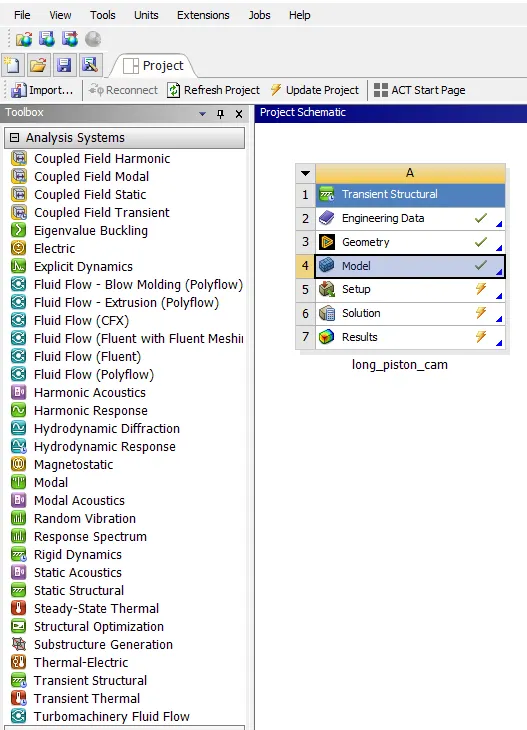
- Now double click on engineering data which is here structural steel as default, no need to change it.
- After that right click on the geometry and import the geometry available in the question. And again right click and select edit in spaceclaim,their no changing required here.
- After that we have to close the spaceclaim and right click on model and click on update,then double click to edit in mechanical.
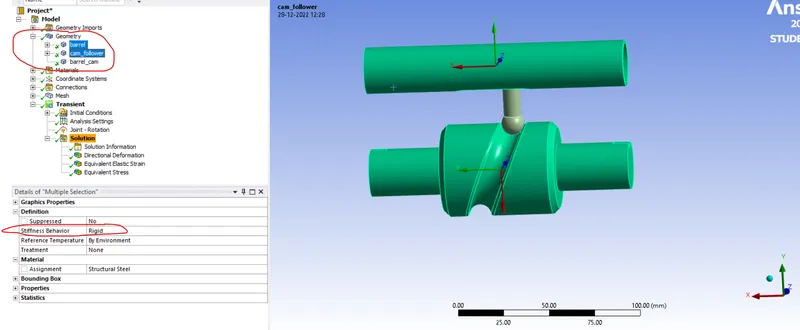
- Now click on geometry and rename it as shown above and change the barrel and cam follower as rigid.
- Now in connection for the first case we have to made frictionless contact so here we have to contact as shown below.
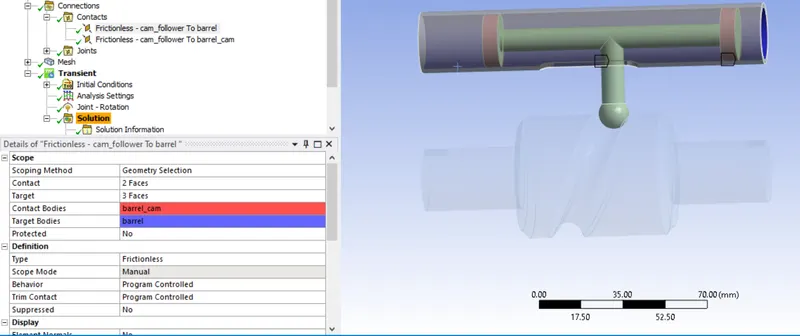
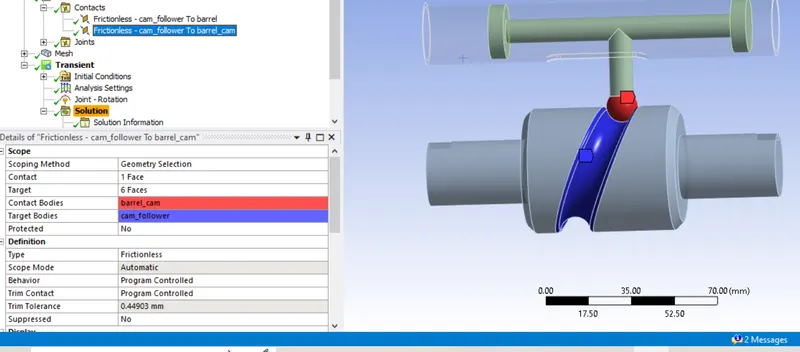
- Here both the contacts are frictionless
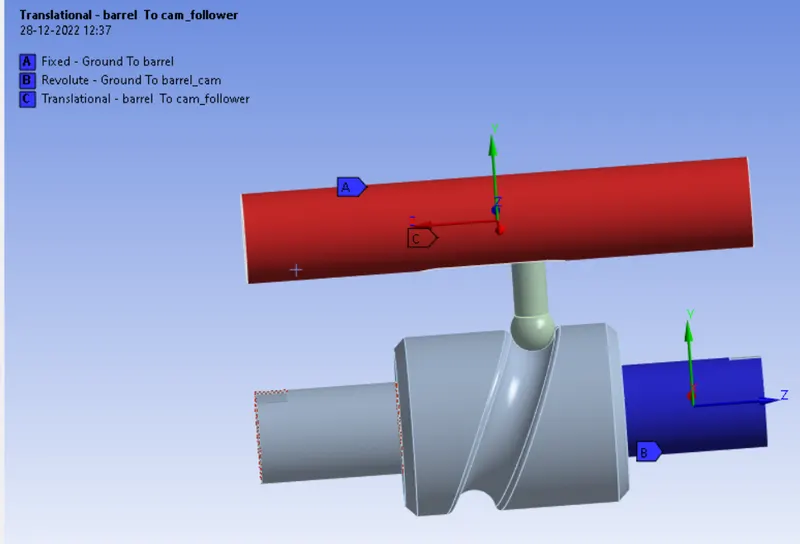
- Now create 3 joints one is fixed joint for the barrel, second is revolute joint for the cam follower, and third is translational joint for barrel cam by keeping mobile scope as barrel cam and reference scope as barrel
- Now we have added a face sizing in the mesh of element size 3mm and reast as default.
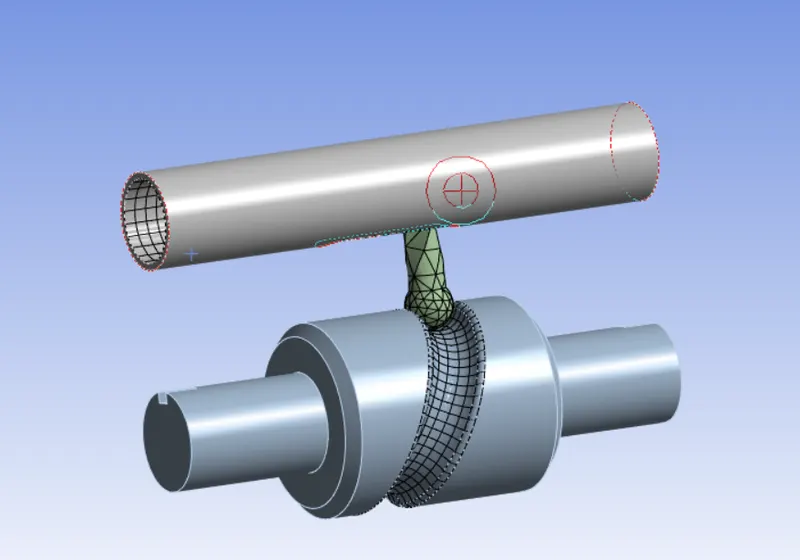
- Here regid bodies are not meshed because they are working as point mass so only the contact surface is meshed.
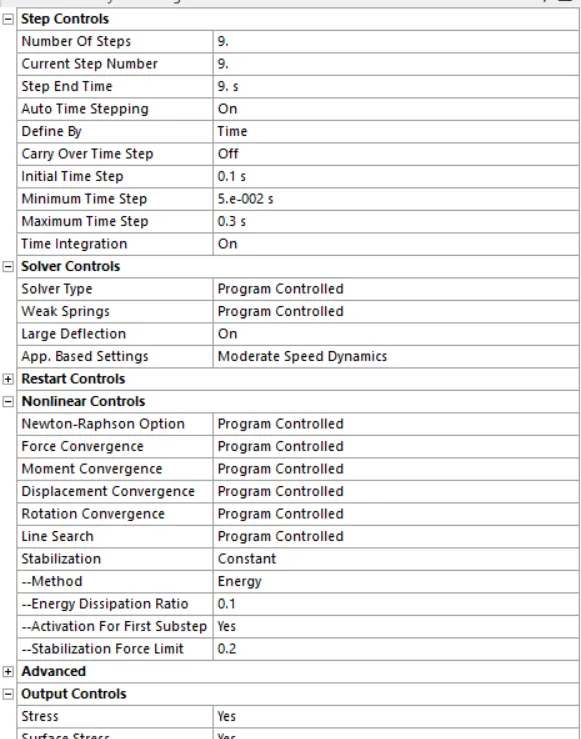
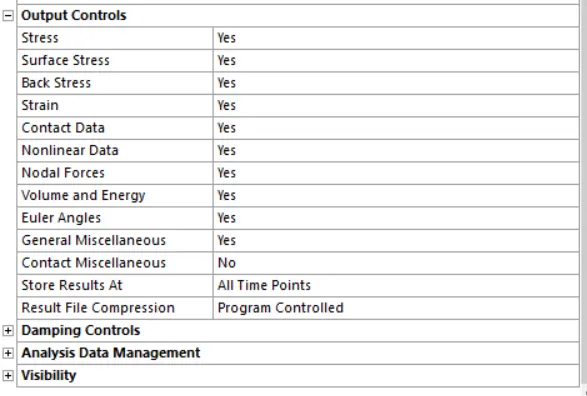
- Now analaysis setting here we have taken 9 steps and the settings are shown below.
- After this we have to give boundry condition se here only one input is their that is rotational joint for the cam_follower.
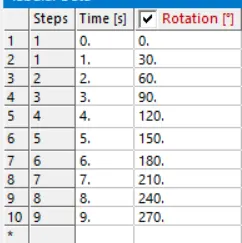
- After that add all the required output i.e, Equivalent Stress, Directional Deformation and Equivalent Elastic Strain
Results:
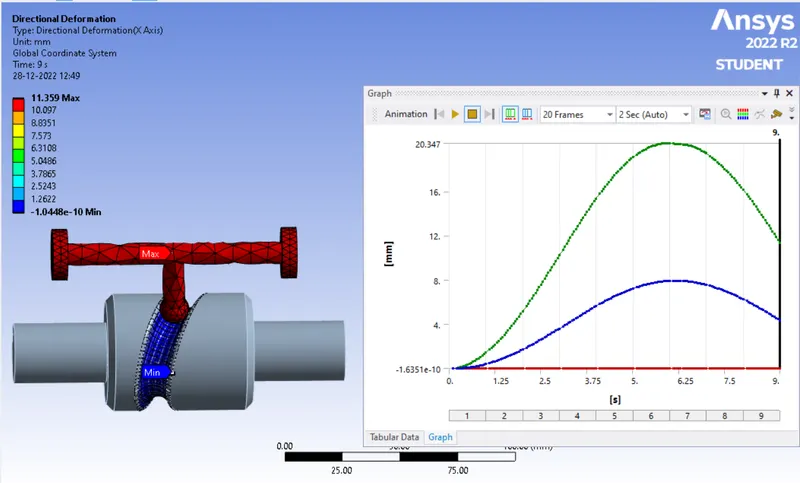
Directional Deformation:
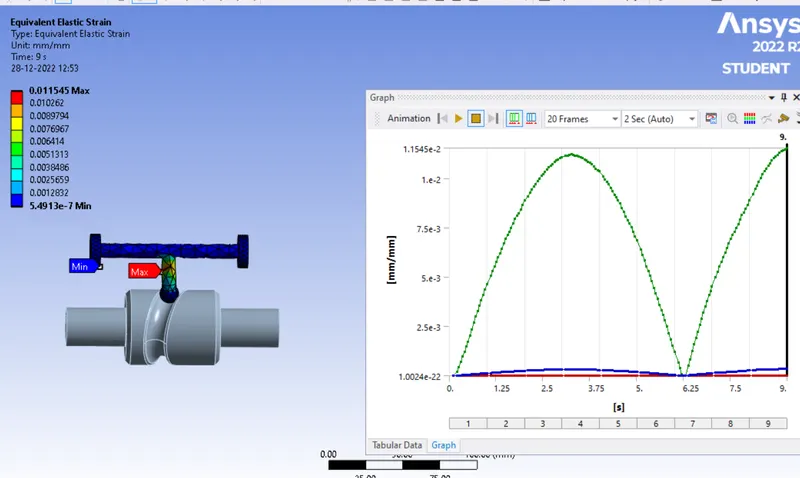
Equivalent Elastic Strain:
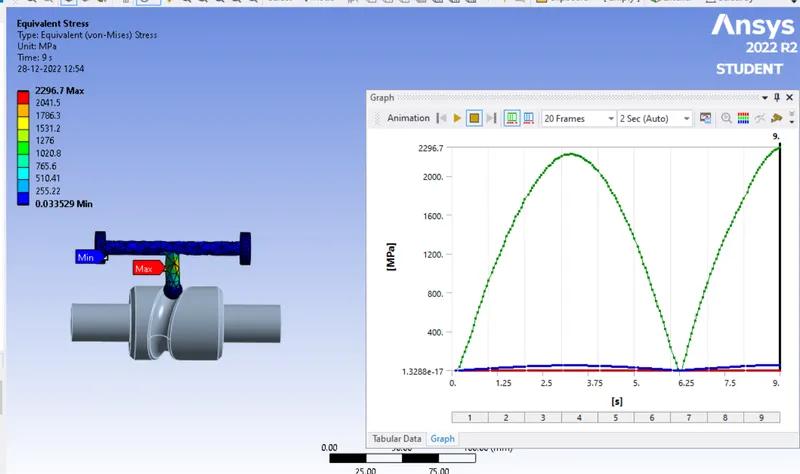
Equivalent Stress:
Case 2: Contact type as frictional value of 0.1.
Procedure:
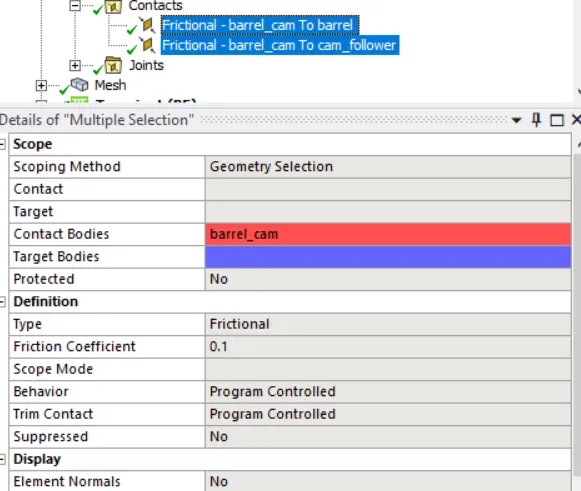
- Only change the type of contact to frictional and give the coefficient of friction 0.1.
Results:
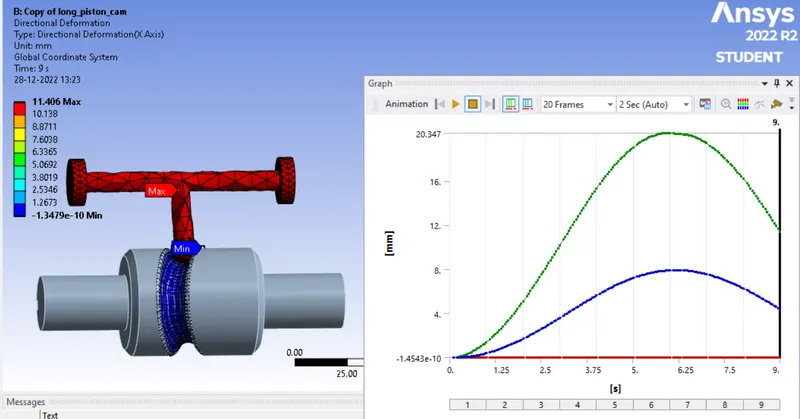
Directional Deformation:
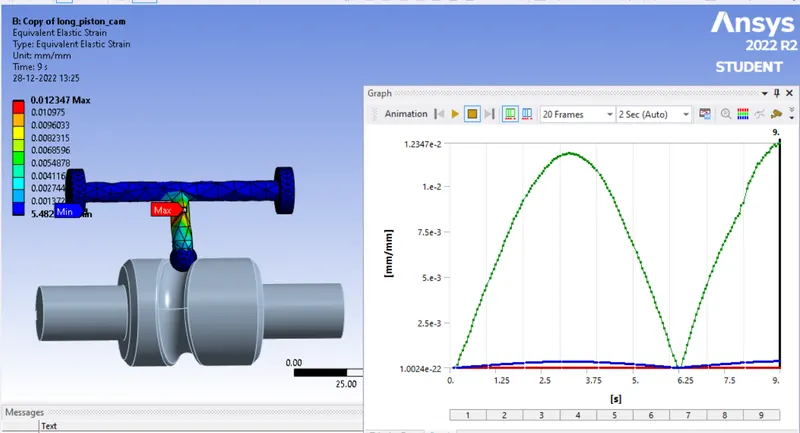
Equivalent Elastic Strain:
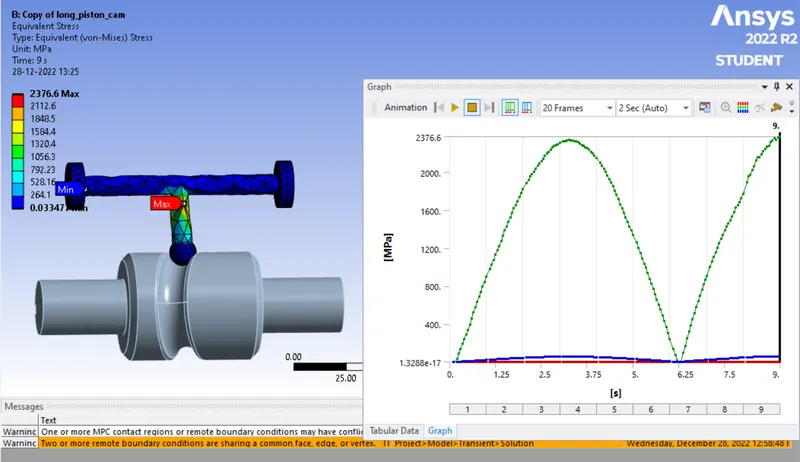
Equivalent Stress:
Case 3: contact type as Frictional value of 0.2
Procedure:
- Only change the type of contact to frictional and give the coefficient of friction 0.2.
Results:
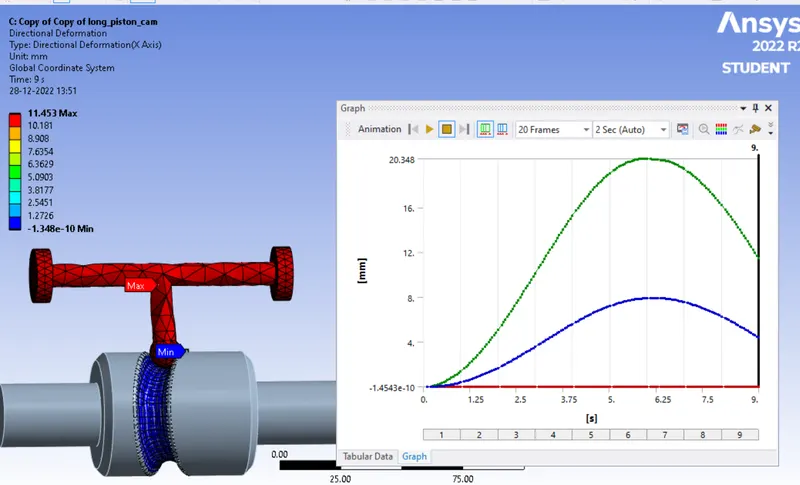
Directional Deformation:
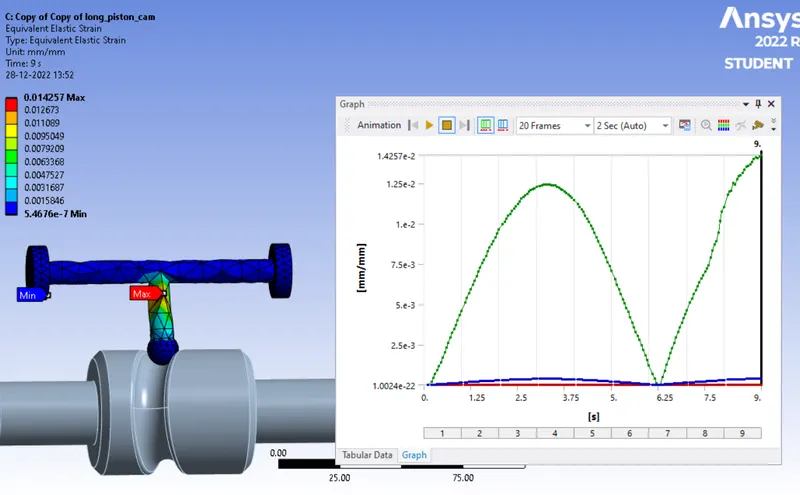
Equivalent Elastic Strain:
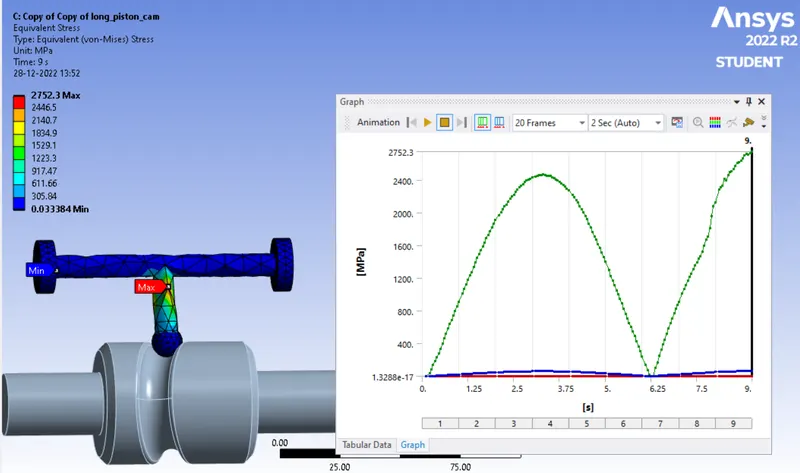
Equivalent Stress:
Discussion:
| Cases | Directional Deformation (mm) | Equivalent Strain | Equivalent Stress (Mpa) |
| Frictionless | 11.395 | 0.011545 | 2296.7 |
| Frictional (0.1) | 11.406 | 0.012347 | 2376.6 |
| Frictional (0.2) | 11.453 | 0.014257 | 2752.3 |
- Here we can see that in directional deformation,there is not much difference in values in all cases but the max directional deformation happened is 11.453 in case 3.
- Equivalent elastic strain is aso not much changed in three cases but the max streain generated in case 3 and the stress is also max in case 3.
Conclusion:
- In all the three cases their is not much change in values but still the case one with the frictionless contact has less stress and strain generated so that is good enough here.