Head Impact on Hood
AIM:
To perform the Head impact Simulation and calculate the Head Impact Criterion (HIC) value for the following cases.
- Simple head model impacting against rigid wall.
2. Child headform dummy model impacting against rigid wall.
3. Child headform dummy model impacting against hood.
INTRODUCTION:
Pedestrian protection CAE is a part of vehicle safety engineering from a crash perspective. In pedestrian protection, we look for imparting minimum injury to head, upper leg (thigh) and lower leg (including knee) in case of an accident with a human subject. These tests are usually done at a lower velocity from 20-40 kmph as accidents tend to result in more severe circumstances above these velocities and braking in case of an accident often results in colision at low velocities. The standard pedestrian test procedure by Euro NCAP is as shown in the figure below.
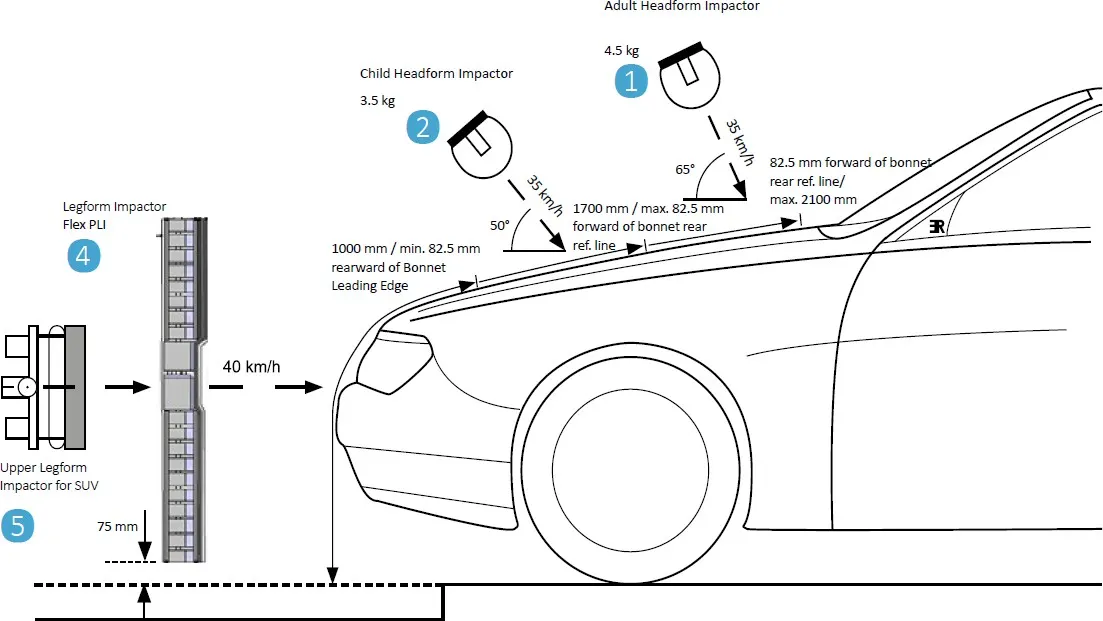
In this project, a child's headform model is provided. An impact simulation is created to replicate a scenario where this headform will impact on a car bonnet. The bonnet is considered as a rigidwall for the first and second case, while for third case a meshed hood model is used with elasto-plastic material card. From the simulation, the head impact coefficient is calculated manually and with the help of LS-PrePost.
HIC, Head Injury Criterion/Coefficient is a quantification of head injury. A small HIC value doesnt mean that the head injuries will be of low levels. Likewise, a high HIC does not imply high level injuries. The real meaning is that with higher HIC values, the higher the pobability of getting high level head injuries. The HIC is the maximum value over the critical time period t to t for the expression.
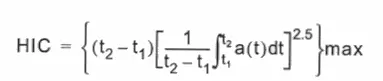
HIC(d) = 0.75446(Free Motion Headform HIC) + 166.4
At HIC-650.
90% probability ofievel one,
55% of level 2
20% of level 3
5% of level 4.
AIS-Abbreviated injury Scale.
Slight damage to brain with headache, dizziness, no loss of consciousness, confusicons.
- Concussion with or without skull fracture, less than 15 minutes of unconsciousness, detached retina, face and nose fracture.
- Concussion with or without skull fracturc more than 15 minutes of unconsciousness without severe neuralogical damage.
- Multiple skull fracture, loss of vision, multiple facial fracture cervical fracture without damage to spine.
- Multiple skull fracture with severe ncurological damage.
Note: The unit system used is kg-mm-ms.
PROCEDURE
Case 1: Simple head model impacting against rigid wall
The given LS-Dyna keyword file of simple head FE model is opened in LS-PrePost using option File>Open-LS-Dyna Keyword File.
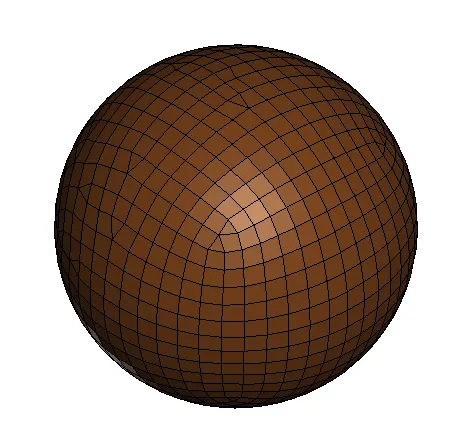
Section:
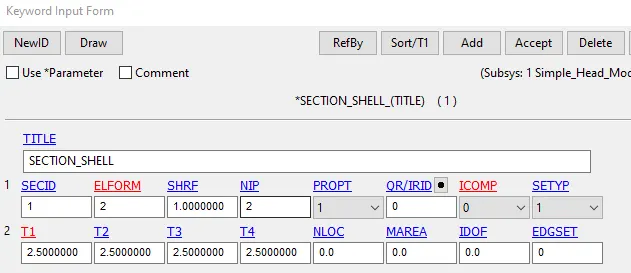
The section properties of simple head are assigned as shell element with 2.5mm thickness and ELFORM = 2.
Material:
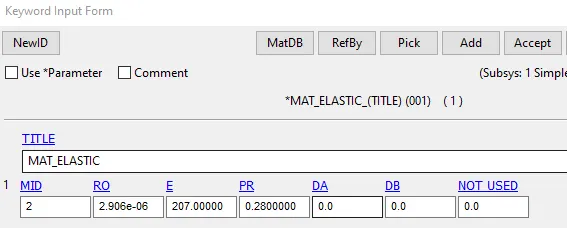
The material properties for simple head model is assigned as Elastic Material with the above definitions.
Part:
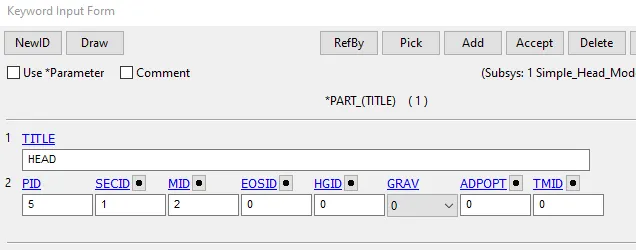
The Section Shell and Material Elastic properties are assigned to the Head part.
Initial Velocity:
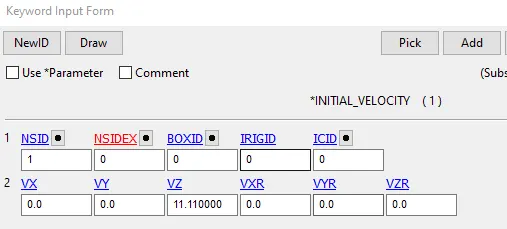
The simple head model is assumed to be impacting the rigid wall at 40kmph i.e. 11.11mm/ms in negative Z direction towards the rigidwall.
Rigidwall:
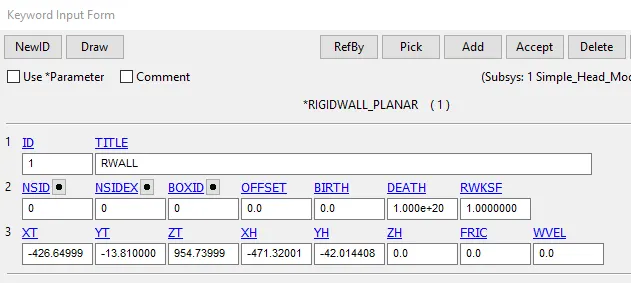
The simple head model is made to impact on the rigidwall.
Contact:
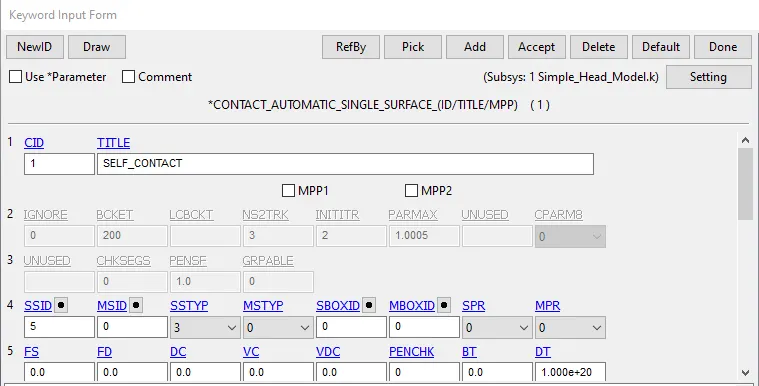
The Automatic Surface to Surface Contact Card is defined for the Self contact of the Head part.
Control Termination:
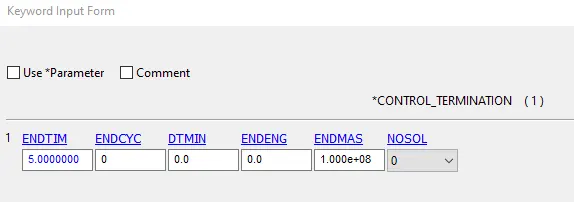
The Simulation is to be terminated at 20ms.
Database:
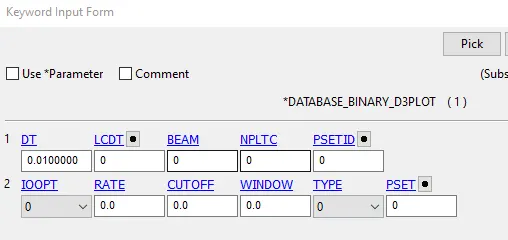
It defines the frequency at which the animation file is to be created and is set to 0.01ms.
Extent Binary:
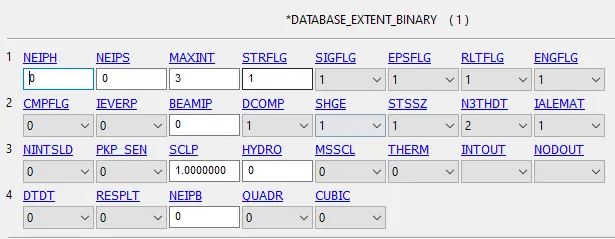
Database Extent Binary is defined with STRFLG = 1.
ASCII option keyword:
The output request in ASCII format, The following keyword are activated
- GLSTAT- Global Data
- MATSUM- Material Energics and
- NODOUT- Nodal point data
- RWFORC- Rigid wall force
Save the model with SIMPLE_HEADFORM_Model and perform LS-RUN.
Case 1 Results:
Von Misses Stress:
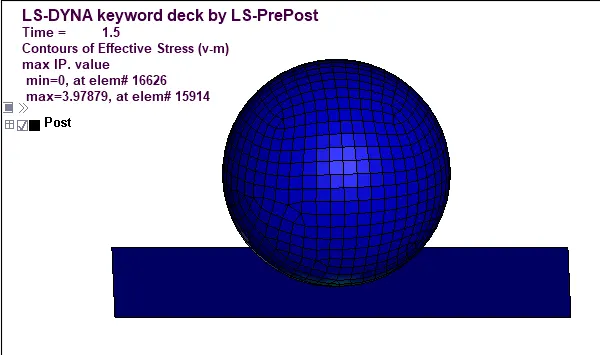
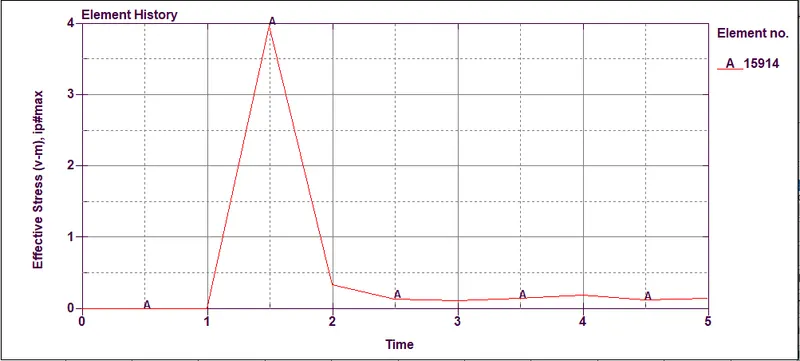
Effective Strain:
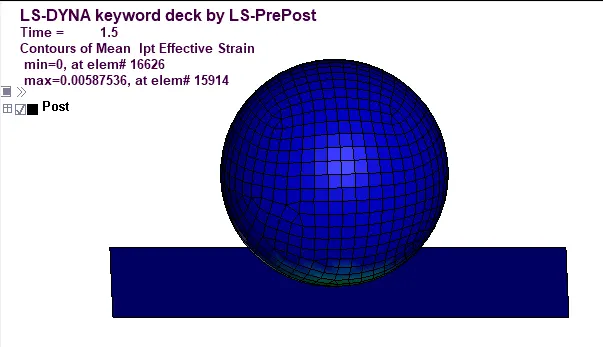
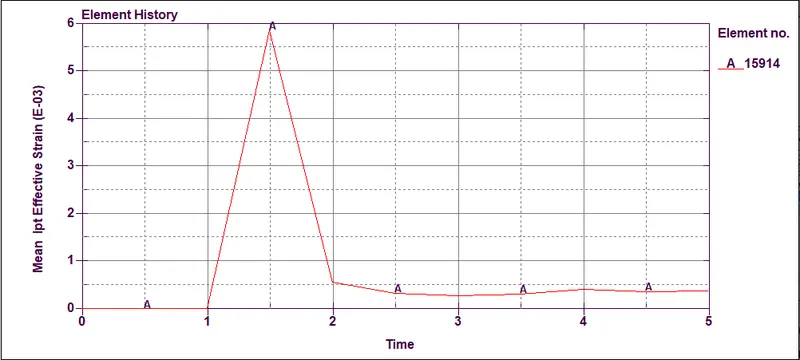
Energy Graphs:
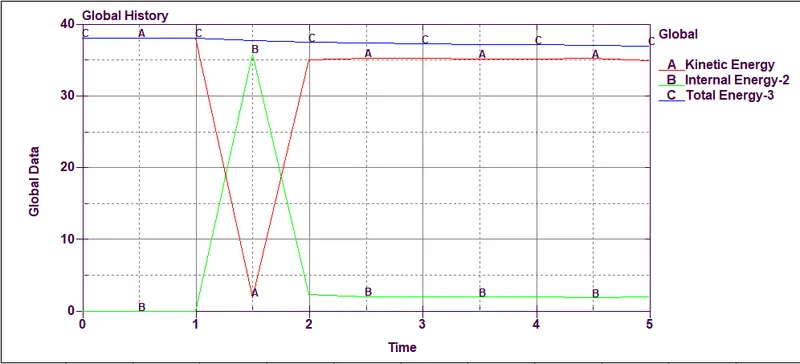
Case 2: Chid Headform Dummy lmpact on Rigidwall.
Pedestrain Headform Model:
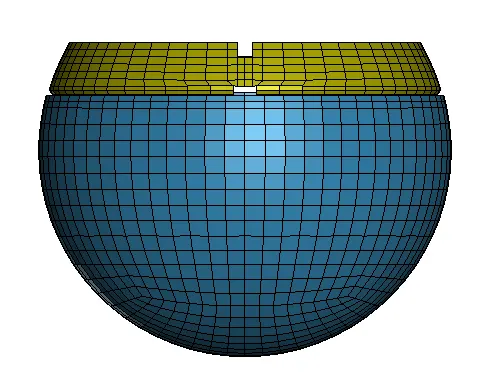
For this Case we start with a fresh New LS-Dyna Pre-Post. Save the new file as Main.k.
We first have to include the provided Pedestrian Headform Model in the Main file.
Define Transformation:
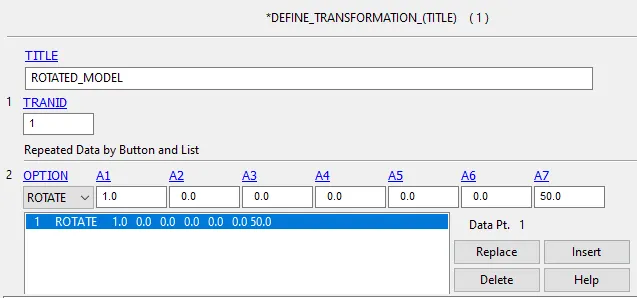
Rotation is Defined for the Dummy head model in X axis and is rotated about 50 deg.
Include Transform:
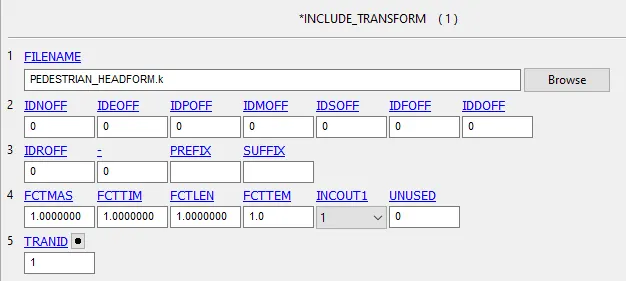
The Pedestrian Headform Model is Included in the Main.k file with the Transform Card.
Then the file is saved as Main.k
Then again open Main.k Keyword file in LS-Prepost.
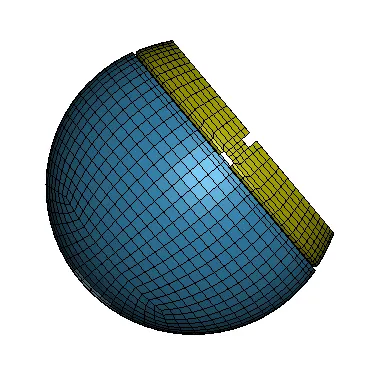
The Pedestrian Headform model will be called in the main file and is rotated 50deg about X axis.
Initial velocity:
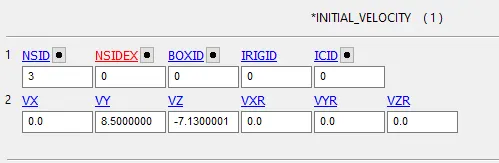
As per the EuroNCAP standards, the Initial Velocity is taken as 40kmph, i.e. 11.11mm/ms at an angle 50deg. Hence, the Vertical and Horizontal components of velocities are -7.13mm/ms and 8.5mm/ms respectively.
RigidWall:
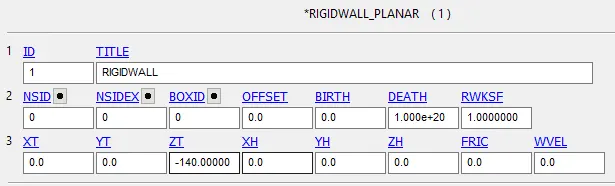
The rigidwall is created at a distance of 15mm below the Head model.
Control Termination:
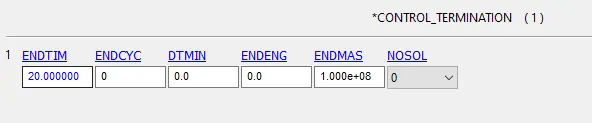
The Simulation is terminated at 20ms.
BINARY D3PLOT - It defines the frequency at which the animation file is to be created and is set to 0.01ms.
DATABASE HISTORY NODE - A nodes on the bottom face of the head were defined the to measure the acceleration and calculated HIC value.
DATABASE HISTORY NODE:
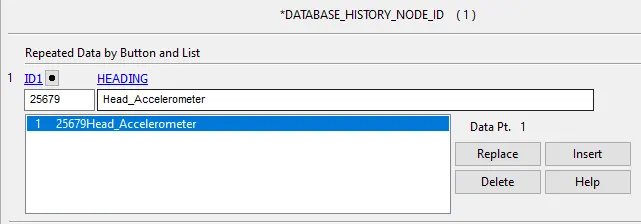
This Card is provided to calculate the HIC value at NodeID = 25679.
DATABASE EXTENT BINARY:
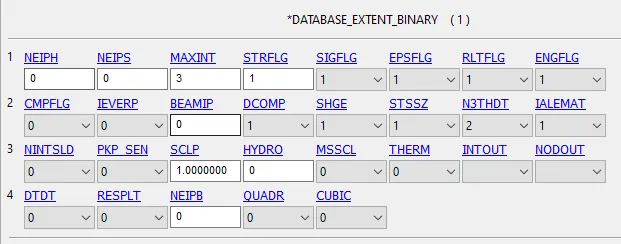
The STRFLG is set to 1 to compute the lastic strain in the model.
ASCII option keyword:
The output request in ASCII format, The following keyword are activated
- GLSTAT- Global Data
- MATSUM- Material Energics and
- NODOUT- Nodal point data
- RWFORC- Rigid wall force
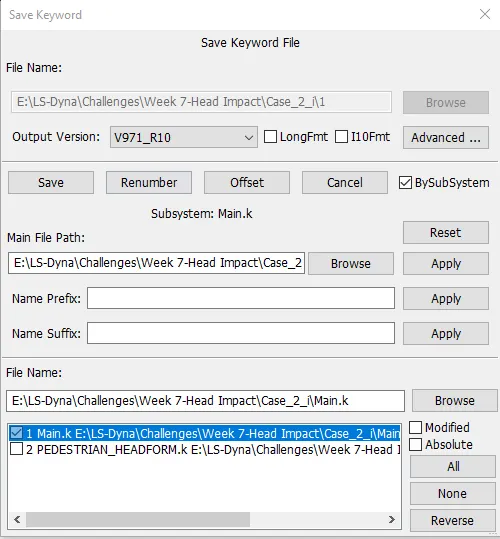
Save the model with MAIN.K and perform LS-RUN.
Case 2 - Results:
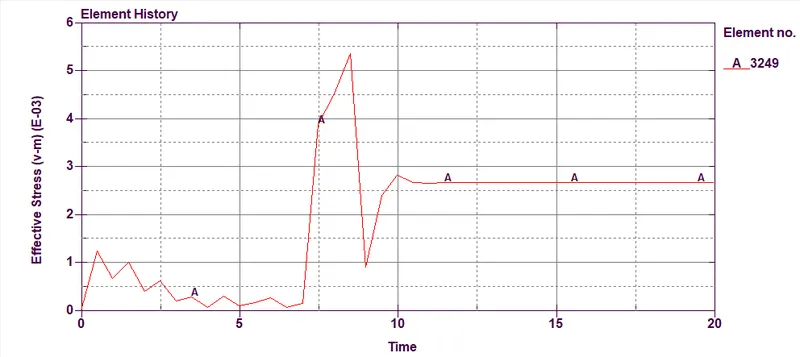
Von Misses Stress:
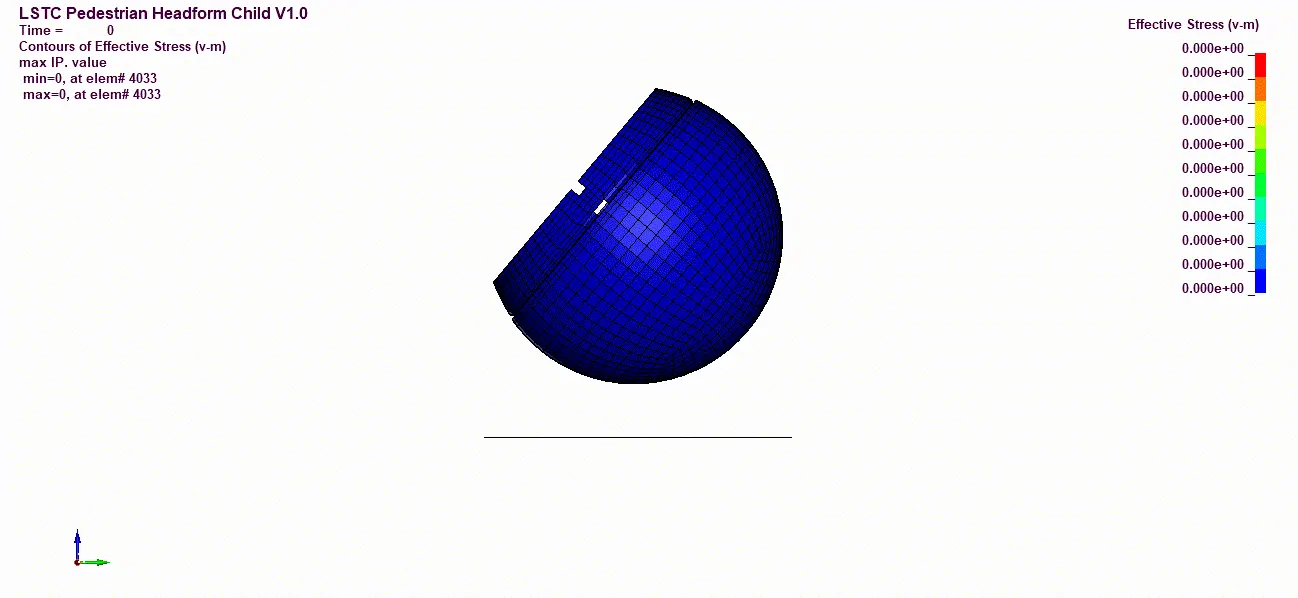
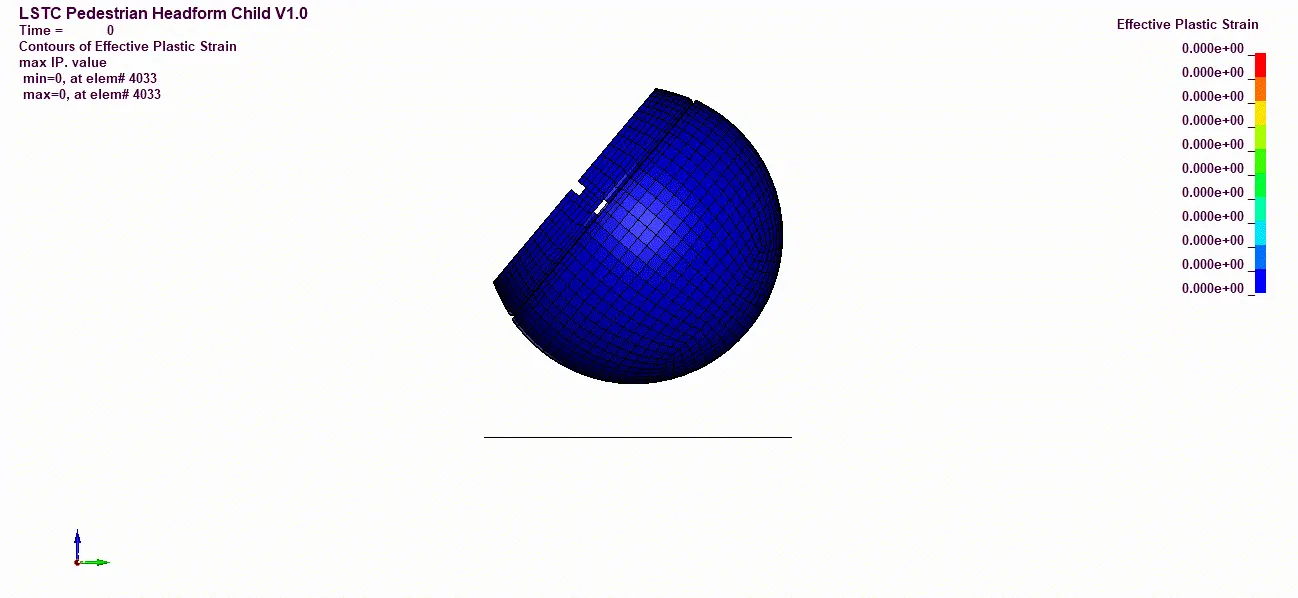
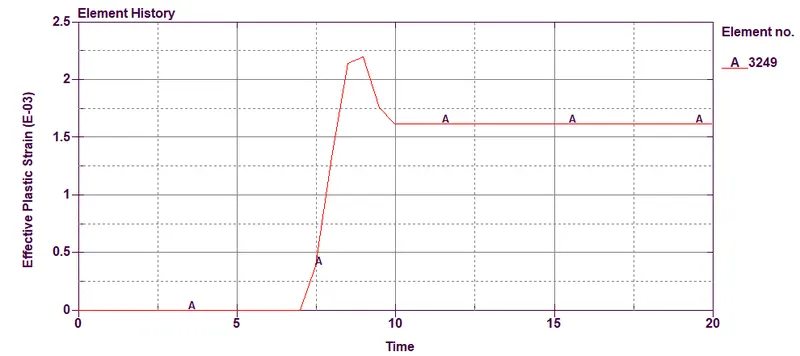
Effective Strain:
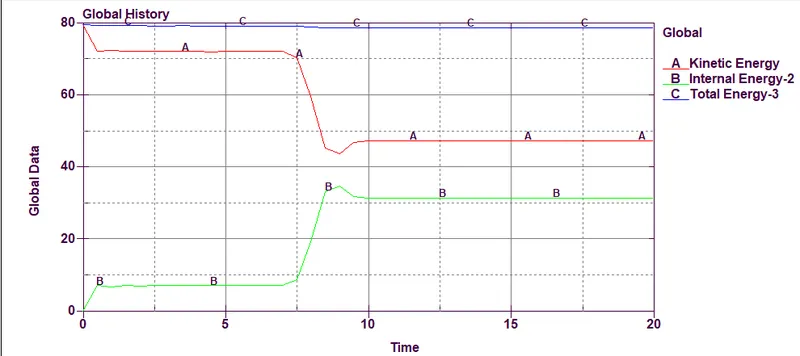
Energy Graph:
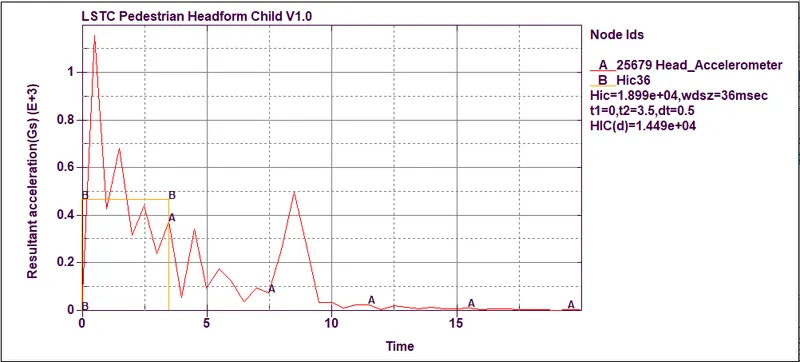
HIC Value:
Case 3: Child Headform Impacting Hood
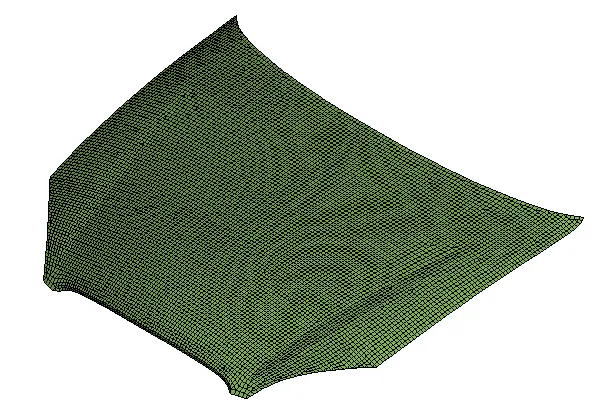
Open LS-PrePost and Import the Meshed Hood Model.
Meshed Hood Model:
Section:
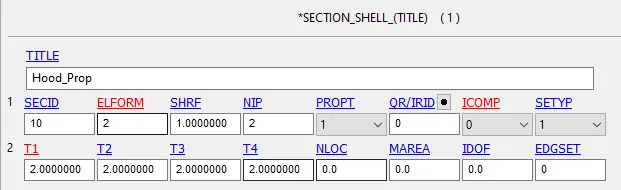
The Hood model is assigned with Shell elements with ELFORM = 2 and thickness as 2mm.
Material:
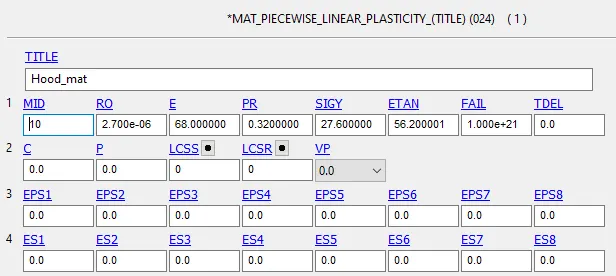
The Elasto-Plastic Material is assigned to the Hood Model.
Define Transform:
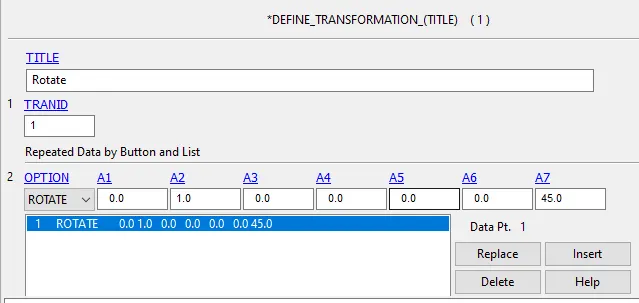
Rotation is Defined for the Dummy head model in Y axis and is rotated about 50 deg.
Include Transform:
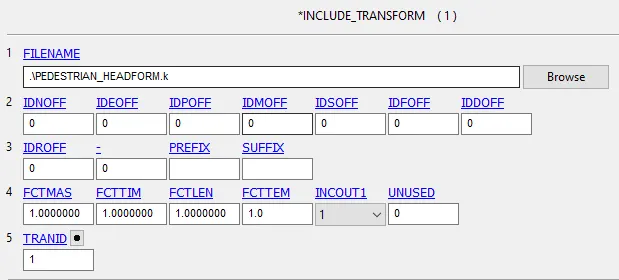
The Pedestrian Headform Model is Included in the Main.k file with the Transform Card.
Then the file is saved.
Initial Velocity:

As per the EuroNCAP standards, the Initial Velocity is taken as 40kmph, i.e. 11.11mm/ms at an angle 50deg. Hence, the Vertical and Horizontal components of velocities are -7.13mm/ms and 8.5mm/ms respectively.
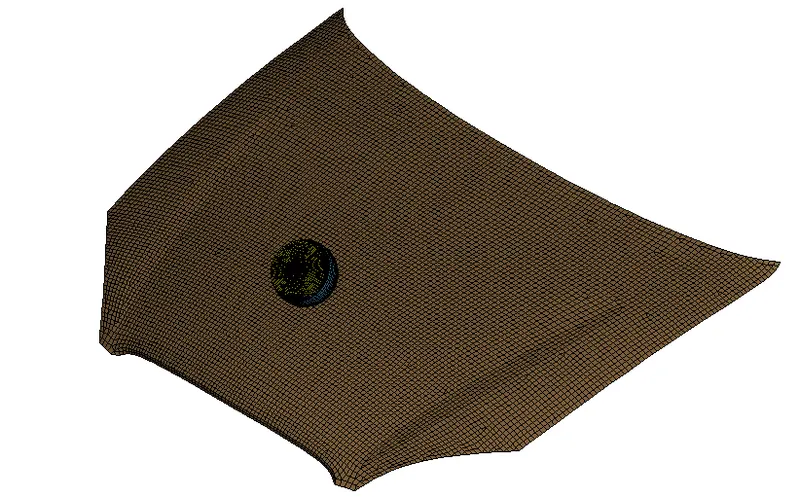
Meshed Hood with Included Child HeadForm model:
Contact:
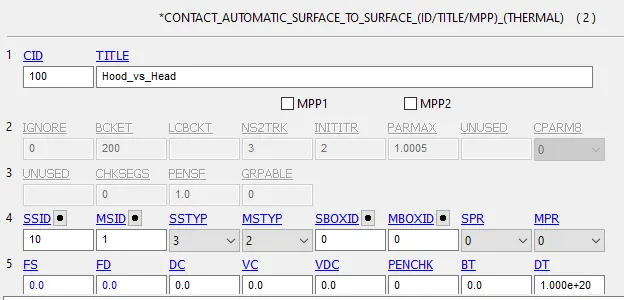
The Automatic Single Surface to Surface contact is defined between Head and the Hood.
Boundary SPC Set:
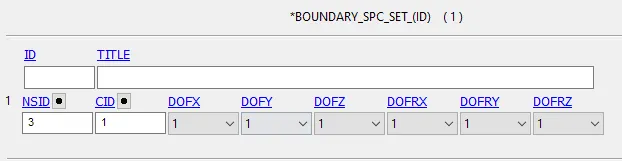
Control Termination:
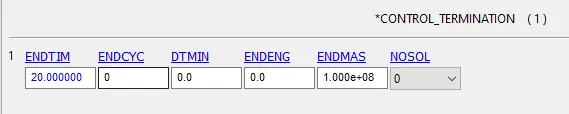
The Simulation is terminated at 20ms.
BINARY D3PLOT - It defines the frequency at which the animation file is to be created and is set to 0.01ms.
DATABASE HISTORY NODE - A nodes on the bottom face of the head were defined the to measure the acceleration and calculated HIC value.
DATABASE HISTORY NODE:
This Card is provided to calculate the HIC value at NodeID = 25679.
DATABASE EXTENT BINARY:
The STRFLG is set to 1 to compute the lastic strain in the model.
ASCII option keyword:
The output request in ASCII format, The following keyword are activated
- GLSTAT- Global Data
- MATSUM- Material Energics and
- NODOUT- Nodal point data
- RWFORC- Rigid wall force
Save As:
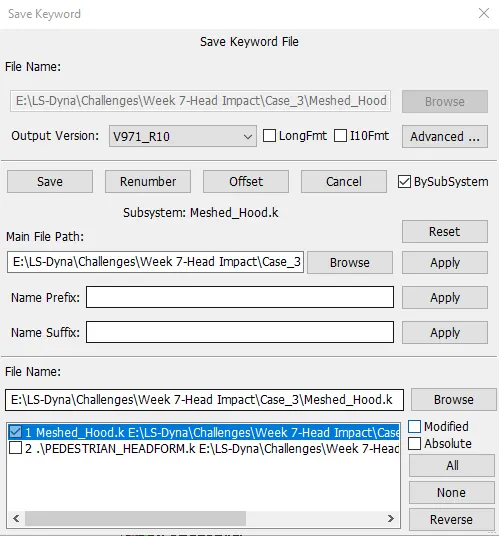
The file is saved and LS-RUN is provided.
Case 3 - Results:
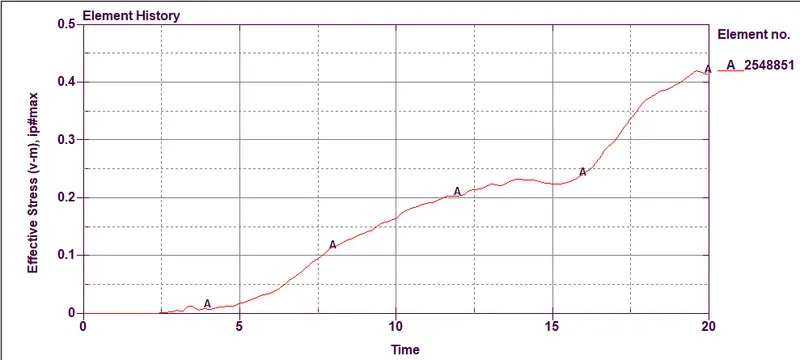
Von Misses Stress:
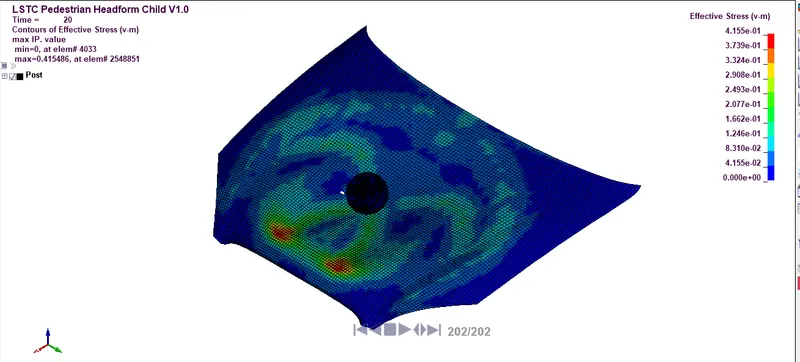
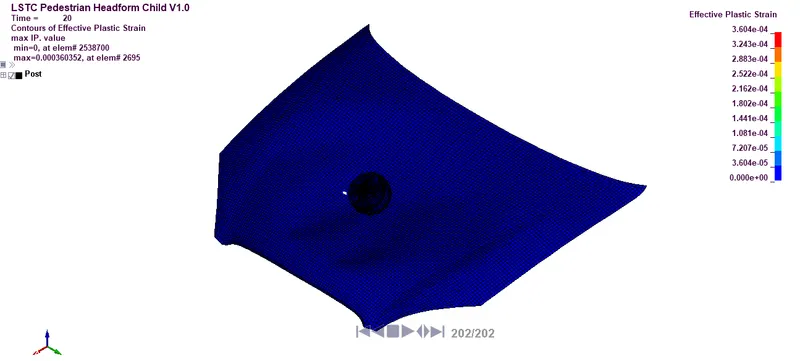
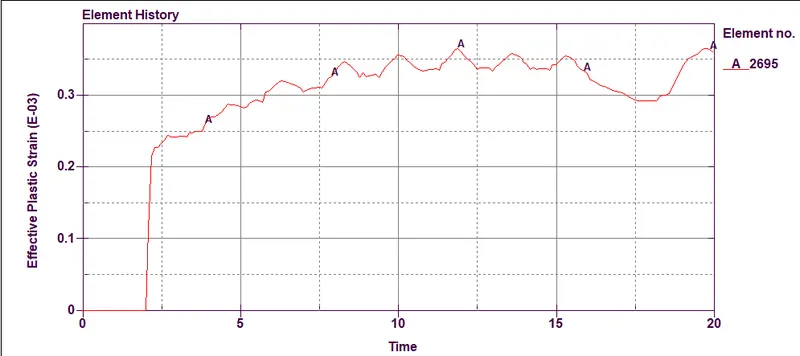
Effective Strain:
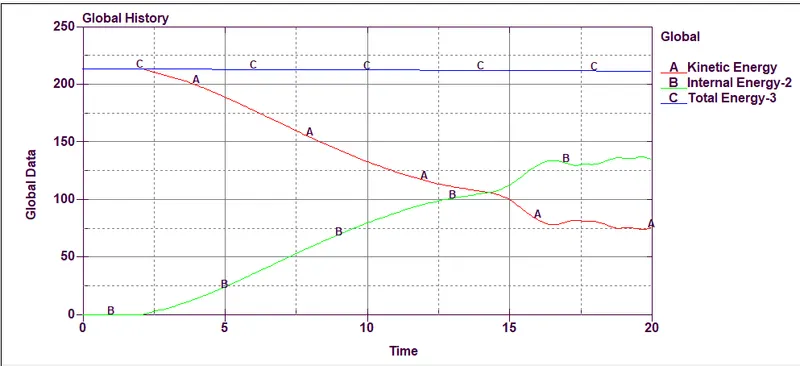
Energy Graph:
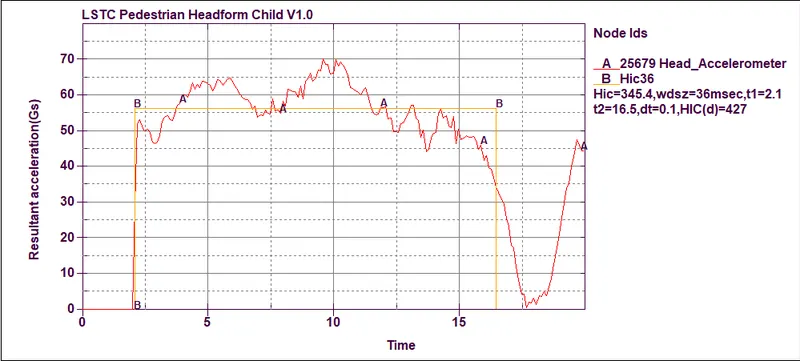
HIC value:
Conclusion:
|
Cases |
Case 1: Simple Head Model and Rigid Wall |
Case 2: Child Headform and Rigidwall |
Case 3: Child Headform and Hood |
|
Stress (Gpa) |
3.97879 |
0.00453122 |
0.421873 |
|
Strain |
0.005875 |
0.00538118 |
0.00036793 |
|
HIC |
- |
1.899e+4 |
345.4 |
|
Explanation |
The Simple Head Model was defined with MAT_ELASTIC material card. The HIC value is too high. |
The Child Headform model was provided with MAT_PIECEWISE_PLASTICITY material card. |
The Child Headform was impacted on the meshed Hood. The HIC value is less than Case 2. |