Week-7 : Converting a detailed engine model to a FRM model
Challenge session 7:
- Explore tutorial number 9 and write a detailed report
Open tutorial number 9 we could see 8 steeps, 1 to 8 and we`re going to show what`s been doing each steep, usually this treatment is necessary to get the results faster, the computational amount needed to run the tests with the FAST RUNING MODEL system is reduced and the computational time to run the tests is also improved by more than 10, 30, 40 times.
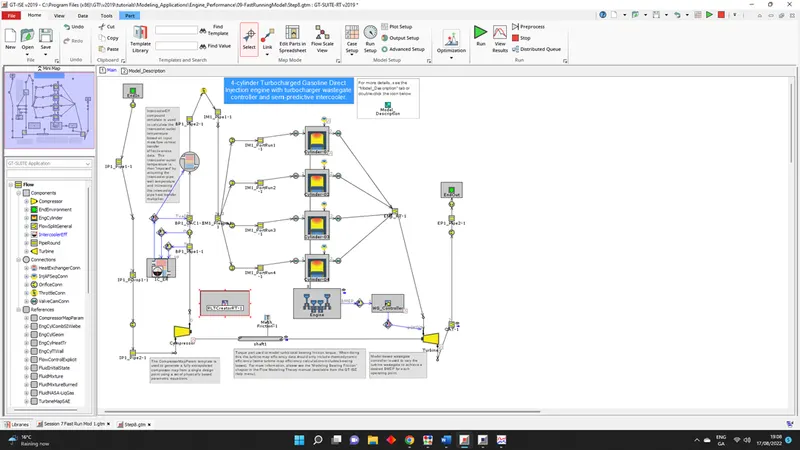
Below the first scenario from Tutorial 9 is shown, we can see a small part of the exhaust already with a pre-processing for fast running mode, before the end of the tutorial we will see another processing in the exhaust
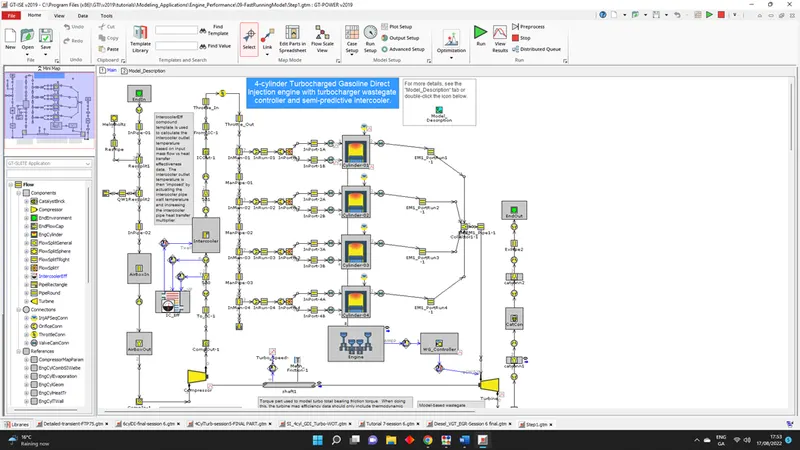
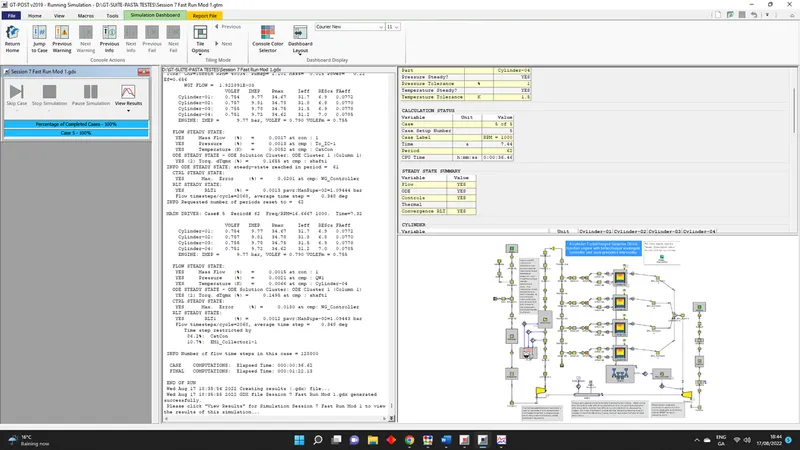
Time to finish the simulation is shown below
|
Period |
62 |
|
|
CPU Time |
h:mm:ss |
0:00:36.46 |
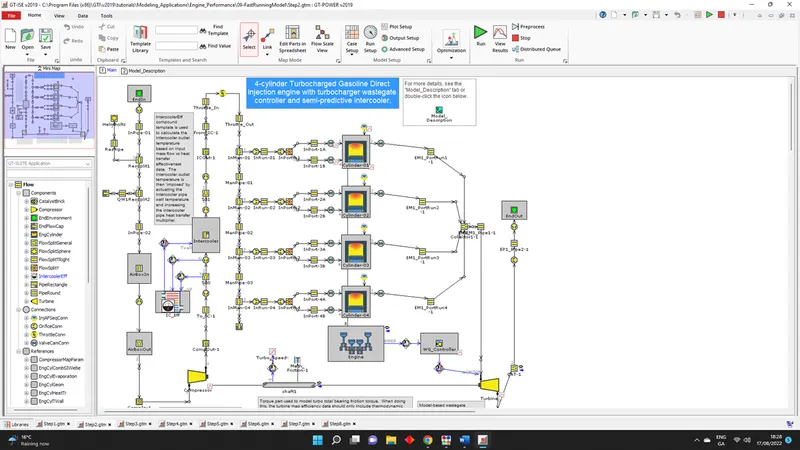
At the second scenario the catalytic system was converted to the FRM system
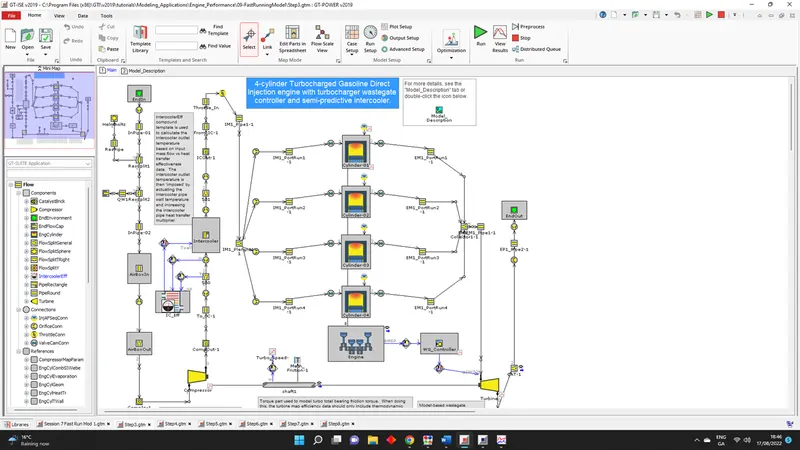
At the thirst scenario we can see the modified intake system to FRM.
At number 4 the intercooler was treated, number 5 the intake system before the compressor including air filter was modified to FRM, at number 6 the exhaust system was modified and is fully fast Running model now, and at the last scenario the RLT module was added, his template allows the user to create RLT variables that can be used with the Real-Time version.
The picture below shows the final model
Time to finish the simulation
|
Period |
66 |
|
|
CPU Time |
h:mm:ss |
0:00:03.57 |
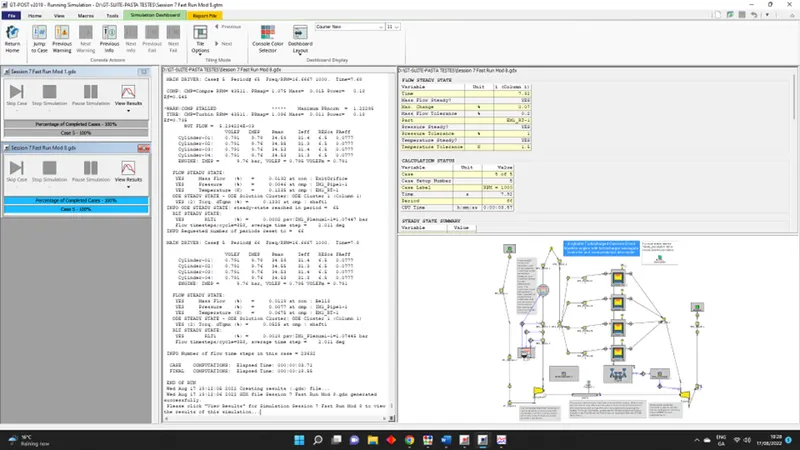
So we can prove that the Fast Running Mode it`s very efficient, we got a result of 12x less processing time.
- Build FRM Model for following configuration using FRM builder approach (50 marks)
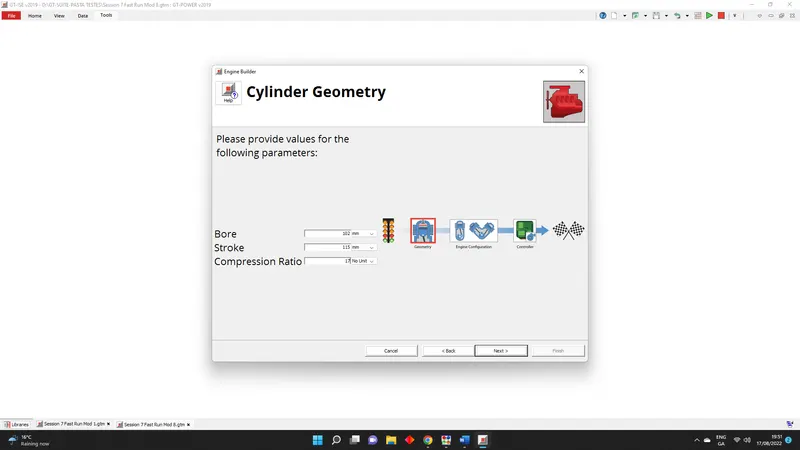
- Bore 102 mm stroke 115 mm CR 17
- No of cylinder 6
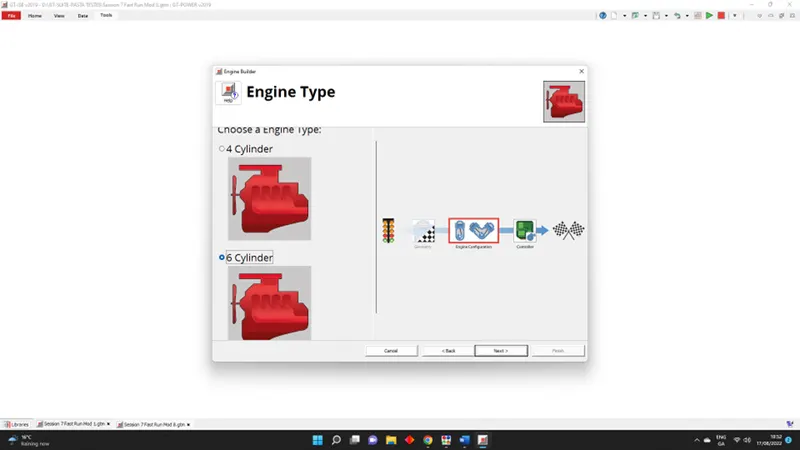
- CI engine
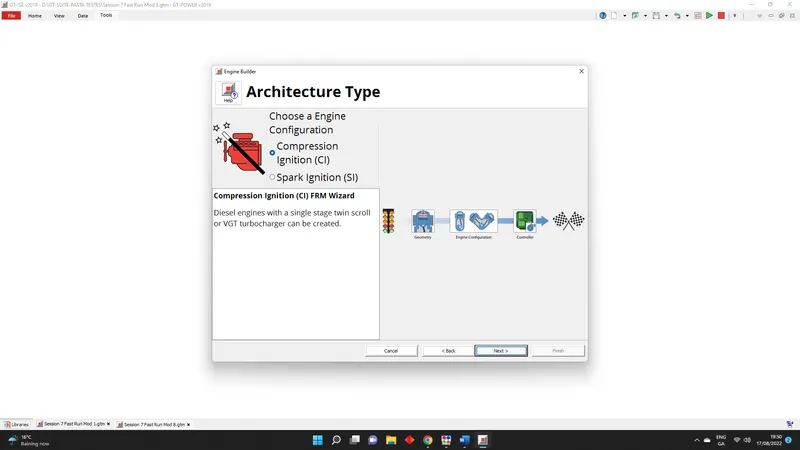
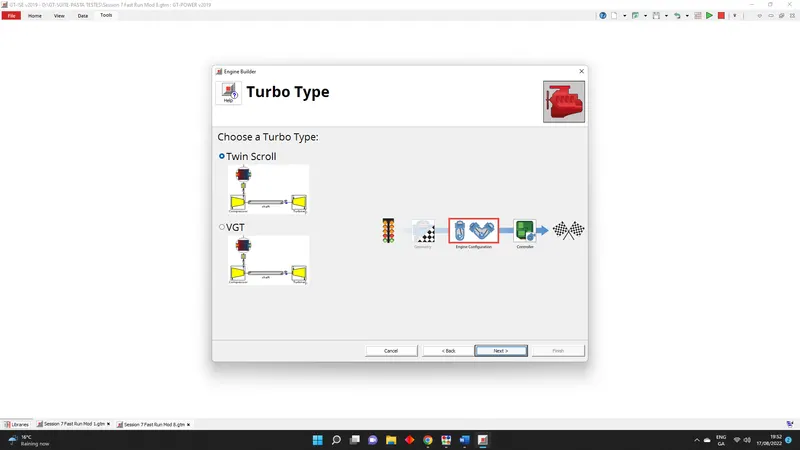
- Twin Scroll Turbine
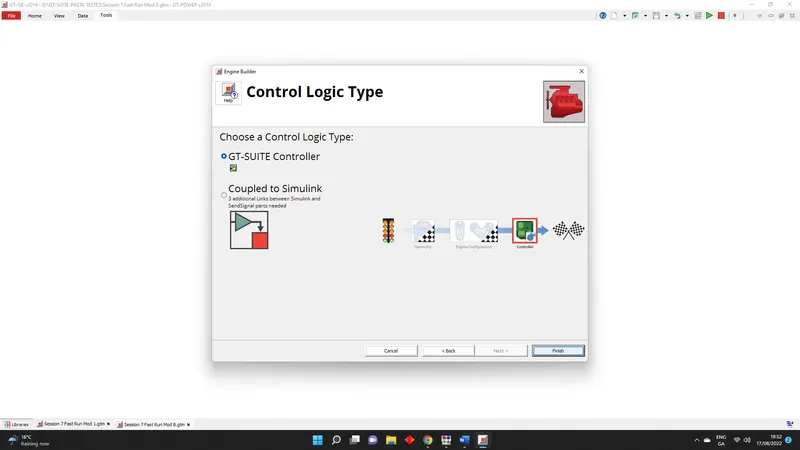
- GT Controller
- Run all cases
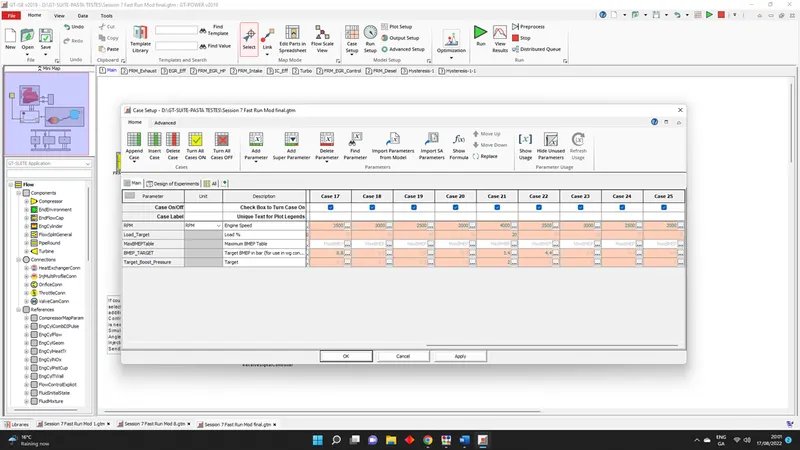
Results:
|
Time |
s |
7.8 |
|
|
Period |
130 |
||
|
CPU Time |
h:mm:ss |
0:00:07.26 |
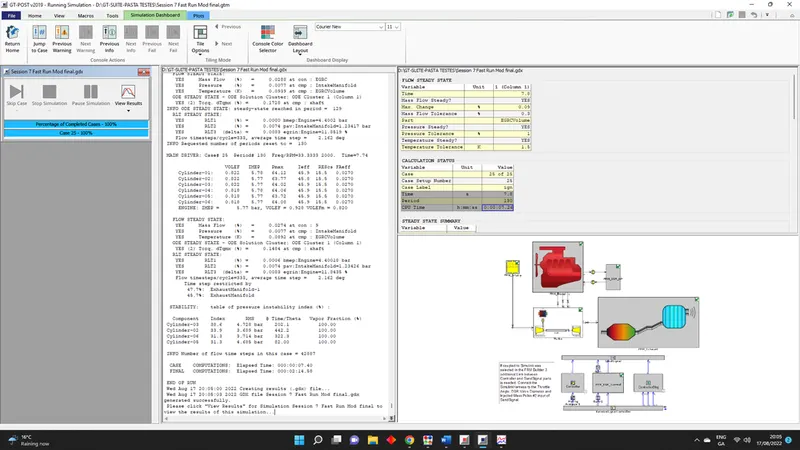
Below is shown some charts and results
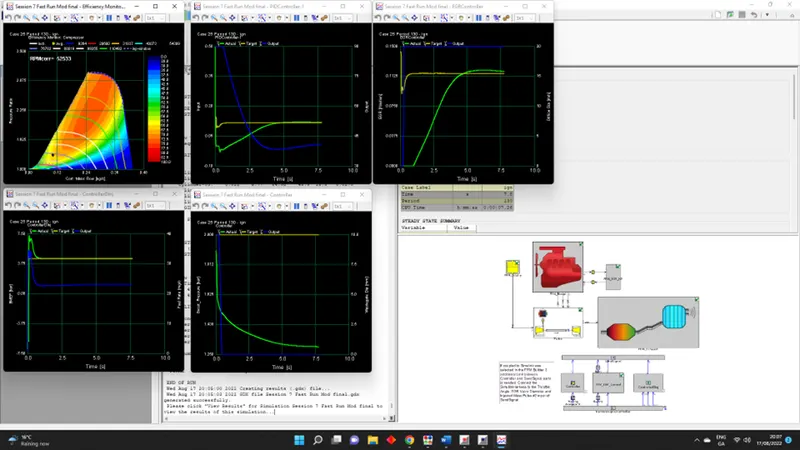
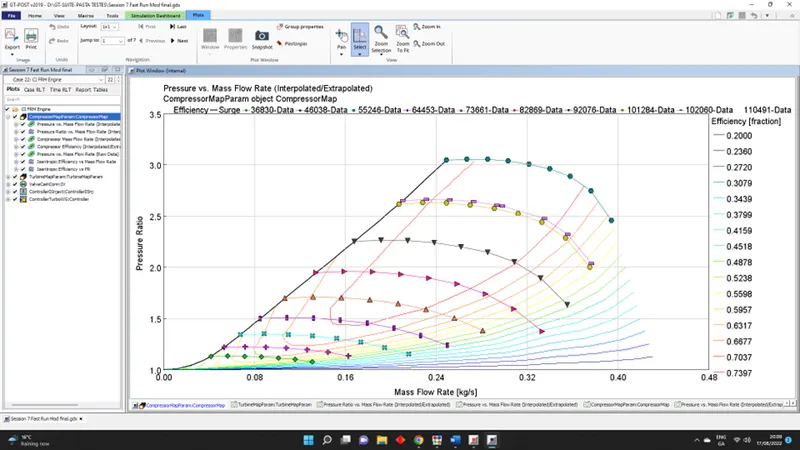
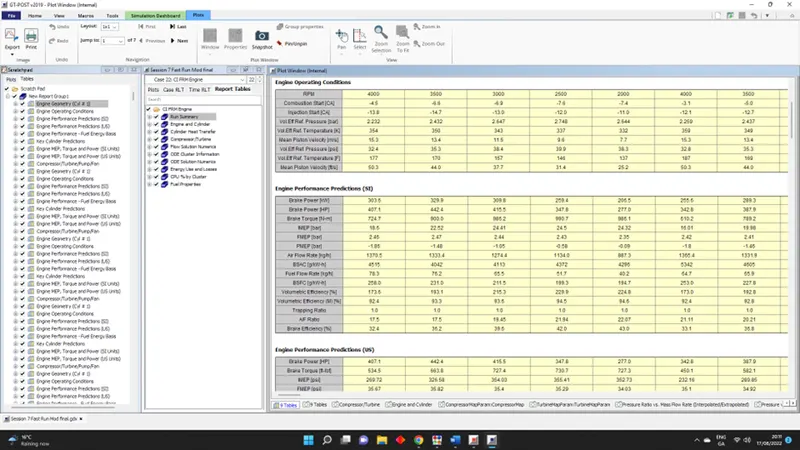
The results show us how functional is the FRM to run simulations as we did, was 25 simulation cases, and the software did in very short time, proven the efficiency.