Week-4 : Basic Calibration of Single cylinder CI-Engine
Q1) Compare SI vs CI and list down differences
| SI | CI |
|
|
Q2) Comments on following parameters
- BSFC
Brake specific fuel consumption is also known by th power-specific fuel consumption or specific fuel consumption, Its literaly how much fuel the car uses compared by how much power it produces. To calculate brake specific fuel consumption you should get fuel consumption divided by power, the results are given in kilowatts per hour.
- Exhaust Temperature
It can be one of the most important gauge on a turbo-diesel-powered vehicle It can warn the driver of situations that are potentially damaging to the engine, and it can also be used as a guide for optimizing fuel economy. The knowledge of the exhaust gas temperature is necessary and very important for the management and diagnosis of the exhaust gas aftertreatment system.
- A/F ratios
Air-fuel ratio (A/F) is the ratio between the mass of air and mass fuel used by the engine when running. The AFR is the quantity of air over the quantity of fuel injected in each cylinder of the engine compared with stoichiometric condition. This variable is characterizes the quality of the combustion and the performances of the engine according to fuel consumption and gases emissions. For a gasoline engine, the stoichiometric air-fuel ratio is around 14.7:1 and for diesel engine it is 14.5:1.
Q3) Change MFB 50 and observe impact on performance
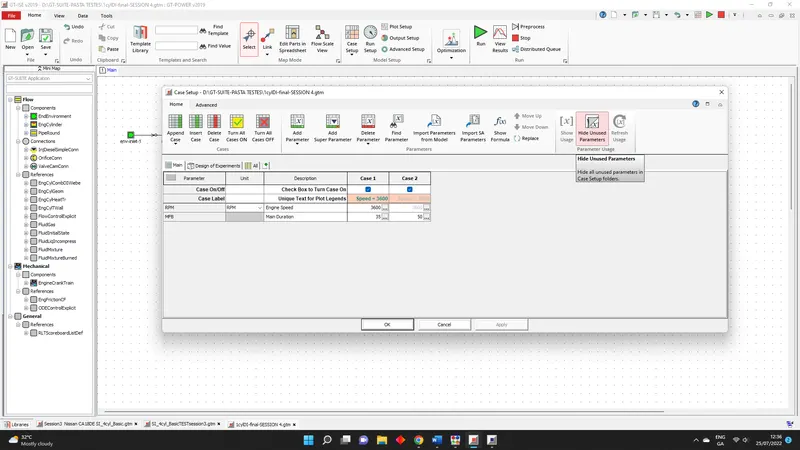
To open the cases we hed to declare MFB as variable and settled the parameter as needed.
case 1 MFB - 35 (standart) and case 2 MFB - 50.
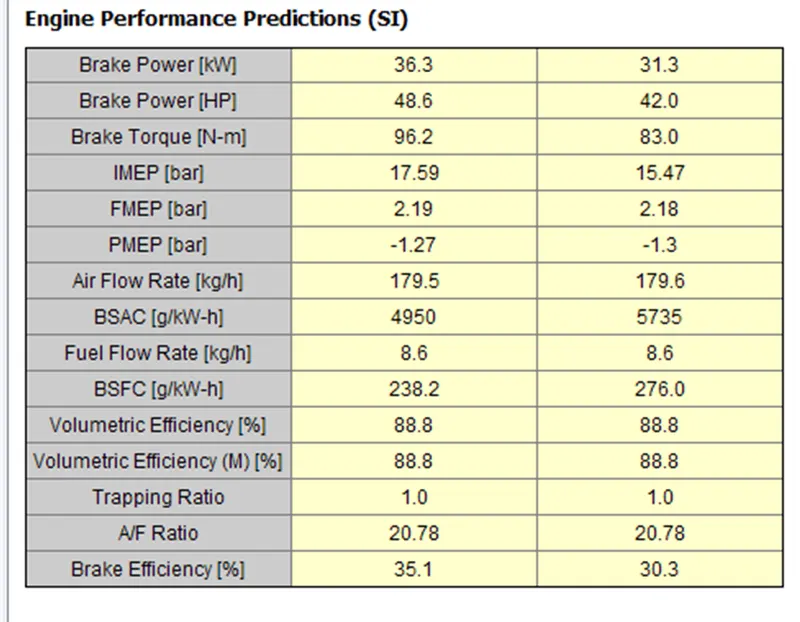
We can see here that we`ve lost 6.6HP of power and also lost 13,2 N-m of torque.
The BSFC has increased 37,8 g/kW-h.
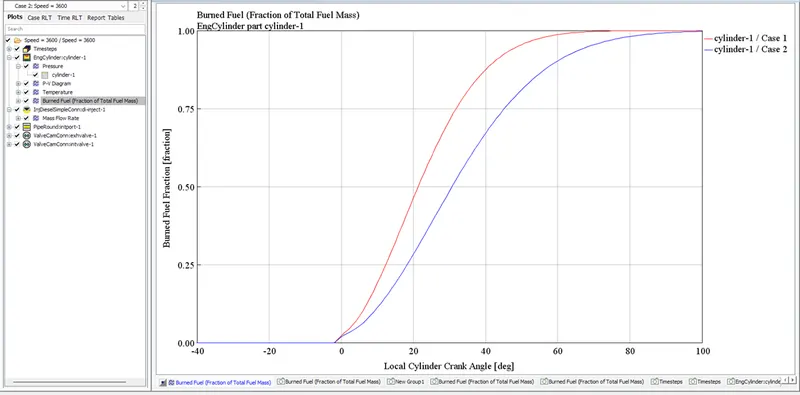
Here we can se on the plots that we`ve decreased the fraction of fuel burnt, and also as shown before we`ve increased the amount of fuel consumption (BSFC).
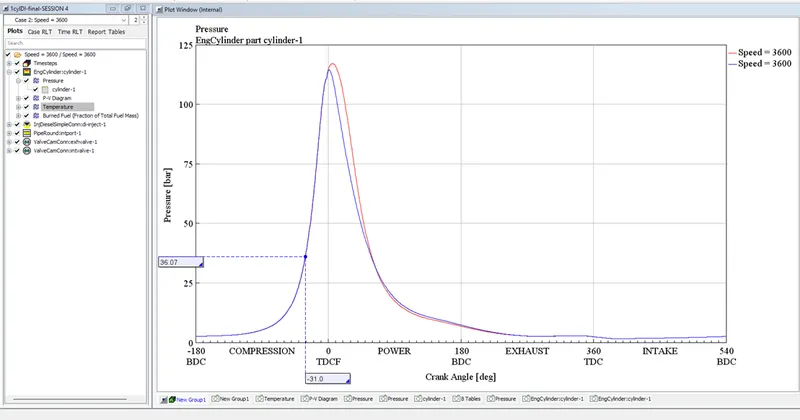
The conclusion is when you increse the MFB to 50, we`re burning more fuel with less power and torque. Also less efficiency.