Week 7 - CHT Analysis on a Graphics card
Aim:
Perform a steady-state conjugate heat transfer analysis on a model of a grahics card with appropriate material of my on choice.
Theory:
Conjugate heat transfer analysis is a phenomena in which multiple heat transfer mechanism occur simultaneously within a same domain. The Conjugate heat transfer can be seen in many engineering application. Eg: jet engine.
Solving and Modelling approach:
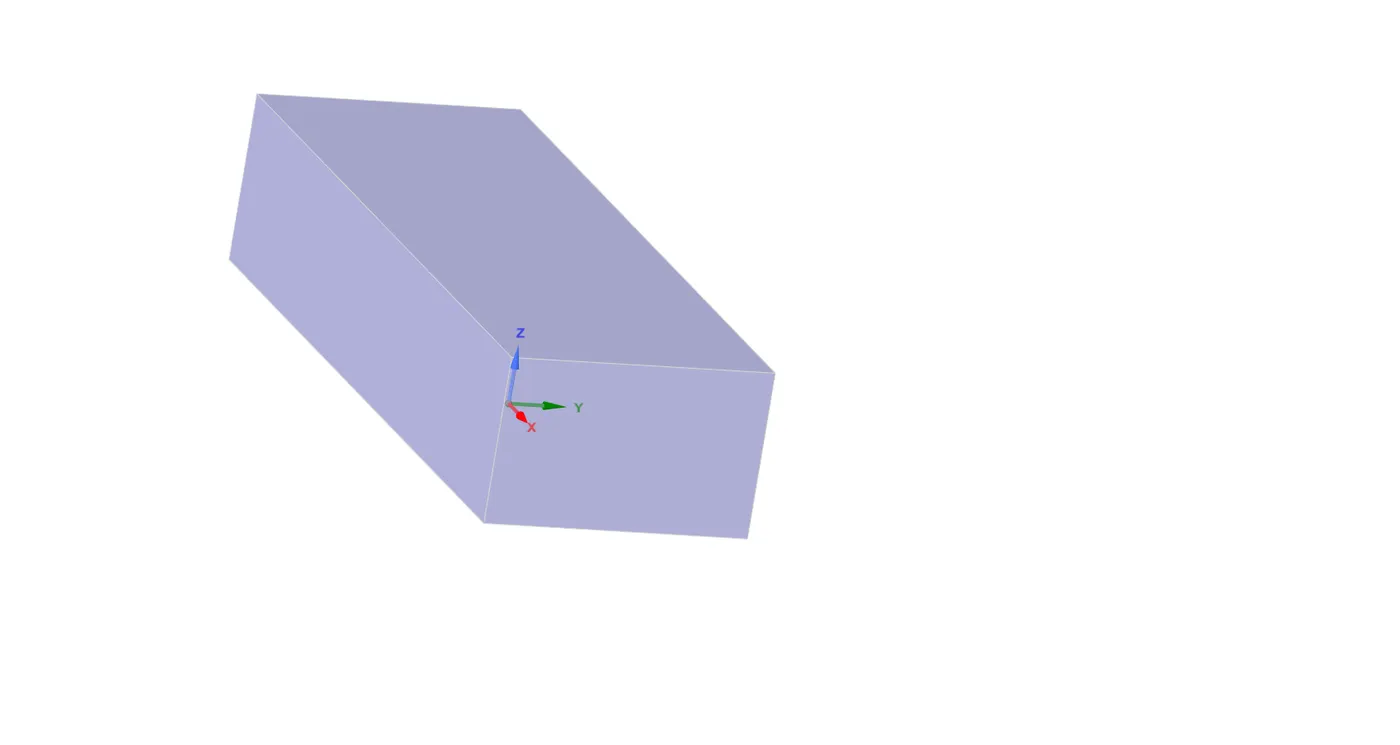
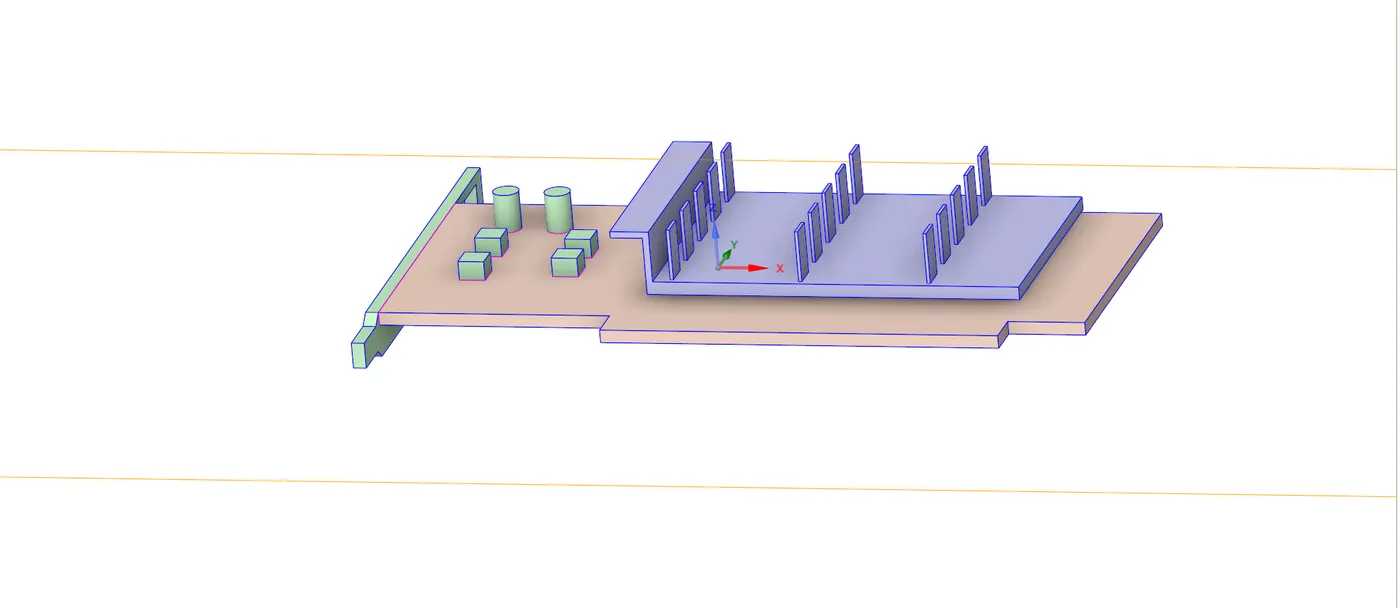
- The Geometry is opened in Spaceclaim and geometry check has been performed to locate extra edges.
- Share Topology has been performed to ensure proper connectivity between meshes in different components.
Meshing:
- Geometry was imported into meshing interface and Named Selection were given to respective components.
- Grid independence test was also conducted whose results has been disclosed at the end.
- contours that has been disclosed below belongs to refined mesh of element count 0.9 million.
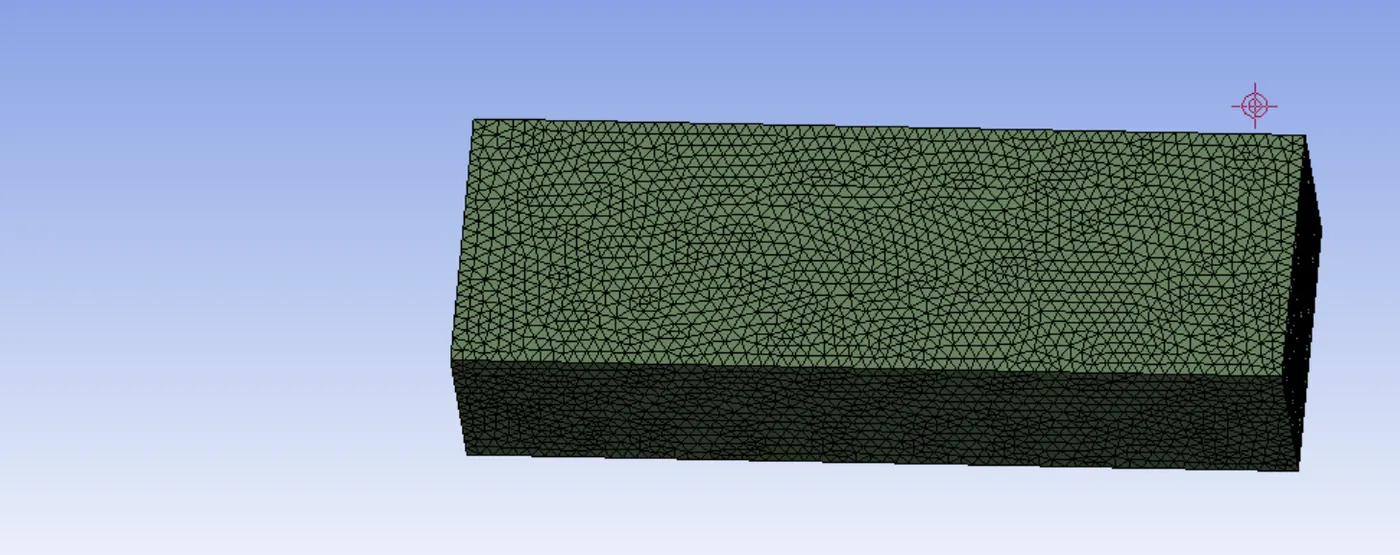
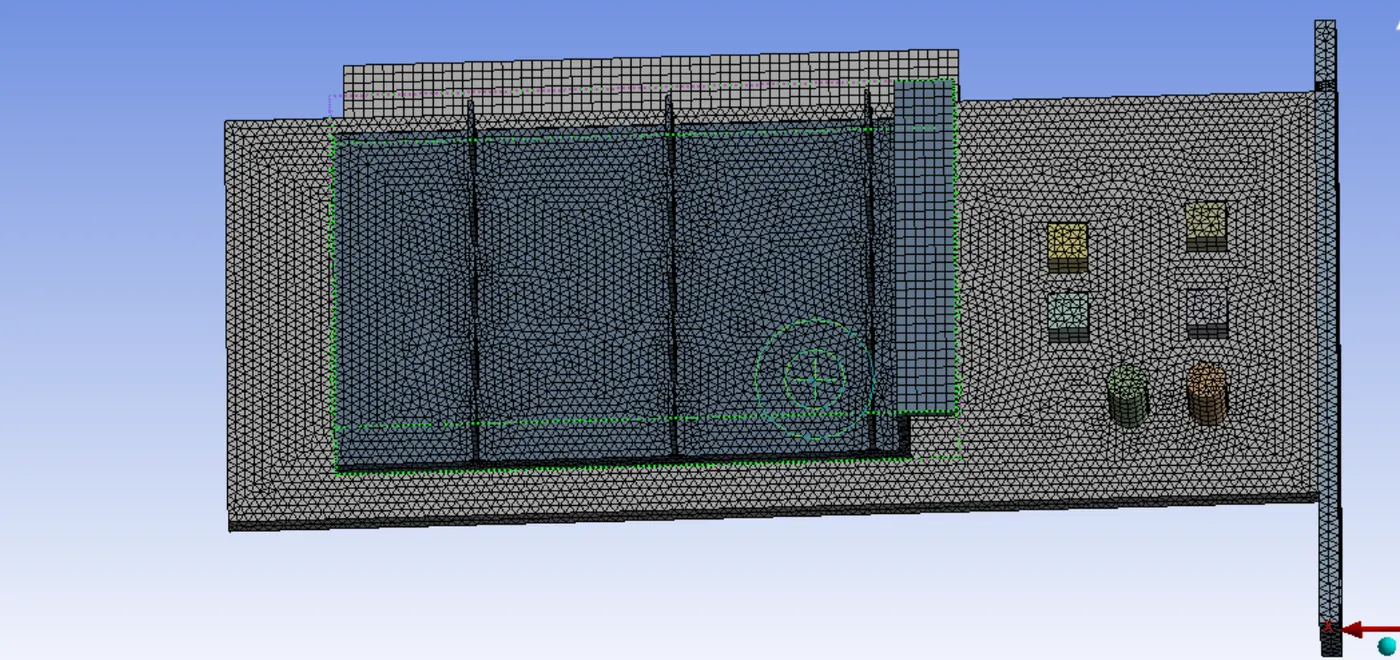
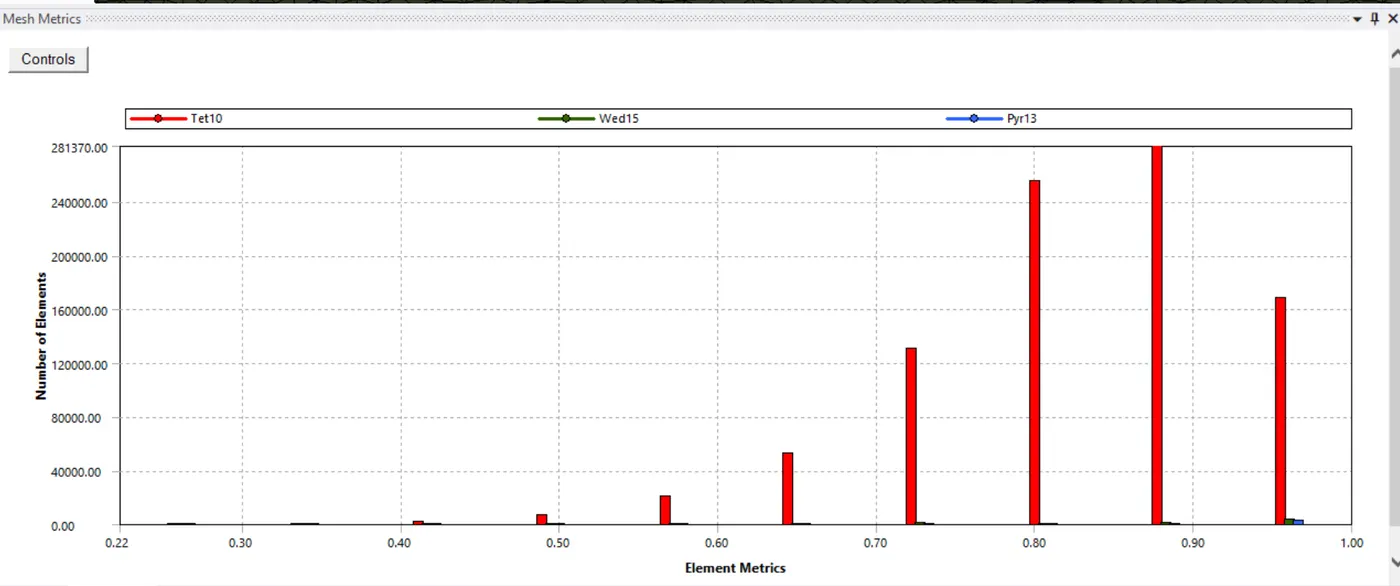
Microprocessor, PCB, and Fins are meshed with element size of 0.5 mm whereas domain was meshed with 6 mm.
Solver Setup:
- For solving this problem steady-state Pressure based solver has been used with Absolute Velocity formulation.
- Energy equation has been turned on along with K-omega turbulence model.
Materials:
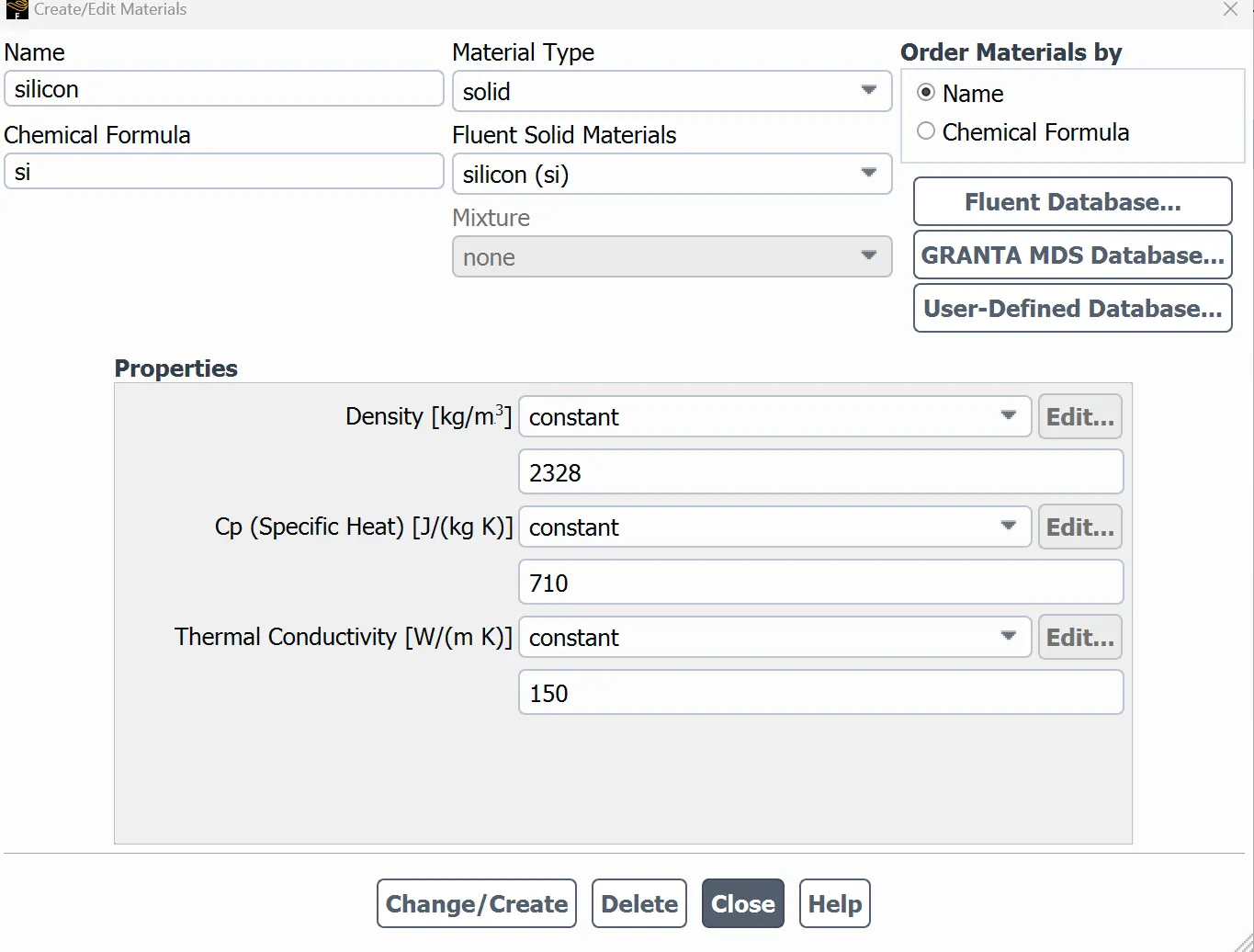
For Microprocessor:
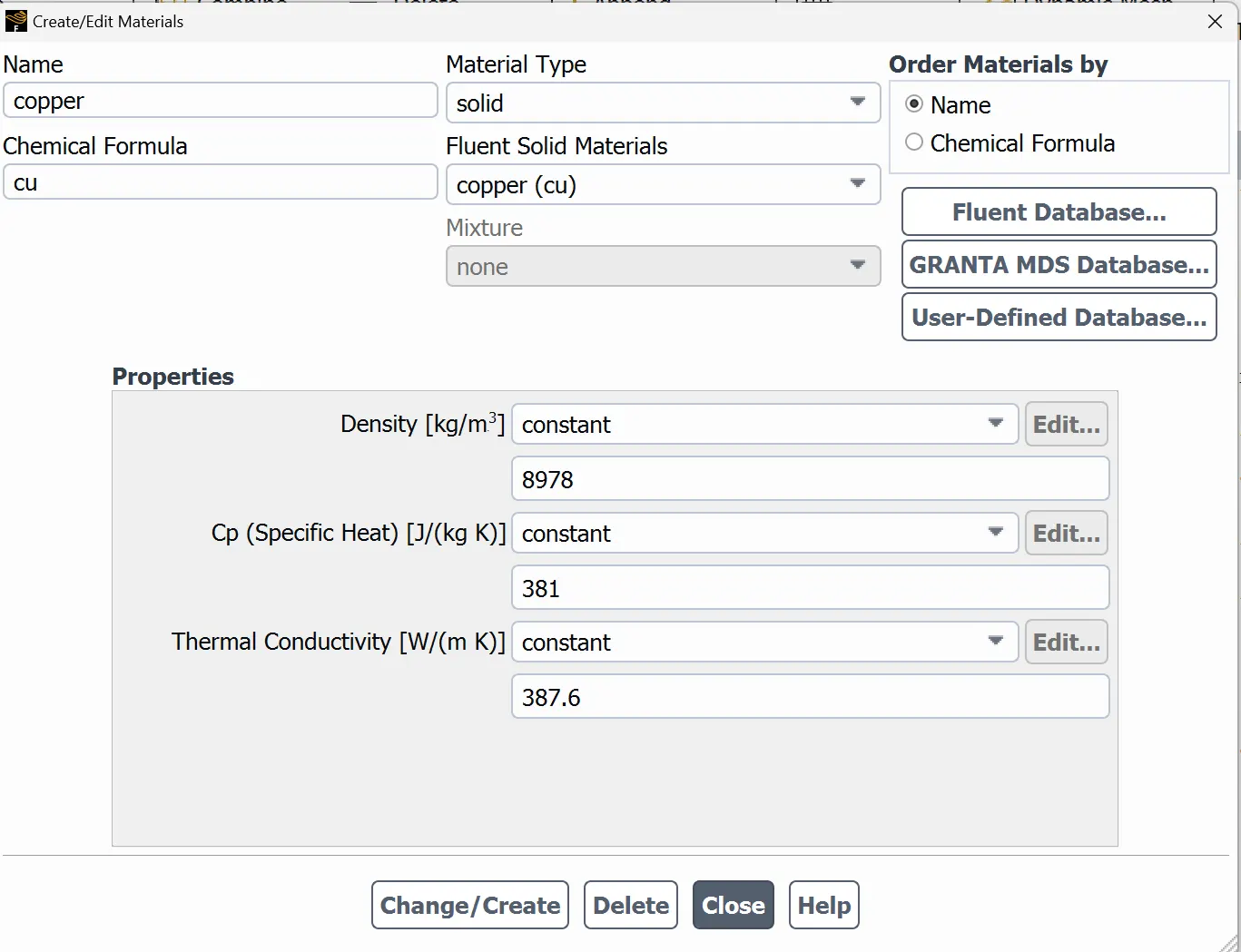
For Fins:
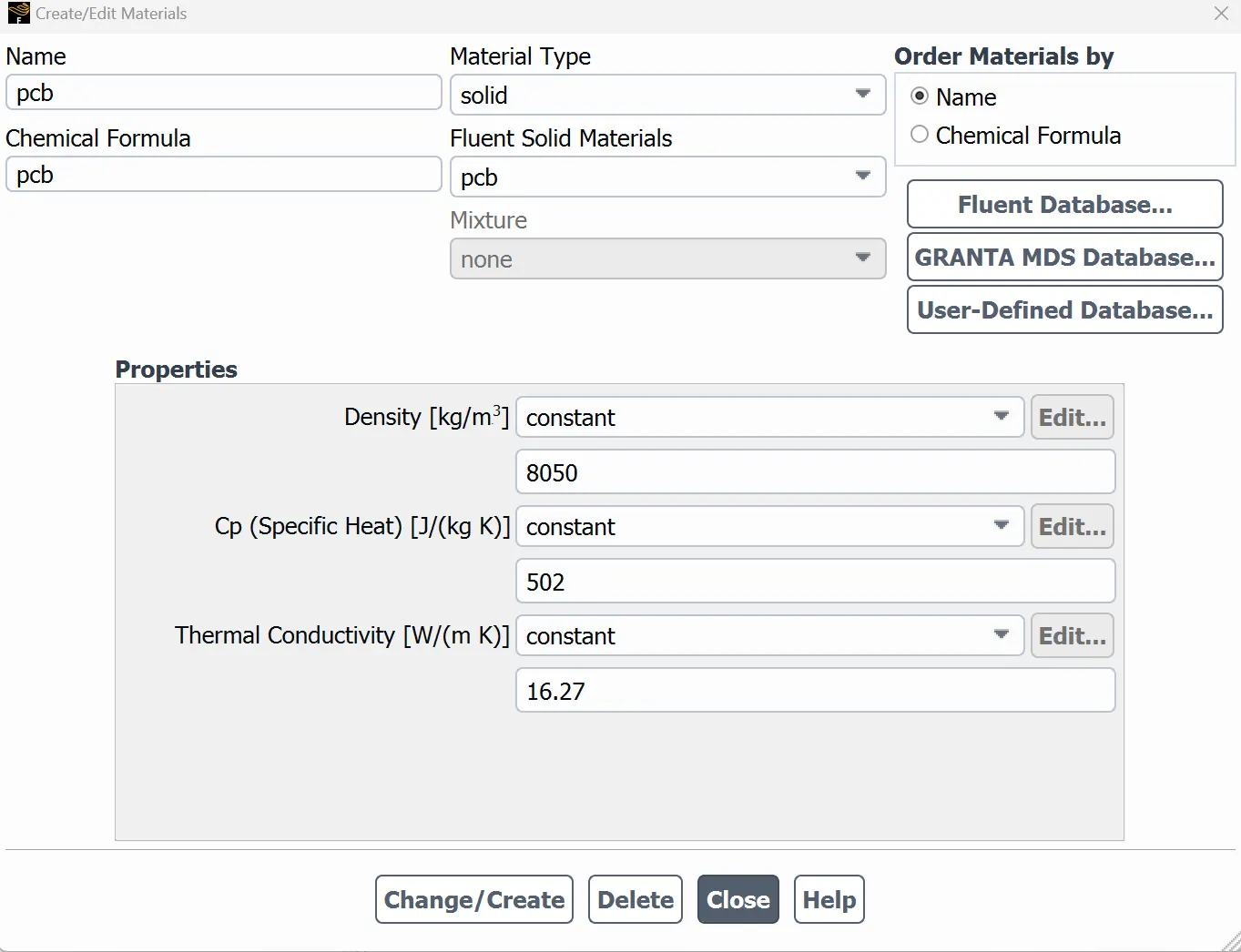
For Base:
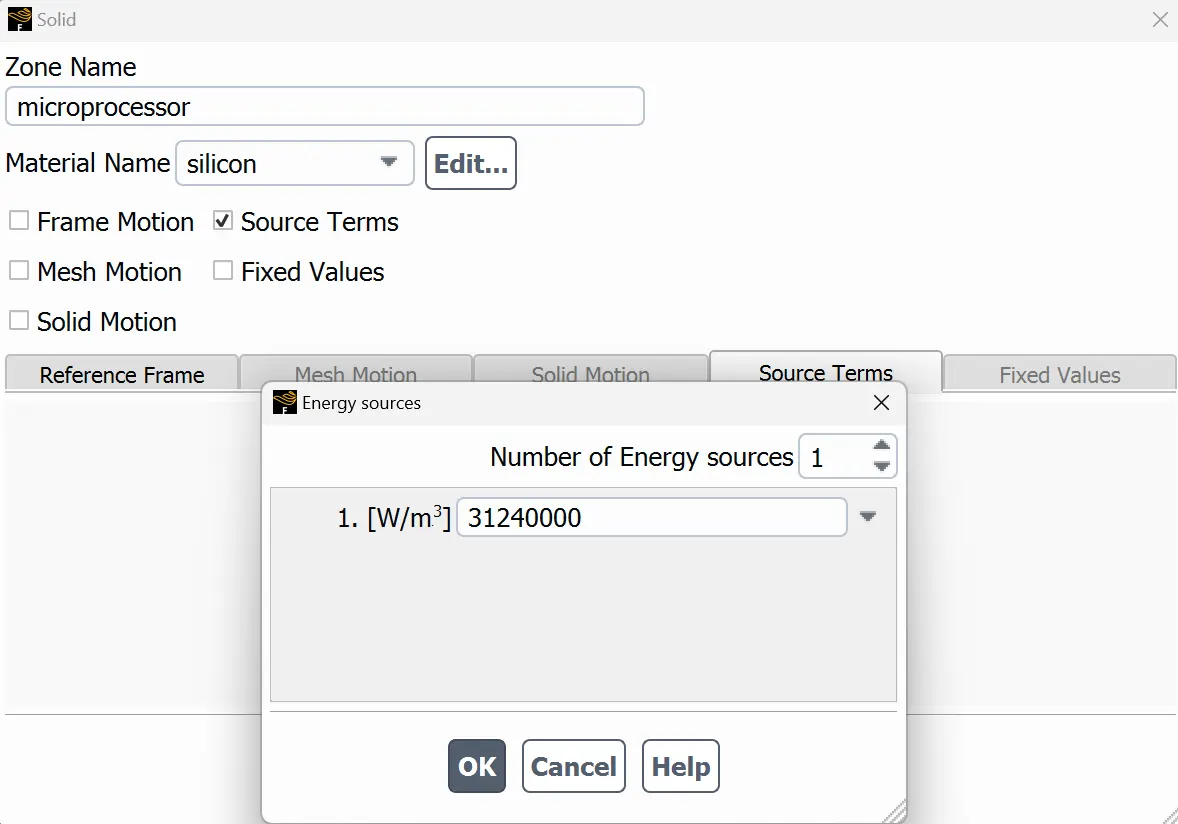
- It is assumed that the processor generates 2W of heat.
- The dimensions of processor is given as 8*8*1
- Then total heat generated per unit volume is 31240000 W/m^3.
Boundary Conditions:
Inlet :
Velocity Inlet
Temperature = 0K
Outlet:
Pressure outlet
Gauge Pressure = 0 Pa
Results:
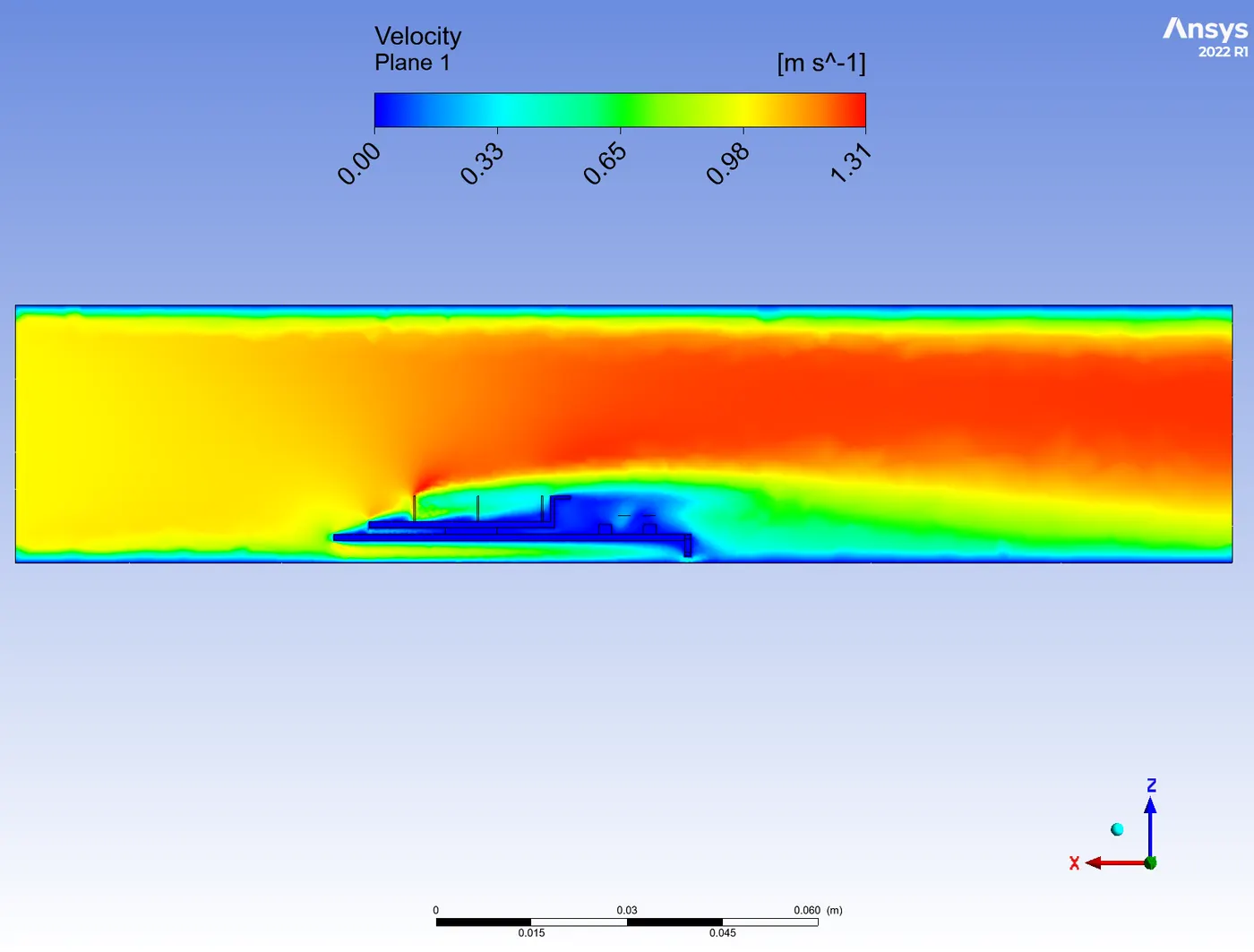
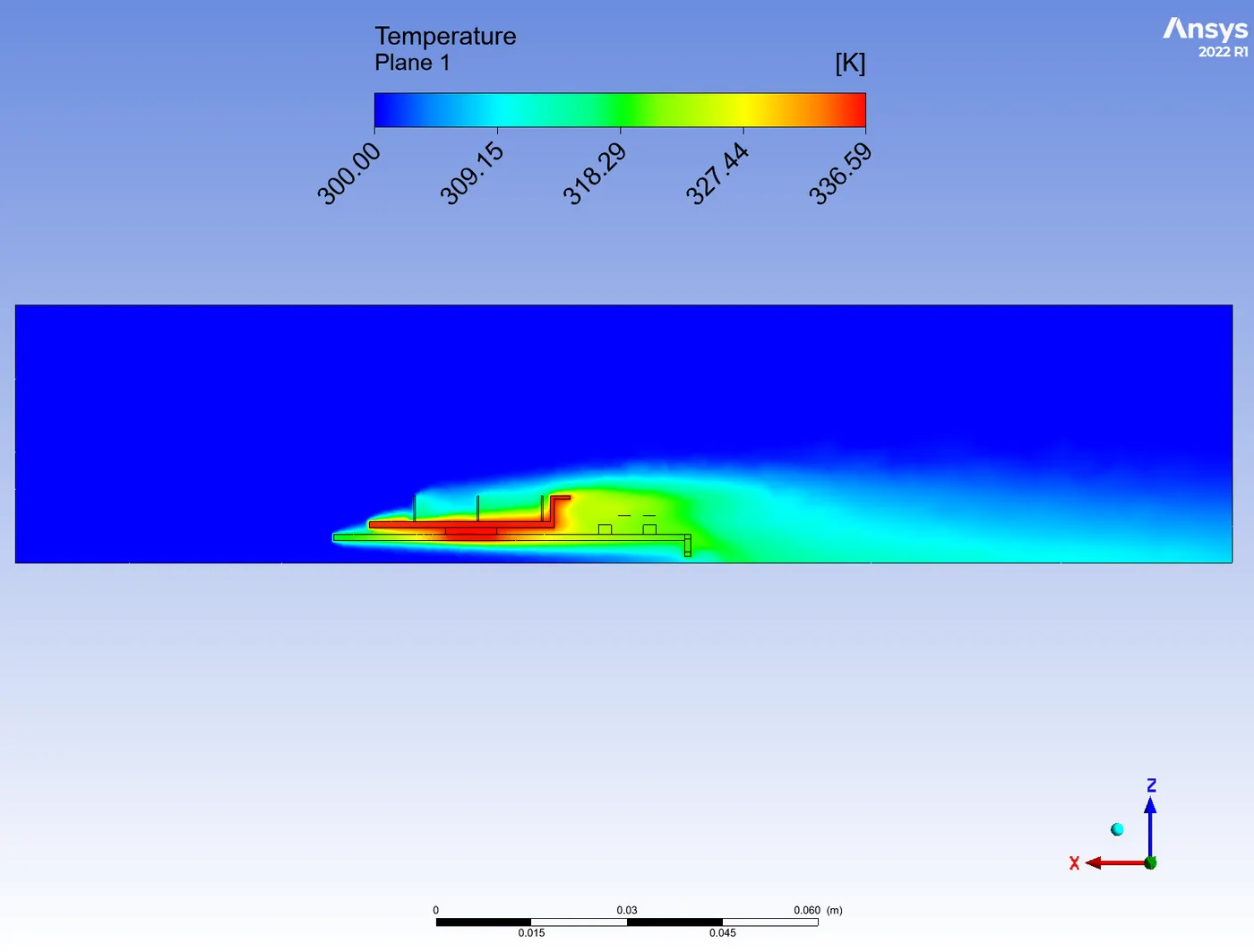
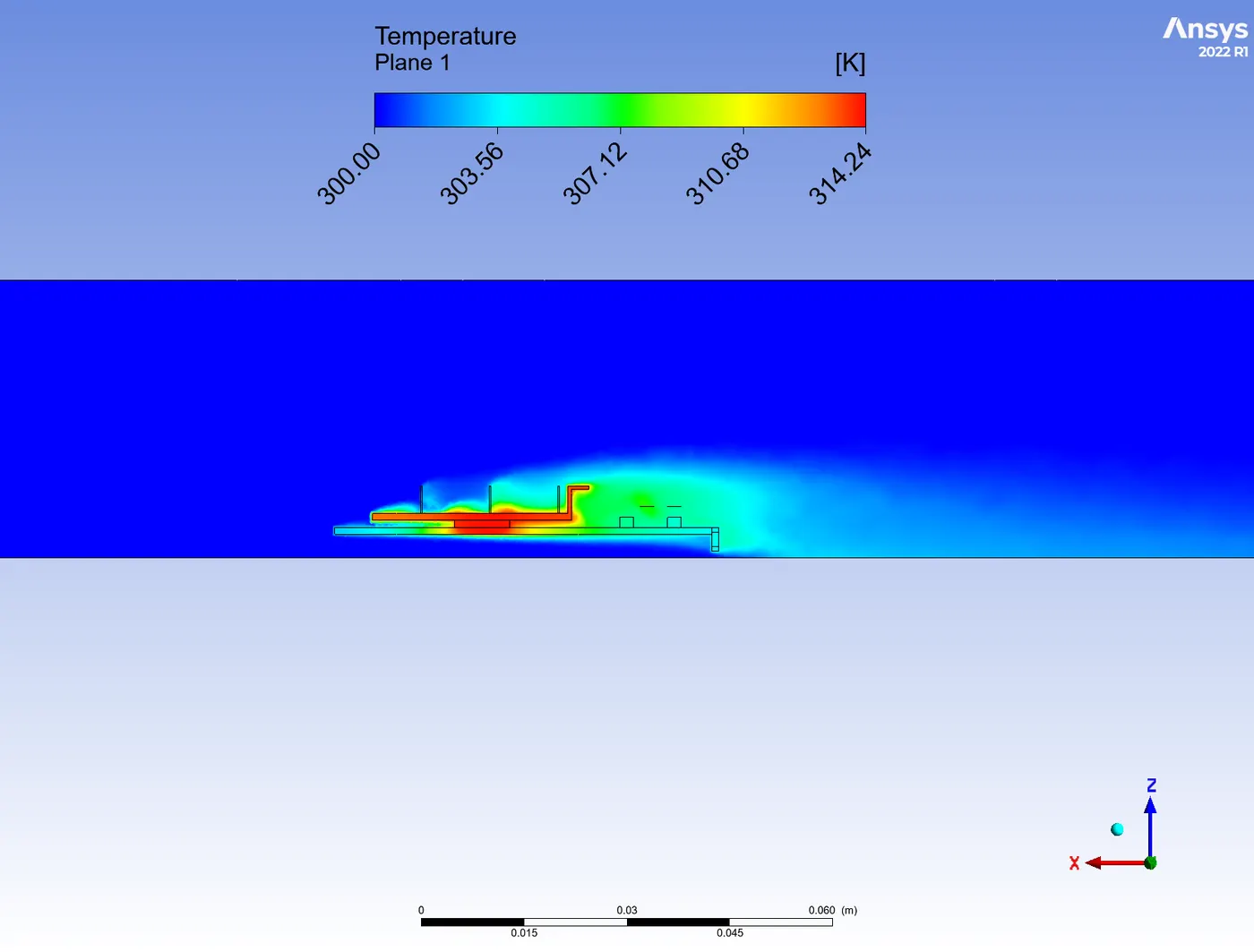
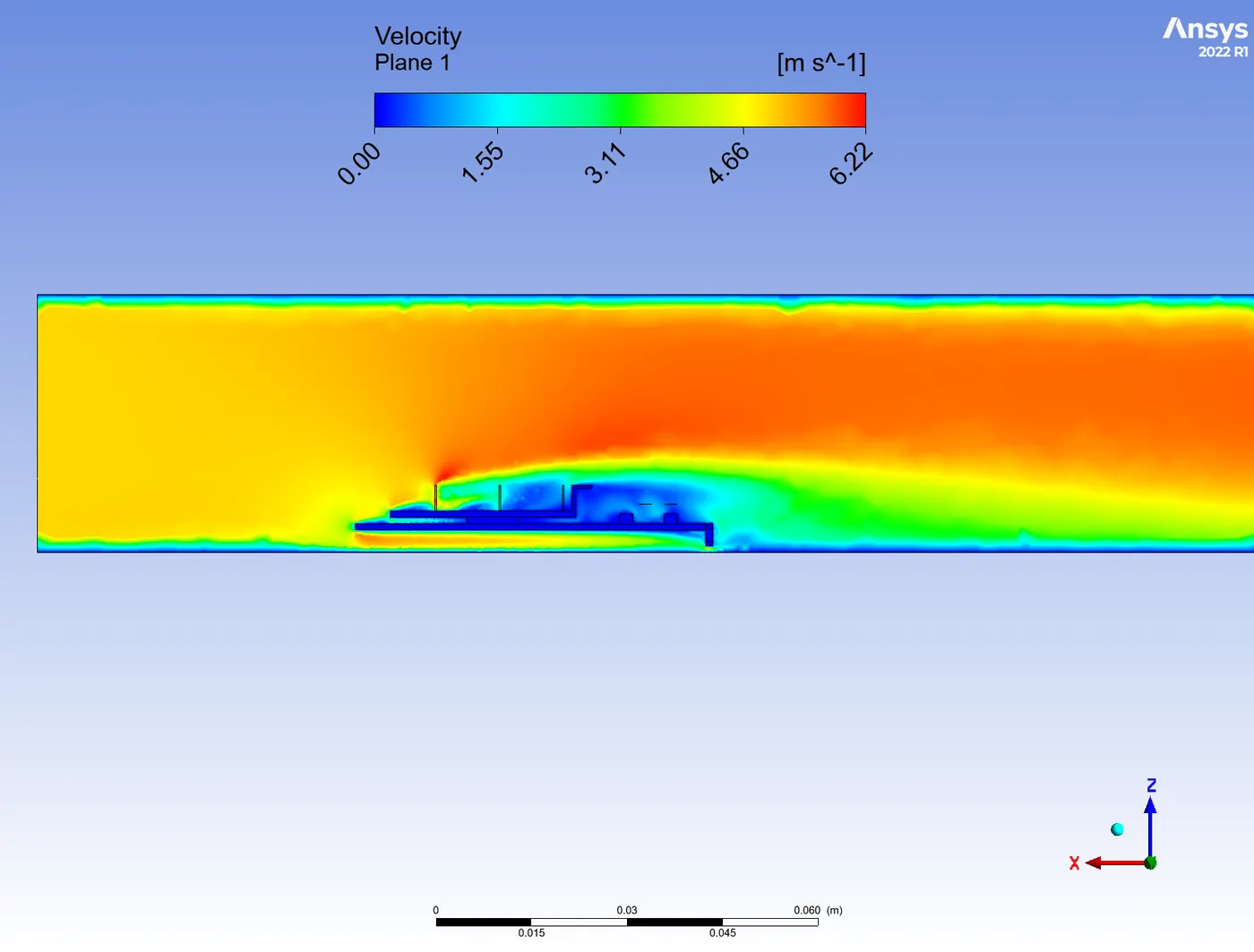
Velocity = 1m/s:
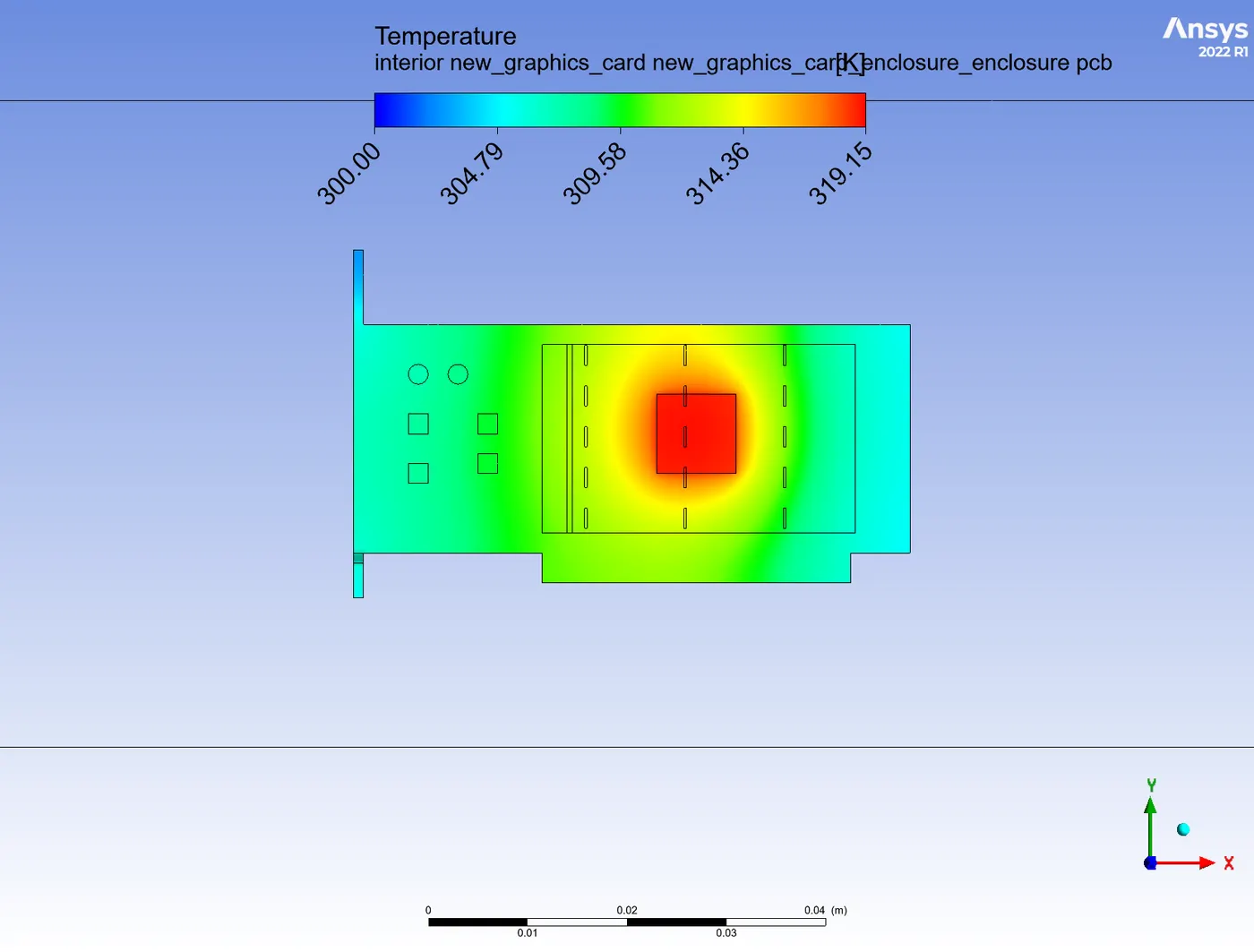
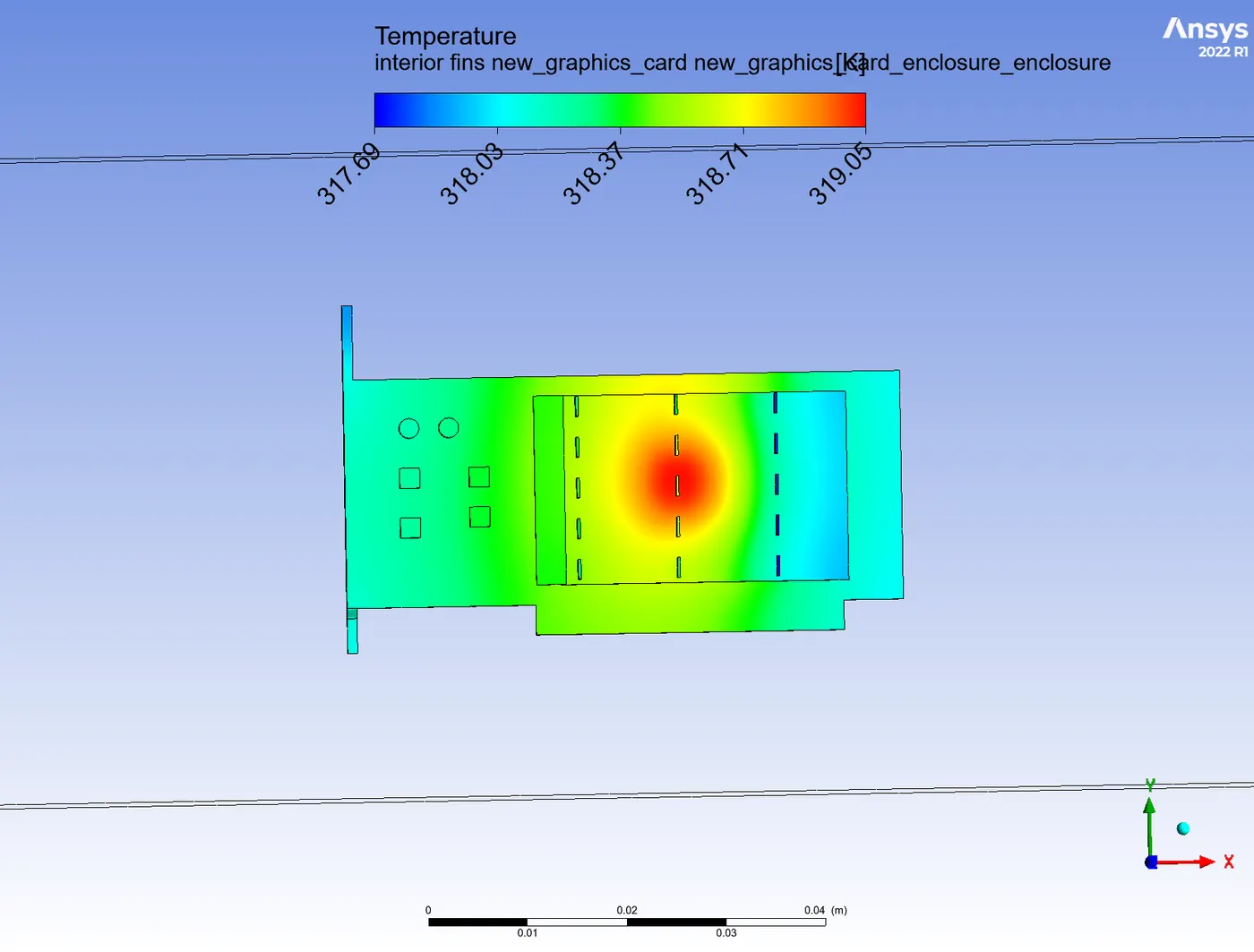
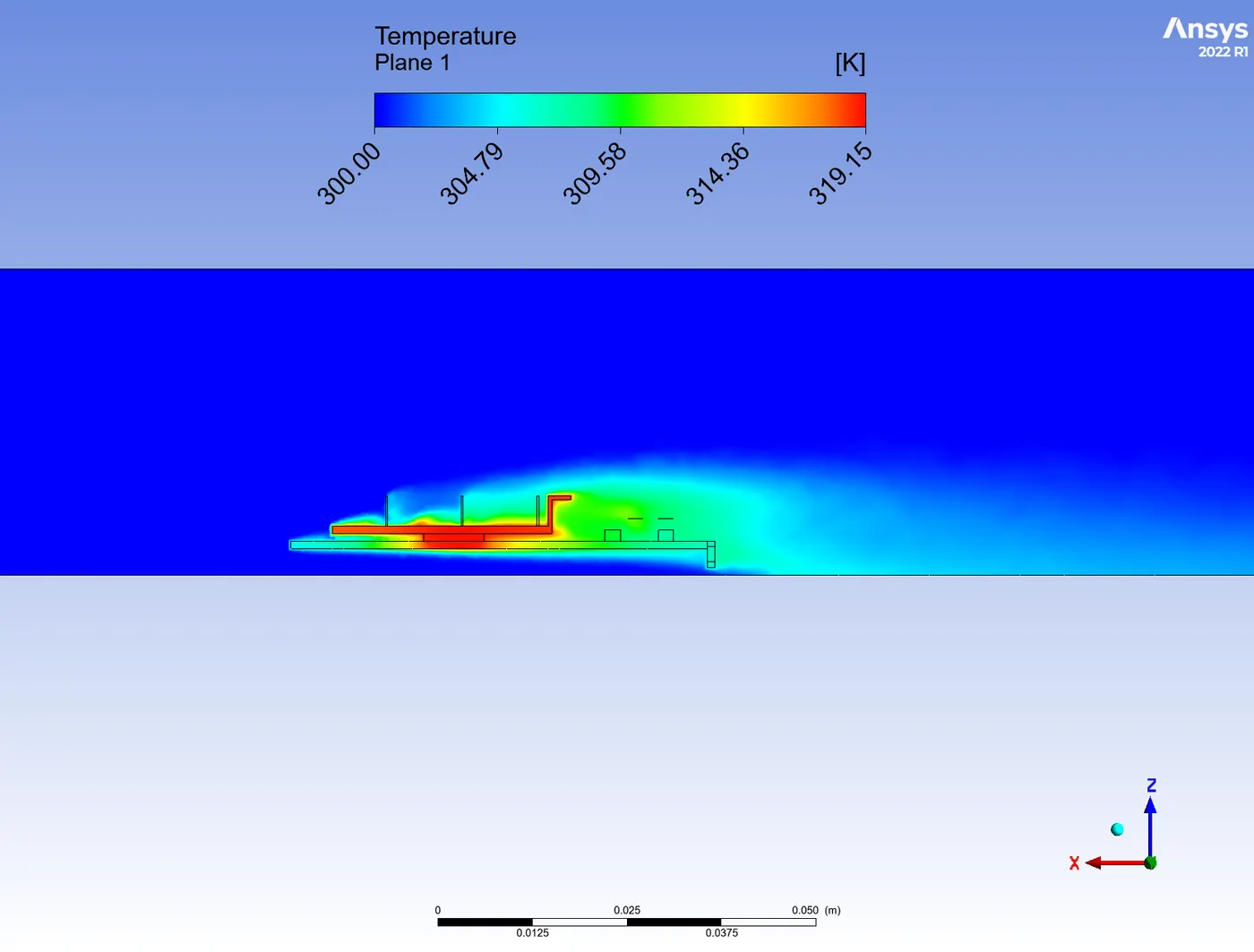
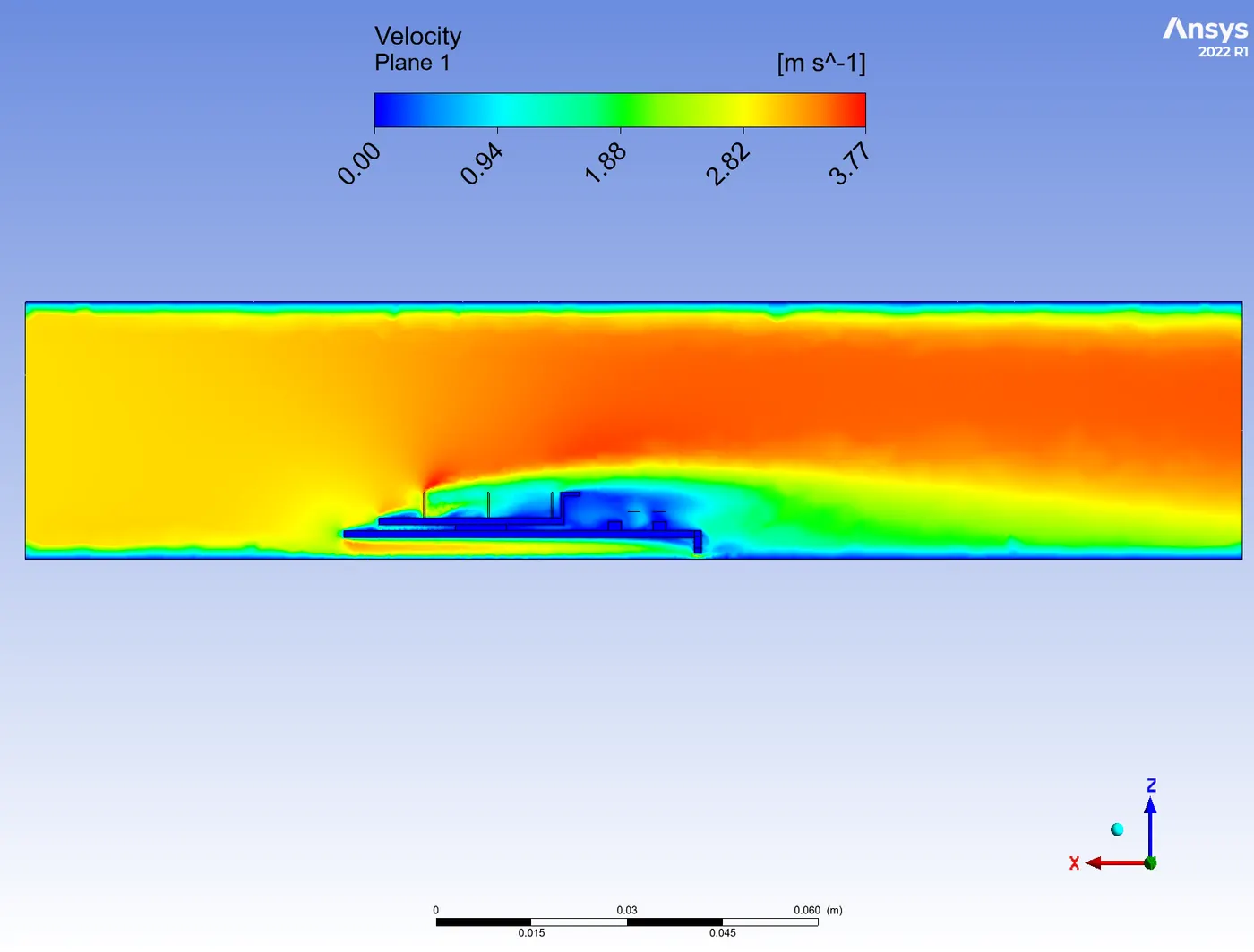
Velocity = 3 m/s
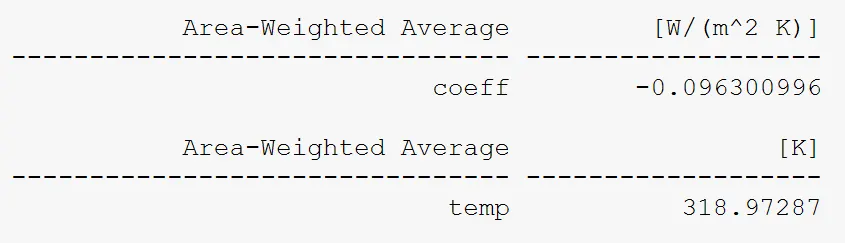
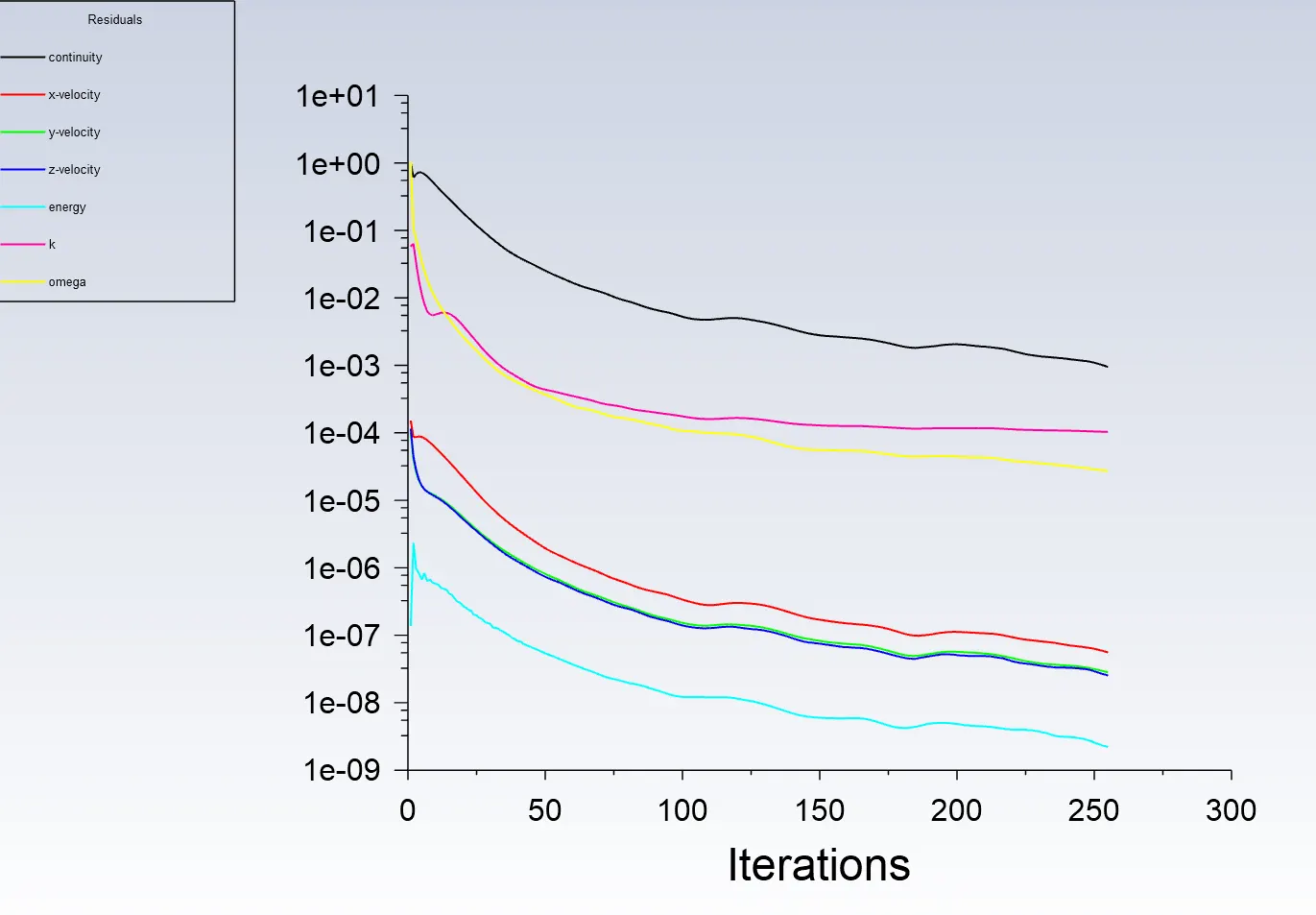
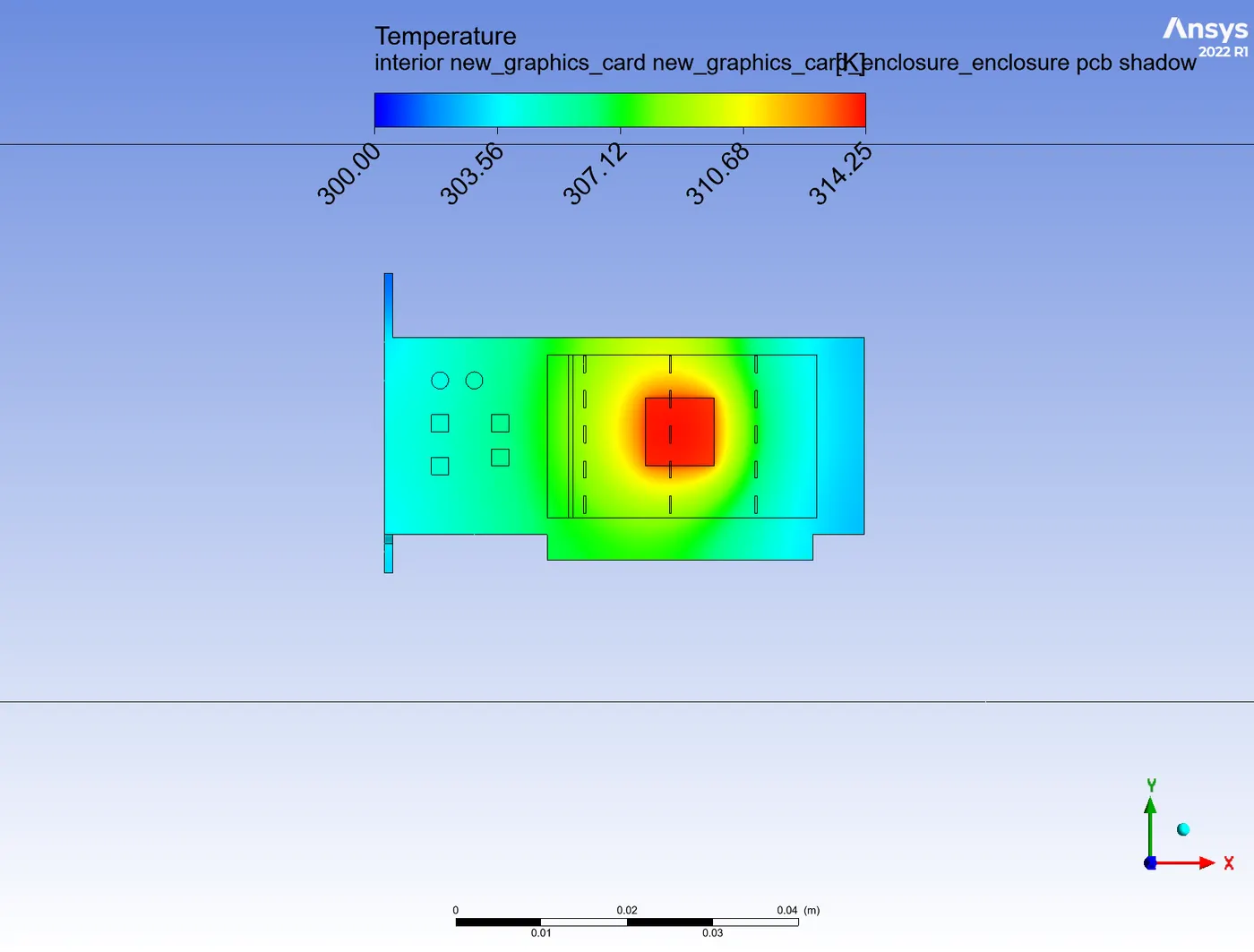
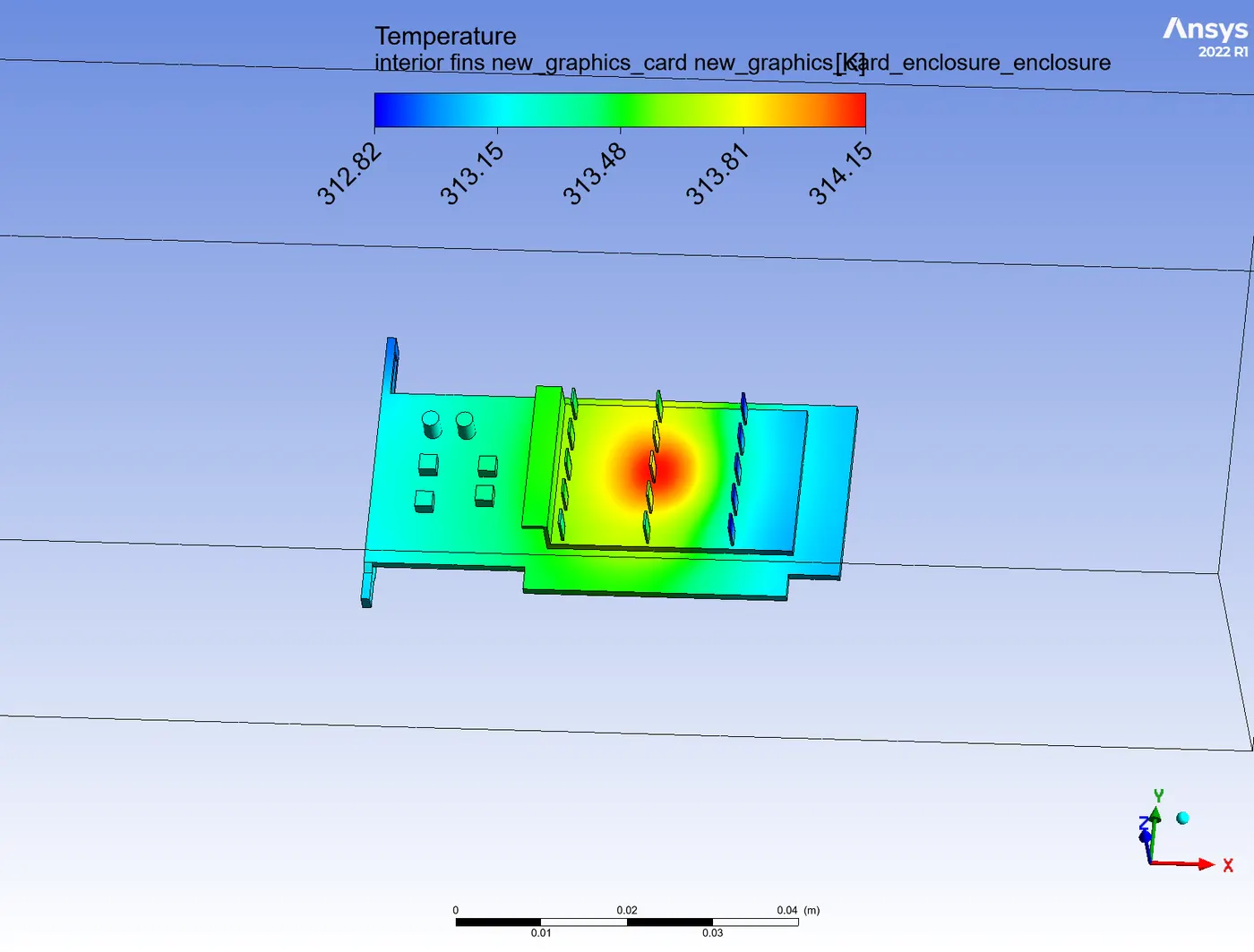
Velocity = 5 m/s
Grid Independance study

Conclusion:
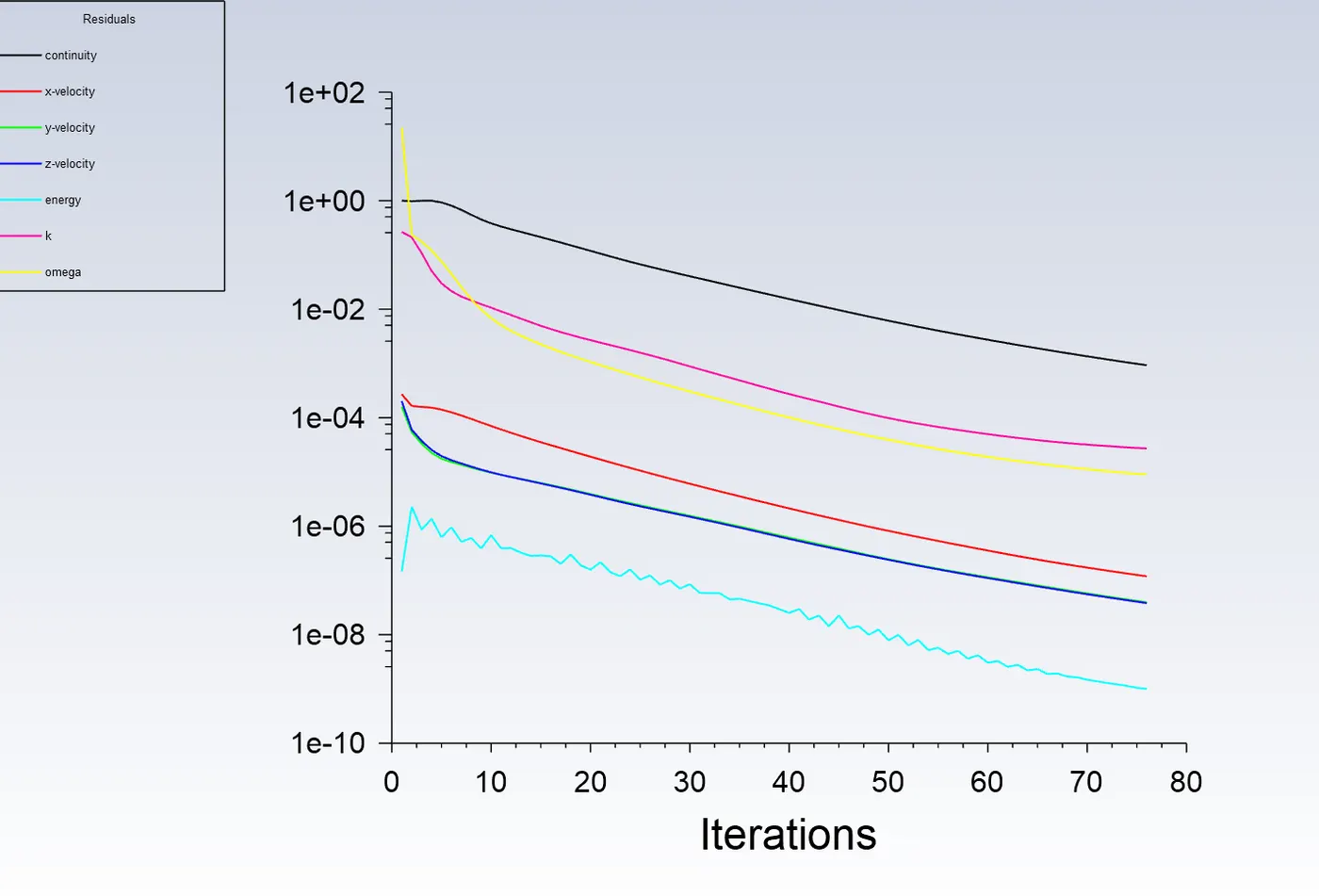
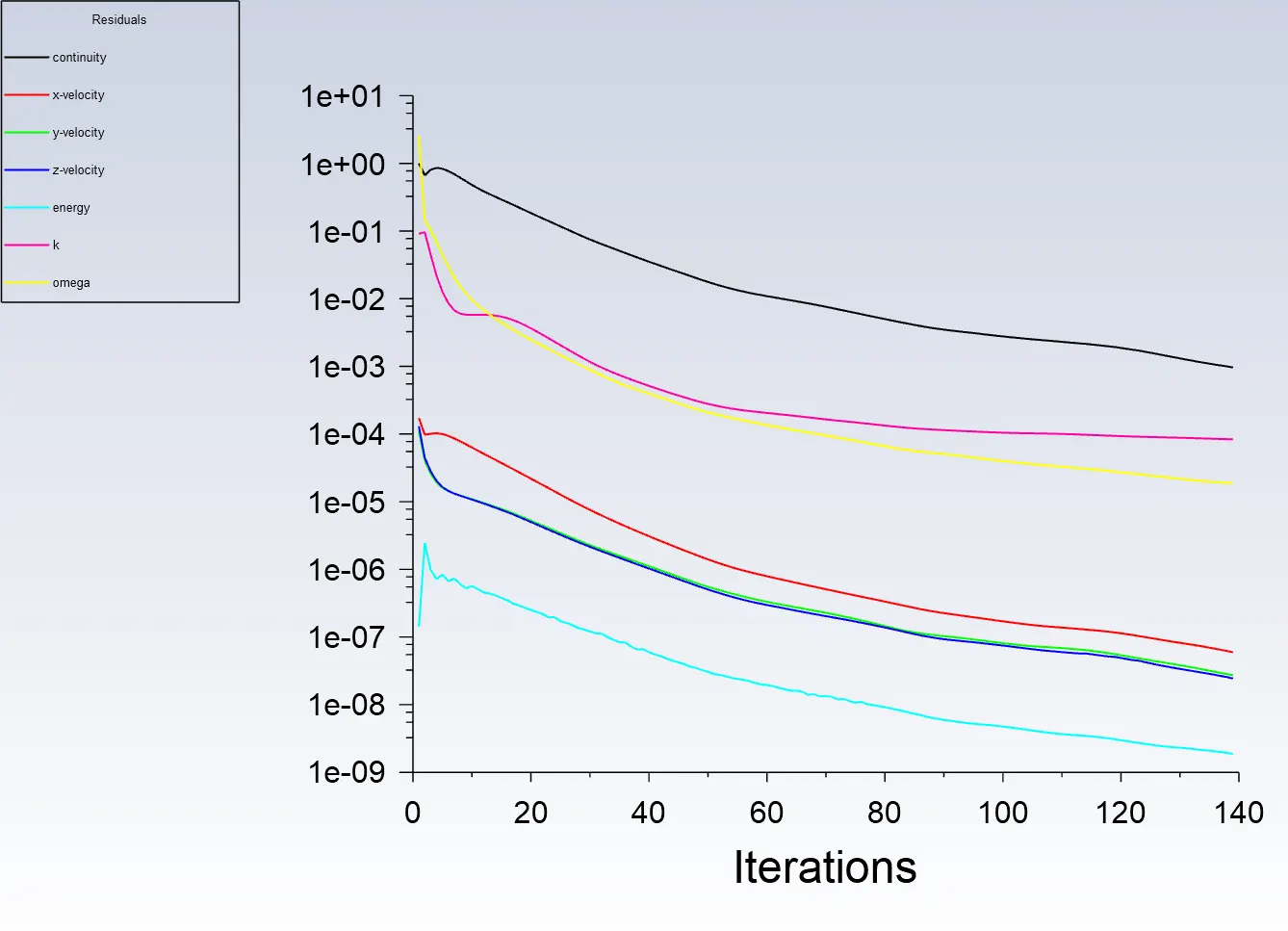
- The convergence of the solution can be observed by repetative nature in the residual plot.
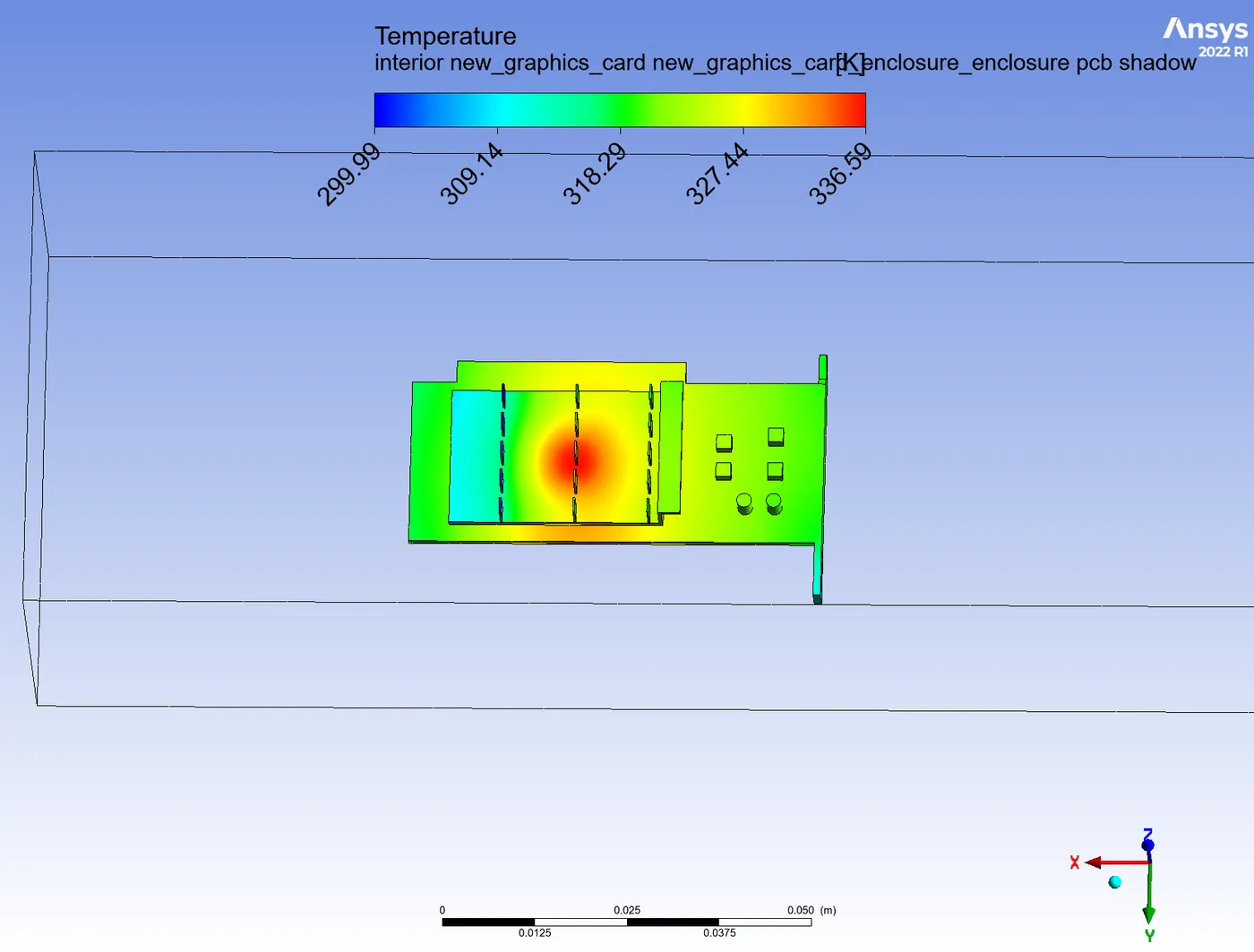
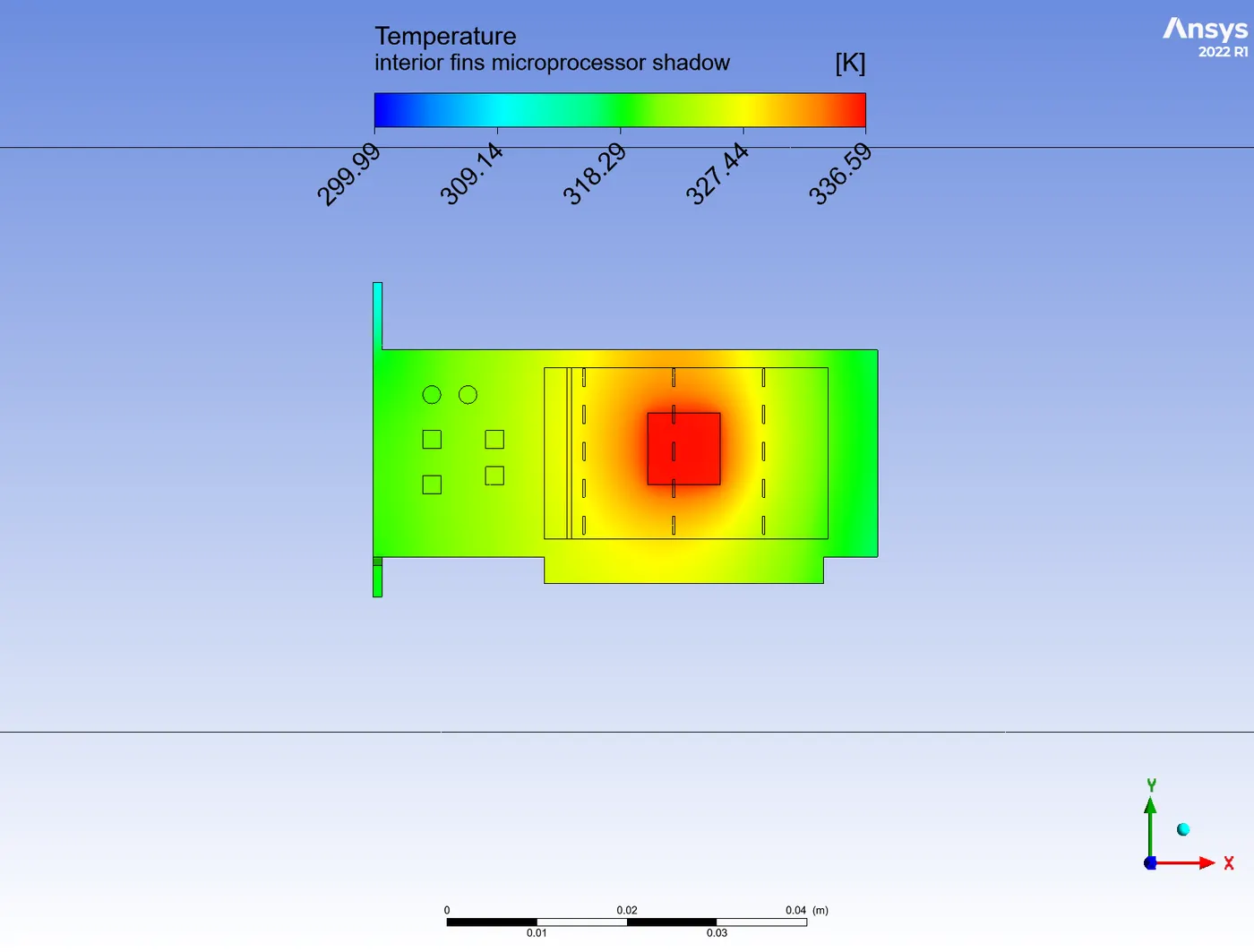
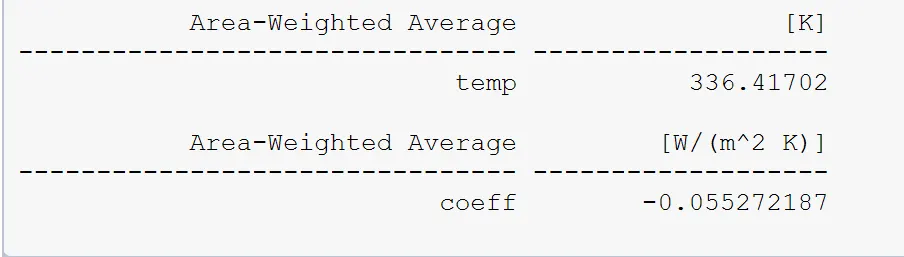
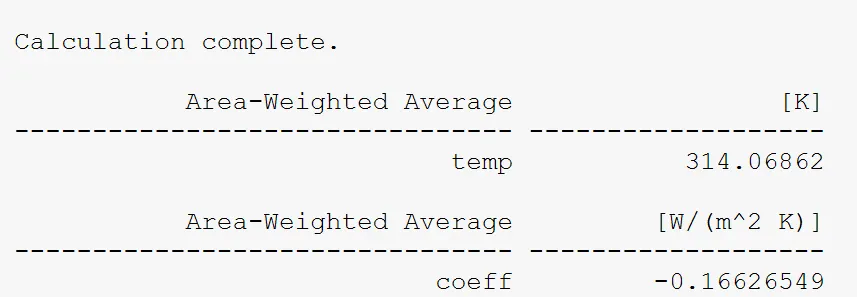
- It can also be seen that, as the velocity rises, the static temperature on the microprocessor decreases and heat transfer coefficient increases. which convey us that heat transfer rate is higher at higher velocities for given material.
- Conduction heat transfer occurs between microprocessor and fins whereas convection takes place between processor and air.
- It can also be seen that temeprature distribution on the fin base occurs in the direction of velocity. So fin base is a potential hotspot.
- It can also be seen that refined mesh gives more accurate result.
https://drive.google.com/file/d/19YRPs0Ur_YY3jhUMEuaWyHQa56MVhkyo/view?usp=sharing