Week-7 Challenge: DC Motor Control
I am online Student batch from EV - 16
1. A. Explain a MATLAB demo model named ‘Speed control of a DC motor using BJT H-bridge’.
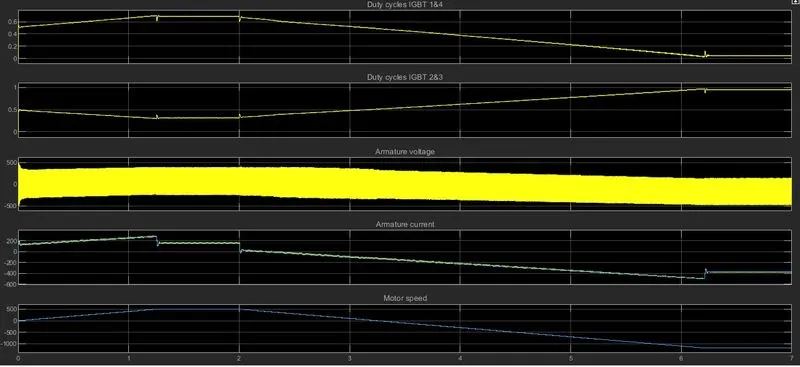
B. Comment on the armature current shoot-up from the scope results.
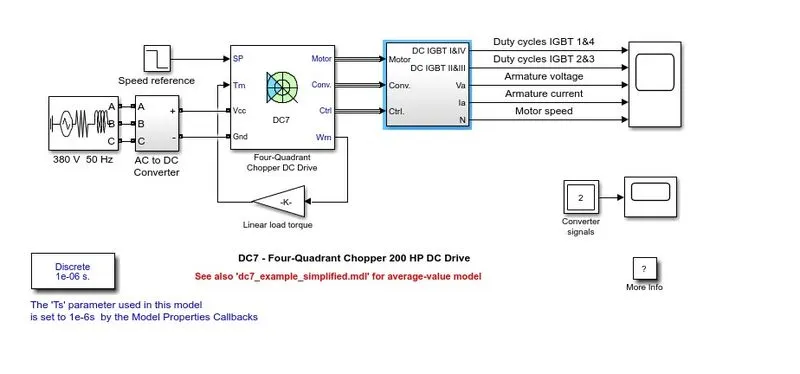
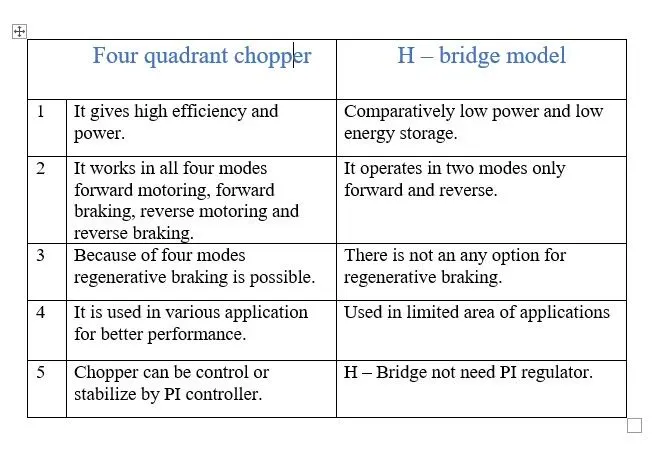
C. Refer to the help section of ‘The Four-Quadrant Chopper DC Drive (DC7) block’. Compare it with the H-bridge model
B)Comment on the armature current shoot-up from the scope results.
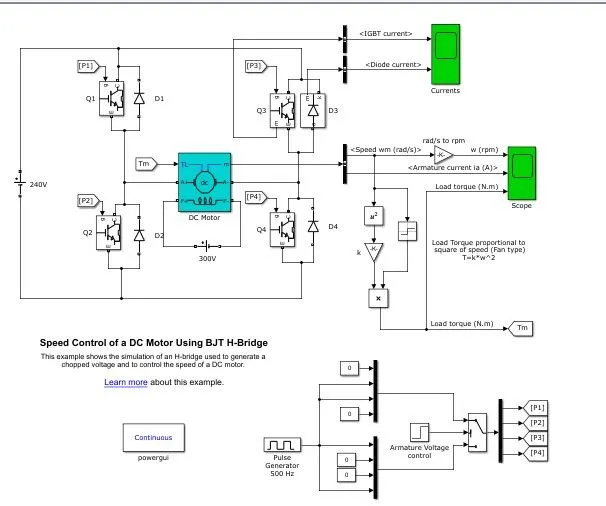
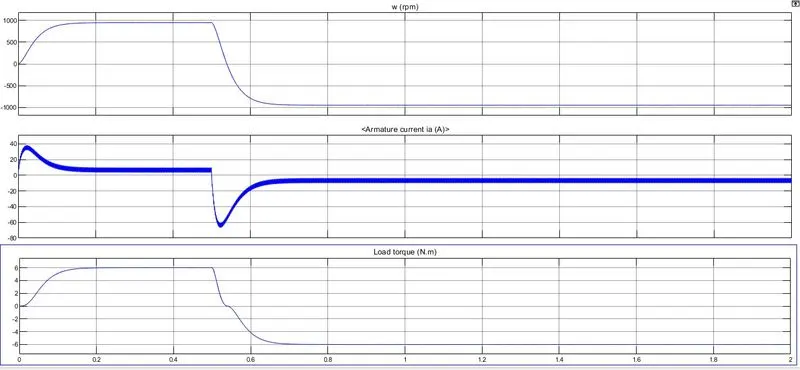
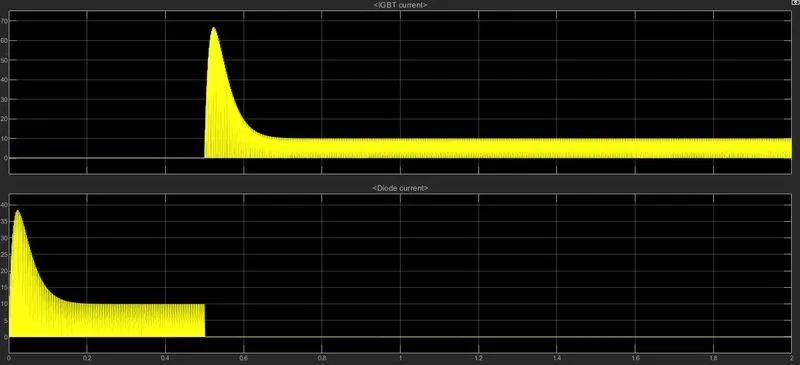
Here, speed control of dc motor using BJT H-bridge is derived. BJT is used for the current controlling of a motor or a device. As we see the diagram from the switch is connected with a diode. The switch Q3 and diode D3 are in operating condition at that time motor speed, torque and armature current are measured.
According to the graph when a diode is in forwarding bias it draws a high current and it is in forwarding motoring condition. Torque is proportional to speed and armature current. hence, as load torque increases the armature current increases simultaneously RPM increases till motoring condition.
As diode gets reverse biased motor acting as reverse motoring system current will flow in negative direction and torque will be less than one.
C)Refer to the help section of ‘The Four-Quadrant Chopper DC Drive (DC7) block’. Compare it with the H-bridge model.
2) Develop a 2-quadrant chopper using simulink & explain the working of the same with the relevant results.
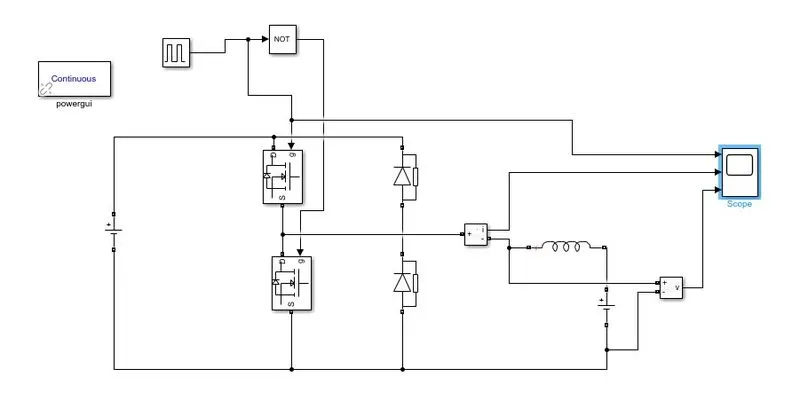
here as a dc supply V = 24v and the secondary supply is 12v. as you saw two-quadrant mode we always get a positive supply voltage because of a freewheeling diode. as diode conducting and gets froward bias the input voltage is equal to the output voltages. current will be positive as the chopper is on. two MOSFETs are conducted simultaneously otherwise it will be short-circuited.
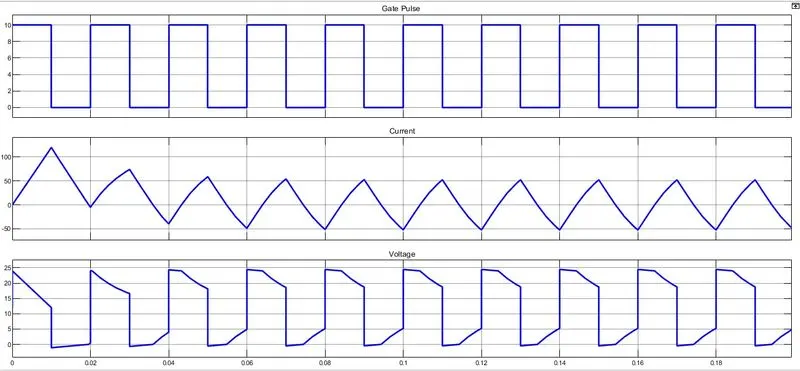
This is the gate pulses, current and voltage waveform of a two-quadrant chopper.
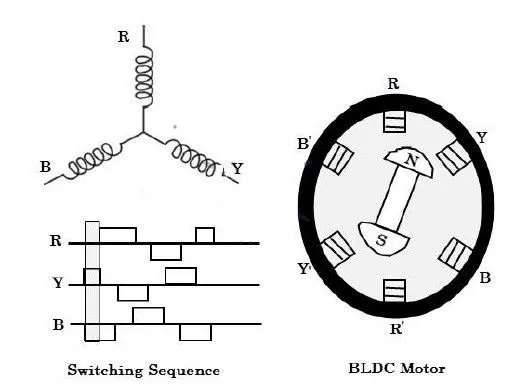
3) Explain in a brief about operation of BLDC motor.
BLDC motor works on the principle similar to that of a Brushed DC motor. The Lorentz force law states that whenever a current-carrying conductor is placed in a magnetic field it experiences a force consequence of reaction force, the magnet will experience an equal and opposite force. In the BLDC motor, the current-carrying conductor is stationary and the permanent magnet is moving. When the stator coils get a supply from the source, it becomes an electromagnet and starts producing the uniform field in the air gap. Though the source of supply is DC, switching makes to generate an AC voltage waveform with a trapezoidal shape. Due to the force of interaction between electromagnet stator and permanent magnet rotor, the rotor continues to rotate With the switching of windings as High and Low signals, corresponding winding energized as North and South poles The permanent magnet rotor with North and South poles align with stator poles which causes the motor to rotate.
Advantages of BLDC motor
-Less overall maintenance due to the absence of brushes.
-It has no mechanical commutator and associated problems.
-Higher speed range and lower electric noise generation.
-Less electromagnetic interference.
-High efficiency and high output power to size ratio due to the use of a permanent magnet rotor.
-Reduced size with far superior thermal characteristics.
Disadvantages of BLDC motor
-These motors are costly.
-Requires complex drive circuitry.
-Need for additional sensors.
-Electronic controller required to control this motor is expensive.