Week-6 Challenge: EV Drivetrain
I am a student of online EV batch - 16
1) Which types of power converter circuits are employed in electric and hybrid electric vehicle?
There are four types of power converters
1 - AC to AC converter (cycloconverter)(convert fix AC voltages into variable DC voltages.)
2 - DC to DC converter (chopper) (convert fix DC voltages onto Variable DC voltages.)
3 - DC to AC inverter (convert fix DC voltages into Variable AC voltages.)
4 - AC to DC Rectifier (convert fic AC into Variable DC voltages.)
In an Electric vehicle's battery pack contains DC voltages so to convert into variable voltages DC to DC converter is used.
Apart from that, it is also used to step down the voltage for regenerating purposes and to distribute power.
If an onboard charger is available, convert AC to DC rectifier needs to supply or charge the battery. If a vehicle has the option of a DC fast Charger then DC to DC converter is also used for fast charging.
DC to AC converter is used when there is a need to supply power to the motor. From the battery pack, we can supply the motor.
According to the vehicle system requirement converters are used for a particular operation to run it.
2) An Electric Vehicle's powertrain with 72V battery pack in shown in the diagram below. The duty ratio for acceleration operation is 'd1' and for the braking operation the duty ratio is 'd2'.
The other parameters of the electric vehicle is given below,
Motor and Controller Parameters:
Rated Armature voltage= 72 V
Rated armature current= 400 A
Ra= 0.5Ω, KΦ= 0.7 Volt second
Chopper Switching frequency= 400 Hz
The vehicle speed-torque characteristics are given by the below equation

What is EV steady state speed if duty cycle is 70%?
Va = 72 v
Ra = 0.5 ohm
Ia = 400 A
`kphi` = 0.7 v/s
f = 400Hz
Tv = 24.7 + (0.0051)w^2
Duty cycle = 70%
output voltage = 72*70
= 50.4v
`w = v/(kphi)-(Ra)/(kphi^2)*T`
`T = (v*kphi)/(Ra)-(kphi^2)/(Ra)*w`
`T = (50.4*0.7)/(0.5)-(0.7)^2/0.5*w`
T = 70.56 - 0.98w
`Tv = 24.7 + (0.0051)w^2`
`34.7 - 0.0051w^2 = 70.56 - 0.98w`
`0.0051w^2 - 0.98 w - 45.86`
x = w
`x=-b+-(sqrtb^2-sqrt4ac)/(2a)`
`x=-0.98+-(sqrt0.98^2-sqrt4*0.0051*45.86)/(2*0.0051)`
`x=-0.98+-(sqrt0.9604-sqrt0.9355)/(0.0102)`
`x= w= 80.62 (rad)/sec`
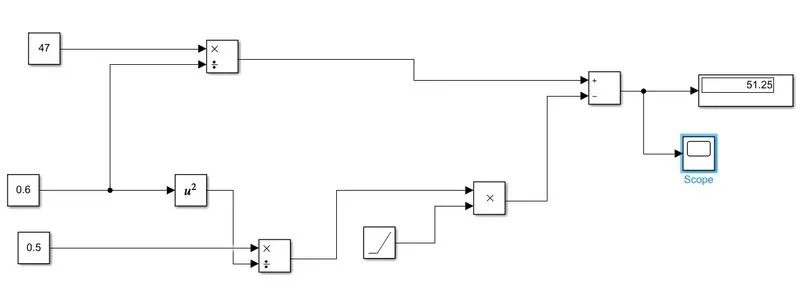
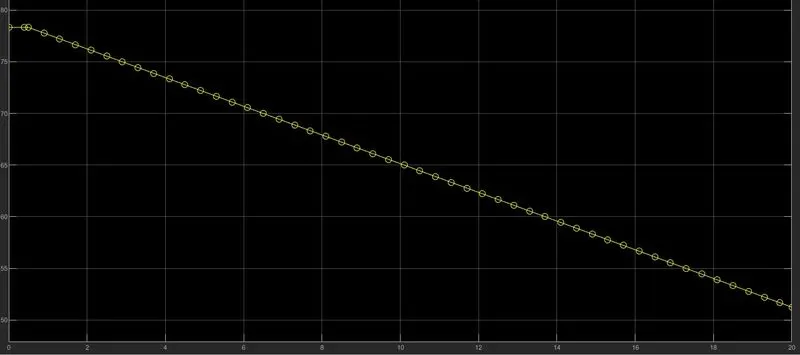
3) Develop a mathematical model of a DC Motor for the below equation using Simulink.
ωω= V/Kϕϕ -Ra/Kϕϕ^2 .T
4) Explain in brief about author’s perspective.
In the very first part author elaborates on how technology changed according to time and parts of the system in EV like DC motor, Lead-acid battery and connector controllers replaced by BLDC or induction motor, Lithium-ion battery and contactors.
Firstly, it looks like the author has an inclination toward Induction motor. there is a difference between the two motors explained very well and how induction motor construction is better than another one. In addition, the performance, advantage of induction motor, possibilities of the machine where it gives full efficiency and limitation all are discussed ver well. Apart from that author gave a detailed explanation of Brushless dc motor working, construction, positive aspects and limitations of the motor.
Secondly, most EV manufacturing companies use BLDC motors according to the various Technology in motors only two companies Tesla and General Motors are using Induction motors is limited car models.
Thirdly, both motors are used differently according to the perspective of making vehicle. induction motor control is complex and hard to understand whereas BLDC is easy. The author is in big confusion and cannot decide which is better to use in EVs.
BLDC motors dominate in the industry of hybrid car manufacturing units. and Induction motor rule for high performance in pure electric vehicles. In the last author is in doubt that how parallelly will work in future because the hardware is common for both. If hybrids are more electrically intensive and increase the performance level then it is really challenging.