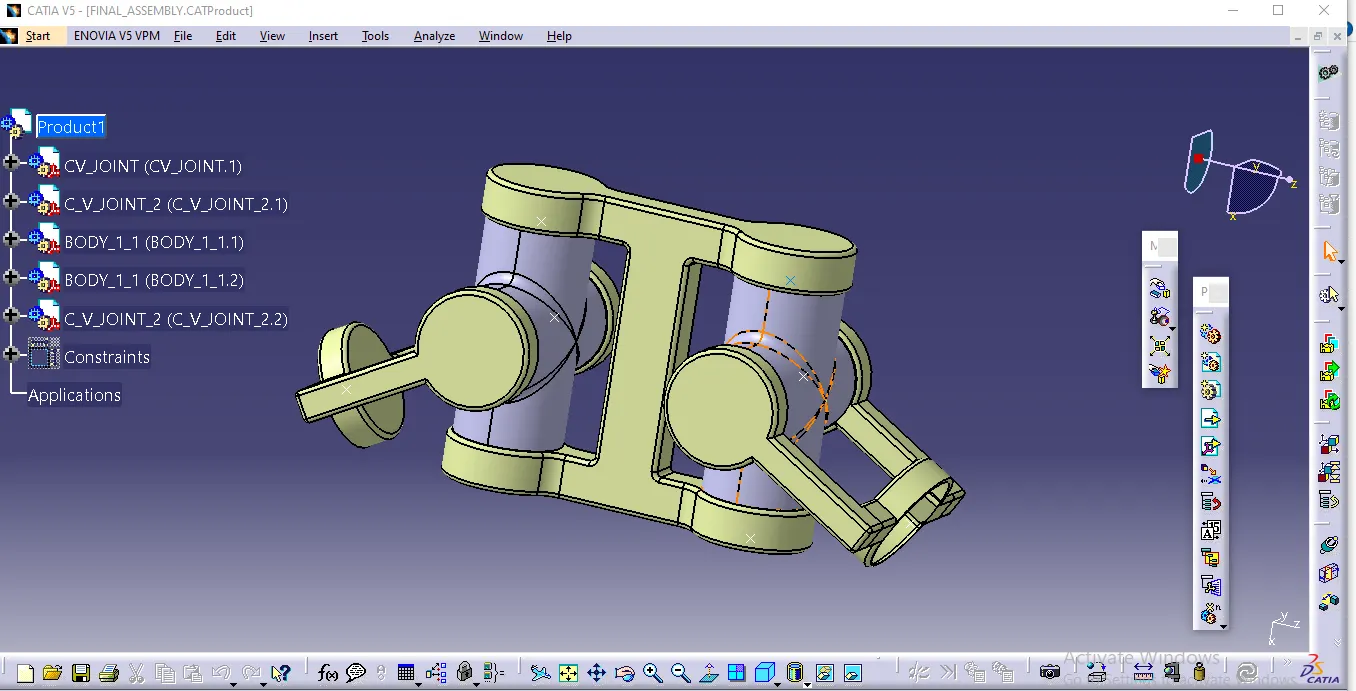
Week 7 Challenge - Assembly Workbench
OBJECTIVE:- To construct the CV joint components and quick return mechanism in part work bench and assemble them in accordance with all the given instructions.
INTRODUCTION:-
a) Quick Return Mechanism:
An device that generates a reciprocating motion with a return stroke that takes less time to travel than a forward stroke is known as a quick return mechanism. In this mechanism usually the return stroke or backward stroke is ideal. It is powered by a source of circular motion, usually a motor of some kind, and operates through a network of linkages that consists of three turning pairs and one sliding pair.
The types of quick return mechanism are-
- Crank and slotted link mechanism
- Whitworth mechanism
When compared to a forward stroke, a quick return mechanism is one that creates a reciprocal effect, allowing the system to execute the return stroke more quickly. A circular movement, such as the crank and lever mechanism, is transformed into a reciprocal movement in the quick-return mechanism; however, the return time differs from the forward moment. This technique is applied in multiple instances. A few of these are screw presses, shapers, slotters, mechanical drives, etc. A quick return mechanism helps to reduce the amount of time required for cutting.
b) CV Joint:-
Constant-velocity joints, sometimes referred to as homokinetic or CV joints, enable a drive shaft to transfer power at a constant rotating speed through a varied angle without noticeably increasing friction or play. They are mostly found in cars with front-wheel drive. CV joints are increasingly used on the drive shaft and at the ends of the rear axle half shafts in modern rear-wheel drive vehicles with independent rear suspension.
Constant Velocity joints, or CV joints, are found on both ends of the drive shafts (half shafts) in all front-wheel drive vehicles. The drive shafts are connected to the wheels by outer CV joints and the transmission by inner CV joints. A lot of vehicles and cars with four-wheel drive and rear-wheel drive also include CV joints.
PROCEDURE TO MAKE THE ASSEMBLY:-
1) First, construct each component of the CV JOINT and the QUICK RETURN MECHANISM.
2) In the generative work bench or part work bench, create each part individually.
3) Start by drawing the part on the sketching work bench, and ensure that the drawing adheres to the ISO limitation.
4) Next, extrude and trim the sketch in accordance with the generative work bench or pad it using the pad feature in the component work bench.
5) Apply addition or subtraction using Boolean operations to get the desired result.
6) Ensure that the elements you produce in the generating work bench are closed surfaces.
7) Make every component and store the CAT. a portion of each component you independently built.
a) QUICK RETURN MECHANISM:-
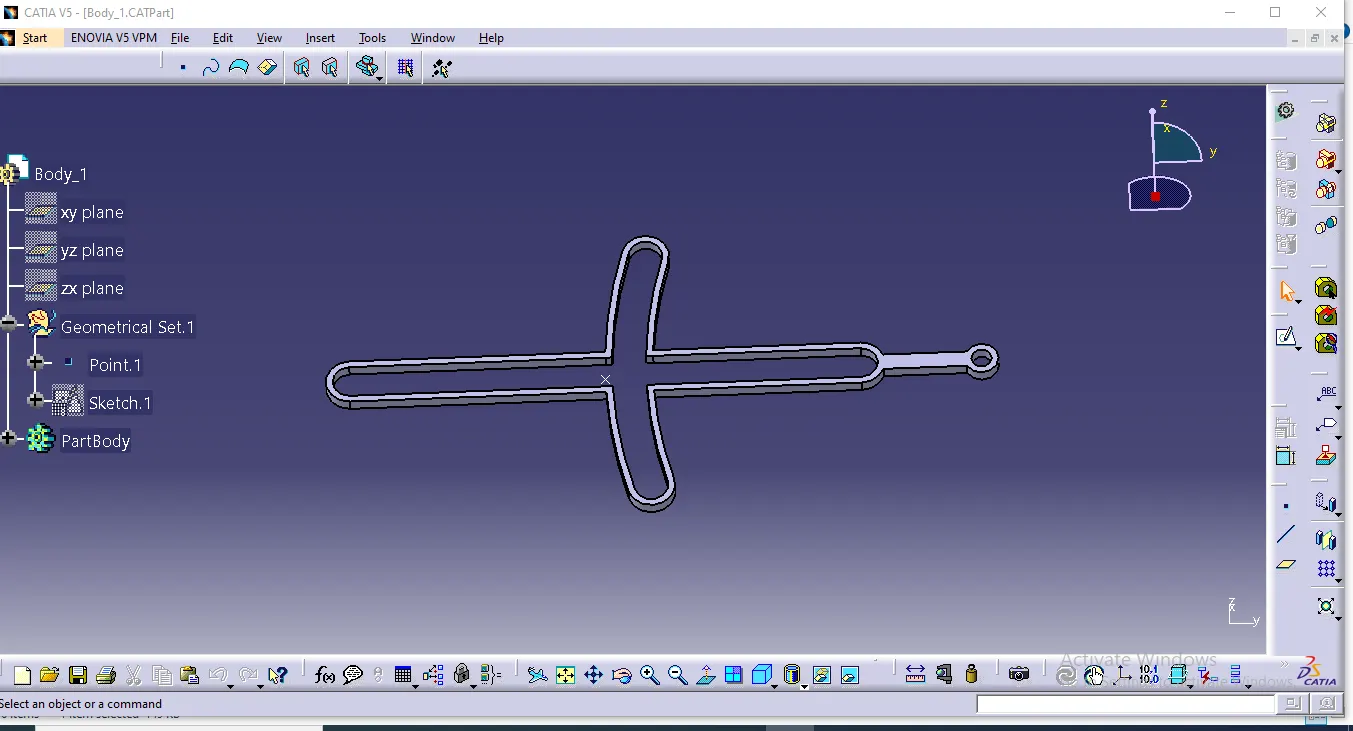
BODY_1
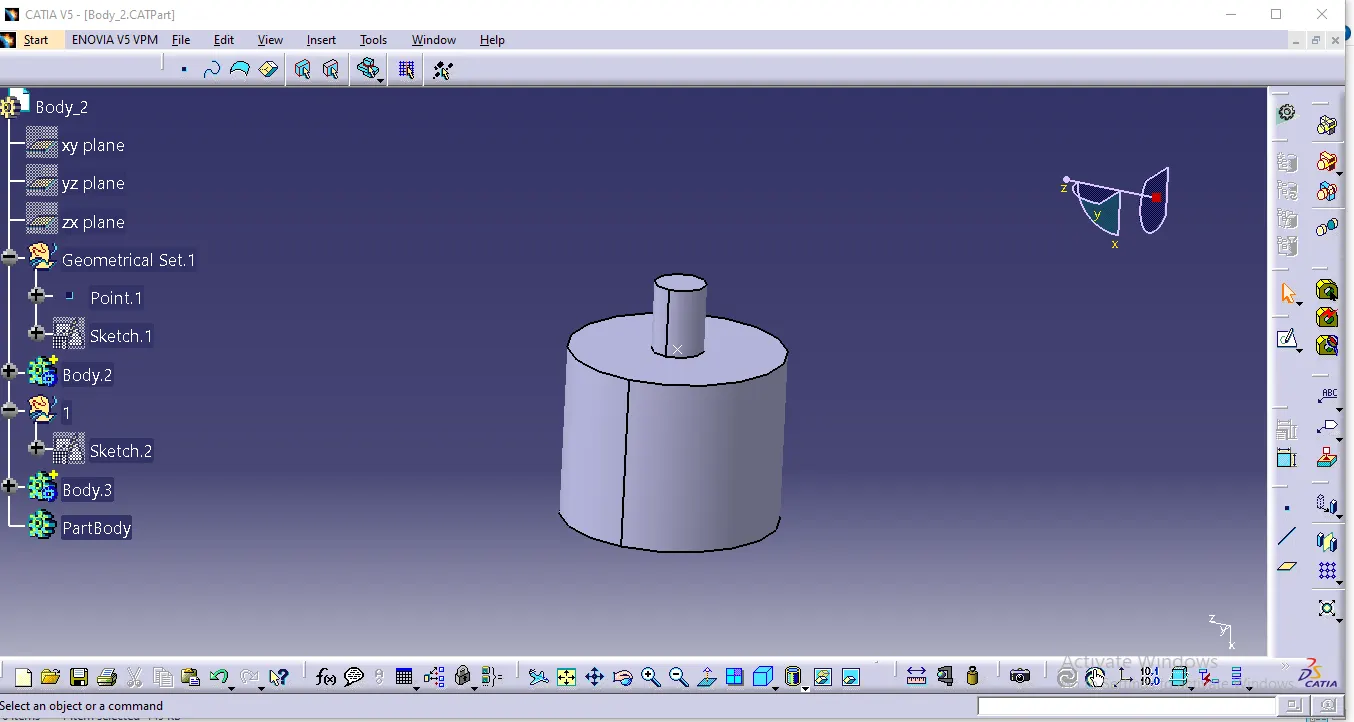
BODY_2:-
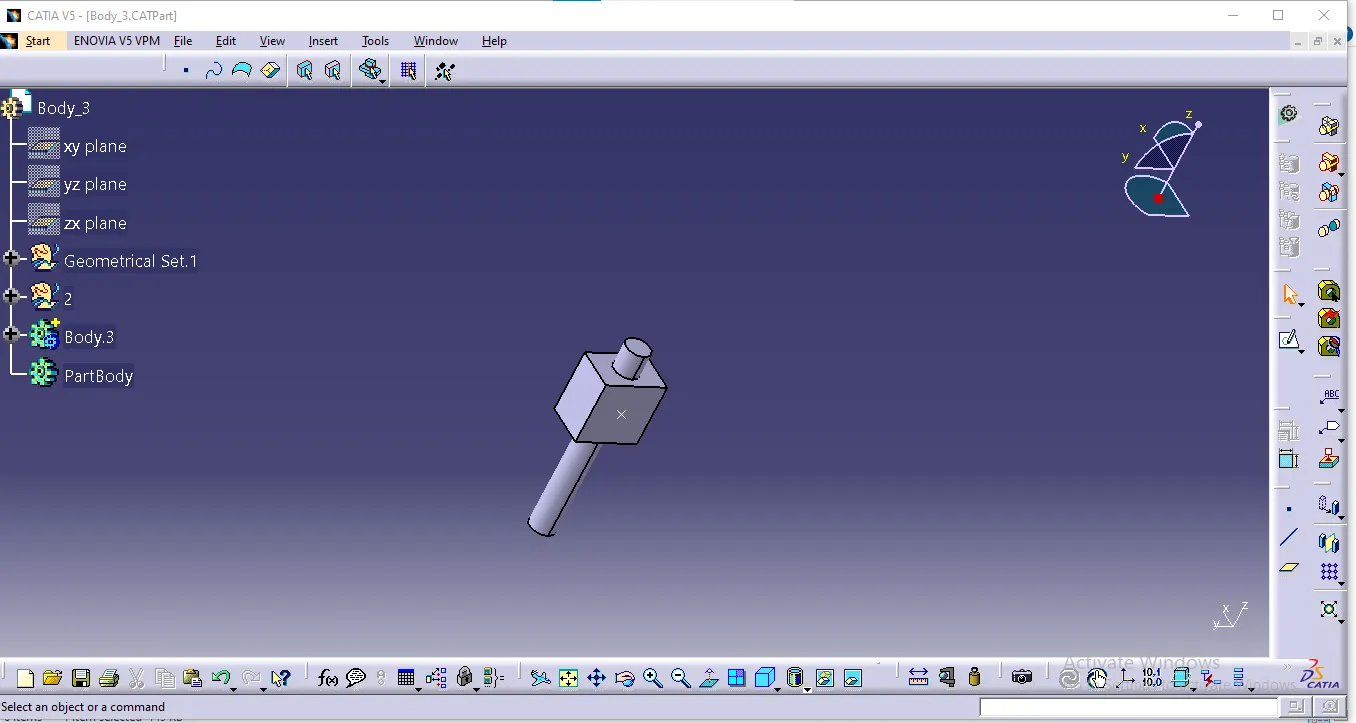
BODY_3:-
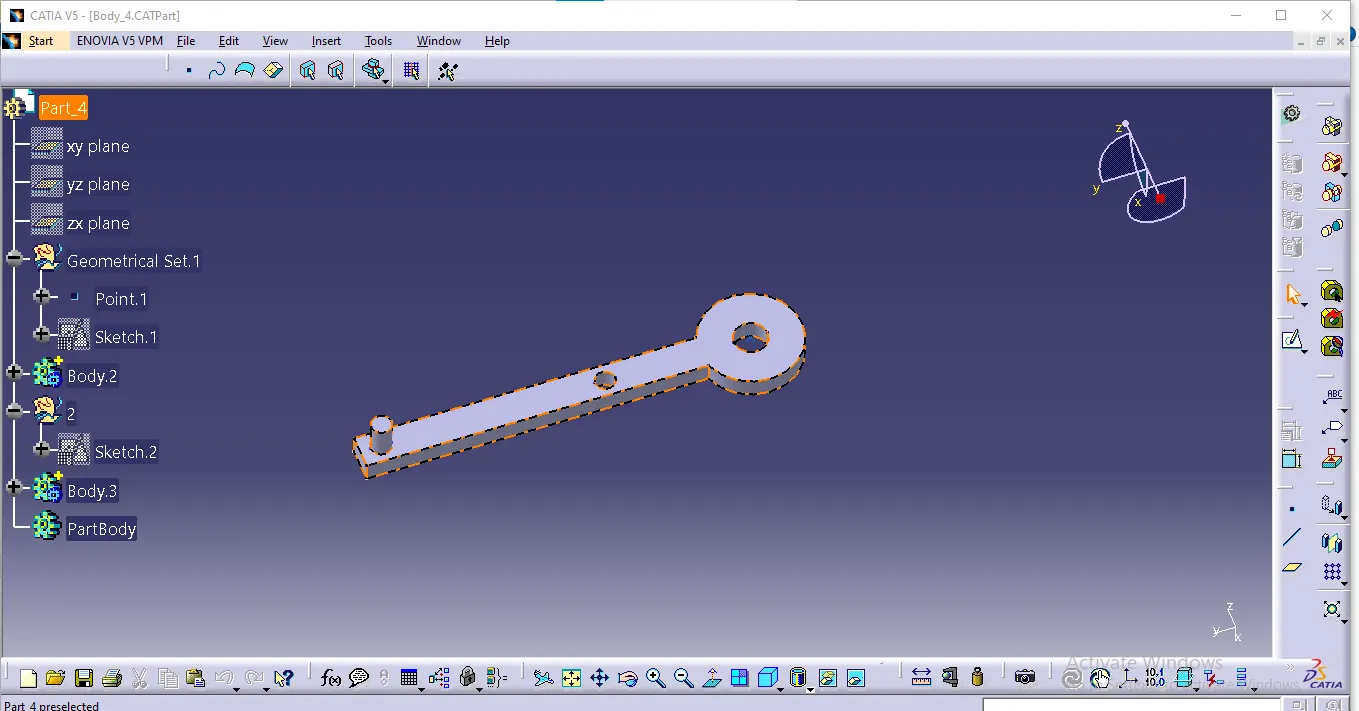
BODY_4
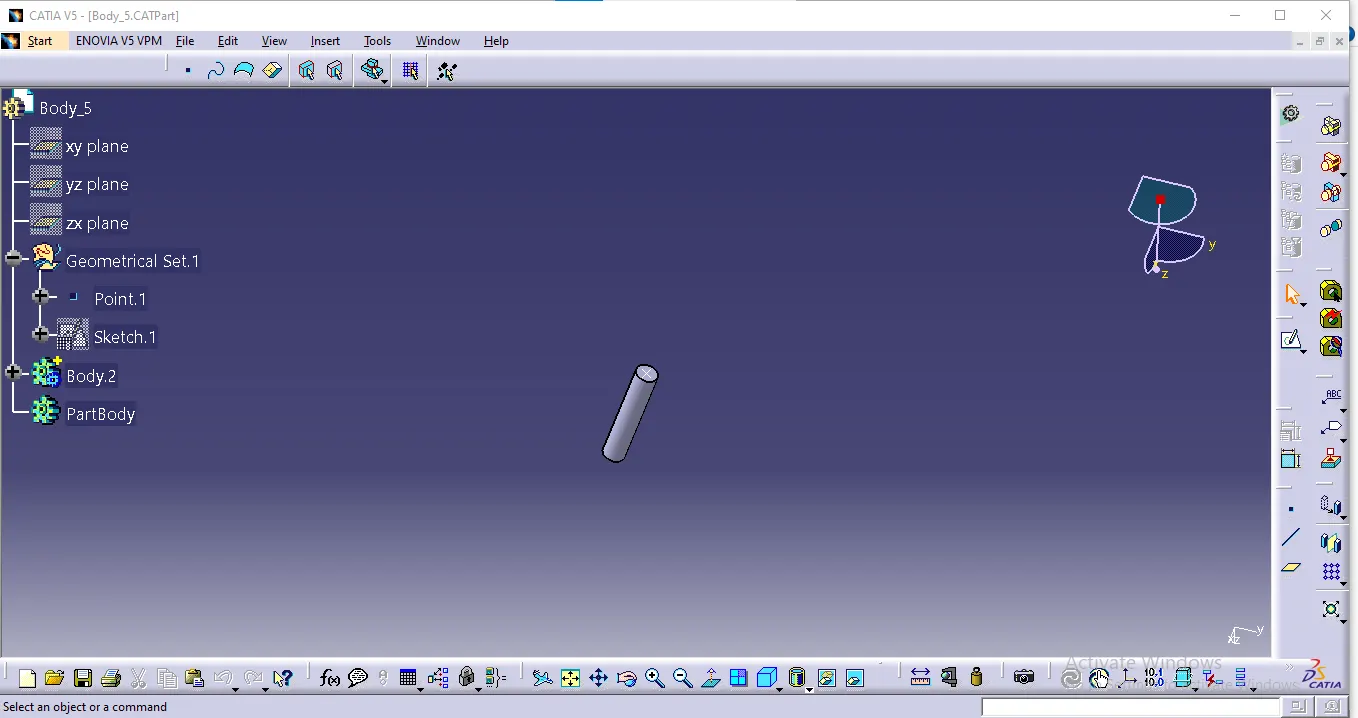
BODY_5
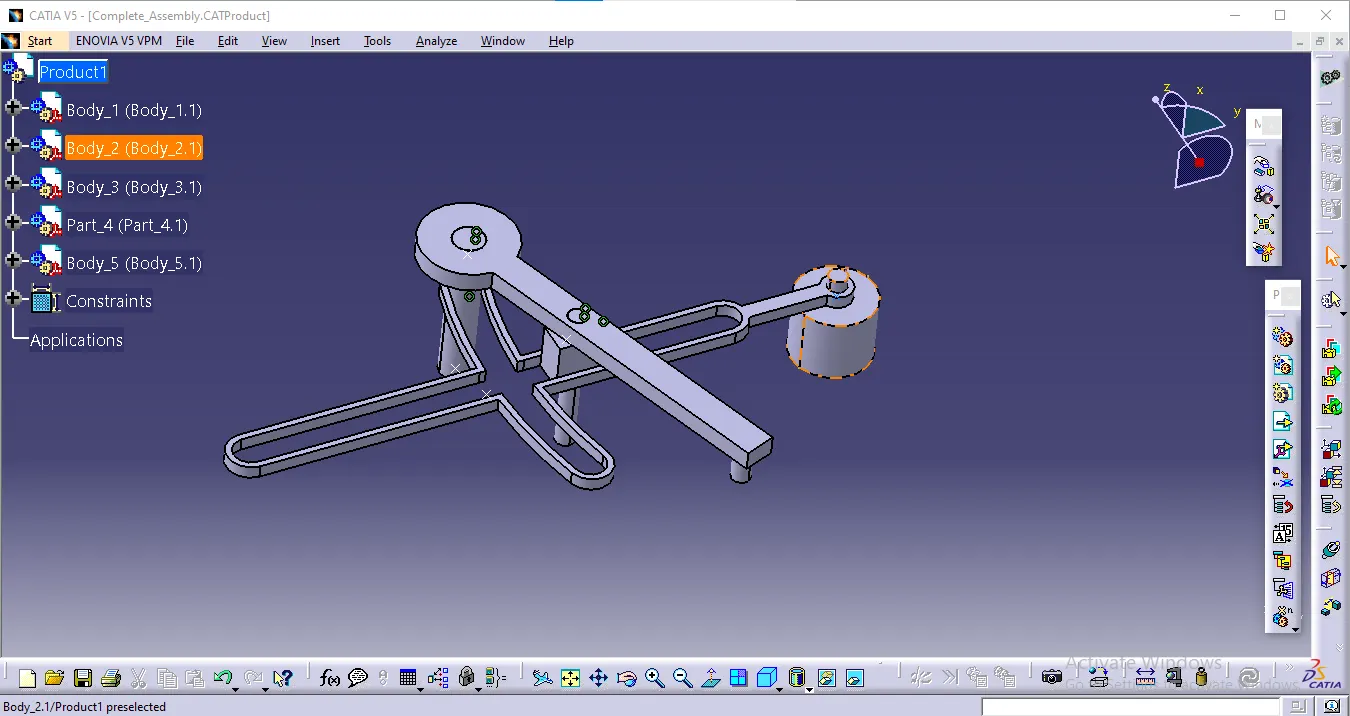
FINAL_ASSEMBLY
B) CV JOINT:-
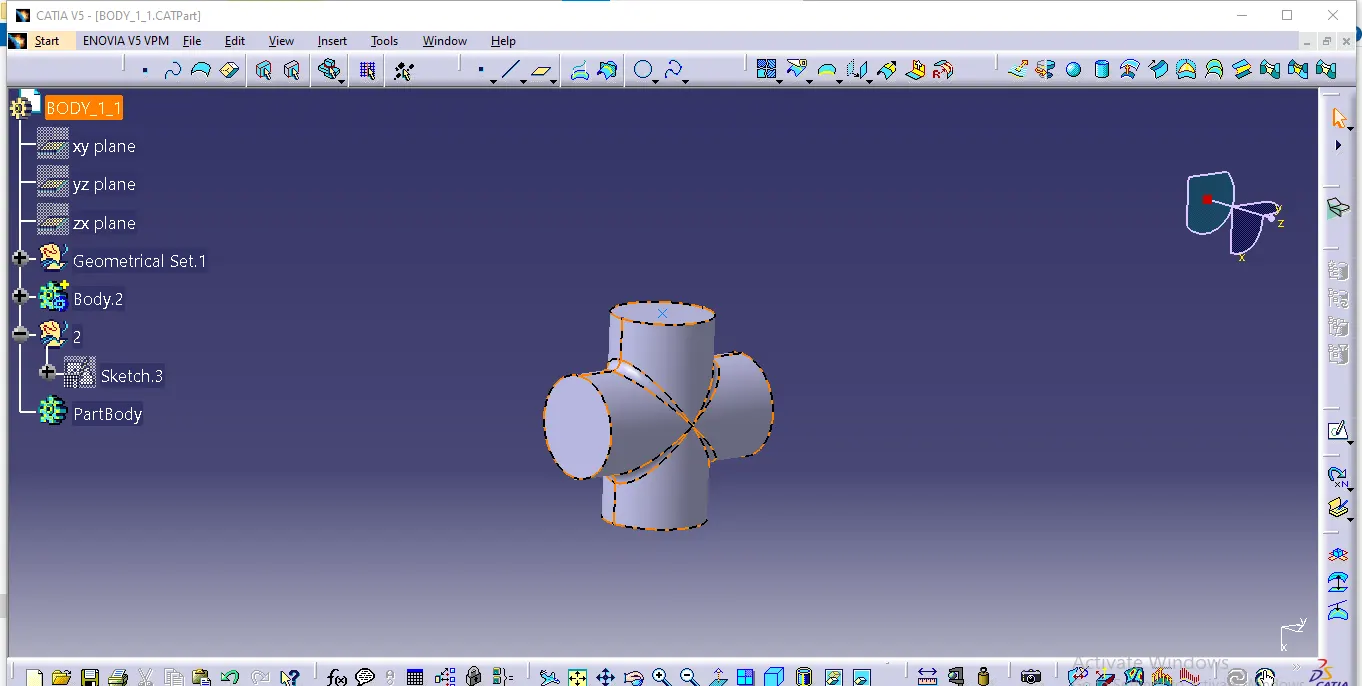
BODY_1_1
BODY_2:-
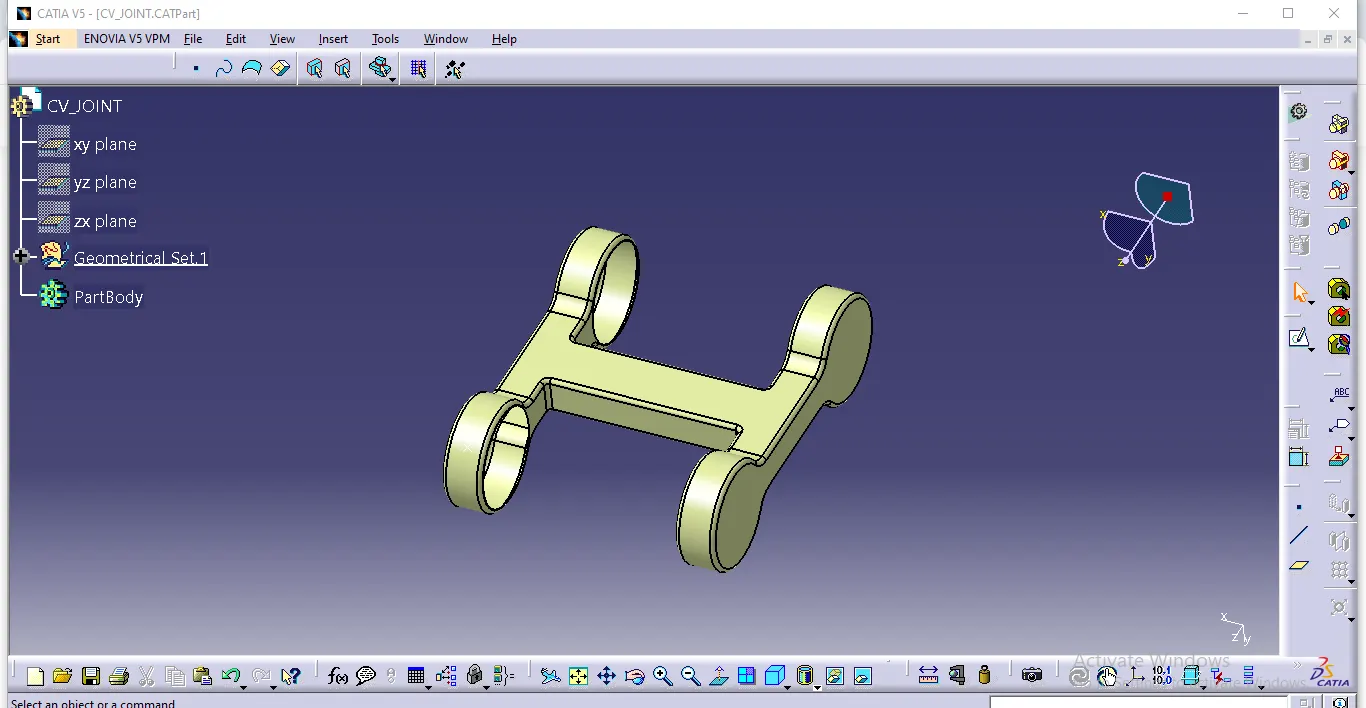
BODY_3:-
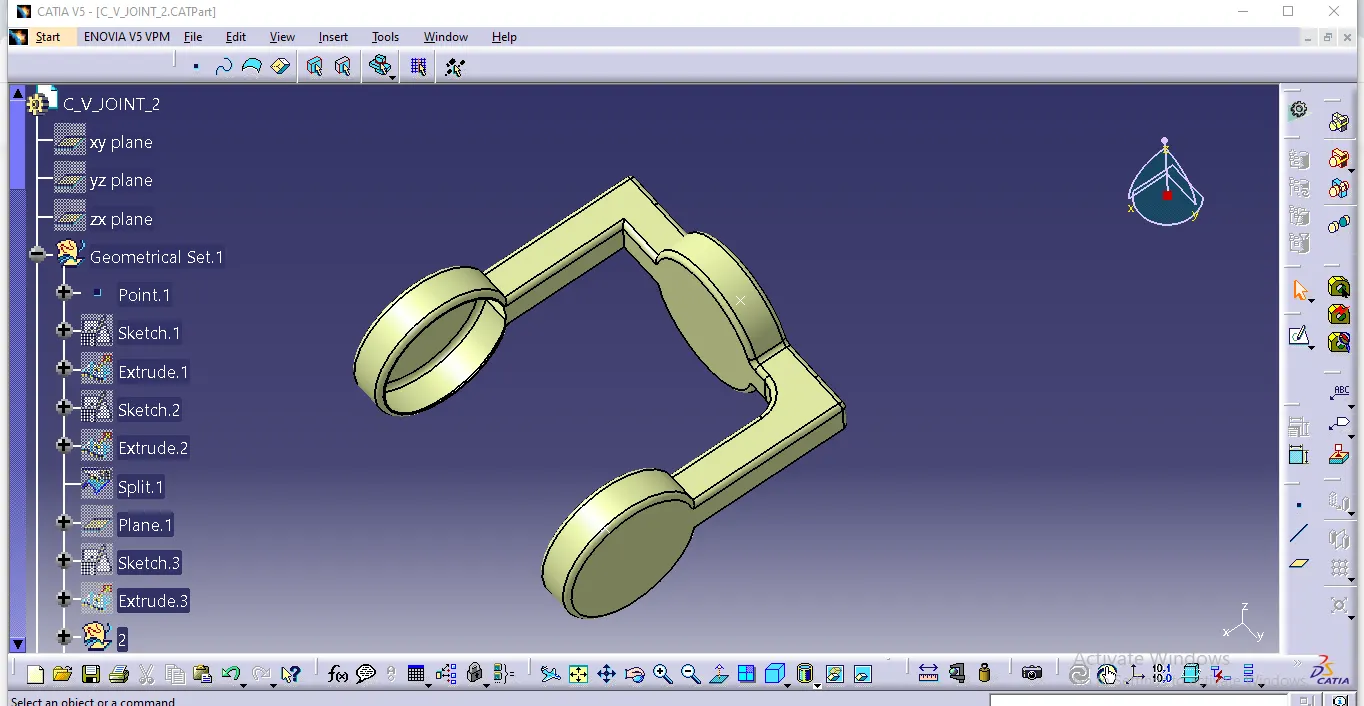
FINAL_ASSEMBLY:-