Week 7- Base Unit Design Challenges 2
Aim:-
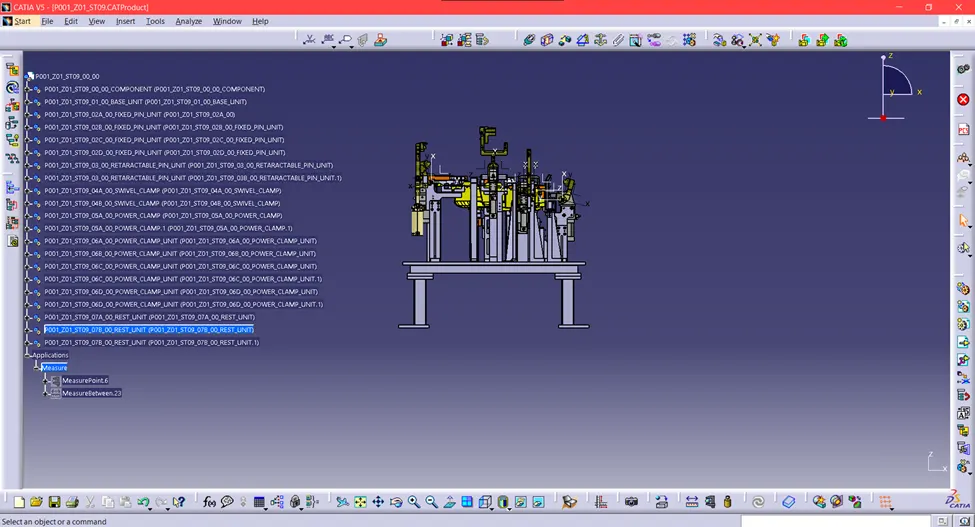
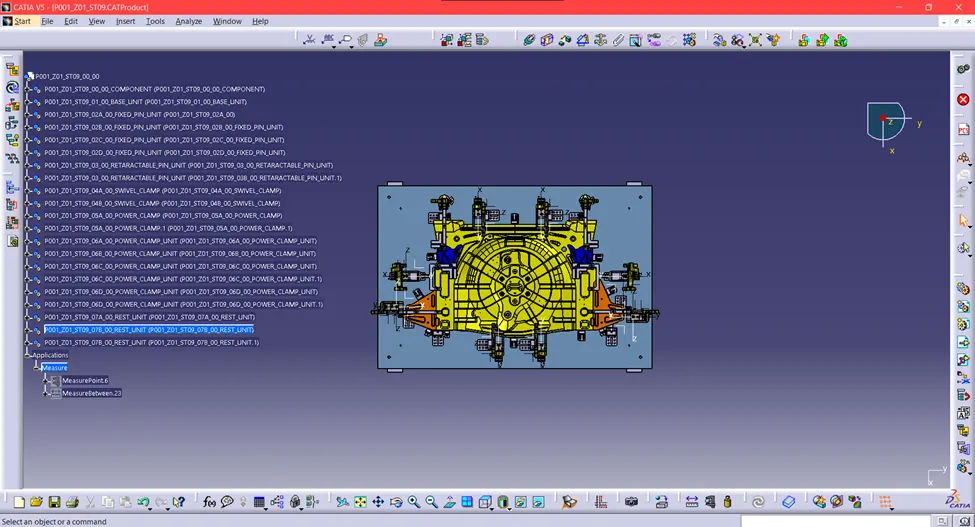
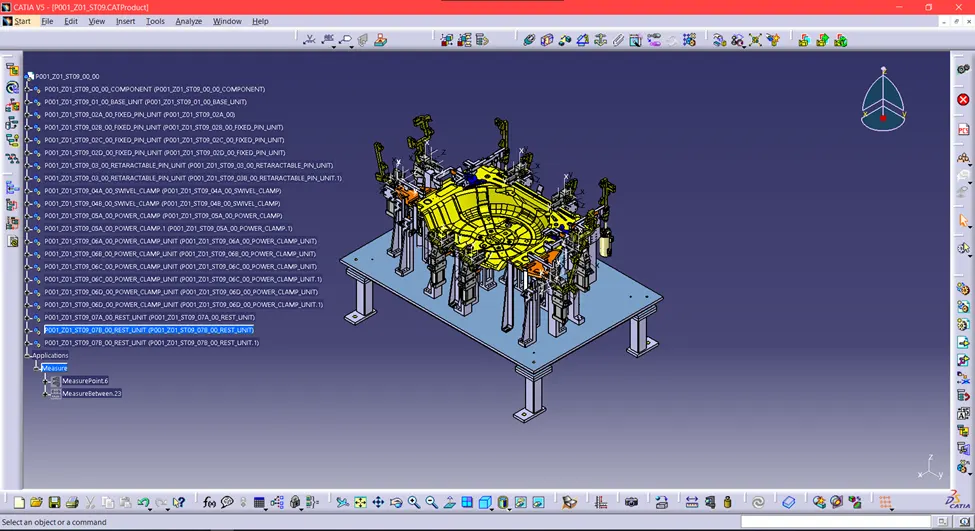
Design a Base Unit for the units designed for the above challenges with all weldments for the given Car Panel.
Design the complete Fixture assembly (the units designed in the previous challenges can also be used). Make sure that all the 5 Panels given in the CAD data are fully constrained with the 3-2-1 principle.
Design:-
Software Used:- CATIA V5
Introduction:-
Base Unit:
A base unit is designed to mount all other units(Clamp unit, pin unit, rest unit, etc) of the tool, also other parts necessary for a tool like a Pneumatic valve box, and trunking cable path will also be mounted onto a base unit. Below are some parts of a base unit in general.
They are a trunking channel, base plate valve box, measuring hole cover, eye bolt, pedestal, weld bars, and floor plate.
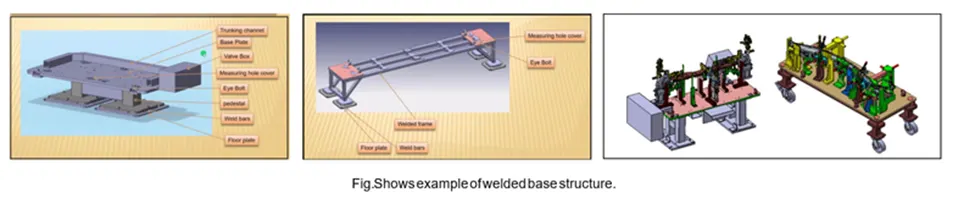
TYPICAL PARTS OF THE BASE UNIT:
BASE PLATE:
The base plate is a plate of 25mm to 40mm thickness.
The base plate has no holes on it which will act as mounting points for the clamp unit, pin unit, etc. of a tool.
PEDESTAL:
It is used to connect the base plate with a floor plate.
The pedestal can be a standard part of a make part, depending on the size and height of the fixture.
Standard pedestals are available at different heights.
Pedestals are also available in different inclinations.
Depending on the size of the base plate, the number of pedestals for a fixture can vary for load distribution.
TRUNKING CHANNEL:
A Trunking channel is a duct that carries all the electrical and pneumatic connections (wires and pipes) for units of the tool. It has a thickness of a few millimeters.
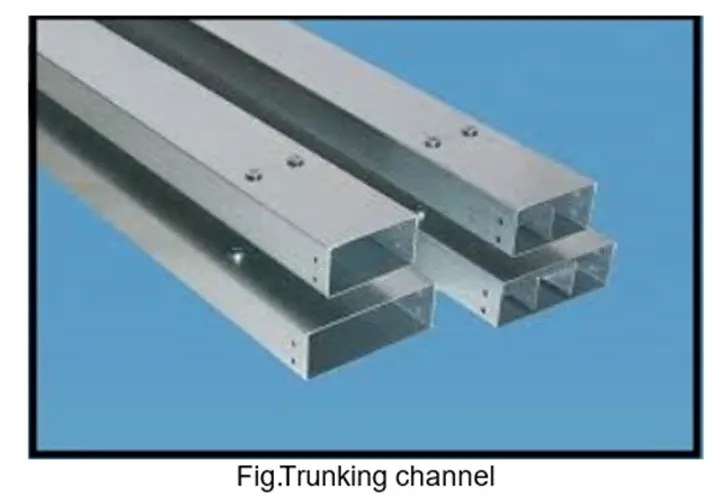
VALVE BOX:
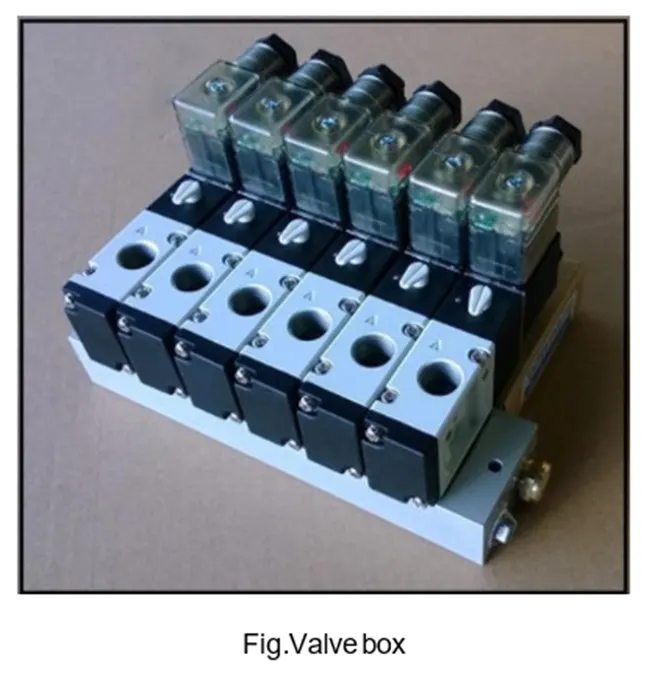
The valve box is a standard part that will accommodate all the pneumatic valves for the unit.
The valve box is the box that includes different solenoid valves.
The trunking channel includes all the pressure inlet cables going to pneumatic parts of the fixture & protects them from damage while the operation is in process.
EYEBOLT:
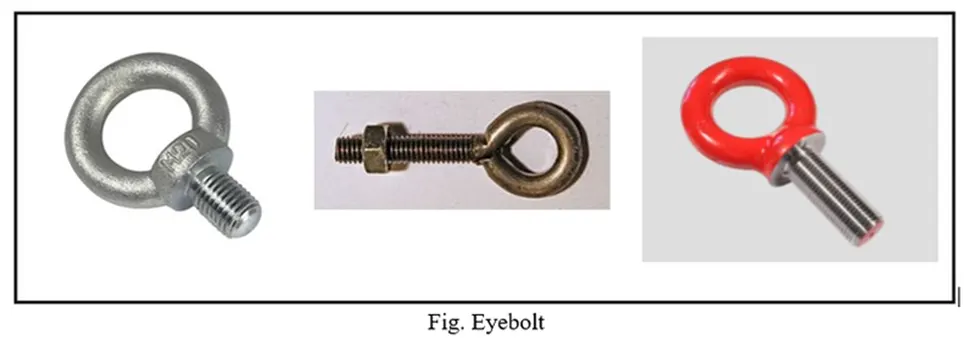
Eyebolts are the bolts that are used to lift fixtures for transportation by inserting hooks into them. For example, usually, we use M20 bolts that are bolted on the base plate.
Used for transportation purposes, sometimes forklift holes will be provided.
FLOOR PLATE:
The floorplate is grounded to the floor with a fixed bolt on the ground.
Floor plates are also called foundation plates.
There will be a clearance of mm maintained between the pedestal base plate and the floor plate.
This clearance will be used by the leveling screw, for leveling the entire tool.
Weld bars are used to weld the positions permanently after leveling is done. A weld bar is a plate along the sides of the base plate of the pedestal.
3-2-1 Principle :
A workpiece free in space can move in an infinite of directions. For analysis, this motion can be broken down into 12 directional movements, or "All 12 degrees" of freedom must be restricted to ensure proper referencing of a workpiece.
The 12 degrees of freedom all relate to the central axis of the workpiece. Notice the 6 axial degrees of freedom. The axial degrees of freedom permit straight_line movement in both directions along the 3 principle axis shown as X, Y&Z.
The radial degrees of freedom permit rotational movement, in both clockwise & counterclockwise radial directions around the same three axis.
A rigid body in the plane has 6 degrees of freedom (i.e.) The motion of a ship at sea has 6 degrees of freedom.
X+
X-
Y+
Y-
ZCW
ZCCW
Now try to understand the 3-2-1 principle of fixture. The purpose of the fixture is
Resting
Locating
Orienting
Clamping
Resting :
In a fixture, the workpiece should rest in such a way that it doesn't move or vibrate on the resting blocks.
Locating:
The fixture should orient the workpiece such that all the operations to be performed on it are within the reach of the workpiece.
Orienting :
The fixture should orient the workpiece such that all the operations to be performed on it are within the reach of the workpiece.
Clamping :
A clamp is a fastening device used to hold or secure objects tightly together to prevent movement or separation through the application of inward pressure. There are many types of clamps available for many different purposes. Some are temporary, as used to position components while fixing them together, others are intended to be permanent.
Structure of design tree:
A process where all the assemblies and parts are named according to a specific standard Different customers have different sets of standards and the structure of the design tree.
Every company and every customer has different standards for their own structural design tree,
So they will leave a template on how the structuring and detailing of the design is done. And you to follow that particular design in the tree.
The design tree itself mentions that particular name, wherever that part is we can easily know that this part, belongs to this one or this station or this assembly on the particular unit. So this helps us to avoid errors during the design Standard study manufacturing assembly & inspection.
It is an important process that helps us to identify specific parts or assemblies as to which project, or tool, it belongs to.
Structuring a design tree is actually to avoid the error, which might come during manufacturing assembly, or in-house inspections as well.
If the part, or ate hot named properly, or the design tree is not structured properly it will create confusion in understanding the design and may create major possibilities of making an error.
Every part and every component should be named according to their procedures.
If we made a mistake or renamed the entire standard parts from the customer as a design part. Now the customer is going to manufacture the entire part again from scratch but he already has that product in his itinerary. but extra cost extra time and is feasible. This is also known as an error which goes on to increase the cost of the entire assembly as well.
Naming a fixture a unit or a part gives the information as to which project zone or assembly they belong.
If we name the part properly or name the fixture properly it'll actually tell which unit or which assembly or which zone or in which station it actually belongs
It can help us to identify the quantity of items of the same types or different types that are being used in an assembly.
While starting to design a fixture, The first unit will be the base unit.
In a Design tree, all the manufacturing parts should be first and the standard parts should be at the last.
Design tree helps to study or understand the parts in the assembly easily.
IMAGE: