Week 6 - Creating connection for Rear door
Aim: To implement connections for a Rear Door FE model.
Objective:
- Understand car rear door assembly
- Understand different types of connections and 1D elements.
- Perform connections for a FE model.
Procedure:
1. Import FE model
The FE model is in a .nas format so we need open by using 'input' shown below.
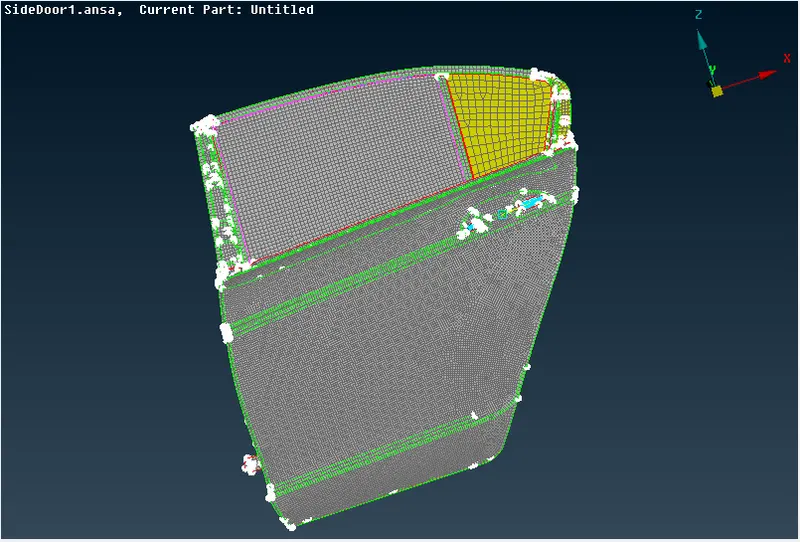
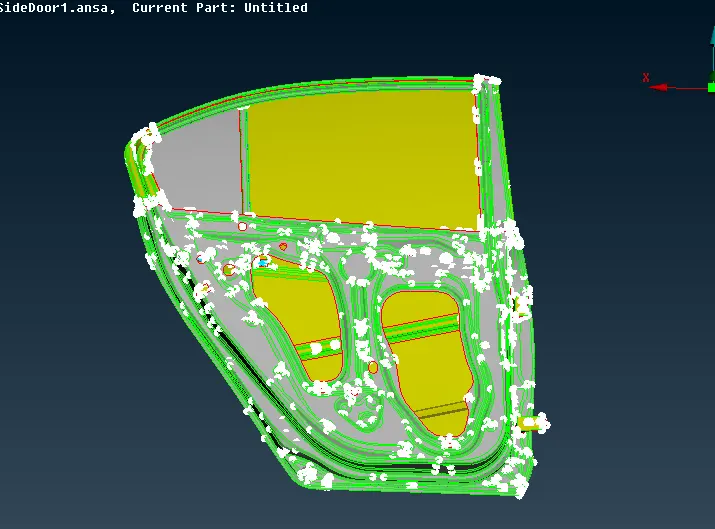
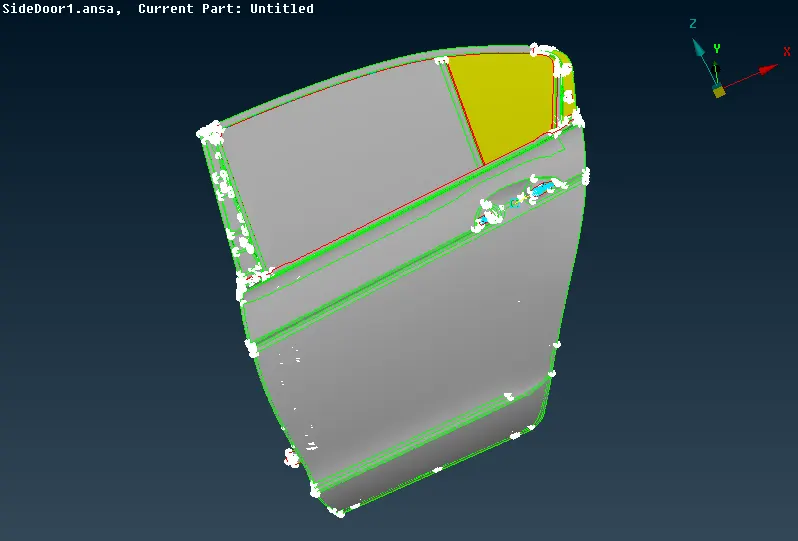
2. Once you open the model understand the mechanism and necessary areas that need to rigidised or made connected.
3.Firstly, we will cover all bolt connections through the RB2 stem element. we will perform this connection by using the auto-mode for the selection of nodes.
4. BOLT CONNECTIONS:
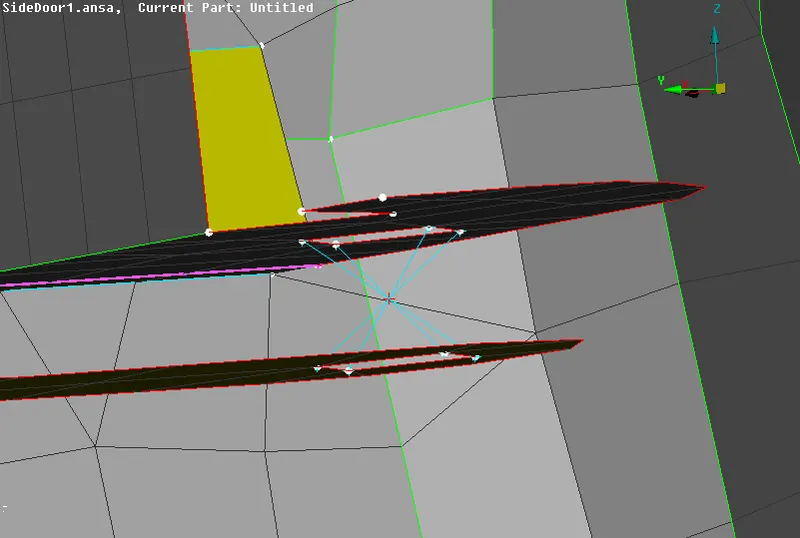
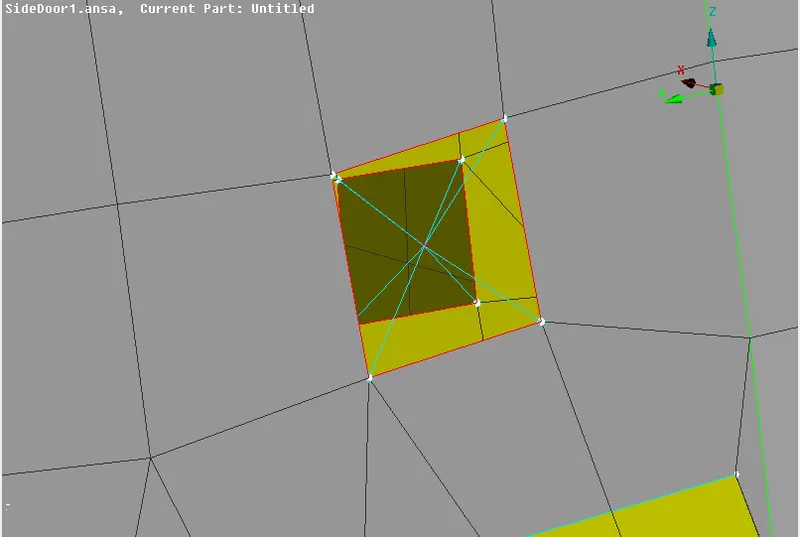
- Under the Topo module select below point section to creat a COG 3D point on any of the co-axial bolt holes.
- convert the 3D point into the bolt.
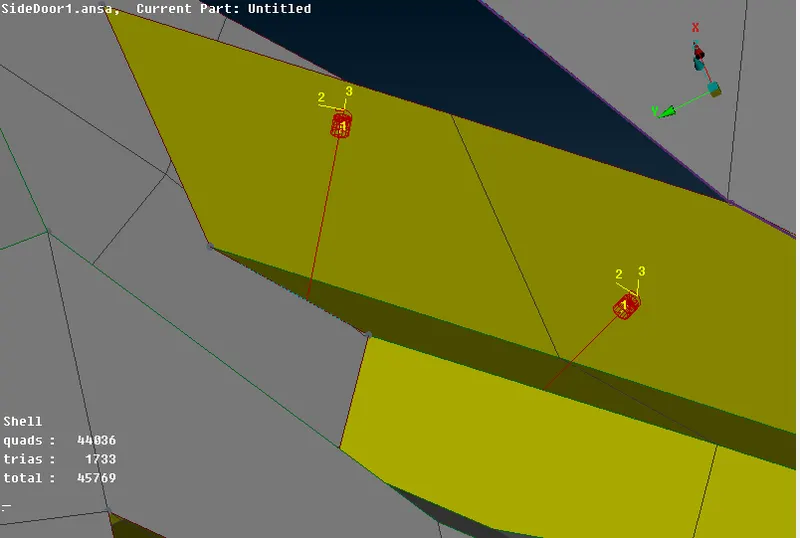
- Bolt representation of 3D point.
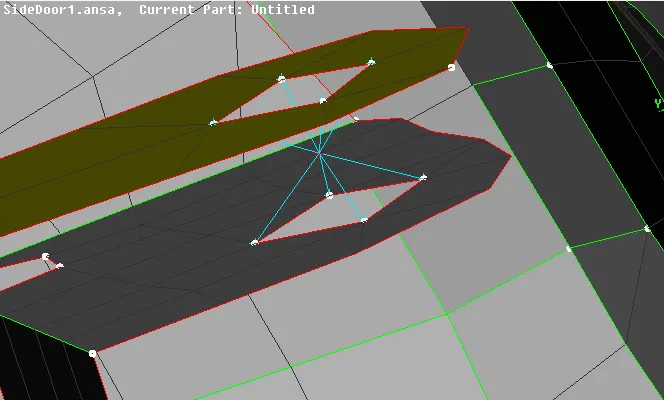
4.Open the connection manager to select the type of element and surfaces to be made connected.
5. Assign the values and P1, P2, P3, P4 surface to be made connections with.
5. Handle connection
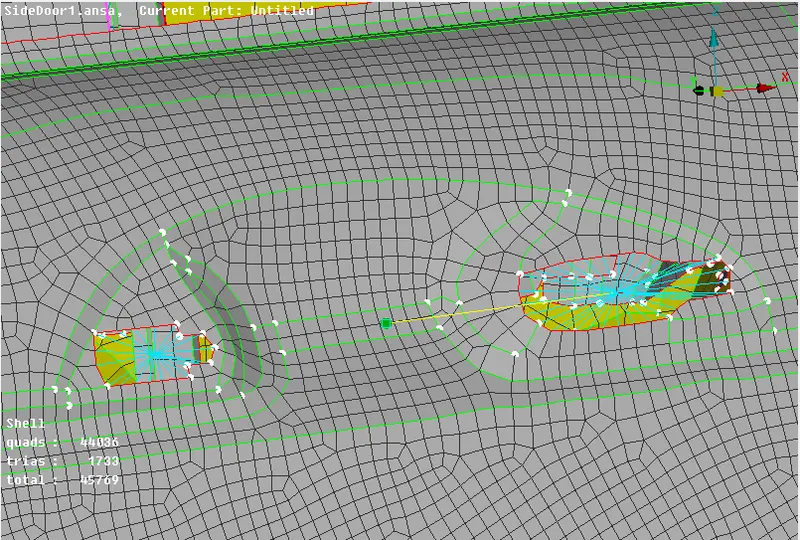
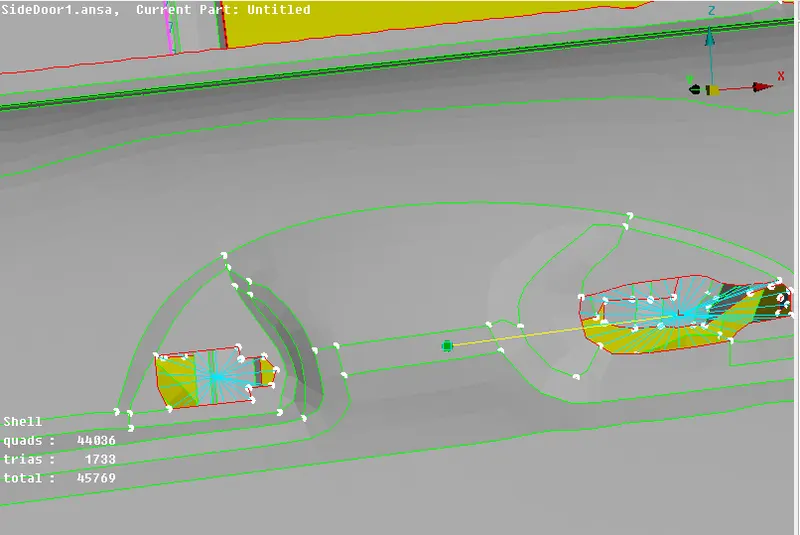
- Give many nodes RB2 handle slots and then connect the slot with two nodes
- Assign mass to the element at the COG .
- We need to assign the mass to the COG of the element connecting two slots with cluster nodes connection. For doing so we will use COMM2 & assign value for mass ('M' as 0.0001 tons).
6.Weather seal with the window glass
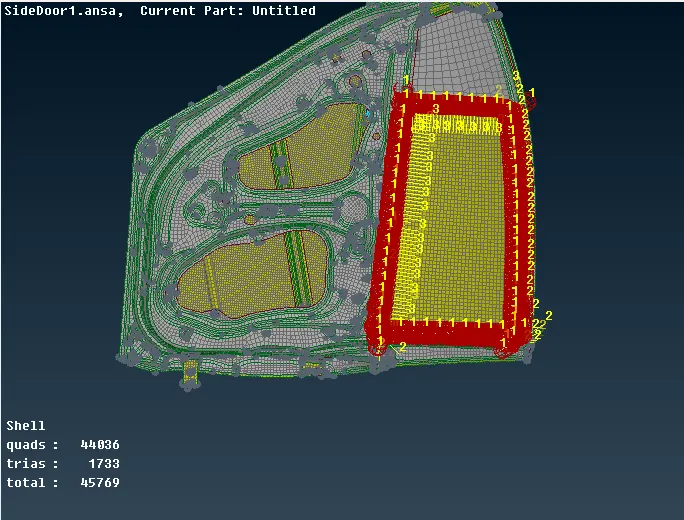
Now we have to finally make connections for weather seal strip and window glass. To do so we need to follow certain steps.
1) Hide the FE model except for the glasses.
2) construct the curve all around the glass edge using Fea2curve tab. Select each edge of the glass one by one to do so.(as shown below)
3)Covert the curve to spot lines. (one curve at a time)
4)Go to the connection manager to assign a connection. we use the RB3-CBUSH-RB3 element to assign connection. Also, set the PBUSH ID (doorlinks) to assign the stiffness values.
5) Select the P1 P2 carefully then apply and realize.
6) Change all the CBUSH element orient as 'cord' and CID as 0. To change the orientation of the element from local to global coordinate system.
CONCLUSION:
After the completion of the challenge, it can be concluded that for any type of model the understanding of the mechanism is very important. As the mechanism will decide in analysis ways to make decisions regarding assigning connections. The connection procedure is moreover the same for any type of model but the requirement to assign the connection may differ from model to model with the requirement of the analysis. So for the NVH analysis, the weather seal was important to capture and is captured in a pretty good way with help of CBUSH element. Most of the areas are covered and are been rigidised as well as connected as per the requirements.