Week 6: Conjugate Heat Transfer Simulation
Aim
-
Baseline configuration
- Setup a flow simulation through a pipe
- Inlet Reynolds number should be 7,000
- Re = (rho*V*D)/(Dynamic viscosity)
- Turbulence modelling - K-Epsilon
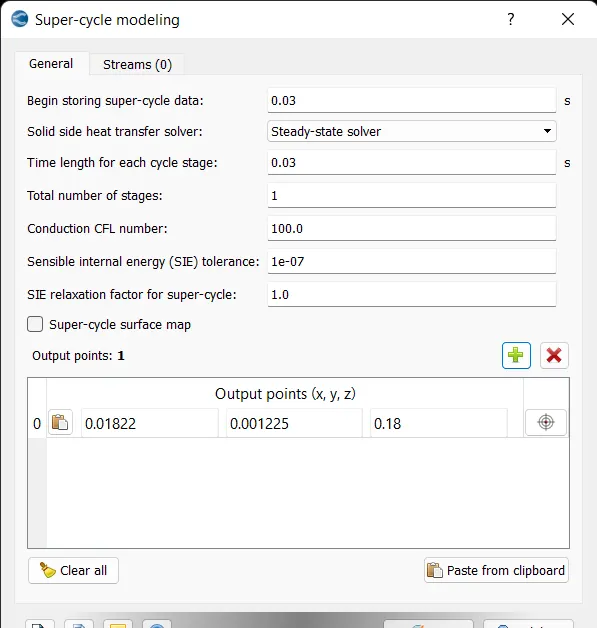
- Supercycling parameters - same as in the video
-
Additional 3D outputs
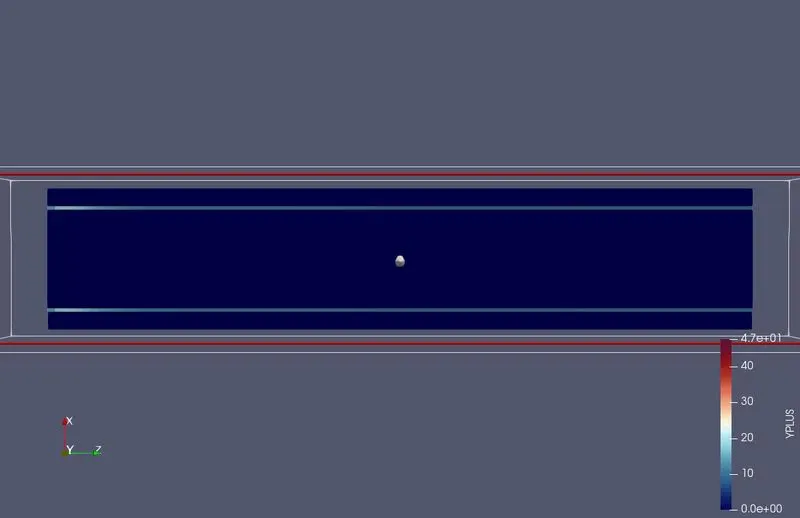
- Add Y+ to post.in file
-
Grid dependence test
- Start with an initial base grid
- Run grid dependence test on 3 grids and show that the outlet temperature converges to a particular value
-
Effect of supercycle stage interval
- Set supercyle stage interval to 0.01,0.02 and 0.03
- For these three values, how does the total simulation time compare against the baseline configuration
CONJUGATE HEAT TRANSFER
The Conjugate Heat Transfer (CHT) analysis type allows for the simulation of heat transfer between solid and fluid domains by exchanging thermal energy at the interfaces between them. Typical applications of this analysis type exist as, but are not limited to, the simulation of heat exchangers, cooling of electronic equipment, and general-purpose cooling and heating systems.
In most cases, heat transfer in solids, if only due to conduction, is described by Fourier’s law defining the conductive heat flux, q, proportional to the temperature gradient:  .
.
For a time-dependent problem, the temperature field in an immobile solid verifies the following form of the heat equation:

Heat Transfer in a Fluid
Due to the fluid motion, three contributions to the heat equation are included:
- The transport of fluid implies energy transport too, which appears in the heat equation as the convective contribution. Depending on the thermal properties on the fluid and on the flow regime, either the convective or the conductive heat transfer can dominate.
- The viscous effects of the fluid flow produce fluid heating. This term is often neglected, nevertheless, its contribution is noticeable for fast flow in viscous fluids.
- As soon as a fluid density is temperature-dependent, a pressure work term contributes to the heat equation. This accounts for the well-known effect that, for example, compressing air produces heat.
Accounting for these contributions, in addition to conduction, results in the following transient heat equation for the temperature field in a fluid:

Applications
- Internal combustion engines
- After treatment
- Aerospace
- Pumps and compressors
ACCELERATING THE CHT CALCULATION
There are several challenges when solving the fluid and solid domains together. The largest challenge to overcome is the difference in time-scales associated with the heat transfer in the fluid and the solid. In general, heat transfer in the solid occurs more slowly than the convective and diffusive time-scales of the fluid. This disparity in time-scales is problematic for CFD simulations because simulations of long physical time periods can be computationally expensive.
CONVERGE offers an alternative approach called super-cycling for overcoming the time-scale disparity. In super-cycling, the fluid solver is frozen periodically while the heat transfer in the solid is allowed to progress to steady-state. CONVERGE solves the fluid and solid phases in the same simulation without requiring you to stop and restart the simulation. Super-cycling significantly reduces the computational cost of the CHT simulation.
Another acceleration strategy in CONVERGE is the fixed flow method, which is useful for cases in which the flow changes less rapidly than other physical phenomena in your computational domain. By freezing the flow field and solving the flow for only short periods of time, the computational expense of the simulation is reduced. This is particularly beneficial for cases that require simulating a long period of physical time.
Geometry
- The model is created in converge
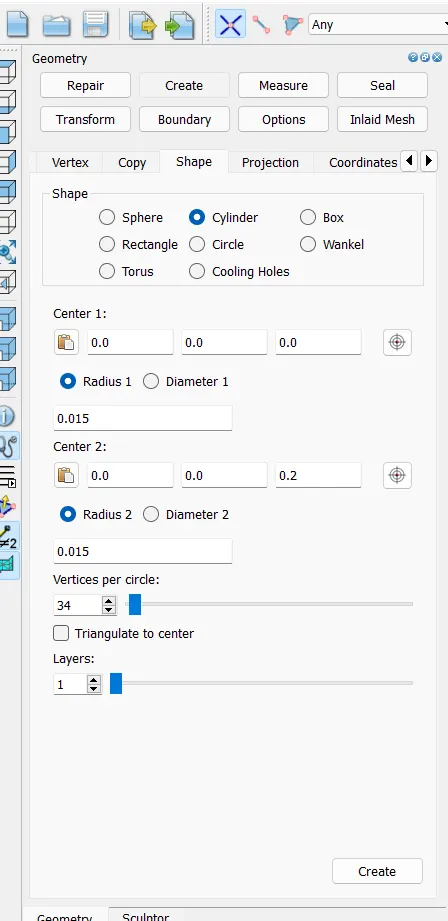
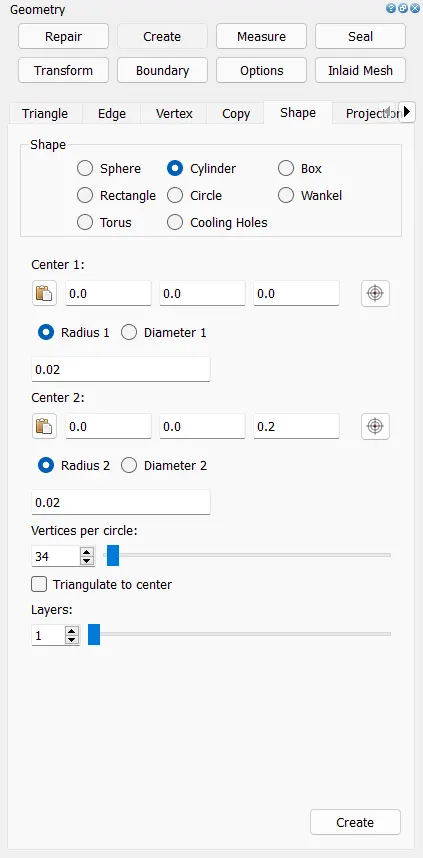
- Two cylinder were created for providing the thickness
- Below are the specified dimensions given for the cylinder 1
- For the second cylinder
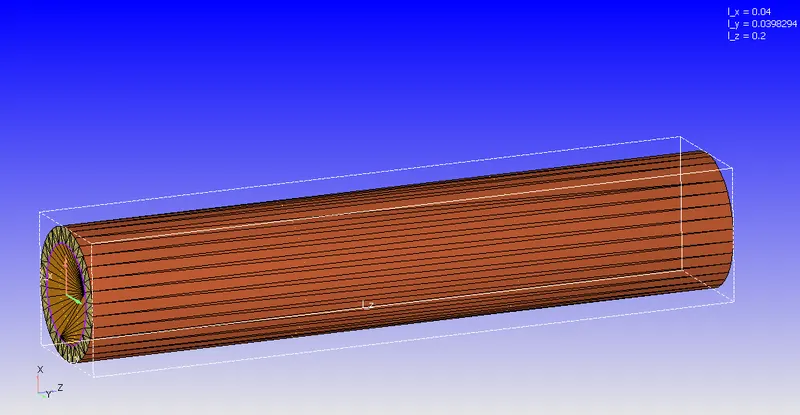
- Both cylinders were connected through Create-> Triangle -> Loft edges
- Then the Inlet and Outlet surfaces were patched Using arc
- Checked for Errors in Geometry
- Boundaries were flagged accordingly
Case setup
- Time based simulation is set
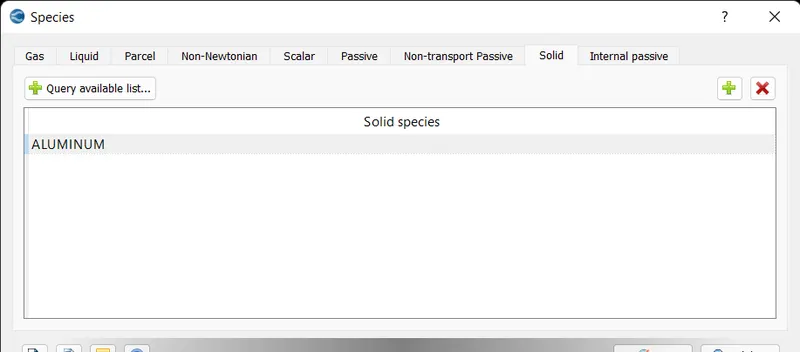
- Material is set to air as gas contains 0.77 of nitrogen and 0.23 of oxygen also species involvemnt is also enabled and Aluminium as solid
- species are added accordingly
- In run parameters enregy involvement is enabled by selecting total energy as the simulation involves the temperature changes
- Steady state monitor is turned off
- A Transient state simulation was enabled in Run parametres
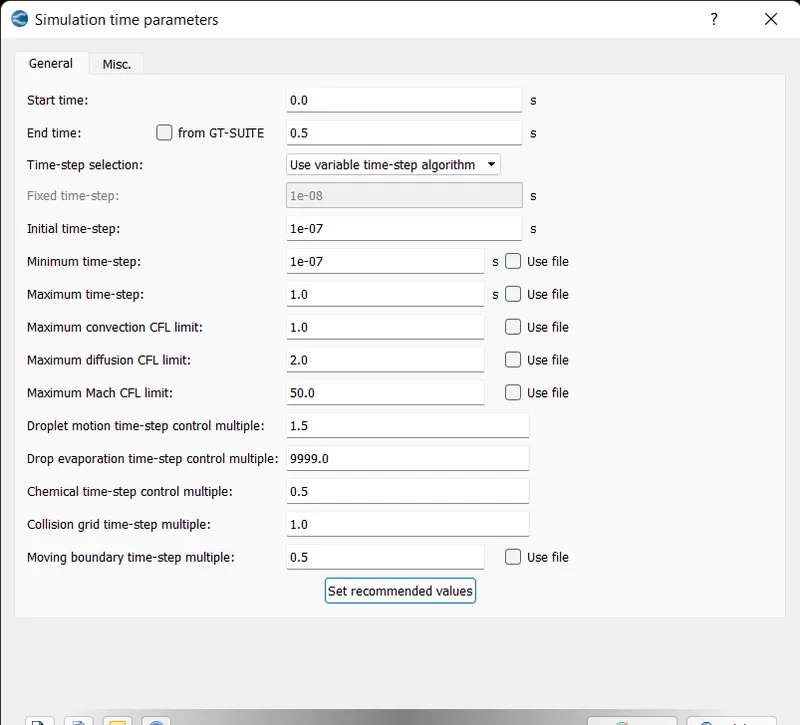
- Under Simulation run parametres the start time and end time was set to 0 to 0.5 and the initial, Minimum time steps set to 1e-7. The maximum time step is set to 1 as usual
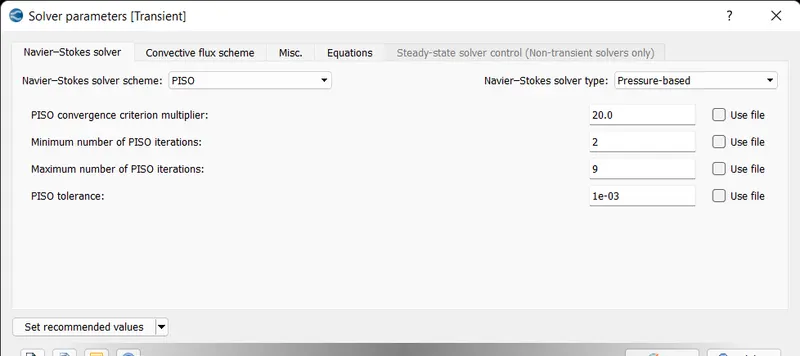
- Under solver paramteres, A Pressure based simulation was enabled
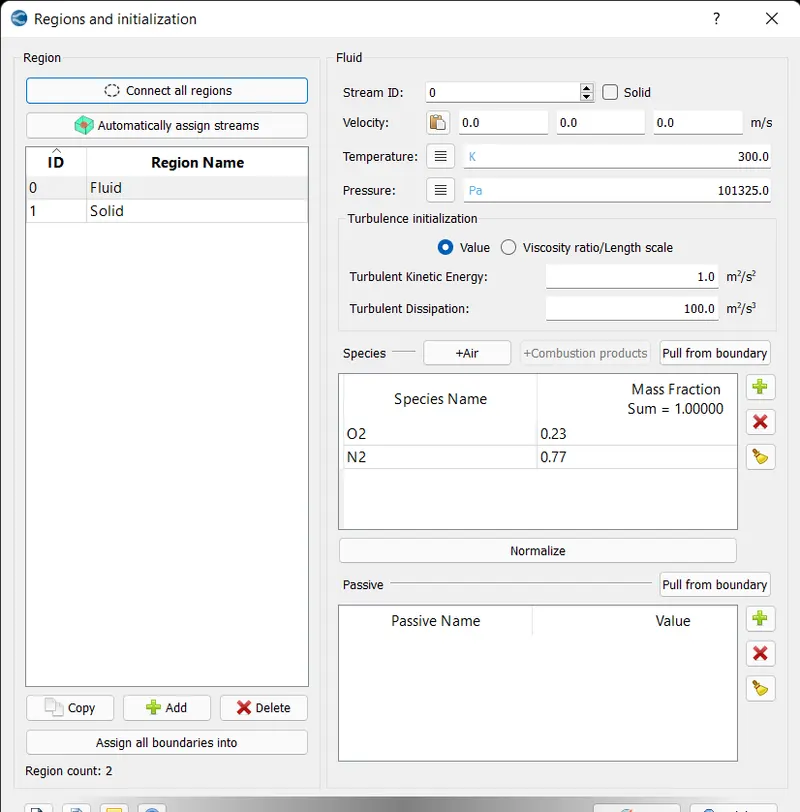
- Under Regions and Initialisation two seperate regions were defined.Fluid region and Solid region and the stream ID for fluid is set to 0 and 1 for solid region
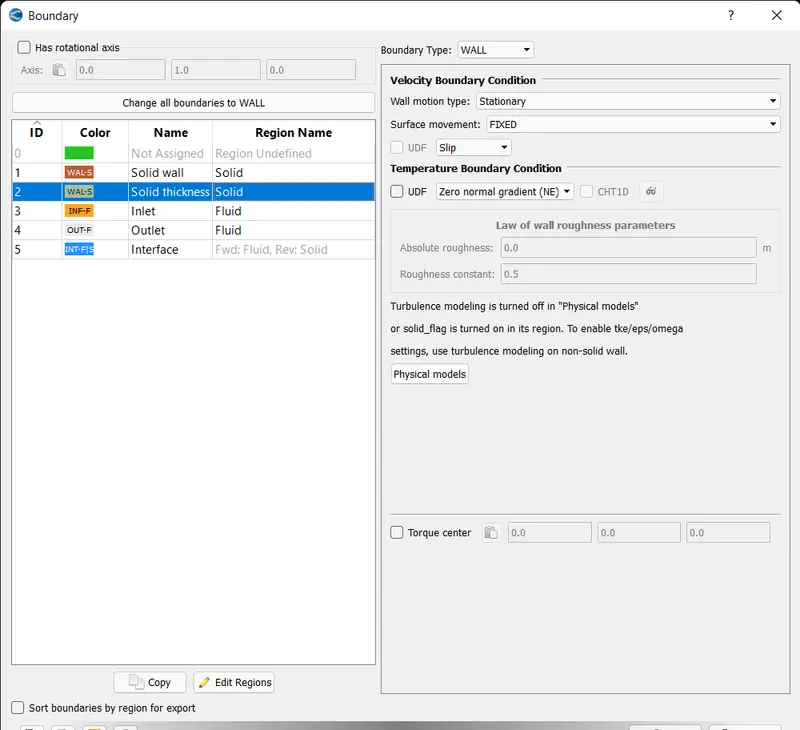
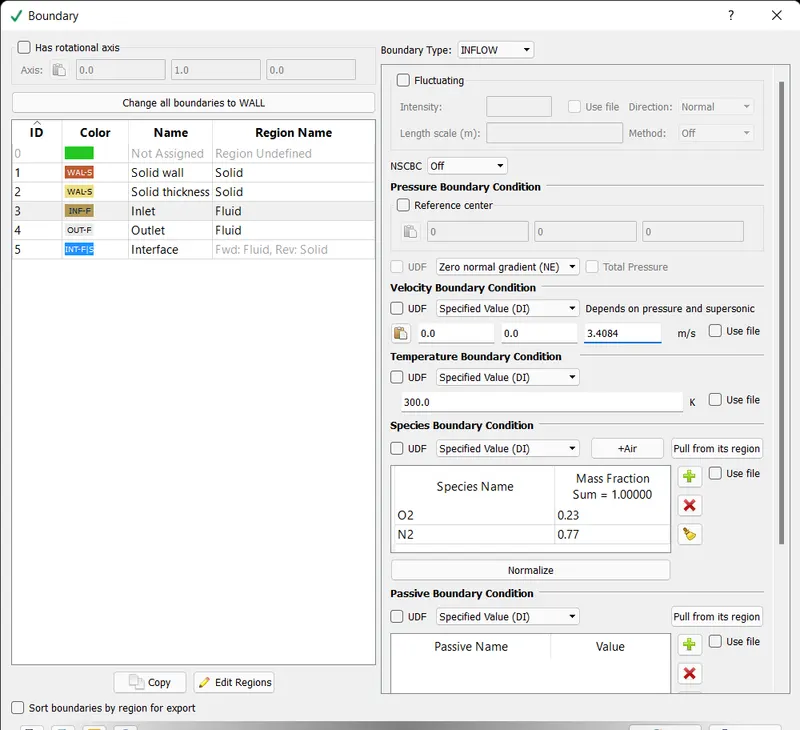
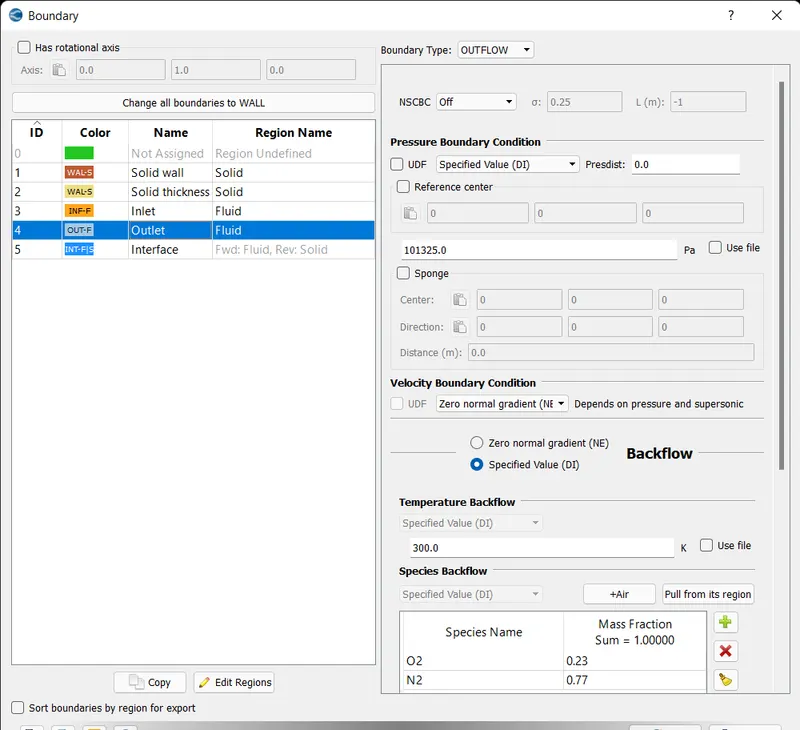
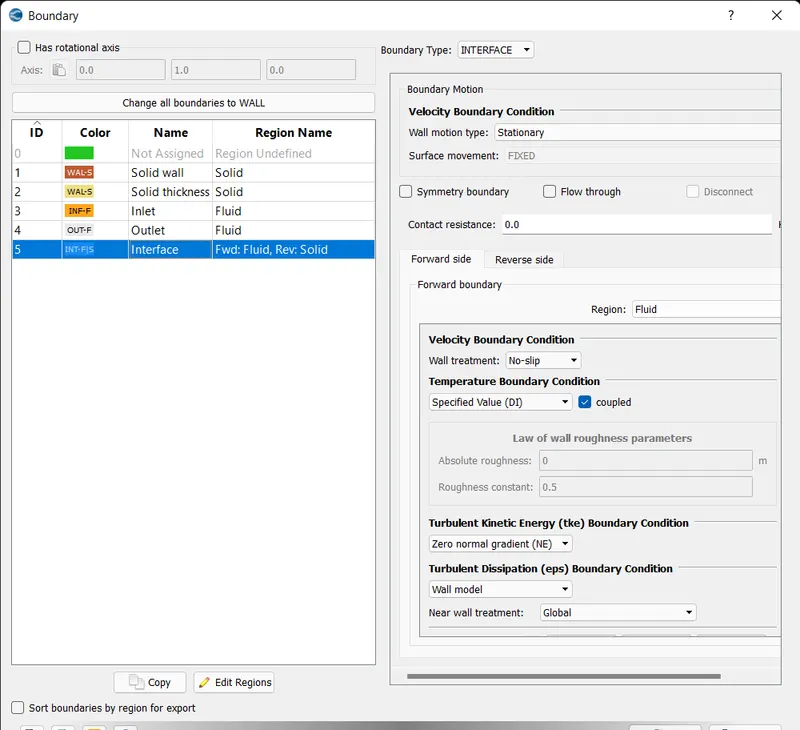
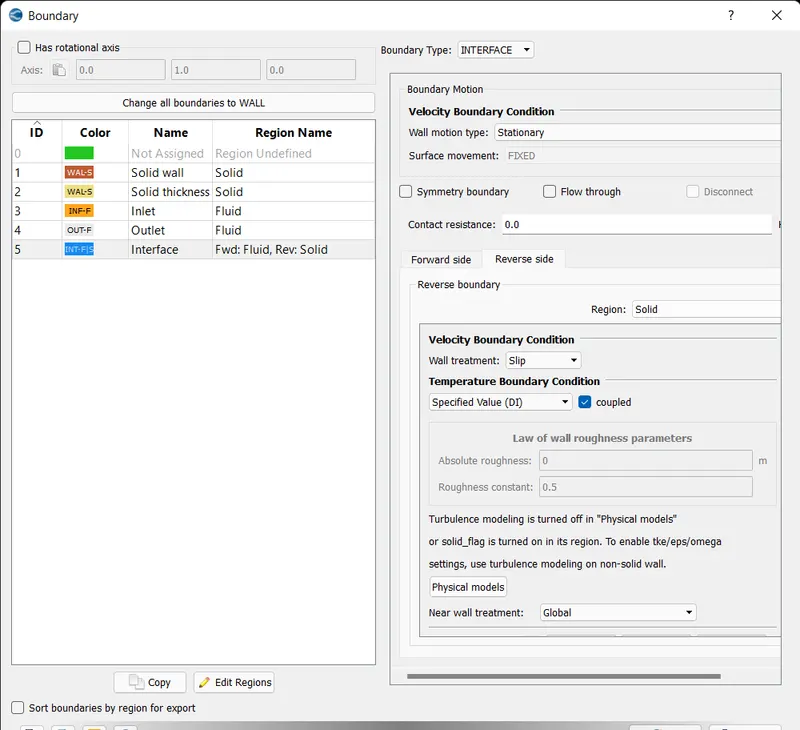
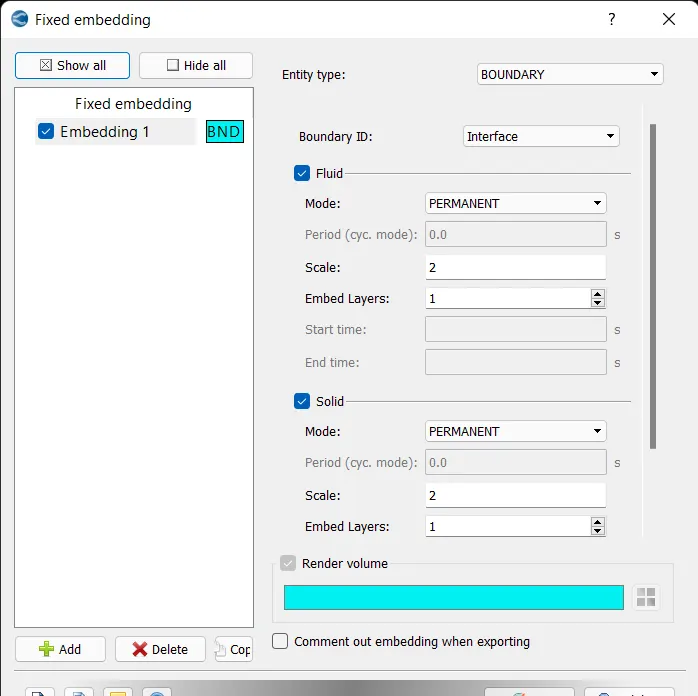
- Boundary conditions are set and shown the screen shots
Inlet Velocity calculation
As specified we need the inlet reynold number to be in 7000,
Hence
Re = 7000;
Mu = 0.000017894;
rho = 1.225;
D = 0.03

V = Re*Mu/(rho*D)
V = 3.4084 m/s
- Turbulance model is turned on and is set to RANS - K_epsilon
- For grid dependency test 3 diferent mesh sizes were set (0.004,0.006,0.008)
- Under Physical models Super cylcing modeling was enabled
- For base line mesh the super cylce stage Interval is set to 0.05 and then for analysing the dependency of supercycling stage Interval 3 seperate values were given (0.01,0.02 and 0.03)
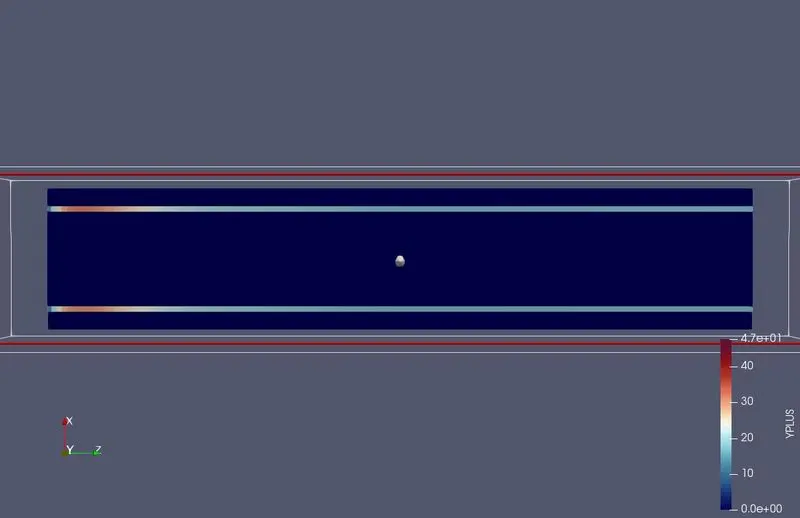
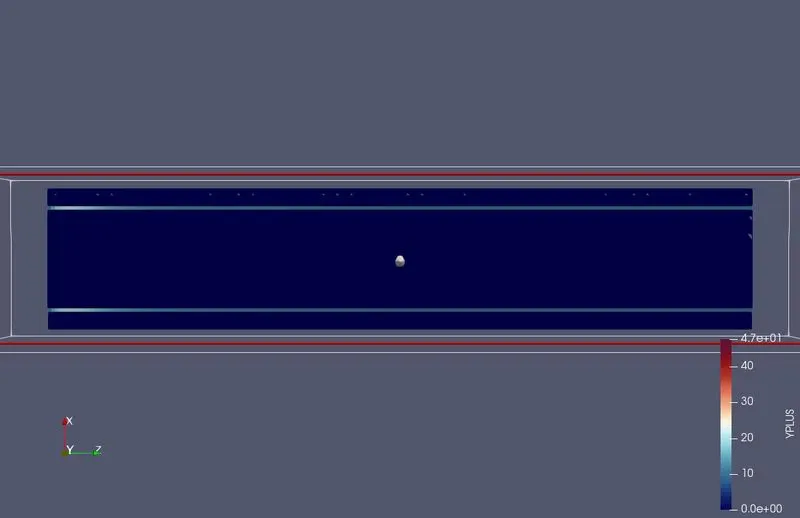
- Also Y+ parametre were also added to Output files


Outputs
Grid Dependency test
Case 1,Mesh size = 0.08
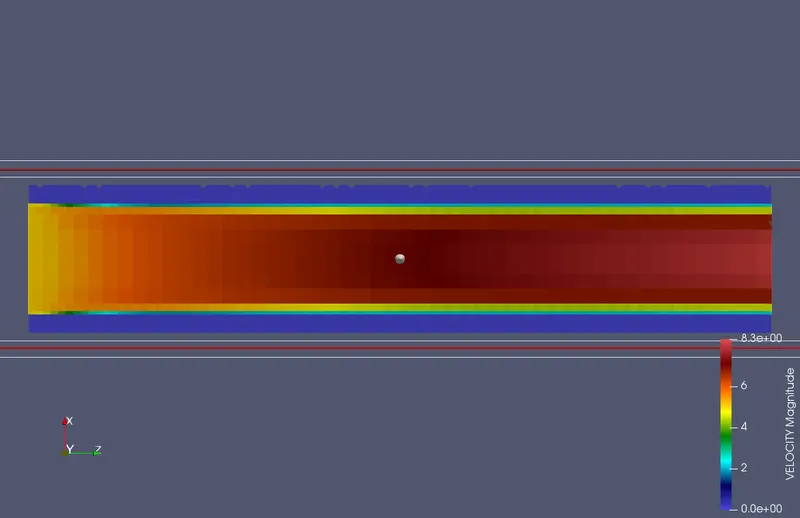
- Velocity
- Temperature
- Y+
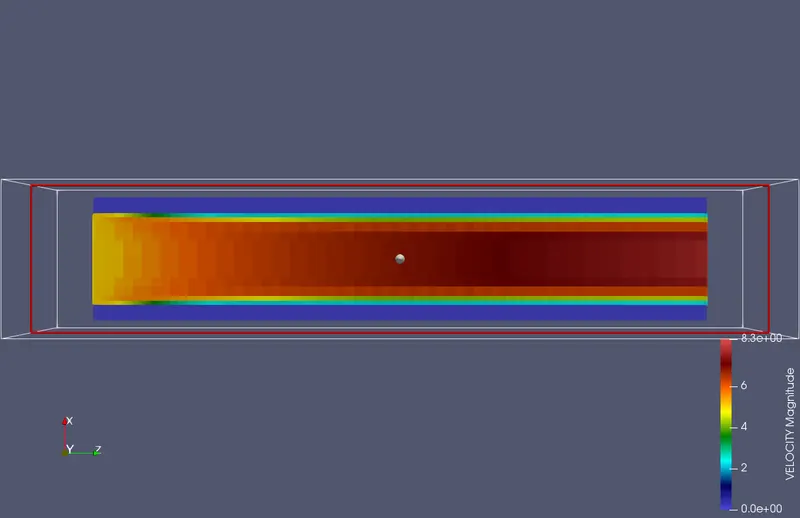
Case 2, Mesh size = 0.006
- Velocity conotur
- Temperature contour
- Y+
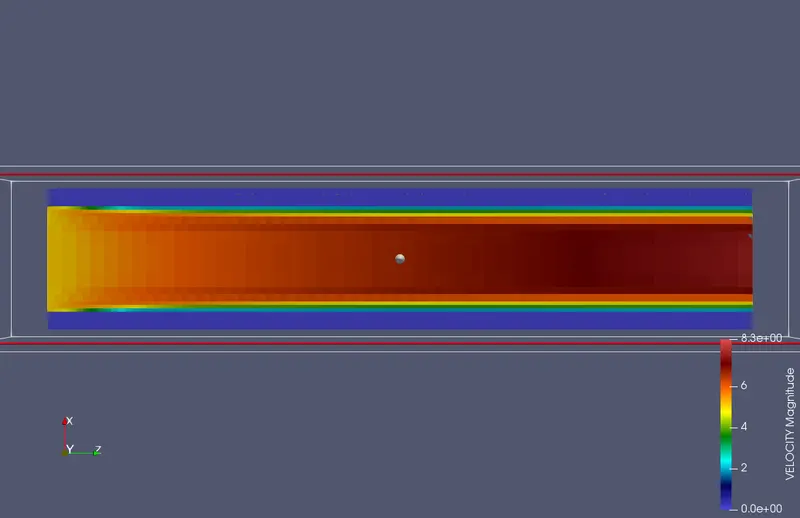
Case 3, Mesh size = 0.004
- Velocity conotur
- Temperature contour
- Y+
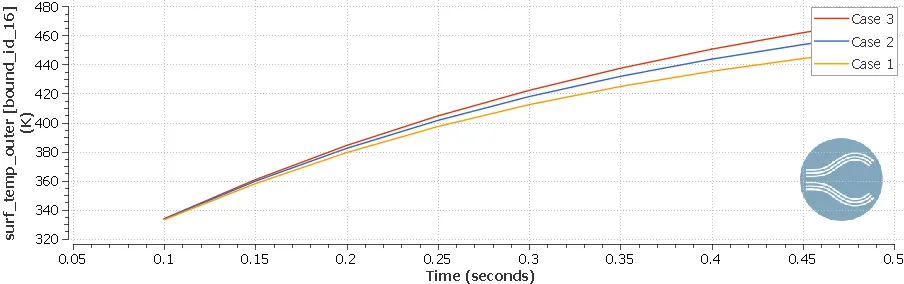
Outlet Temperature
Total Cells
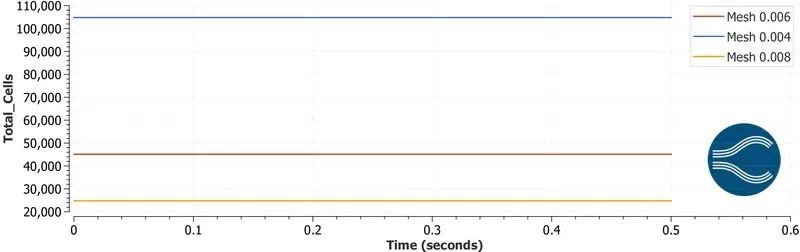
Observations
- From the outlet temperature plot there can be seen only less variation in the values from each other. Although there is variation a finer mesh gives finer results
- No much differences were observed from the velocity plots
- But the computaional power required for the finer mesh (0.004 m) was higher
- From the total cell plots we can see that the number of cells in mesh size 0.004 is way too higher compared to other mesh sizes and hence sticking to mesh size 0.006m is a good Idea since we prefer better results at efficient resources
Testing the effect of supercycle stage interval
Temperature conoturs
- Super cycle interval = 0.01
Elapsed time = 39109.90894 seconds
- Super cycle interval = 0.02
Elapsed time = 37915.850139 seconds
- Super cycle interval = 0.03
Elapsed time = 19877.868957 seconds
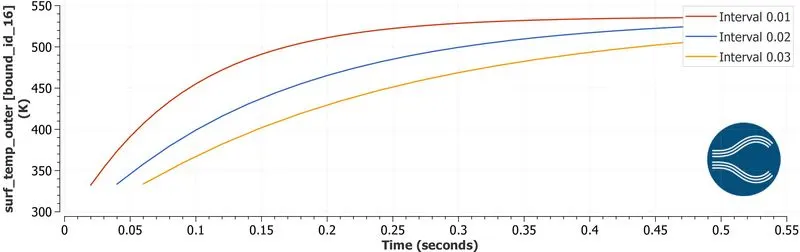
Outlet temperature plot
Observations
- By observing the contours we can say that the temperature at solid part converges at faster at lower values of supercycle intervals
- The above statement can be ensured by taking a look at the plot , the curve of 0.01 is steeper than 0.02 implyng that it gets to the values fast
- But when it comes to the resource usage or time the lower values of Super cycle interval takes more of it
Conclusions
- A CHT simulation was done
- The reynolds was made to 7000 by adjustiing the inlet velocity
- Y+ were added to post file
- Grid dependancy test was done
- Effect of supercycling interval was anlysed