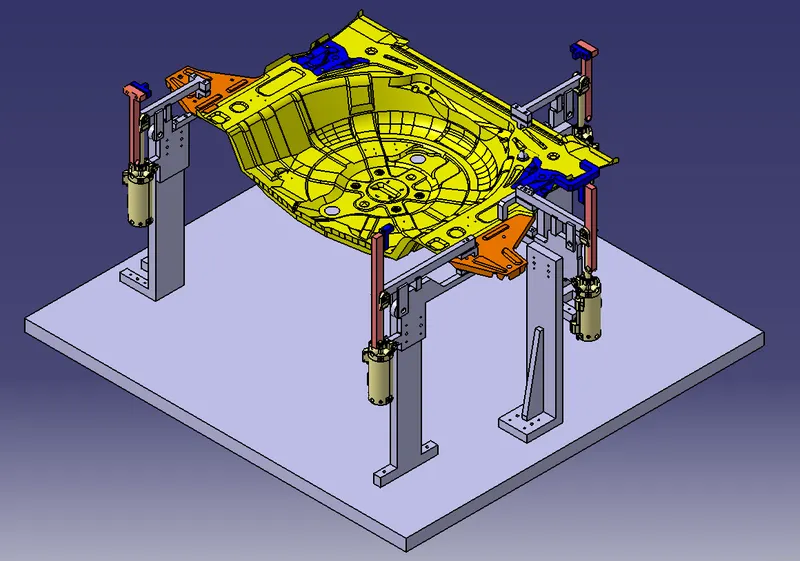
Week 6:- Clamp Unit & Pin-Clamp Unit Design Challenge
Aim: To design 3 different types of Swivel Clamp Unit with different Riser, Blade, and Clamp Arm for the given Car Panel and also design a Pin-Clamp Unit for the given Car Panel. Write a Detailed Report describing the process and attach relevant images.
Introduction:
Clamp Unit: The clamp unit is designed to clamp or hold the car panel with the help of the above spoken mylars, the clamp and rest mylars. In this challenge we use the tuenkers pneumatic cylinders for the clamp units and the design shows both the closed and open position of the clamp arm. 4 way shims are provided in the clamp unit and this is done to adjust the position of the mylars to compensate for the tolerance stack up.
Swivel Clamp Units: Swivel clamp units are a variation of the regular clamp units which are used to hold or clamp a work panel in an assembly. The swivel units use a pneumatic cylinder which is connected to the clamp and moves about a pivot attached to the clamp arm and the blade. The open clamp position in a swivel clamp unit is 90 degrees. The pneumatic cylinder uses compressed gas to produce the required force to move the clamp arm to its open and closed position. In the closed position it should be ideally clamping the work panel with only the required amount of force to hold the panel correctly and also it should ensure not too apply too much clamping so as to not damage the work part.
Components of a Swivel Clamp Unit:
1) Clamp Arm: The clamp arm is the component that connects the cylinder to the clamping mylar. The clamping mylar will be fitted to one end while the cylinder will be attached to the other end. The clamp will move about a pivot which provides its opening and closing trajectory.
2) Stopper Block: The stopper block is a piece that is used to prevent the clamp arm from exceeding its fully closed position and to prevent any damage to the car panel which would be caused if the clamping mylar exceeds its clamp force.
3) Riser: The riser is merely component that is used to give the required height from the base to the fixture.
4) Blade: The blade is a component that is fitted to the riser. The blade can come in various shapes depending on what all it must accomodate on it. In this challenge, we use the blade to place the Stopper Block, L-Blocks, Rest Mylars and even the pivot for the clamp arm.
5) Fingers/Mylars: The mylars or fingers are used to hold the panel in place. There is a clamp mylar to provide the required clamping force to hold it in place and this is usually coupled with a rest mylar which assits in holding the panel up so that it can be clamped probably.
6) Cylinder: The cylinder used in this case is a pneumatic cylinder which makes use of the compressed gas in it to provide the required linear motion which in turn moves the clamp arm which is attached to it.
Design of Swivel Clamp Units
1) Swivel Clamp Unit (1)
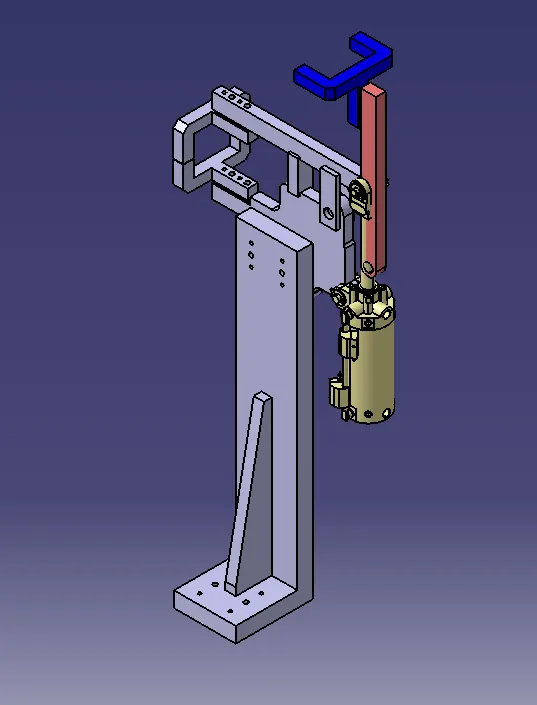
Isometric View
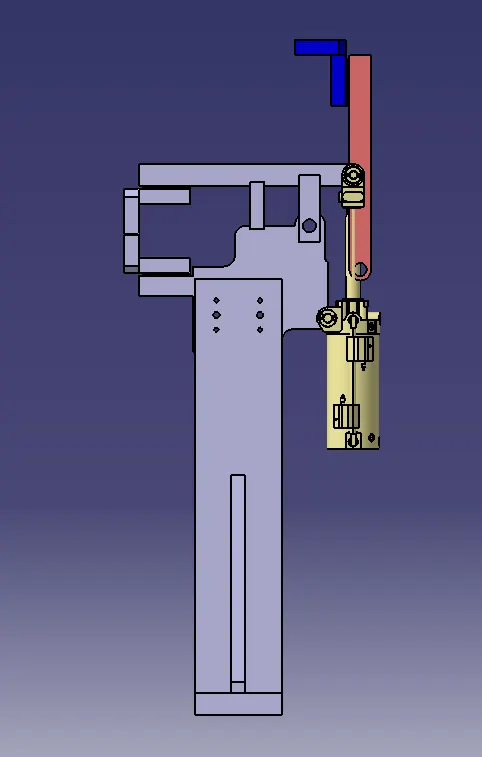
Front View
2) Swivel Clamp Unit (2)
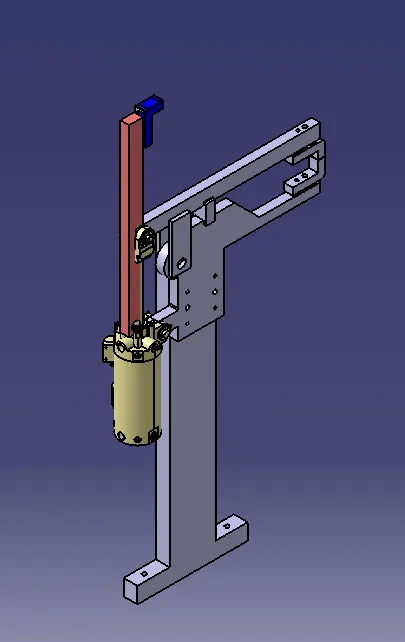
Isometric View
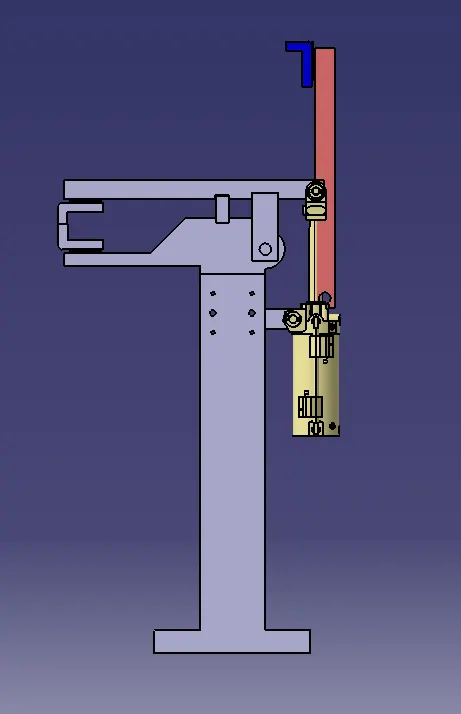
Front View
3) Swivel Clamp Unit (3)
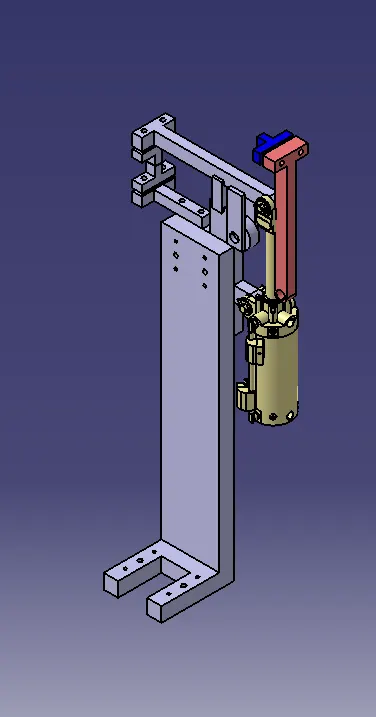
Isometric View
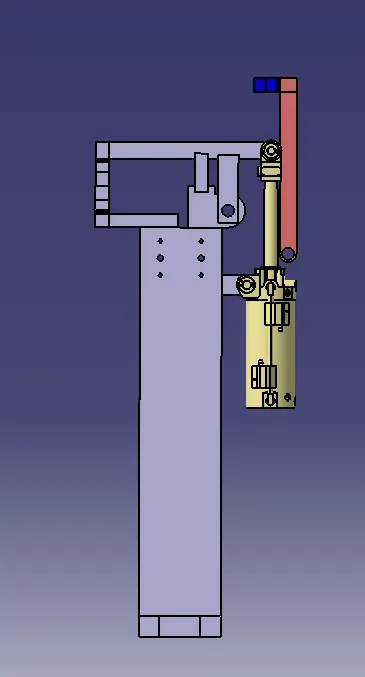
Front View
4) Pin and Clamp Unit
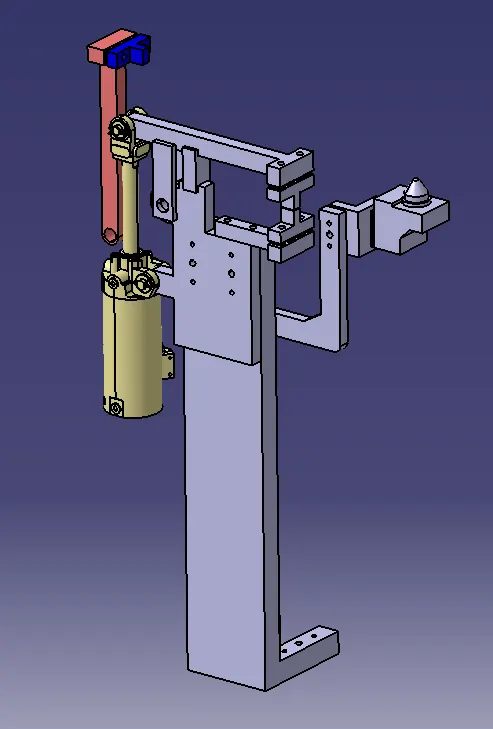
Isometric View
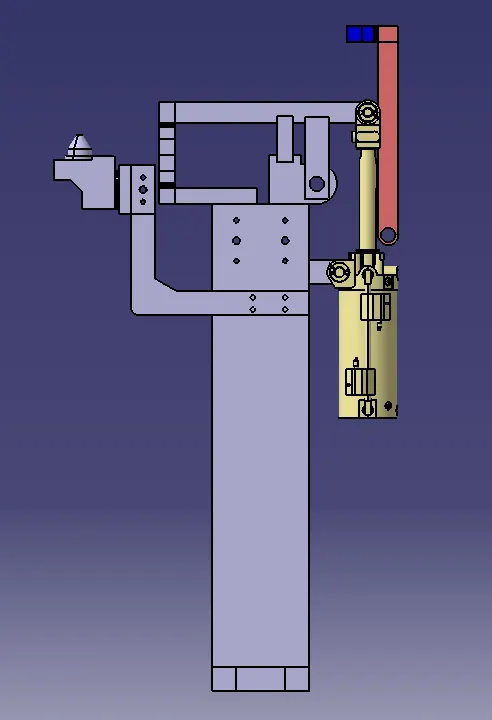
Front View
Final Design & Conclusion:
The swivel clamp units were designed according to the given requirements and the image with all the units holding the panel