Hood design-Week 2
The hood is a hinged part or cover that rests over the engine bay in a front engine car. It is also commonly referred to as a Bonnet in many parts of the world. The main purpose of the hood is to provide access to the engine and the other components around it for maintenance. The hood is considered as door too as it consists of an outer and inner panel and the inner panel is what give the hood of a car its strength. The hood is constructed mostly from the same materials that were used in the construction of the vehicle body and the most commonly used materials are steel, aluminium or composite materials like carbon fibre depending on the type of vehicle and the budget for its development.
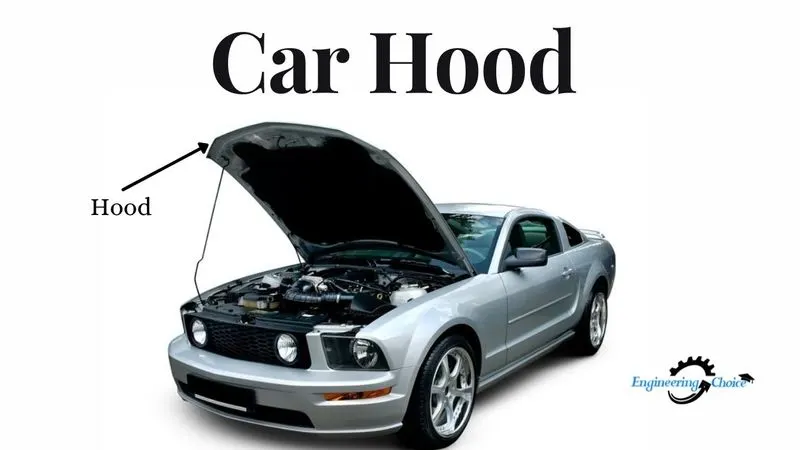
Depending on the vehicle, the hood maybe hinged at it’s front, rear and in the case of much older vehicles, they would split open as it was hinged at the centre.
Although the hood plays a part in vehicles to provide access to the engine bay, it plays another very critical role in a car, and that is for the frontal crash and the pedestrian safety requirements. The hood is the component that will dissipate the energy from a frontal impact away from the passenger cabin and thus keeping the passengers safe from receiving the full impact energy which could prove to be fatal for the occupants.
Components of the Hood:
- Inner Panel:
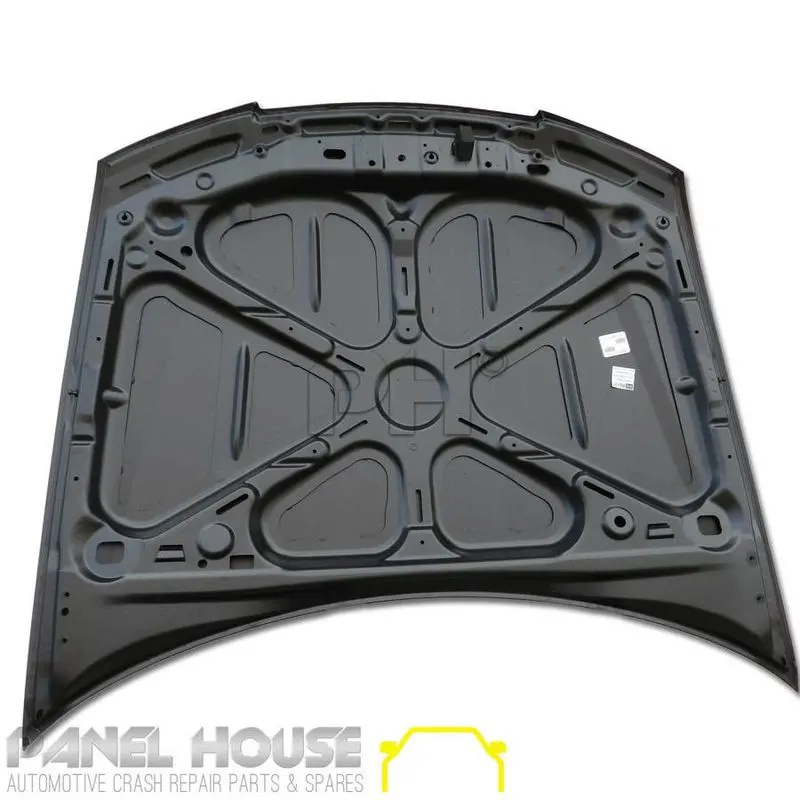
The inner panel of a hood is one of the most critical components of a vehicles hood assembly as this is the part that is used for the dissipation of the impact force when a vehicle is involved in a front crash.
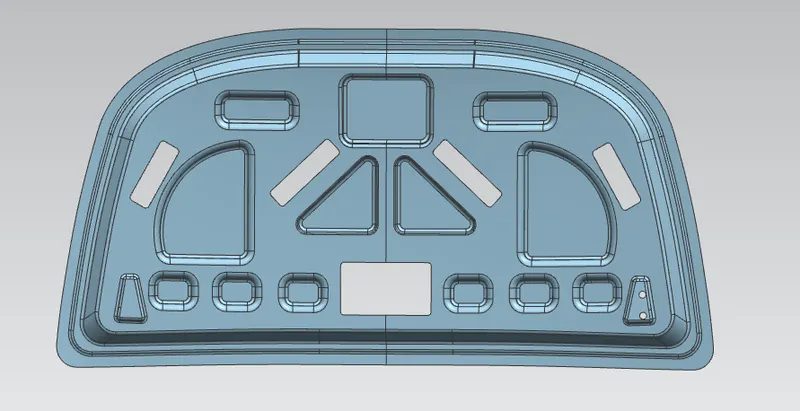
The Inner Panel contain embosses on it and the provision of these embosses ensure that there is no direct load path for the impact force to travel into the cabin and thus minimising the force that reaches the passengers upon a frontal crash. The design of the inner panel is the most crucial as it plays such an important part when it comes to frontal impact and the safety regulations about it.
The Inner Panel is also designed in a way, along with the outer panel, to crumple or deform in such a way that.
- Latch and Striker Mechanism
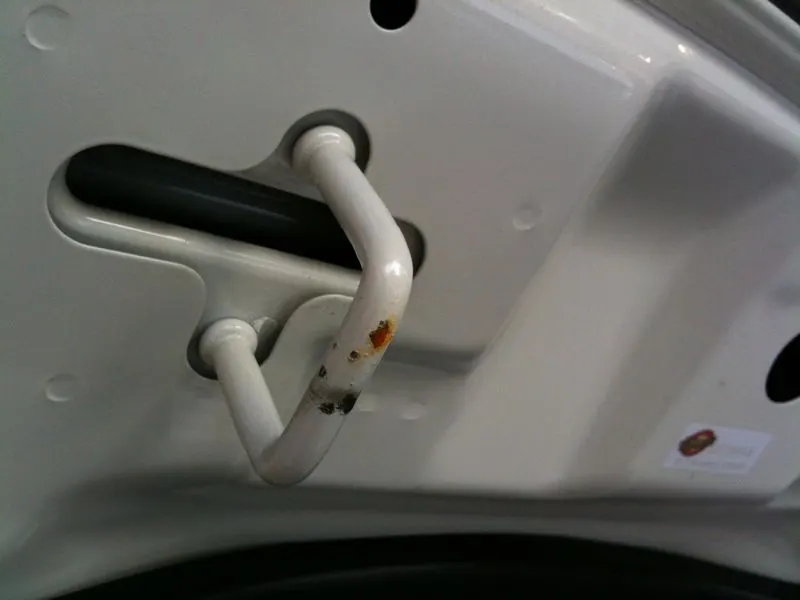
A vehicle hood latch and striker mechanism are the components that helps with the locking and unlocking mechanism in the hood. It is usually placed in the front section of the hood. The striker is placed on the inner panel of the hood and this striker engages the latch when the hood reaches its closed or closing position and then locks the hood in place so that it does not open in normal driving conditions.
Once closed and locked, the hood can only be opened by manually actuating the mechanism via a primary release which would be placed inside the cabin of the vehicle, and then a secondary release mechanism which would involve putting your hand between the gap the primary release creates and the pushing or pulling a lever which release the mechanism and thus freeing the hood from the latch.
- Hinges
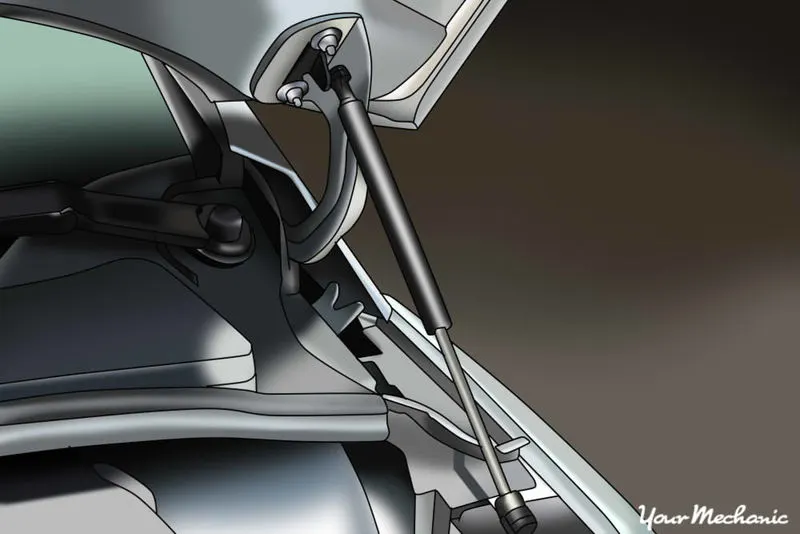
The hinge is the part in the hood assembly that aids the hood in attaining its opening and closing motion. The hood opens and closes due to the rotating motion of the hinges.
These hinges are placed towards the rear of the hood and it keeps the hood fixed to the fender of the vehicle. The hinge axis must be perpendicular to the position of the latch for assembly to function as intended. The image below shows both the Hinge and the Support Rod.
- Support Rods
The hood by itself cannot remain upright once opened unless it is supported. This support that is provided in the hood assembly to help the person keep the hood upright when he or she opens it, is called a support rod. It is merely a metal rod that is attached to the hood inner panel and provides the support by locking itself into a hole provided in the engine bay.
Embossing:
Embossing on sheet metal is the process of stamping the sheet metal to produced raised or sunken features on the sheet metal. This is accomplished with the application of heat and pressure on the sheet metal. The sheet metal to be worked on is drawn through a pair of dies, a male die and a female die and these are how the embosses are created on sheet metal.
Mastic Data:
A mastic sealant is the material that is used in a car hood to fix or join the outer and inner panels of the hood. The mastic sealant is a hard rubber that is placed in specific points throughout the hood and melts on the application of heat and then hardens up when cooled to join the 2 panels.
The mastic sealant has another use and that is, it provides an increase in the rigidity or stiffness of the material locally. It provides this additional stiffness in a range of 80mm radius from the point of application of the sealant.
Latch Trajectory
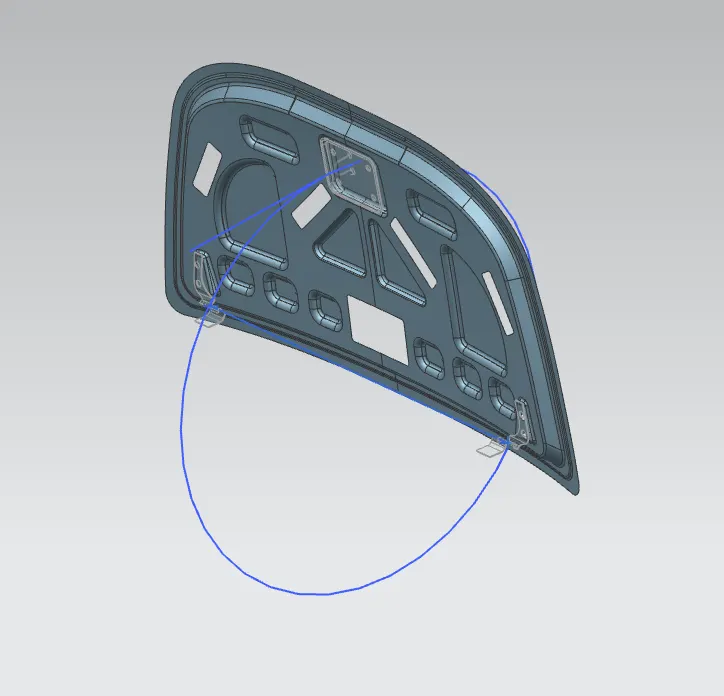
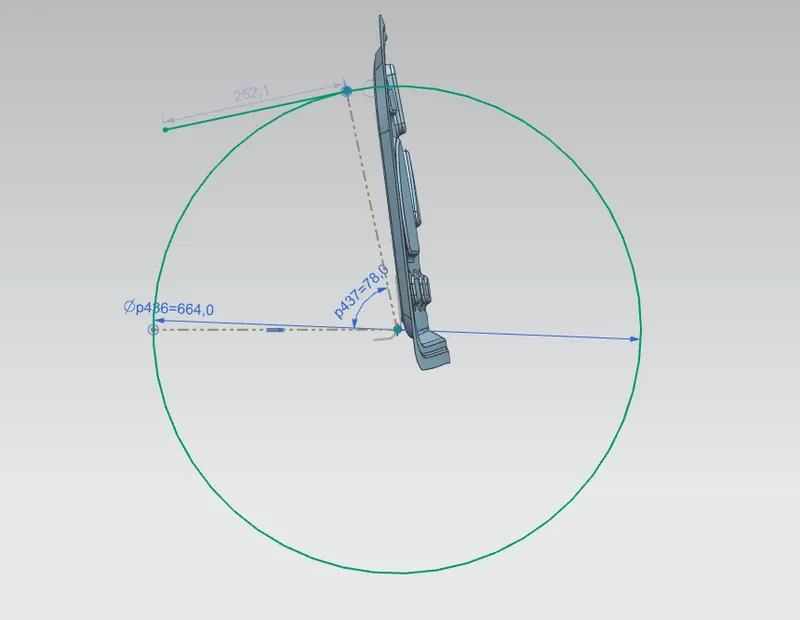
The images below show the latch and striker and how it was positioned on the inner panel and the method to check for tangency for the striker.
Hemming:
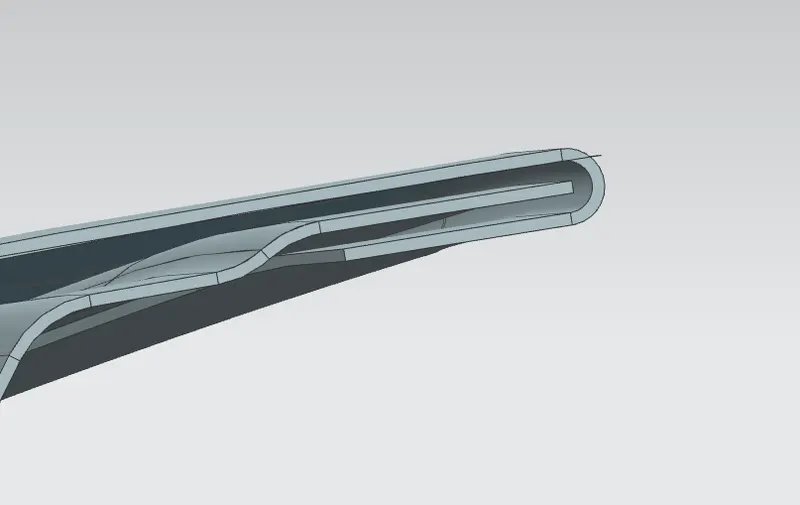
Hemming is a sheet metal forming process in which the different sheets are joined by bending it usually to angle of 180 degrees.
This process is used in the manufacturing of automotive body panels and components such as the hood, doors, trunk lids and tail gates. It is very commonly used in the industry because of the fact that the alternative methods such as welding or riveting causes issues when it comes to the aesthetics of the vehicle as the weld spots or rivets will be seen on the outer panels of these components and to avoid such issues, the process of hemming is used on these parts.
Hemming is classified as Die hemming and Roller hemming. Die hemming is ideal for mass production but it is the more expensive technique in terms of the tools used but the cycle times are very low.
On the other hand, roll hemming is carried out incrementally with a hemming roller. An industrial robot guides the hemming roller and forms flanges. Roll hemming is very flexible to use and the toll costs are much lower compared to die hemming but the cycle times are high.
Deep Drawing:
Deep drawing is another metal sheet forming process where a sheet metal blank is radially drawn into a forming die with the help of mechanical action of a punch. It is called deep drawing when the length of the drawn material is more than the diameter of the material. It is used commonly for the manufacturing of parts such as gas tanks, sinks, containers etc. The part is redrawn through a series of dies till the intended dimensions are formed.