Fender Design - Wheel Arch Challenge
Fender Regulations:
The fender is an important component on the exterior of the car as it houses the wheel arch which in turn houses the vehicles wheels. The wheel should ideally sit inside the boundaries of the fender to avoid the it from spraying abrasive particles into the air which could potentially cause damage, in the form of chipping to the exterior components of the vehicle or these same particles could be flung onto pedestrians, which again be dangerous.
Considering the factor of pedestrian safety, there are certain regulations set by the different automotive bodies around the world when it comes to this safety factor. Although all of them state that the tire & wheel should sit inside the boundaries of the fender, there are slight variations on the distance the tires must be offset from the fender boundary depending on the different automotive governing bodies based on the road conditions of that specific region.
In this challenge, we will be only looking at the European regulation requirement for the design of the fender. The steps to check if the given model passes these requirements is given below :
- First the wheel center is taken, a 30° line to the left of the vertical is taken and then a 50° line to the right of the vertical is taken.
- Next, a line at a height of 150 mm from the horizontal is taken and joined to the center.
- A line from the midpoint of the 50° line and the line 150 mm from the horizontal is drawn.
- From the points that these lines make on the fender, there should be a minimum gap of 10mm between the fender and the wheel.
If the model has atleast a 10 mm gap between the fender and the wheel at all these point, then it passes the European fender regulation requirement.
Figure 1 shows the model that was given for validation in this challenge.
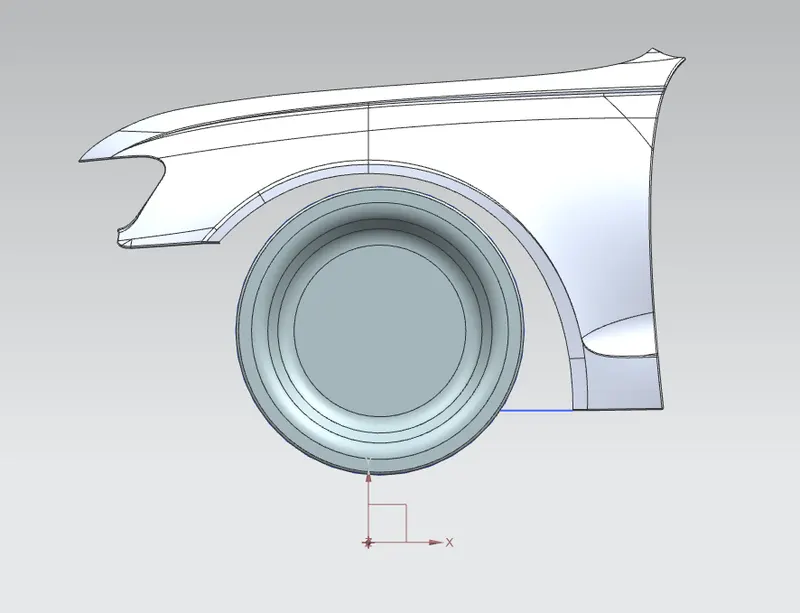
Figure 1
Figure 2 depicts how the steps, mentioned above, were taken to go about with the validation
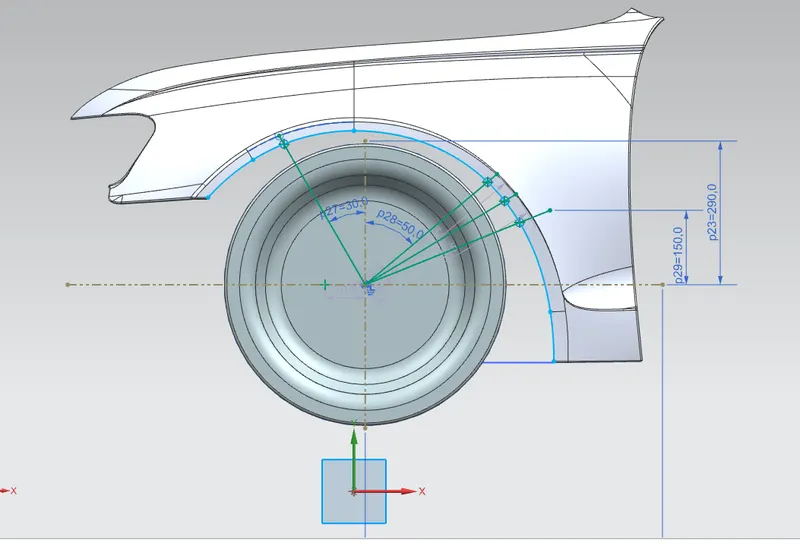
Figure 2
The points from the measured lines were projected on the diameter of the wheel and then the measurements were taken for each of the points.
- Figure 3, Measurement of the point on the 30° line (Line A) from the fender
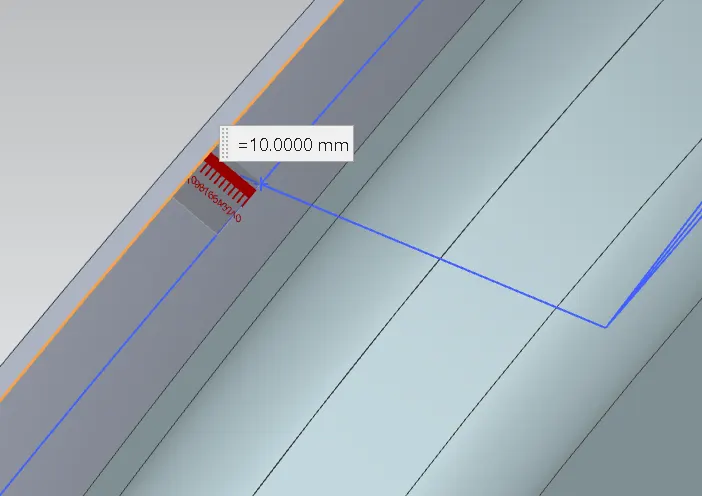
Figure 3
- Figure 4, Measurement of the point on the 50° line (Line B) from the fender
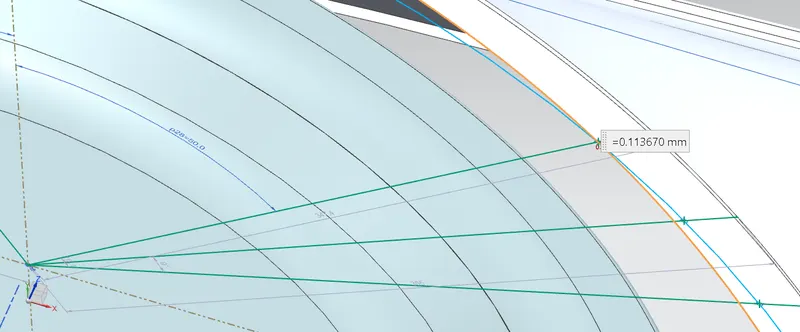
Figure 4
- Figure 5, Measurement of the point on the 150 mm line (Line C) from the fender
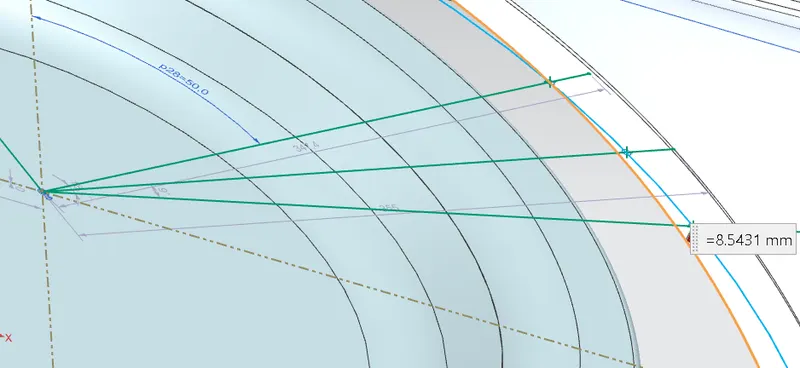
Figure 5
- Figure 6, Measurement of the point on the bisecting line (Line D) from the fender
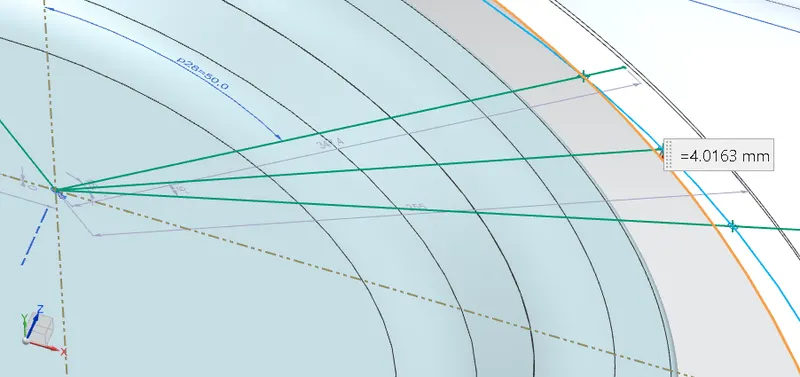
Figure 6
Result:
|
Line |
Distance From Fender |
Validation |
|
Line A |
10 mm |
Pass |
|
Line B |
0.113 mm |
Fail |
|
Line C |
8.54 mm |
Fail |
|
Line D |
4.016 mm |
Fail |
The European regulations state that at all the point the distance between the projected points on the wheels diameter to the fender should 10 mm or more and from what we can see from this analysis, this fender model will not pass through the European regulation requirement as only at one point, i.e Line A, does the distance meet the 10 mm requirement. At every other point it is less than 10 mm and hence this model fails to pass the European standards.