Week 6 - CHT Analysis on a Graphics card
The Conjugate Heat Transfer (CHT) analysis type allows for the simulation of heat transfer between solid and fluid domains by exchanging thermal energy at the interfaces between them. Typical applications of this analysis type exist as, but are not limited to, the simulation of heat exchangers, cooling of electronic equipment, and general-purpose cooling and heating systems.
The term ‘conjugate heat transfer’ refers to a heat transfer process involving an interaction of conduction within a solid body and the convection from the solid surface to fluid moving over the solid surface. Therefore, a realistic analysis of conjugate heat transfer problems necessitates the coupling of the conduction in the solid and the convection in the fluid. This is generally accomplished by satisfying the conditions of continuity in temperature and heat flux at the fluid–solid interface. There are many engineering devices in which conjugate heat transfer analysis becomes important. Most common example is a heat exchanger in which the conduction in the tube wall is greatly influenced by the convection in the surrounding fluid. Another example of conjugate heat transfer problem is found in fins.
The graphic card is the main component which is responsible for the better quality of the visuals displayed. In this experiment we study the heat generated by the graphic card with effect of different inlet velocities.
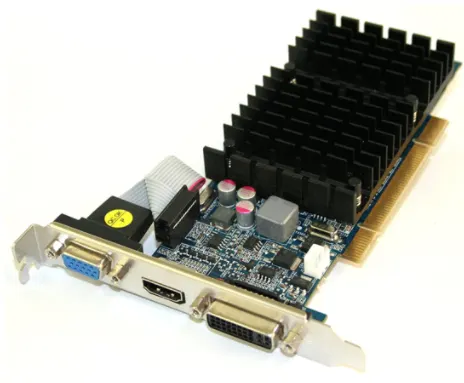
The whole graphic card contains 3 sub parts viz processor, Base, Fin.
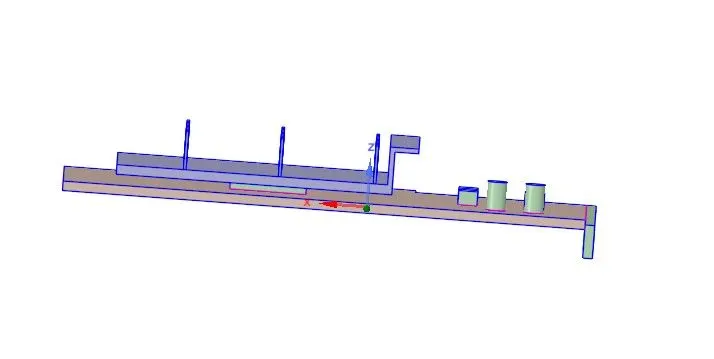
The model used can be seen in the image as it contains all the sub parts one on the top of other.
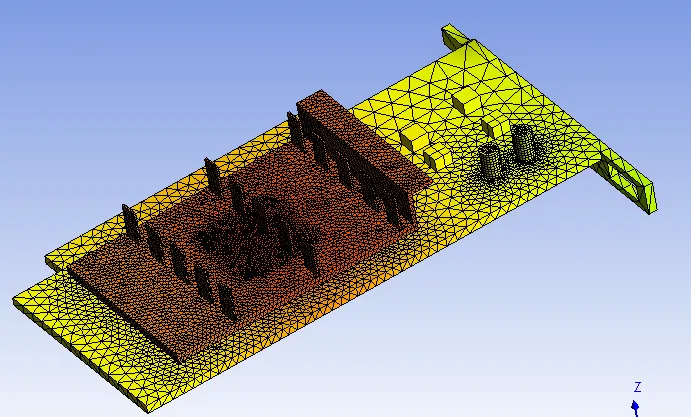
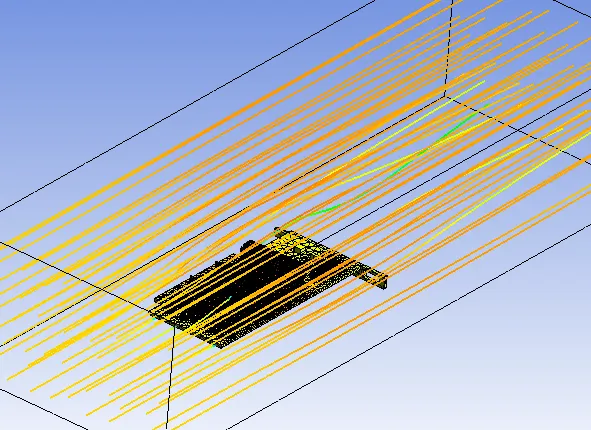
In the spaceclaim, model is imported and the whole model is made to be interconnected thus we get a cnformal mesh in the mesher option.
In the mesher tab, different mesh settings are incroporated and further which the results are observed.
In the setup, Pressure BAsed and steady solver is selected.
The base material is selected as aluminium.
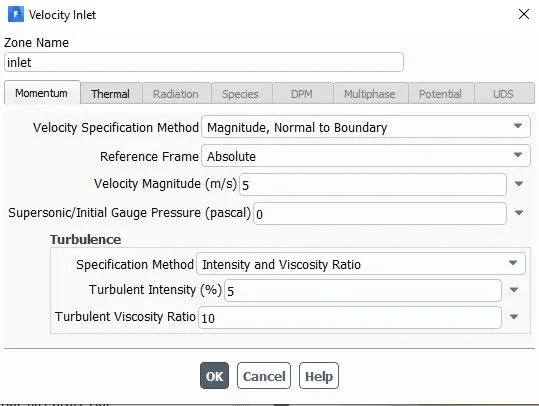
Processor material is Titanium. And Fins are selected to be of Copper. The velocity of air inlet is selected as 3 values (1m/s, 3m/s, 5m/s) at both baseline mesh and refined mesh.
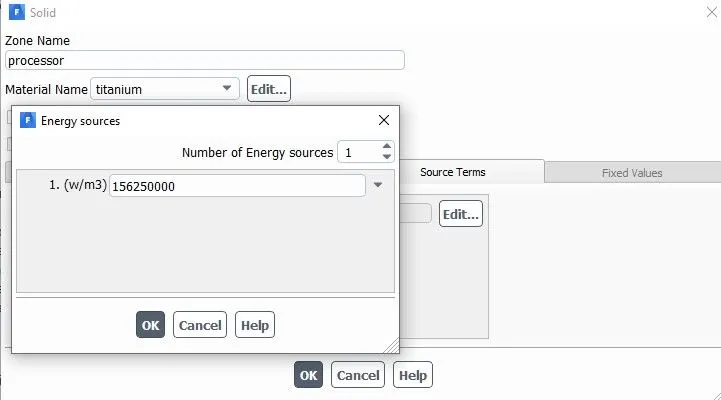
The processor is set to generate a heat of 156260000 w/m^3.
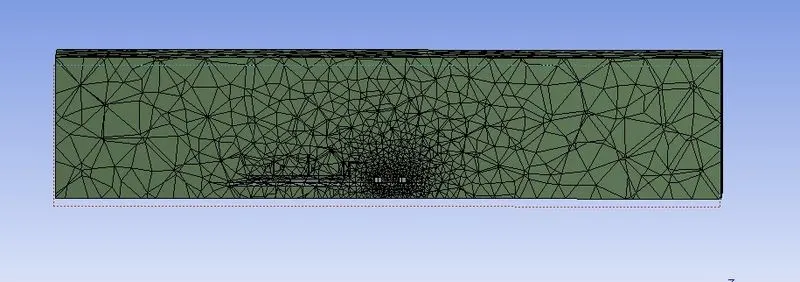
The baselline mesh is chosen as:
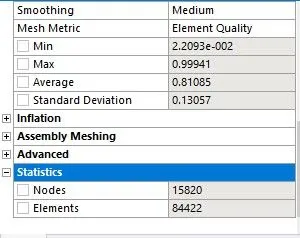
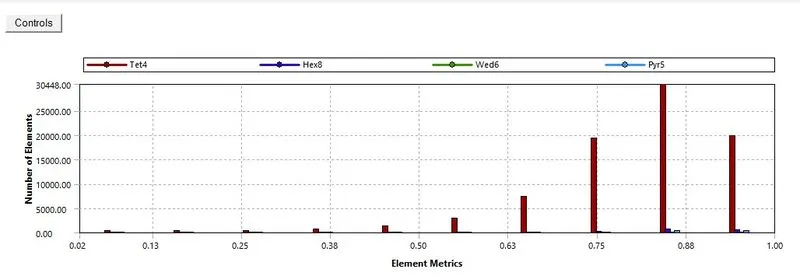
It is an Automatic mesher which gives an automatic mesh size and count. And result is-
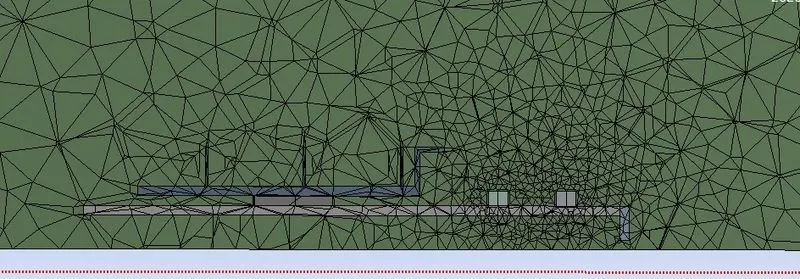
In the Refined Mesh body sizing is done on processor and fins and the overall mesh size is reduced to 0.002m:
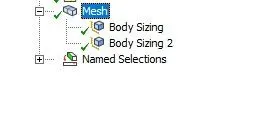
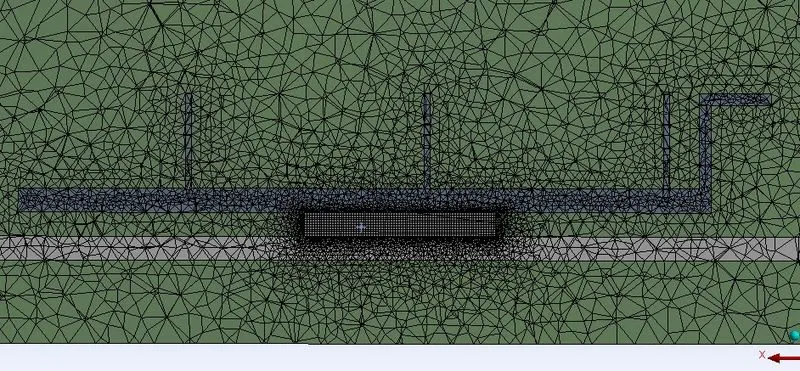
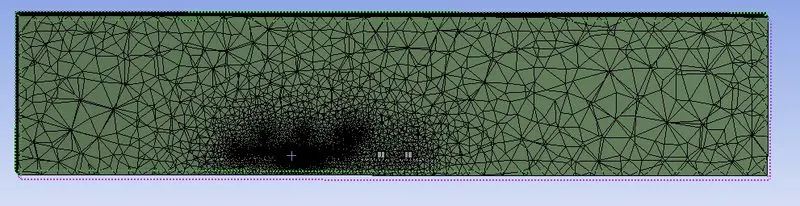
As seen from the above mesh settings it is clear that the mesh around processor is smaller which is ultimately required.
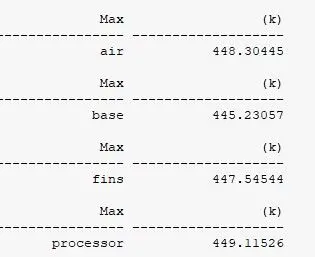
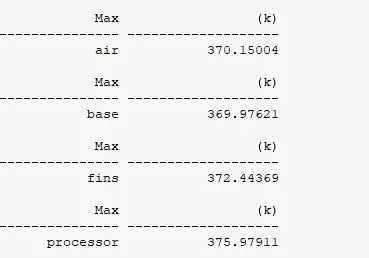
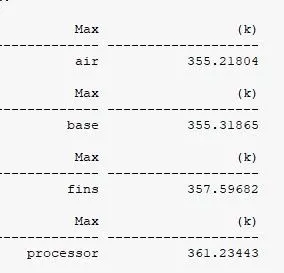
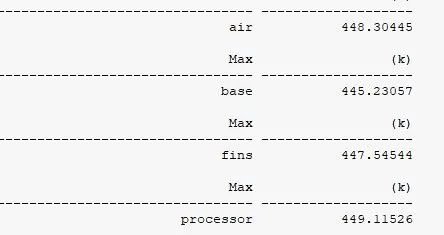
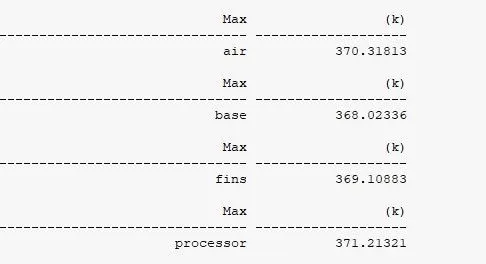
Maimum tempreature is measured and with the help of matlab and heat transfer formulas an approximate value of Heat transfer coeffiient is calculated.
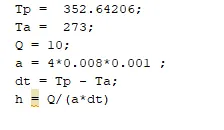
The two meshes and their post processing is distinguished below:
| Maximum temperature | Heat transfer coef(calculated) (w/(m-2*k-1)) | Temperature contour | |
|
Baseline Mesh (Inlet Velocity = 1m/s) |
 |
1.7744e+03 | 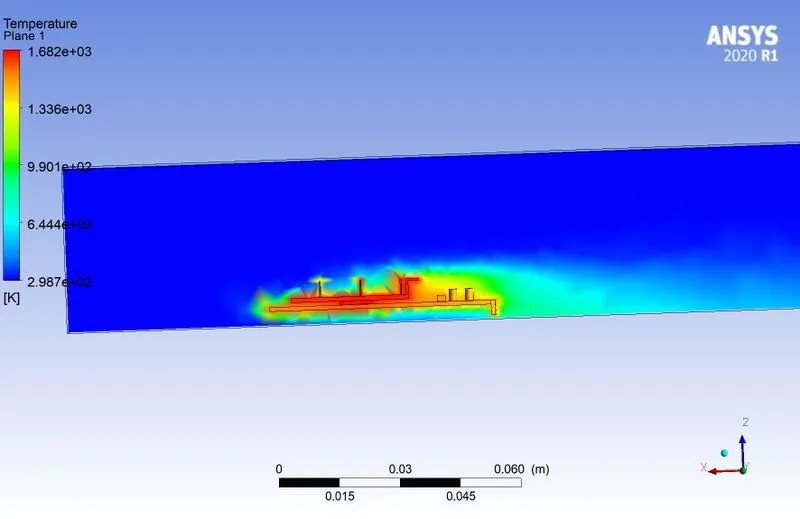 |
|
Baseline Mesh (Inlet Velocity = 3m/s) |
 |
3.0346e+03 | 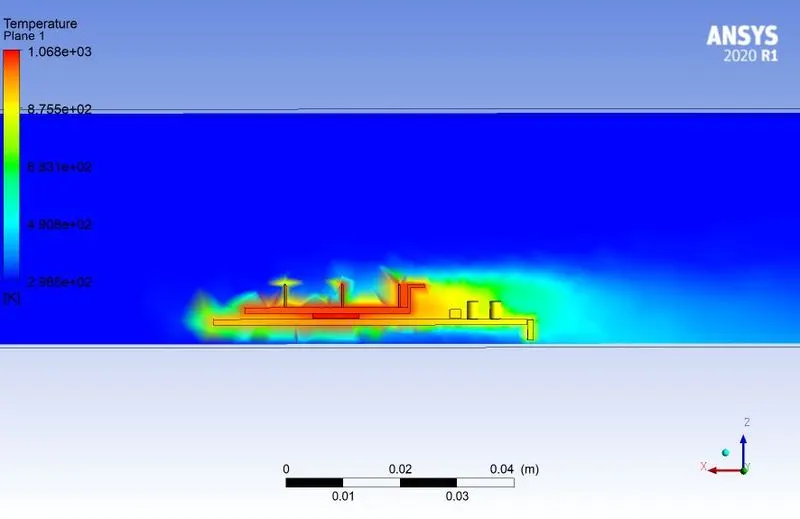 |
|
Baseline Mesh (Inlet Velocity = 5m/s) |
 |
3.5417e+03 | 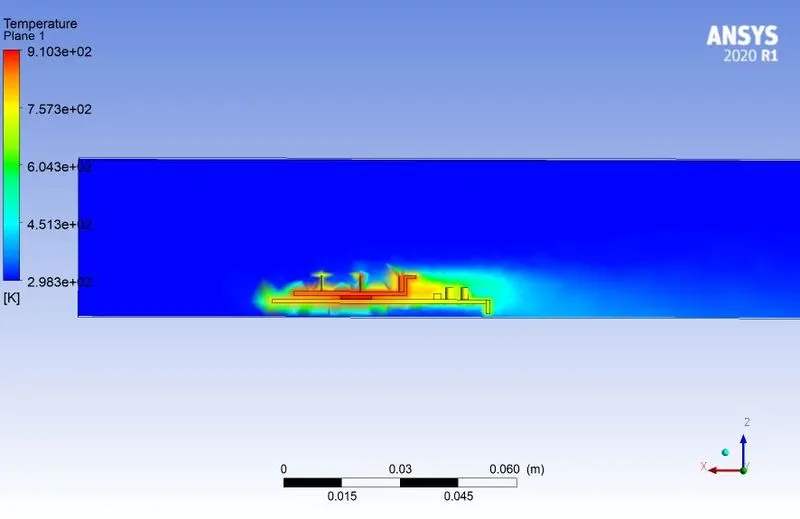 |
|
Refined Mesh (Inlet Velocity = 1m/s) |
 |
1.7744e+03 | 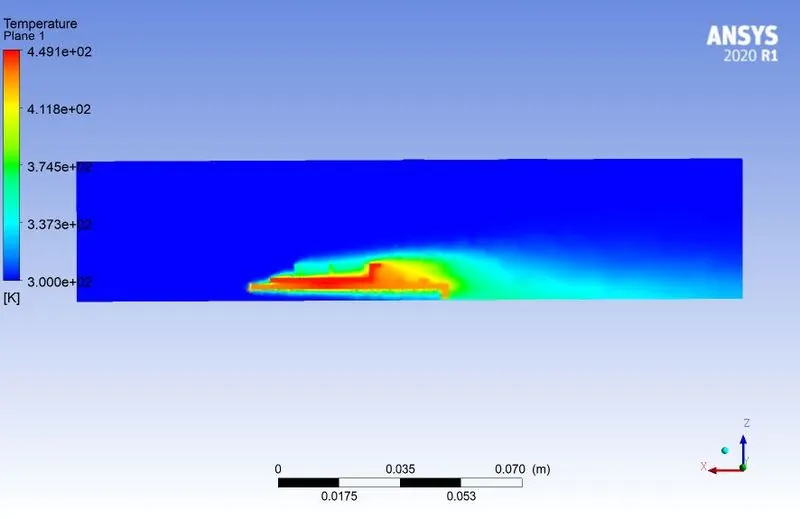 |
|
Refined Mesh (Inlet Velocity = 3m/s) |
 |
3.1819e+03 | 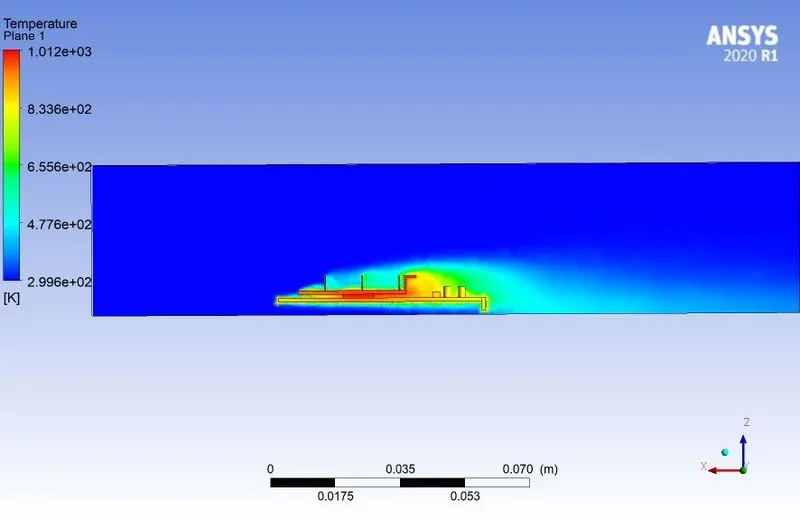 |
|
Refined Mesh (Inlet Velocity = 5m/s) |
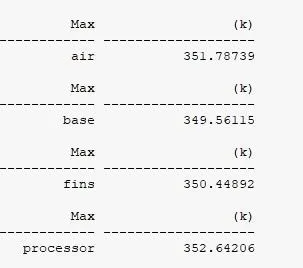 |
3.9238e+03 | 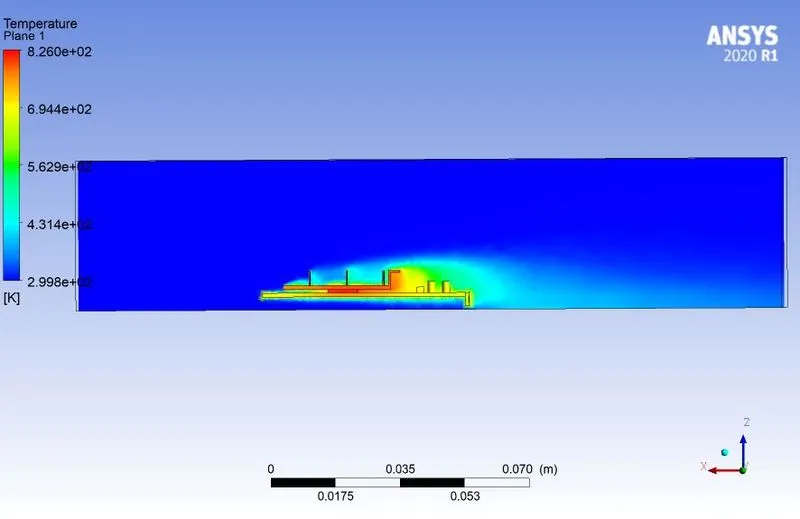 |
The residuals obtained in all of the above 6 cases are linear, hence it can be concluded that the results have coverged.
Baseline mesh:
1 m/s
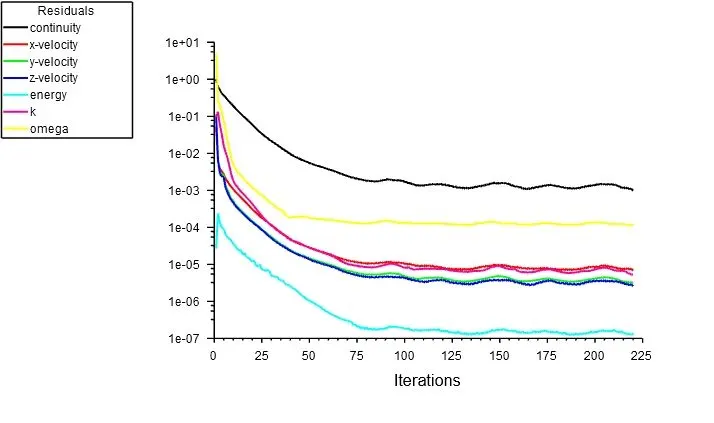
5m/s
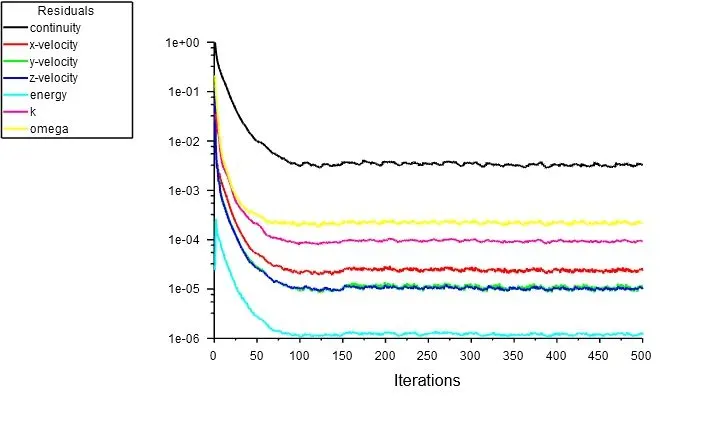
Refined Mesh:
1m/s
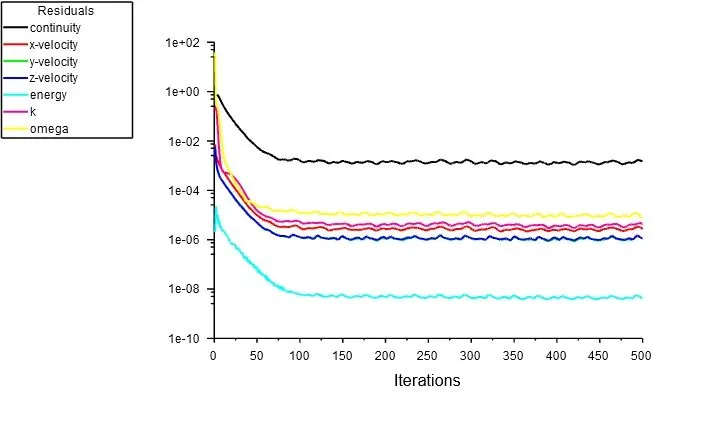
3m/s
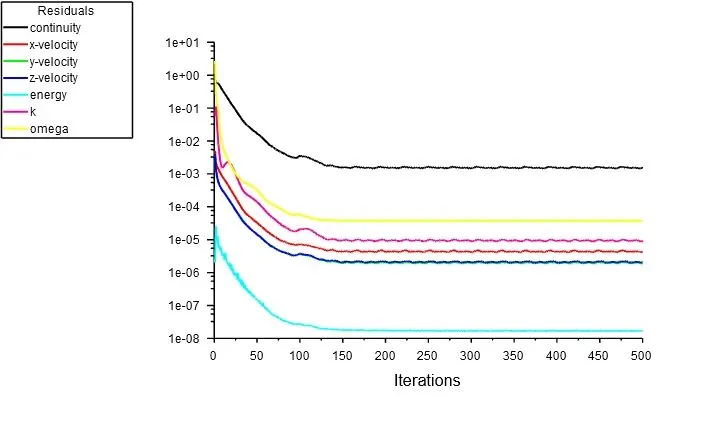
5m/s
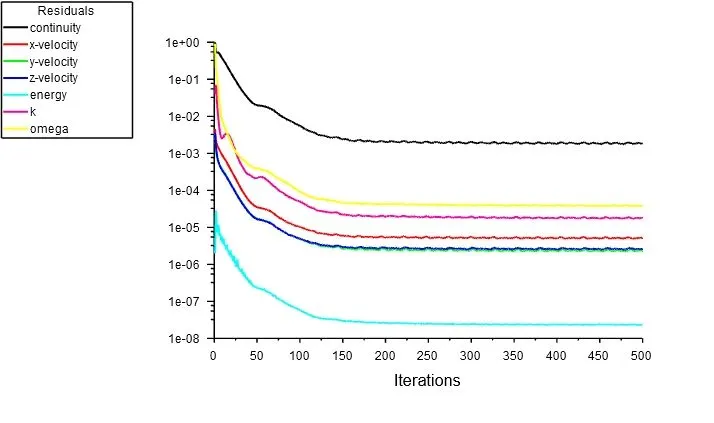
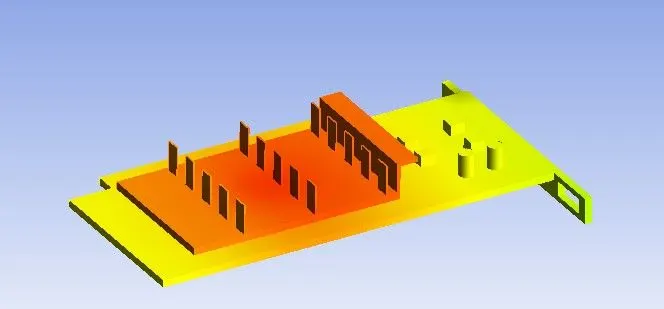
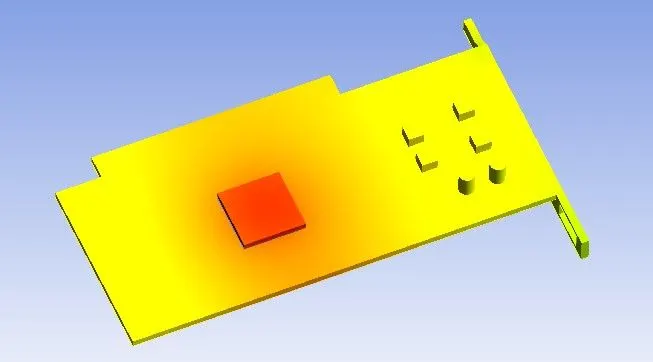
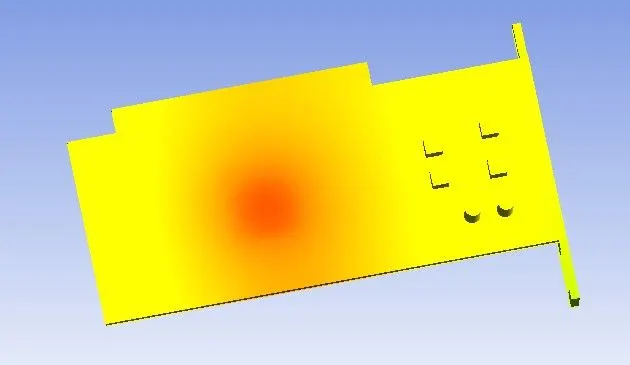
Hotspots:
In the above problem the processor act as a heat source which is generating the energy and the fins act as the the heat exchanger. Though there is the heat concentration in both base plate and the fins which can be seen below.
Note: The method of calculating heat transfer coefficient above is not a completely accurate method. Furthermore it is advisable to monitor the problem with physical probes and do the cross verification. Also in the heat generation formulas, they are made for standard geometry but our problem includes more complex geometry. So emperical relations must also be taken into account to get a more accurate value.