Week 6 - CHT Analysis on a Graphics card
Aim: To perform a steady state conjugate heat transfer analysis on a model of graphics card. By defining solid and fluid materials accordingly.
Introduction: Given model is Graphics card which includes Processor, Fins, & base body.
Out of these parts Processor is the heat generating part which need to be cooled down by using fins and proper air flow.
Material selection :
- Enclosure fluid flow : Air
Density (kg/m3) : 1.225
Specific heat (J/Kg K) : 1006.43
Thermal conductivity ( W/m K) : 0.0242
- Base body: Polysterene.
Density (kg/m3) :1050
Specific heat (J/Kg K ) : 1400
Thermal conductivity ( W/m K) : 0.12
- Processor : Silicon.
Density (kg/m3) : 2330
Specific heat (J/Kg K ) : 710
Thermal conductivity (W/m K) : 148
- Fins : Aluminium.
Density (kg/m3) : 2719
Specific heat (J/Kg K ) : 871
Thermal conductivity ( W/m K) : 202.4
Theory :
Given model has a major real life applications like in computers, super computers to process our data etc.
In which processor is a heat source, this heat needs to be decipiated to cool down the system.
Conjugate heat transfer is a type of heat transfer analysis between solids and fluid(s). This type of heat transfer includes both convection (between fluids) and conductive (between solids) heat transfer, as well as both forced and natural convection.
Solving and modeling approach:
Given model is initially taken to spaceclaim to create a enclosure around the model so that we can create a chamber to simulate air flow over the graphic card.
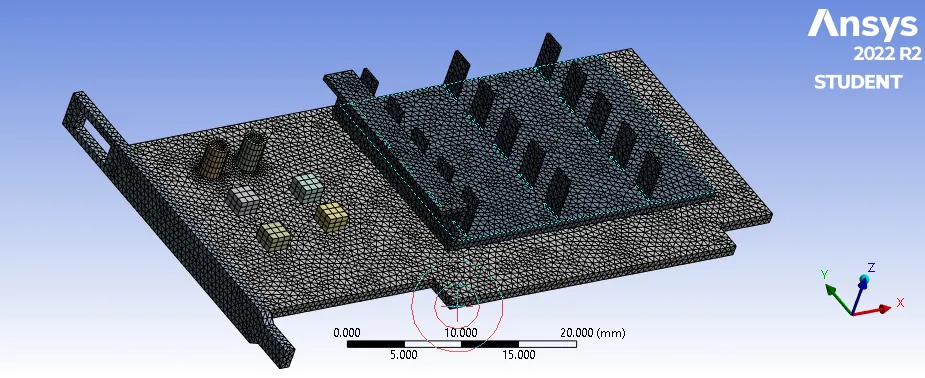
After that model is imported to Meshing, here meshing is done where enclosure is meshed with course mesh and model is meshed with finer mesh by using body sizing option. different named selection are given to models like, symmetry,inlet,outlet, fins, body & processor.
Mesh details :
No. of nodes : 85793
No. of elements : 491287.
After meshing model is taken to ansys fluent to solve.
Here in materials we define variours material properties like density,specific heat & thermal conductivity, In cell zone we define the material to particular part.
Procedure :
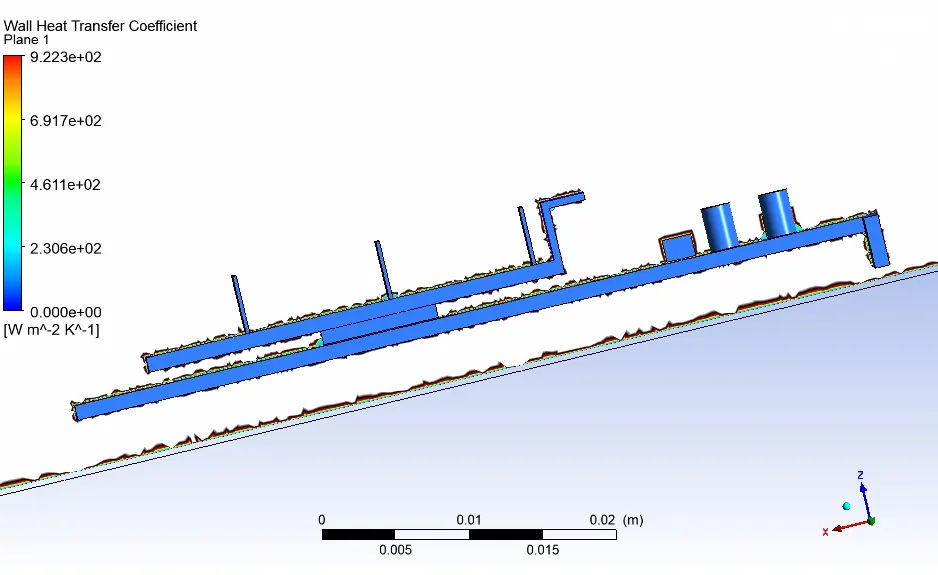
- CASE 1
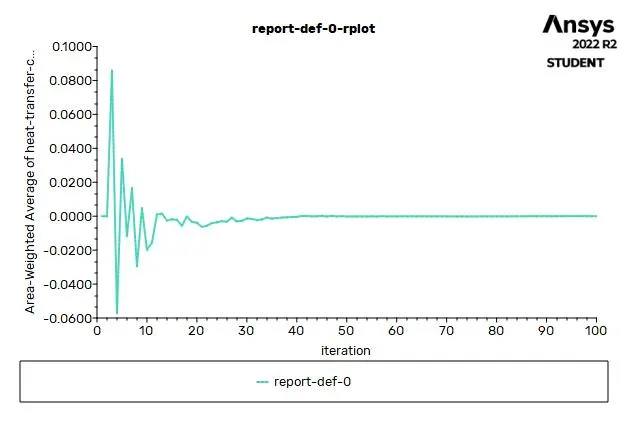
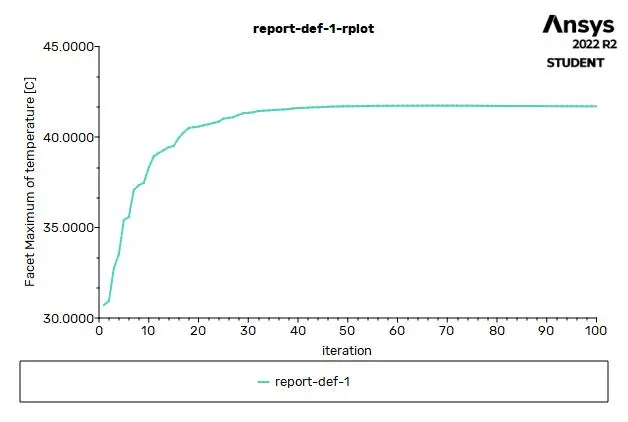
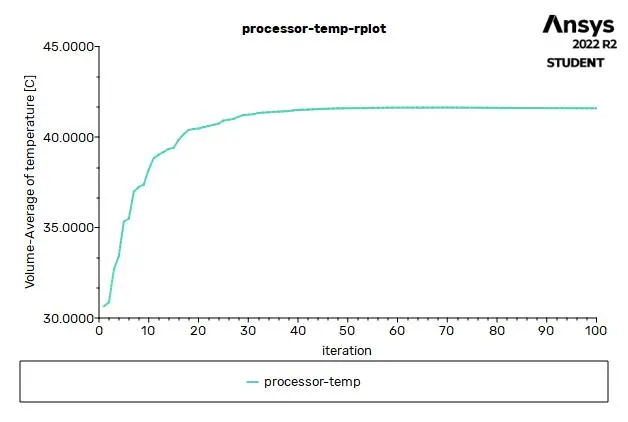
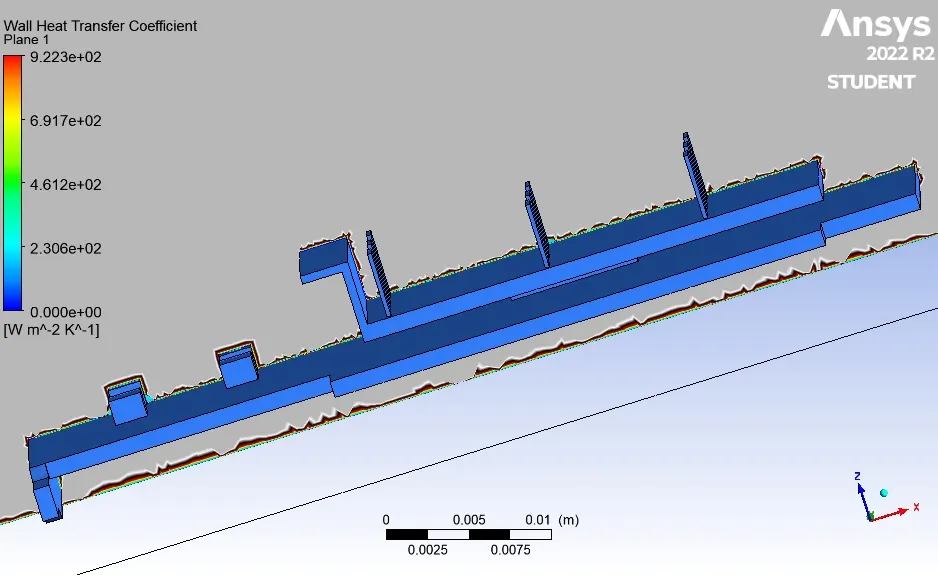
Forward air flow (RHS to LHS), Air speed = 1m/s.
Refined mesh condition.
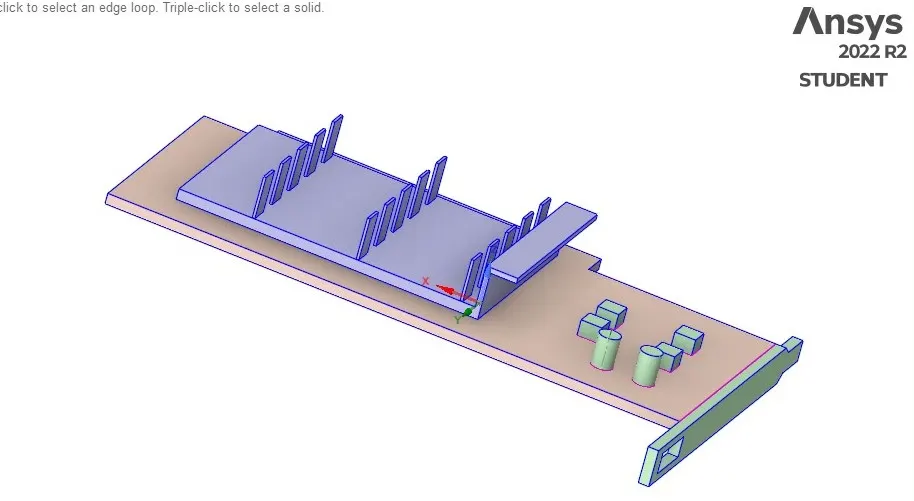
Space claim
Meshing:
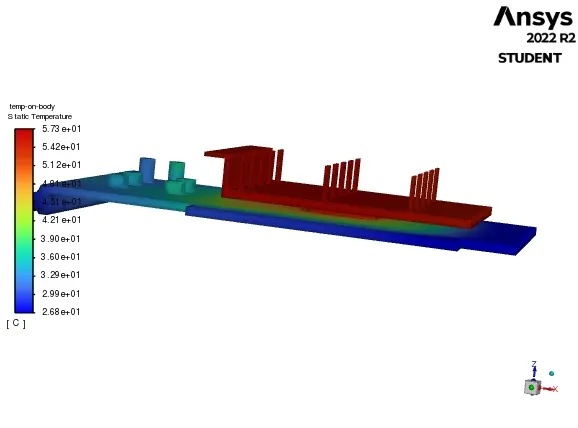
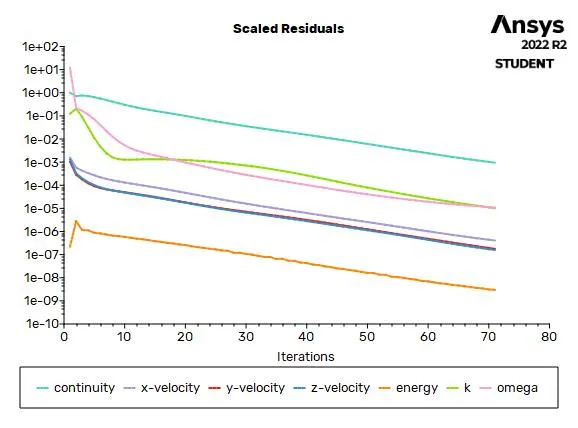
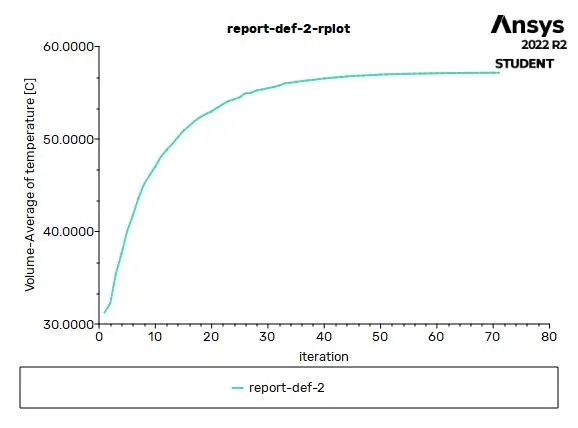
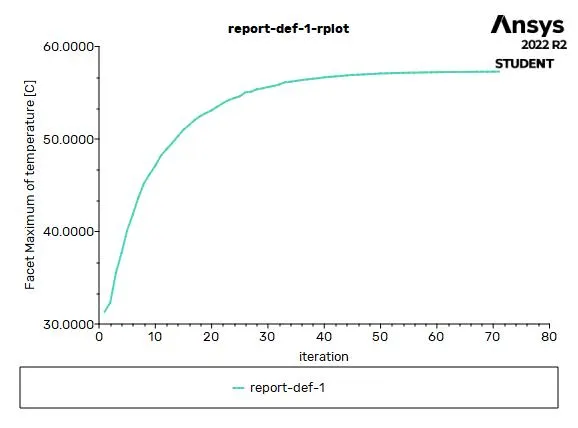
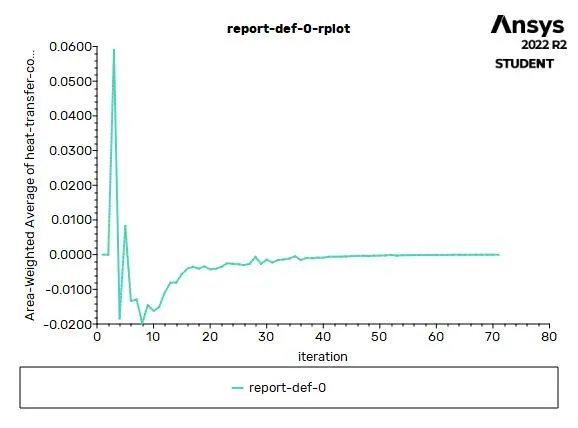
Solving:
- CASE 2
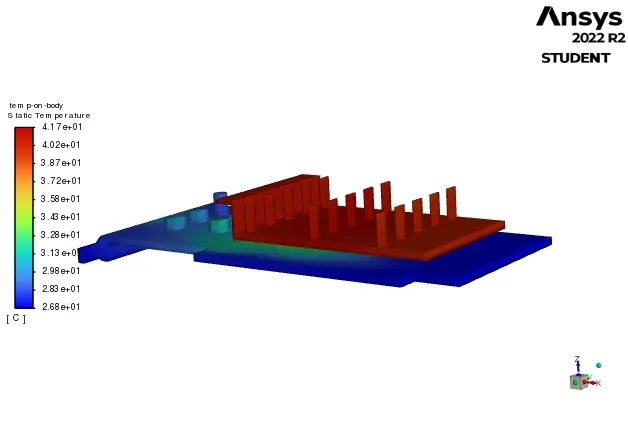
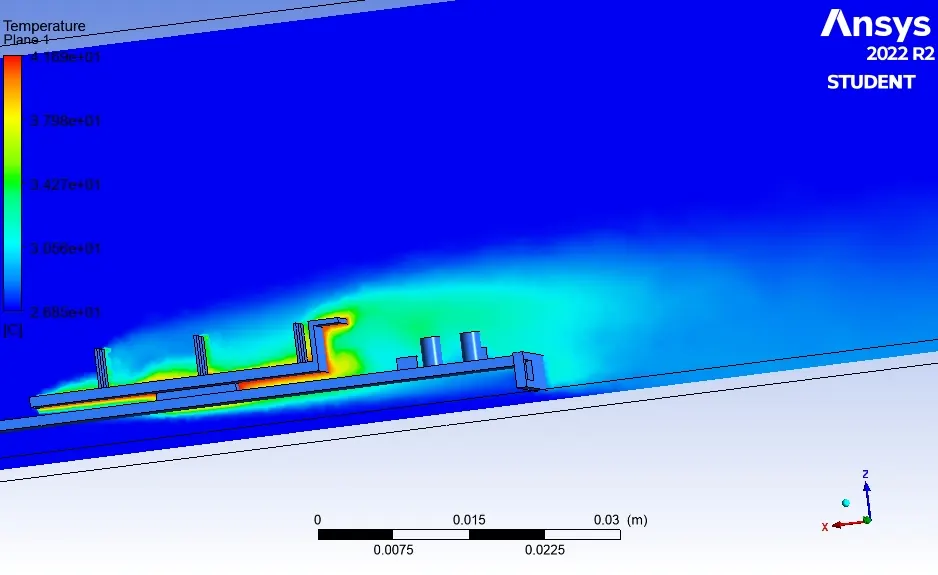
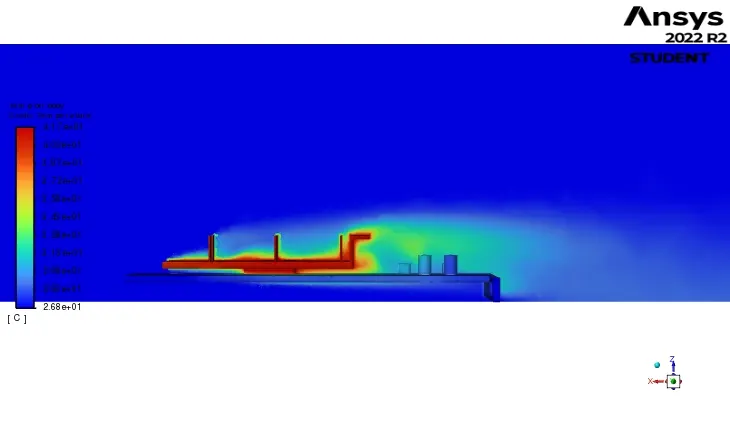
Forward air flow (RHS to LHS), Air speed = 3m/s.
Refined mesh condition.
Space claim:
Meshing:
Solving:
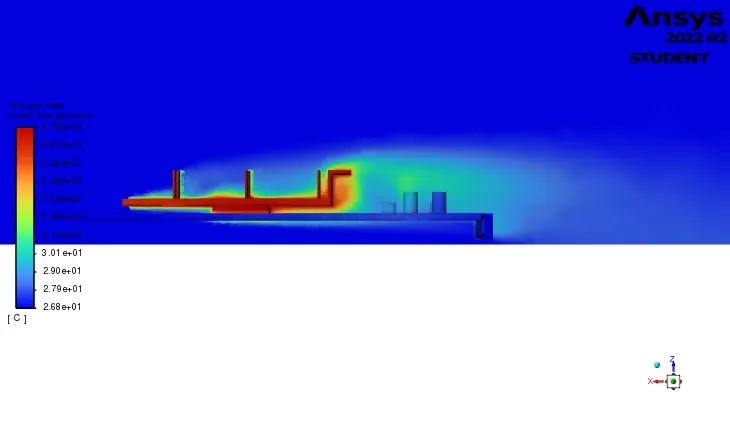
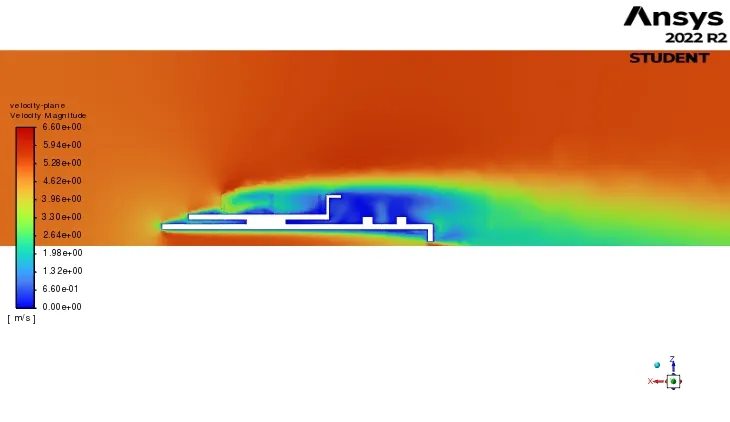
- CASE 3
Forward air flow (RHS to LHS), Air speed = 5m/s.
Refined mesh condition.
Solving:
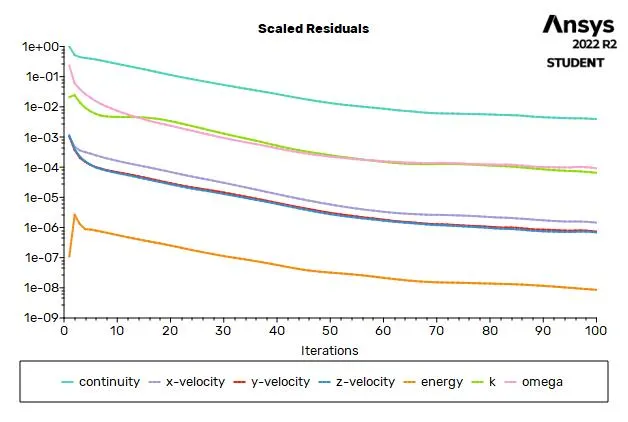
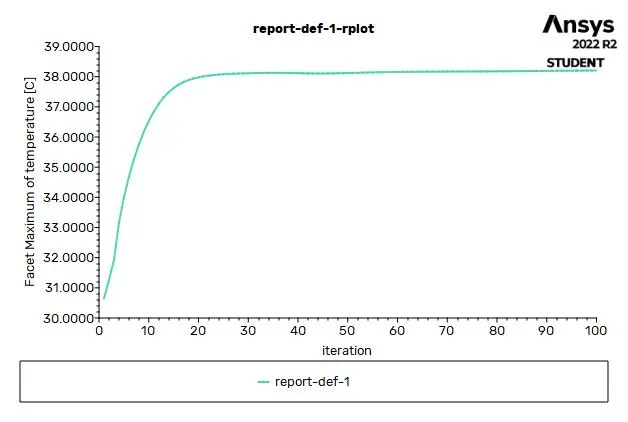
- CASE 4
Revarse air flow (RHS to LHS), Air speed = 5m/s.
Refined mesh condition.
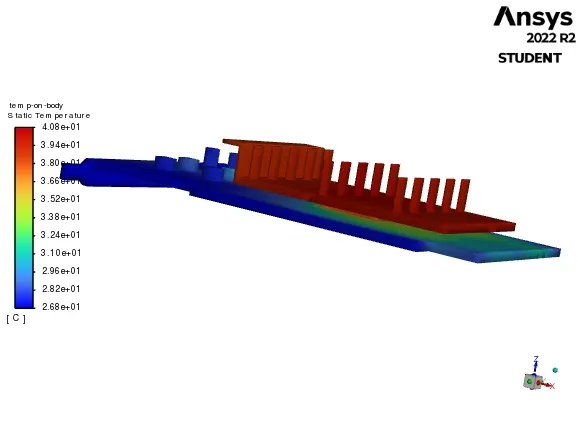
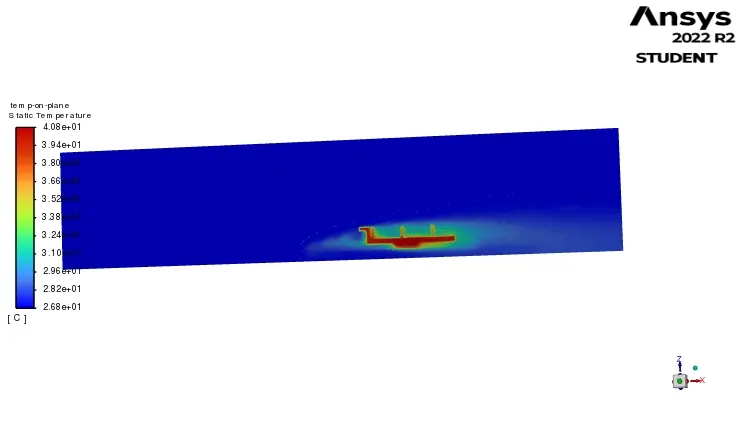
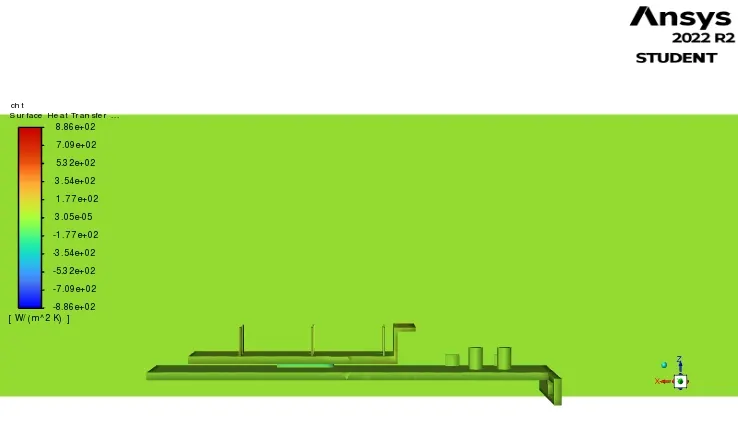
RESULTS COMPARISON:
LHS to RHS---1m/s--3m/s--5m/s
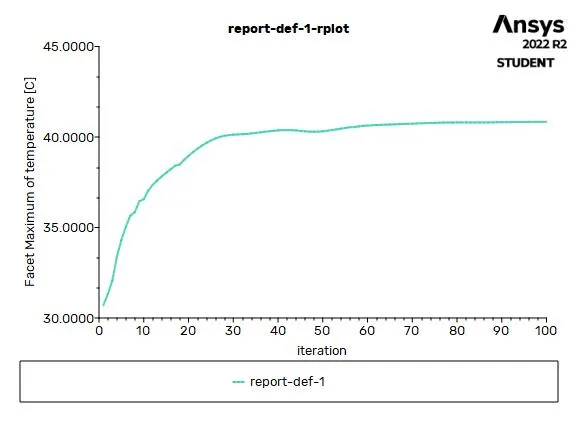
We can see above 3 plots to understand the significance of air speed on processor temperature. higher the speed more will be the heat desipiation.
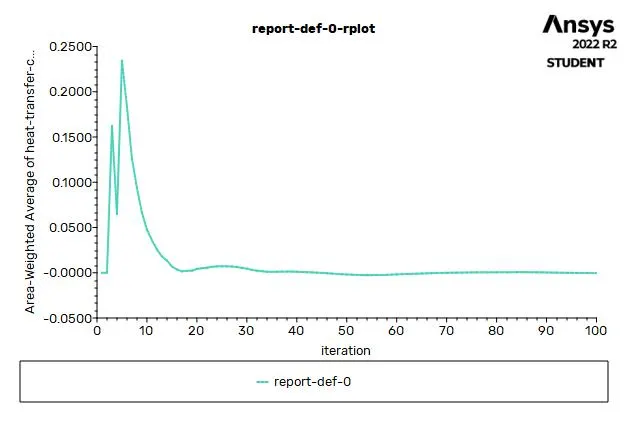
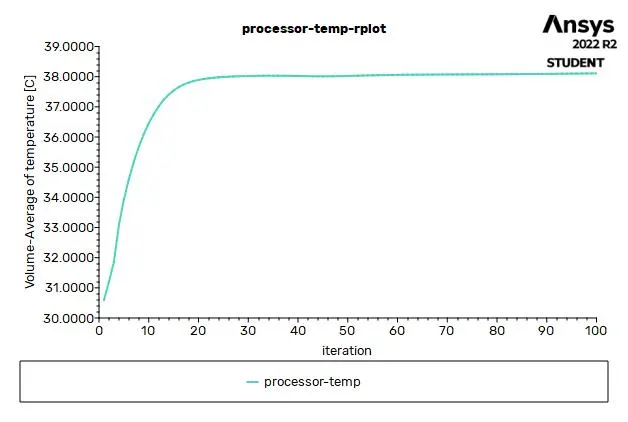
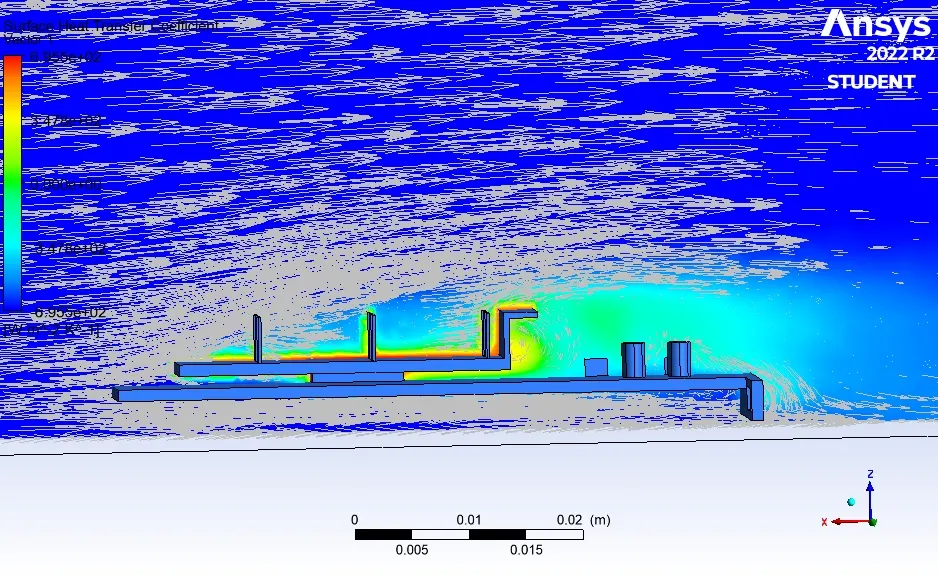
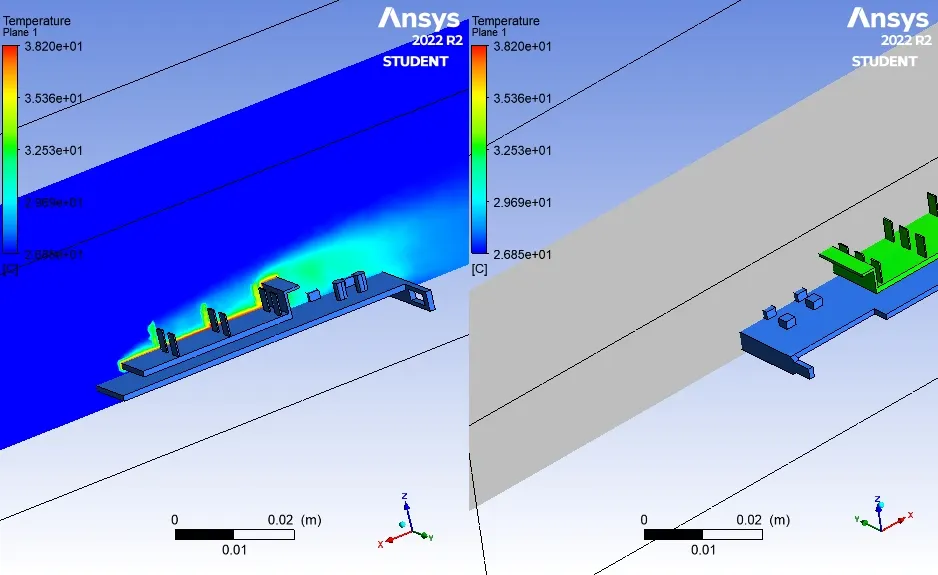
In special case ie., reverse flow (5m/s) following are the results. Not much effective heat desipiation observed