Week 6 - CHT Analysis on a Graphics card
AIM :
To Perform a steady-state conjugate heat transfer analysis on a model of a graphics card.
Objectives:
- Run the simulation by varying the velocity from 1m/sec to 5m/sec for at least 3 velocities and discuss the results.
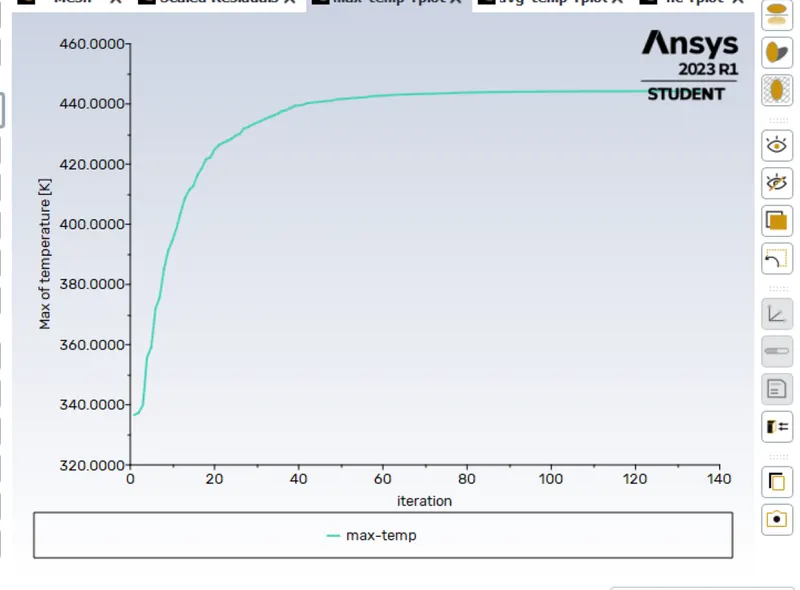
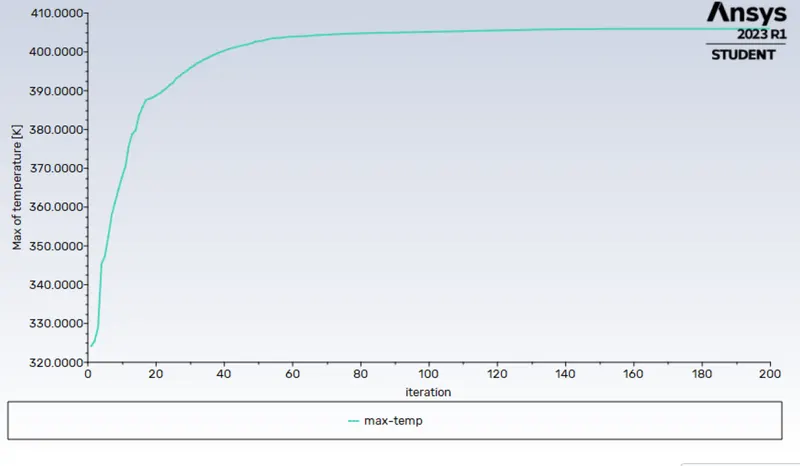
- Find out the maximum temperature and heat transfer coefficient attained by the processor.
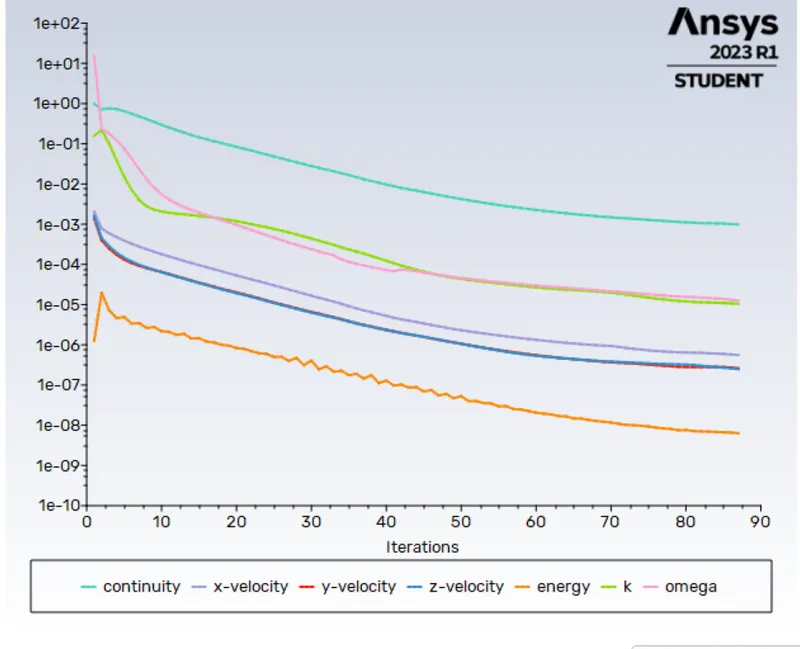
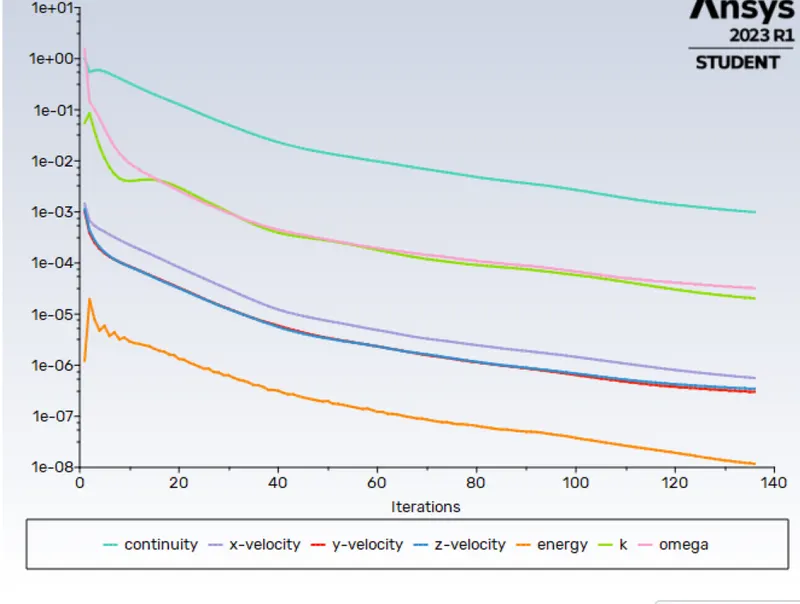
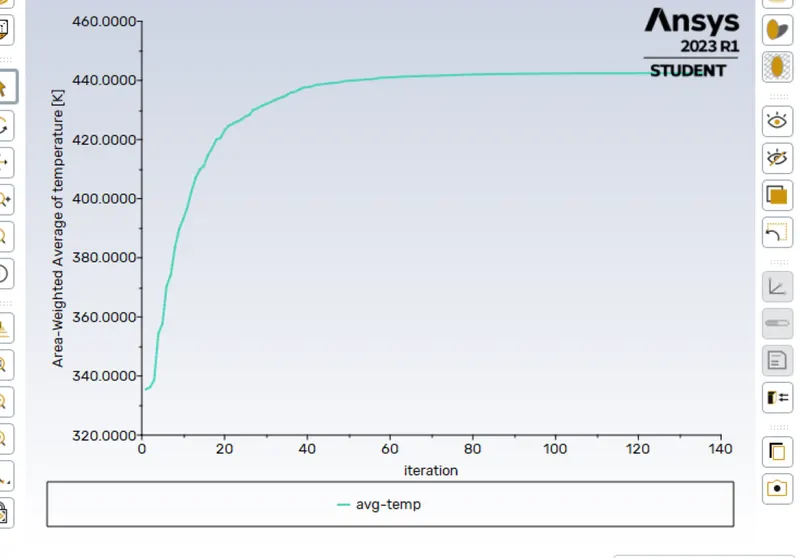
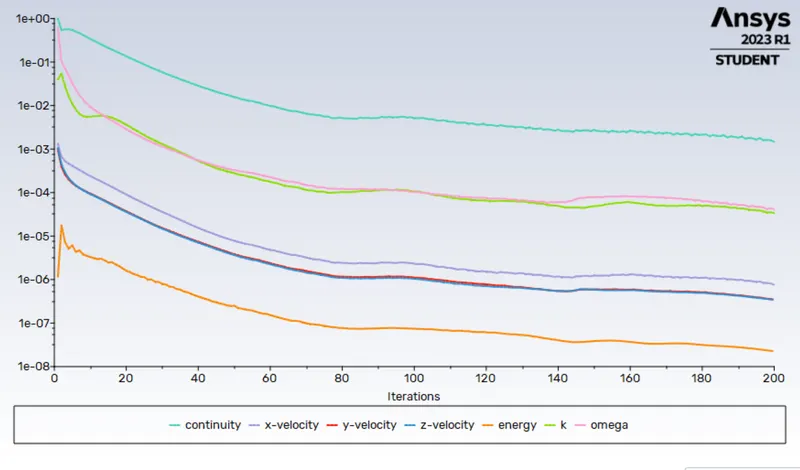
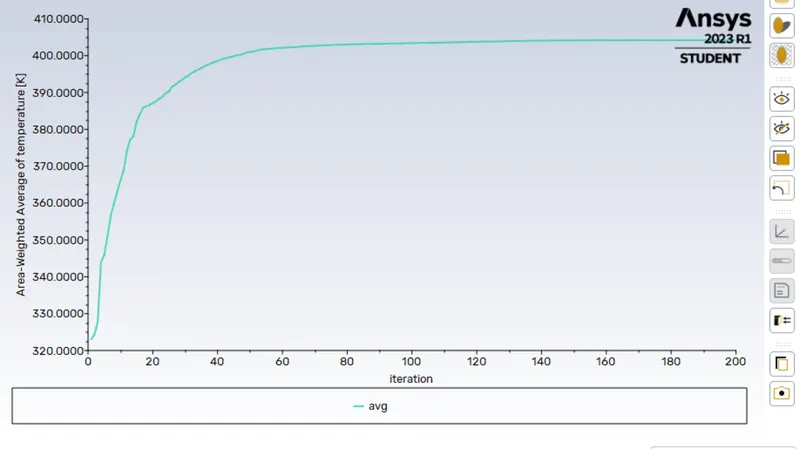
- Prove that the simulation has achieved convergence with appropriate images and plots.
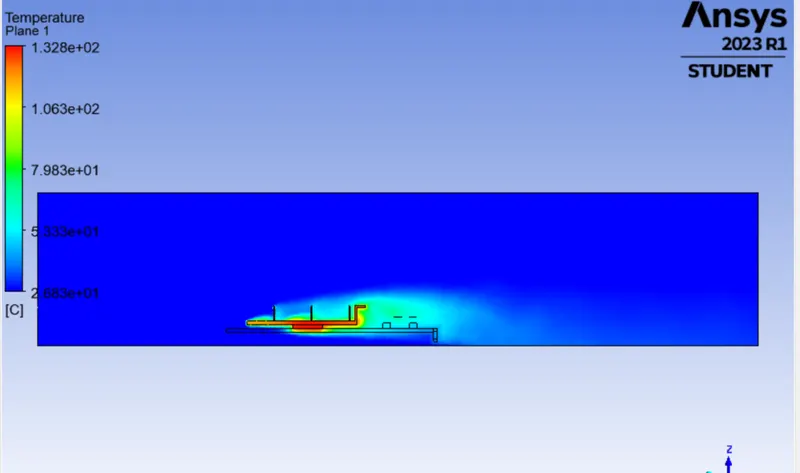
- Identify potential hotspots on the model.
THEROEY :
Conjugate Heat Transfer (CHT)
Conjugate heat transfer is defined as the heat transfer between two domains by exchange of thermal energy. For a system the thermal energy available is defined by its temperature and the movement of thermal energy is defined by its heat flux through the outer walls. Heat transfer in solids happens through conduction and walls by convection and in liquid phase through convection. CHT provides the temperature prediction and the hotspot regions at the solid-fluid interface, and we can also predict the heat transfer accurately for example- Conduction through solids, convection through fluid, and thermal radiation. It also provides the velocity and pressure distribution of fluid moving inside the solid. We can also use CHT in design optimization for improvement for heat transfer and cooling capacity. A video card (also called a graphics card, display card, graphics adapter, or display adapter) is an expansion card that generates a feed of output images to a display device (such as a computer monitor). Most video cards are not limited to a 6-inch simple output. Their integrated graphics processor can perform additional processing, removing this task from the central processor of the computer.
Geometry:
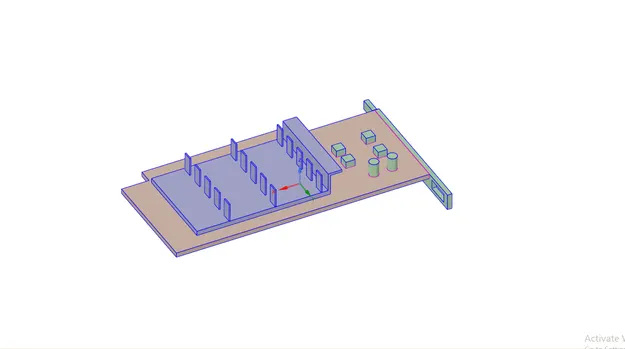
Importing the given model and open the space modul to edit the model. The given model is ready with the all geomentry and also with enclosers. So we can do only the share tropology which is used to carry the information from nodes of one model to other models. It will coincides the nodes of one model to other model.
space claim - workbench -share tropology
MESH:-
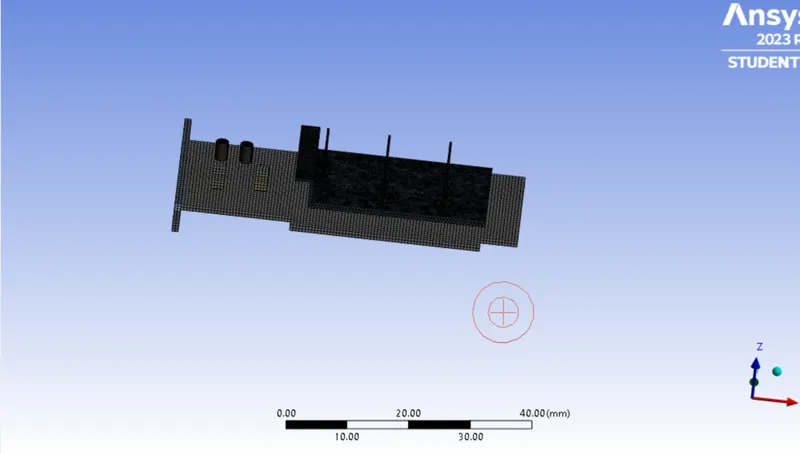
We start the mesh by naming the parts
1. Inlet
2. Outlet
3. Symmetry
4. Components
5. Fins
6. Base
7. Processor
Then we give a total element size of 5mm and applying a body sizing to the processor with an element size of 0.5. Making this our Refined mesh.
CASE 1 :
|
SETUP : |
|
|
Solver Type |
Pressure-Based |
|
Velocity Formulation |
Absolute |
|
Time |
Steady |
|
Models |
Viscous model: K-omega SST Energy model: On |
|
Material |
Fluid type: Air Solid-type: Aluminium : Silicon : fr-4 |
|
Boundaries |
Inlet : inlet velocity: 1m/s : temperature = 300K Outlet: outlet pressure = 0 |
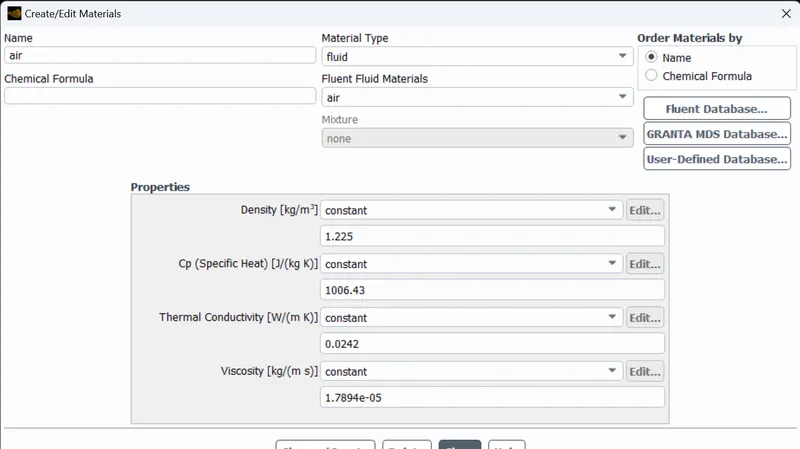
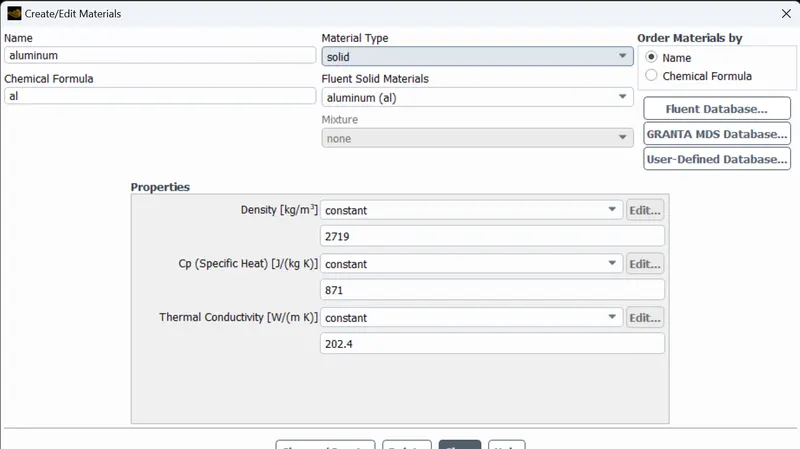
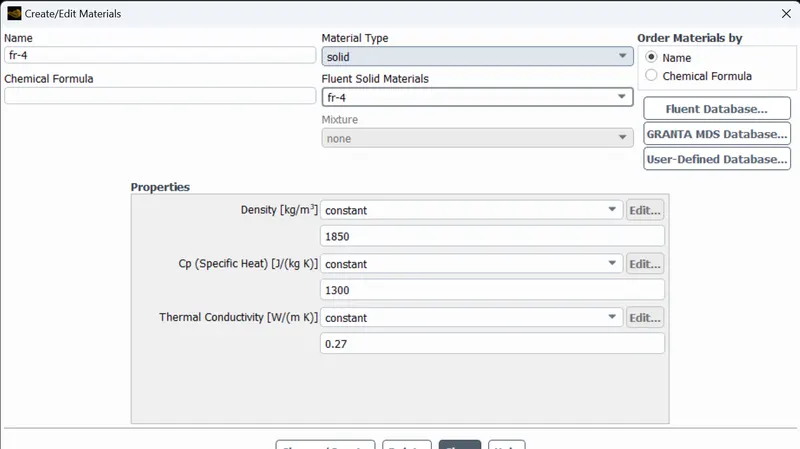
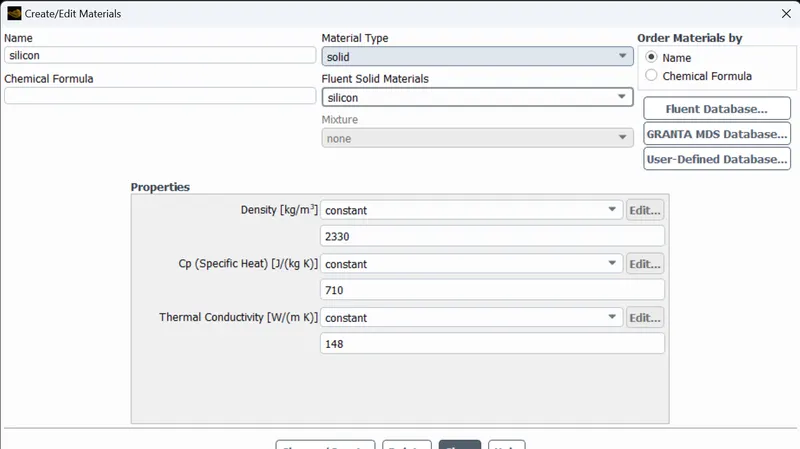
Assign the created material to the respective parts in the cell zone option and when assigning for graphics card we wants to give the sorce term as 1 and constant and give heat generated is 15625000 W/mm^3 by assuming the heat decipated as 1W.
HEAT GENERATED,
Qg = Heat decipated / Volume of graphic card
= 1W / 64m^3
= 1W / 64*10^(-9) mm^3
= 15625000 W/mm^3
RESIDUAL POLTS :
AVERAGE TEMPERATURE POLTS :
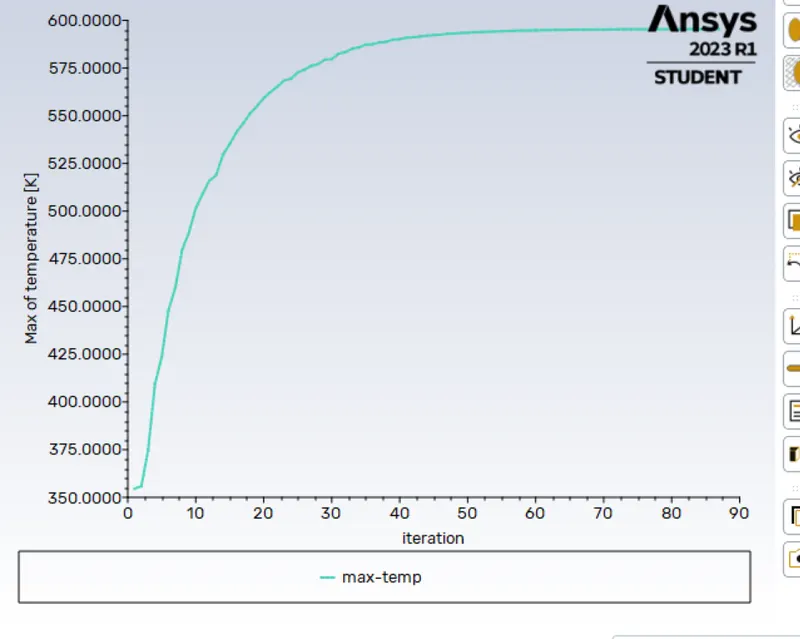
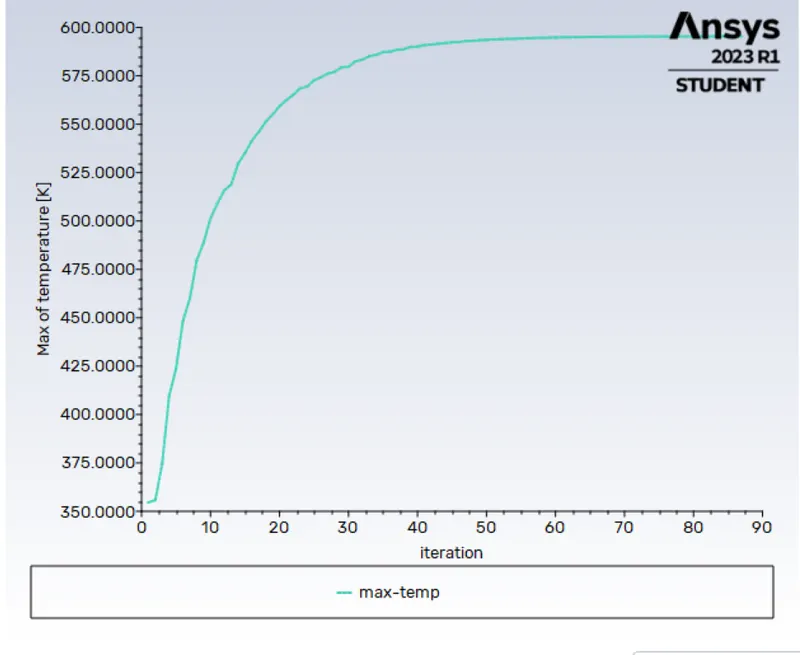
MAXIMUM TEMPERATURE POLTS :
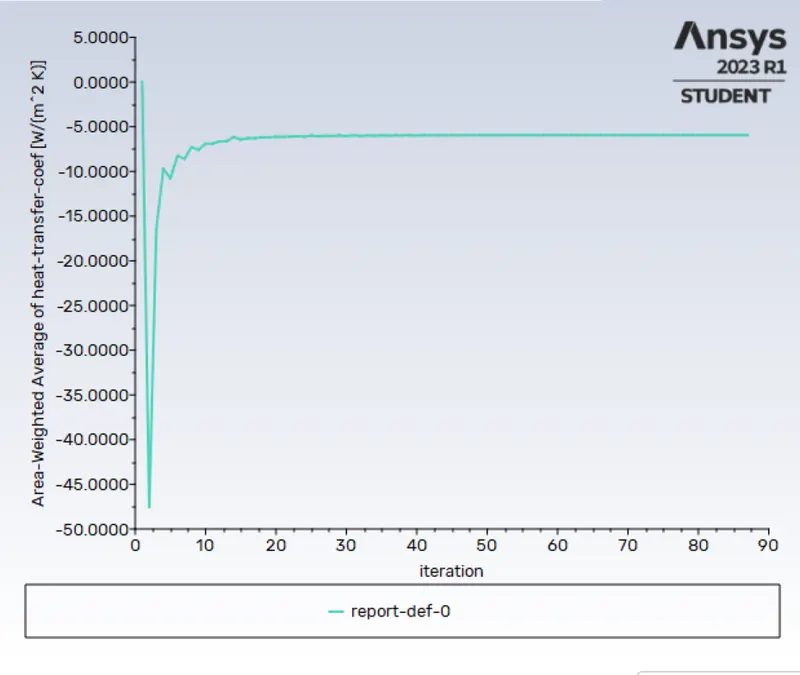
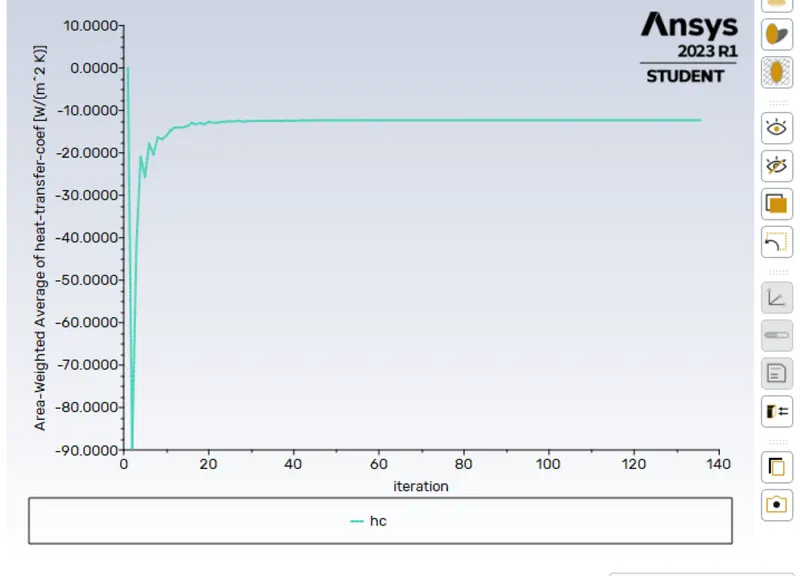
HEAT TRANSFER COEFFICIENT :
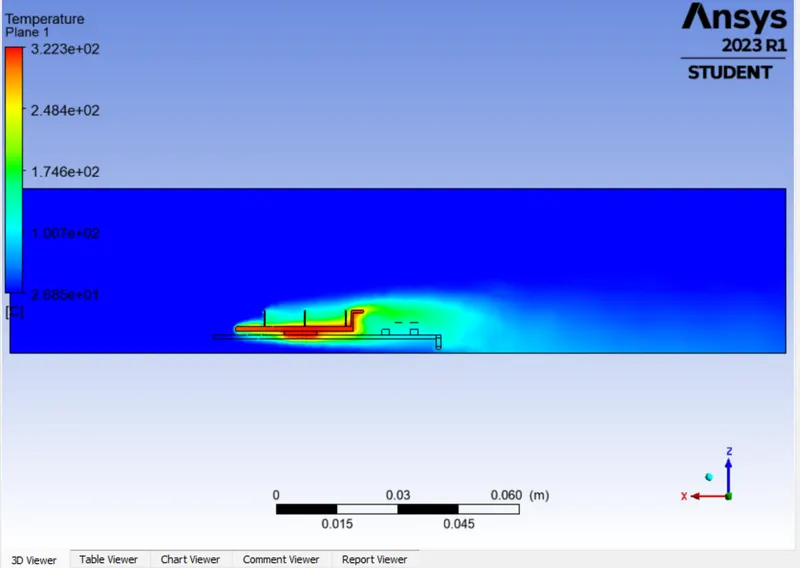
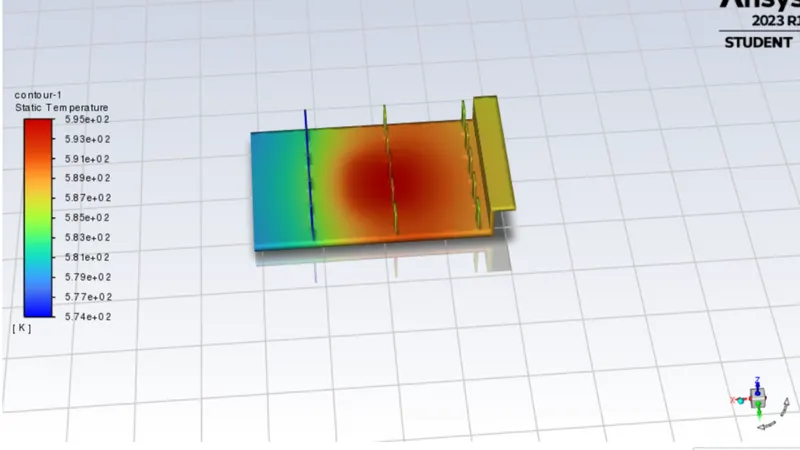
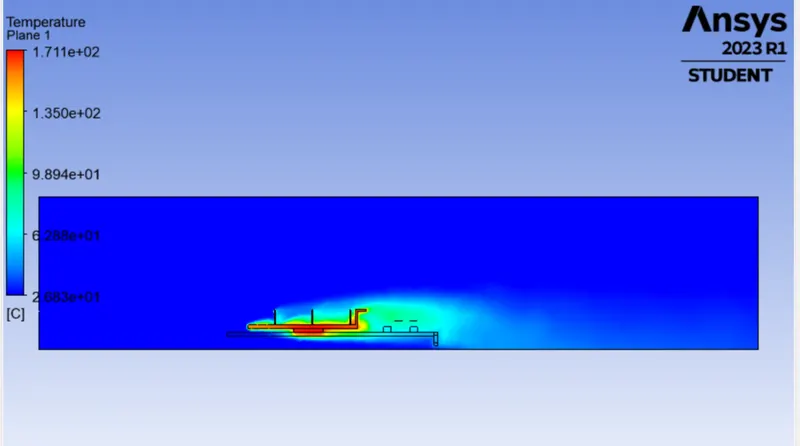
TEMPERATURE CONTOUR :
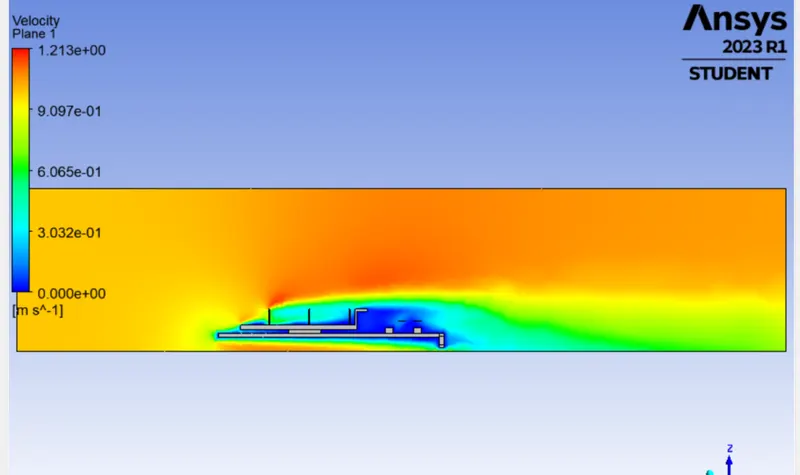
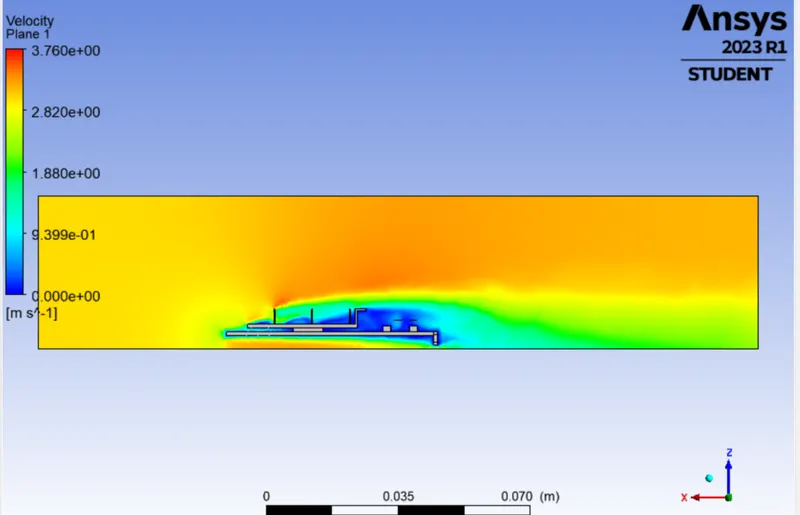
VELOCITY CONTOUR :
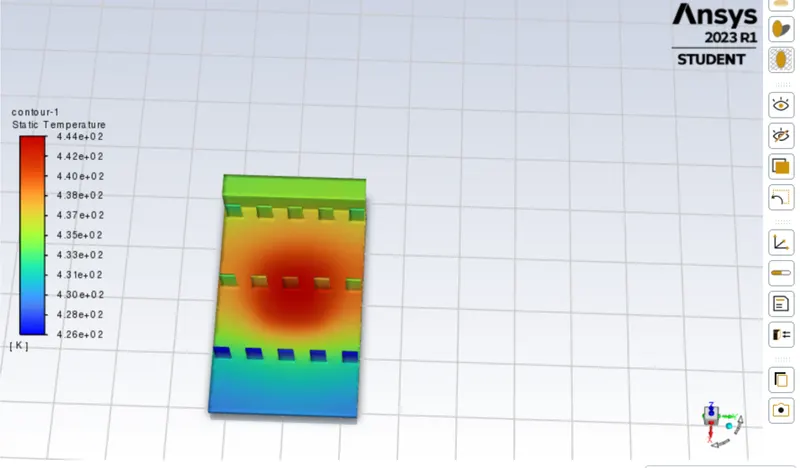
Hotspot Region :
CASE 2 :
Inlet Velocity = 3m/s
RESIDUAL POLTS :
AVERAGE TEMPERATURE POLTS :
MAXIMUM TEMPERATURE POLTS :
HEAT TRANSFER COEFFICIENT :
TEMPERATURE CONTOUR :
VELOCITY CONTOUR :
Hotspot Region :
CASE 3 :
Inlet Velocity = 5m/s
RESIDUAL POLTS :
AVERAGE TEMPERATURE POLTS :
MAXIMUM TEMPERATURE POLTS :
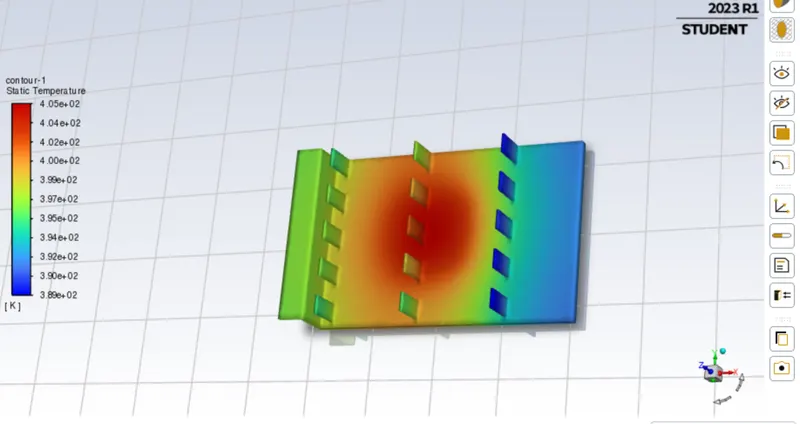
TEMPERATURE CONTOUR :
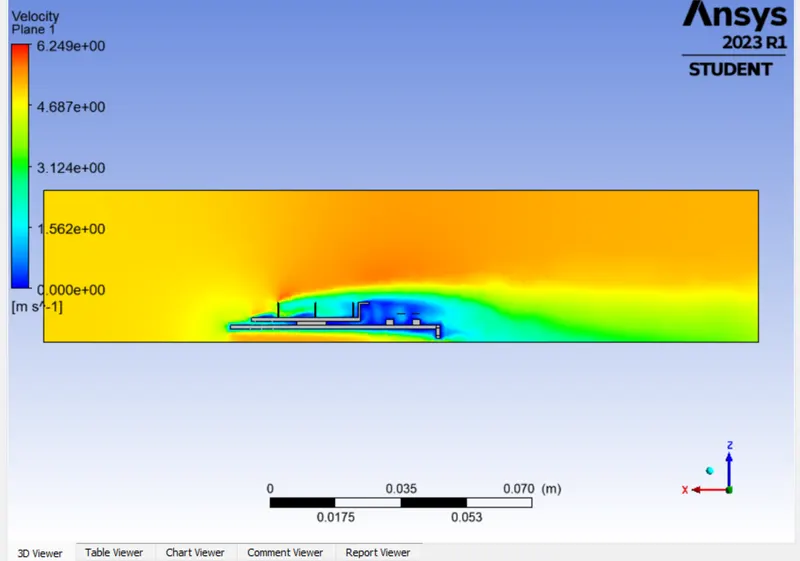
VELOCITY CONTOUR :
Hotspot Region :
| CASE | VELOCITY | AVERAGE TEMPERATURE | MAXIMUM TEMPERATURE | HEAT TRANSFER COEFFICIENT |
| 1 | V = 1 m/s | 593.5497 | 595.425 | -5.936765 |
| 2 | V = 3 m/s | 442.4395 | 444.2192 | -12.2871 |
| 3 | V = 5 m/s | 404.2122 | 405.9793 | -21.35622 |
EXPLANATION :
From the table we can observe that the maxmimum temperature decreases and the heat transfer coefficient increases when the velocity increases. These is because when the velocity of inlet air increases the heat flux increases as heat transfer coefficient is depends on the heat flux with respect to change in temperature. So the heat transfer coefficient increases . As the heat transfer coefficient increases the temperature decreases due to the convection of heat to the surrounding air. The fins is used to increase the convection of heat because the heat convection increases when the surface area increased. since the fin as large surface area it increases the convections. So, it also helps the heat transfer to occurs at faster rate.
HOTSPOTS :
From the temperature distribution, we can see hotspots in the fin and base near the surface that is in contact with the processor. Based on the thermal conductivity of the material this temperature is distributed accordingly amongst the component. We see a few high-temperature zones on fin away from processor depicting their high susceptibility to heat due to their geometry.
CONCLUSIONS :
As the size of mesh is becomes fine the number of elements increases and the results of temperature distribution odtained is more accurate. From the above table it is observed that, the temperature of componenets of graphics card decreases with increase in inlet velocity.Hence it can be conclued that a higher inlet velocity results in better cooling and decreases the average temperature thus keeping the components safe from damage.It can be observed that the temperature of components increases as the inlet velocity decreases from 5 m/s to 1m/s, also proving that higher velocity results in better cooling.