Week 6 - CHT Analysis on a Graphics card
Aim :-
- To perform steady-state conjugate heat transfer analysis on Graphics Card
- To find the effect of different velocities on the temperature.
Conjugate Heat Transfer (CHT) :-
Conjugate heat transfer is defined as the heat transfer between two domains by exchange of thermal energy. For a system the thermal energy available is defined by its temperature and the movement of thermal energy is defined by its heat flux through the outer walls. Heat transfer in solid happens through conduction and walls by convection and in liquid phase through convection.
Procedure :-
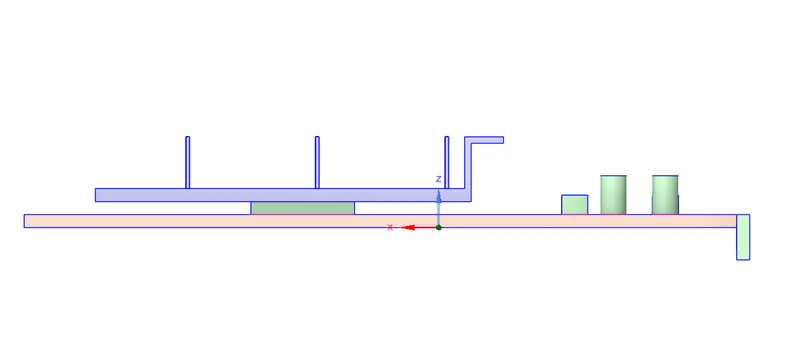
Geometry :- enable share topology to avoid interpolation error
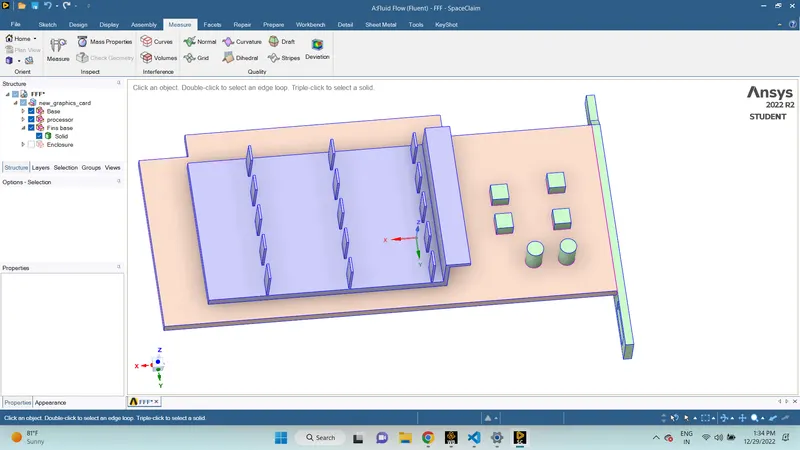
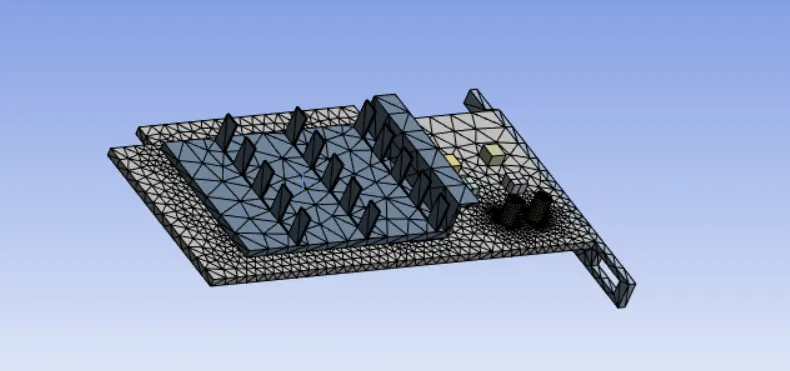
Mesh :- 3 mm size

1.Solver - Steady
2.Type - Pressure Based
3.Turbulence Model - k-Omega(SST)
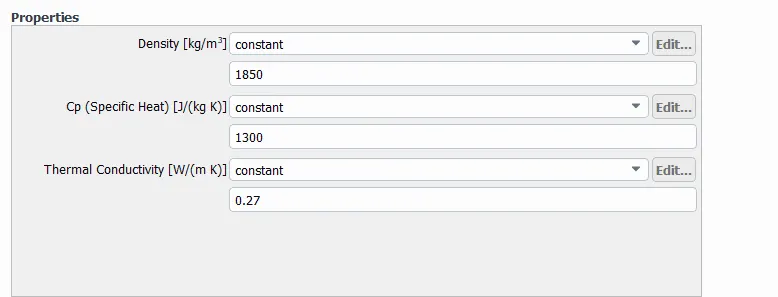
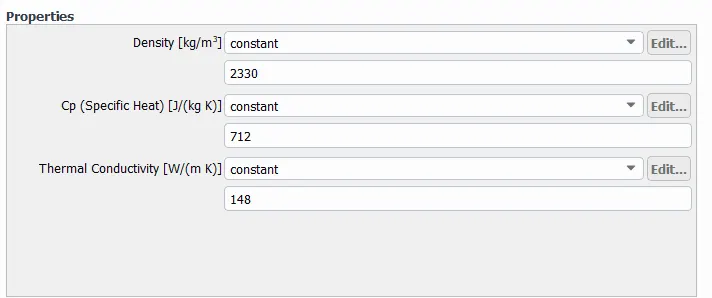
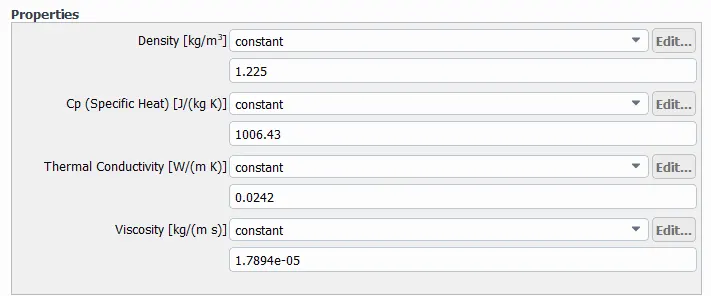
4.Materials - Different materials are used for each part, some of which are custom created
parts material
Base FR 4 (created)
Fins Alluminium
Processor silicon (created)
Enclosure air
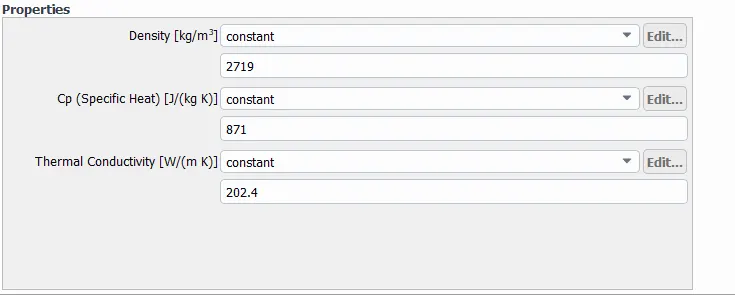
Properties :-
Aluminium :-
FR 4 :-
Silicon :-
Air :-
Boundry conditions :-
Inlet -
velocity inlet - 5 m/s
temperature - 300 k
Outlet -
Pressure Outlet - 0 Pa(Gauge Pressure)
temperature - 300 k
The processor is assumed as the only source of heat. The heat generated by the processor is calculated as:-
Assume,
Graphics Card Power = 1W
Volume of the card = 8 x 8 x 1
`64 mm^3`
Heat Generated = `p/v`
=`1/(64e-8)`
= `1.5625e^7 w/m^3`
Solution :-
- Method: Standard
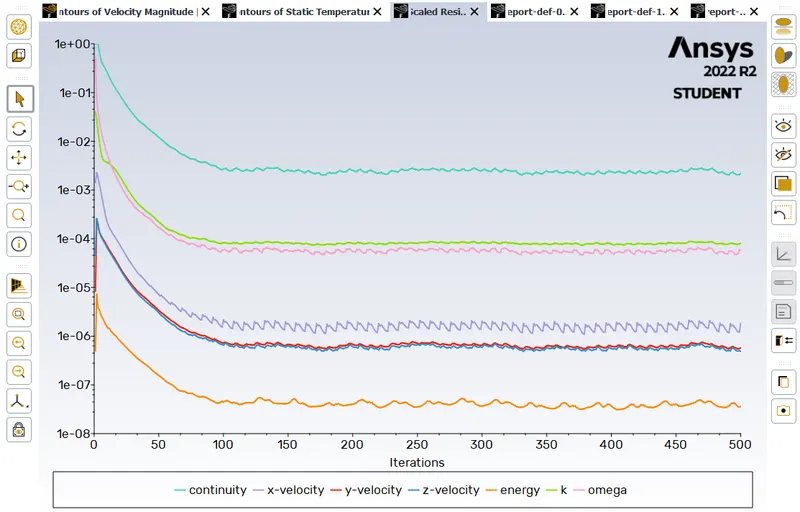
- Number of Iterations: 500
Results :-
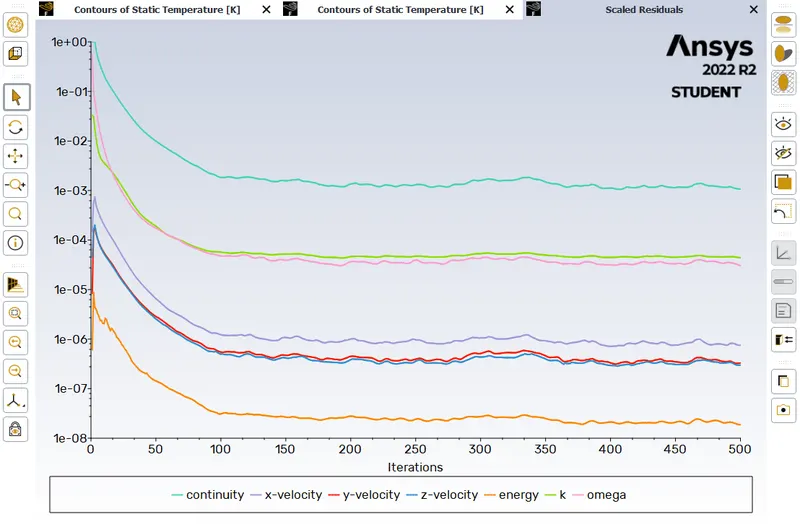
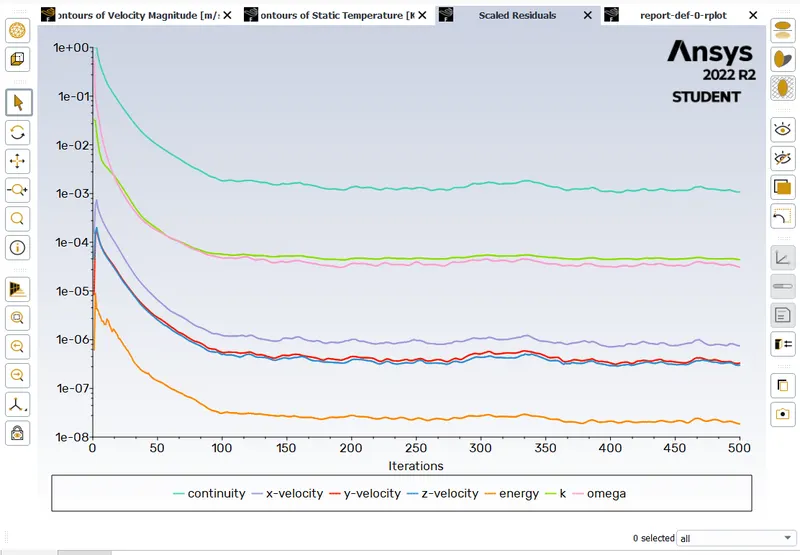
Residuals :
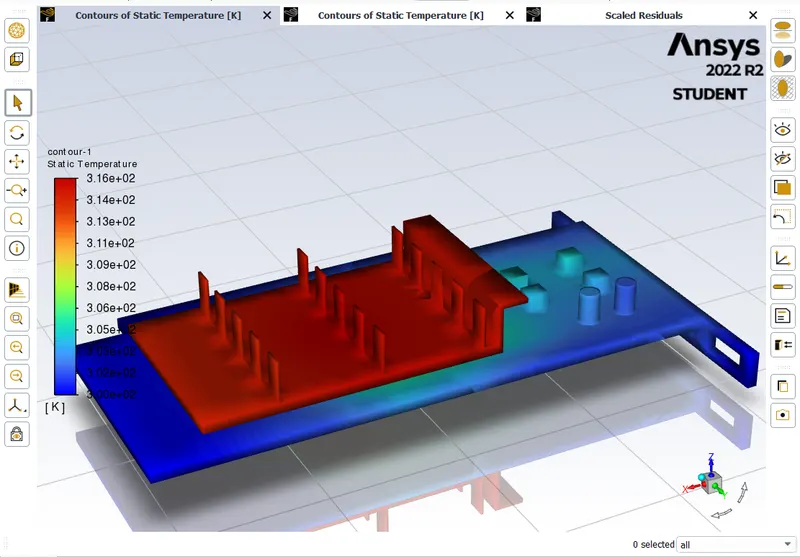
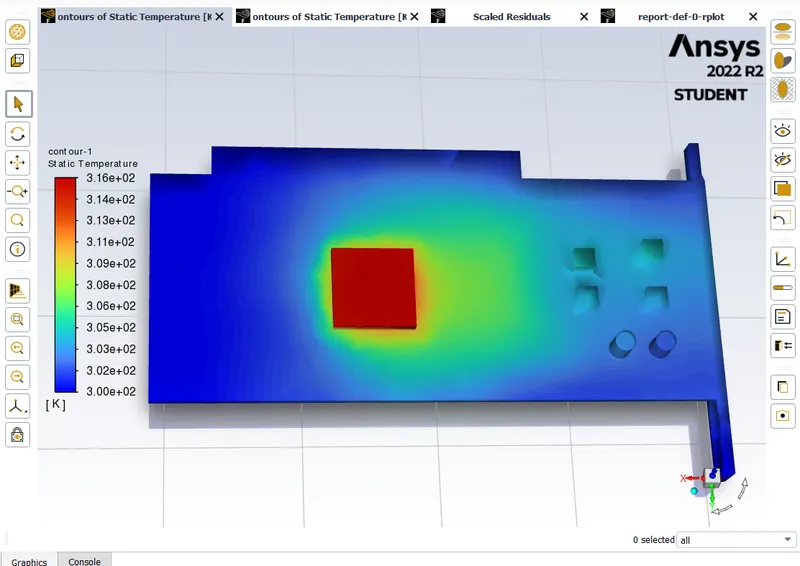
Temperature contour :-
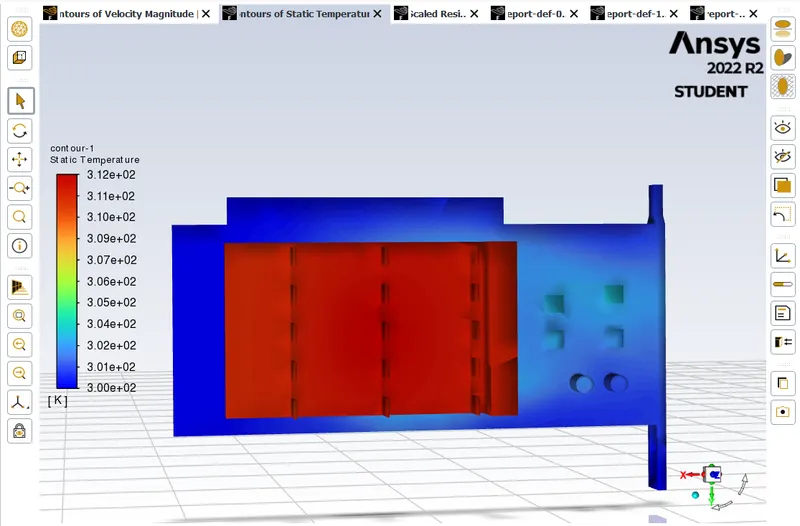
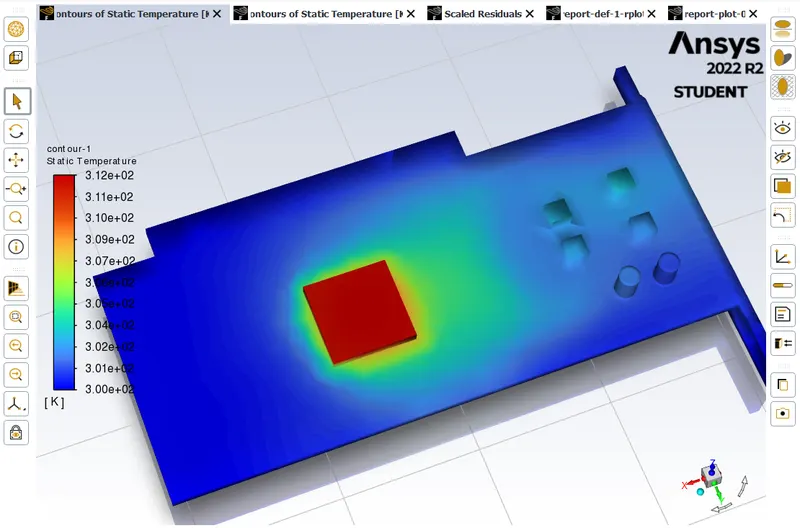
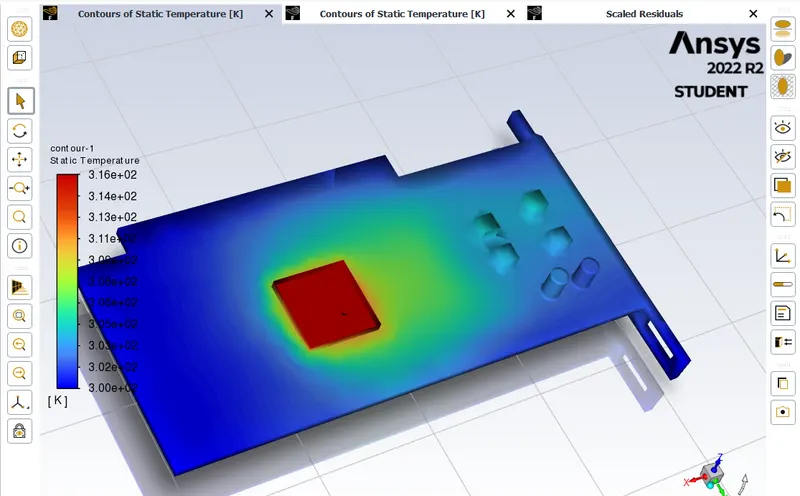
Hotspot Regions near processor :
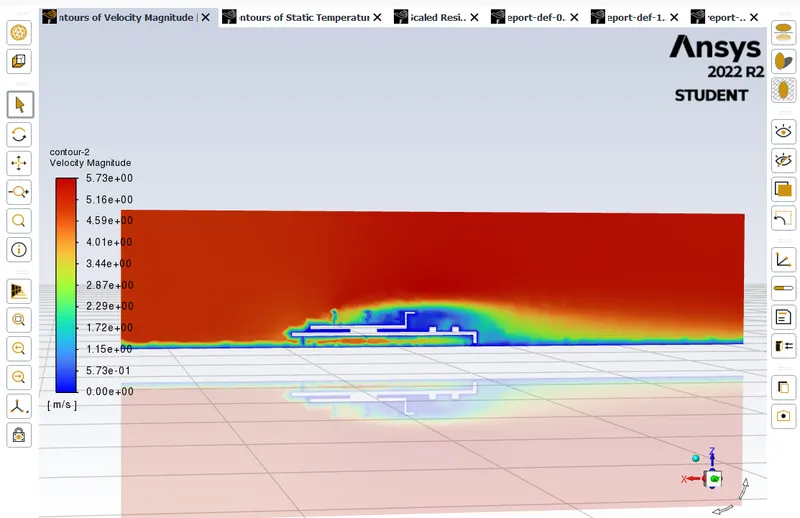
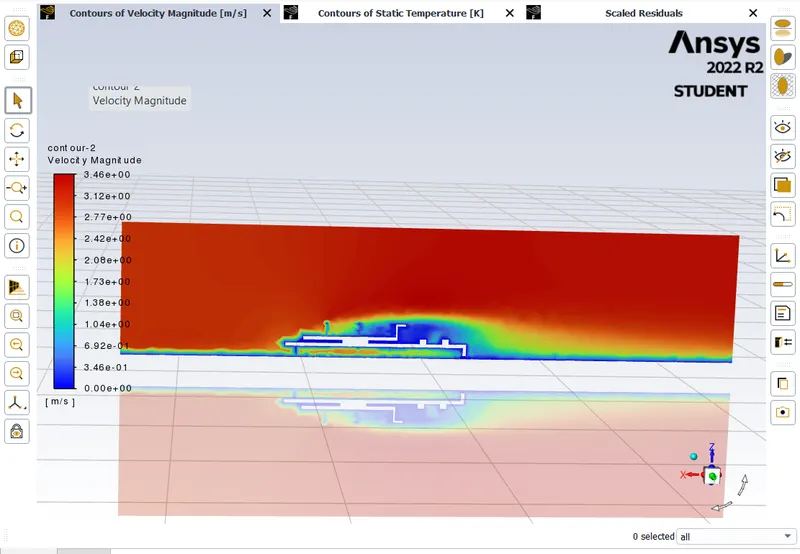
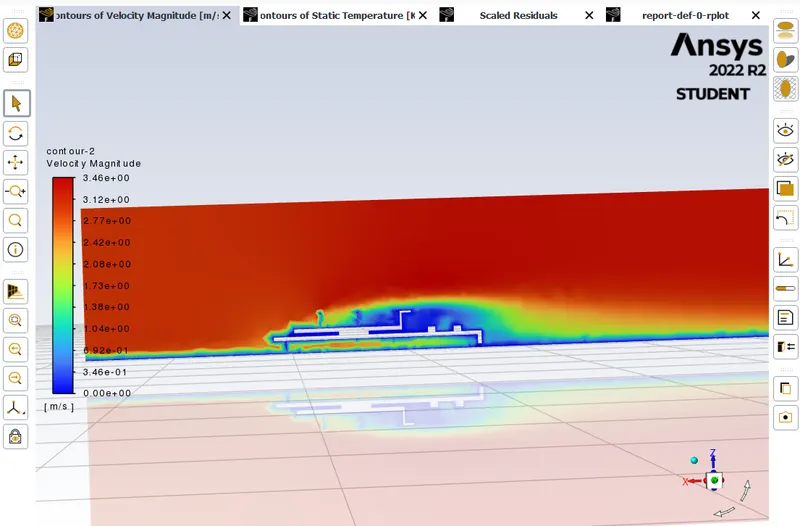
Velocity contour :-
Temperature & Heat transfer coefficient:-
Velocity :- 3 m/s
results :-
Residuals :-
Temperature Contour :-
Hotspot Regions near processor :-
Velocity contour:-
Temperature & Heat transfer coefficient:-
Velocity = 1 m/s
Results :-
Residuals :-
Temperature contour :-
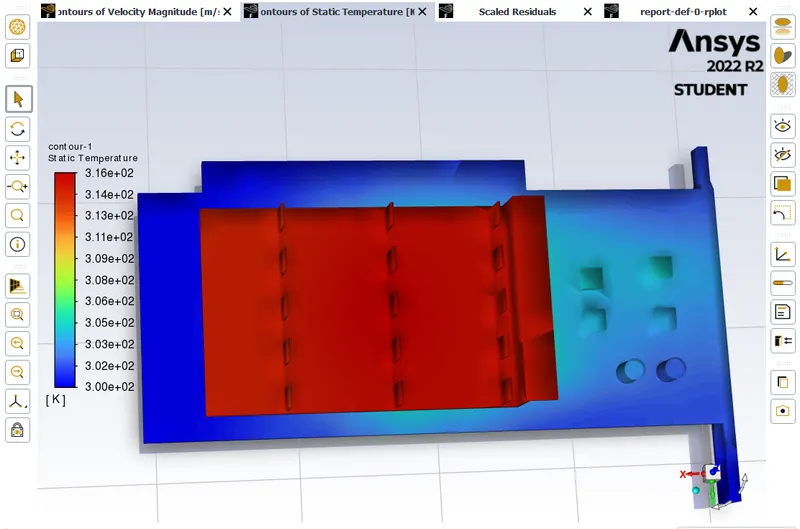
Hotspot Regions near processor :-
Velocity contour :-
Temperature & heat transfer coefficient :-
Conclusion :-
- it is fairly notable that, the net temperature of components of graphics cards decreases with an increase in inlet velocity.
- Hence it can be inferred that a higher inlet velocity results in better cooling and lower the average temperature thus keeping the components safe from damage.