CHT Analysis on a Graphics card
OBJECTIVE
To perform a steady-state conjugate heat transfer analysis on a model of a graphics card by using appropriate materials for the simulation, by varying the velocity from 1m/sec to 5m/sec and to find out the maximum temperature and heat transfer coefficient attained by the processor.
THEORY
The CHT type simulation allows us to simulate heat transfer between solid and fluid domains by exchanging thermal energies at the interface between them.
The CFD and more precisely, CHT can actually predict heat transfer by solving all the solid and fluid flow field heat transfer processes simultaneously, such as conduction through solids, convection, thermal radiation. It has definitely got advantage over finite element analysis as in CHT, the wall heat transfer coefficients and their local variations on surfaces are directly solved on the model rather than based on simplified emperical calculations. Hence, CHT analysis can be used in those situations where the heat transfer is either non-uniform or too difficult to calculate using emperical formulae.
Graphics Card
A graphics card (also called a video card, display card, graphics adapter, video adapter, or display adapter) is an expansion card which generates a feed of output images to a display device (such as a computer monitor).
PROCEDURE/WORKFLOW
- GEOMETRY
- Load the provided geometry to spaceclaim.
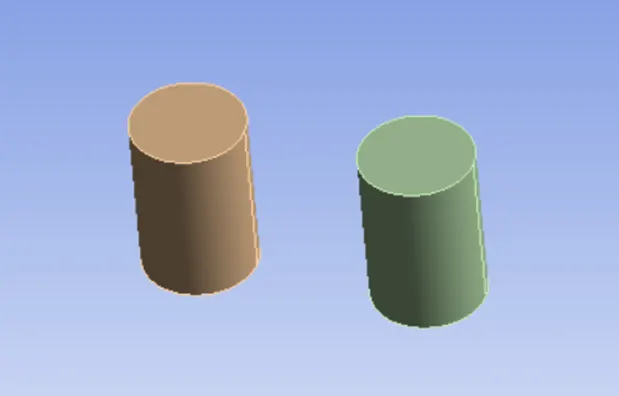
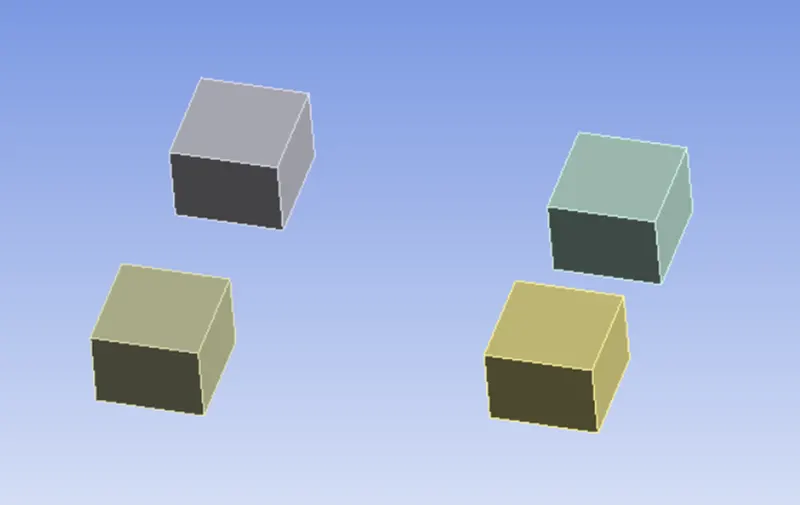
- Parts of the graphics card (used for name selection)
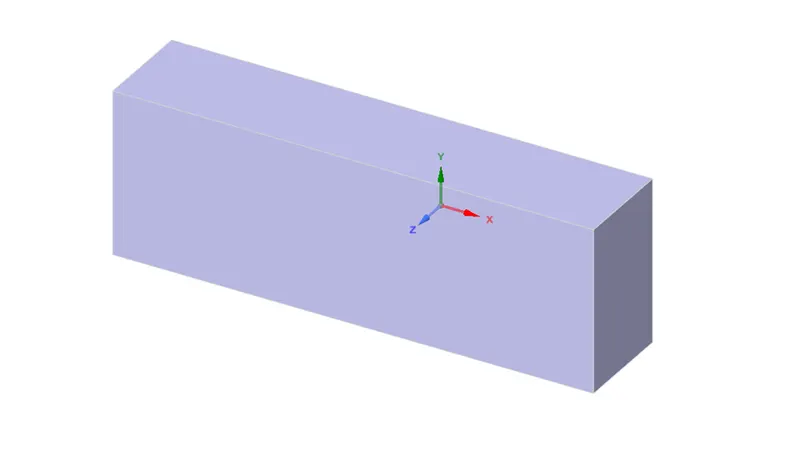
- Enclosure
-
-
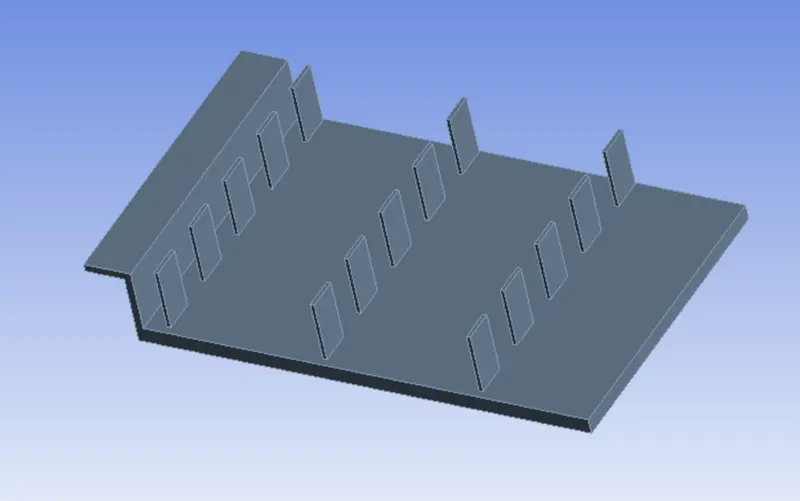
- Fins
-
-
-
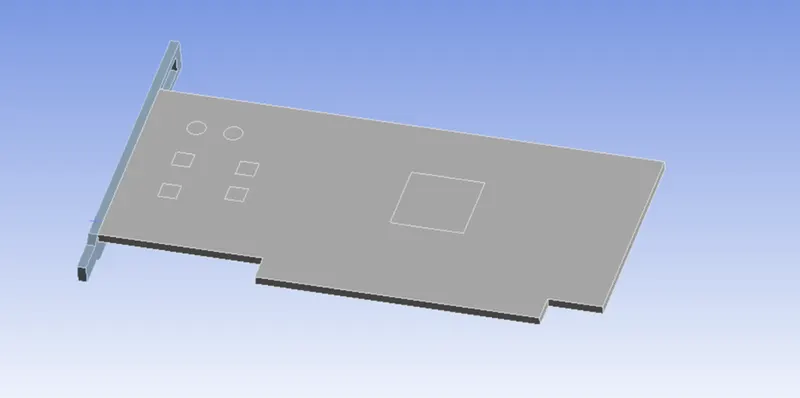
- Base
-
-
-
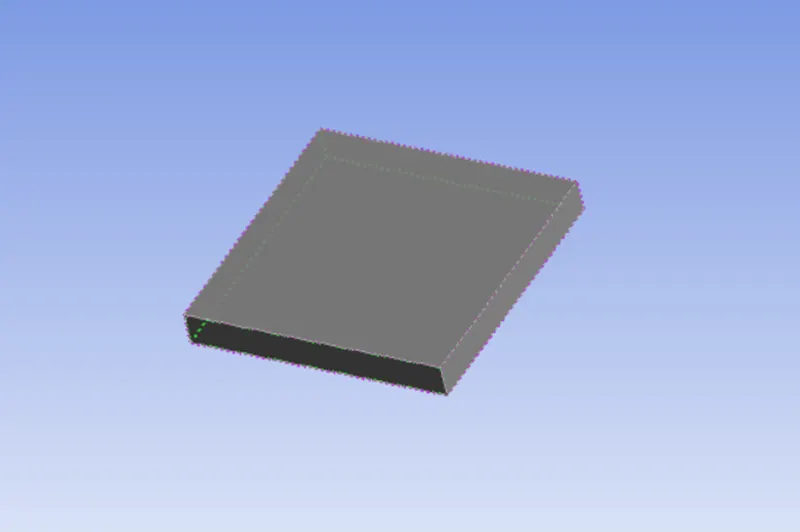
- Processor
-
-
-
- Capacitor
-
-
-
- Port
-
- MESHING
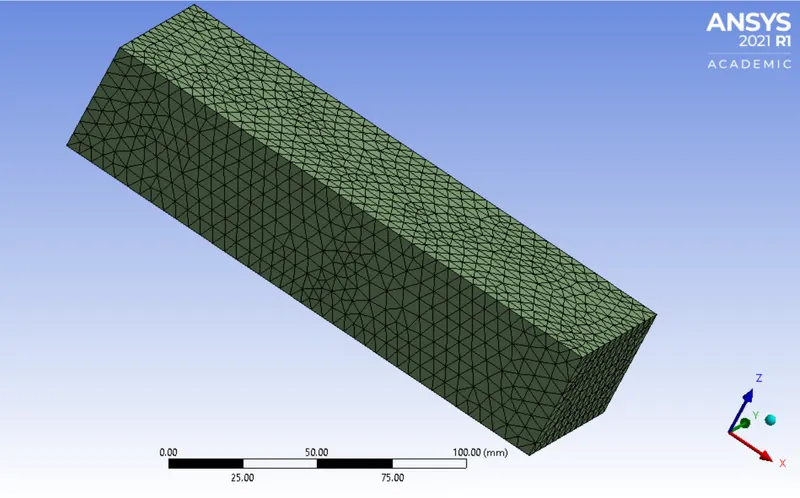
- Enclosure
-
-
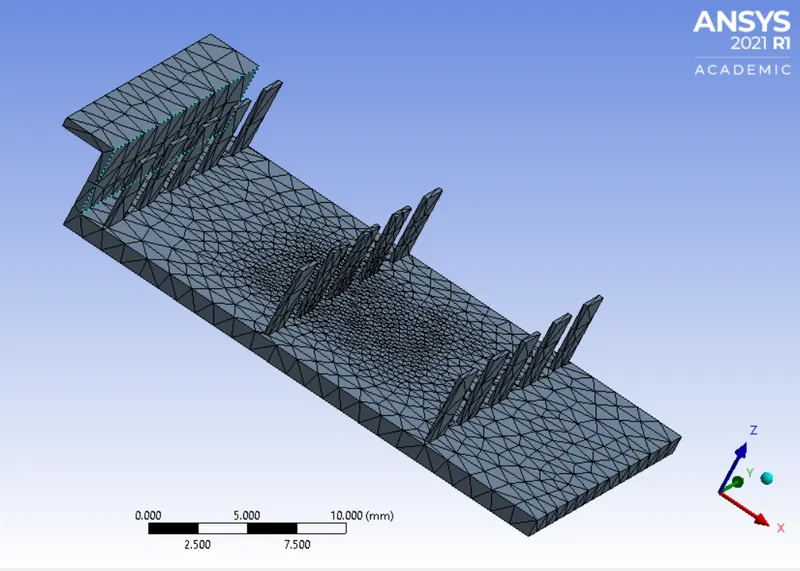
- Fins
-
-
-
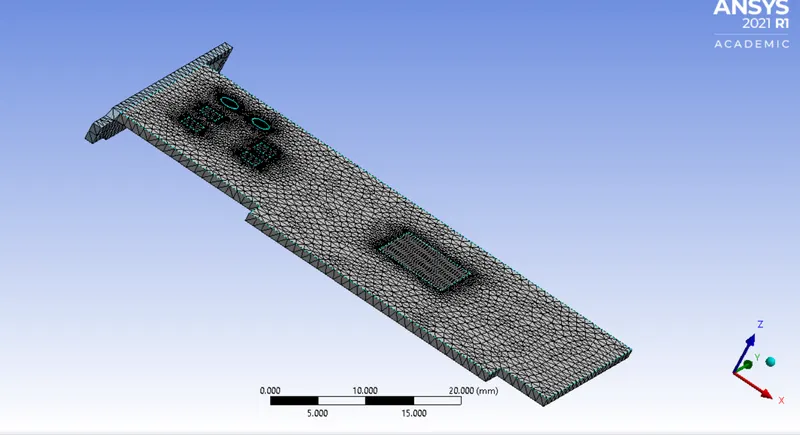
- Base
-
-
-
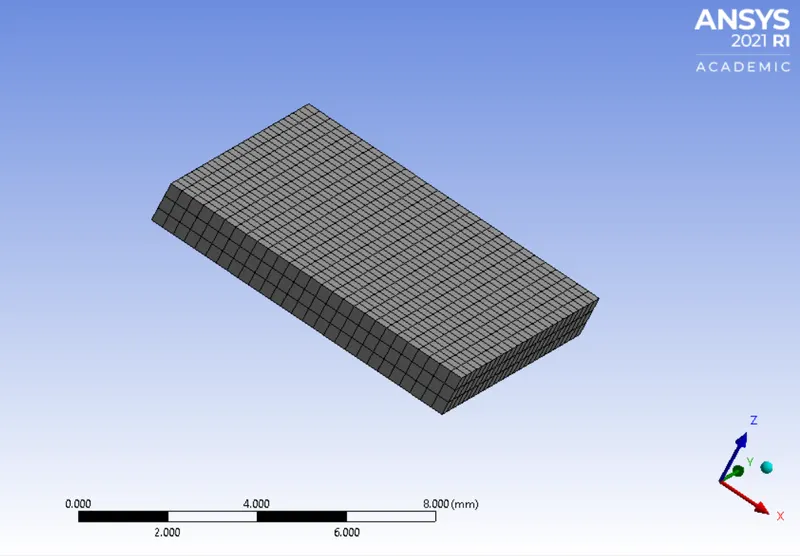
- Processor
-
-
-
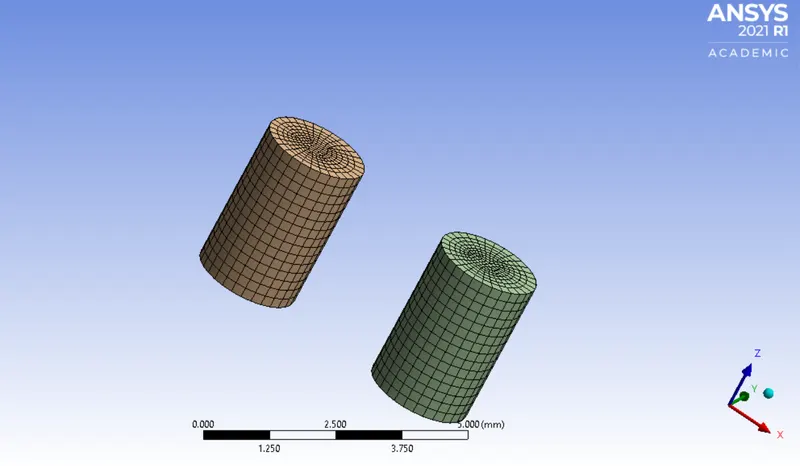
- Capacitor
-
-
-
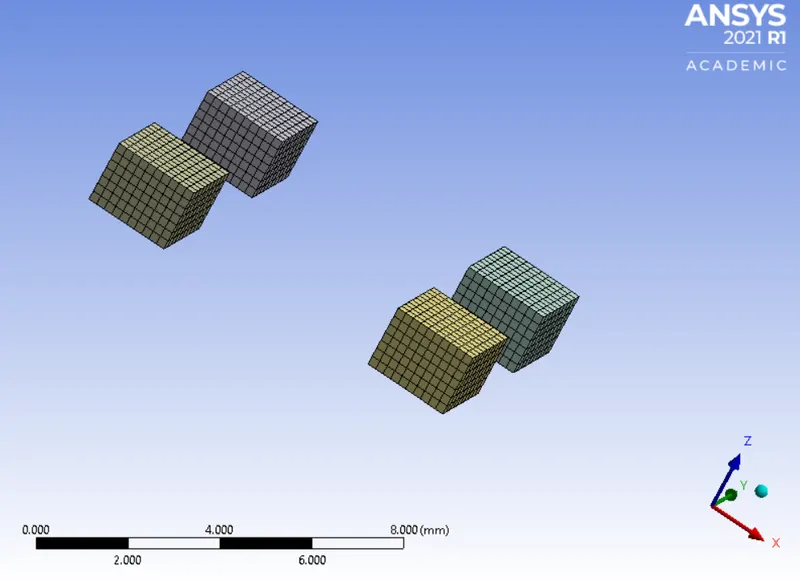
- Port
-
- SETUP
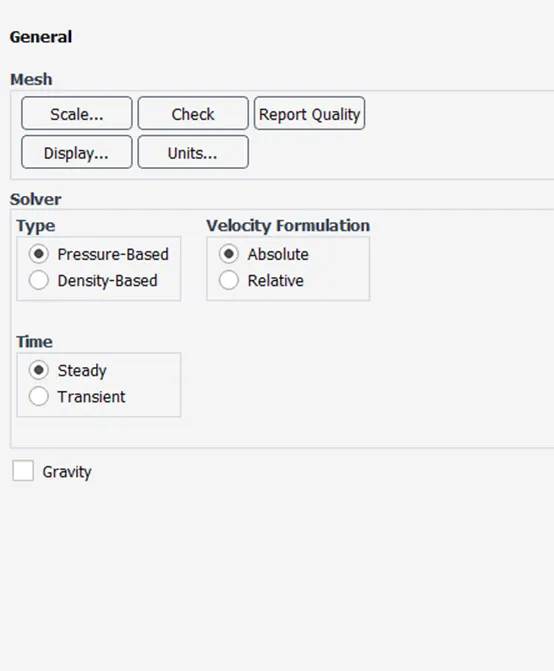
- Double precision, parallel processors
- Solver
- Pressure based, absolute velocity formulation
- Steady state
-
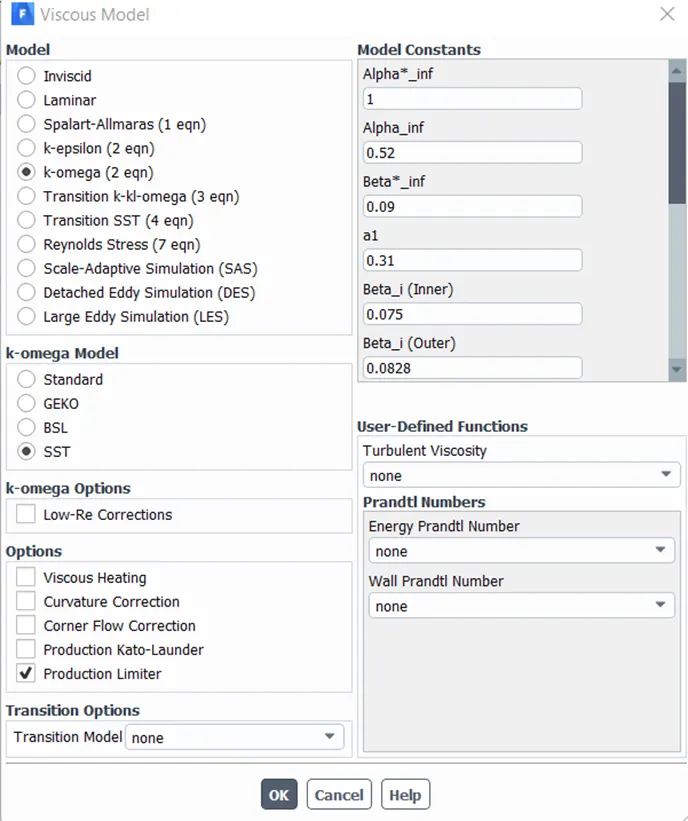
- Energy-check
- Viscous model
- K-omega-SST
-
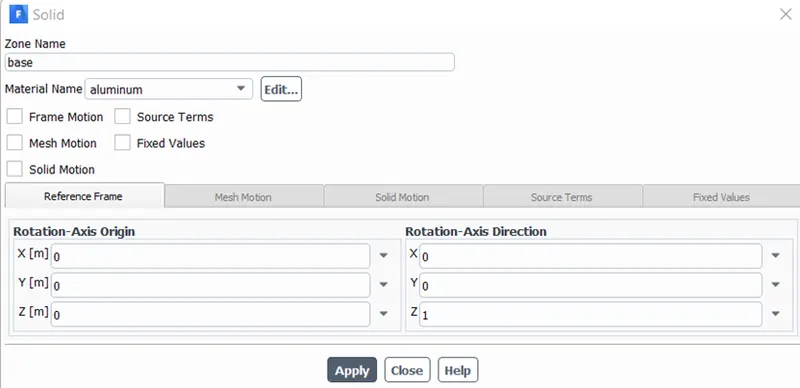
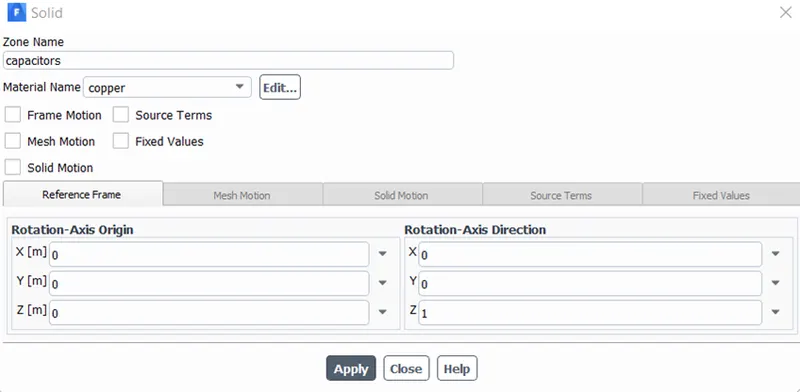
- Materials
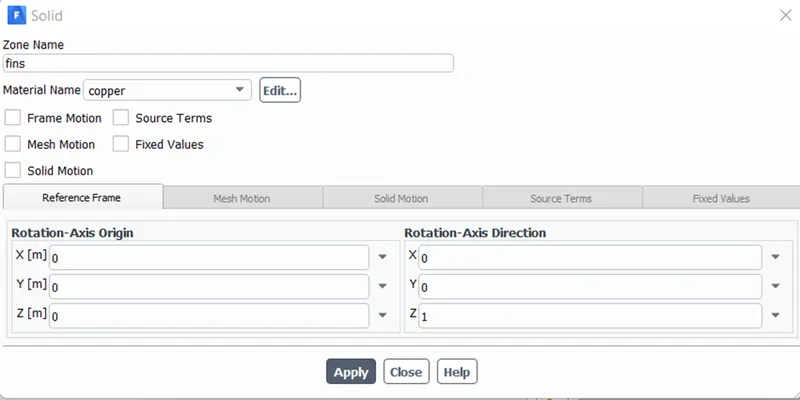
- Create/edit materials->provide materials accordingly using fluent database.
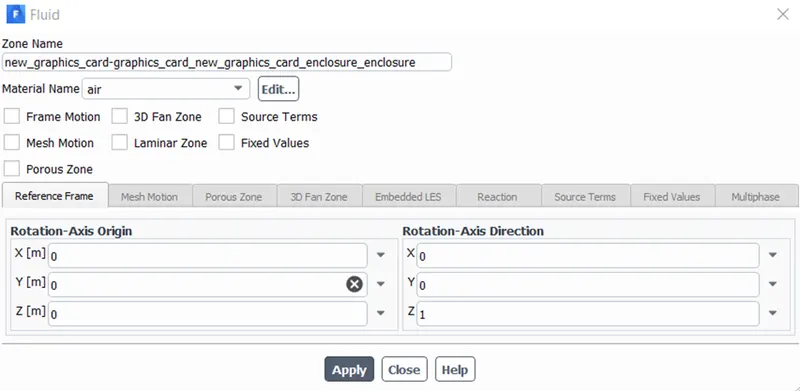
- Enclosure-fluid->air
- Base-solid->Aluminium
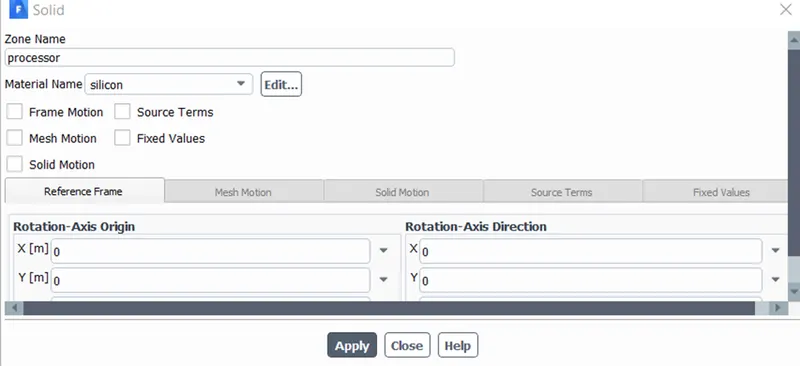
- Processor-solid->Silicon (user defined)
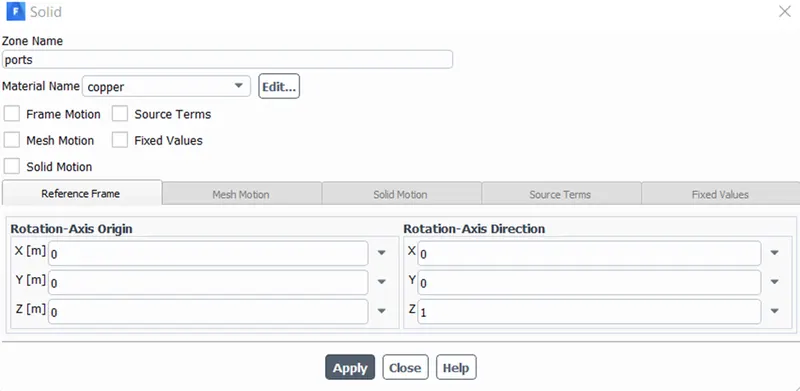
- Fins, capacitors, ports-solid->Copper
- Cell zones->make sure that the parts are having right medium and materials
- Base
- Create/edit materials->provide materials accordingly using fluent database.
- Materials
-
-
-
- Capacitors
-
-
-
-
-
- Fins
-
-
-
-
-
- Enclosure
-
-
-
-
-
- Processor
-
-
-
-
-
- Ports
-
-
-
-
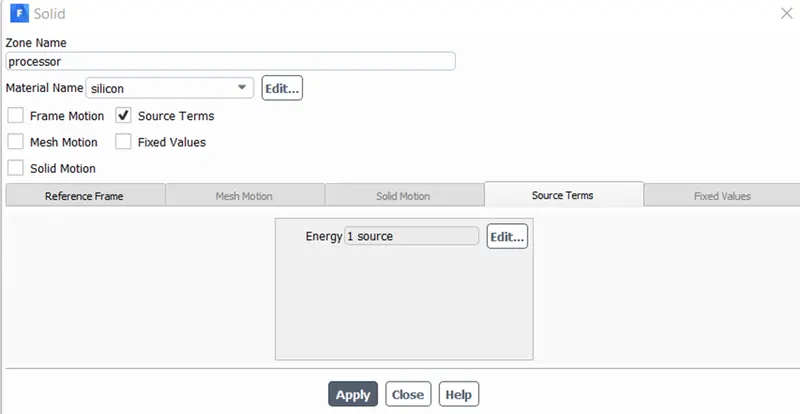
- Processor->source term->Energy source=1->select constant from the dropdown->provide the calculated energy in W/m^3
-
-
-
- Calculation of the energy source
- Assume the processor consumes =50 W
- Volume of the processor=8*8*1 mm^3
- Hence, energy produced by the processor =781250000 W/m^3
- Boundary
- Inlet- velocity =1 m/s (later varied), temperature =300K
- Outlet=0 Pa gauge pressure.
- Symmetry walls->symmetry
- Initialization
- Hybrid initialization
- Create the required plots and contours
- Run the solution
- Calculation of the energy source
-
RESULTS & PLOTS
- Base mesh
- velocity =1 m/s
| Part | element size (mm) |
| enclosure | 5 |
| fins | 2 |
| processor | 1.5 |
| capacitor | 0.2 |
| port | 1 |
| base | 2 |
| Total elements | 172288 |
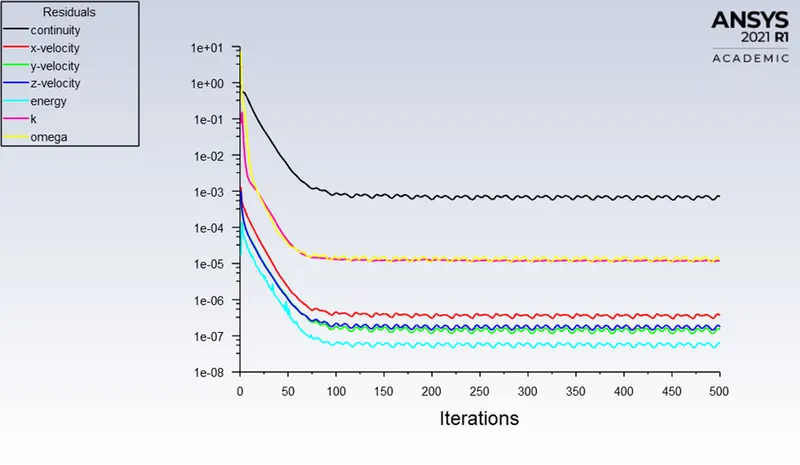
Figure 1: Residuals for base mesh
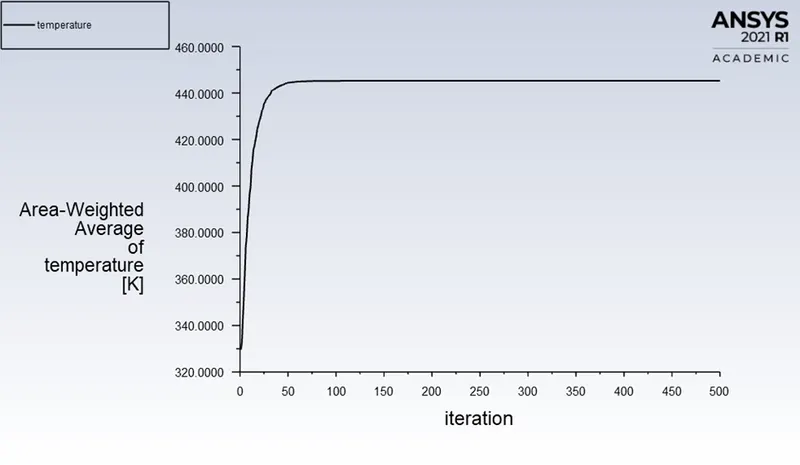
Figure 2: Average temperature of graphics card with base mesh
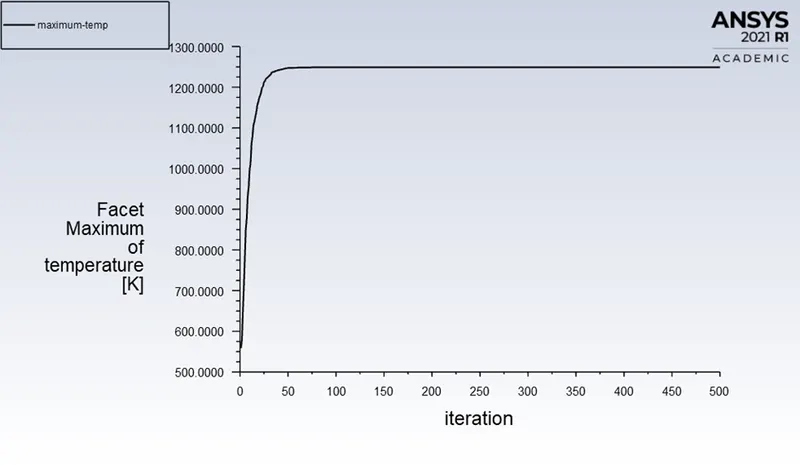
Figure 3: Maximum temperature of graphics card with base mesh
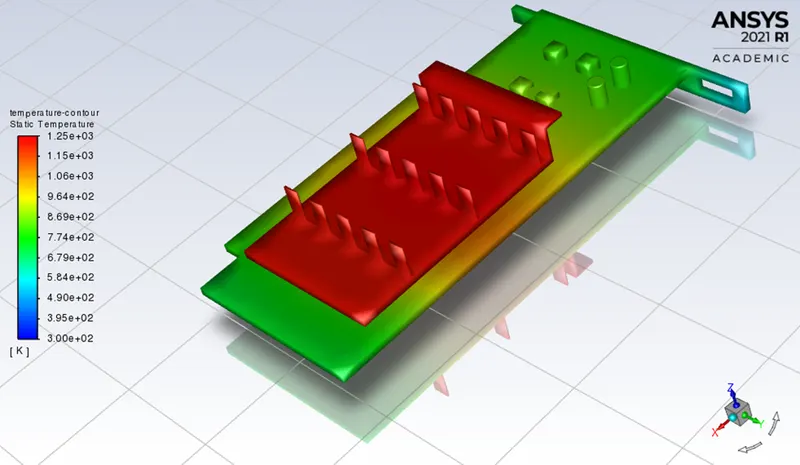
Figure 4: Temperature contour of graphics card with base mesh
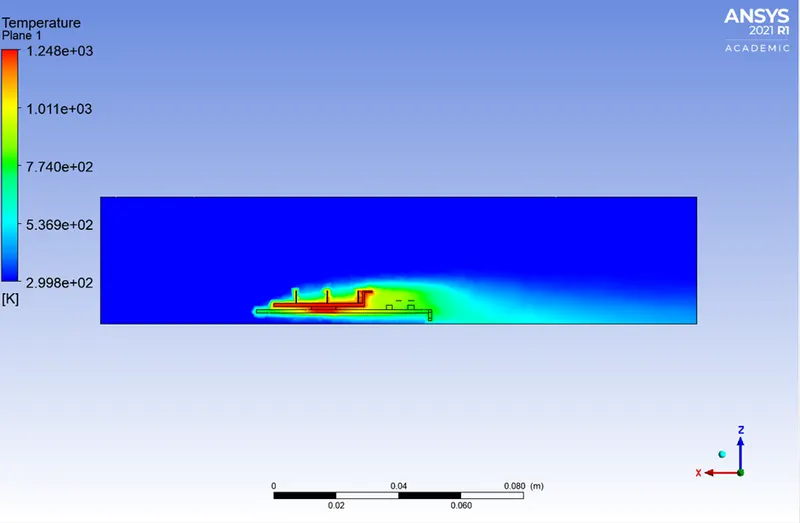
Figure 5: Temperature contour of graphics card with base mesh across xz plane
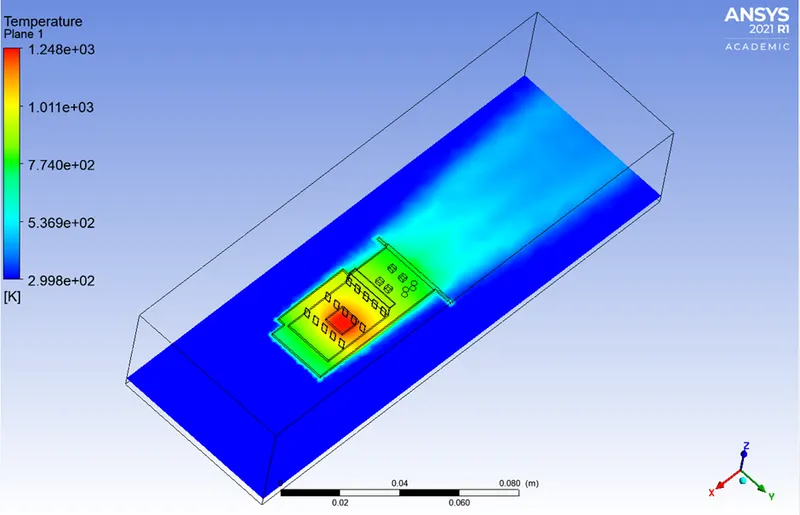
Figure 6: Temperature contour of graphics card with base mesh across xy plane
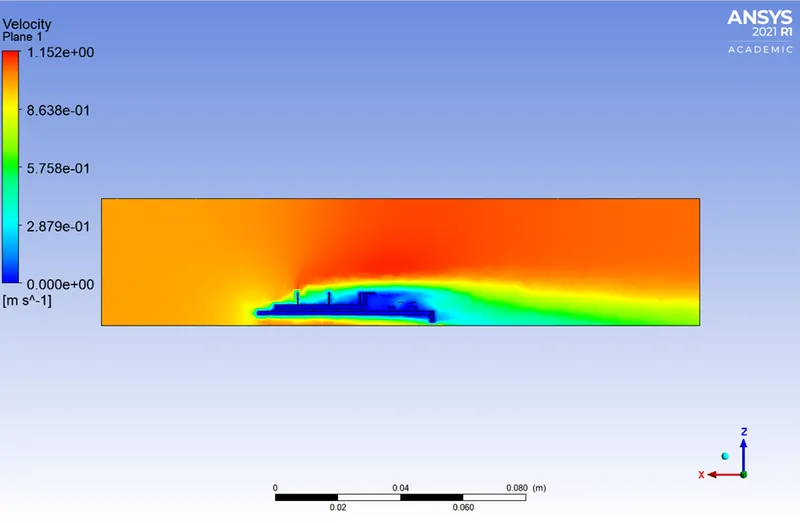
Figure 7: Velocity contour of graphics card with base mesh across xz plane
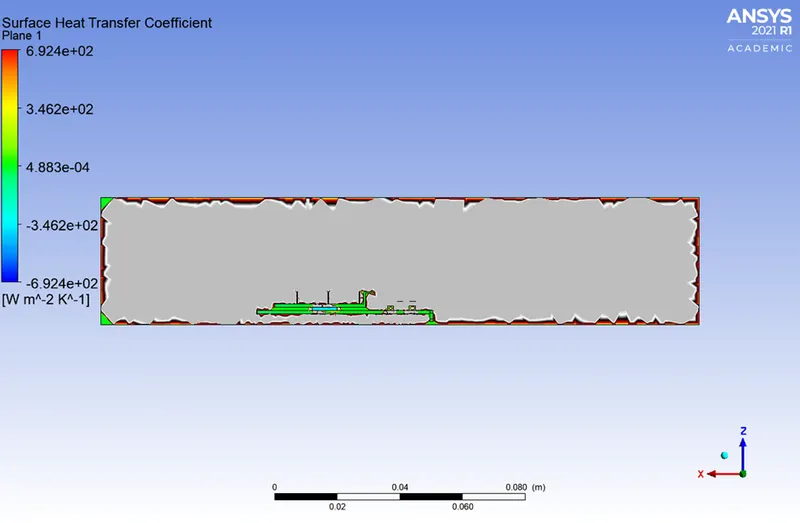
Figure 8: Surface HTC of graphics card with base mesh across xz plane
- First refinement
- velocity =1 m/s
| Part | element size (mm) |
| enclosure | 5 |
| fins | 2 |
| processor | 1 |
| capacitor | 0.2 |
| port | 0.5 |
| base | 1 |
| Total elements | 259199 |
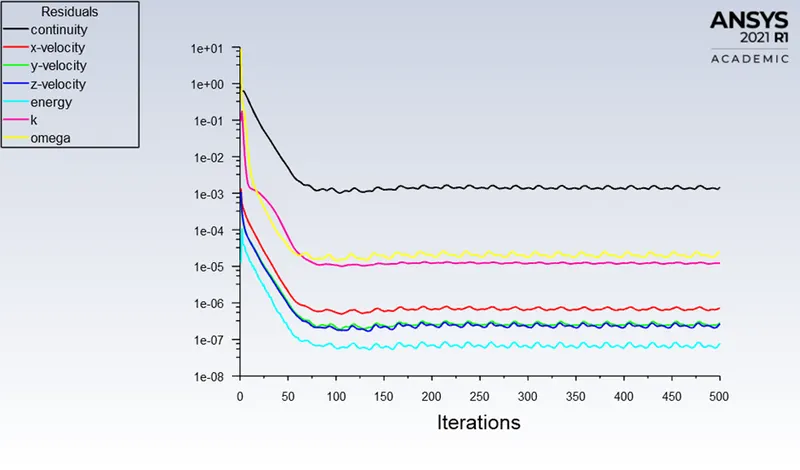
Figure 9: Residuals for first refined mesh
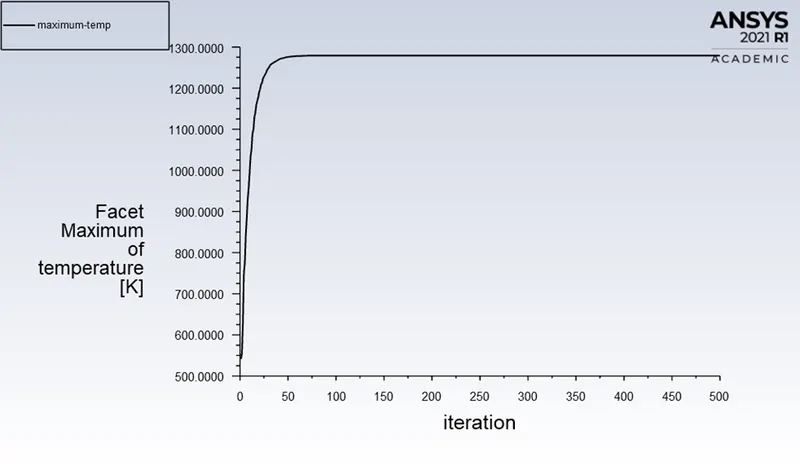
Figure 10: Maximum temperature of graphics card with first refined mesh
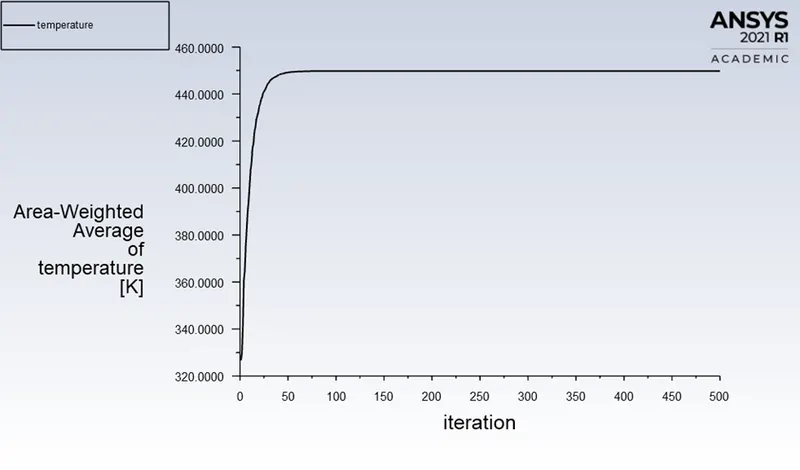
Figure 11: Average temperature of graphics card with first refined mesh
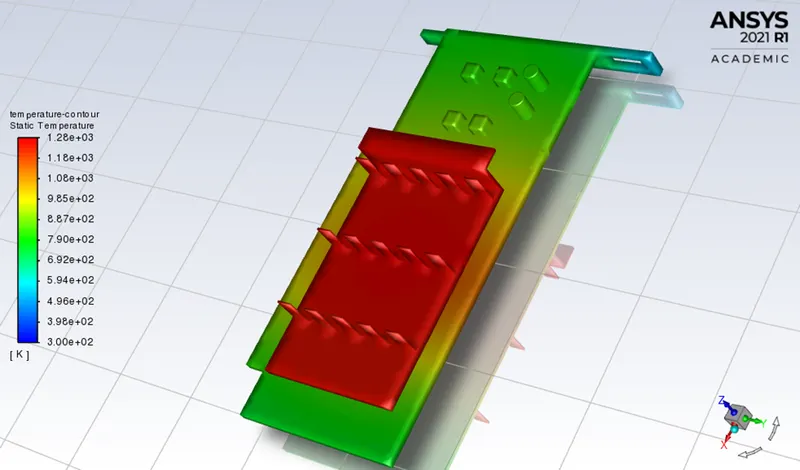
Figure 12: Temperature contour of graphics card with first refined mesh
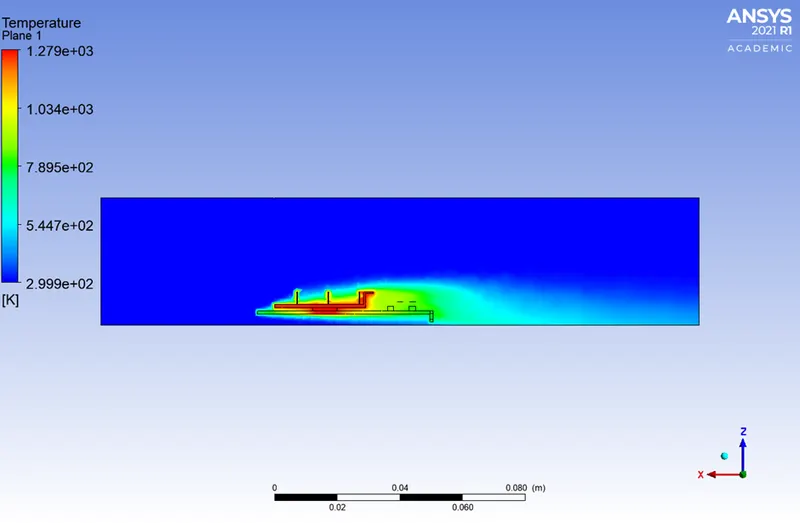
Figure 13: Temperature contour of graphics card with first refined mesh across xz plane
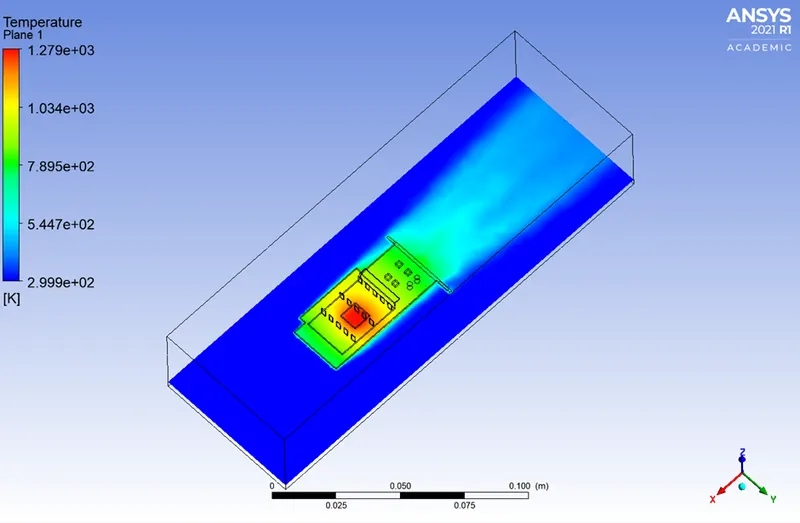
Figure 14: Temperature contour of graphics card with first refined mesh across xy plane
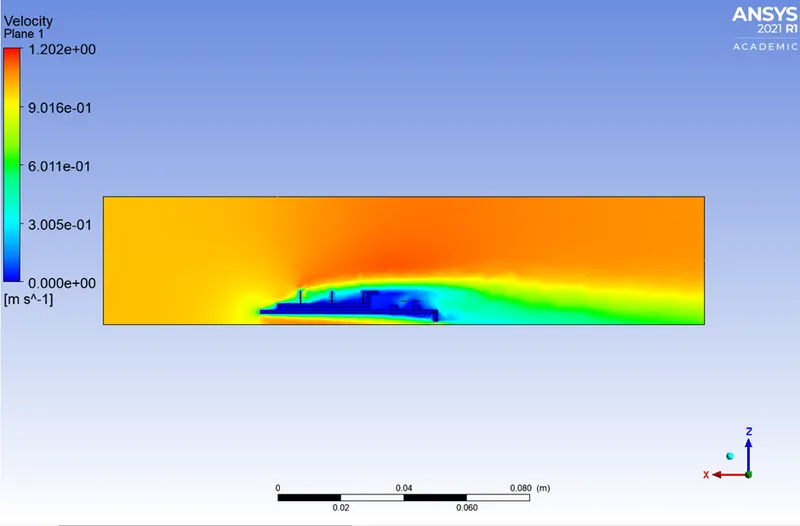
Figure 15: Velocity contour of graphics card with first refined mesh across xz plane
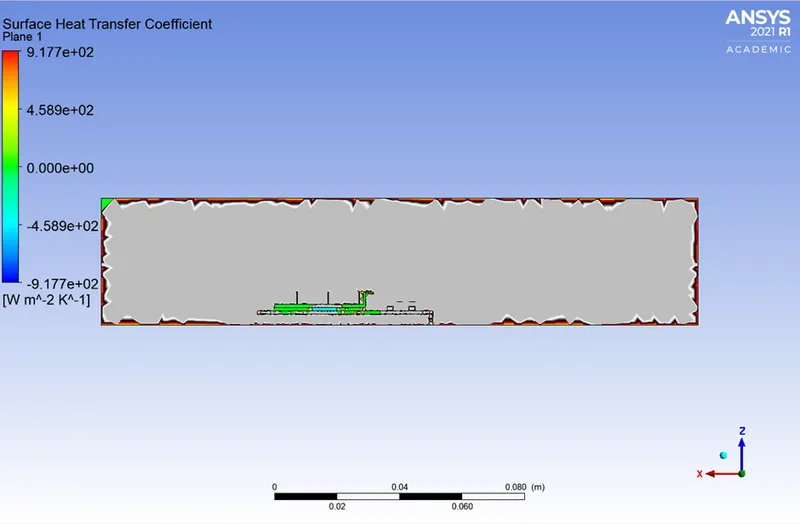
Figure 16: Surface HTC of graphics card with first refined mesh across xz plane
- Second Refinement
- velocity =1 m/s
| Part | element size (mm) |
| enclosure | 5 |
| fins | 2 |
| processor | 0.3 |
| capacitor | 0.2 |
| port | 0.2 |
| base | 1 |
| Total elements | 442617 |
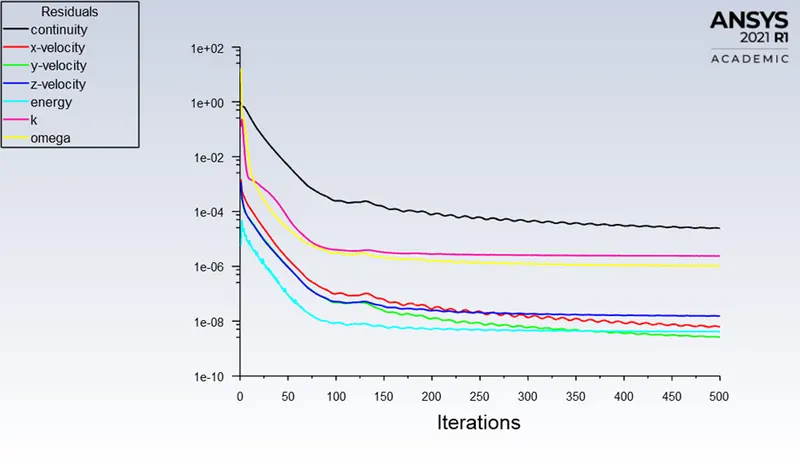
Figure 17: Residuals for second refined mesh
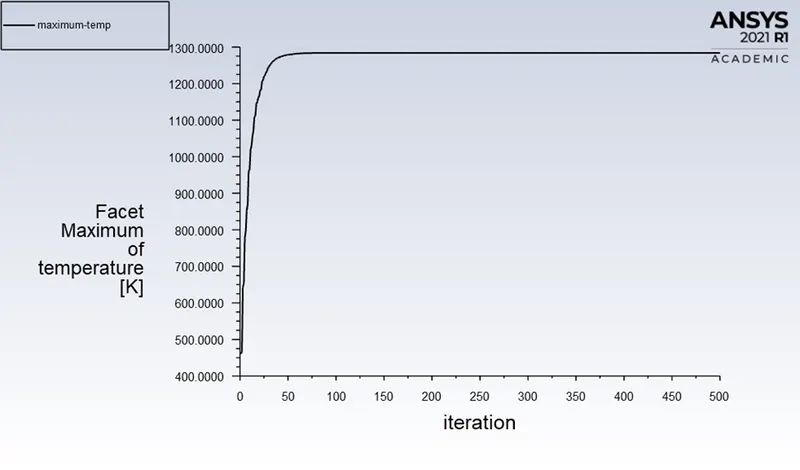
Figure 18: Maximum temperature of graphics card with second refined mesh
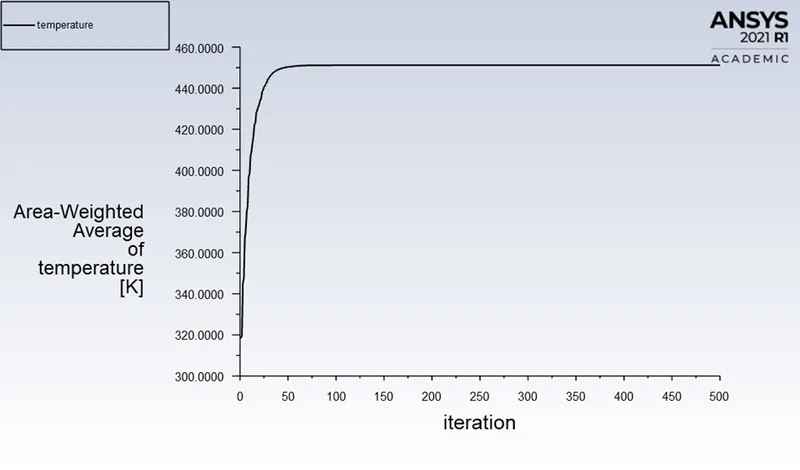
Figure 19: Average temperature of graphics card with second refined mesh
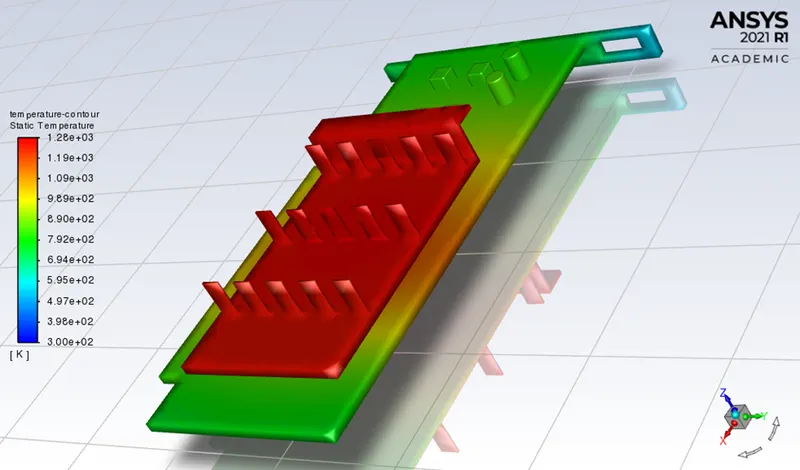
Figure 20: Temperature contour of graphics card with second refined mesh
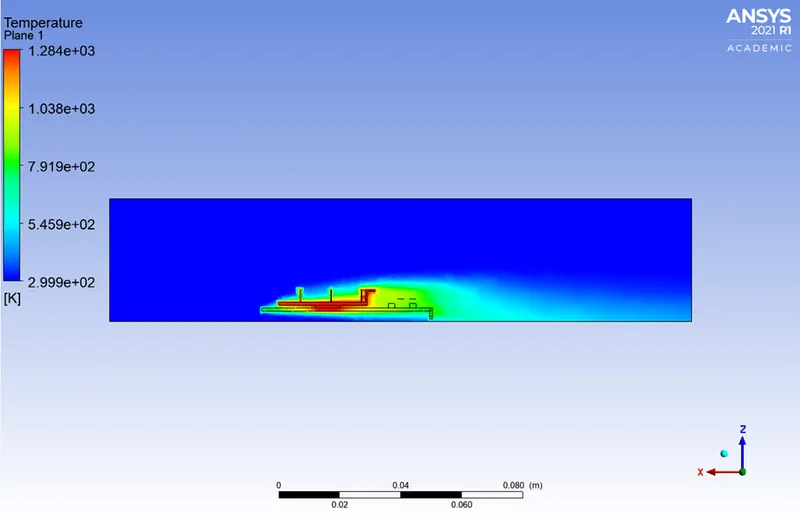
Figure 21: Temperature contour of graphics card with second refined mesh across xz plane
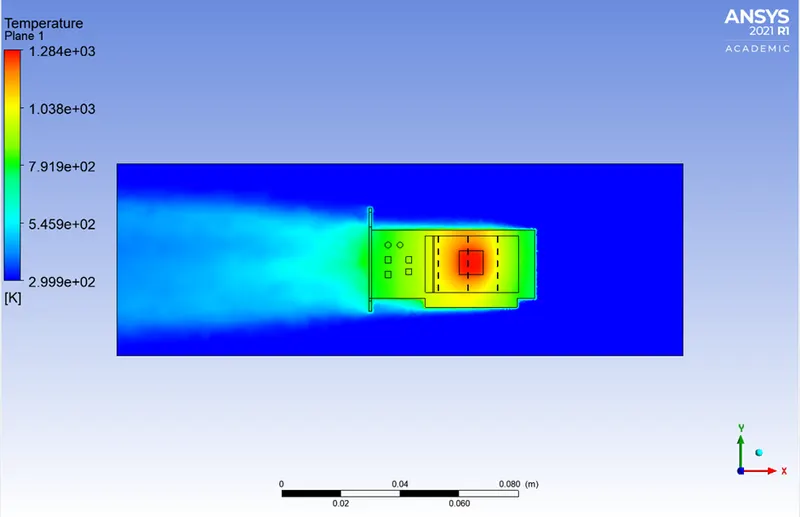
Figure 22: Temperature contour of graphics card with second refined mesh across xy plane
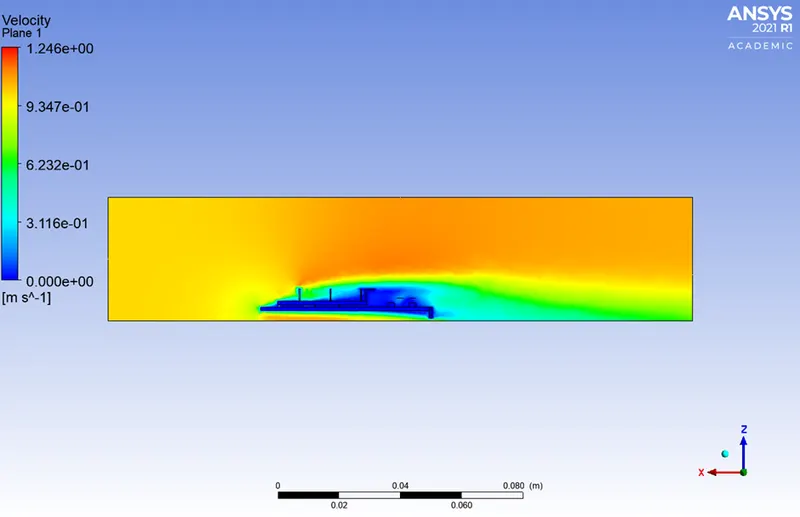
Figure 23: Velocity contour of graphics card with second refined mesh across xz plane
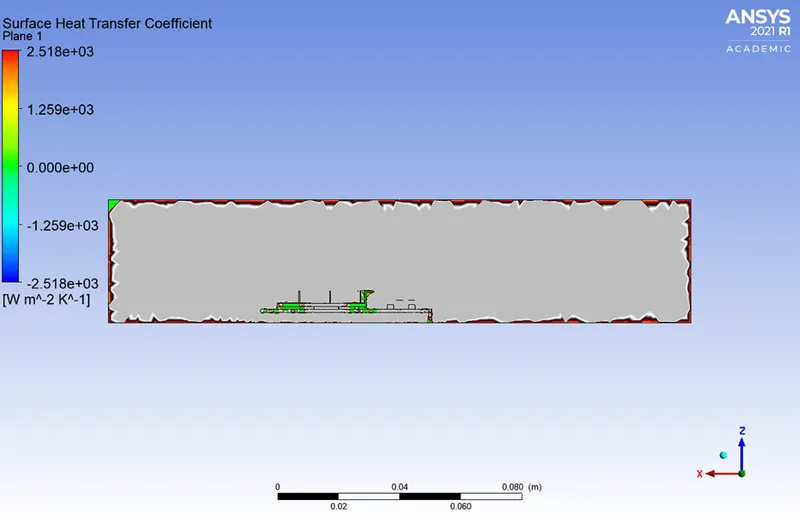
Figure 24: Surface HTC of graphics card with second refined mesh across xz plane
Varying the velocity on the refined mesh
- velocity =3m/s
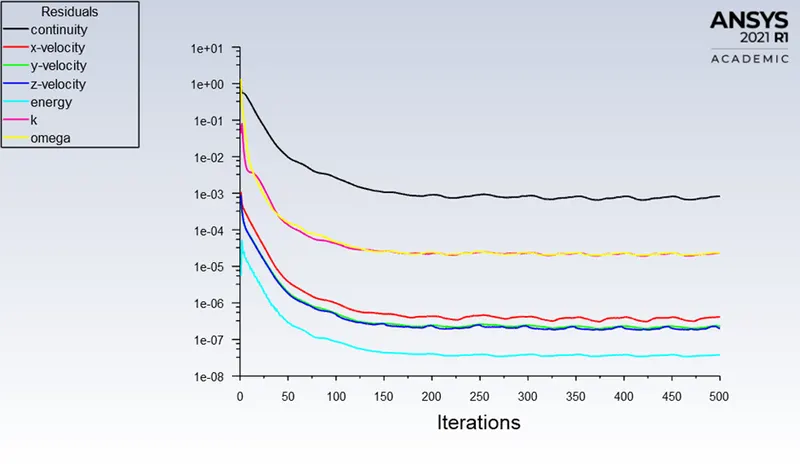
Figure 25: Residuals for second refined mesh with velocity=3m/s
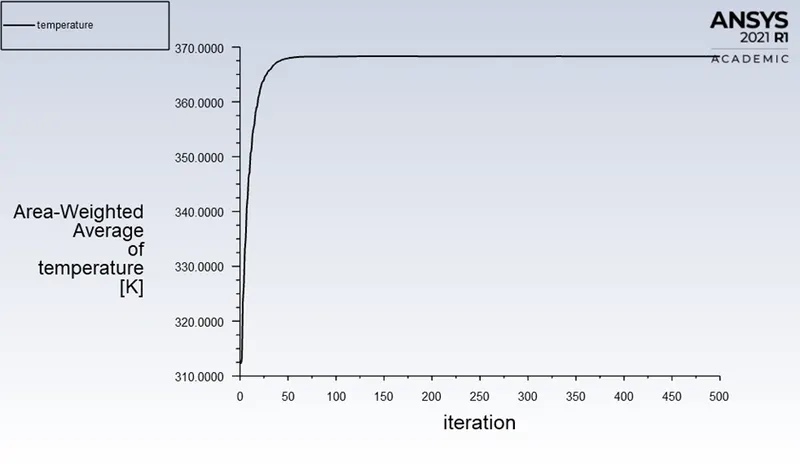
Figure 26: Average temperature of graphics card with second refined mesh with velocity=3m/s
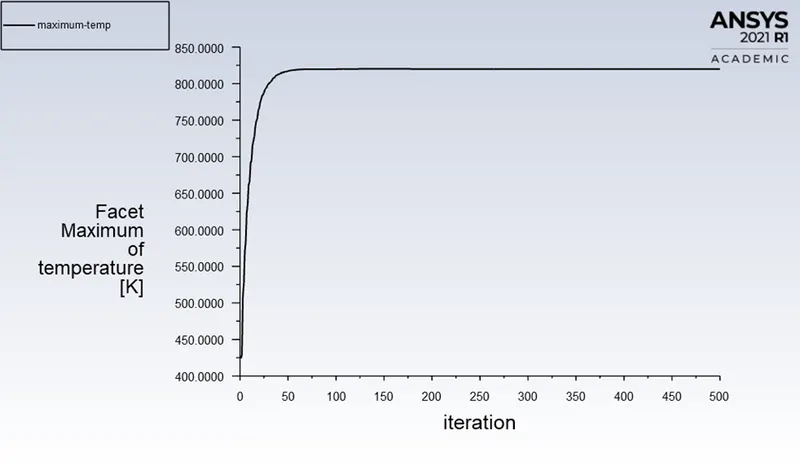
Figure 27: Maximum temperature of graphics card with second refined mesh with velocity =3m/s
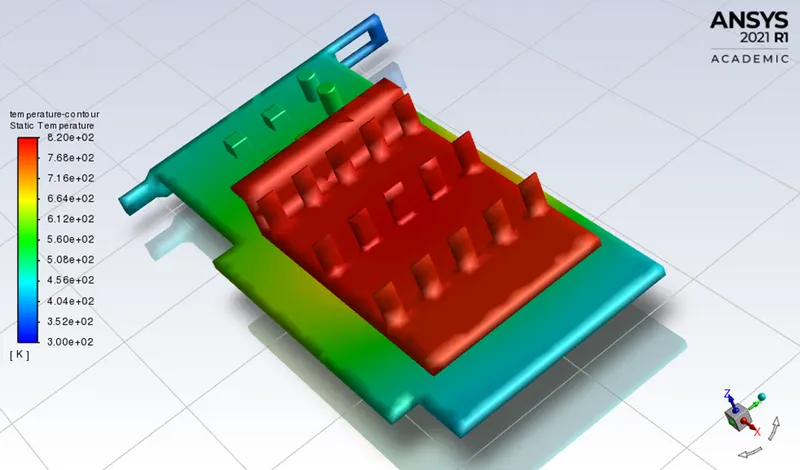
Figure 28: Temperature contour of graphics card with second refined mesh with velocity =3m/s
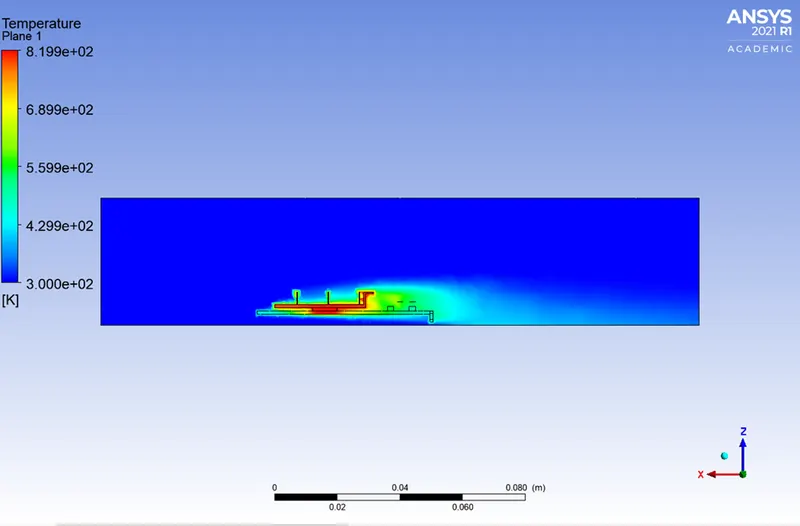
Figure 29: Temperature contour of graphics card with second refined mesh with velocity =3m/s across xz plane
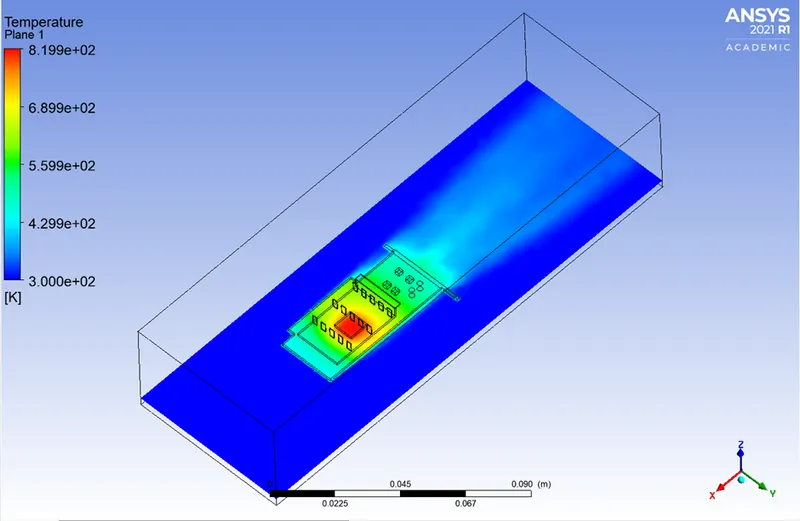
Figure 30: Temperature contour of graphics card with second refined mesh with velocity =3m/s across xy plane
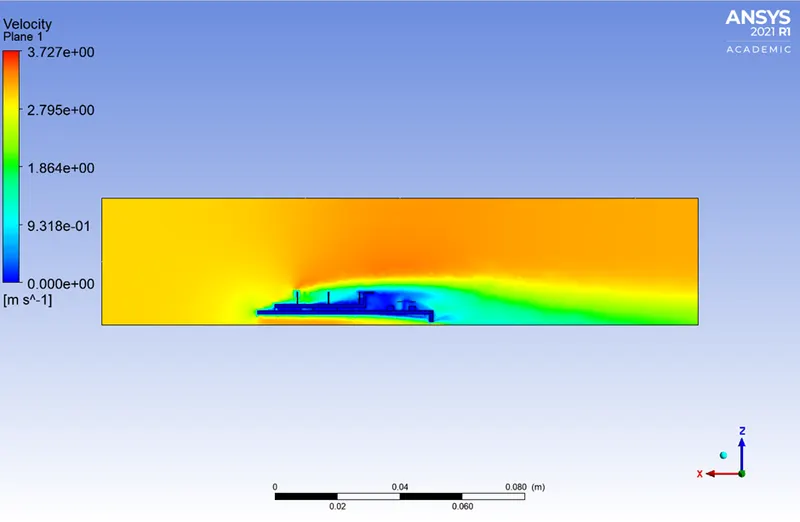
Figure 31: Velocity contour of graphics card with second refined mesh with velocity= 3 m/s across xz plane
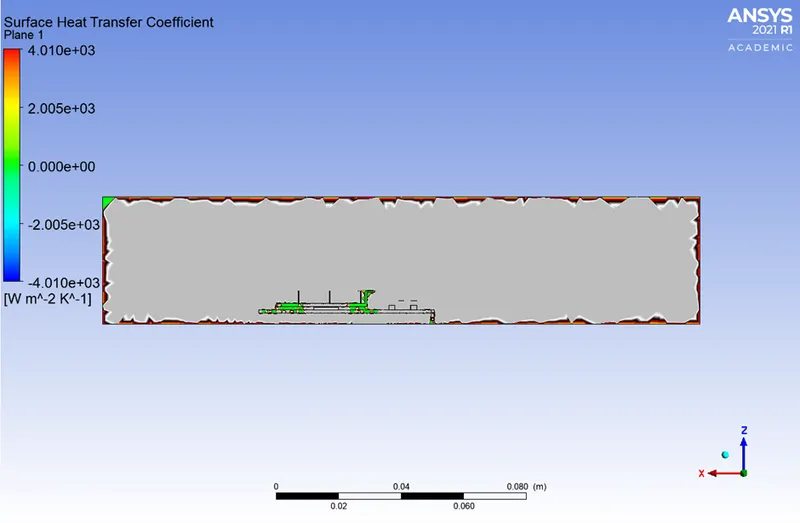
Figure 32: Surface HTC of graphics card with second refined mesh with velocity= 3 m/s across xz plane
- velocity =5m/s
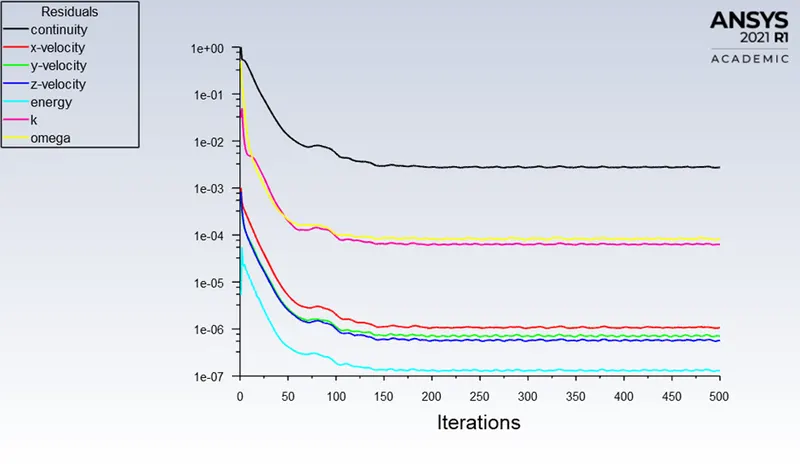
Figure 33: Residuals for second refined mesh with velocity=5m/s
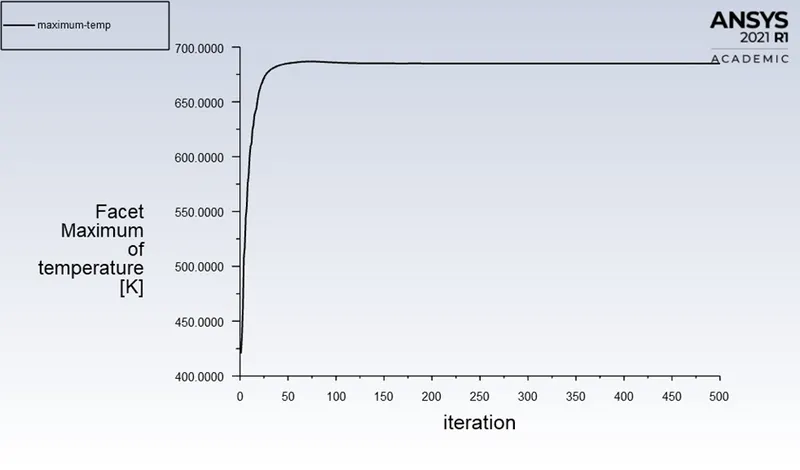
Figure 34: Maximum temperature of graphics card with second refined mesh with velocity =5m/s
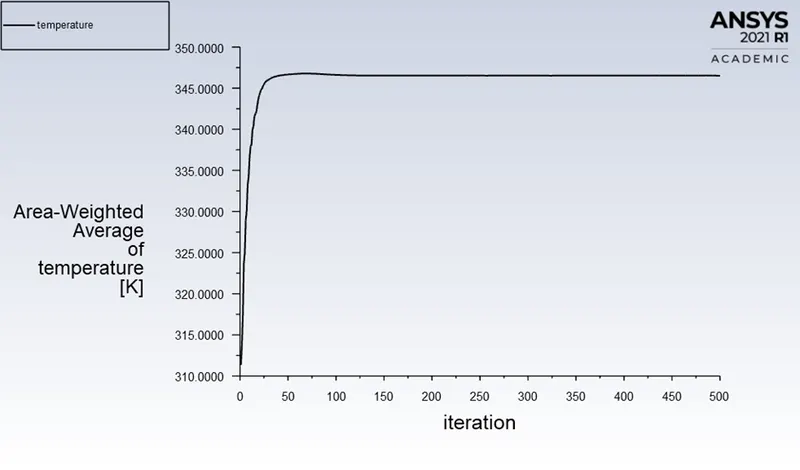
Figure 35: Average temperature of graphics card with second refined mesh with velocity=5m/s
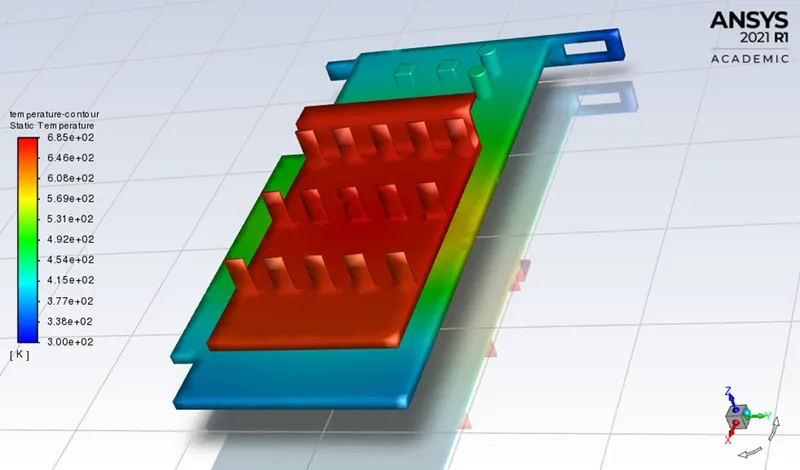
Figure 36: Temperature contour of graphics card with second refined mesh with velocity =5 m/s
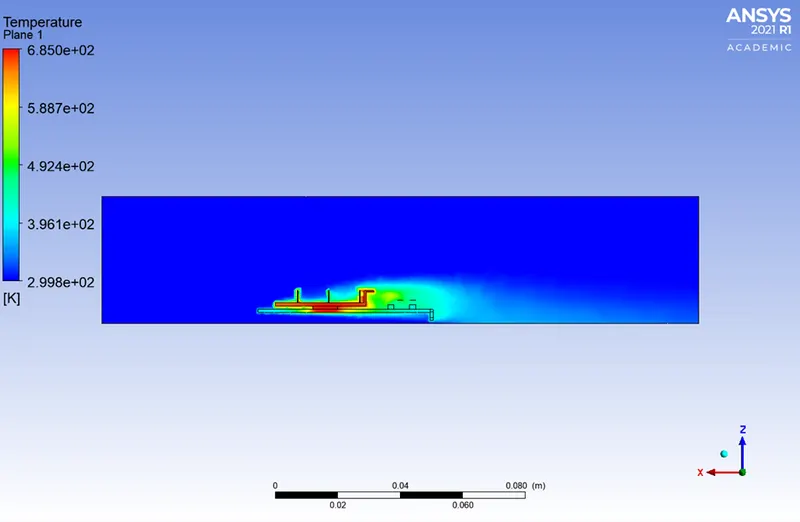
Figure 37: Temperature contour of graphics card with second refined mesh with velocity =5 m/s across xz plane
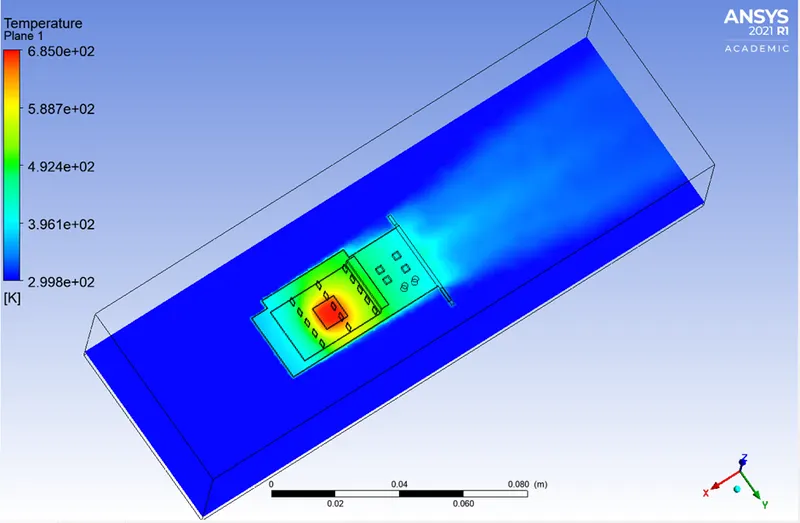
Figure 38: Temperature contour of graphics card with second refined mesh with velocity =5 m/s across xy plane
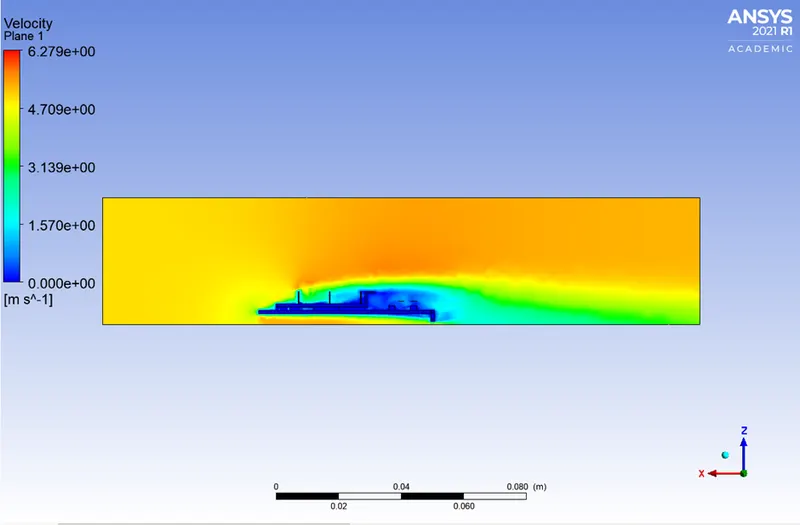
Figure 39: Velocity contour of graphics card with second refined mesh with velocity= 5 m/s across xz plane
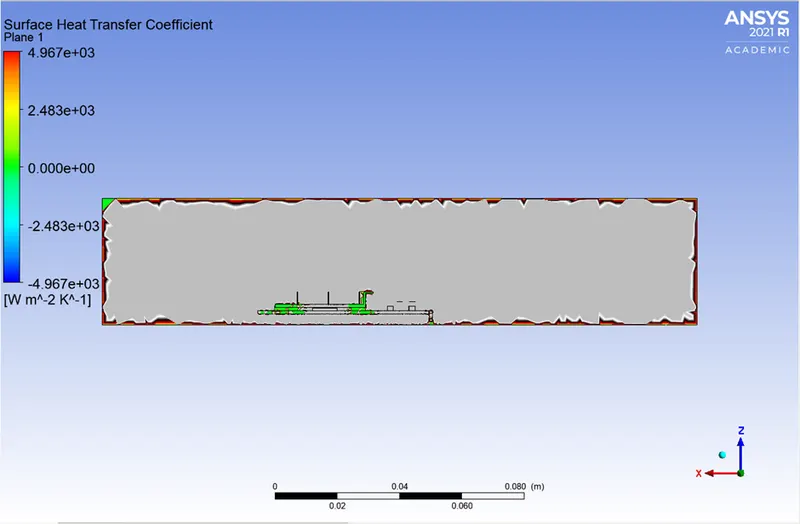
Figure 40: Surface HTC of graphics card with second refined mesh with velocity= 5 m/s across xz plane
|
Type of mesh |
Velocity (m/s) | Average temperature (K) | Facet Maximum temperature (K) |
| Base | 1 | 445.25 | 1248.88 |
| First refinement | 1 | 449.75 | 1279.29 |
| Second Refinement | 1 | 451.14 | 1283.98 |
| Second Refinement | 3 | 368.29 | 819.90 |
| Second Refinement | 5 | 346.51 | 346.51 |
CONCLUSION
- With an increase in velocity, the temperature distribution is considerably reduced and thereby an increment in wall heat transfer coefficient. Thus, high-velocity air can be used as a medium of heat dissipation in graphics card.
- Careful analysis of the results of mesh refinement shows that, the minimum the mesh size, the better will be the results. Also, the differences in the residual plots are considerably smaller, hence can be concluded that the solution has converged.
- The potential hotspots are the centre of the fins, processor walls and base. The temperature is distributed to the other regions of the graphics card in the direction of the air flow.
- Conduction occurs where there is a solid-solid interaction, hence in this case, conduction occurs between processor and base & processor and fins.
- Convection occurs when the heat generated in the processor is carried away by the inlet air flow. With increase in air-flow velocity, the heat removal by convection is also faster.