Week 6 - CHT Analysis on a Graphics card
Aim
To conduct a CHT analysis on graphics card
Objectives
- Run the simulation by varying the velocity from 1m/sec to 5m/sec for at least 3 velocities and discuss the results.
- Find out the maximum temperature and heat transfer coefficient attained by the processor.
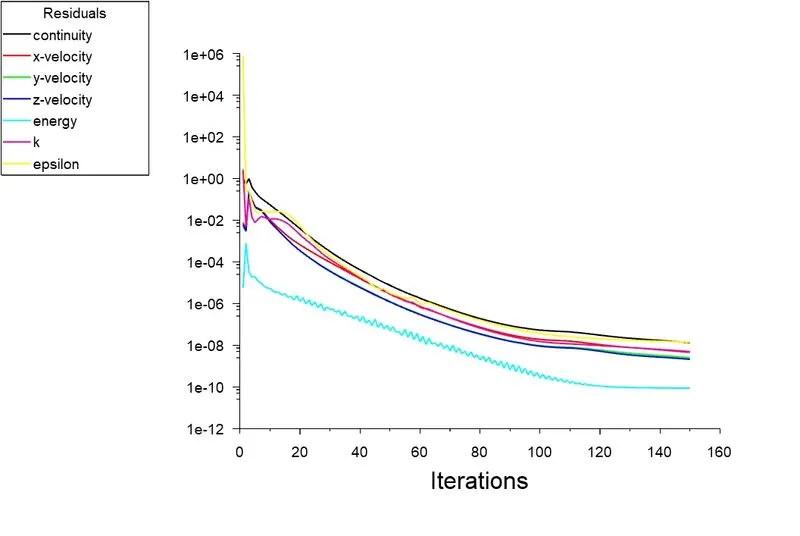
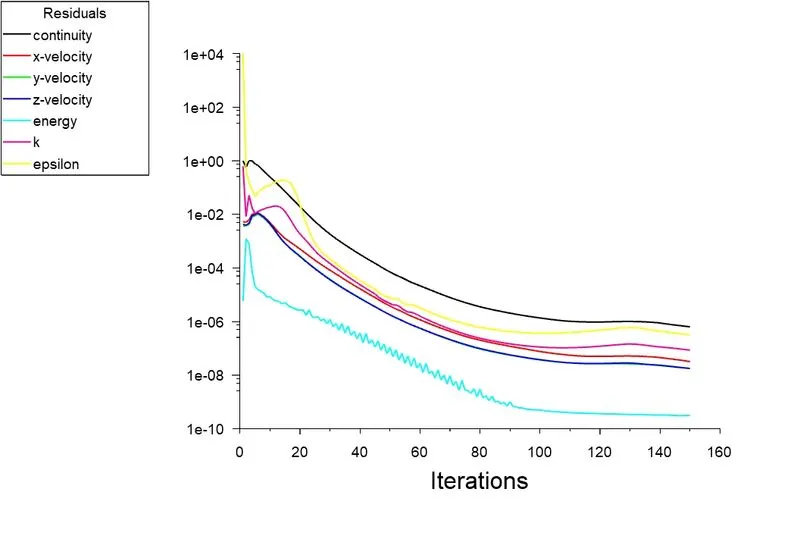
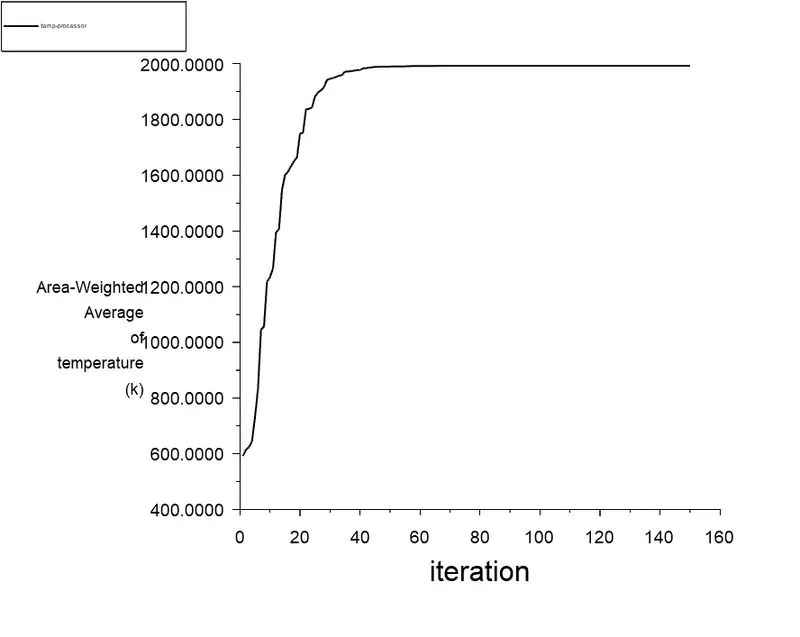
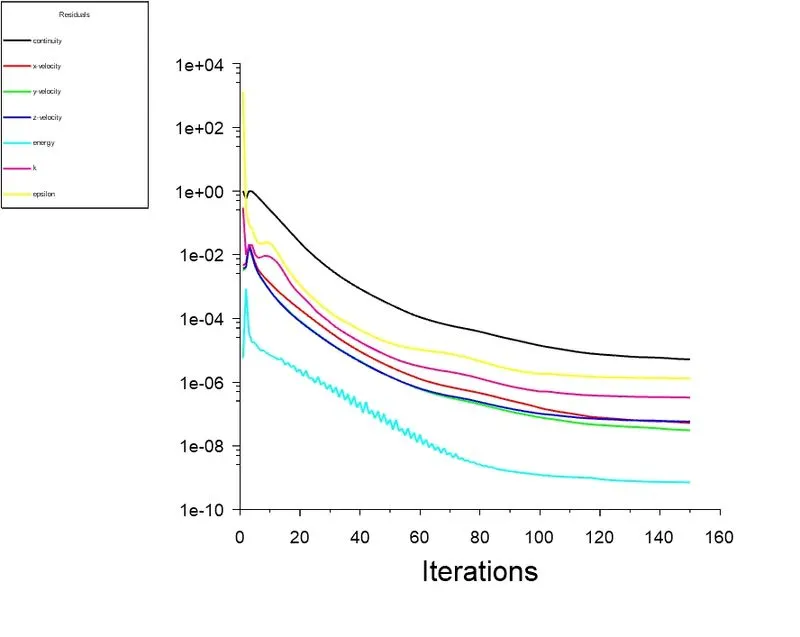
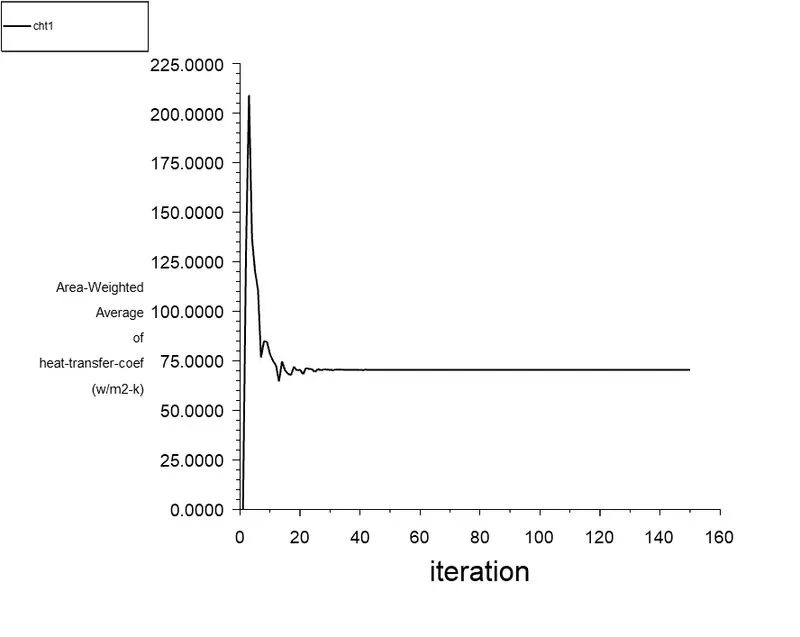
- Prove that the simulation has achieved convergence with appropriate images and plots.
- Identify potential hotspots on the model.
Need of CHT analysis on graphics card
- Most of the mass in a graphics card is the associated heatsinks and fans to cool down a GPU.
- GPU’s are designed with heatsinks to get rid of excess heat. These are usually copper for heat conduction, and have some sort of aluminum fins to vent the heat and provide a larger surface area for air to cool the unit
- The heat is created at the processor
- Through the CHT analysis we can get a clear Idea about the efficiency of these heatsinks Under different conditions and stick to a best working condition where the the Heatsinks can have maximum efficiency
Parts and Materials of a graphics card
- Here in this case we have considered Three main parts of a graphics card and those are PCB , Processor, and fins
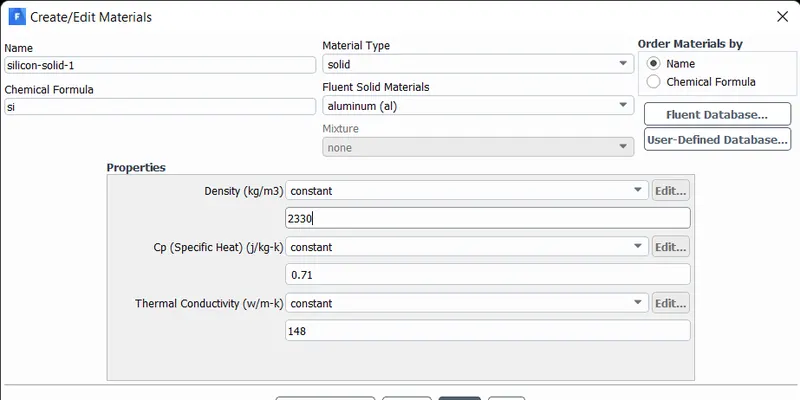
- Processor being the heat generator is made of 6 Billion Tantalum and Palladium transistors and capacitors, Gold(switches) and Silicon- Layered with tantalum to stabilize the chip and allow for better data storage with a smaller chip, Since it gets very complicated to define all the materials we will stick to one which is most dominant in terms of mass . So for processor I've considered it as Silicon
- The fins are generally made of Aluminium
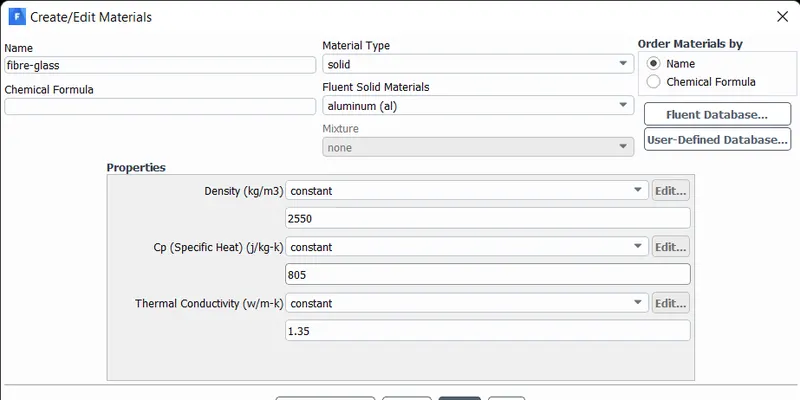
- For all type of PCB manufacturing, most common glass laminated material is FR4. Based on woven glass-epoxy compounds, FR4 is a composite material which is most useful because it provides very good mechanical strength
Geometry
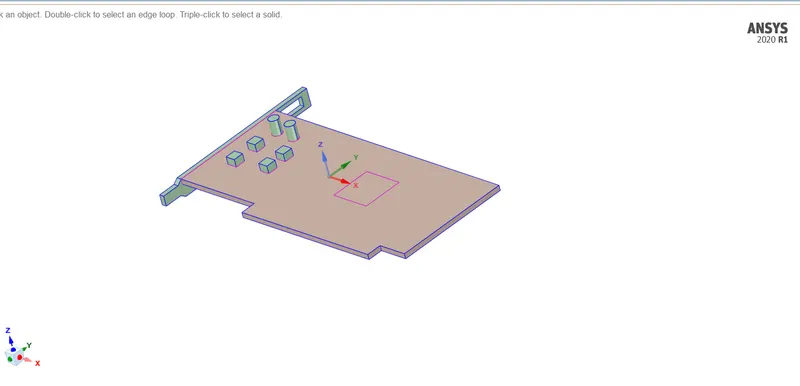
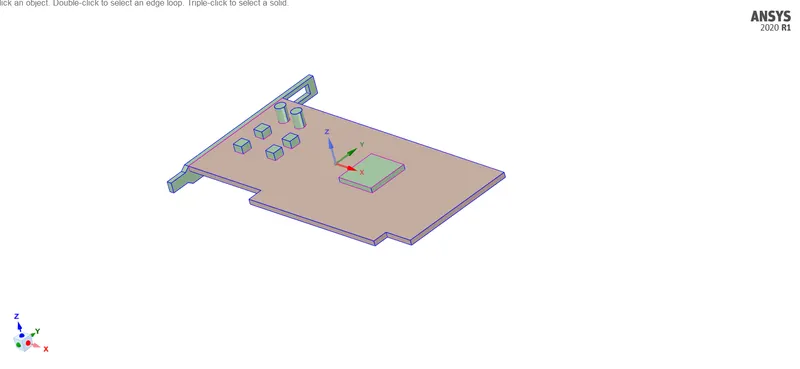
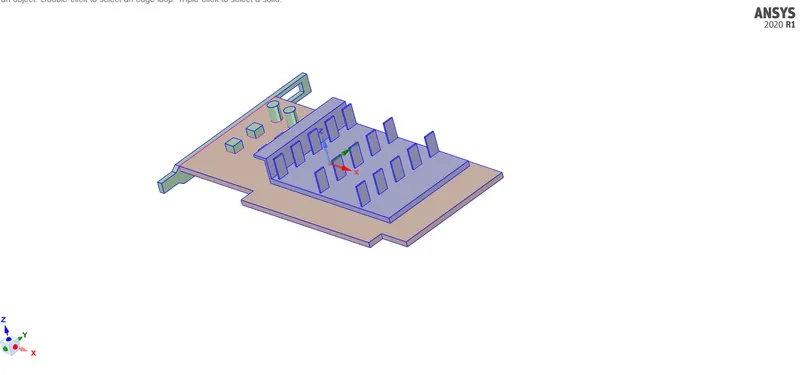
- Consist of 3 parts - Mother board, Processor and Fins (Heat sink)
- Share topology is enabled
- Checked for Interference
Mesh
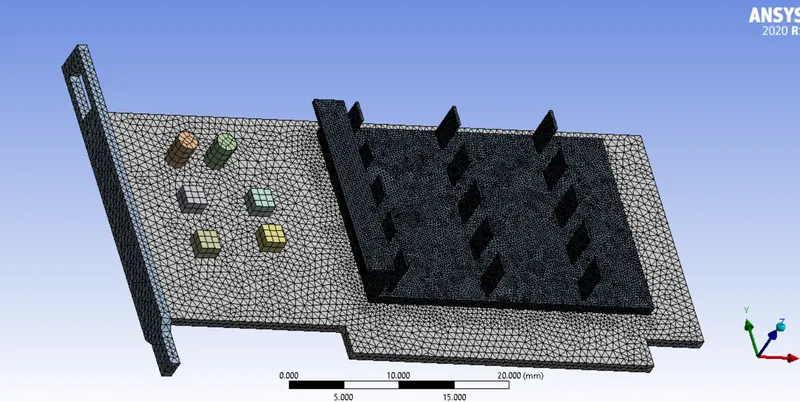
- There will be only one case of meshing, That is all the cases are run on the same refined mesh
- No inflation layers were added here as our objective is to find out the Heat transfer and Temperature effects on the processor
- Named selection was added inorder to define the Inlet and Outlet also Symmetry walls have also been adeed .
- Each parts of the graphics card were given different sizes of mesh in accordance to the conductivity of the material
- Hence Processor was given as mesh size of 0.5
- Fins were given a mesh size of 0.25 mm
- The motherboard was given a mesh size of 0.7
- And the overall mesh was set to 1 mm
Setup
- A steady state Pressure based simulation is selected
- Viscous model set to K-epsilon
- As we have 3 materials here in which aluminium is availible in fluent database, so I had to create the other two materials Solid silicon and Fibreglass by giving appropriate property values
- By default Ansys set the solid parts and the fluid parts in the same fluid catogory, Hence the PCB, processor and fins were changed the type to solid
- Also materials for PCB is set to Fibre glass
- Processor to Silicon
- Fins as Aluminium
- Inlet velocity is set as 1 m/s ,3 m/s,5 m/s for case 1 ,Case 2,case 3 respectively
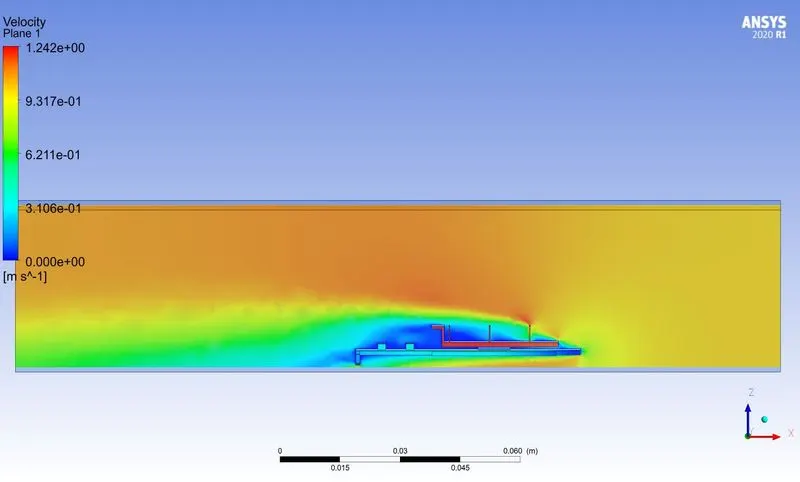
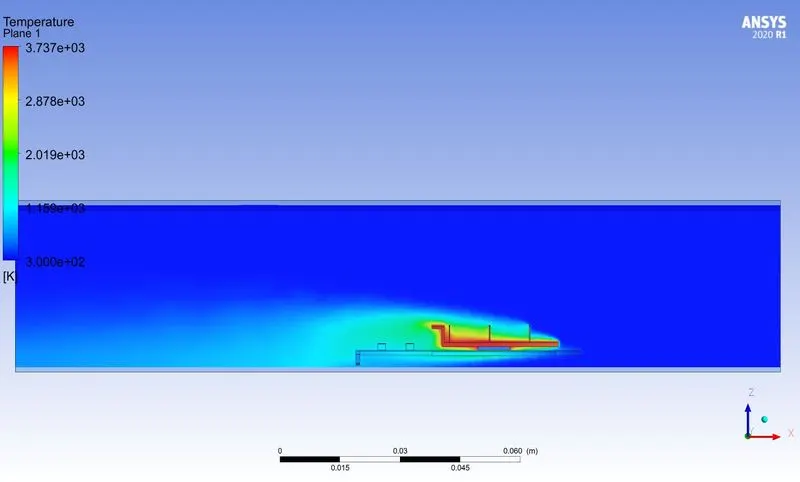
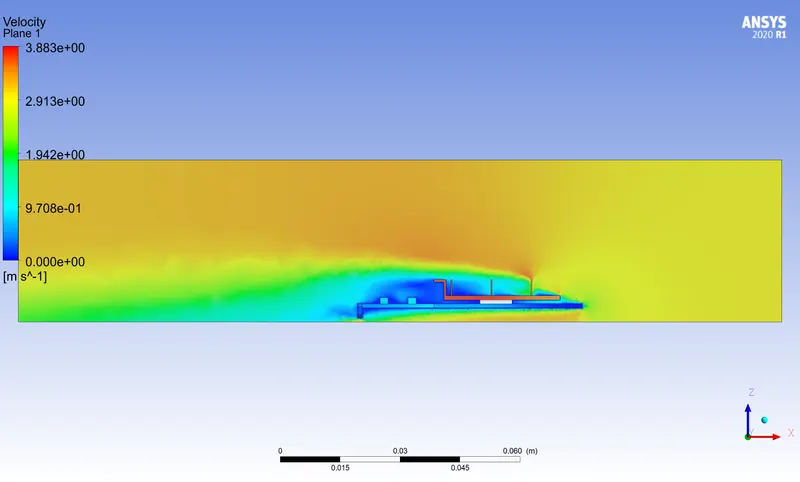
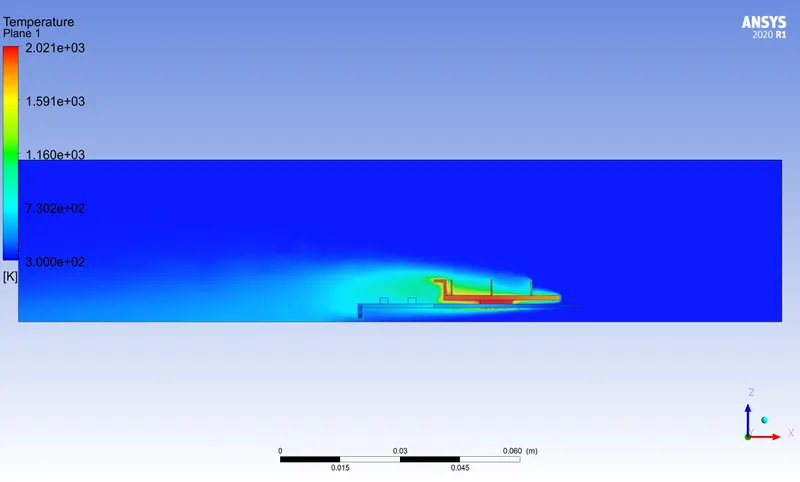
- Plane was created in xz plane inorder to create the velocity and temperature contour
- The velocity and temperature contour was created on the same plane
- A heat source was added on the processor so that we dont have to define any other Initial values
- Since the volume of the processor is 6.4e-8 m^3 and the thermal power dissipation of the processor is 149W , The disspation rate can be found by dividing both making the unit as w/m^3. So the Heat dissipation rate was found to be 23.125e8 w/m^3
- The Coupled scheme was selected
Results
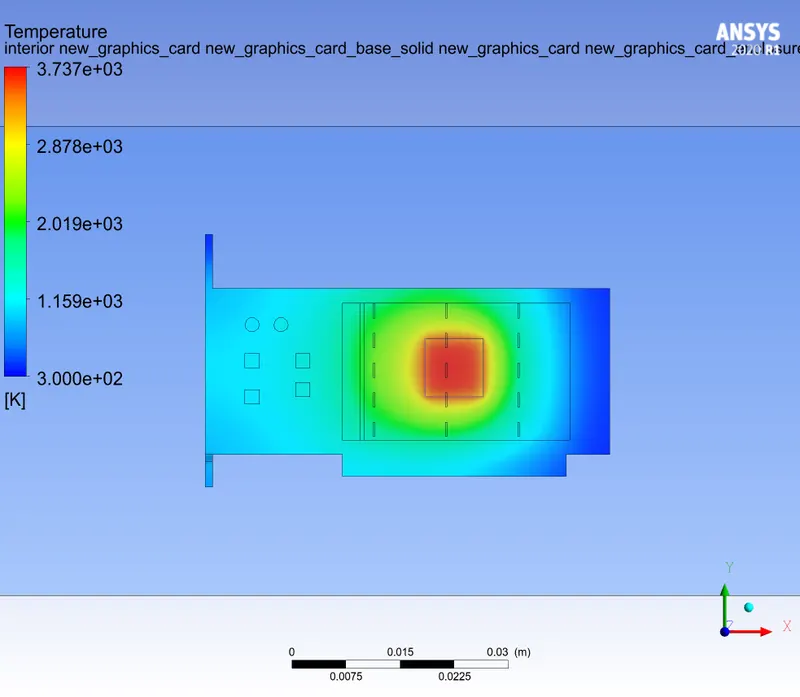
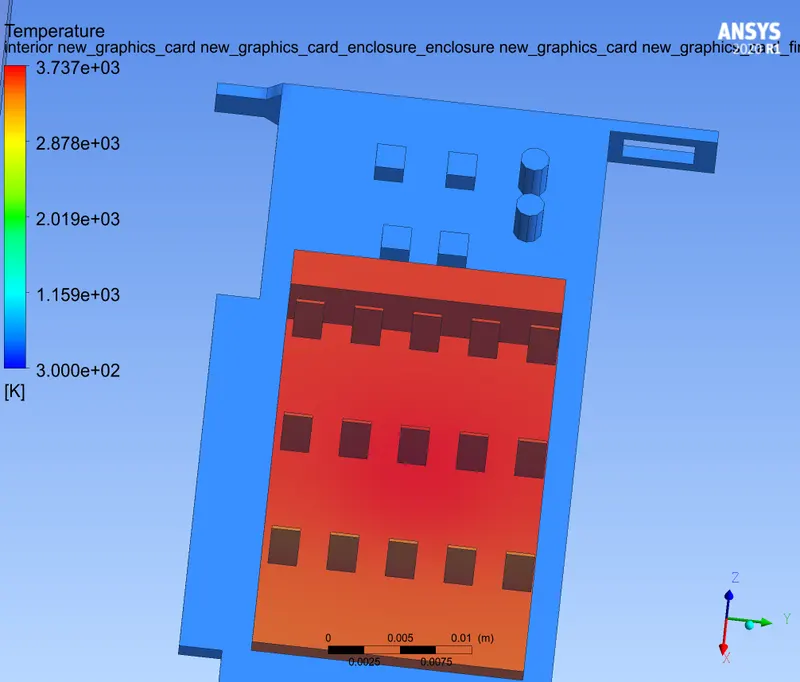
Case 1 :- Velocity at Inlet = 1 m/s
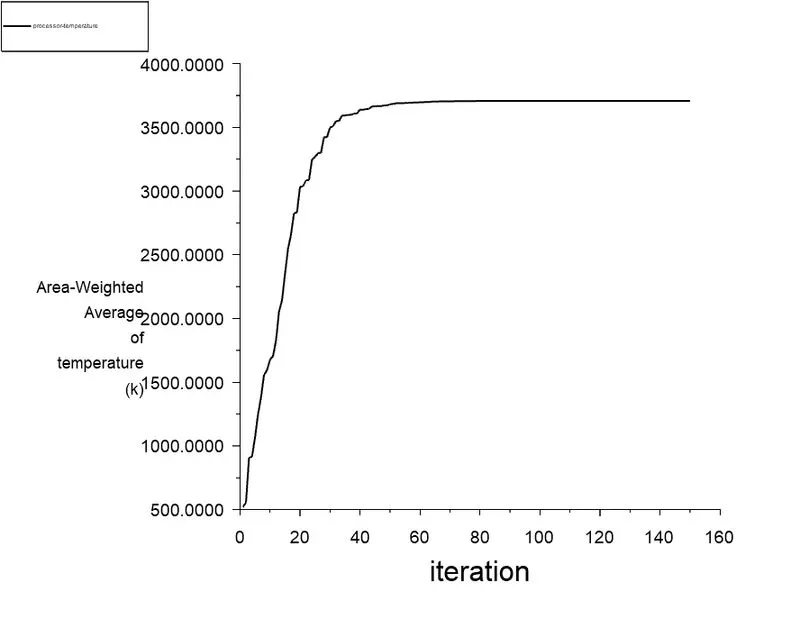
Area weighted Average of Temperature on Silicon Processor
- The obtained value is 3708.5281 k
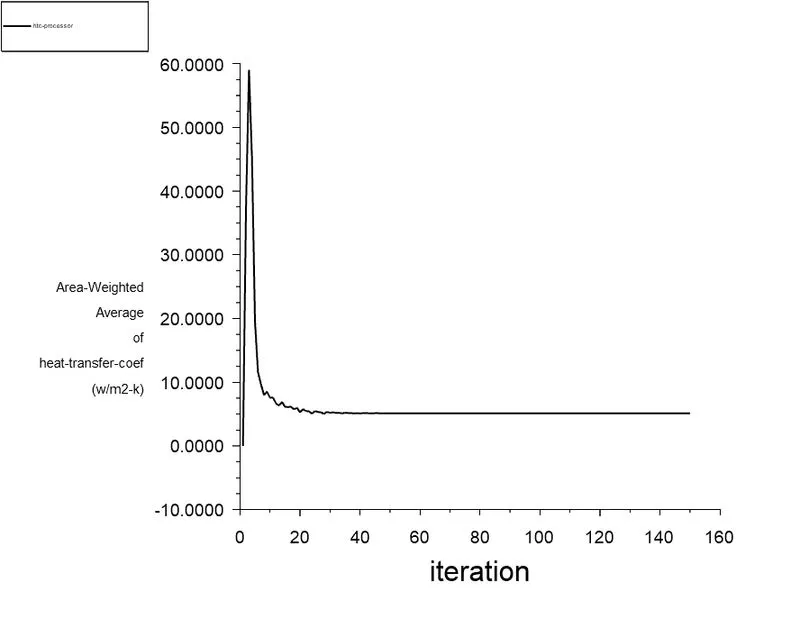
Heat transfer coefficient of Silicon Processor
- The value was found to be 5.1080359 w/m^3k
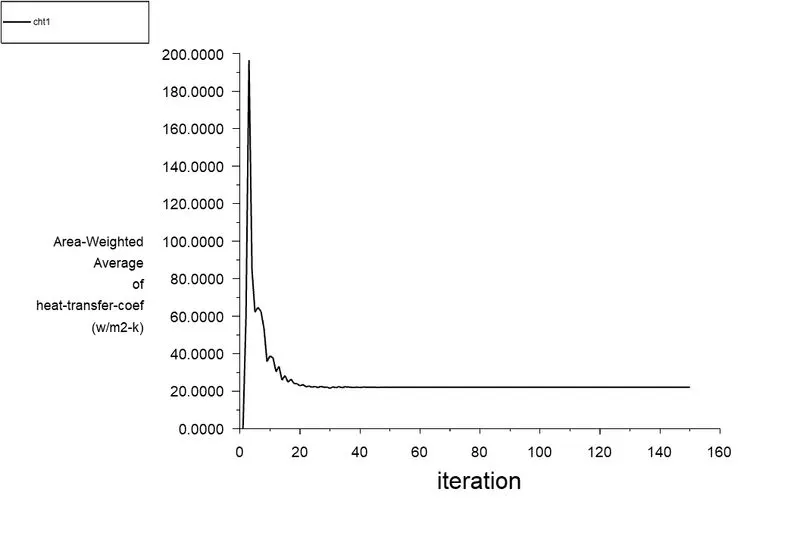
Heat transfer coefficient of Aluminium fins
- The value was found to be 23.131628 w/m^2k
Case 2 :- Velocity at Inlet = 3 m/s
Area weighted avarage of Temperature on Silicon processor
- The value obtained was 1992.525 k
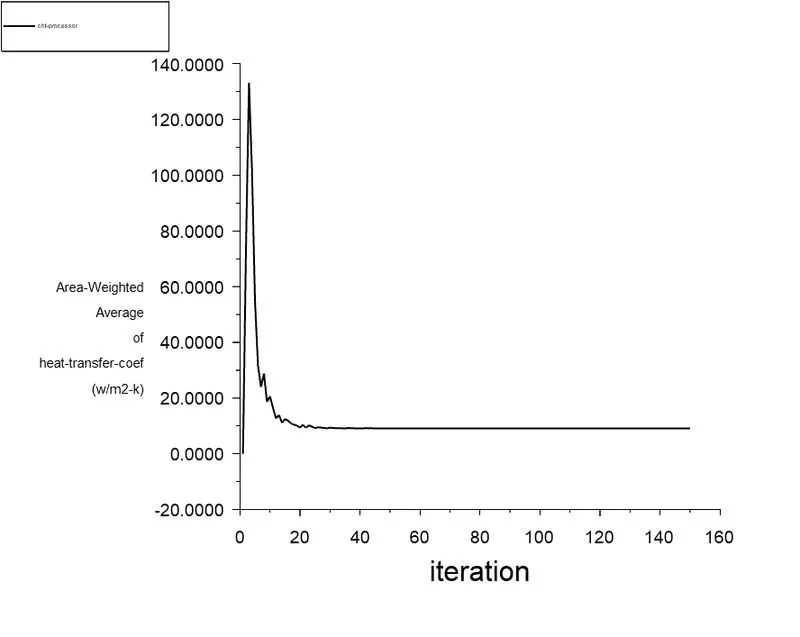
Area weighted avarage of Heat transfer coefficient on Silicon processor
- The value is 9.1443323 w/m^2k
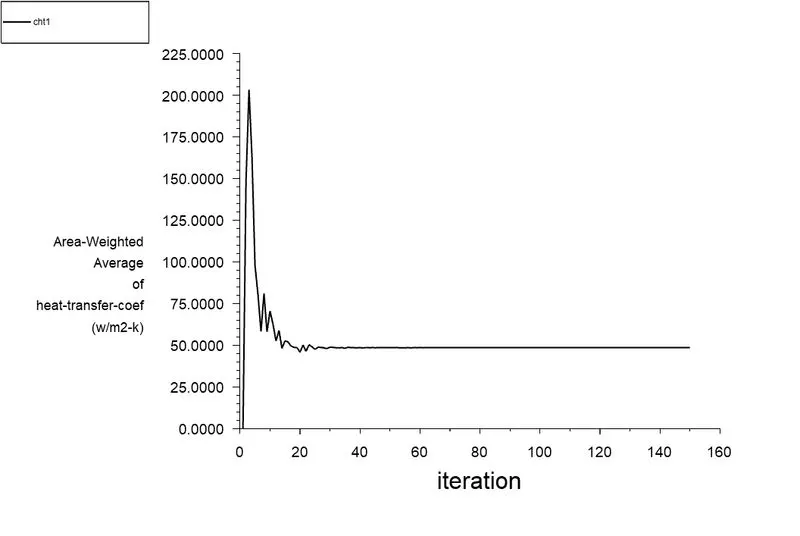
Avea weighted Avarage of Heat transfer Coefficient on Aluminium fins
- The value obtained was 48.637661 w/m^2k
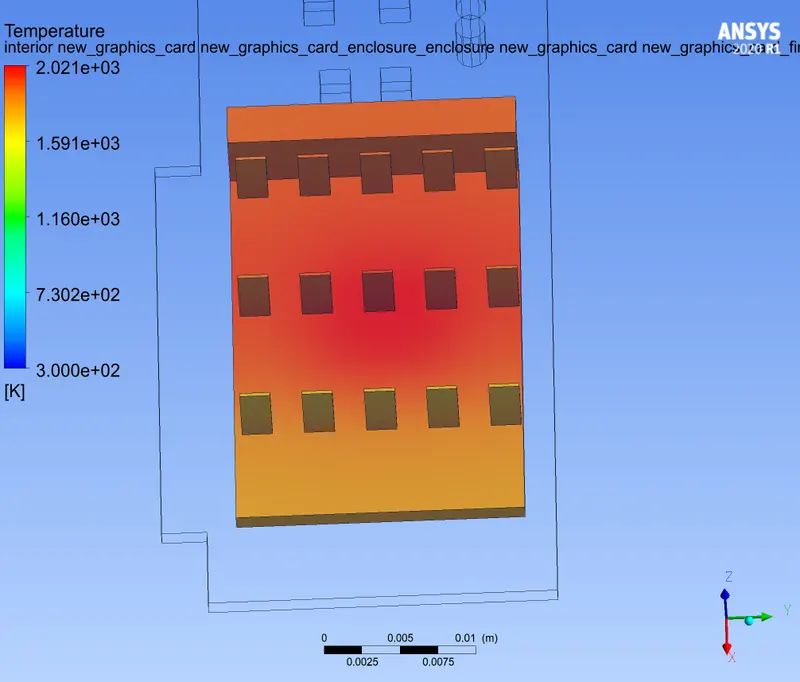
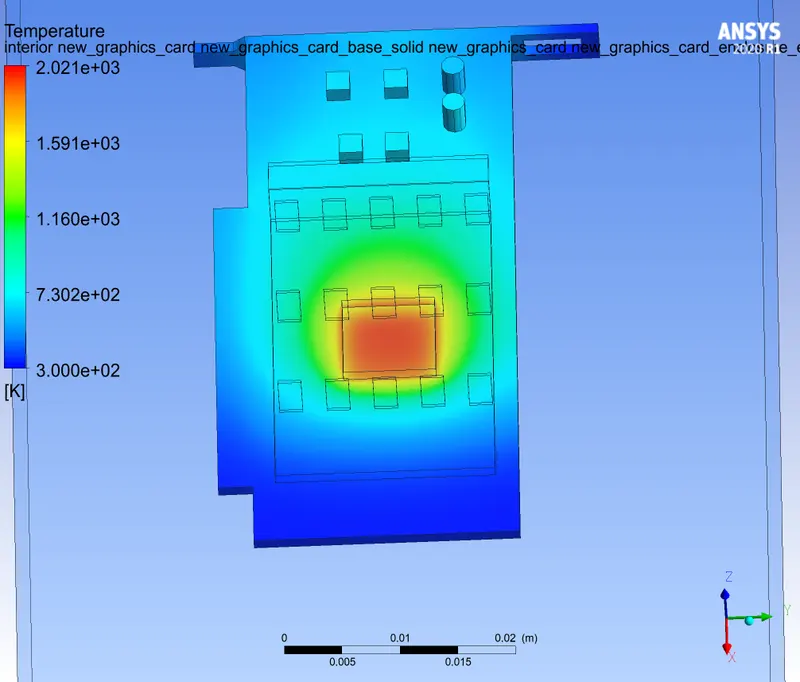
Case 3 :- Velocity at Inlet = 5 m/s
Area weighted avarage of HTC on aluminium fins
- Value = 70.536246 w/m^2k
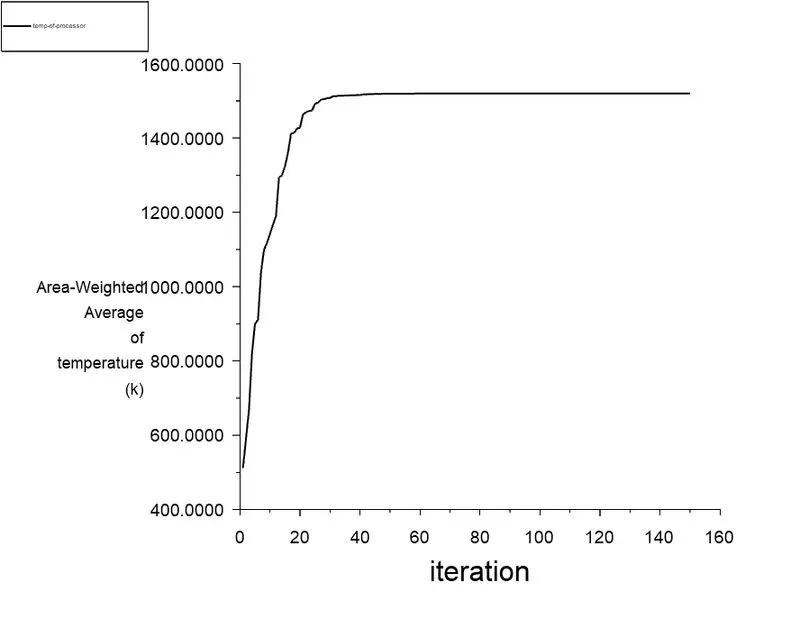
Area weighted avarage of Temperature on Silicon processor
- The value obtained was 1519.8079 k
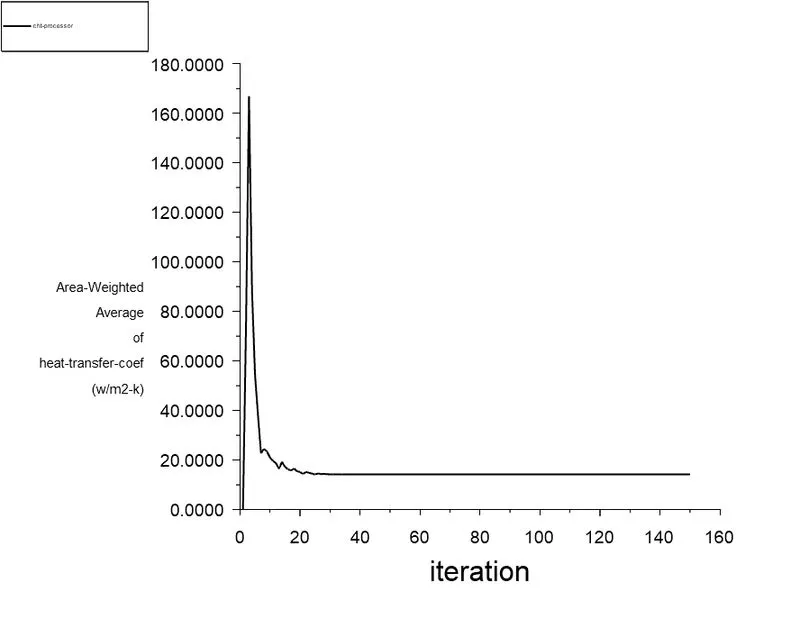
Area weighted avarage of Heat transfer coefficient on Silicon processor
- The value is 14.207928 w/m^2k
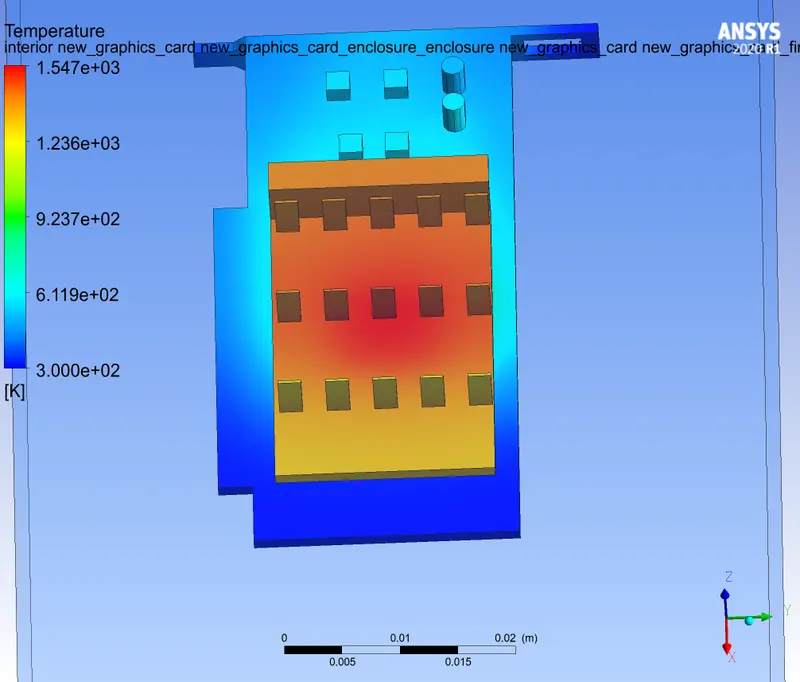
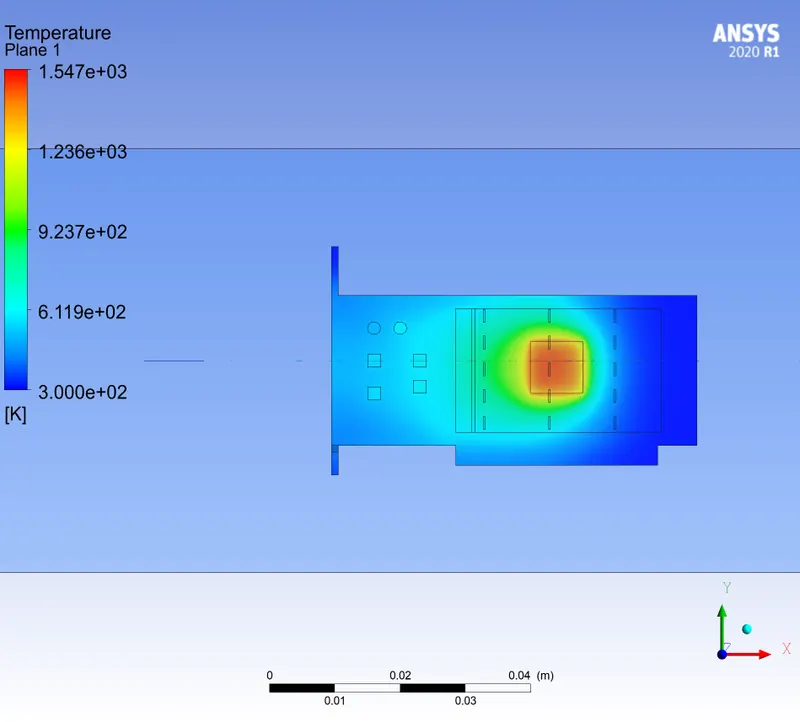
Observations
| Cases | Heat transfer coefficient on aluminium fins (w/m^3k) |
HTC on Processor (w/m^3k) |
Temperature on Processor (k) |
| 1 | 22.13 | 5.1 | 3708.5 |
| 2 | 48.63 | 9.1 | 1992.525 |
| 3 | 70.53 | 14.2 | 1519.8079 |
- The solution got converged before 100 iterations in each case , while there was only little difference in convergencey of the solution in each case
- As the velocity is increased the heat transfer coefficient of fins and processor also increases
- When we look at the temperature it is getting decresed in each case , so we can conlcude that as velocity is increased the temperature can be reduced
- which implies more heat transfer occured at the highest velocity cases which is at 5m/s
- So Case 3 can be considered as the best possible solution inorder to reduce the Hight temperatures created at the processor
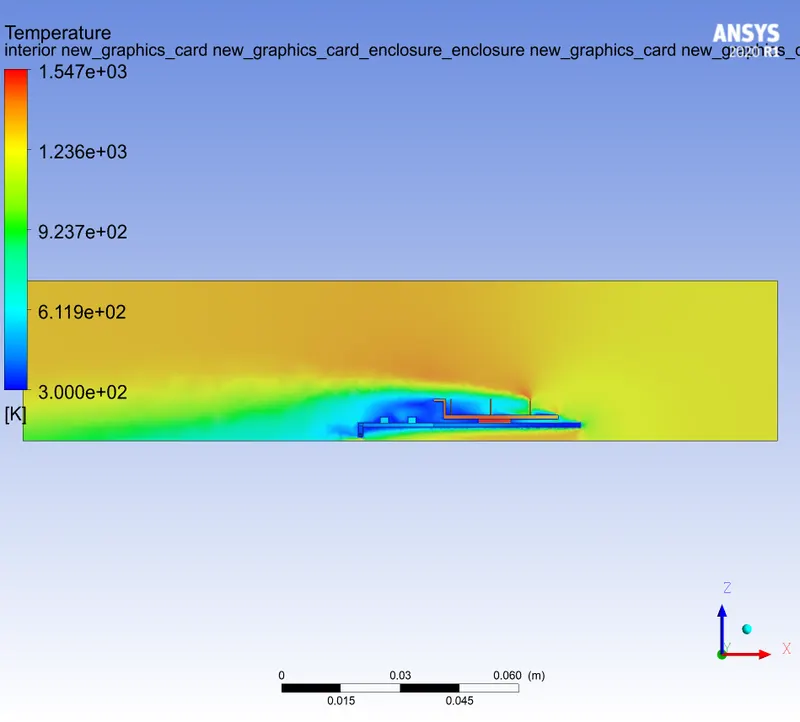
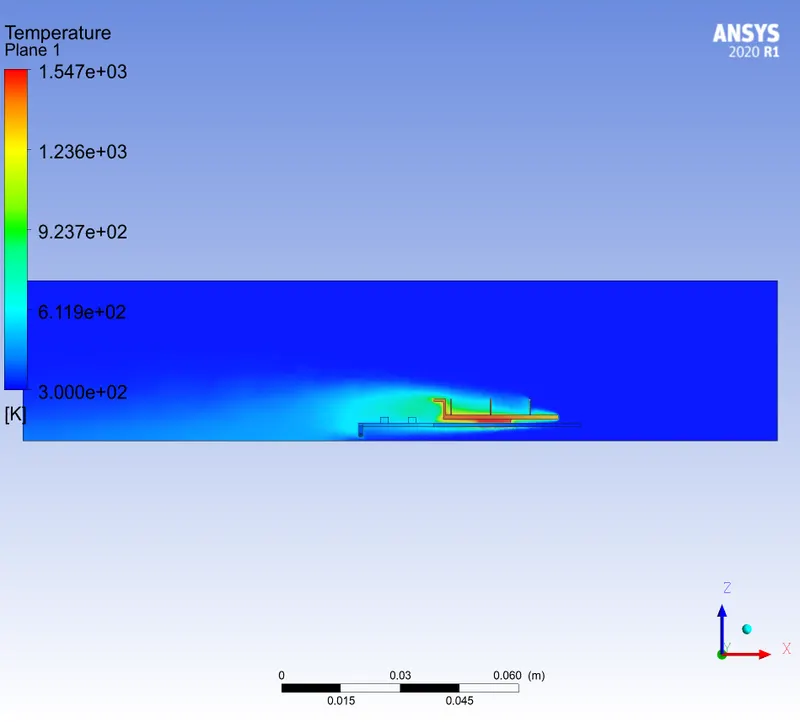
- Hot spot was found where the processor was located also in real case this is where the heat is produced (at the processor)
- We can also come to the above conclusion through the contours given above, as the velocity is increased it can be seen that the red spots at and near the processor is decreasing
Conclusions
- CHT analysis was done on the graphics card with different cases of velocities
- Maximum temperature in each case was found
- Heat transfer coefficient was found on the processor as well as on the Aluminium fins
- Potential Hotspot was found on the graphics card