Week-6 Challenge: EV Drivetrain
Q1.ANS:-
The different types of Power converter circuits which are employed in EV and HEV are as follows:-
i.A/C to D/C converter ( also know as Rectifier)
>It convert alternating quantities into D/C quqntities.
>It is most commonly used in Plug in HEV and plug in EV to charge the battery since the battery cannot be charged using AC supply which is generrally available from the GRID supply.
>The Rectifier can be half cycle and Full cycle. The Full cycle(Wave) rectifier are employed for the EV and HEV Battery charging.
>It is also a single phase and 3-phase.
>The Onboard charger or a offBoard charger employed the Rectifier circuit.
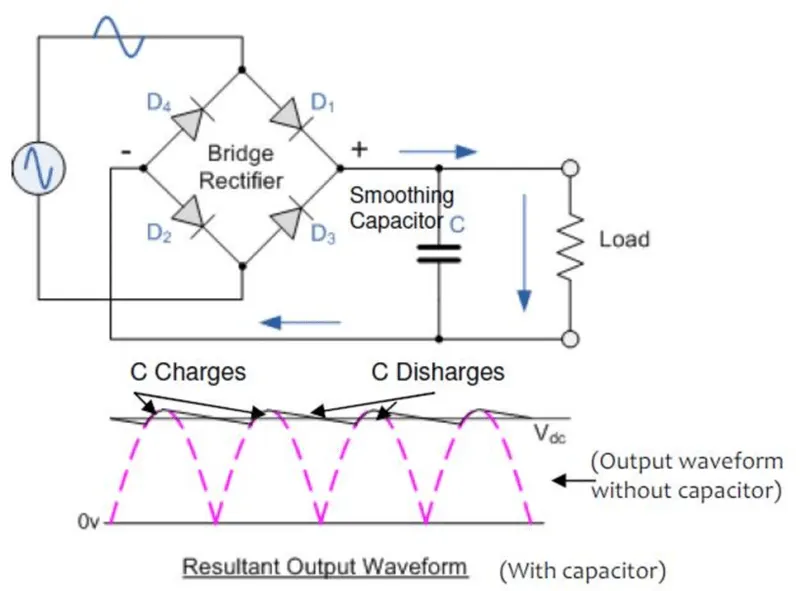
The figure below shows the Full wave rectifier circuit;
ii.DC-DC converter ( also known as choppers)
>It converts the fixed DC supply voltage into the variable DC voltage.
>SInce the output voltage obtained from the AC-DC converter is very high( nearly 330v in case of single phase Rectifier) which is not suitable for the battery charging and the other auxiliary equipments.
>We need DC-DC converter which provide variable DC voltage required for the battery cahrging and to operate other electrical equipments inside the EV and HEV.
iii.DC-AC converter ( also know as Inverter)
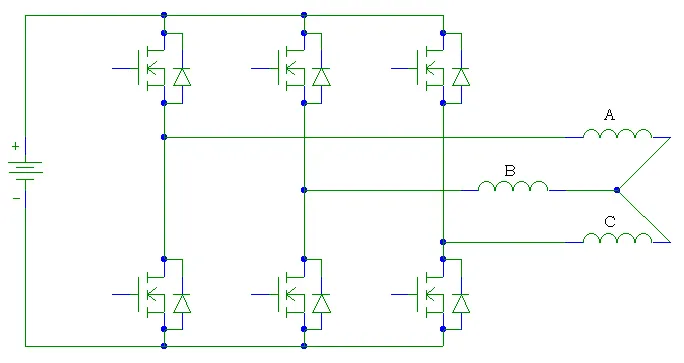
>It is required to convert DC Power supply coming out of Battery in to the AC power required by the Motor.
>The figure below shows the simple Inverter Ckt;
Q2.ANS:-
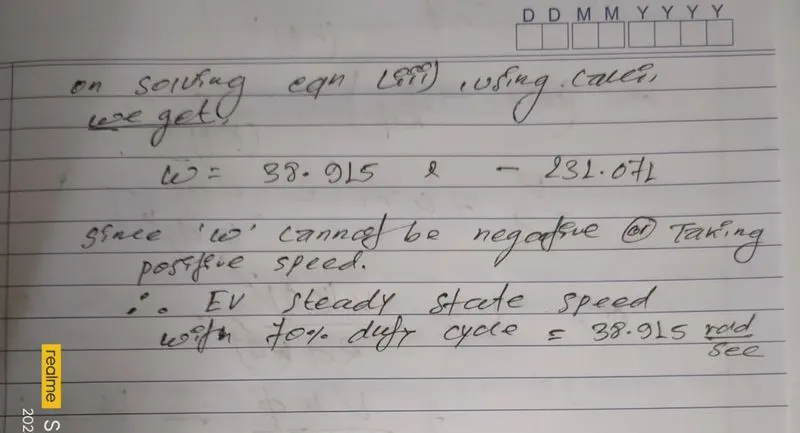
here the -ve speed indicates the reverse motoring operation or regenerative braking.
Q3.ANS:
DC_Motor
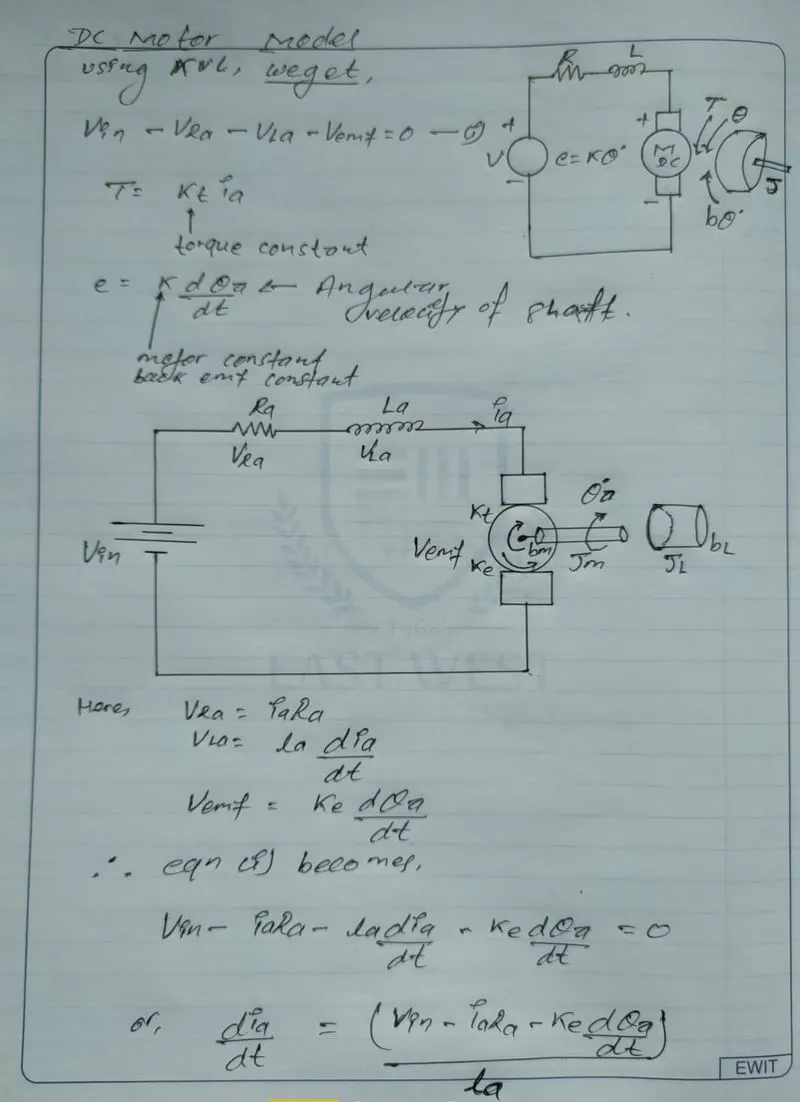
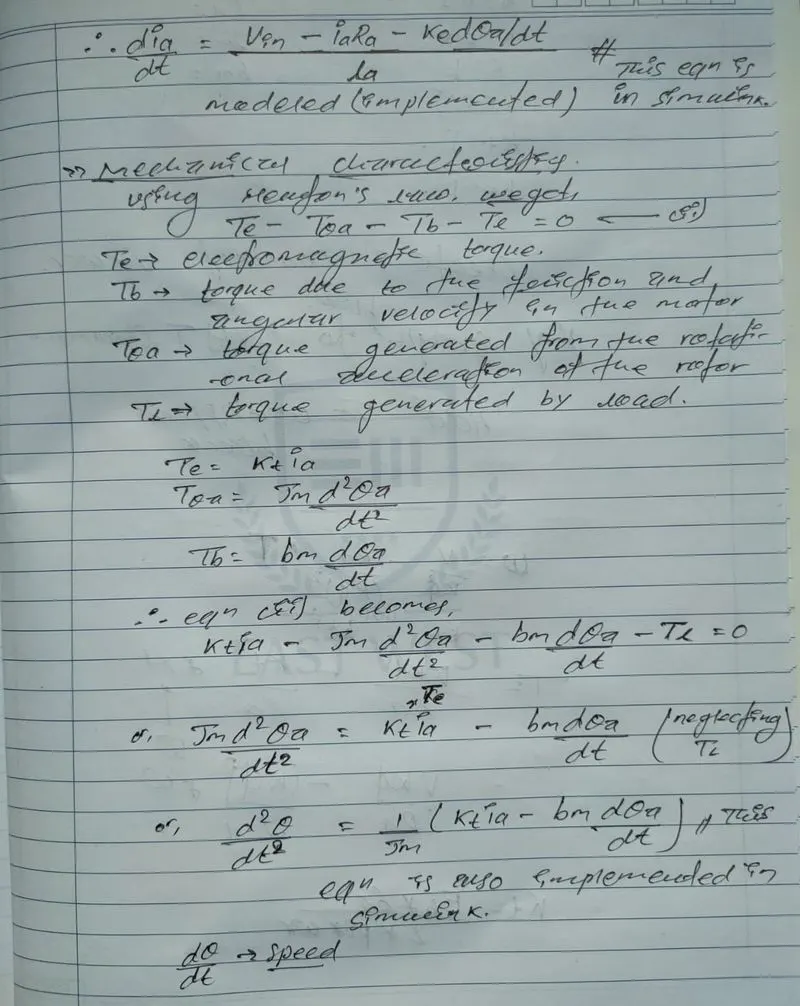
The mathematical model od DC motors are obtained by applying the fundamental physical laws governing the nature of the comopnents making these models.
The laws governing the mathematical equation are Newton's law and Kirchoff's law.
The DC motor uses electricity and magnetic field to produce a torque, Which causes it to turn.
The Mathematical Eqation for the DC motor Model are derived as shown below:-
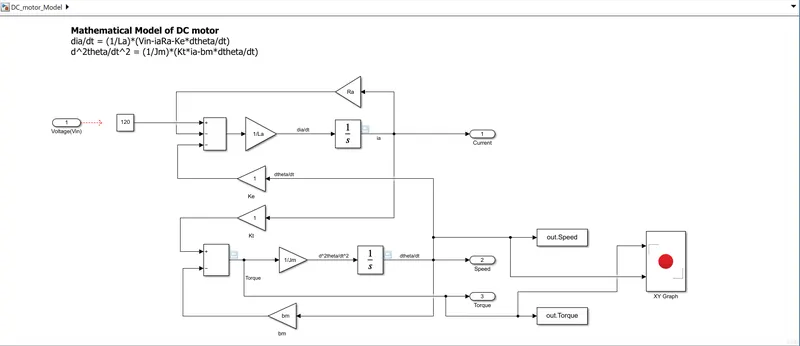
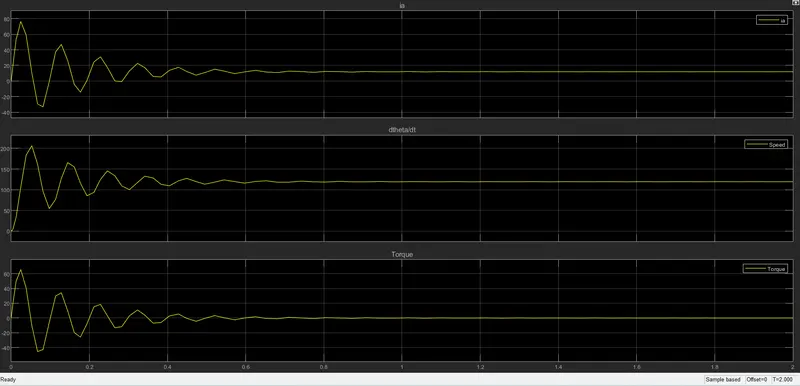
The simulink Model is as shown below:-
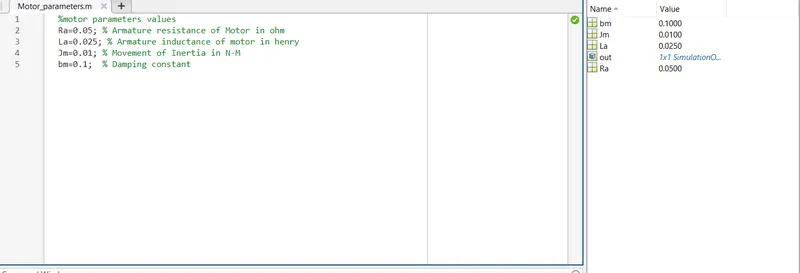
The output are as shown below:-
Q4.ANS:-
>>Author's Perspectives
In the link given the author explain about the two types of motor and its deives which are widely used in EV and HEV.
The Author expalin about the working of DC brushless motor and three phase induction motors.
The Authors also explain about the advantages and limitation of these motor.
Induction motor has ceratin advantage like it do not have parmanent magnet rotor, induction motor can start at loaded condition, inducttion motor are widely used in industries since it can be directly connectd to the grid supply, Induction motor can operate without inverter. some of disadvantages of Induction motors are it cannot operate from DC supply directly, The shaft speed is proportional to the line frequency i.e supply frequency. since the grid supply frquency is fixed it is also known as constant speed machines. When operated from grid supply they have limited starting torque capabilities. Induction motor can also operated by DC supply by the means of Inverters.
Brushless DC motors have some advantages such as much less rotor heat generation with DC brushless Drive. The peak point energy efficiency for DC brushless drive is typically few % higher than thae Induction motor drive. some of disadvantages are as the machine size grows the magnetic losses increases proportionally and part load eficiency drops. Parmanent magnets are expansive and difficiult to handle due to very large forces that come into play when anything ferromagnetic gets close to them.
Finally the Author conclude that
>The DC brushless Motor drives wil likely to dominate in HEV.
>The INduction motor drives will likely maintain dominance for the high performance Pure EV.