Week-6 Challenge: EV Drivetrain
EV Live batch 17
ANS:1
Following are the converters used in EV and HEV .
1. AC to DC
In on board charger this converter is used if battery has to be charged with external electric supply.
2. DC to DC.
If battery has to be charged with external DC supply then this converter is used. Also it can be used to provide auxillary supply having different voltage level than battery i.e to provide supply to different DC loads in vehicle
They are again divided in non isolated and isolated type
Non isolated:
a. Buck - to step down Dc voltage
b. Boost- to step up dc voltage
c. Buck-Boost
Isolated:
Flyback converter- Similar to Buck-Boost converter uses transformer instead of inductor to store energy
Forward converter- Uses transformer to send energy between input and output in single step.
3. DC to AC
This is used as inverter to give three phase supply to electric motor. It converts battery DC voltage to AC voltage of variable voltage variable frequency required to control motor.
ANS:2
Given-
Rated Armature voltage= 72 V
Rated armature current= 400
Ra= 0.5Ω, KΦ= 0.7 Volt second
Chopper Switching frequency= 400 Hz
Duty cycle=70%
With the above data given,
w= (V/KΦ) - (Ra/KΦ^2)*T
w= (72*0.7/0.7) - (0.5/0.7^2) *T
w=72- 1.02T
T= 70.58-0.98w .......eqn (1)
T= 24.7-0.0051*w^2 .....eqn(2)..given
solving equation 1 and 2 wih formula,
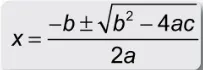
w1= -231.086 rad/s; w2= 38.92 rad/s
Consider steady state operation
w= 38.92 rad/s
ANS:3
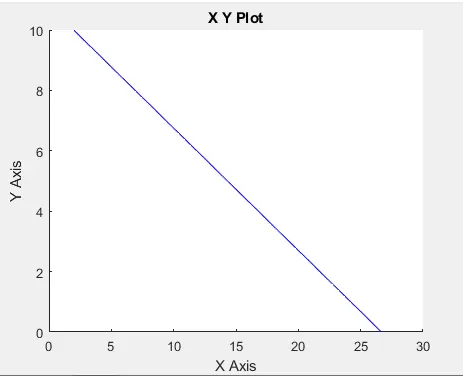
Model for Dc machine characteristics is developed using simulink blocks and simukink file is attached
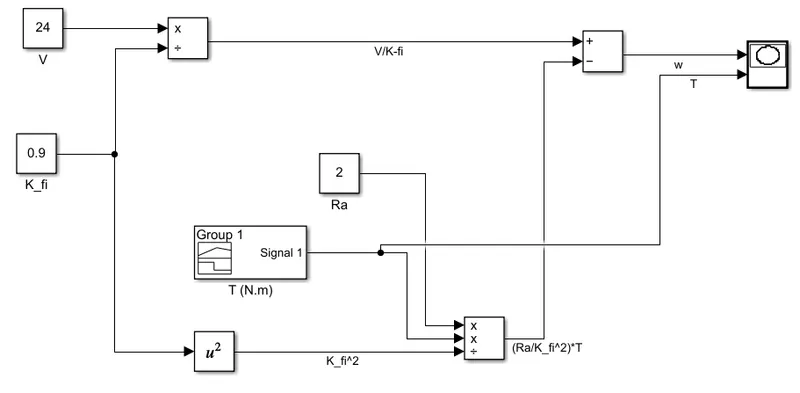
Result : X-axis = Speed ; Y-axis = Torque
ANS:4
1. Constuction
DC Brushless - It consists of stator having 3 phase copper winding. Rotor consists of laminated core having two or more permanent magnets either buried of pasted on surface of rotor.
Induction Motor- Stator is same as burshless DC, rotor consists of stacked steel laminations with buried peripheral conductors that form a “shorted structure.”
2. Working
DC Brushless- Magnetic field of permanent magnets enters the core interacts with the magntic field of stator currents and produces a torque interaction between stator and rotor. It is necessary that the magnitude and polarity of current continuously changes so that torque remains constant.
Induction Motor- Currents flowing in stator Currents flowing in the stator windings produce a rotating magnetic field that enters the rotor. In turn, the frequency of this magnetic field as “seen” by the rotor is equal to the difference between the applied electrical frequency and the rotational “frequency” of the rotor itself. Accordingly, an induced voltage exists across the shorted structure that is proportionate to this speed difference between the rotor and electrical frequency. In response to this voltage, currents are produced within the rotor conductors that are approximately proportionate to the voltage, hence the speed difference. Finally, these currents interact with the original magnetic field to produce forces – a component of which is the desired rotor torque.
3. Starting
DC Brushless- This machine can not start when connected with fixed frequency utility power. They require a phase maintained in step with known angular position of rotor.
Induction Motor- This machine can start under the load when directly connected to the utility
4. Induction motor has limited starting, peak and running torque as compared to DC brushless motor.
5. DC brushless drives required absolute position sensor for rotor while inductuon motor drive require only speed sensor.
6. less rotor heat is generated with the DC brushless drive, rotor cooling is easier and peak point efficiency is generally higher for this drive. In incuction motor as more heat is generated in rotor due to rotor copper losses
7. Brushless drive can be operate at unity PF while inductiondrive can be operate aaroun 0.85 PF
8. In induction drive when it requires maximum torque at low speeds, the magntic field strength can be adjusted with the stator currents with optimum efficiency. In brushless less drive permanent magnetic filed by magnets can not be adjusted
9. With DC brushless, as machine size grows, the magnetic losses increase proportionately and efficiency drops. With induction, as machine size grows, losses do not necessarily grow. Thus, induction drives may be the favored where high-performance is desired.
10. peak efficiency will be a little less than with DC brushless, but average efficiency may actually be better.
11. Permanent magnets costs are high and are difficult to handle so cost is high as compared to IM
12. Induction machines are more difficult to control. The control laws are more complex and difficult to understand. Achieving stability over the entire torque-speed range and over temperature is more difficult with induction than with DC brushless.