Week-6 Challenge: EV Drivetrain
1.Which types of power converter circuits are employed in electric and hybrid electric vehicle?
power converter circuits:
Power converter is nothing but an electronic circuit which is used to change the electrical energy from one form to an another form which would be the desired load.
Types of Power converters used in electric vehicle and hybrid electric vehicle are:
- AC-DC converter(rectifier)
- DC-AC converter (Inverter)
- DC-DC converter(chopper)
AC-DC converter:
It is an electronic circuit which convert Ac input signal into variable DC output signal. AC/DC converter can also be called as rectifier.
Simple step for converting AC to DC are:
(i)Stepping down the Voltage Levels:
Power that are coming from the line will be very hign that couldn't be handled by devices. so the first step is stepping down the voltage level. For an example, voltage needed for our device is 12v but voltage recieved is 240v. her we need to step down the voltage from 240 to 12v.
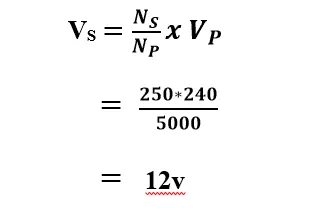
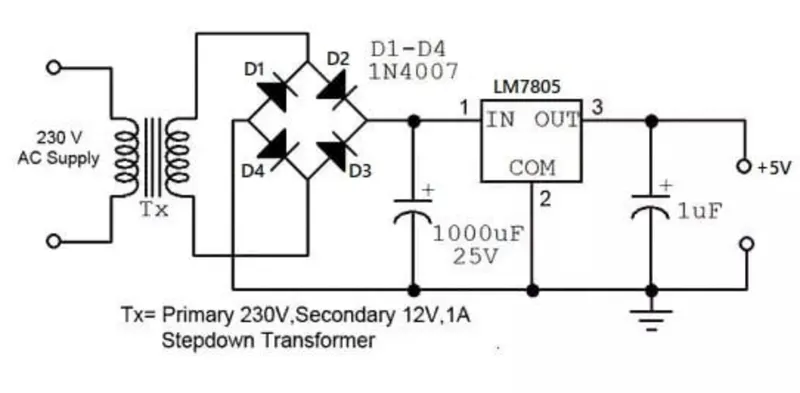
(ii)AC to DC Power Converter Circuit:
A rectifier converts AC to DC at the load end. here Full Bridge rectifier is used that consists of four diodes are connected in the form of a bridge. these diodes will conduct electricity during forward bias.
So during positive half cycle, D2 and D4 conduct the signal and during negative half cycle D1 and D3 conduct the signal hence at last we will the signal only at the positive side.
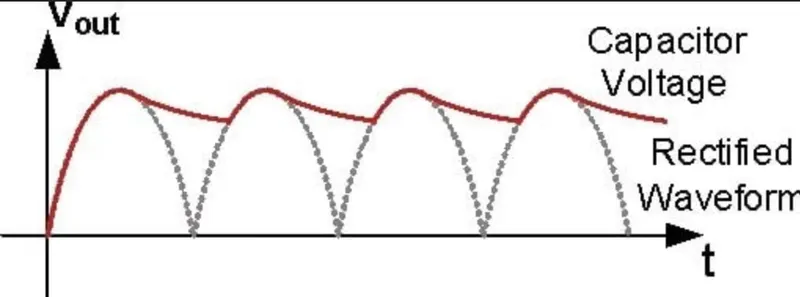
(iii)Obtaining Pure DC Waveform:
Next step to form Pure DC waveform from the pulsed DC waveform. To obtain the pure waveform most of the circuit uses capacitor which will charge during rising of pulse and discharge during peak to zero movement. So with the charging and discharging nature of the capacitor, desired pure DC waveform would be obtained.
(iv)Regulating Fixed DC Voltage
To arrange the output voltage to the desired value, we are using voltage regular. The name of the voltage regular comes like 78XX. Here XX (last digit) represents output voltage value. Suppose if we need output voltage as 7v then the voltage regulator IC is 7807.
Uses of AC to DC converter in EV and HEV:
EV and HEV vehicle uses AC/AC converter that converters electric power from the commercial power system to onboard high-voltage battery system.
DC-AC converter (Inverter):
Dc to Ac converter is also called as inverter which is little bit complicated from AC/DC convertersince it requires some oscillaters to reverse the current.
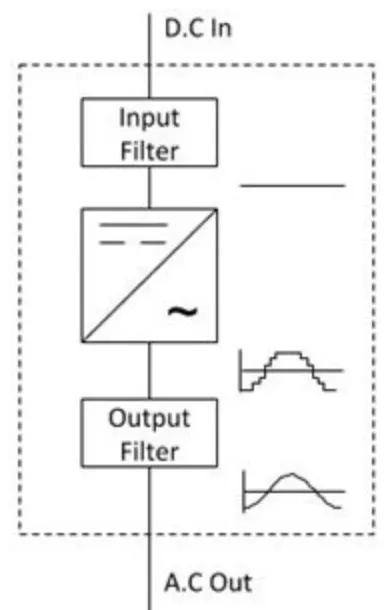
Steps to be followed in DC to AC converter:
(i)Input Filter: Any frequency disturbance from DC supply is cleared by this input filter.
(ii) inverter: this is the main block where dc is converted into PWM waveform. PWM wave are generated by using Insulated Gate Bipolar Transistors (IGBT). IGBT act as a switch in inverter. by on/ off process we get PWM.
(iii) Output Filter: this block used to remove high frequency component from the PWM wave so that perfect sine wave output can be obtained.
uses of DC/AC converter in EV:
- It nis used to connect battery to the flywheel low voltage side.
- used in EV motor drive suring regenerative process.
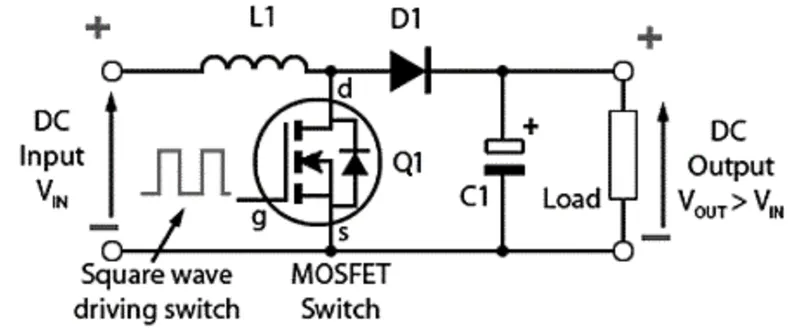
DC to DC converter:
It is an electronic circuits which converts voltage from one level to another level voltage.
working principle of DC/DC converter:
Working principle of this converter is very simple.DC-DC converters are high-frequency power conversion circuits which use high-frequency switching and inductors, transformers, and capacitors to smooth out switching noise into regulated DC voltages.
In which closed feedback loop is used to maintain constant voltage output even fluctuation in input voltages.The main disadvantages of DC/Dc converter is noise.
uses of DC/DC converter in EV:
- it is used to convert high voltage 200v to 12v which is needed for the operation of speaker system, headlight, wiper, fans etc of the car.
2.An Electric Vehicle's powertrain with 72V battery pack in shown in the diagram below. The duty ratio for acceleration operation is 'd1' and for the braking operation the duty ratio is 'd2'.
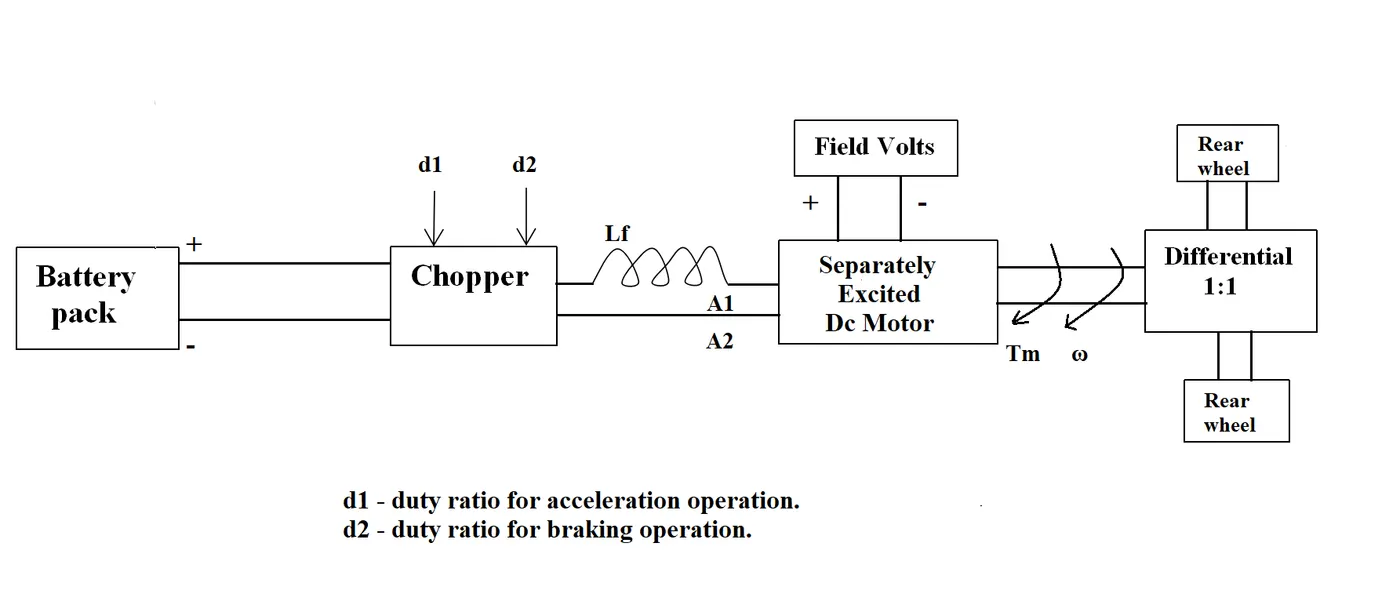
The other parameters of the electric vehicle is given below,
Motor and Controller Parameters:
Rated Armature voltage= 72 V
Rated armature current= 400 A
Ra= 0.5Ω, KΦ= 0.7 Volt second
Chopper Switching frequency= 400 Hz
The vehicle speed-torque characteristics are given by the below equation

What is EV steady state speed if duty cycle is 70%?
parameter given for electric vehicle motor and controller:
Rated armature voltage(v)=72v
Rated armature current=400A
Armature Resistance (Ra)=0.5
Motor constant =0.7
Chopper switching frequency=400hz
Solution:
we know that,
Voutput=Vbattery*d----1
where,
d=Duty cycle.
equation 1=>
Voutput=72*0.70
=50.4V
therefore, output voltage is 50.4V.
we know the torque equation is
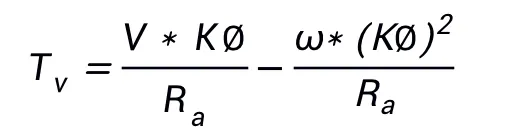
By substituting the given parameter value, the above equation will becomes
Tv=(50.4*0.7)/0.5-((0.7)^2*w)/0.5
=70.56-0.98w---A
In question vehicle speed torque equation is given as
---B
During steady state condition we can equate equation A and B, hence the equation becomes
70.56-0.98w=24.7+(0.0051)w^2
0.0052w^2+0.98w-45.86=0
by solving the quadratic equation we obtain, w=38.9rad/s
CONCLUSION:
If the duty cycle is 70%, the EV steady state speed is 38.9rad/s or 371RPM.
3. Develop a mathematical model of a DC Motor for the below equation using Simulink.
ω">ω= V/Kϕ">ϕ -Ra/Kϕ">ϕ^2 .T
In order to develope the mathematical model for the above equation, we need product, addition, square and ramp blocks.
Inputs:
Velocity(v), Armature Resistance(Ra), torque Constane(K) and torque(T)
Output:
Speed.
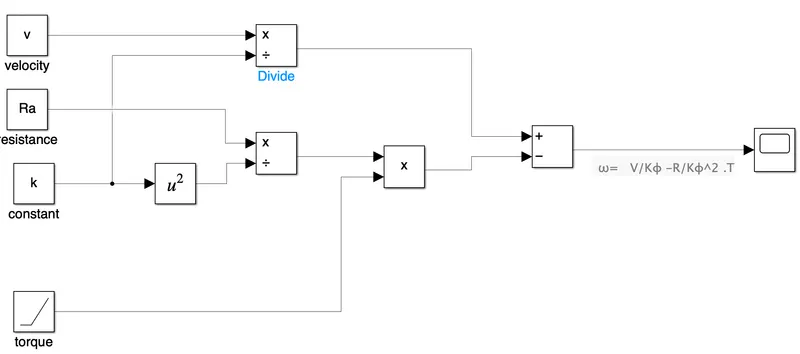
I have declared the input using constant block and its values are given in workspace.

the output of the given mathematical model is
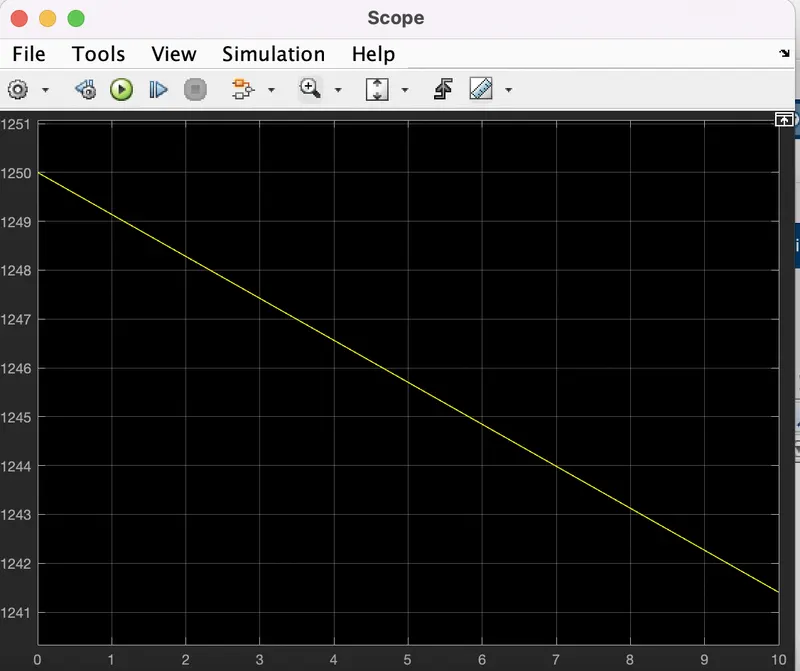
Conclusion: Given equation is designed as mathematical model and its results also plotted.
4. Refer to the blog on below topic:
Induction Versus DC brushless motors by Wally Rippel, Tesla
Explain in brief about author’s perspective.
Wally Rippel proposes inductor versus DC brushless motor. Variety of Internal Combustion engine care are there. Each of them are using different engine not as same to provide better performance than the previous one. Technology used are also getting changed when time flew.
In olden days, Lead Acid batteries, DC brush motor and contactor controllers were used. But Today, nothing remains same.
- Instead of Lead, Lithium is used
- Instead of DC Brush motot, DC brushless/ induction motor is used.
- Instead of Contactors, Modulating invertor is used.
Then the author made a comparison between Brushless motor and DC induction motor. let us see that,
In Brushless motor:
Rotor has two / more permanant magnet that will produce magnetic field. This magnet get into the stator that produce torque interaction between tha rotor and stator.
Advantages of Brushless motor:
- with brushless motor, less rotor heat is generated.
- Peak point energy efficiency is few percent higher than induction motor.
Disadvantages of Brushless motor:
- If the size of the machine increase, it will reflect o magnetic loss and it leads to decrease in load efficiency.
- Permanent magnet are expensive and also difficult to handle as it has high fore of attraction towards ferromagnetic material.
In DC Induction motor:
3-Phase onduction motor is invented by Nikola Tesla. by virtual both Brushless and Induction motor resembles same. Induction motor doesnt have magnet in rotor. It has stacked steel laminations which form a shorted structure. Here Magnetic field is produced in stator which enter into rotor.
Advantages of Dc Induction motot:
- It has no magnets.
- High load is not needed to start the motor.
- there is no need of inverters.
Disadvantages of DC Induction motor:
- Only operates at AC current, will not work in DC
- Difficult to control.
Conclusion By Wally Rippel: There is no result which shows either brushless / Induction motor is best. Apart from that author clearly said that
- DC Brushless motor likely used in Hybrid and Plug in Hybrid Vehicle.
- Induction drive have been implemented in Pure Electric vehicle for high Performance.