Week-6 Challenge: EV Drivetrain
1. AC_DC converter, DC_DC converter and DC_AC Converter
AC-DC converter for on board chargers, DC_DC converters as interface elements between the energy storage and vehicle, and DC-AC converter for powerring motors.
2.
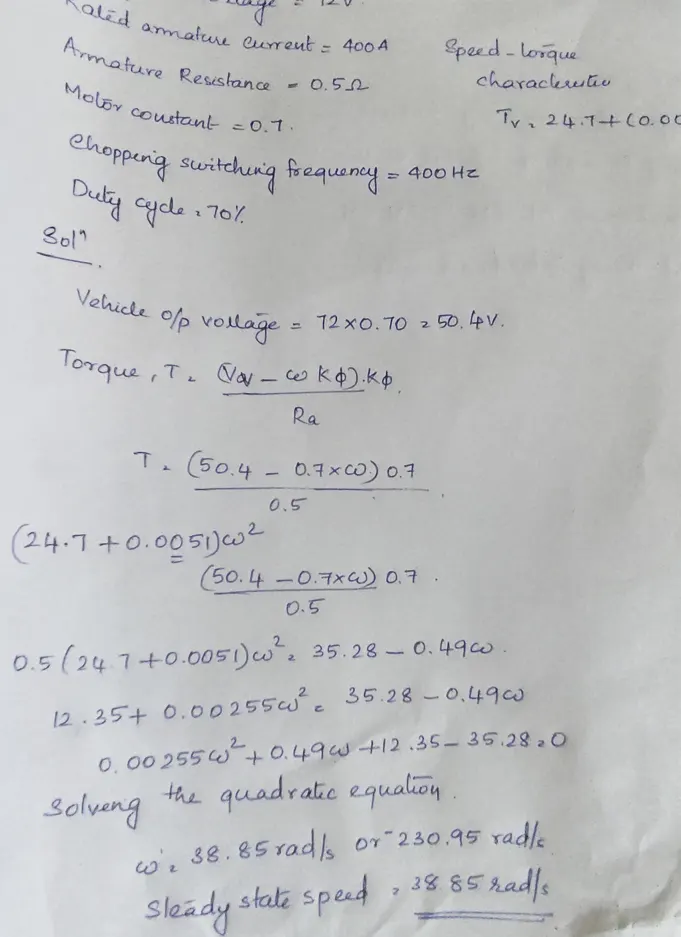
2.
3. The mathematical model of motor is shown below
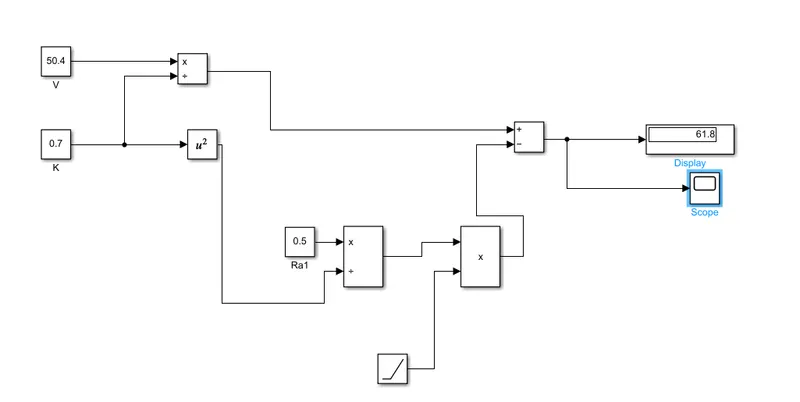
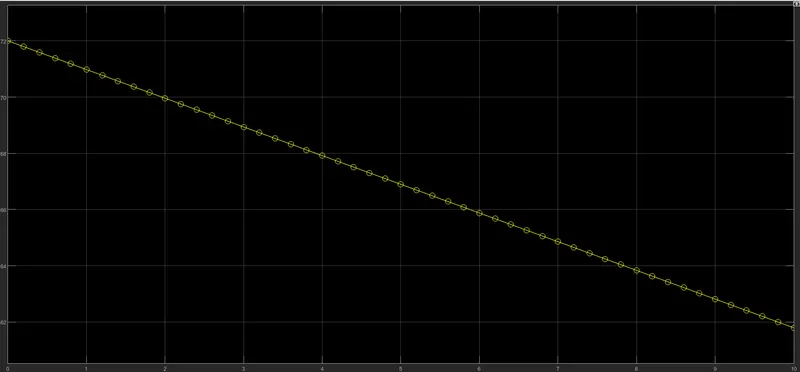
Torque input is given as ramp input. It can be seen that speed holds an inverse relation with torque input.
4.Author discusses about two configuration of motors- brushless and induction motors.He discusses the constructional difference of two motors -brushless motor and induction motor and also discusses the suitability of each motor with respect to EV application
Constructional difference
Brushless motor has permanent magnets in the rotor where as induction motor has field coils in the rotor. Stator of induction motor just stacked steel laminations with buried peripheral conductors that form a “shorted structure.”where as in brushless core is made of thin stacked laminations.
Principle of operation
With brushless machines, the rotor includes two or more permanent magnets that generate a DC magnetic field (as seen from the vantage point of the rotor). In turn, this magnetic field enters the stator core (a core made up of thin, stacked laminations) and interacts with currents flowing within the windings to produce a torque interaction between the rotor and stator. As the rotor rotates, it is necessary that the magnitude and polarity of the stator currents be continuously varied – and in just the right way - such that the torque remains constant and the conversion of electrical to mechanical energy is optimally efficient. The device that provides this current control is called an inverter. Without it, brushless motors are useless motors.
In induction motors ” Currents flowing in the stator windings produce a rotating magnetic field that enters the rotor. In turn, the frequency of this magnetic field as “seen” by the rotor is equal to the difference between the applied electrical frequency and the rotational “frequency” of the rotor itself. Accordingly, an induced voltage exists across the shorted structure that is proportionate to this speed difference between the rotor and electrical frequency. In response to this voltage, currents are produced within the rotor conductors that are approximately proportionate to the voltage, hence the speed difference. Finally, these currents interact with the original magnetic field to produce forces – a component of which is the desired rotor torque.
Advantages of induction motor
- motor has the ability to start under load
- no need of inverter
- directly compatible with conventional utility
Disadvantages of IM
- They cannot operate from DC; AC is a must
- Shaft speed is proportionate to line frequency. Hence, when used with utility power, they are constant speed machine
- hey have limited starting torque and somewhat limited running peak torque capabilities, when compared to DC type machines
- a brushless DC motor produces no starting torque when directly connected to fixed frequency utility power. They really need the aid of an inverter whose “phase” is maintained in step with the angular position of the rotor.
- he control laws are more complex and difficult to understand. Achieving stability over the entire torque-speed range and over temperature is more difficult with induction than with DC brushless. This means added development costs, but likely little or no recurring costs.
Author discusses about the effect of magnetic flux density of both motors. At low speed the value of B must be at maximum so as to reduce the losses where as at high speed value of B must be adjusted so as to reduce the losses .But this adjustment cannot be done in brushless motor, where as in induction V/F ratio can be adjusted and magnetic and conduction losses can be traded such that efficiency is optimized.
Author concludes by saying that brushless DC drives will continue to dominate the electric vehicles along with induction motor. However the availability of magnets and price may cause a concern in future.