Week-6 Challenge: EV Drivetrain
1. Which types of power converter circuits are employed in electric and hybrid electric vehicles?
Solution -
Power conversion is the process of converting electric energy from one form to another. A power converter is an electrical or electro-mechanical device for converting electrical energy.
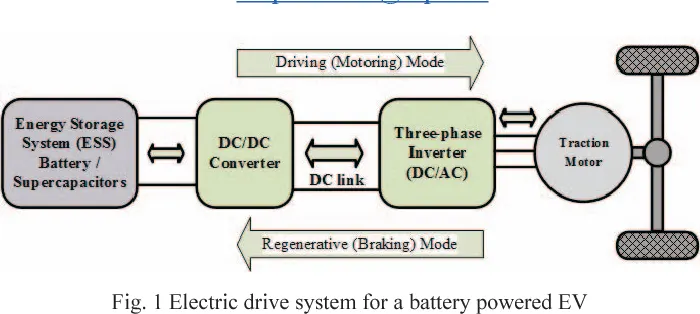
There are 4 types of power converters
- AC to DC converters
- DC to AC converters
- DC to DC converters
- AC to AC converters
AC to DC converters:-
- These converters are used to convert continuous Alternating current(AC) into constant direct current(DC).
- These circuits are also called Rectifiers.
- These circuits are used in plug-in EV and PHEV to charge the battery from an external source.
DC to AC converters:
- These converters are used to convert constant DC voltage into AC voltage.
- These circuits are also called Inverters.
- These circuits are used in EV and PHEV to convert charge from battery and supply to induction motor.
DC to DC converters:
- These converters are used to convert the source of direct current from one voltage level to another, the voltage level may be high or low depending on the requirement.
- These circuits are also called Voltage Choppers.
- These circuits are used in EV and HEV to power headlights and other UI-related components as the input voltage will be less than 12V.
AC to AC converters:
- These converters are used to convert AC waver from form one particular frequency and waveform to another.
- These circuits are called Regulators.
- These converters are used in HEV to provide input to Motors in rare conditions.
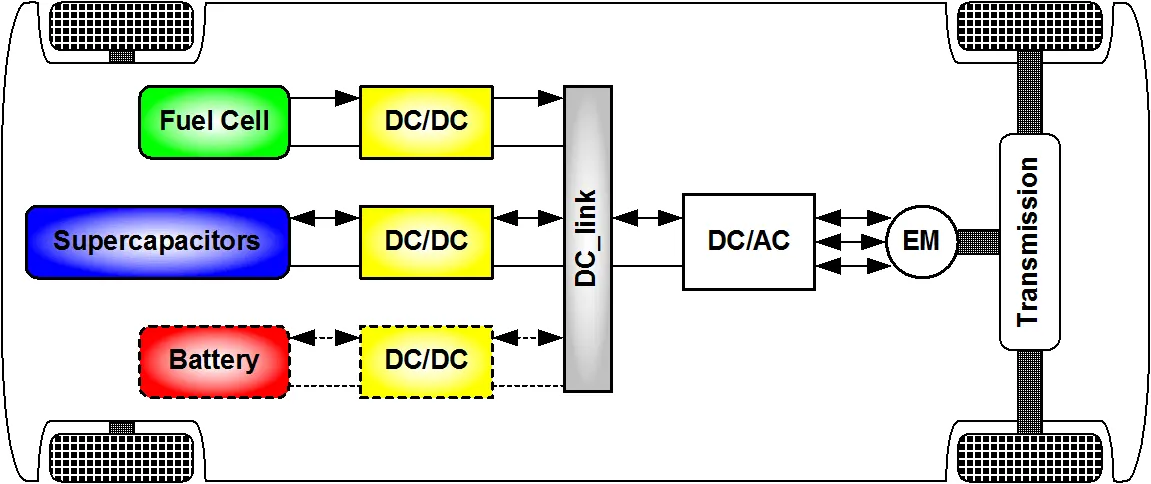
///////////////////////////////////////////////////////////////////////////////////////////////////////////////////////////////////////////
2.An Electric Vehicle's powertrain with a 72V battery pack as shown in the diagram below. The duty ratio for acceleration operation is 'd1' and for the braking operation the duty ratio is 'd2'.
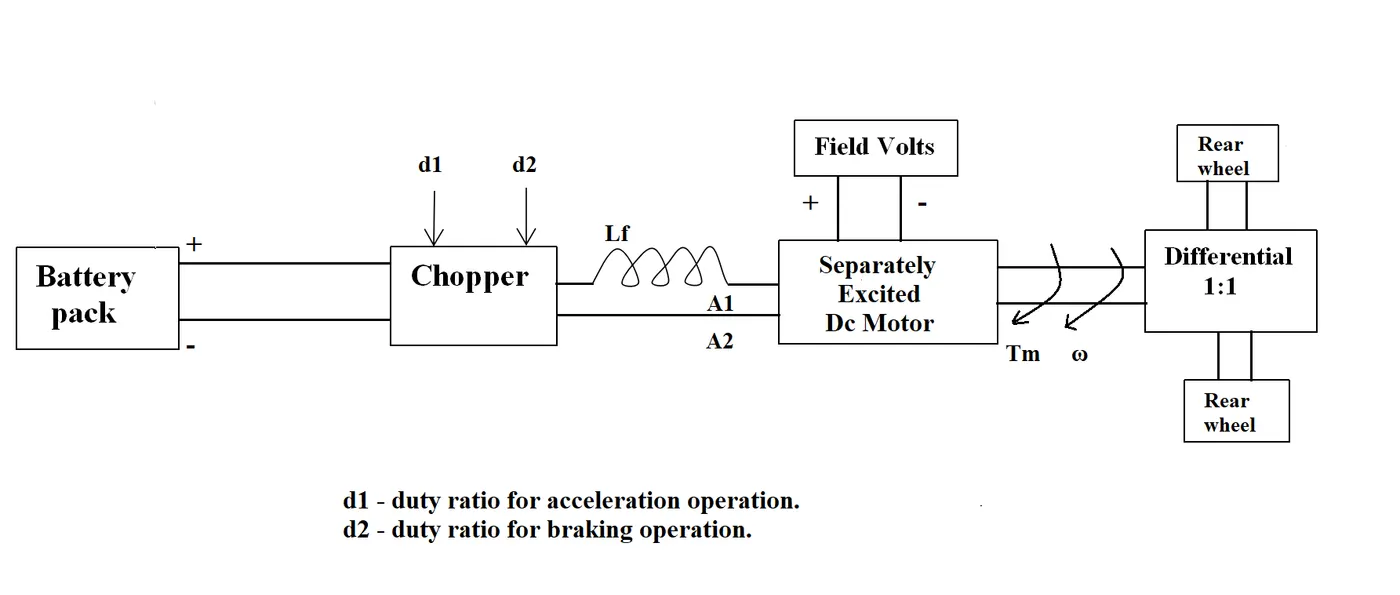
The other parameters of the electric vehicle are given below,
Motor and Controller Parameters:
Rated Armature voltage= 72 V
Rated armature current= 400 A
Ra= 0.5Ω, KΦ= 0.7 Volt second
Chopper Switching frequency= 400 Hz
The vehicle speed-torque characteristics are given by the below equation

What is EV steady-state speed if the duty cycle is 70%?
Solution:
The EV steady state speed is :
The given Duty cycle is 70% of 72
The applied voltage can be calculate as
Vm = 70/100*72
Vm = 0.7*72
Vm= 50.4V
Vm = 50.4V
we know that speed-torque equation
w = Vm/K(ϕ) - Ra/K(ϕ)^2.Tm
where vm = applied voltage, Ra = resistance, T = applied torque
w = 50.4/0.7 - 0.5/0.7^2.Tm
w = 72 - 1.02 Tm
Rearraging the the above equation to get Tm.
We have
Tm = 70.58 - 0.98w ....................................................................................Equation(1)
We have the vehicle torque characteristic equation in the question
Tv = 24.7 + (o.oo51)w^2 ........................................................................... Equation (2)
Equation (1) and equation (2) are the equations for torque
by equating the above equations we can get the quadratic equation from which we can get the value of 'we.
Tm = Tv
70.58 - 0.98w = 24.7 + (0.0051)w^2
Moving the elements form LHS to RHS
(0.0051)w^2 + 0.98w + 24.7 - 70.58
(0.0051)w^2 + 0.98w - 45.88 = 0 ........................................................................ Equation (3)
The above equation is in the formate of quadratic equation i.e ax^2+bx+c = 0
now solving the above equation, we have the below values
w = +39.69 and w = -231.853
since speed is only calculated in positive values, we will consider only positive value of w
The EV steady-state speed if duty cycle is 70% is 39.60km.
///////////////////////////////////////////////////////////////////////////////////////////////////////////////////////////////////////////
3. Develop a mathematical model of a DC Motor for the below equation using Simulink.
ω= V/Kϕ">ϕ-Ra/Kϕ^2.T
Solution:
The mathematical model of the DC motor is as shown in the below diagram.
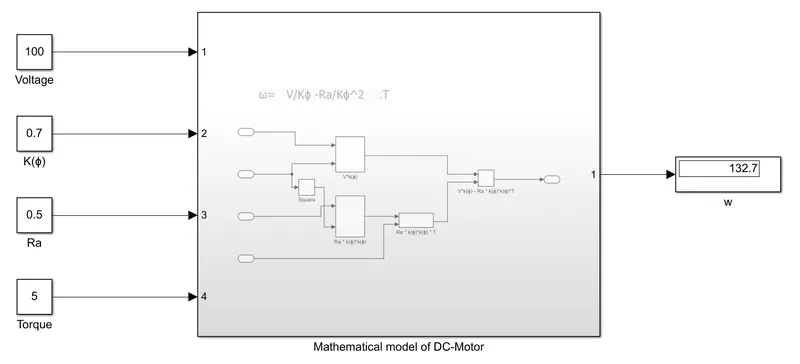
Inside mathematical model of DC-motor block:
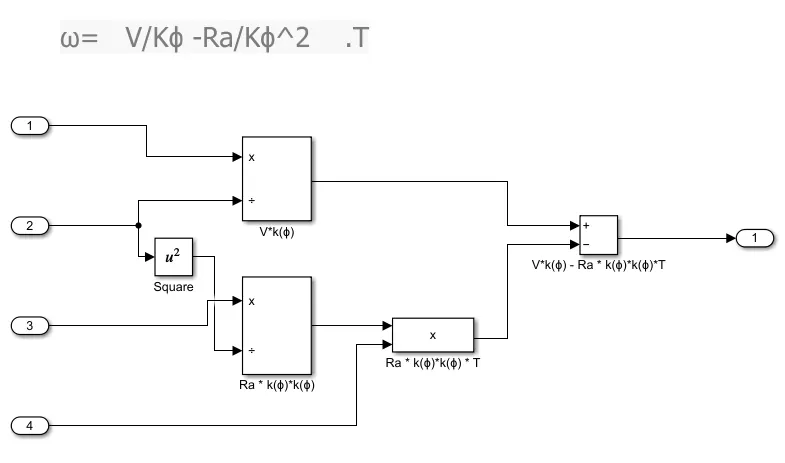
ω= V/K(ϕ) - Ra/K(ϕ)^2.T
The above picture gives a clear view of the operations performed by each block.
The constant block is used to provide constant inputs to the system.
The divider block is used to divide the first element by the second.
The multiply block is used to multiply two elements.
The square block is used to square the input i.e u -> u^2.
For Example:
let V = 100V, Ra=0.7, k() = 0.8 and t = 10.
The result from the model in Simulink is 114.1.
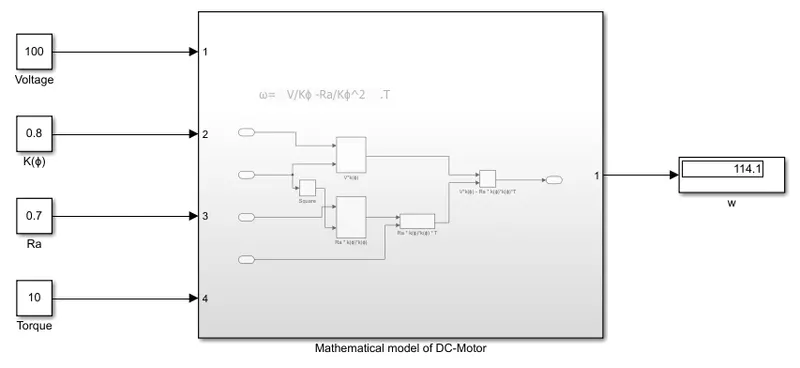
By manual calculation, we have
ω= V/K(ϕ) -Ra/K(ϕ)^2 .T
= 100/0.8 - 0.7/(0.8)^2.10
= 114.0625
Hence the model is working as expected.
Attached simulink file for references.
///////////////////////////////////////////////////////////////////////////////////////////////////////////////////////////////////////////
4. Refer to the blog on the below topic:
Induction Versus DC brushless motors by Wally Rippel, Tesla
Explain in brief about the author’s perspective.
Solution:
In the beginning, the author explains the about extinguish of IC engine as gasoline are non-renewable resouse.
He explains the automotive industry. he says all engines are the same and it was users wish to choose the engines depending on their requirements.
He explains the use of DC-motor and induction motor technology in the coming future.
He says no technology is permanent and going forward every technology will be updated periodically reducing the size and increasing the efficiency.
He explains the working of brushless DC motor and 3-phase induction motor.
DC motor:
- the rotor includes two or more permanent magnets that generate a DC magnetic field...
- this magnetic field enters the stator core (a core made up of thin, stacked laminations) and interacts with currents flowing within the windings to produce a torque interaction between the rotor and stator.
- As the rotor rotates, the magnitude and polarity of the stator currents must be continuously varied – and in just the right way - such that the torque remains constant and the conversion of electrical to mechanical energy is optimally efficient.
- The device that provides this current control is called an inverter. Without it, brushless motors are useless motors.
Induction motor:
- Currents flowing in the stator windings produce a rotating magnetic field that enters the rotor. In turn, the frequency of this magnetic field as “seen” by the rotor is equal to the difference between the applied electrical frequency and the rotational “frequency” of the rotor itself.
- currents are produced within the rotor conductors that are approximately proportionate to the voltage, hence the speed difference
- Finally, these currents interact with the original magnetic field to produce forces – a component of which is the desired rotor torque.
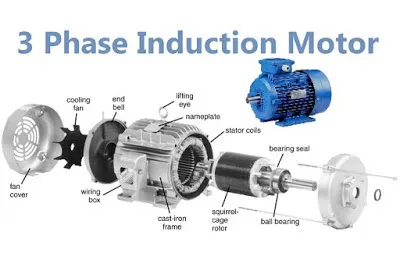
He compares two technologies, explains the advantages and disadvantages.
- DC motor advantages are, Less heat is generated by the motor brushless drive and the efficiency of the brushless motor will be a little higher than that of the indication motor.
- DC motor disadvantages are, the magnetic losses in DC motors increase proportionality and decrease the load-carrying capacity of the motor, permanent magnets are expensive and difficult to handle as ferromagnetic substances move close to them.
- Induction motor advantages, no magnets required, no inverter required and the motor is capable of stating with the load.
- Induction motor disadvantages, they can't be operated with DC voltage - they operate only with AD voltage, Shaft speed is proportionate to line frequency. Hence, when used with utility power, they are constant speed machines, have limited starting torque and somewhat limited running peak torque capabilities.
Finally, the author concludes by not choosing the best machine as both DC brushless and induction drives use motors having similar stators. Both drives use 3-phase modulating inverters. The only differences are the rotors and the inverter controls. And with digital controllers, the only control differences are with control code. DC brushless drives will likely continue to dominate in the hybrid and coming plug-in hybrid markets, and that induction drives will likely maintain dominance for the high-performance pure electrics.