Week-4 Challenge WOT Condition Part-2
1. What is the difference between the mapped and dynamic models of engine, motor, and generator? How can you change the model type?
Solution:
The main difference between mapped and dynamic is
The Mapped model of the engine, motor, and generator make use of data from the steady-state lookup table to judge the engine performance, the look table contains the overall engine performance parameters like torque, speed, fuel flow, etc. depending on these data, the mapped model calculates the results/output.
The Dynamic model of engine, motor, and generator make use of data from all sub-components/sub-systems to characterize the engine performance in real-time. The dynamic model receives data from various sub-systems/components in real-time to calculate the results/output.
To Change the model type:
Let us change the model type for the electric vehicle reference application
Use the link to open the powertrain blockset of the electric vehicle reference application model
Link - https://in.mathworks.com/help/autoblks/ug/explore-the-electric-vehicle-reference-application.html
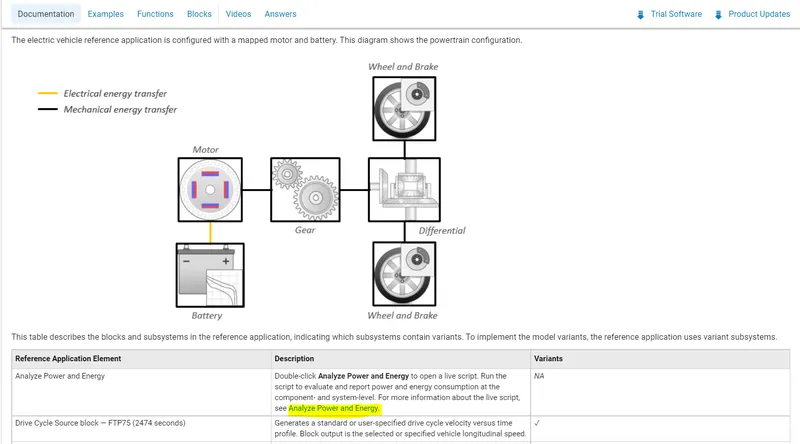
Double click on the highlighted area 'Analyze power and energy' to open the model in Simulink.
Click on 'Open example' to open the model in the Simulink.
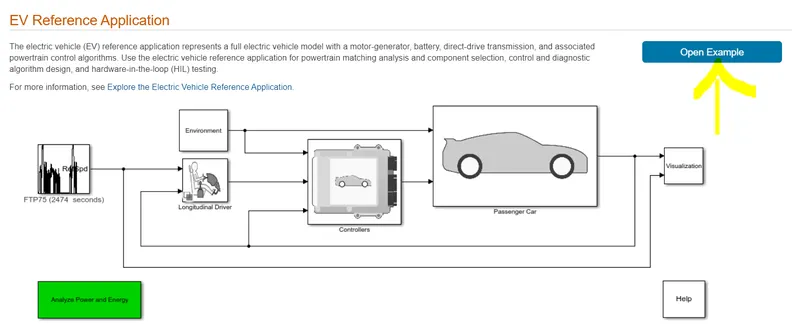
The model looks as shown in the screenshot below.
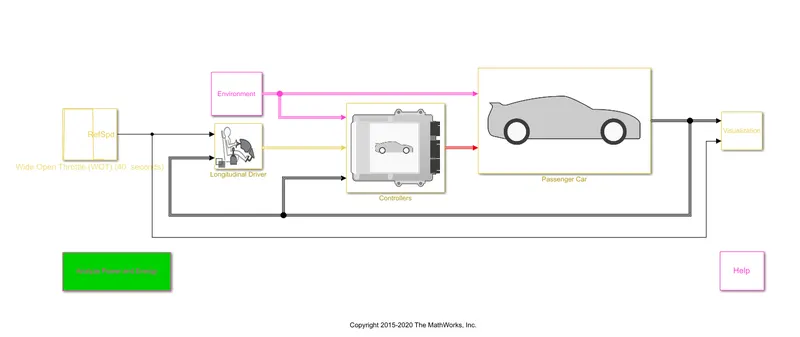
The mapped and dynamic models are related to motor block, follow the below steps
Open 'Passenger Car' block
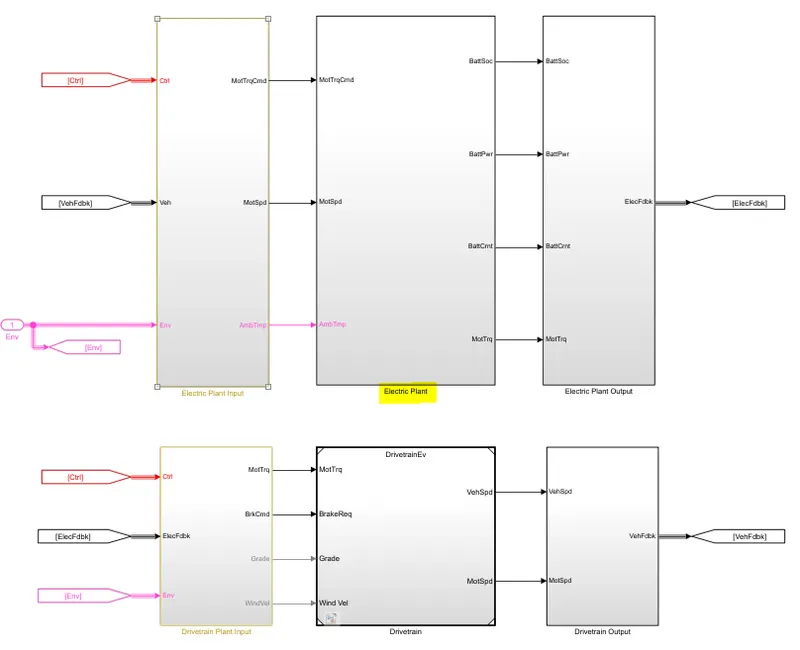
Open 'Electric plant' block
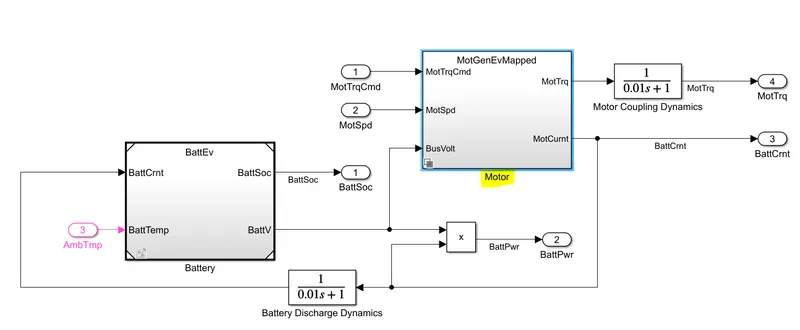
Open 'Motor' block
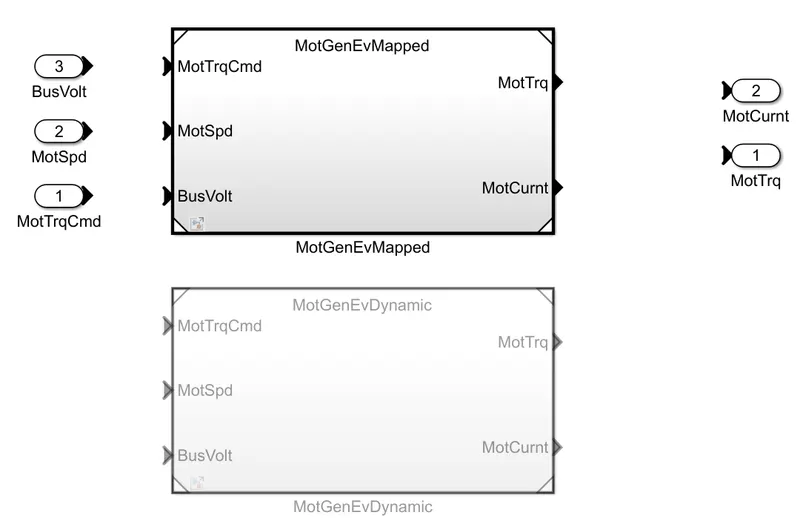
Now we can choose either 'MotGenEvMaapped' or 'MotGenEvDynamic' to view the results either in mapped model or dynamic model.
Path : EvReferenceApplication/Passenger Car/Electric Plant/Motor
///////////////////////////////////////////////////////////////////////////////////////////////////////////////////////////////////////////
2. How does the model calculate miles per gallon? Which factors are considered to model fuel flow?
Solution :
Model to calculate miler per gallon
Folow the same steps as mentioned in previous case to open the electric vehicle reference application model.
Path : EvReferenceApplication/Visualization/Performance Calculations
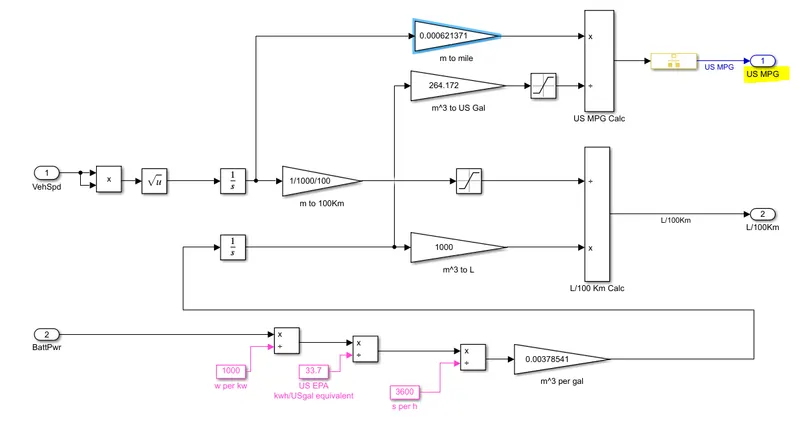
The model to calculate MPG (miles per gallon) will be inside the 'performance calculation' block.
To Calculate MPG we need to process the vehicle speed and battery power parameter.
We need to perform the below calculation as shown in the model to calculate the MPG
Fuel flow:
Total tractive forces, Velocity and speed are the factors that are considered to model the fuel flow rate.
With the increase in velocity and acceleration the rate of fuel flow will be high.
If the rate of fuel flow is high it decrease the fuel efficiency of the vehicle.
///////////////////////////////////////////////////////////////////////////////////////////////////////////////////////////////////////////
3. Run the HEV ReferenceApplication with WOT drive cycle. Change the grade and wind velocity in the environment block. Comment on the results.
Solution :
The electric vehicle (EV) reference application represents a fully electric vehicle model with a motor-generator, battery, direct-drive transmission, and associated powertrain control algorithms. The electric vehicle reference application for powertrain matching analysis and component selection, control and diagnostic algorithm design, and hardware-in-the-loop (HIL) testing.
Use the link to open the powertrain blockset of the electric vehicle reference application model
Link - https://in.mathworks.com/help/autoblks/ug/explore-the-electric-vehicle-reference-application.html
Double click on the highlighted area 'Analyze power and energy' and click on 'Open example as shown in the below screenshot' to open the model in Simulink.
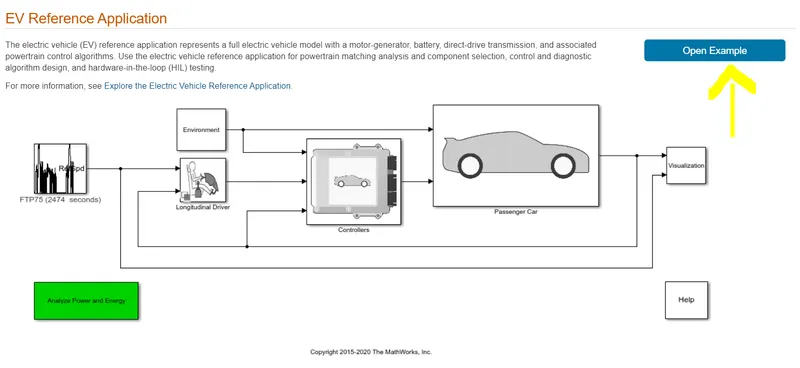
The model looks as shown in the screenshot below.
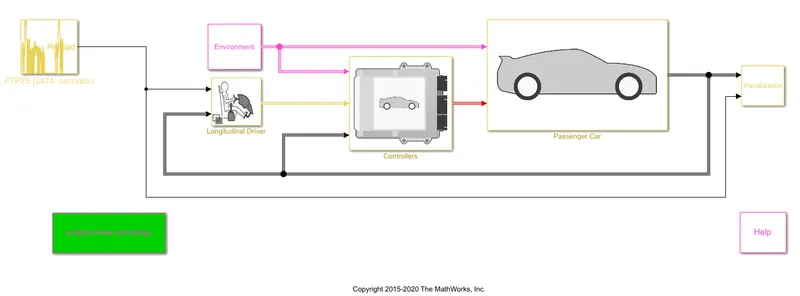
By default, the drive cycle Source will be selected with FTP75 (2474 seconds).
To change it to Wide-open throttle(WOT), double click on the drive cycle block and select 'Wide-open throttle(WOT)' from the drop-down box as shown below.
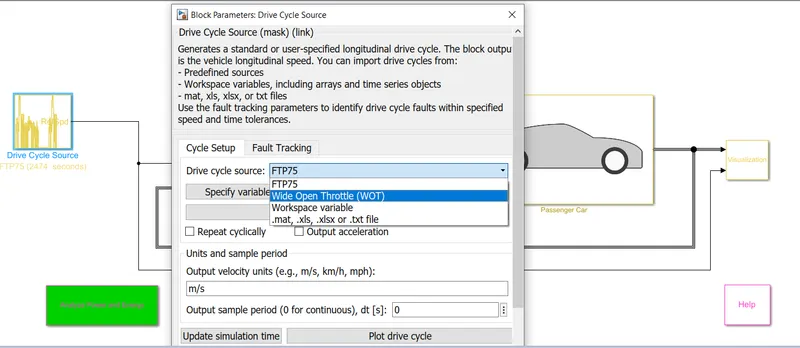
Change other parameters like start time and stop time depending on the requirement.
Click on 'apply' and 'OK'
To change the grade and wind velocity:
Open the environment block
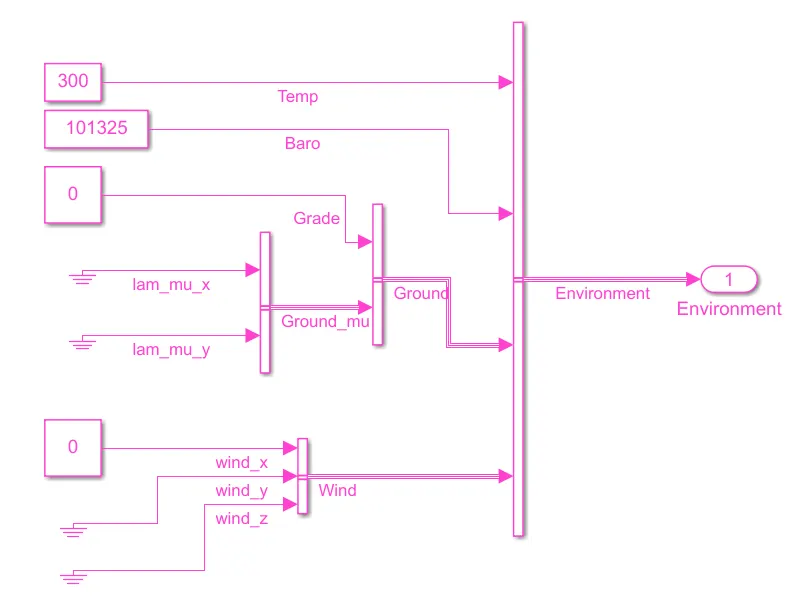
By default the value of grade and Wind will be '0', let's change the value of grade = 8 and wind = 3.
RUN the simulation:
Result:
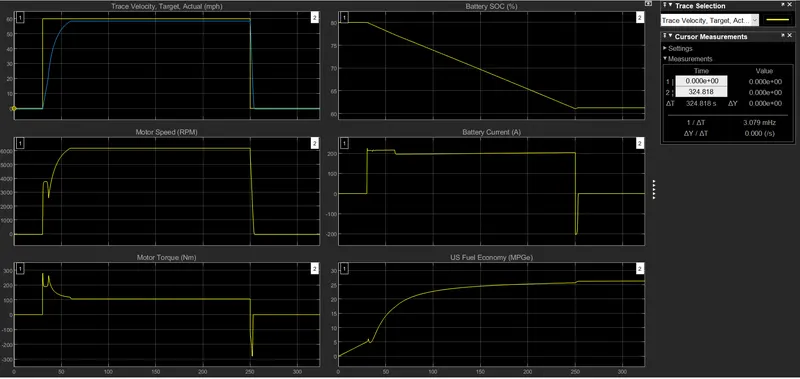
Case 1: for default condition. grade = 0 and Air = 0
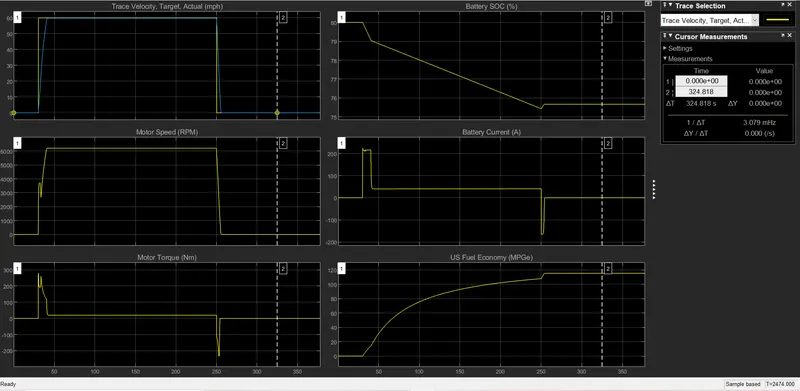
Case 2: for grade = 8 and Air = 3
Conclusion:
As we check, with the increase in grade and wind blast, the vehicle takes a little more time to reach the top speed.
Since the vehicle keeps moving with same grade value and wind blast, the vehicle motor consume more battery current during run time, the battery current plot shows the rate of battery current consumption.
///////////////////////////////////////////////////////////////////////////////////////////////////////////////////////////////////////////
4 . Keeping all other parameters same, compare the simulated results of hybrid and pure electric powertrains.
Solution:
The models used to compare are:
Fully Electric : Electric Vehicle Reference Application
Hybrif electric vehicle : Hybrid Electric Vehicle Multimode Reference Application
Link to access both model - https://in.mathworks.com/help/autoblks/ug/getting-started-with-powertrain-blockset.html?s_tid=srchtitle
The Models runs with drive cycle i.e Wide open throttle (WOT) with variation in parameters as shown in the below screenshot so that we can analyze the results.
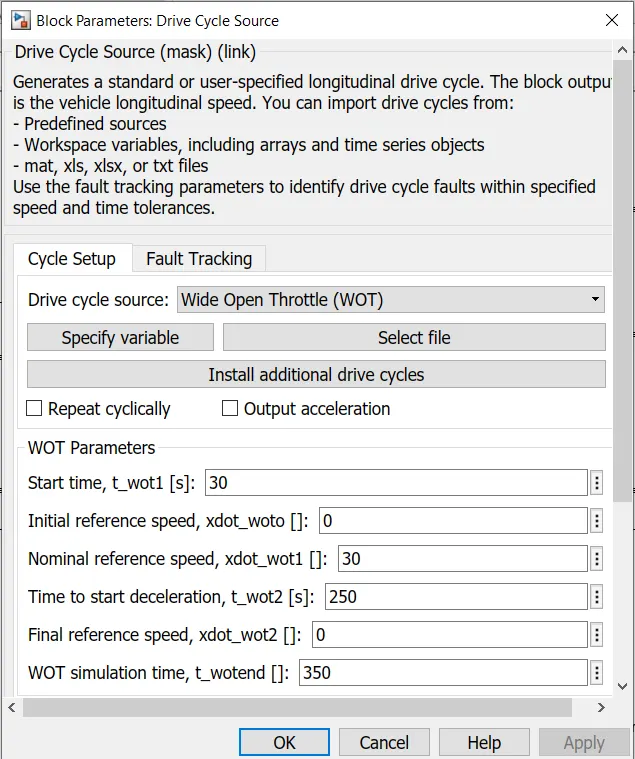
Apart form these changes we have not changed any parameters.
After Running the model, we have the below plots.
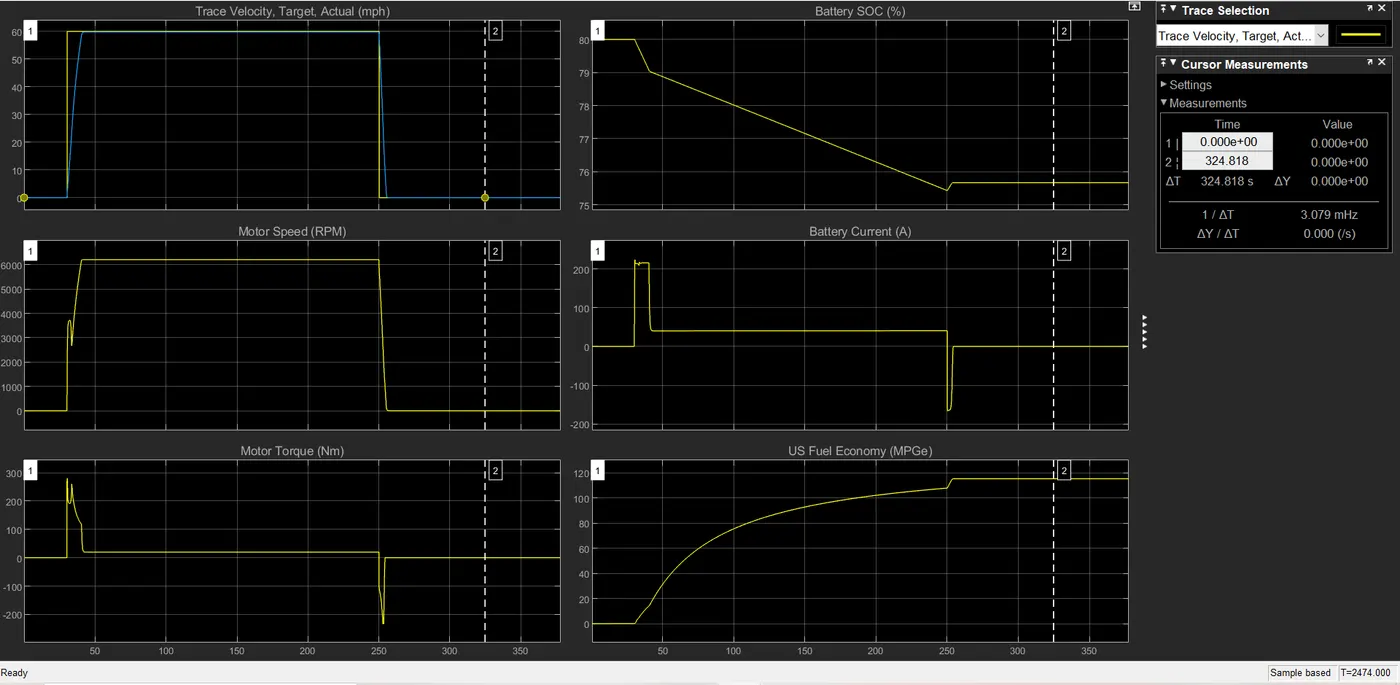
Case 1: Electric Vehicle Reference Application
- The below model is purely electric with battery, motor and ECU.
- The battery charges and dischanges with respect to acceleration and braking.
- The battery discharges when throttle is applied and charges when vehicle in motion without acceleration and during breaking.
- The output plot is as shown below.
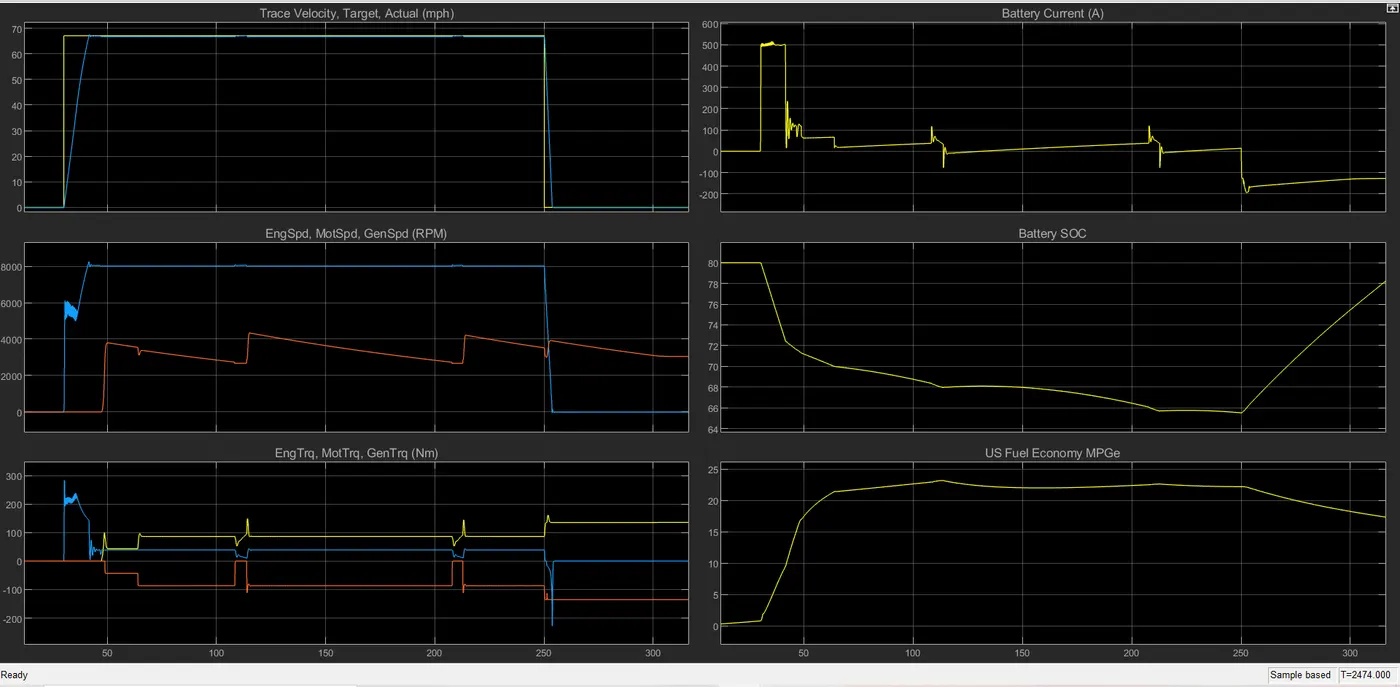
Case 2 : Hybrid Electric Vehicle Multimode Reference Application
- The below model has IC engine, battery, motor, transmission/gearbox and ECU.
- The vehicle runs with both IC engine and electric motor.
- Initially, if the battery's are fully charged the electric motor is used to drive the vehicle to achieve a constant speed.
- The battery charges and dischanges with respect to acceleration and braking.
- The battery discharges when throttle is applied and charges when vehicle in motion without acceleration and during breaking.
- The IC engine is used to drive the vehicle only when the battery power is less than the required power.
- The IC engine runs the vehicle and parallel charges the battery.
- The output plot is as shown below.
conclusion:
The pure electric vehicle is more efficient as the batteries are charge by external grid.
The pure electric vehicle can be used for short drives as there is not external source to charge the battery.
The Hybride electric vehicle is also efficient when it runs on battery, but not when it runs on fuel.
The Hybrid electric vehicle can be used for long runs as there is a back up of IC engine to run the vehicle when it runs out of power.