Week-6 Challenge: EV Drivetrain
CHALLENGE 6 : EV DRIVETRAIN
Question 1: Which types of power converter circuits are employed in electric and hybrid electric vehicle
Solution: The task of a power converter is to process and control the flow of electrical energy by supplying current and voltages that are optimally suited for the user load. The block diagram of a power electronic converter is given below:
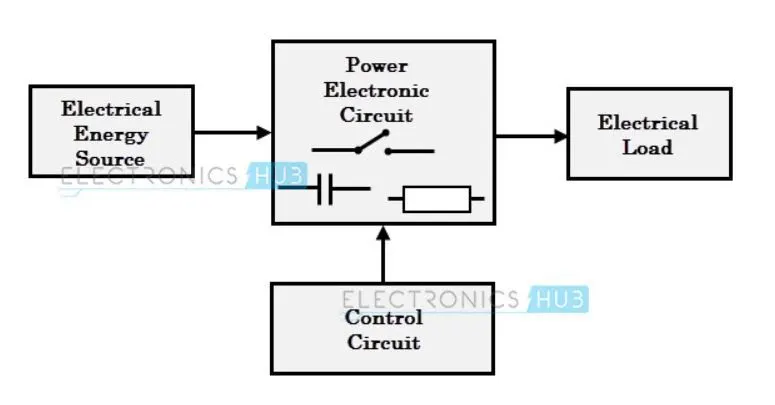
This circuit consists of 4 parts:
- electrical energy source
- power electronic circuit
- control circuit
- electric load
This convertor changes one form of electrical energy to the other.
The power electronic circuit consists of both the power part and control part. The power part transfers the energy from source to load and it consists of power electronic switches (SCR or TRIAC), transformers, electric choke, capacitors, fuses, and sometimes resistors.
The control circuit regulates the elements in the power part of the convertor. This block is built with a complex low power electronic circuit that consists of either analog or digital circuit assembly.
Depending on the type of function performed, power electronic converters are categorized into the following types.
- AC-DC(rectifiers)
- DC-AC(inverters)
- AC-AC(cyclo converter)
- DC-DC(chopper)
RECTIFIERS:
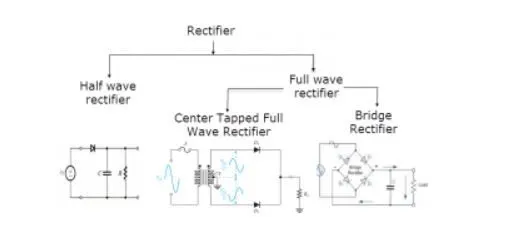
A rectifier is an electrical device comprised of one or more diodes that allow the flow of current only in one direction. It basically converts alternating current into direct current. Rectifiers can be mold in several shapes as per necessity like semiconductor diodes, SCRs (silicon controlled rectifiers), vacuum tube diodes, mercury-arc valves, etc.
INVERTERS:
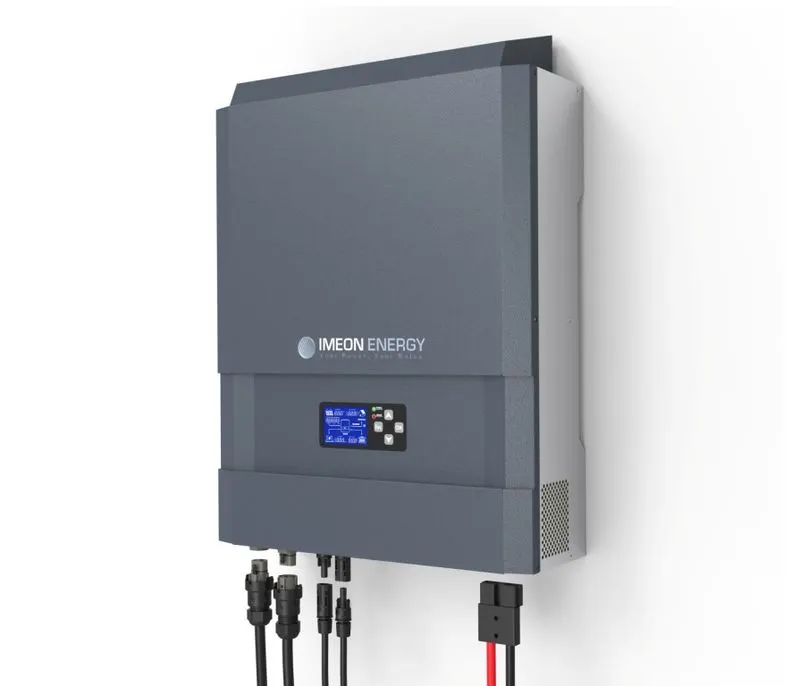
A power inverter, or inverter, is a power electronic device or circuitry that changes direct current (DC) to alternating current (AC). The input voltage, output voltage and frequency, and overall power handling depend on the design of the specific device or circuitry. The inverter does not produce any power; the power is provided by the DC source. A power inverter can be entirely electronic or maybe a combination of mechanical effects (such as a rotary apparatus) and electronic circuitry.
CHOPPER:
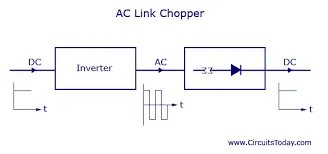
A chopper is basically a dc to dc converter whose main function/usage is to create adjustable dc voltage from fixed dc voltage sources through the use of semiconductors.
CYCLO CONVERTERS:
A cycloconverter (also known as a cycloinverter or CCV) converts a constant voltage, constant frequency AC waveform to another AC waveform of a different frequency. A cycloconverter achieves this by synthesizing the output waveform from segments of the AC supply (without an intermediate DC link).
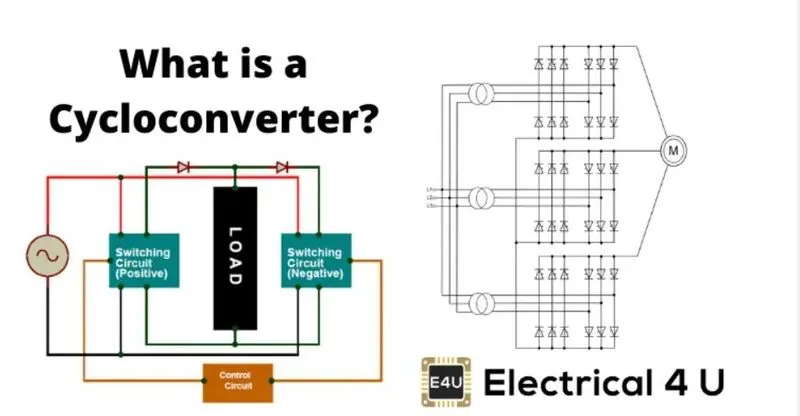
TYPES OF POWER CONVERTERS EMPLOYED IN EV AND HEV
1. AC - DC convertor
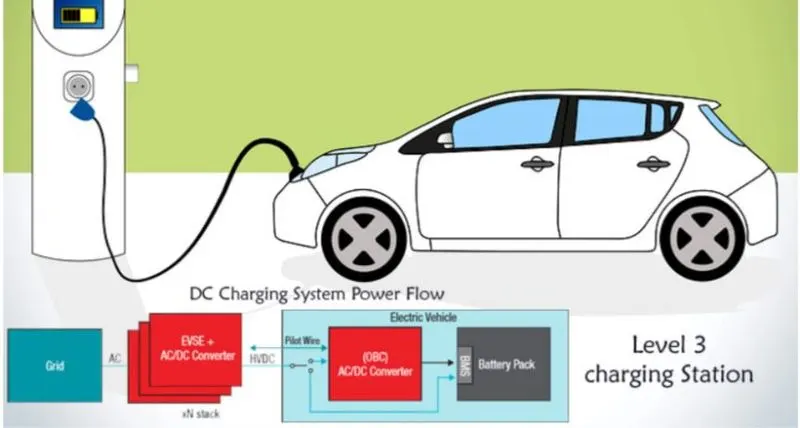
- The AC-DC converters or rectifiers are used to charge the battery from external sources.
- They are also called as rectifiers.
- The external power stations use an AC supply and only DC can be stored in the battery.
- This is mainly used in plug-in hybrids where the battery can be charged externally.
2. DC-AC converter
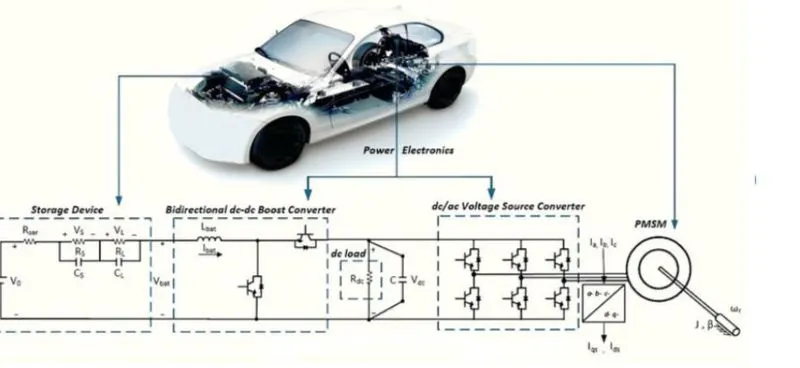
- the inverter supplies current to the battery pack for recharging during regenerative braking.
- Provides electricity to the AC induction motor for propulsion.
- The inverter unit choreographs how these divergent voltages and current types work together.
because of the use of transformers and semiconductors (and the accompanying resistance encountered), enormous amounts of heat are emitted by these devices. Adequate cooling and ventilation are paramount to keeping the components operational. For this reason, inverter/converter installations in hybrid vehicles have their own dedicated cooling systems, complete with pumps and radiators, that are entirely independent of the engine's cooling system.
3. DC-DC converters
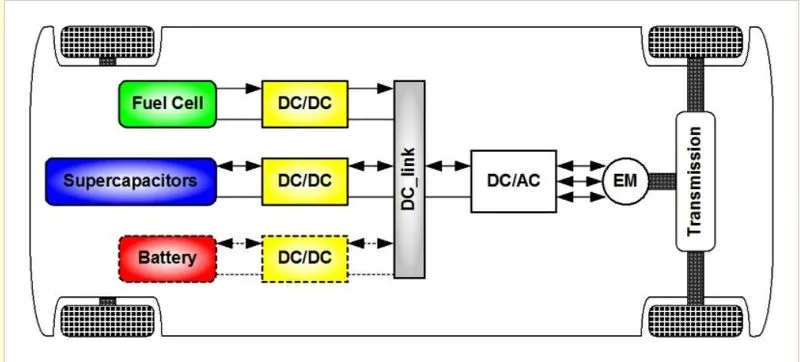
- a DC to DC converter is a category of power converters and it is an electric circuit that converts a source of direct current (DC) from one voltage level to another, by storing the input energy temporarily and then releasing that energy to the output at a different voltage. The storage may be in either magnetic field storage components (inductors, transformers) or electric field storage components (capacitors)
- The amount of power flow between the input and the output can be controlled by adjusting the duty cycle (ratio of on/off time of the switch). Usually, this is done to control the output voltage, the input current, the output current, or to maintain constant power.
- The most commonly used DC-DC converters are:
1. Unidirectional Converters:
They cater to various onboard loads such as sensors, controls, entertainment, utility, and safety equipment.
2. Bidirectional Converters:
They are used in places of regenerative braking and battery charging. The power flow is from a low voltage end like a battery or a supercapacitor to a high voltage side which is referred to as boost operation.
---------------------------------------------------------------------------------------------------------------------------------
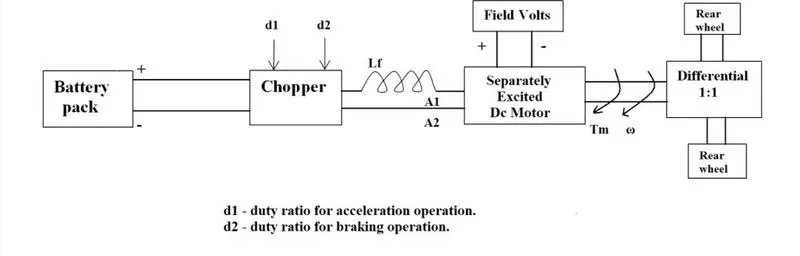
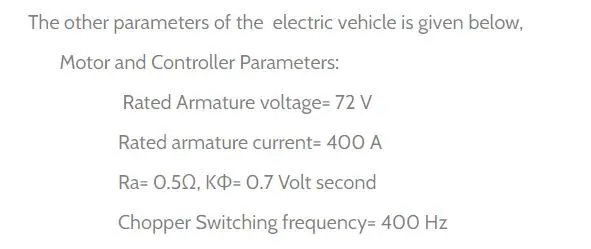
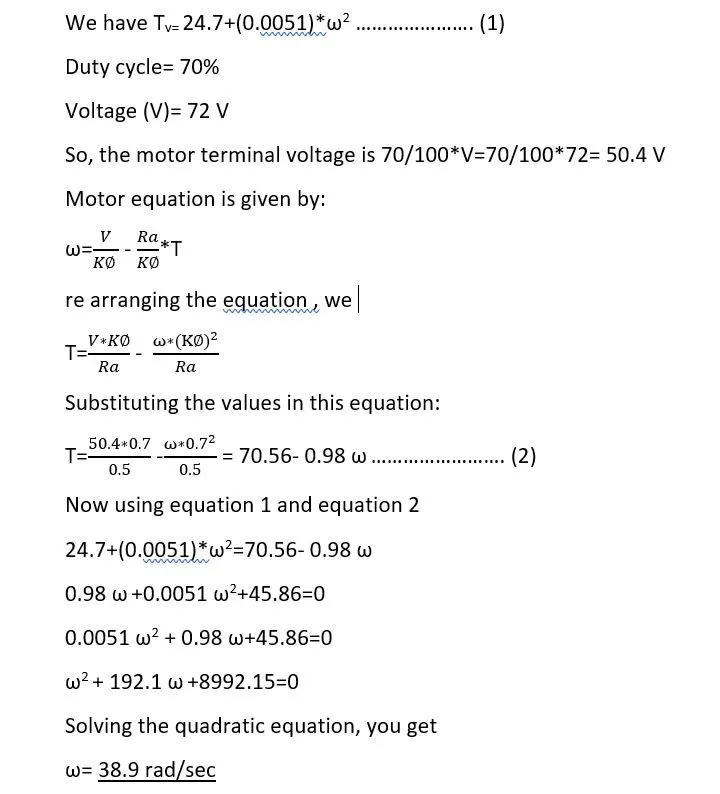
Question 2:An Electric Vehicle's powertrain with a 72V battery pack is shown in the diagram below. The duty ratio for acceleration operation is 'd1' and for the braking operation the duty ratio is 'd2'. What is EV steady-state speed if the duty cycle is 70%?
Solution:
----------------------------------------------------------------------------------------------------------------------------
Question 3: Explain in brief about author’s perspective.
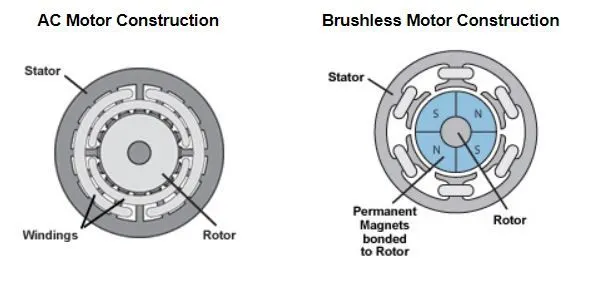
solution: The author states that every engine is unique in its own ways. There is no one best performing engine. It all depends on the requirements of the user. Given below are the differences between Ac induction and BLDC motors.
| AC INDUCTION | BRUSHLESS DC |
| 1.An AC induction motor does not have any magnets on the rotor; instead, it has a series of laminations and winding. When 3-phase power is applied to the stator of the motor, a rotating magnetic field is generated. This rotating magnetic field creates a current flow in the rotor via induction. The rotor current creates its own magnet that interacts with the stator field and generates torque. | 1.Alternatively, a BLDC motor replaces the windings on the rotor with a series of permanent magnets. These magnets create a magnetic field that interacts with the stator’s field and generate torque |
| 2.Most AC induction motors can be run directly off of AC power with no controller, but if variable speed is required—as is the case in many pump applications—this advantage is eliminated since a VFD must be installed between the AC power and the motor | 2.a BLDC motor requires the stator’s magnetic field to be precisely controlled and aligned with the rotor position and its fixed magnets. The stator field is controlled by a device that is all but identical to a VFD used with an AC induction motor but with one additional input; a shaft encoder attached to the rotor is required to help the motor controller keep the rotor and stator fields in proper alignment. |
| 3. Lower efficiency | 3. higher efficiency |
| 4. Torque control not as precise as BLDC | 4. Precise control of torque |
| 5. Response time is a little less. | 5.a BLDC motor’s inherently fast response allows the mechanical connection to be significantly simplified. |
| 6. Invertor is not needed | 6. Inverter is needed |
| 7. Cannot operate at unity power factor | 7. They can operate at a unity power factor |
| 8. More heat is generated | 8. Less heat is generated |
He also concluded that
For an HEV or plug-in hybrid, BLDC is preferred and for a pure electric vehicle, an AC motor is preferred.
-----------------------------------------------------------------------------------------------------------------------------