Week-6 Challenge: EV Drivetrain
1.Which types of power converter circuits are employed in electric and hybrid electric vehicle?
Ans :-
There are 4 main types of power converters used in Electric and Hybrid electric vehicles they are as follows ;-
- AC-DC Converter
- DC-AC Converter
- DC-DC Converter
- AC-AC Converter
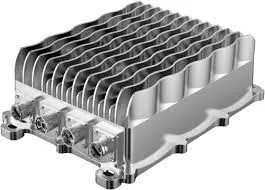
AC-DC Converter:-
AC to DC Converters are one of the most important in power electronics because there are lot of real applications are based on this conversions. The AC current to dc current conversion process is known as rectification. This rectifier converts AC supply into the DC supply at load end connection. Normally Transformers are used to adjust the AC source to get step down transformer to reduce the voltage level to have better operation range for DC supply. Normally this AC to DC converter converts low voltage values.
This ac-dc converters are used for charging operation of battery Electric and Hybrid electric vehicles.
DC-AC Converter:-
The DC-AC power converters are used for converting the Dc power supply into Ac power supply . This conversion process of converting the DC power to AC power is called as inverter. The DC power from the battery pack is converted into AC power in electric drive train where the dc power from battery gets converted after passing through inverter into AC power to drive the ac power operated motor of ev.
DC-DC Converter :-
The DC-DC converter are the power converter device which convert the high voltage Dc to low voltage Dc supply or from low dc power supply to a high dc power supply . the main aim of the DC-DC power supply is to convert the required DC voltage to required DC voltage. This DC-DC converters are used in auxiliary circuit where the battery pack is of high rated voltage and even the motor is operated at high voltage but the auxiliary circuit of ev or hev like the headlamp , turn indicators , dashboard are operated at lower voltage12V as compared to the main circuit.
AC-AC Converter:-
These types of power electronic converters are used to convert the alternating current waveforms of specific magnitude and specific frequency into alternating current waveforms with different magnitude and different frequency, as the signal remains AC, hence this converter is termed as AC to AC converter. To operate a few devices and machines we require some specific voltage with specific frequency which can be obtained using AC to AC converters. By regulating AC power using the AC to AC converter we can regulate the speed of induction motors. There are different types of AC to AC converters which are classified based on different criteria.
- An Electric Vehicle's powertrain with 72V battery pack in shown in the diagram below. The duty ratio for acceleration operation is 'd1' and for the braking operation the duty ratio is 'd2'.
The other parameters of the electric vehicle is given below,
Motor and Controller Parameters:
Rated Armature voltage= 72 V
Rated armature current= 400 A
Ra= 0.5Ω, KΦ= 0.7 Volt second
Chopper Switching frequency= 400 Hz
The vehicle speed-torque characteristics are given by the below equation
What is EV steady state speed if duty cycle is 70%?
Ans:-
`ω=V/kφ-(Tm.R)/((〖Kφ〗^2))` - equ (1)
Tm= motor torque
w`=speed
V=effective voltage
kφ`=motor constant
R=armature resistance

We know that , Vb. duty= Ve
Vb= 72v
Ve= effective voltage
Duty =70/100=0.7
Vb*0.7=Ve
72*0.7=50.4v
Substitute in equ(1):-
W=(50.4/0.7) - (Tm*0.5/(0.7^2))
W=72 – 1.02 .Tm
Tm=70.5 – 0.98 w
Steady state – Tm=Tv
70.5 – 0.98 = 24.7 + 0.0057w^2
0.0057 – 0.98 – 45.8=0
Hence the above equ is an quadratic equation,
`w`= 210.16 &`w` = - 38.23
Therefore the EV steady state speed with duty cycle is 70% is 210.16 .
3.Refer to the blog on below topic:
Induction Versus DC brushless motors by Wally Rippel, Tesla
Explain in brief about author’s perspective.
Ans:-
As per the author of the paper he is comparing the Induction motor and DC brushless motor, he had made a detail comparison between this two from the working principle to construction and even he had discussed about the advantages and disadvantages over each other.
DC Brushless Motor:-
The DC brushless motor has two or more permanent magnet tha generate a DC magnetic field. The magnets are mounted on the rotor of the motor and it’s the rotating part of motor. While the magnetic field enters the stator core and interacts with the current flowing within the winding to produce a torque interaction between the stator and the rotor. When the rotor rotates its necessary to change the magnitude and polarity of the stator such that the torque remains constant and the electrical energy is converted mechanical energy at optimal efficiency. The device which control this changing the magnitude and polarity of stator is called an inverter, without an inverter the brushless motors are useless motors.
Induction Motor :-
The induction motor was invented by Nikola Tesla, the stator of both the motors are identical ,both have three sets of distributed windings , that are within the the stator core, only the difference is between the rotors.
The induction motor does not have permanent magnet , the have steel lamination with the buried peripheral conductors. Current flows in stator winding which produces a rotating magnet field that enters a rotor. The magnetic field o rotor is equal to the difference between the applied electrical frequency and rotational ‘ frequency of the rotor itself ’.
The voltage , current produced in the rotor which is proportional to the voltage. The current interact with the original magnetic field to produce a force.
Advantage of induction motor over DC Brushless motor:-
The three phase induction motor can be started by connecting it the three phase power supply and there is no need of an Inverter. While the DC Brushless motor can not perform directly when connected to fixed frequency utility power. There is an need of an inverter to operate “phase ” is maintained in step with the angular position of rotor.
Limitation of Induction Motor over DC Brushless motor:-
They can not operate from DC source they require AC source. The shaft speed is proportional to line frequency therefore when used with utility power they have limited starting torque and running peak torque capabilities, when compared to the DC type machine.
If we add inverter to this machine then its possible to run this motor from DC power source and even variable speed become possible by adjusting the inverter frequency.
What to choose:-
The stator of both motor are same and both are drive use three phase modulating inverter. There is only difference between only rotor and inverter control.
Less rotor heat is generated in DC Brushless drive. Rotor cooling is easiest and peak point efficiency is generally higher.
DC motor they can be operated at unit power factor therefore the energy efficiency is higher for Dc brushless drive, typically few point higher than induction drive.
The magnetic field in DC brushless drive can be adjusted , when higher torque is required at lower speed , magnetic field strength (B) should be maximum. Likewise torque required level is low B field should be reduced this B field are not adjustable in DC brushless motor as the are using permanent magnet while in Induction motor This B field can be adjusted since B is proportional to V/f (voltage to frequency) hence at light load inverter can reduce voltage such that magnetic losses are reduced and efficiency is maximised.
Thus induction motor have advantage over DC motor when operated by smart inverters the magnetic and conduction losses can be controlled. when high performance is needed the Induction motors are great choice. As machine size is increased the losses do not necessary grow while in DC motor when size of motor grows the losses are increased.
The peak efficiency of Induction motor will be less than DC brushless motor but average efficiency will be greater.
Conclusion:-
Permanent magnets are expensive even difficult to handle due to large forces, therefore induction motor are cost advantage over PM motors , but the control laws are very much complex and difficult to understand. So here the development cost is higher. The induction motors are used where high performance is needed and DC motors are used in medium performance where efficiency is focussed.