Week-6 Challenge: EV Drivetrain
Aims:
- To determine the types of power converter circuits are employed in electric and hybrid electric vehicles.
- To determine EV steady state speed if duty cycle is 70% from the given parameters.
- To refer a Tesla blog by Wally Rippel and to explain in brief about author’s perspective on Induction VS DC Brushless Motors.
Theory:
Part 1: Types of power converter circuits that are employed in electric and hybrid electric vehicles.
Power Converter circuits: A power converter circuit is usually an electrical circuit with takes an input as a DC input and generated a DC output of different voltage. This is usually attained by high frequency switching action engaging inductive and capacitive filter elements. There are numerous kinds of converters based upon the source of input and output voltages and falls into below listed categories [1].
Mainly there are four types of power converters in power electronics namely:
- AC to DC Converter also known as Rectifier
- DC to AC Converter also known as Inverter
- DC to DC Converter also known as Chopper
- AC to AC Converter also known as Cycloconverter or frequency changer.
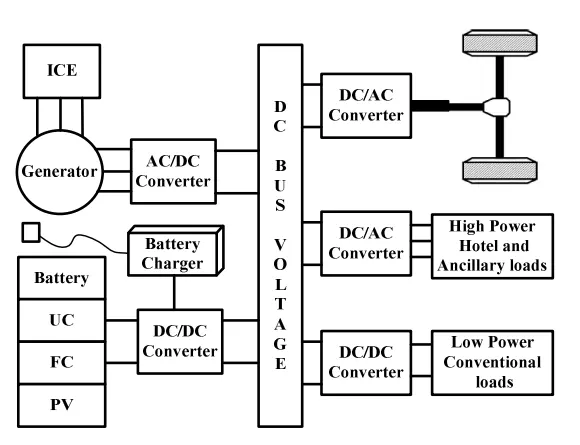
A figure [2] representing the use of electric converters in a vehicle can be seen below:
Uses of these converters in EV and HEV:
The DC-DC and DC-AC converters are the one mostly used in EVs and HEVs. However, AC-DC converter has only limited use in these vehicles. AC-AC converters are not used in the vehicles as they are mostly used for high power conversions or for speed control of induction motors [3].
Typical uses of converters:
- AC-DC Converter: These converters are usually used in charging circuits as the charging point outlet is an AC and the batteries require DC current to charge. Here AC is converted into DC current for charging purpose.
- DC-DC Converter: These converters are used at various places in the vehicle such as in infotainment, sensors, controls, utility and different safety equipment. Also used for DC motor drives and traction, regeneration braking and backup power.
- DC-AC Converter: These converters plays an important role in capturing energy from regenerative braking and feeding back to the batteries. It also accepts the high voltage from traction batteries. These inverters can be used to increase or decrease the power or torque of the motor by adjusting the amplitude of signal.
Part 2: To determine EV steady state speed if duty cycle is 70% from the given parameters.
Below shown is the EV powertrain with a 72V battery pack.
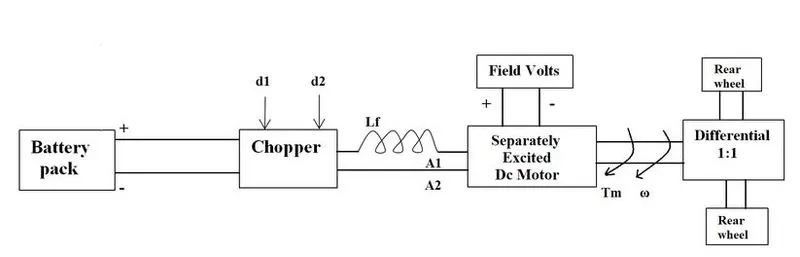
The parameters given for this powertrain are as follows:
Motor and Controller Parameters:
- Rated Armature voltage = 72 V
- Rated armature current = 400 A
- Ra = 0.5Ω,
- KΦ = 0.7 Volt second
- Chopper Switching frequency = 400 Hz
- Duty Cycle(d) = 70% i.e. 0.7
The vehicle speed-torque characteristics are given by the equation below:

To calculate steady state speed, we need ω, which can be given as:
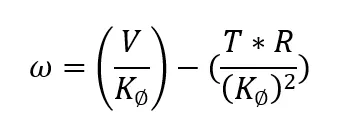 (2)
(2)
Where,
V = Vbatt * d = 72*0.7
Now, substituting all the values in (2) we get:
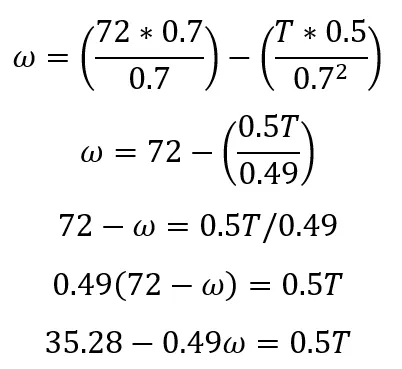
Therefore,
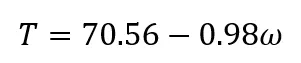 (3)
(3)
Now, substituting (1) in (3) we get,
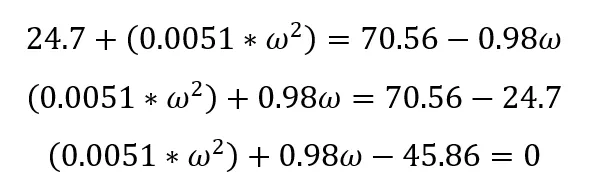
As the equation is of second order, by calculating the value we get two values of ω that is:
ω = 38.915 and -231.072
However, the speed value is always positive, therefore the positive value of ω is considered as an answer which is 38.915.
Therefore, the steady state speed (ω) of the above shown electric vehicle if the duty cycle is 70% is 38.915 rad/sec.
Part 3: To refer a Tesla blog by Wally Rippel and to explain in brief about author’s perspective on Induction VS DC Brushless Motors [4].
- In the blog the author starts explaining the motors by giving an example of ICEs that not all engines are the same and are required as per users needs also depending upon the performance and price which is true for electric vehicles too. In earlier times DC brushed motors and contactor controllers were used, which are now replaced by lithium-ion batteries and DC brushless motors and modulating inverters. Also stating that the technology is developing day by day in every field.
- Thereafter the author starts explaining DC brushless motor, stating that when the motor runs, it is necessary that the magnitude and polarity of the stator currents has to be continuously varied in just right way, such that the torque remains constant and the conversion of electric to mechanical energy is efficient and the device that provides this current is called as an inverter without which the brushless motors are useless.
- Thereafter, the author describes the Induction motor invented by Nicola Tesla before 1889 and says that both of these motors have same type of stators that contains three sets of “distributed windings” which are inserted in the stator all at once and the main difference between both machines is the rotor.
- As DC brushless rotor, the induction rotor has no magnets, it is just stacked steel laminations with buried peripheral conductors that form a “shorted structure”.
- Since the current produced in the rotor is proportional to the voltage hence the current interacts with magnetic field and produces the force. Inverters are not needed when induction motors are used as they are compatible with conventional utility power. However, inverters are used in brushless DC motors to develop the torque. With the angular position of the rotor the phase is maintained in it.
- The induction motors when operated from utility power have a very limited starting torque and limited running peak torque capabilities. Also, there are possibilities of having variable speeds by adjusting the inverter frequency, which shows that the induction motors are better capable compared to DC brushless motors in applications.
- Only some electric vehicles such as GM EV-1 and Tesla Roadster and Tzero uses induction motor, however, mostly all EV and HEVs have DC brushless motors now a days. The differences between these two motors are very small, because the differences are in rotors and inverter controls, the induction motor requires a speed sensor and DC motor requires absolute position sensor. One main difference being that much less rotor heat is generated in the DC brushless drive and the rotor cooling is easier and peak point efficiency is higher of this motor.
- The DC brushless motor can also operate at unity power factor whereas the best power factor for induction motor is 85%, which means the peak point energy efficiency of a DC motor will be a few percentages higher than compared to the induction motor. The author also states the motor properties regarding eddy currents and hysteresis.
- The author then talks about the permanent magnets. That PMs are very expensive costing around $50 per kilogram and PM rotors are very difficult to handle due to very large forces come into play when anything ferromagnetic substance gets close to it.
- In the end the author talks about how difficult the induction machines are to control, as the control laws are complex and difficult to understand. Attaining stability over whole torque-speed range and over temperature is much difficult when compared to DC brushless motors. Which means added development costs but less likely or no recurring costs.
- In the end of the blog the author concludes that the DC brushless motors will mostly dominate the EV and HEV markets and the induction motors will dominate in high performance pure electric vehicles. He also questions about electric intensiveness and increase in the performance of hybrid electric vehicles and the fact that much of the hardware is almost common in both the drives which means we will see both the technologies working side by side during the golden era of EV and HEVs.
Conclusions:
- The types of power converter circuits employed in electric and hybrid electric vehicles were determined and studied with their uses in the vehicle.
- The EV steady state speed for duty cycle 70% from the given parameters was determined to be 38.915 rad/sec.
- The brief discussion about the author perspective on DC brushless and induction motors was studied and was concluded that both are almost same when compared overall and will live side by side together. Therefore, the usage and requirements were defined in the study.
References:
[1] https://www.sunpower-uk.com/glossary/what-is-a-power-converter/#:~:text=A%20converter%20is%20an%20electrical,inductive%20and%20capacitive%20filter%20elements.&text=The%20size%2C%20weight%20and%20cost,largely%20determined%20by%20these%20components.
[2] https://www.researchgate.net/figure/Role-of-PEC-in-modern-architecture-of-electrical-power-system-for-vehicular-application_fig6_321360237
[3] https://www.elprocus.com/ac-to-ac-converter-working-and-supplies/#:~:text=AC%20to%20AC%20converters%20is,voltage%20magnitude%20applications%20as%20well.
[4] https://www.tesla.com/blog/induction-versus-dc-brushless-motors