Week 5 Sphere pressing on a plate
SIMULATION OF SPHERE PRESSING ON A PLATE
OBJECTIVE
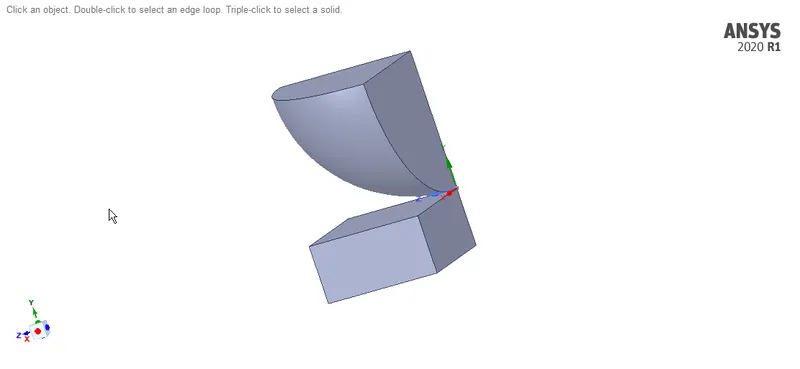
To simulate the condition of a sphere pressing over a flat plate and to perform analysis by assigning Structural Steel for sphere and Structural steel NL for the plate.
To press the sphere onto the plate 4mm downwards and retract it and to capture the Plastic deformation.
MODEL SETUP
The 3D model of the setup is imported into ANSYS Space Claim. Check for any abnormalities in the Geometry.
MATERIAL ASSINGMENT:
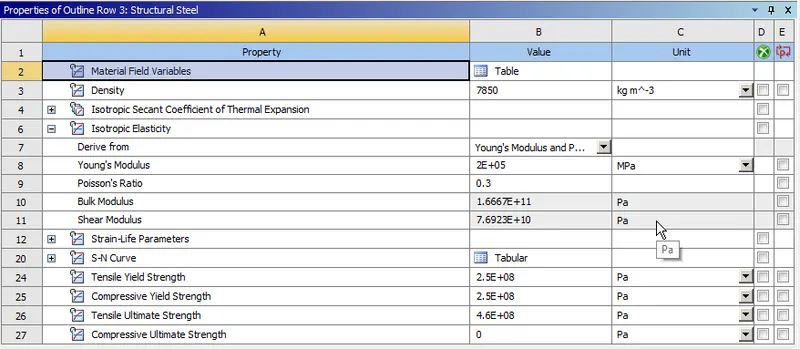
Structural Steel is assigned for Sphere
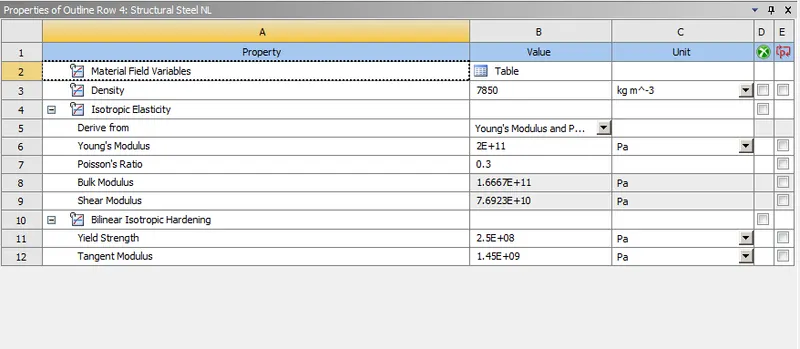
Structural Steel NL is assigned for the Plate
The properties of the materials used are shown below
- Structural Steel:
- Structural Steel NL:
SYMMETRY:
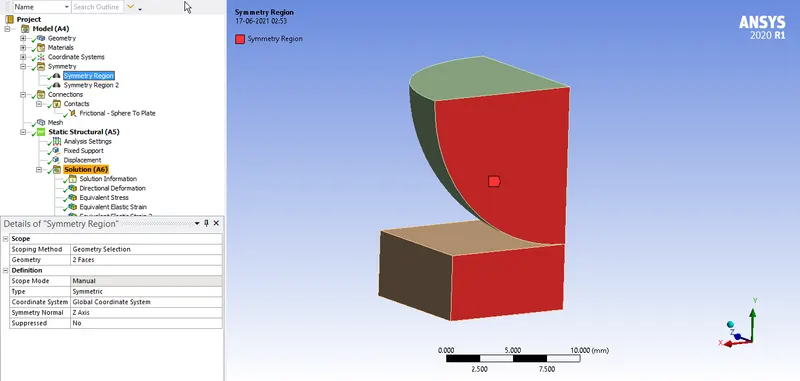
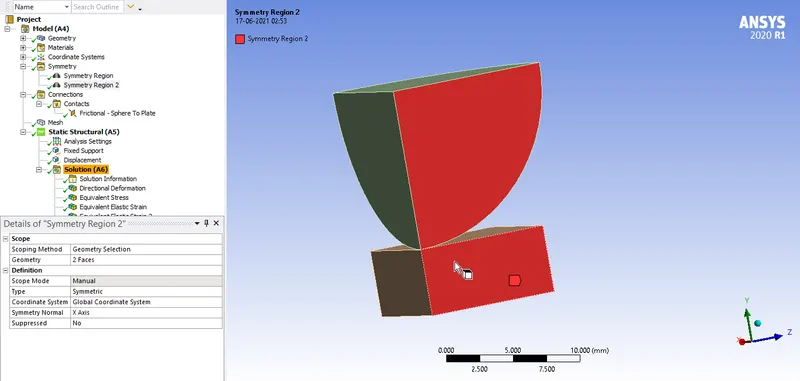
As the Sphere Pressing on a Plate setup is symmetrical, we take 1/4th of the model and latter mirror it to bigger model to account for the effects (to reduce computational time and cost)
These two faces have been mirrored, one about X axis and other about Z axis.
CONTACTS DEFINITION:
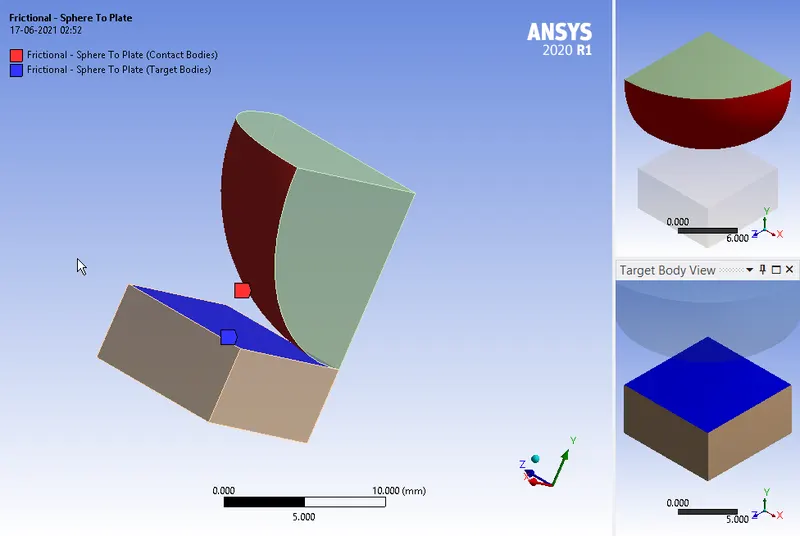
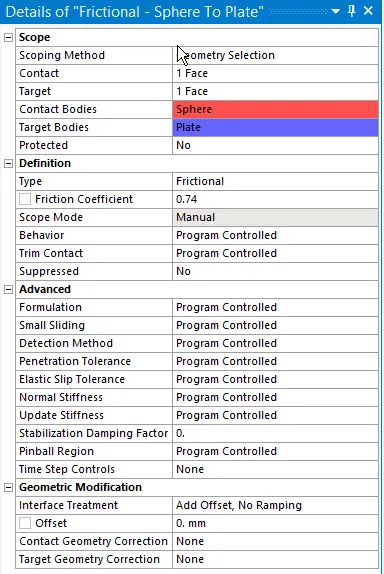
We define frictional contact with a coefficient of friction as 0.74 (Data obtained from Friction coefficient table from Roy Mech friction coefficient tables), is selected between the surface of the Quarter Sphere and top surface of the Plate.
The settings are shown as below
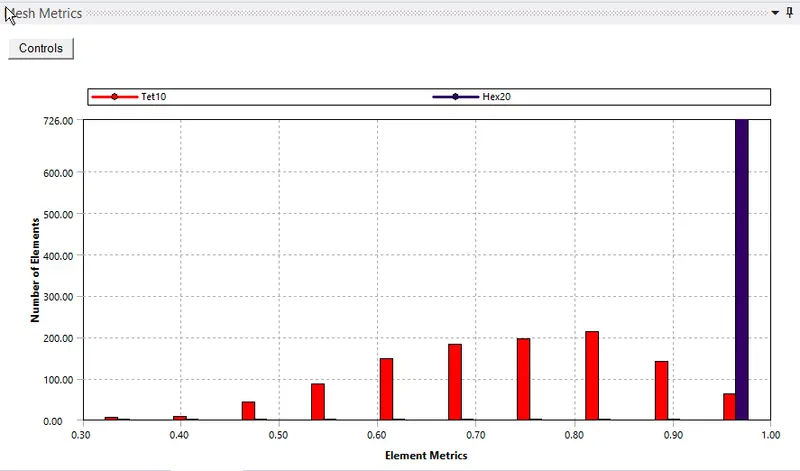
MESHING:
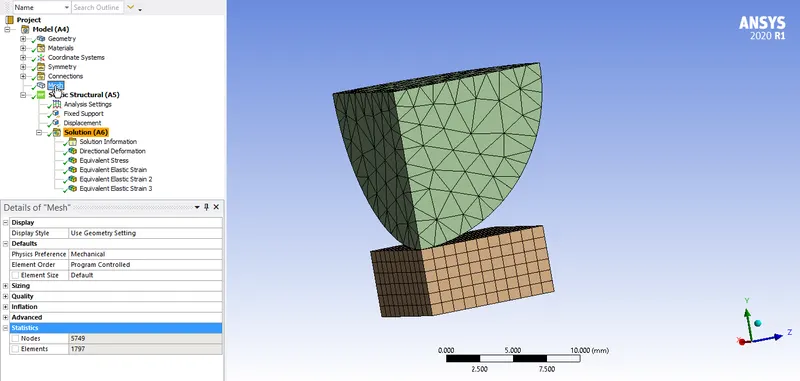
The setup has been meshed for the default element size
ANALYSIS SETTINGS:
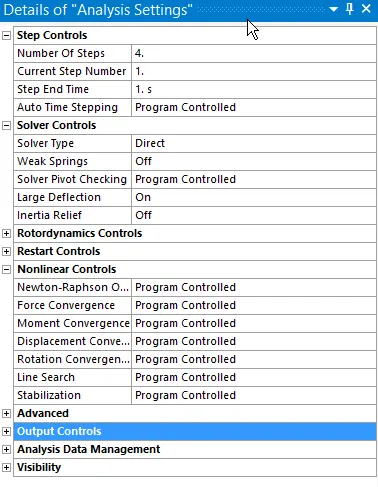
Now, the simulation is run for 4 steps. The following settings are modified
Auto Time stepping is set to Program Controlled.
Solver Type is set to Direct
The Large deflection is set to ON.
Other settings are as shown below
BOUNDARY CONDITIONS:
The boundary condition for this model are
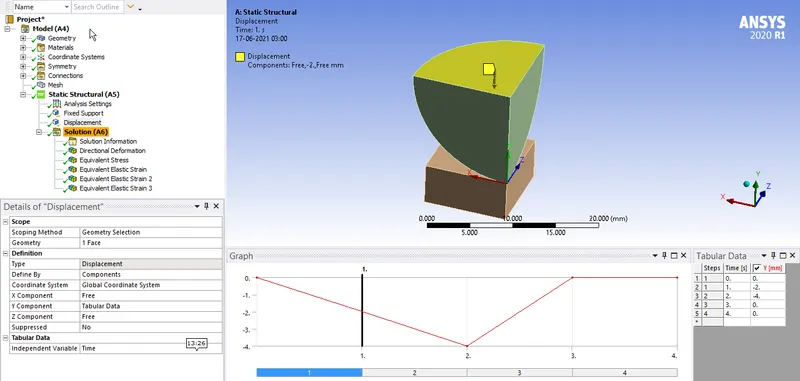
- A Displacement of 4mm in the negative Y direction:
The top surface of the Quarter sphere is given a displacement of 4mm in the negative Y direction and then retracted back
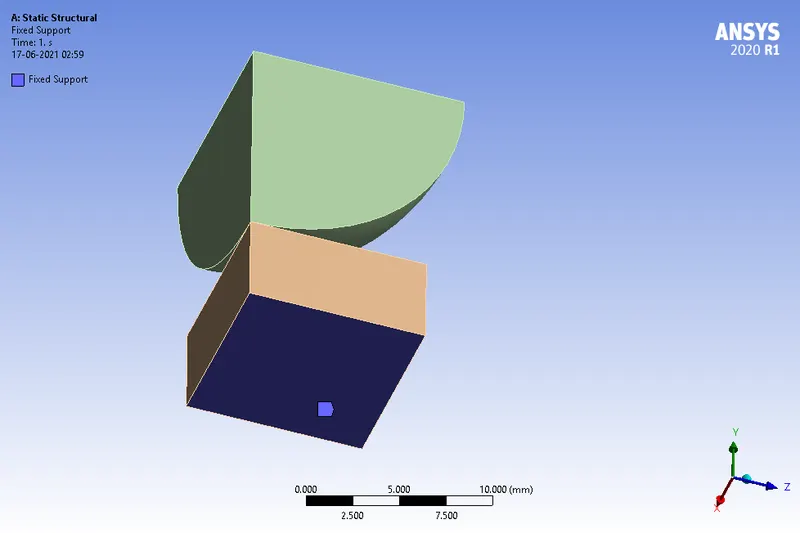
- A fixed support on the Plate :
The bottom surface of the Plate is fixed
RESULTS:
- DIRECTIONAL DEFORMATION IN THE Y AXIS :
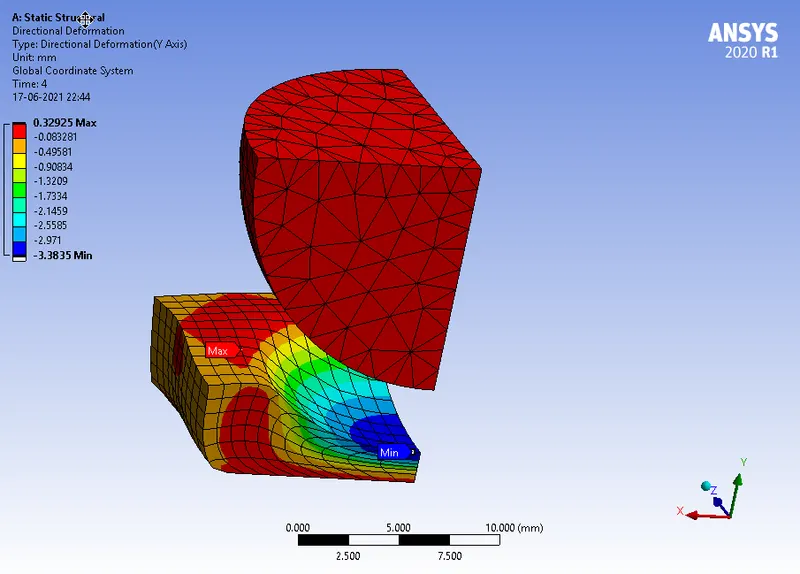
- DIRECTIONAL DEFORMATION OF THE PLATE IN THE Y AXIS :
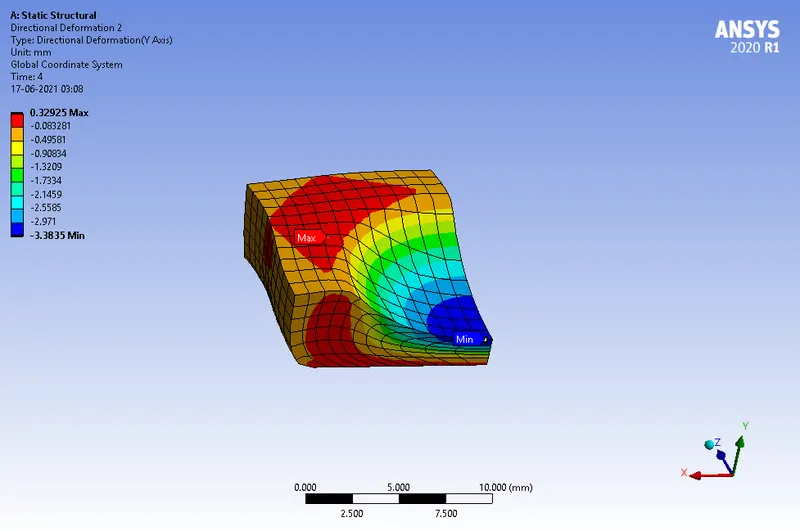
- EQUIVALENT STRESS ON THE PLATE:
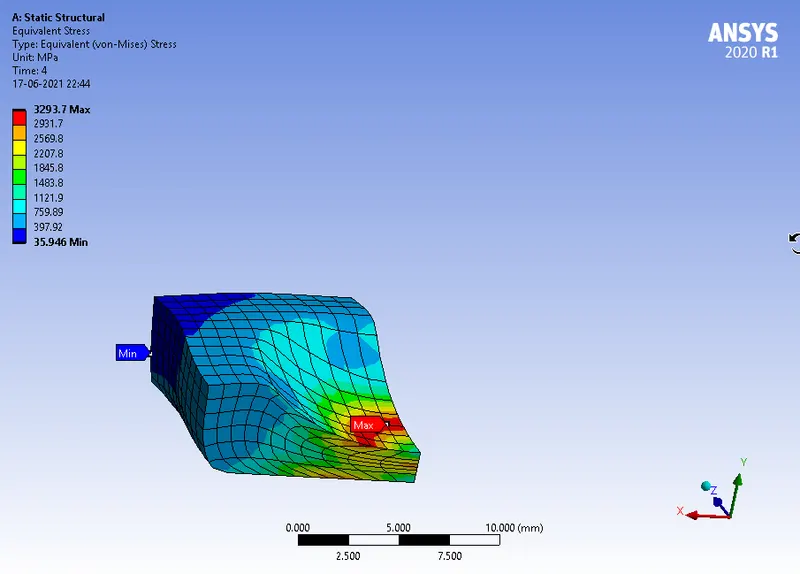
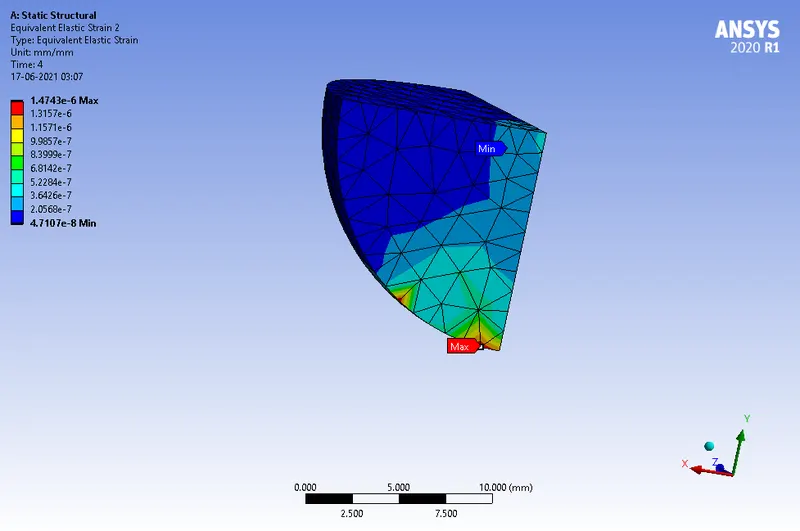
- EQUIVALENT ELASTIC STRAIN ON THE PLATE:
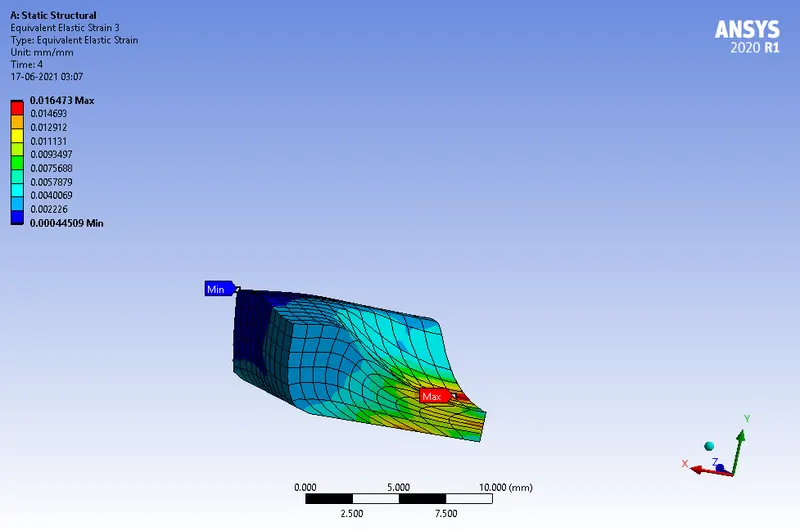
- EQUIVALENT ELASTIC STRAIN ON THE SPHERE:
CONCLUSION:
The Equivalent Stress, Equivalent strain and the Deformation are tabulated below

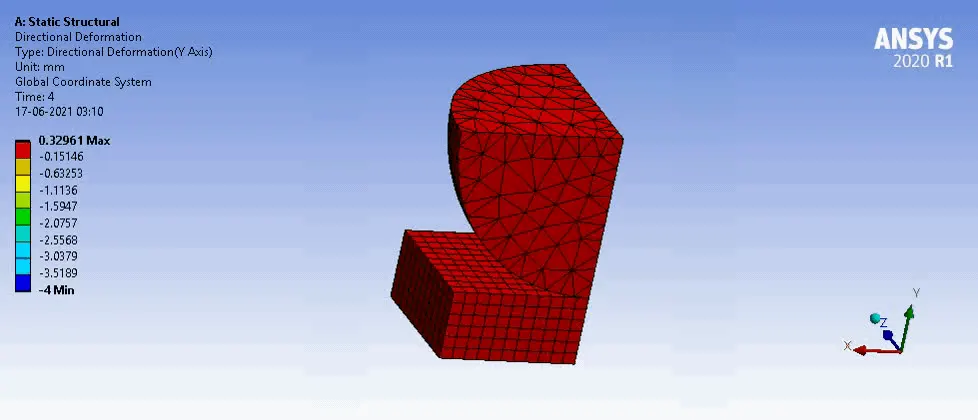
From the above animation, it is clear that the Plate doesn’t regain its original shape after deformation, hence it can be inferred that the Plate has undergone Plastic deformation.
The simulation files are attached below