Week 3 Verification of Weld Joints
VERIFICATION OF WELD JOINTS BY PERFORMING STRUCTURAL ANALYSIS
OBJECTIVE
To verify and simulate three different types of welding done on a Rib and Plate setup using three different weld materials namely,
- Stainless steel
- Aluminium Alloy
- Bronze
Three different cases are to be used, they are as follows:
Case 1: In this case, the material of the plates, Ribs and weldments are Stainless Steel
Case 2: In this case, the material of the plate is Stainless Steel, Ribs and weldments are of Aluminium alloy (high strength, wrought).
Case 3: In this case, the material of the plate is Stainless Steel, Copper is assigned to Ribs and weldments are of bronze to simulate Brazing
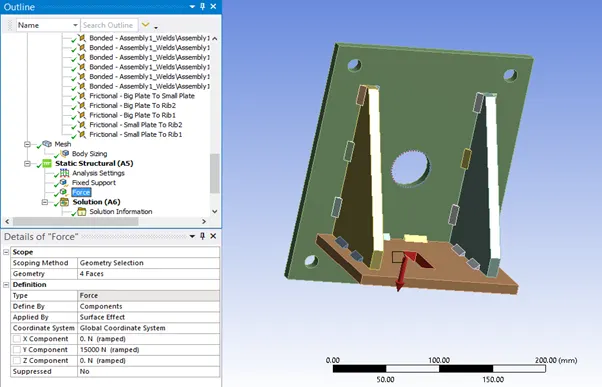
All three cases are simulated for a load of 15kN, which is applied at the rectangular hole in the small plate and tabulate the Directional Deformation and equivalent strain experienced by the setup. Also find the weld joint that experiences the highest equivalent stress in each case and compare the results for all three cases
MODEL SETUP
The 3D model of the setup is imported into ANSYS Space Claim. Check for any abnormalities in the Geometry.
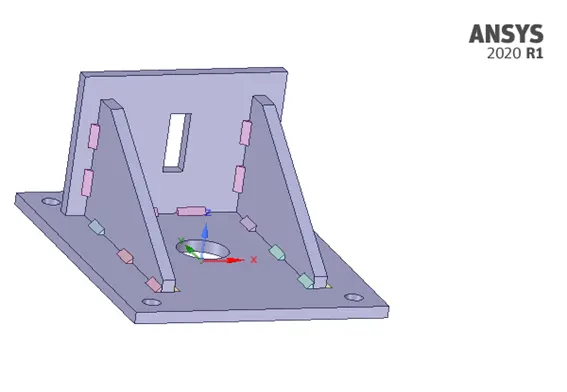
MATERIAL ASSINGMENT:
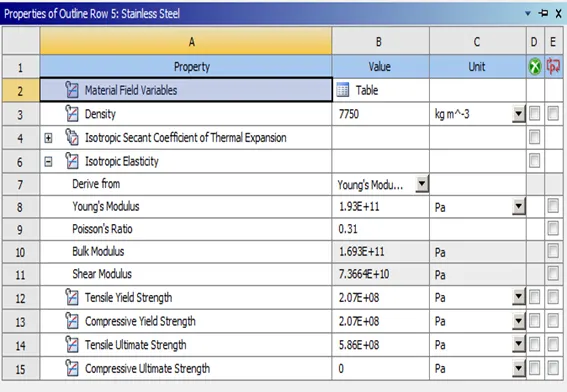
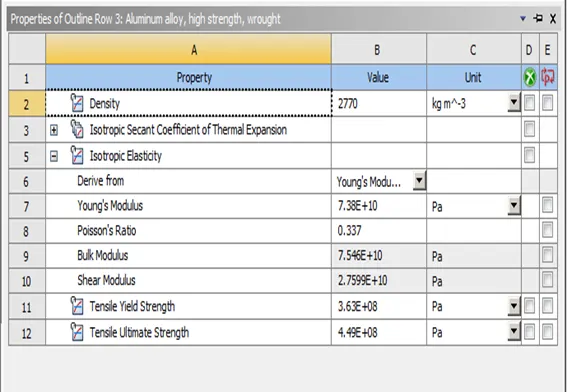
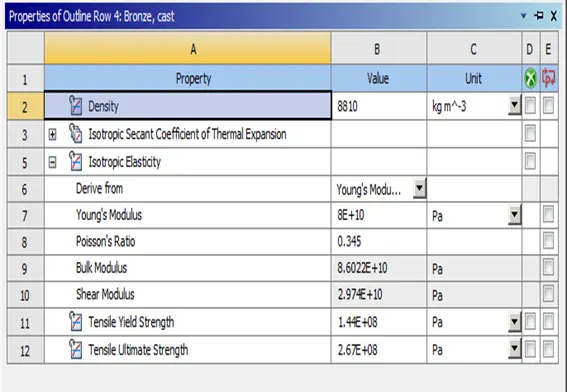
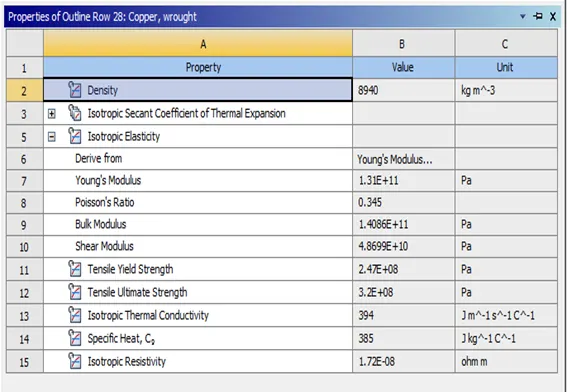
The properties of various materials used are shown below
- Stainless Steel:
- Aluminium Alloy (High Strength, Wrought):
- Bronze:
- Copper:
CONTACTS DEFINITION:
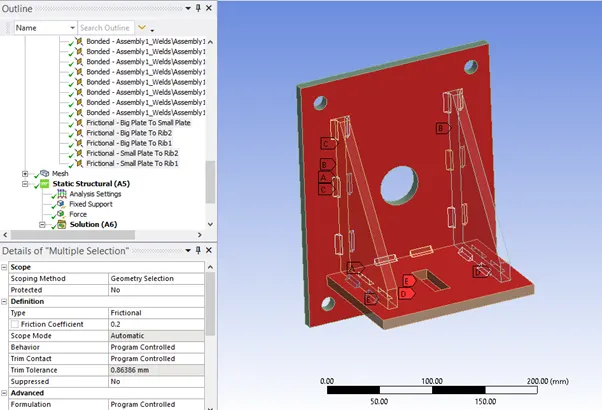
We need to define 5 contact regions for this model.
Frictional contact with a coefficient of friction as 0.2 is selected between the
- Big Plate and Small Plate
- Big Plate to Rib 1
- Big Plate to Rib 2
- Small Plate to Rib 1
- Small Plate to Rib 2
All other contacts are bonded contacts.
MESHING:
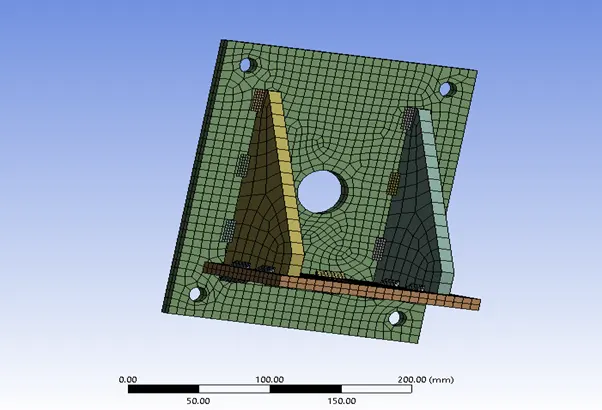
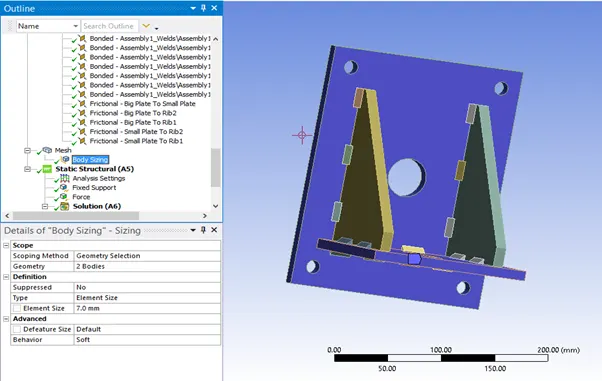
Our focused areas are the weldments in the setup. These regions has been refined using Face Sizing. In face sizing, the weldments have been meshed with element size of 7mm.
BOUNDARY CONDITIONS:
The boundary condition for this model are
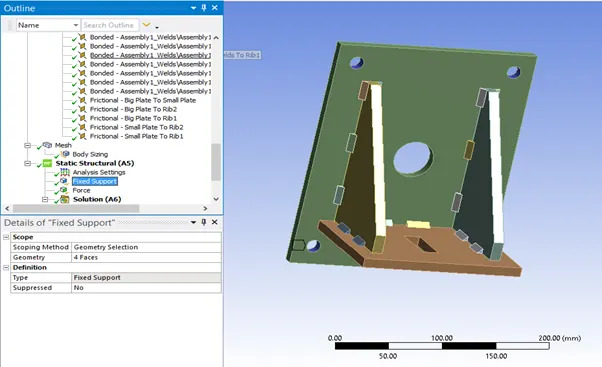
- A Fixed Support at the four holes in the Big Plate
- A Force of 15kN at the rectangular hole in the small plate in the Y direction
ANALYSIS SETTINGS:
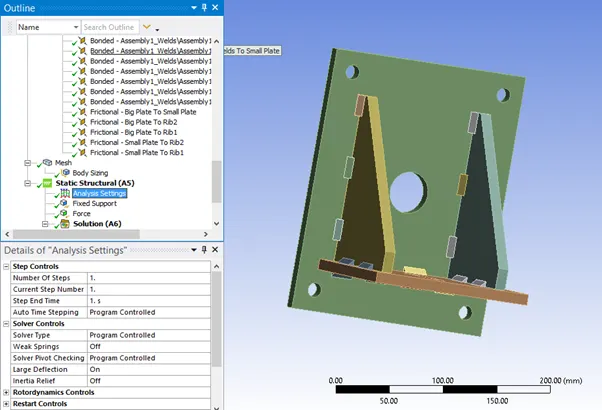
Now, the simulation is run for 1 step. Auto Time stepping is set to Program Controlled, which is a default setting. The Large deflection is set to ON. Other controls are of default settings.
RESULTS:
CASE 1: The material of the plates, Ribs and weldments are Stainless Steel
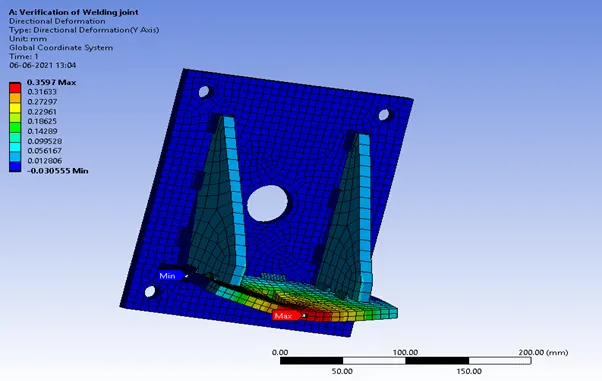
- Total Deformation:
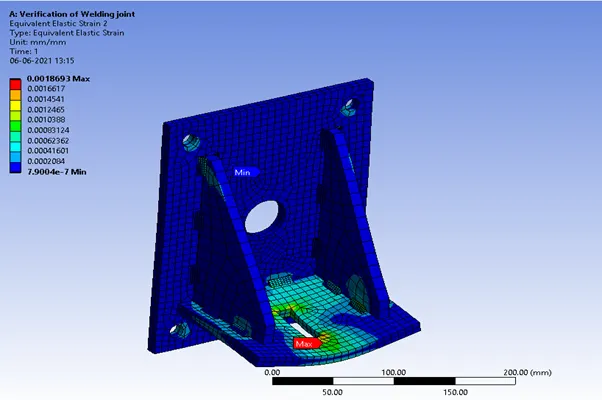
- Equivalent Elastic Strain:
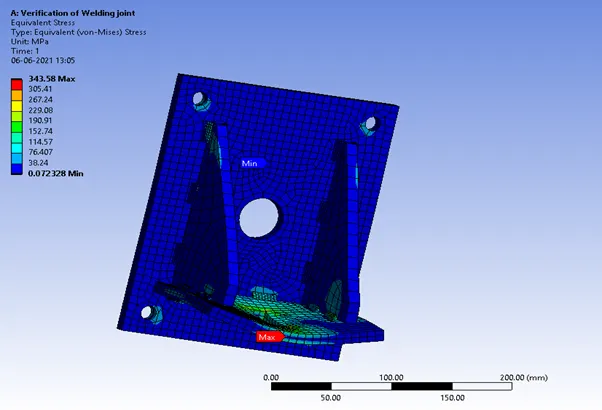
- Equivalent Stress:
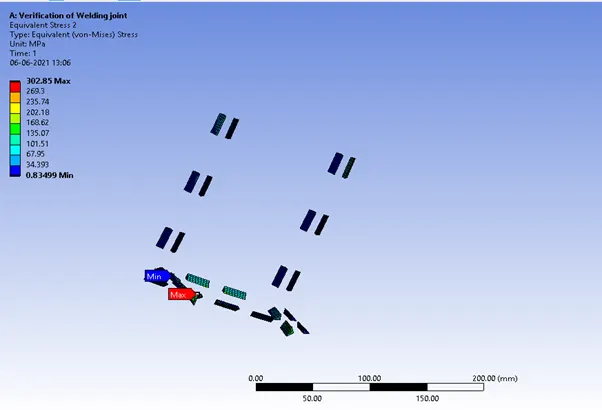
- Equivalent Stress on Weldments:
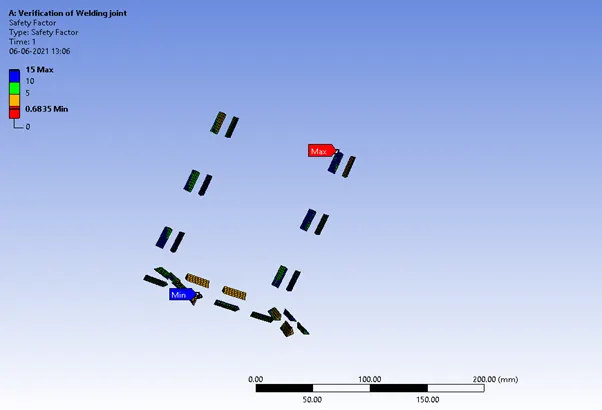
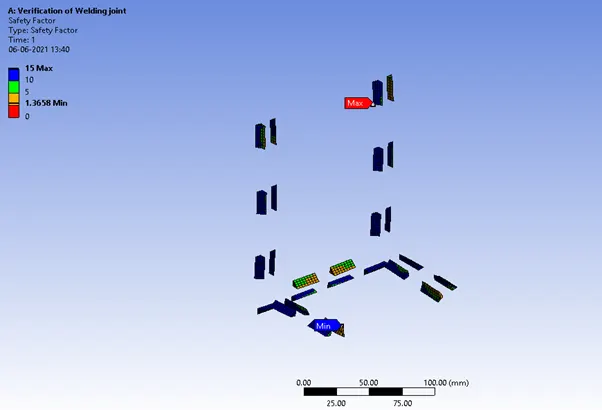
- Safety Factor :
Case 2: The material of the plate is Stainless Steel, Ribs and weldments are of Aluminium alloy (high strength, wrought).
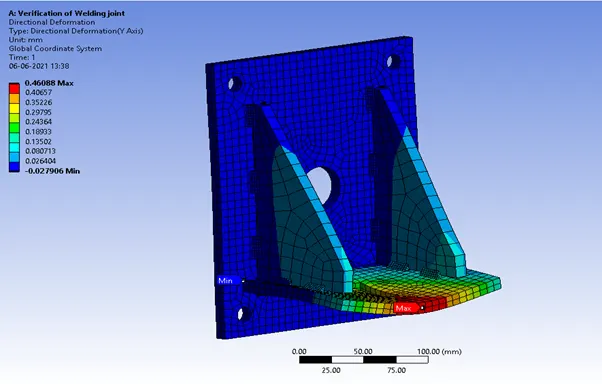
- Total Deformation:
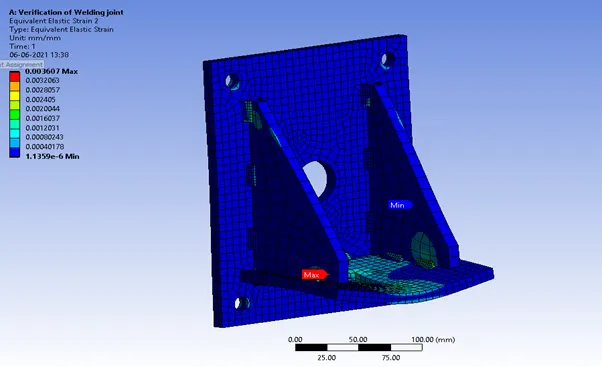
- Equivalent Elastic strain:
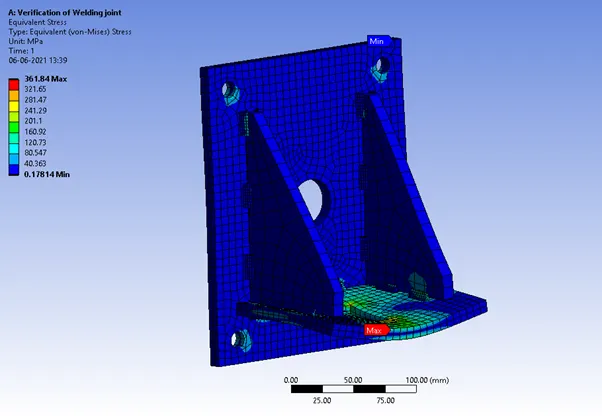
- Equivalent Stress:
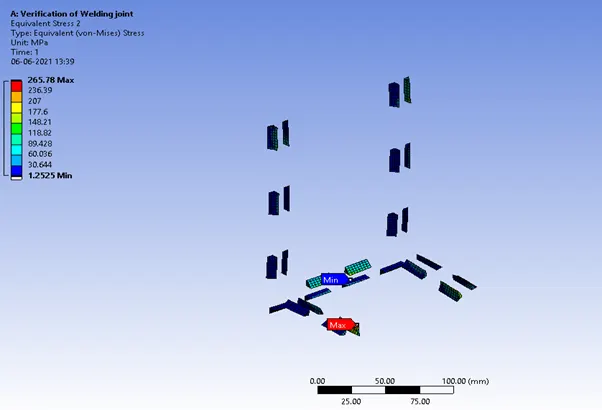
- Equivalent Stress on Weldments:
- Safety Factor:
Case 3: The material of the plate is Stainless Steel, Copper is assigned to Ribs and weldments are of bronze to simulate Brazing
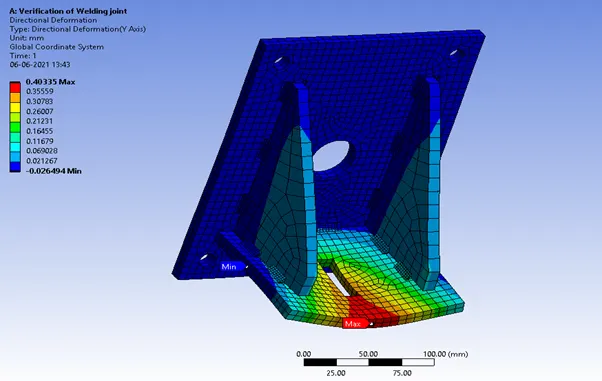
- Total Deformation:
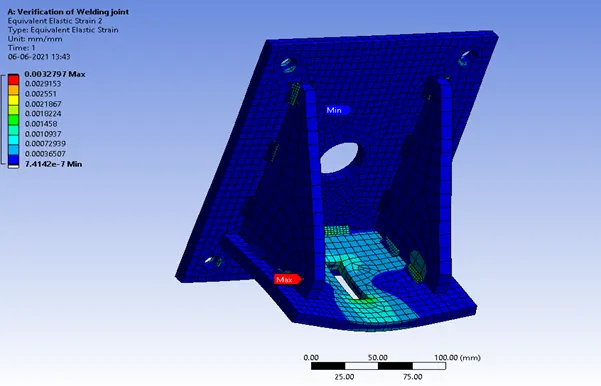
- Equivalent Elastic Strain:
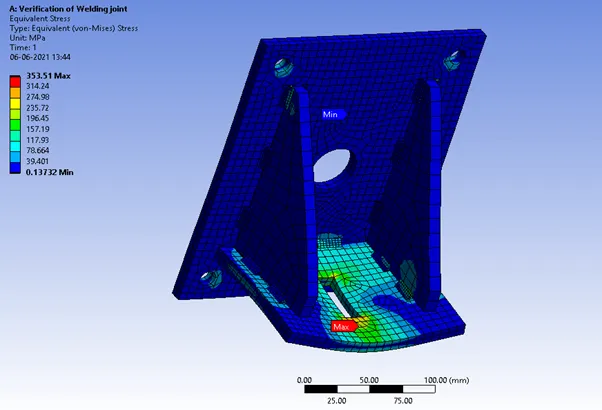
- Equivalent Stress:
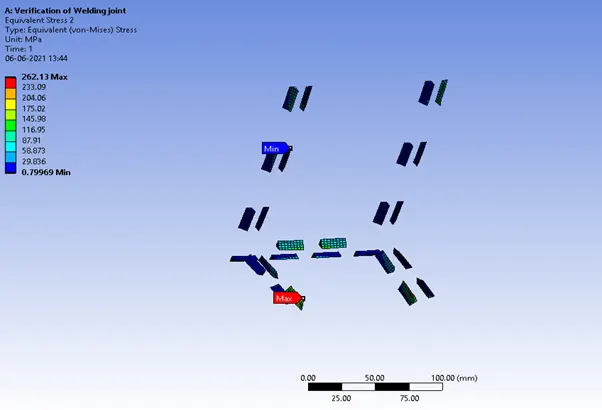
- Equivalent Stress on Weldments
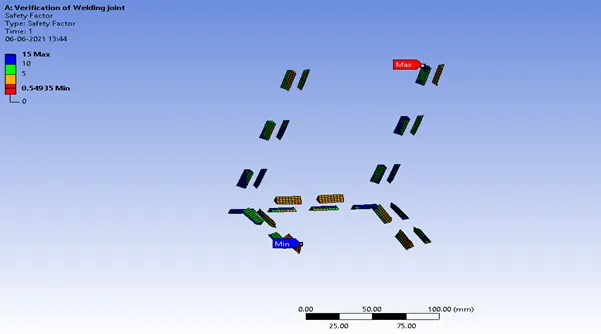
- Safety Factor:
CONCLUSION:
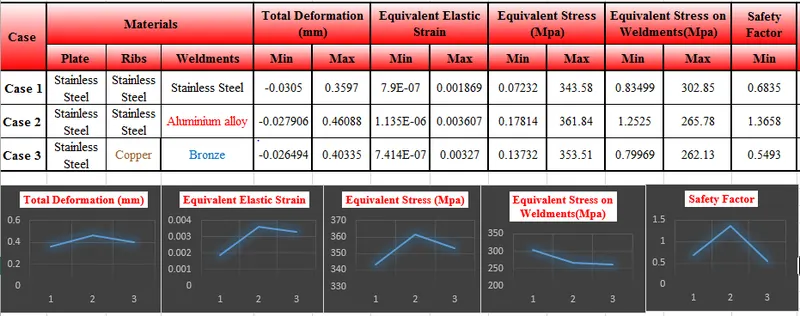
From the results, it can be inferred that,
- Total deformation remains almost same for all the three cases with highest for the Al Alloy weld.
- Equivalent Strain was highest for the Al Alloy weld followed by Bronze and Stainless steel welds.
- Equivalent Stress is maximum for Al Alloy weld followed by Bronze and Stainless Steel welds.
- Equivalent Stress on Weldments was maximum for Stainless Steel weld followed by Al Alloy and Bronze welds.
- Factor of Safety is above 1 in Al Alloy weld whereas in Stainless Steel weld & Bronze weld, it is below 1.
Thus it can be concluded that Al Alloy weld can be preferred for this setup because,
- Equivalent Stress on Weldments ( 265.78 MPa) is lesser than the Tensile Yield Strength of Al Alloy ( 363 MPa).
- Factory of Safety of all the weldments is above 1.
The Simulation files are attached below.