Week 3 Sheet metal Bending challenge
STATIC STRUCTURAL ANALYSIS ON SHEET METAL BENDING
OBJECTIVE
Case 1: To perform the static structural analysis on Sheet metal bending with materials Al alloy 1199, Mg alloy NL and Cu alloy NL and calculate
- Equivalent stress
- Equivalent elastic strain
- Total Deformation in Y direction
Case 2: To perform the above analysis with Aluminium Alloy 1199 as the material and the friction coefficient as 0.19
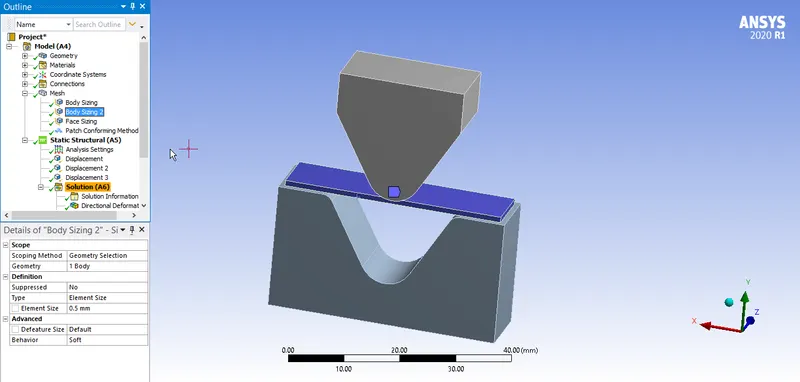
Case 3: To perform the same analysis by refining the mesh on the Sheet with Aluminium alloy 1199 as material.
Compare the results from the above three cases
MODEL SETUP
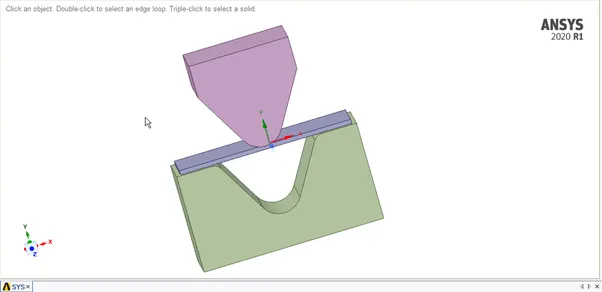
The 3D model of Sheet metal bending setup is imported into ANSYS Space Claim. Check for any abnormalities in the Geometry.
MATERIAL ASSINGMENT:
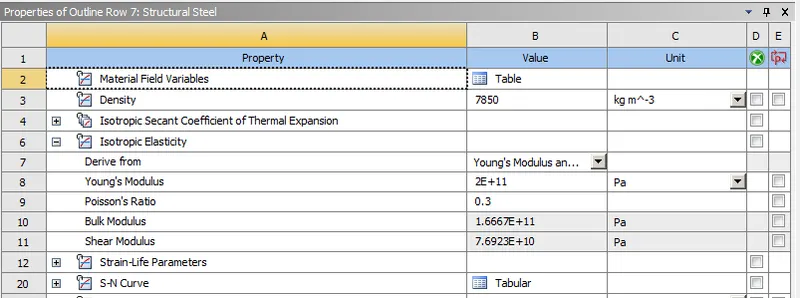
- For Punch and Die, Structural Steel material is assigned
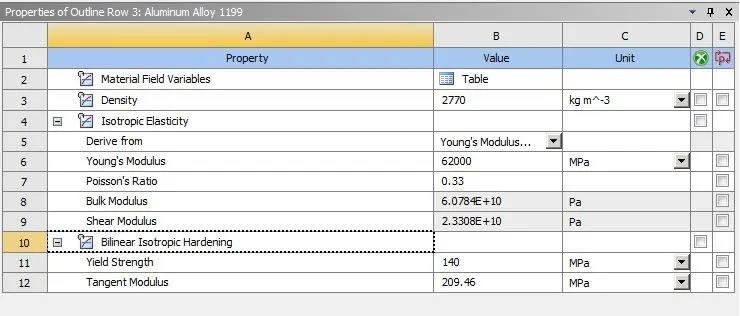
- For Sheet, Al Alloy 1199 is assigned
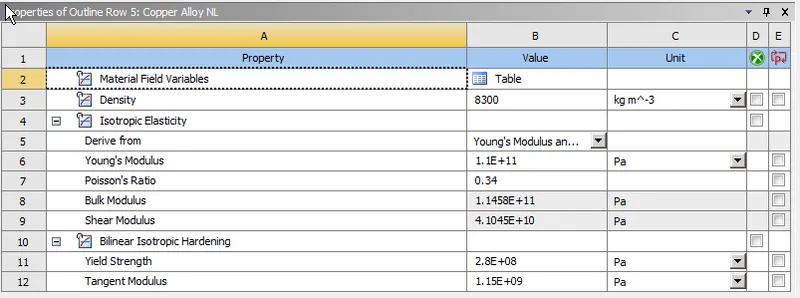
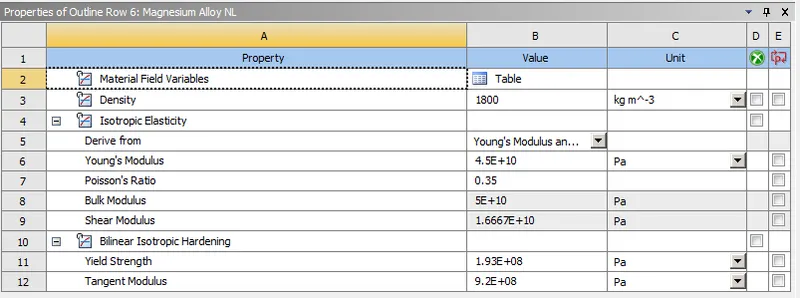
- For the other cases, Mg alloy NL, Cu alloy NL have been assigned for the Sheet, now Al Alloy 1199 is assigned for the Sheet.
- The materials properties of all the materials are shown below :
CONTACTS DEFINITION:
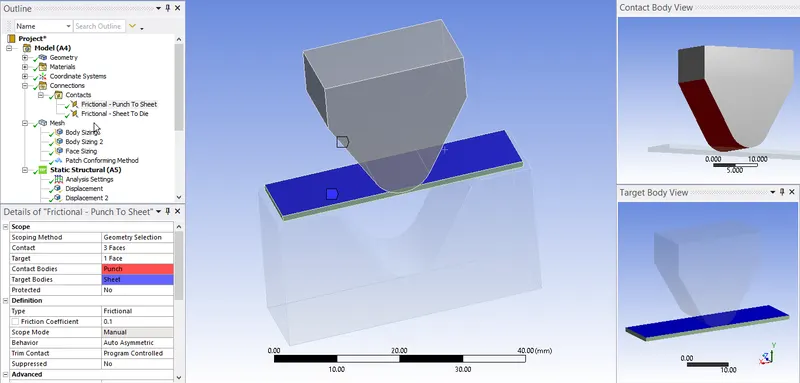
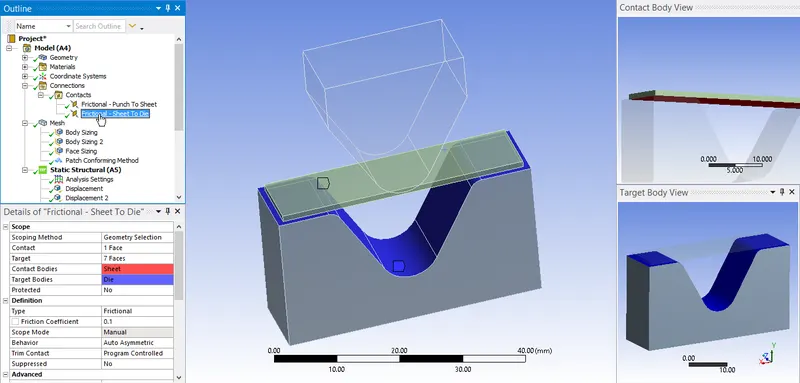
We need to define two contact regions for this model.
- A frictional contact with friction coefficient as 0.1 is selected between the face of the Punch and the top face of Sheet.
- Another frictional contact of friction coefficient as 0.1 is selected between the inner face of the die and bottom surface of the Sheet.
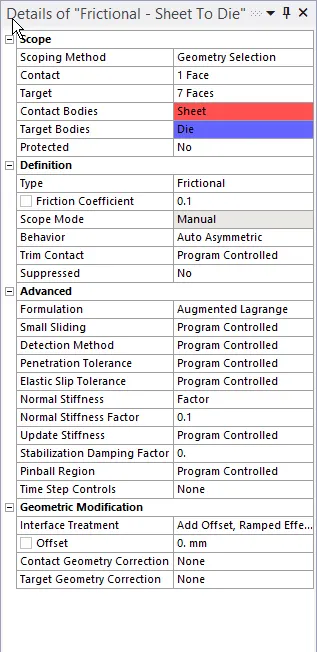
The settings in the Contacts are shown below
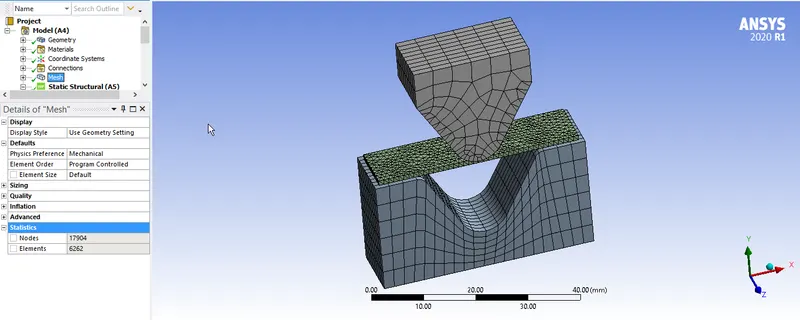
MESHING:
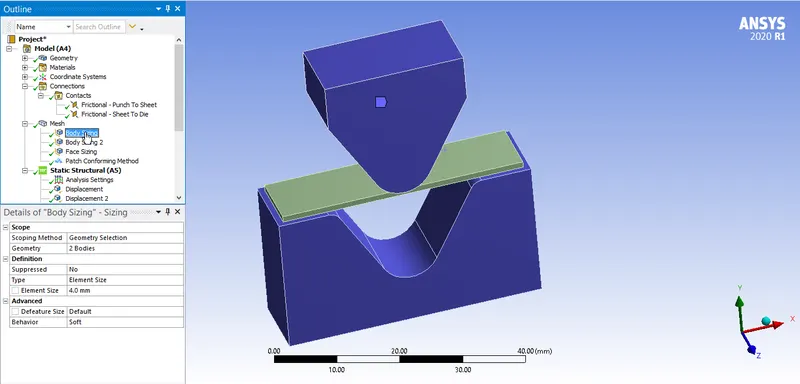
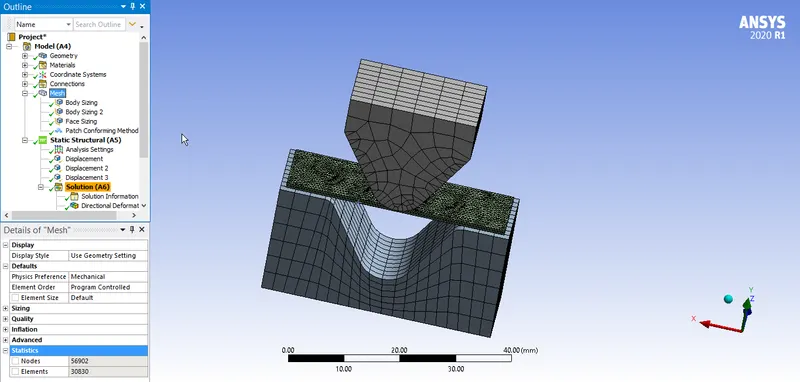
- Punch and Die are meshed for element size of 4mm.
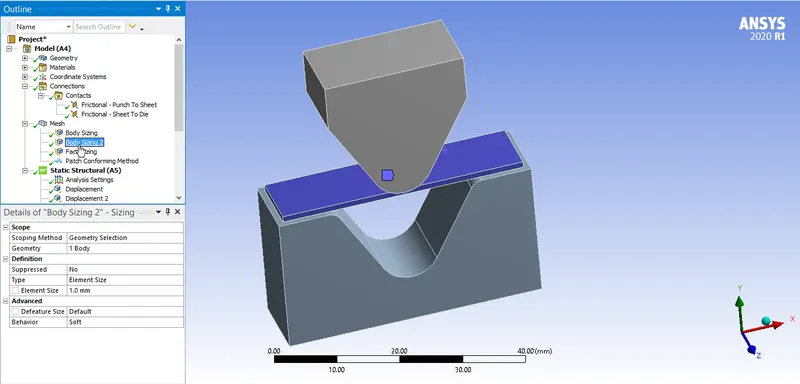
- The Sheet is meshed for element size of 1mm.
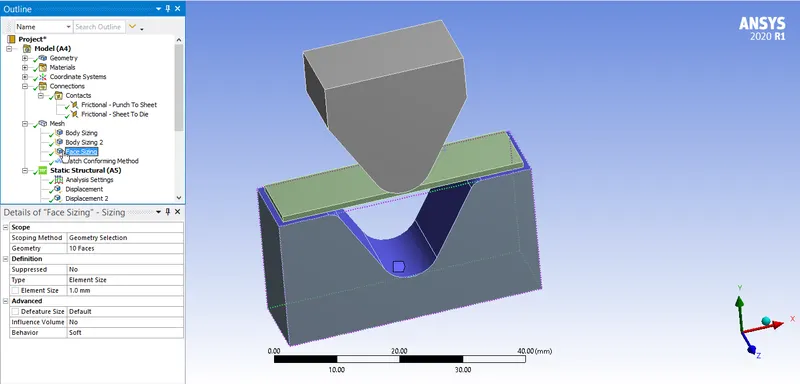
- The faces of the Die and Punch are meshed for element size of 1mm as they are in contact with the Sheet.
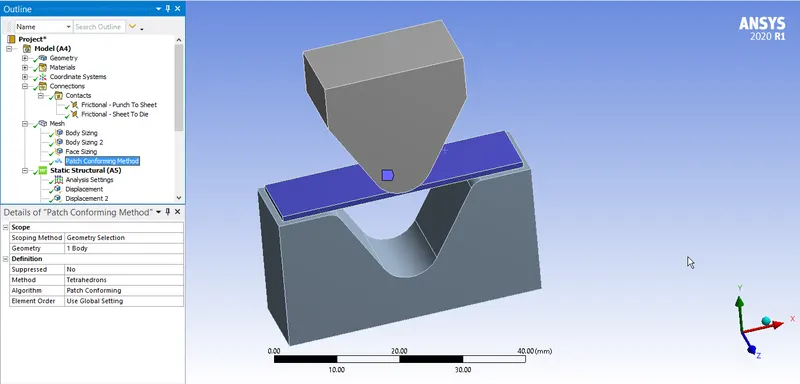
- Now Patch Conforming Algorithm is selected for the Sheet and Tetrahedron method is assigned
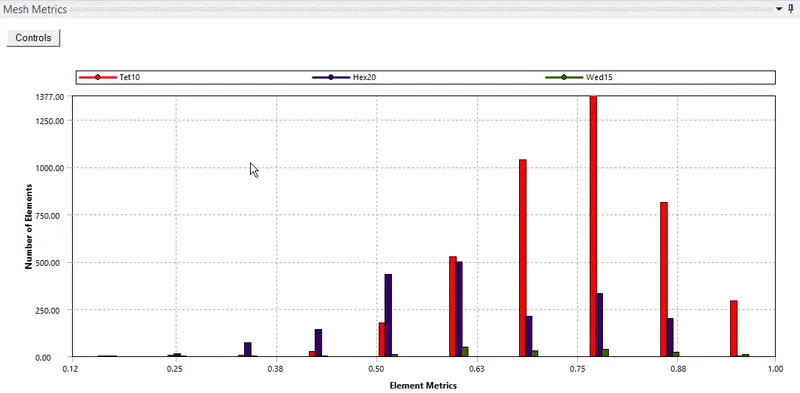
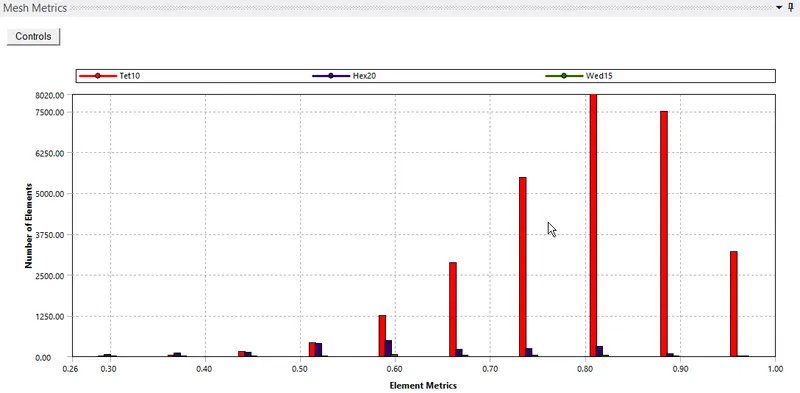
The final mesh will be as shown below
ANALYSIS SETTINGS:
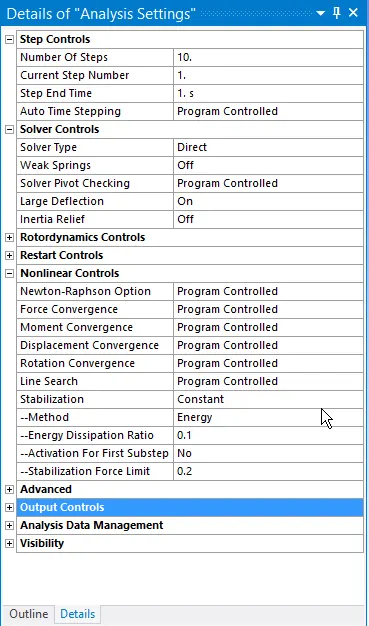
Now, the simulation is run for 10 steps with 1 second on each step. Auto Time stepping is set to Program Controlled. The solver controls, nonlinear controls are as shown below.
BOUNDARY CONDITIONS:
The boundary condition for the Sheet metal bending simulation are
- A Displacement of 13.5 mm is given to the Punch in the negative Y direction and fixed along X and Z axis. The punch is assigned with a displacement of 13.5 mm till 7th step and retracted back to 8mm at the last step.
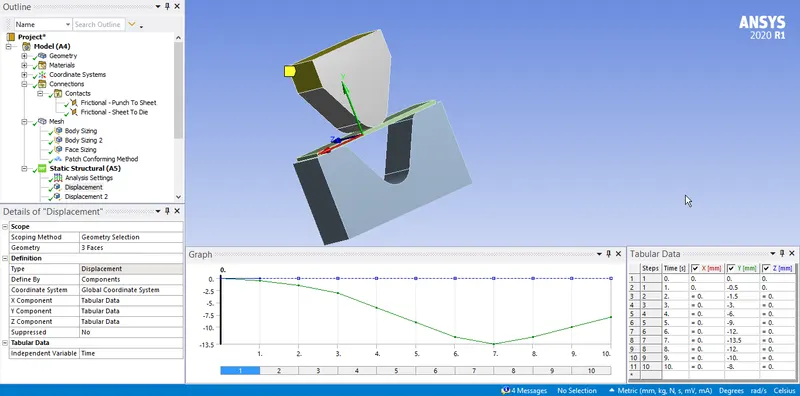
- The Sheet is fixed along Z axis and as it deforms along X and Y axis, it is set free.
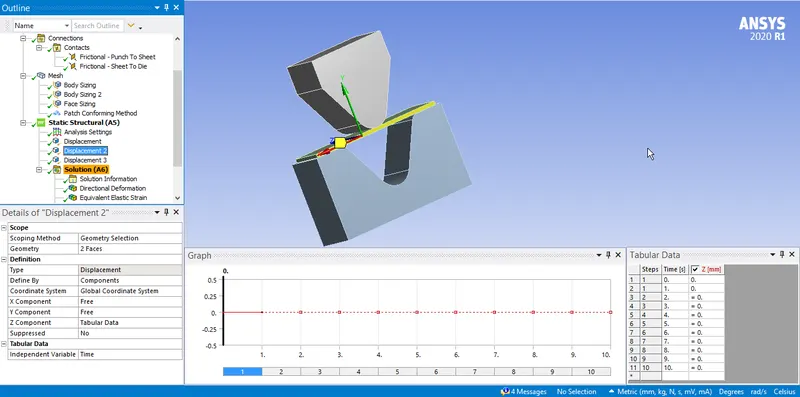
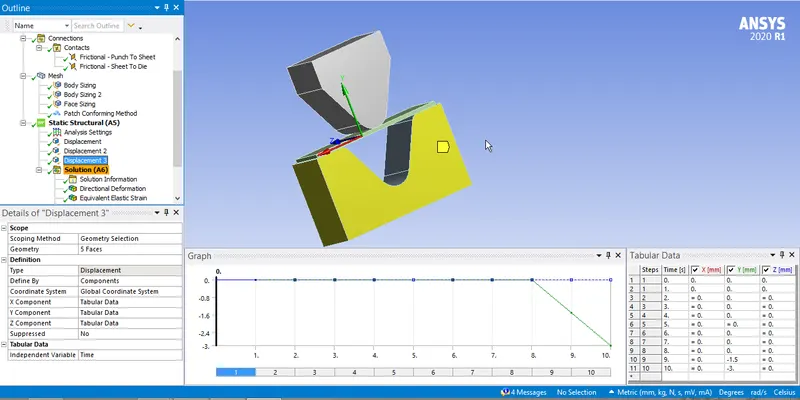
- The die is fixed along X and Z axis and given a displacement of 3mm in the negative Y direction at the last two steps as the die should retract after bending of sheet
RESULTS:
CASE 1 :
Al Alloy
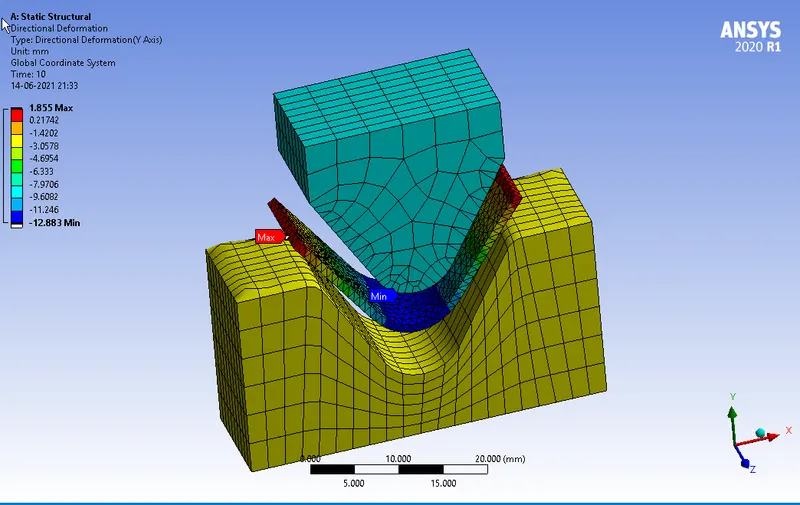
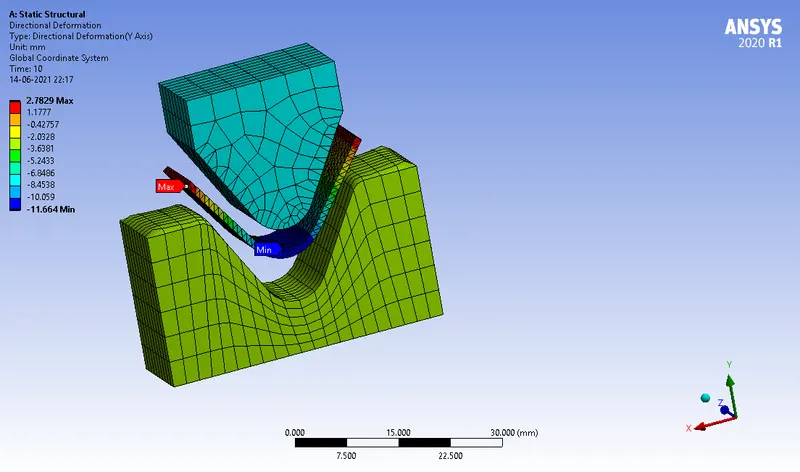
- Directional Deformation ( Y axis) :
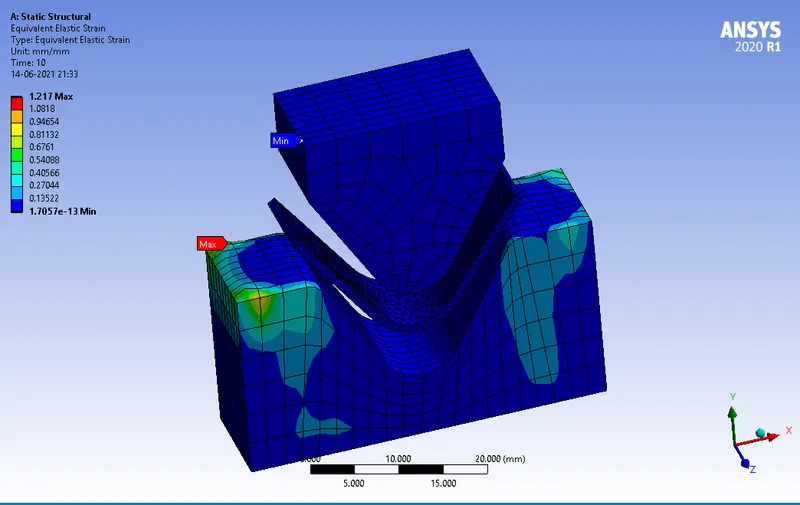
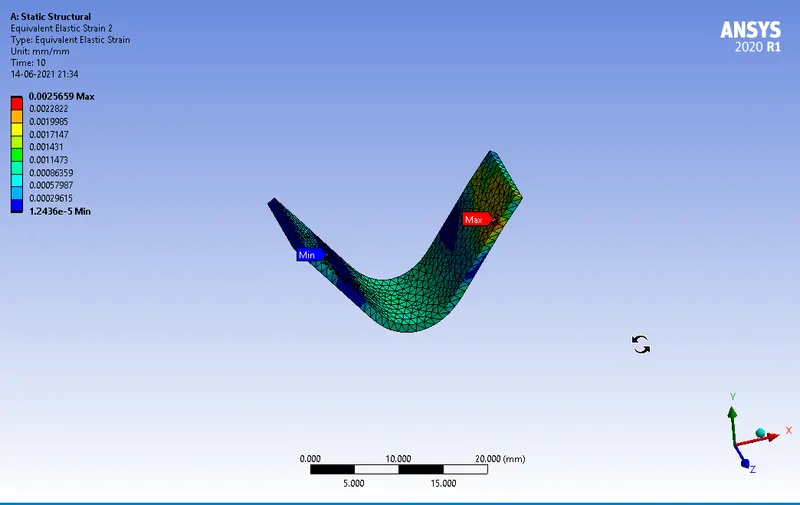
- Equivalent Elastic Strain
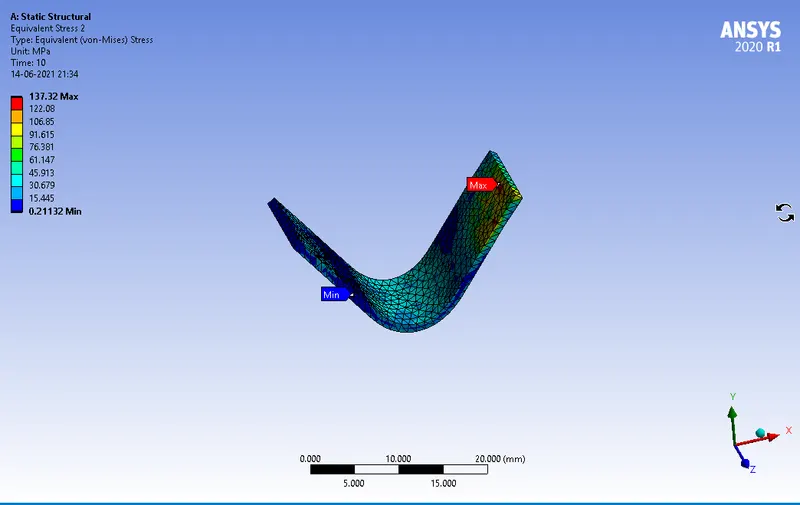
- Equivalent Stress
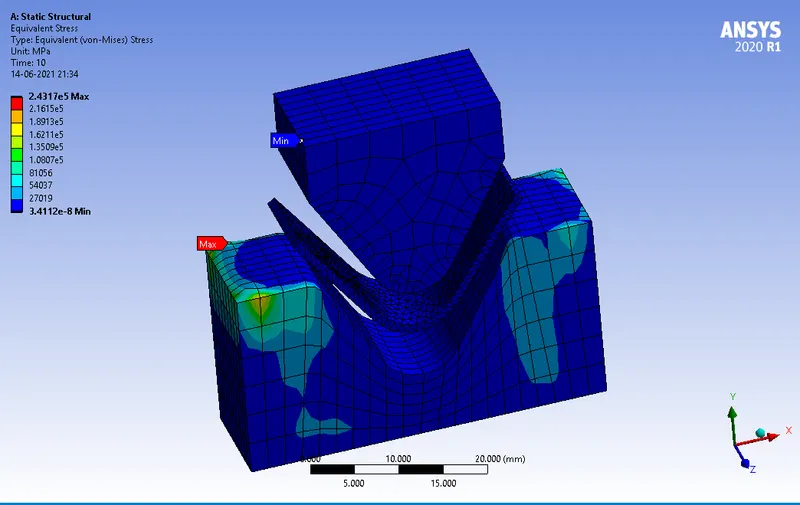
- Equivalent Stress on Sheet
- Equivalent Elastic Strain on Sheet
Cu Alloy
- Directional Deformation ( Y axis) :
- Equivalent Elastic Strain
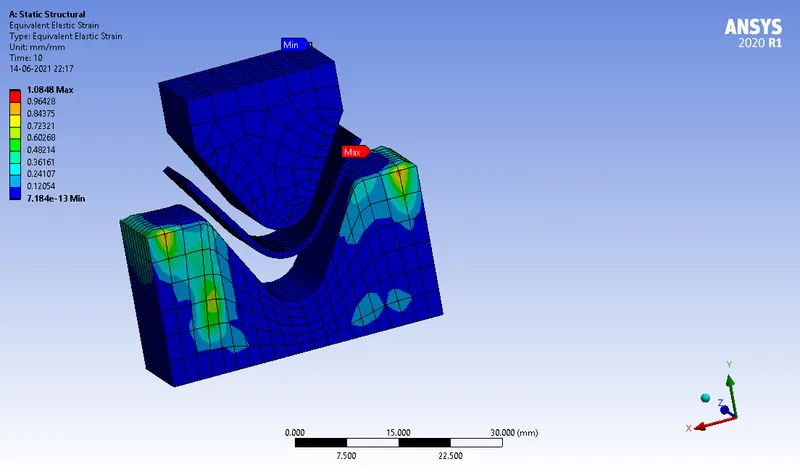
- Equivalent Stress
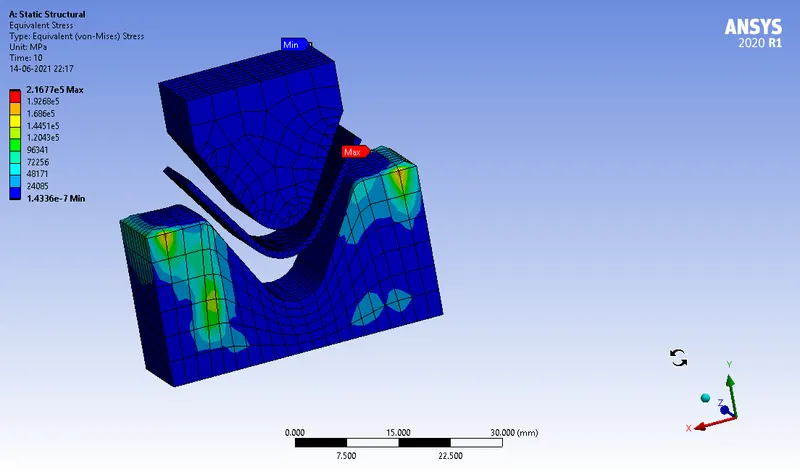
- Equivalent Stress on Sheet
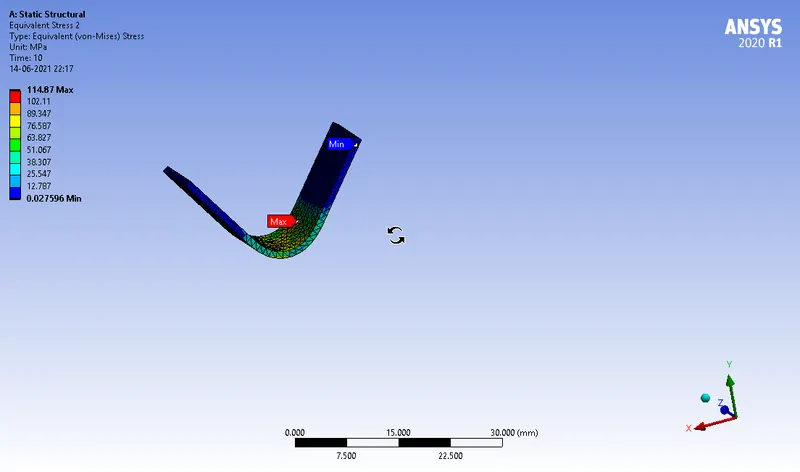
- Equivalent Elastic Strain on Sheet
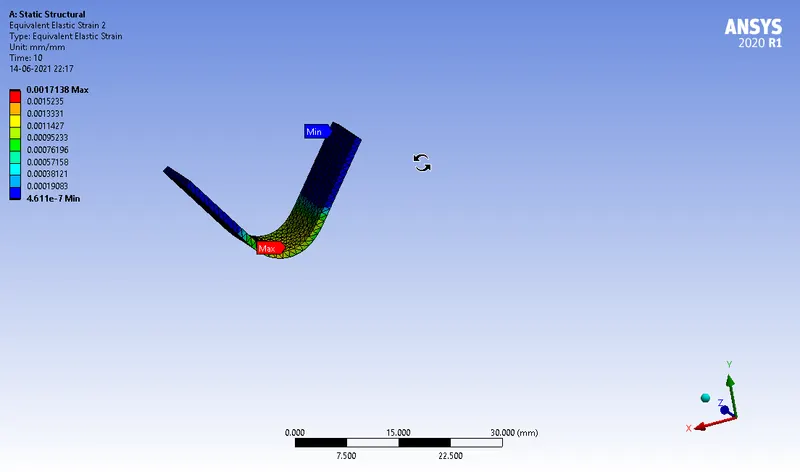
Mg Alloy
- Directional Deformation ( Y axis) :
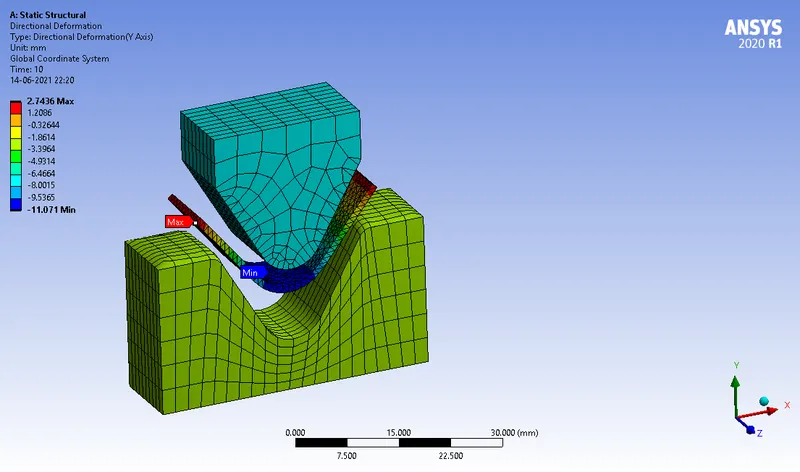
- Equivalent Elastic Strain
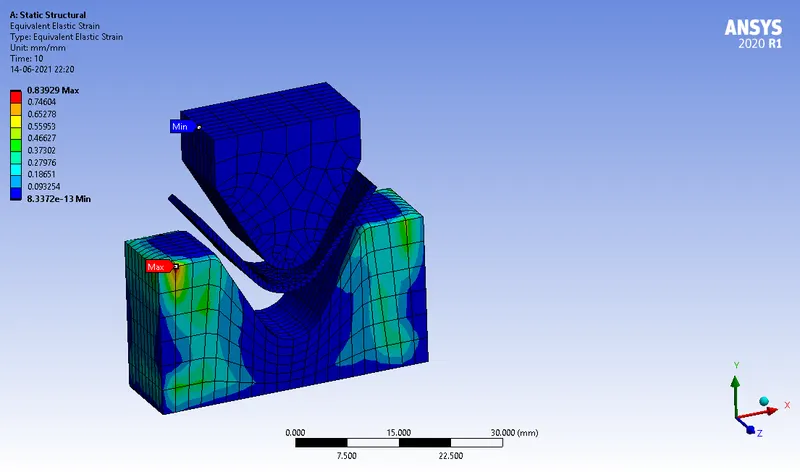
- Equivalent Stress
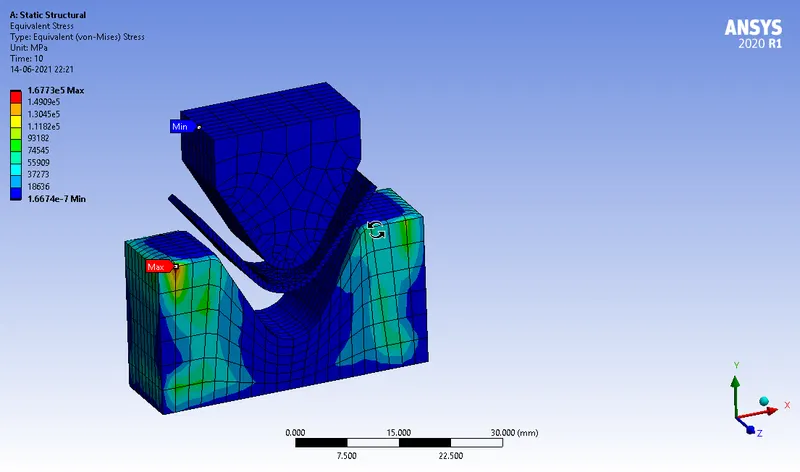
- Equivalent Stress on Sheet
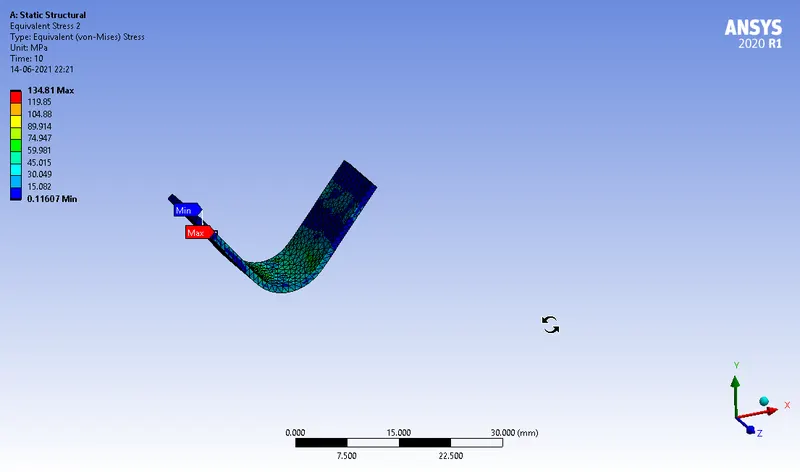
- Equivalent Elastic Strain on Sheet
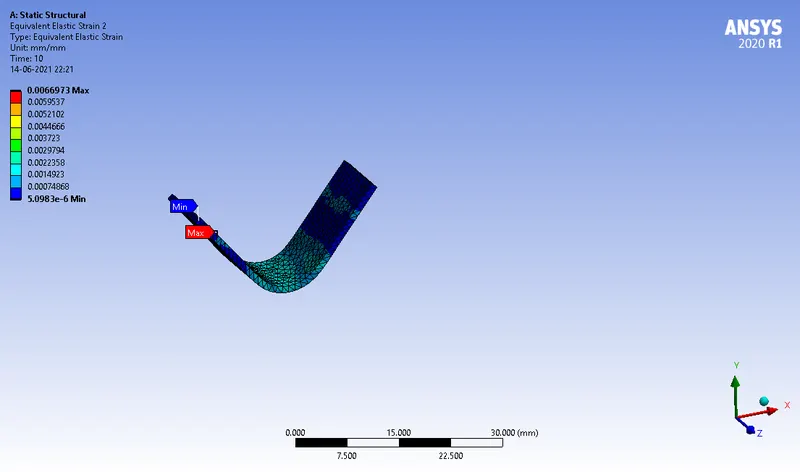
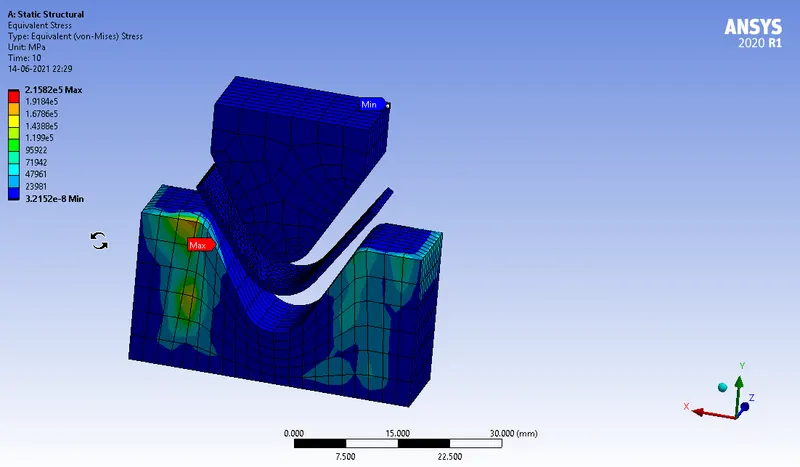
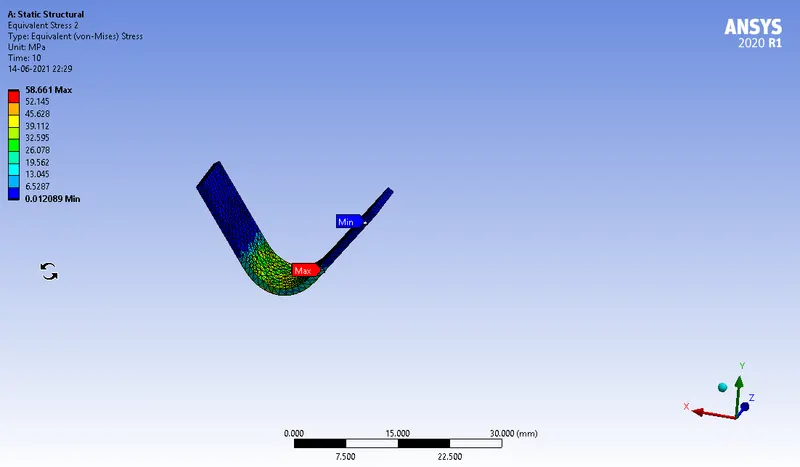
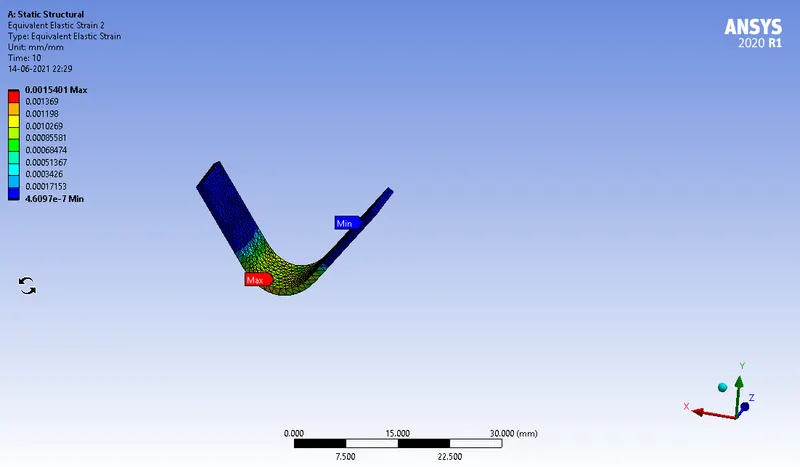
CASE 2: Material as Aluminium Alloy and the friction coefficient as 0.19:
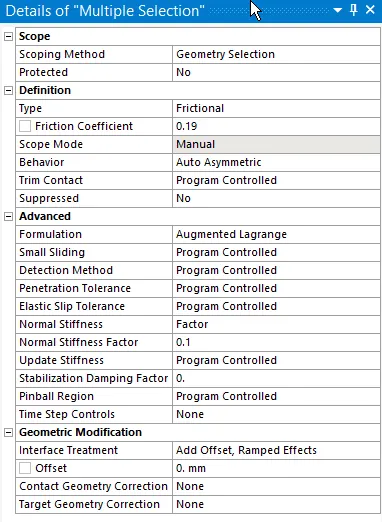
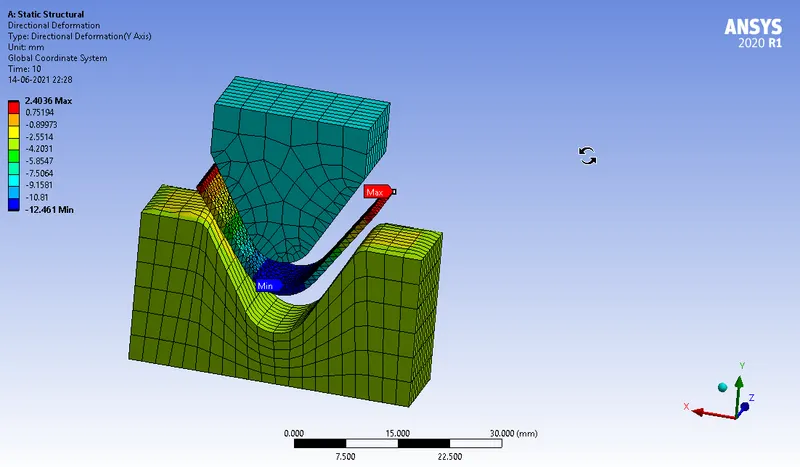
- Directional Deformation ( Y axis) :
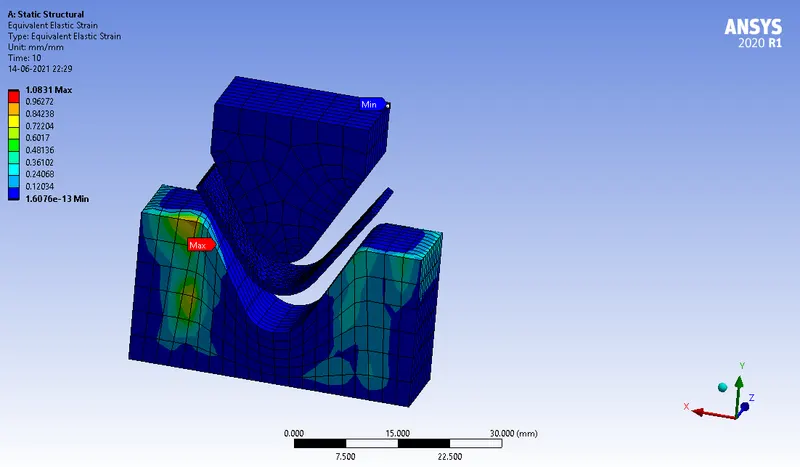
- Equivalent Elastic Strain
- Equivalent Stress
- Equivalent Stress on Sheet
- Equivalent Elastic Strain on Sheet
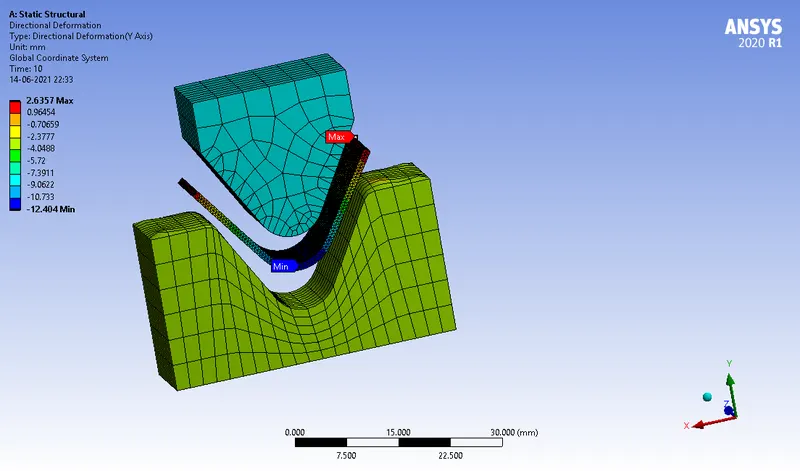
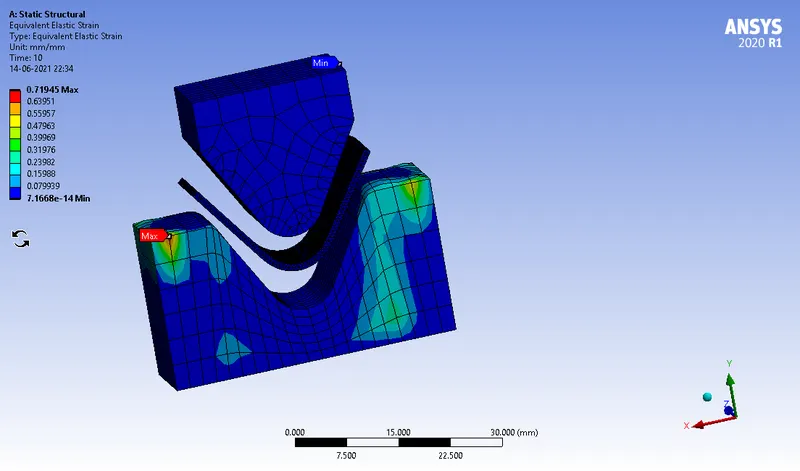
CASE 3: Material as Aluminium Alloy and refining the mesh on the Plate to 0.5mm:
- Directional Deformation ( Y axis) :
- Equivalent Elastic Strain
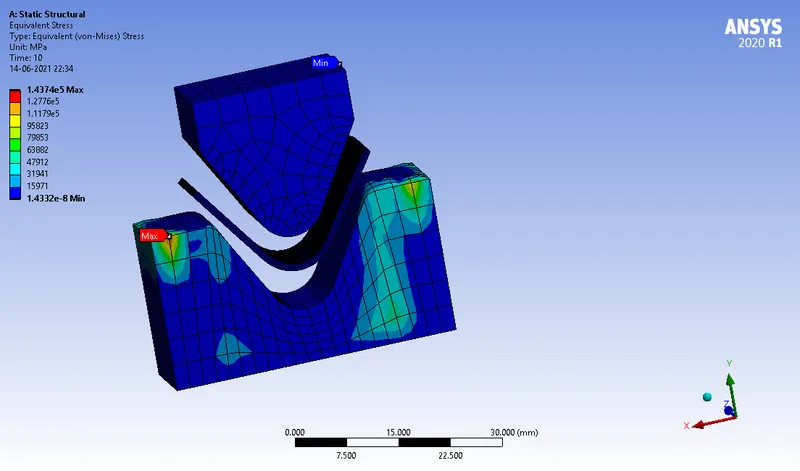
- Equivalent Stress
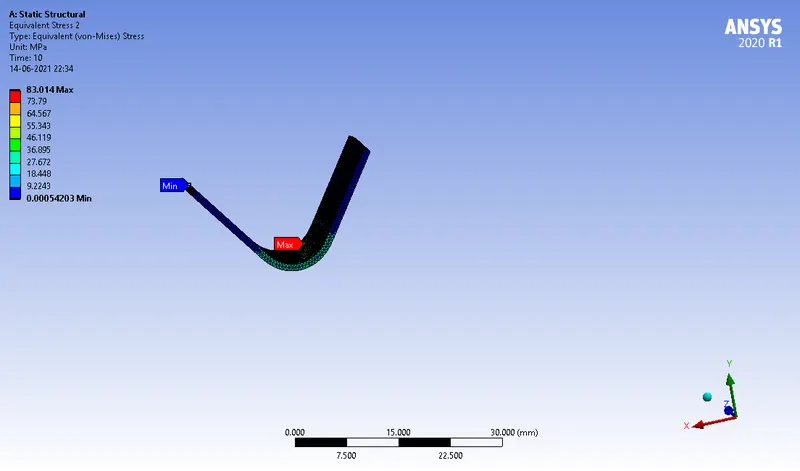
- Equivalent Stress on Sheet
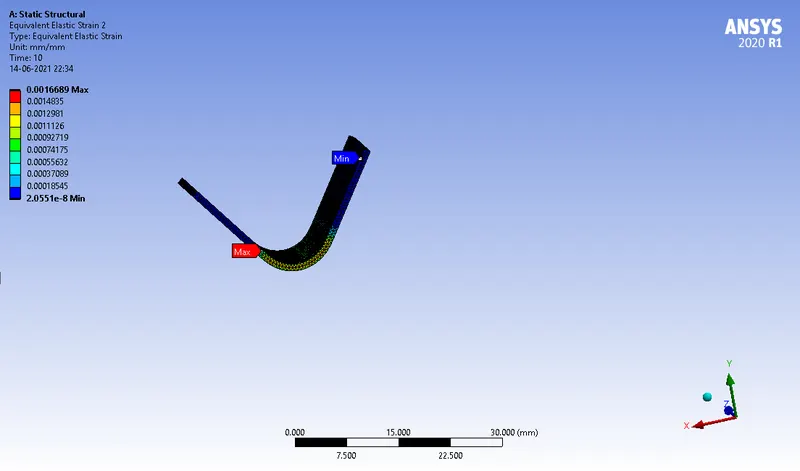
- Equivalent Elastic Strain on Sheet
CONCLUSION:
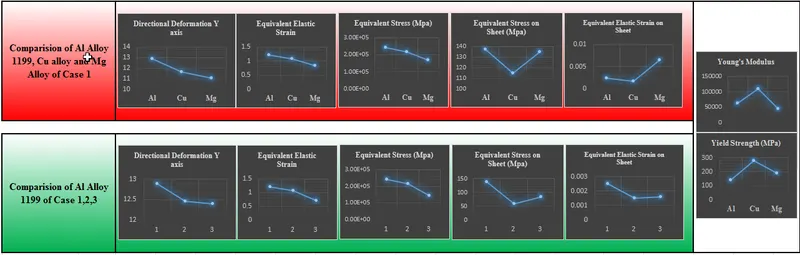
From the results, it can be inferred that,
Case 1:
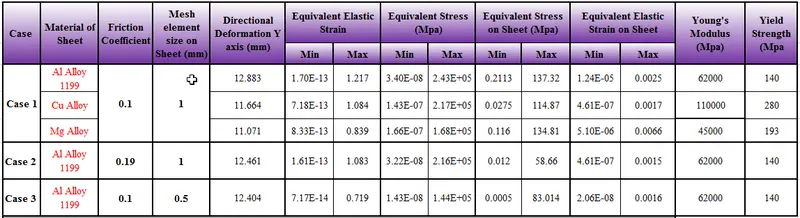
- Directional deformation is highest in the case of Al Alloy 1199 followed by Cu Alloy NL and Mg Alloy 1199, where deformation is almost same, which implies that deformation is inversely proportional to the Yeild Strength (With same amount of Force applied, Deformation is higher in case of materials having lower Yeild Strength)
- Equivalent Stress on Sheet is almost equal in Al Alloy 1199 and Mg Alloy followed by Cu Alloy, which implies that stress is inversely proportional to the Young's Modulus (With same amount of Force applied, Stress induced is higher in case of materials having lower Young's Modulus)
- Equivalent strain on sheet is almost same in all the three materials with higher value in Mg Alloy.
Case 2 :
- With increase in friction coefficient, Directional Deformation, Equivalent Elastic strain on sheet and Equivalent stress on sheet decreases, because with increase in friction coefficient, the frictional force increases and hence deformation, stress and strain decreases.
- Equivalent Stress on sheet decreases by large amount and Equivalent elastic strain on sheet remains almost same with increase in friction coefficient
Case 3 :
- Refining of mesh provides accurate results as there is considerable variation in the values of all the output, but the computational time and cost gets increased.
The simulation files are attached below