Week 5 Sphere pressing on a plate
AIM: To perform the analysis to simulate a sphere pressing on a plate.
Objective:
Use Structural steel for both sphere and plate but the material of the plate must be Non Linear.Press the sphere onto plate 4mm downwards and retract it. The plastic deformation must be captured by you. Attach appropriate images and make a detailed report.
Theory:
Plastic deformation:
Deformation often referred to strain, is the change in the size and shape of an object due to the change in temperature or an applied force. Depending on the size, material and the force applied, various forms of deformation may occur. Based on these factors, deformation is classified into the following:
- Elastic Deformation – The deformation caused is reversible, and the deformation disappears after the removal of applied forces. A classic example of elastic deformation is the stretching of a rubber band.
- Plastic Deformation – The deformation is irreversible and it stays even after the removal of the applied forces. Example, bending of steel rods.
Plastic deformation is studied in experiments with spring where Hooke’s law is explained to differentiate between the plastic materials and elastic materials.
What is Plastic Deformation?
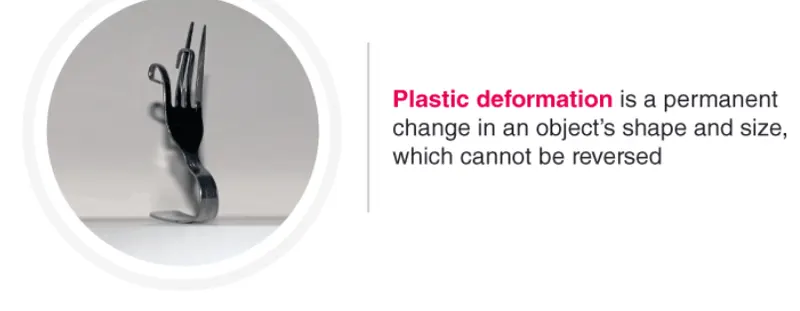
Plastic deformation is defined as a process in which the object due to applied force changes its size or shape in a way that is not reversible. Plastic deformation is seen in many objects, including:
- Plastics
- Metals
- Soils
- Rocks
- Concrete
Procedure:
- First we have to start the ansys workbench, double click on static structural analysis and rename it "Sheet_plastic_deformation".
- Then double click to engineering data ad add structural steel NL and structural steel is by defaut its their.
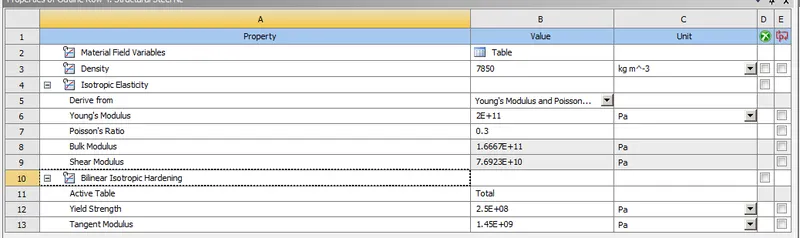
- Then right click on the geometry and click on the import and import the geometry given in the question and also double click to the geometry to edit in spaceclaim.
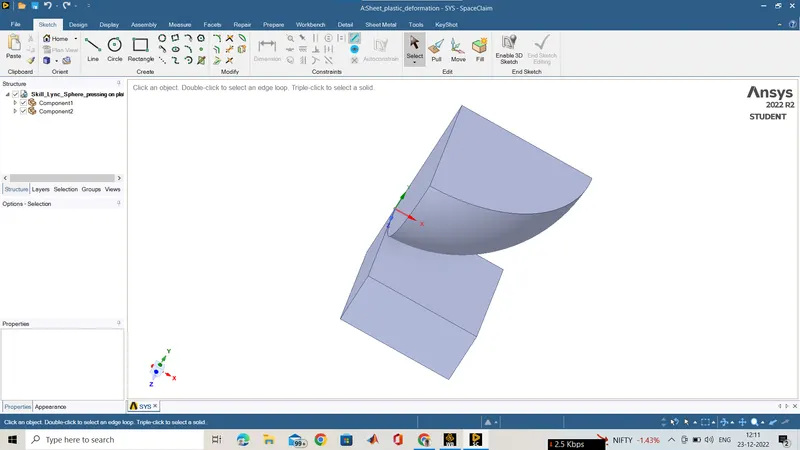
- After that we have to close the spaceclaim and right click on model and click on update,then double click to edit in mechanical.
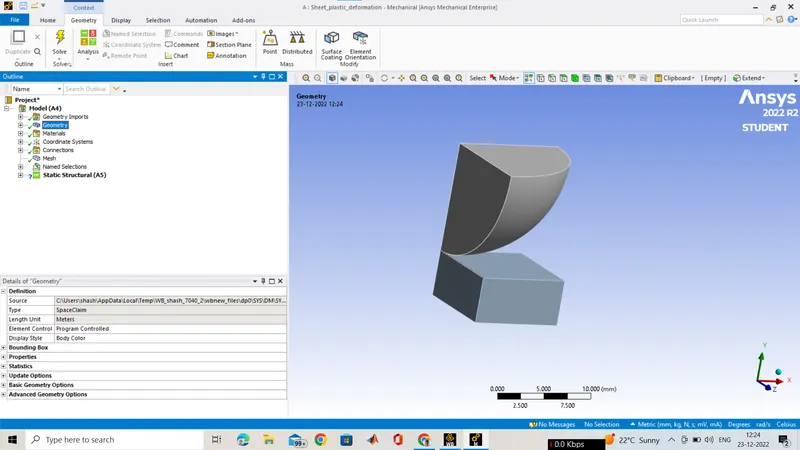
- Rename the geometry as shown below and also assign structural steel NL to material to the plate.
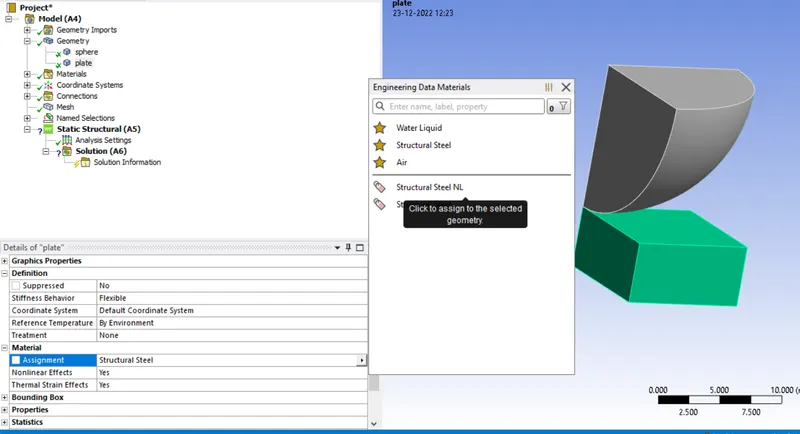
- After that right click on model and insert symmetry and add symetry regioun bor two side of the the sphere as hown below.
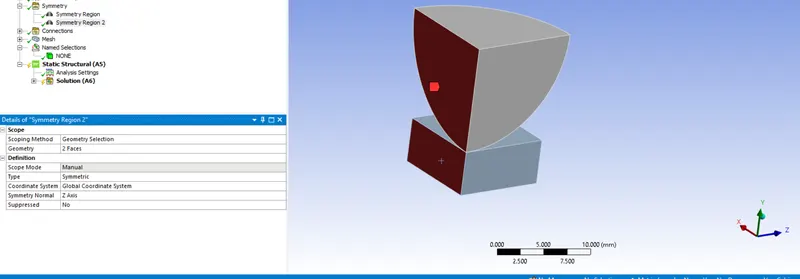
this is in the z direction.
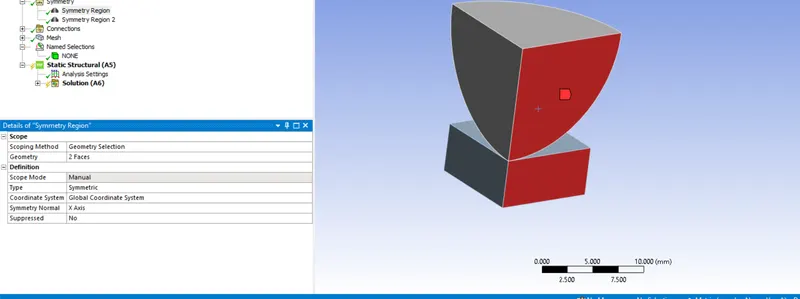
This is in the x direction.
- After that in the connection we have to made the frictional contact and the settengs i made is shown below.
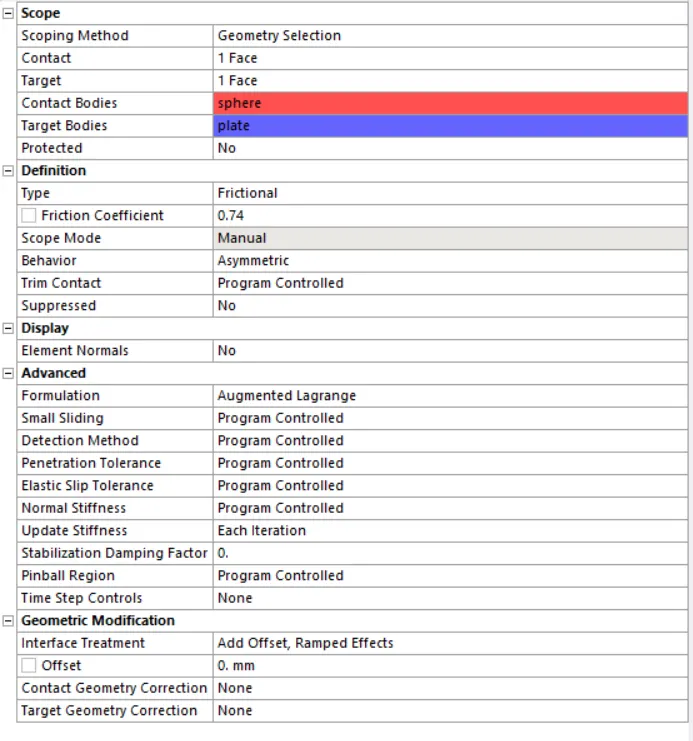
- Now select the mesh and insert mesh sizing for the plate and give the size 0.75mm and for the whole element size as 1mm.
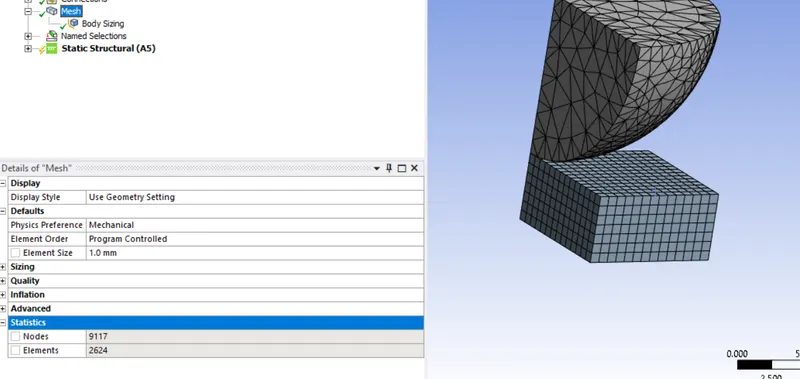
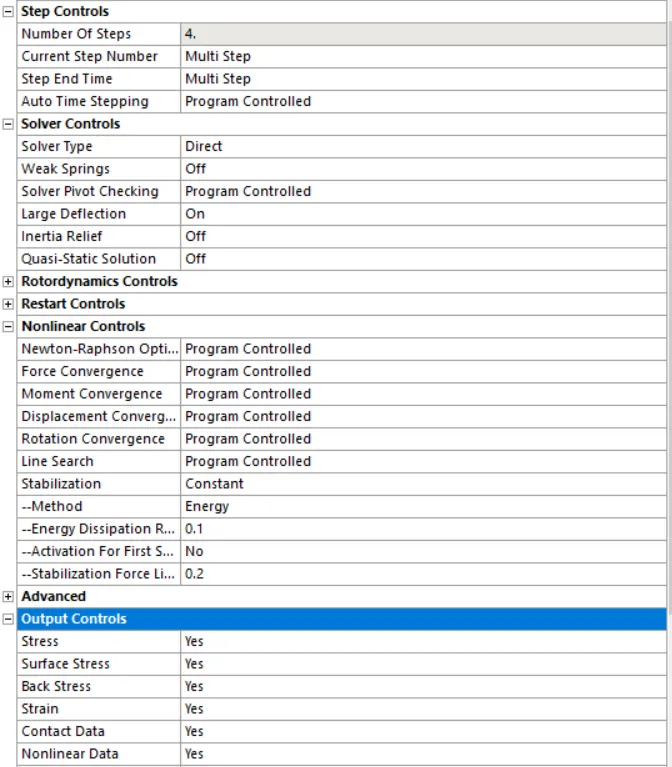
- Now go to analysis setting and given 4 step and change the non linear setting and output contro as shown below.
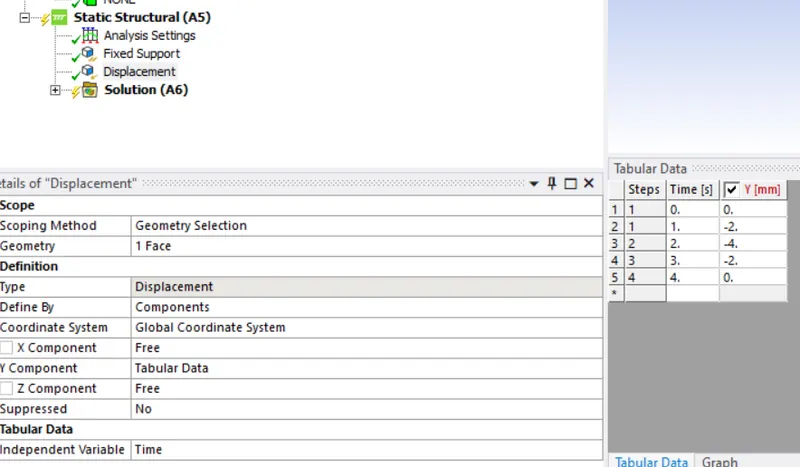
- Now input the boundry condition here we have to fixed the bottom plate and the displacement of 4 mm in the negative y direction.
- In the solution section add the directional deformation in -y direction,equivalent stress on plate,equivalent elastic strain,equivalent plastic strain.
Results:
directional deformation in -y direction:
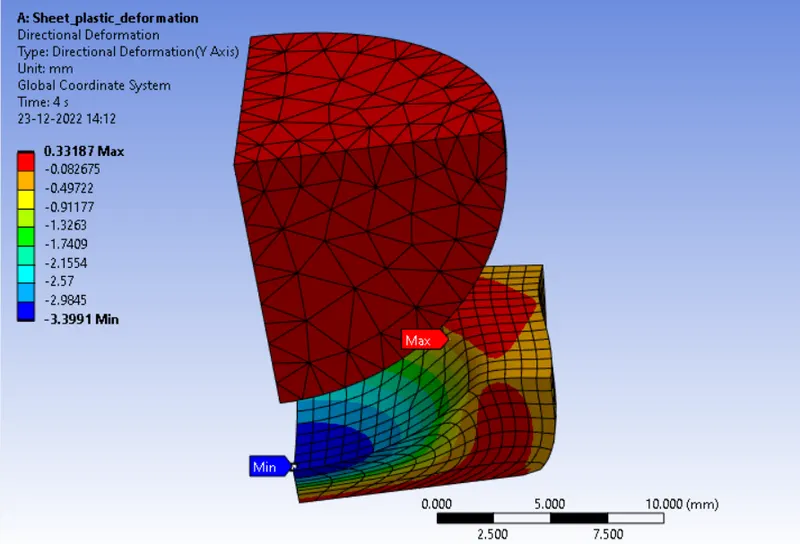
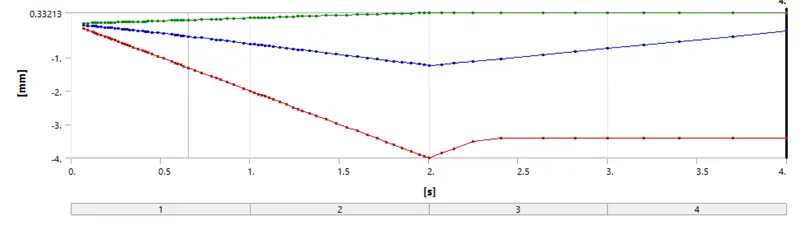
- Here the max diformation happened in y direction is 0.33187 mm.
equivalent stress on plate:
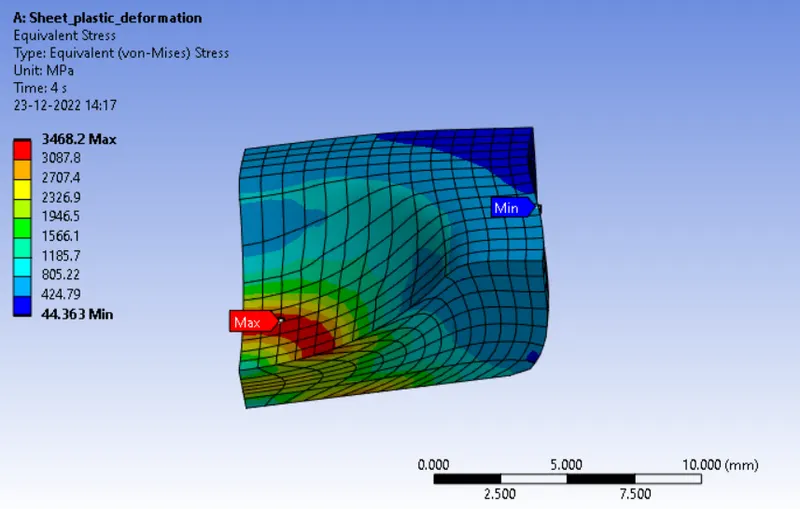
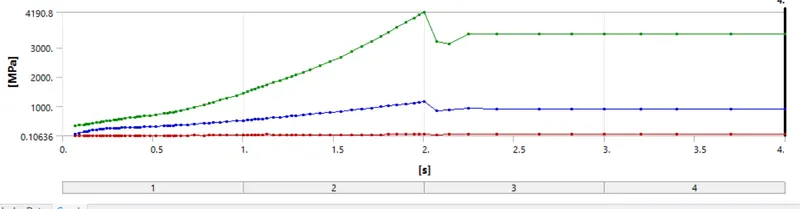
- max Equivalent stress is generated at the deformation place which is 3468.2 Mpa.
equivalent elastic strain:
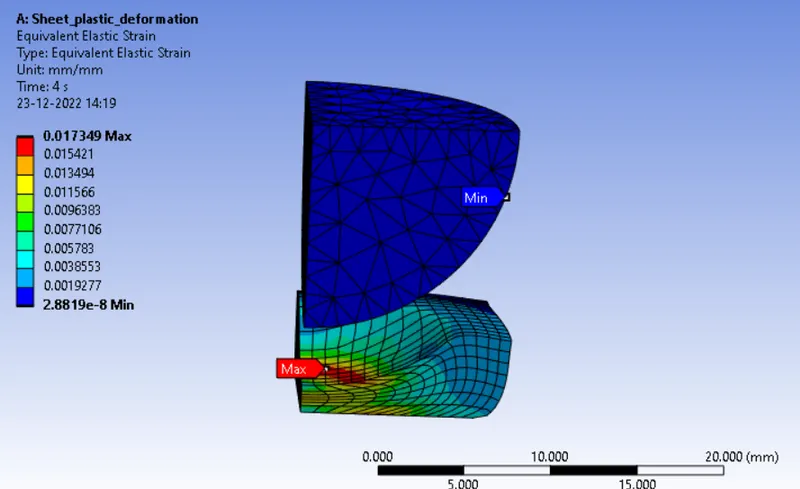
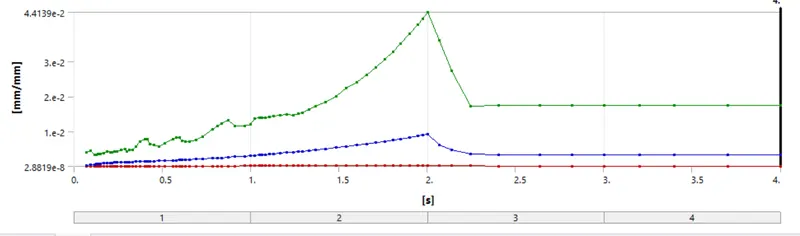
- Maximum Equivalent elastic strain is 0.017349 in the above graph you can see that the strain is increased up to maximum and then redurns back when the load returns baack untill it is in elastic limit after that the cuve won't be zero.
equivalent plastic strain on plate:
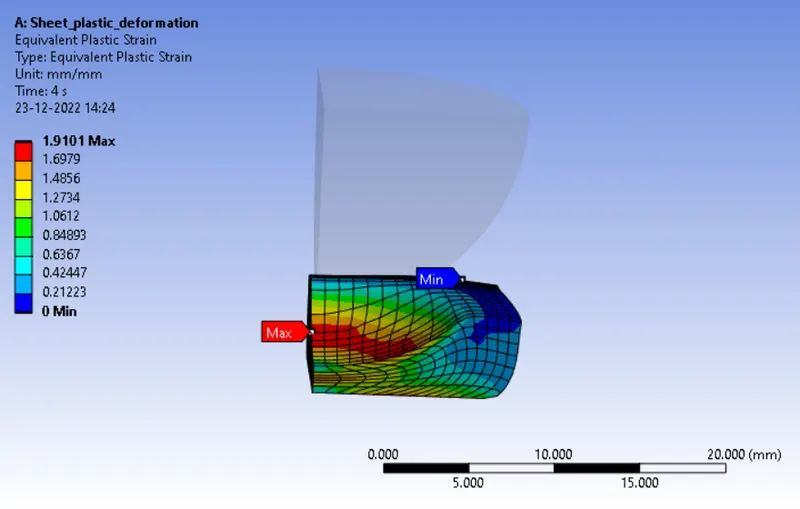
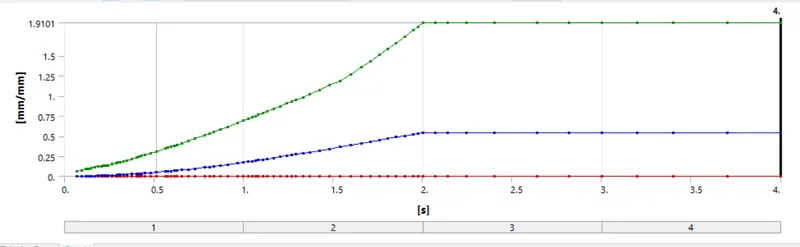
- Max plastic strain 1.9101. Here the strain increases and at the point of return it remains at the same.
Conclusion:
- The plate is deformed permanently as asked in the question.