Week 5:- Rest Unit & Clamp Unit Design Challenge
Design of Rest Unit & Clamp Unit
Objective: To understand and design 2 different types of Rest Units for the given Car Panel.
To understand and design 3 different types of Power Clamp Unit with different Riser, Blade and Clamp Arm for the given Car Panel.
Introduction:
Rest Unit: Rest unit is a unit designed to support a car panel using Mylar/ NC block/ rest component is rested only, no upper clamp or force applied there. It is the simplest unit to design because it has fewer parts to design & the purpose is only resting of the car panel.
Because of the simplicity, the rest unit is combined with another unit to reduce the cost of the overall project.
It can be combined with a clamp unit to clamp as well as to rest the car panel. It can be combined with locating unit to locate as well as to rest the car panel. Also locating, clamping & Test unit can be combined together in one unit to reduce cost.
There is no cylinder attached to it. It has rest Mylar, blade, and riser & below is different parts of the rest unit. Rest unit is also divided into simple support unit, multiple support units & retractable support units.
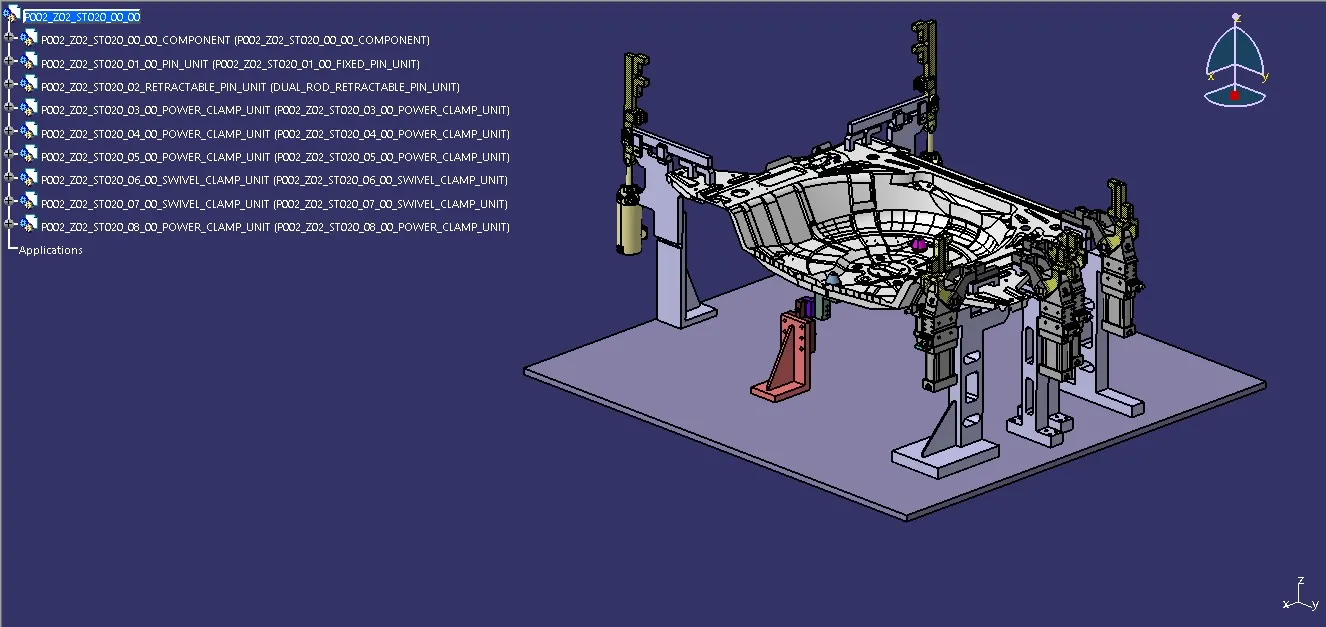
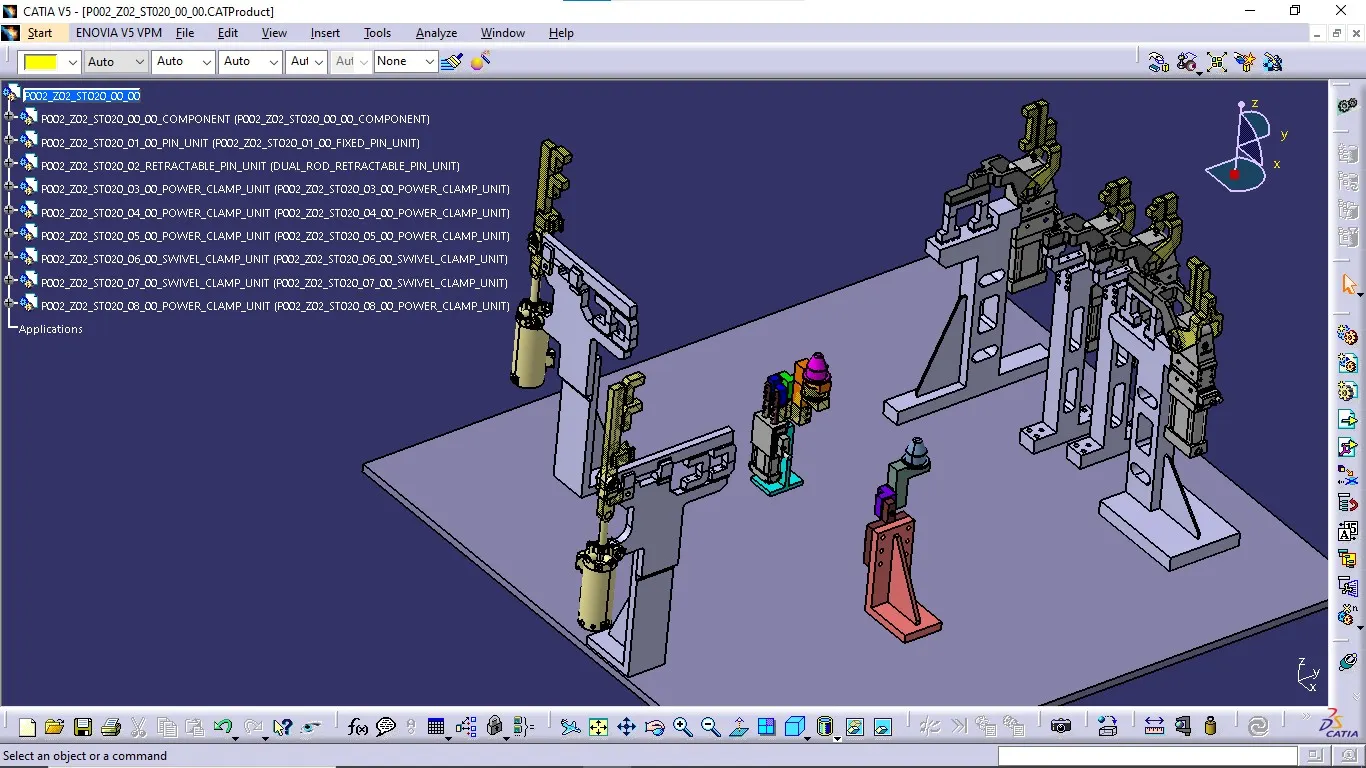
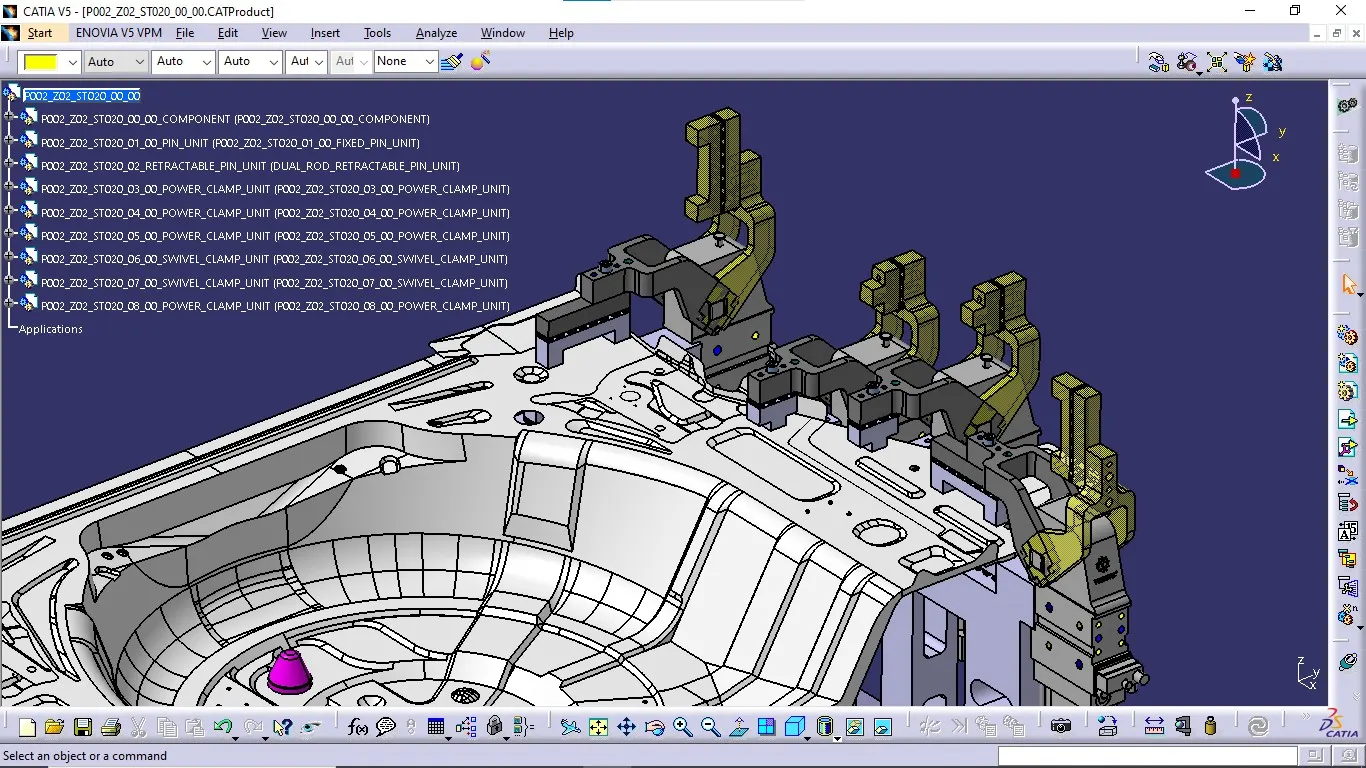
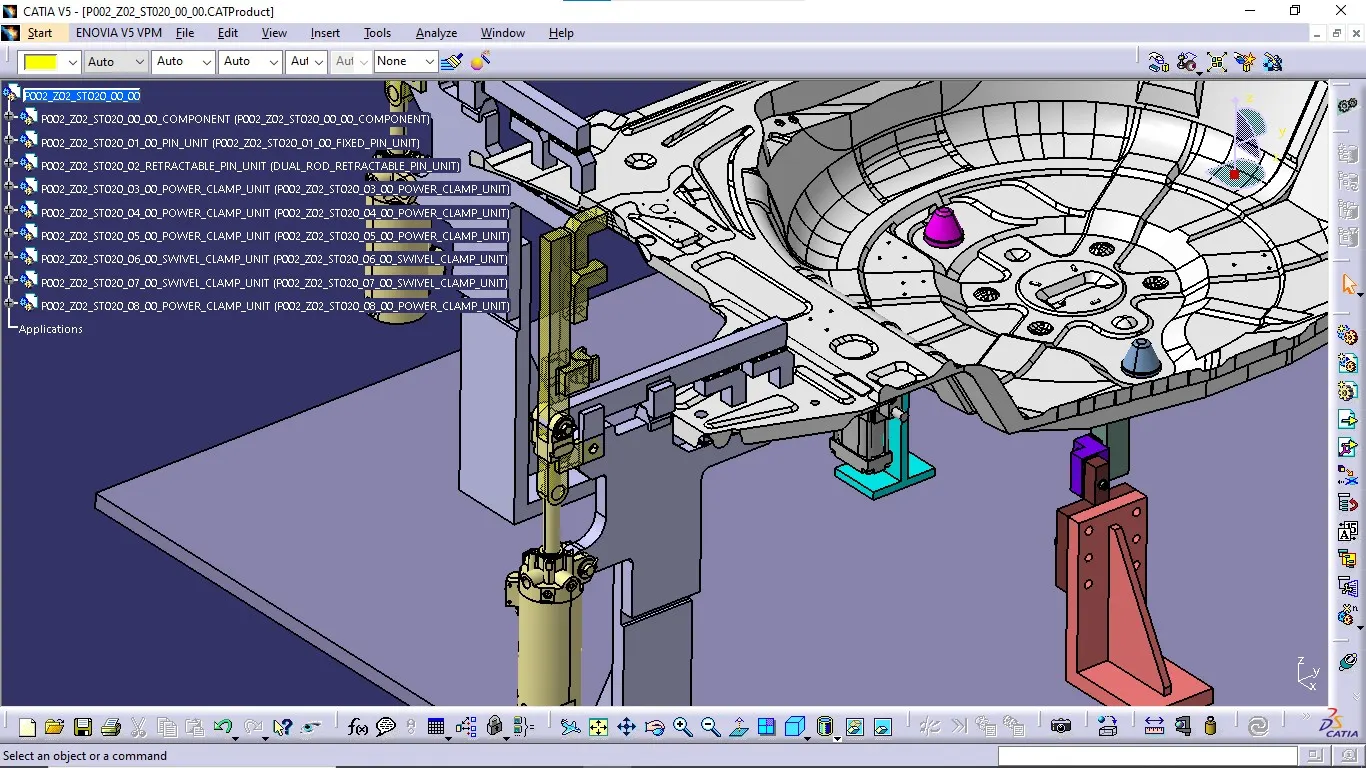
Clamp Unit: A clamp unit is a unit designed to clamp/hold the car panel with NC blocks/Mylars/rest by using a pneumatic cylinder. Clamp arm, finger, Rest/backup, Lblock, shims, riser, pneumatic cylinders are the typical parts of clamp unit.
Clamping force should be considered while designing a clamp unit. Usually clamp open position is 90. Fingers are attached to clamp Mylar.
In the Clamp unit shim to one side is more enough because it will restrict translation motion in an upward direction and downward direction only.
There is another type of clamp unit known as the swivel type. There is a pivot pin around which the clamp arm rotates.
Purpose of Rest Unit &Clamp Unit:
tool. For this reason, clamps are also equipped with mechanical transmission gear units.
Design Methodology:
3 locators or supports are placed under the workpiece which establishes the part plane. Three locators are generally positioned at the primary locating surface.
of freedom.
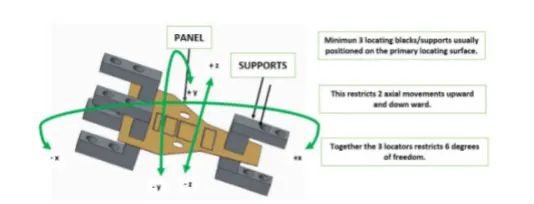
Thus by using the 3-2-1 principle, introducing a minimum of 3 clamping & resting blocks will restrict 6 DOF( 2 axial translational about z-axis & 4 rotational about the x&y axes respectively).
The remaining 6 DOF are restricted by introducing a Pin unit of minimum of 2 nos.
Clamping- The process of holding the workpiece in the jig/ fixture is called clamping. The primary devices used for holding the workpieces are clamped/clamp units.
Resting - The car panel will rest on the rest unit. It resists the clamping force of the finger exerted by the clamp cylinder and thus clamps the car panel.
Forces acting in the clamp and rest unit:
while designing a clamp unit 2 forces are considered that act in clamp unit,
1. Clamping force
2. Holding force
1. Clamping force:
It signifies the force applied to the workpiece by the drive mechanism via the clamp arm during gripping or clamping operations.
2. Holding force:
Holding force, on the other hand, denotes the maximum force after locking the knee-lever (over centre position, that can be applied by the workpiece on the gripper/clamp arm without destroying the mechanism.
Therefore, particular attention must be paid to the maximum holding force when, for example during the production process (welding, bonding), there is a possibility of distortion of the component or if the clamp arm is used as a fixed stop.
If the holding force specified in the technical details is exceeded, this will inevitably result in the destruction of the
mechanism, the clamp arm or the bearing position.
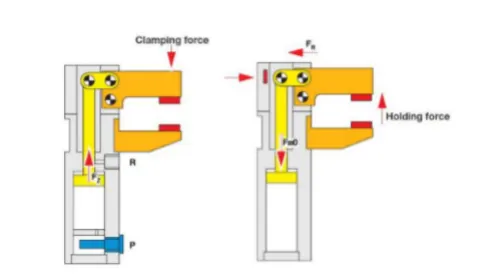
Average Clamping force(Fs) = 1200N (for the size of 50 bore dia and mean length of clamp arm)
Types of Rest Units:
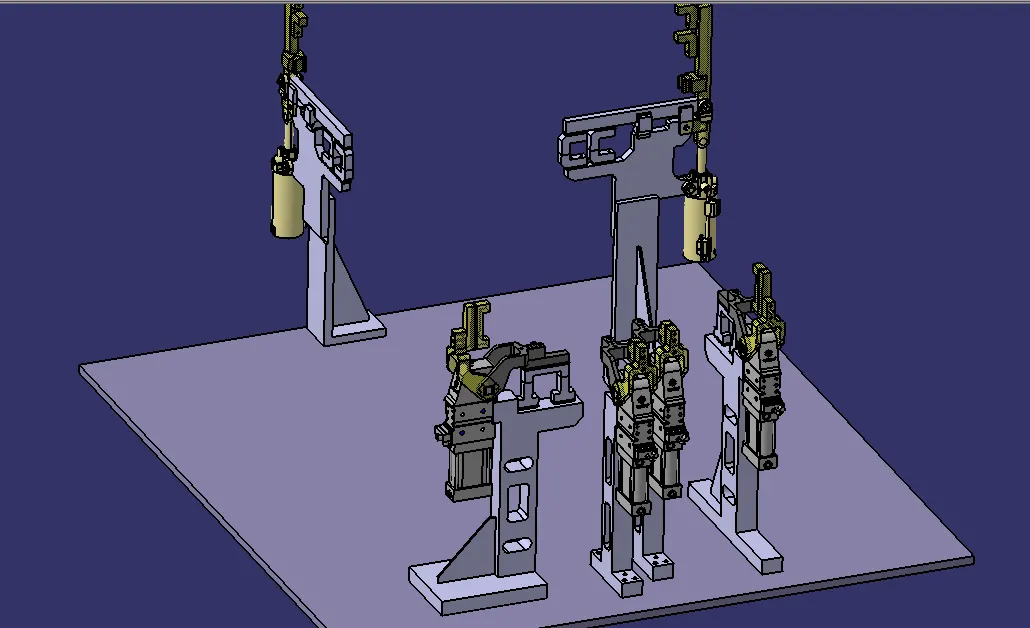
Parts in clamp unit:
1. Finger /clamp mylar:
It is a NC block mounted on the clamp arm of the cylinder.
It is used for clamping / holding the car panel.It presses the car panel towards the rest.
It presses the car panel towards the rest.
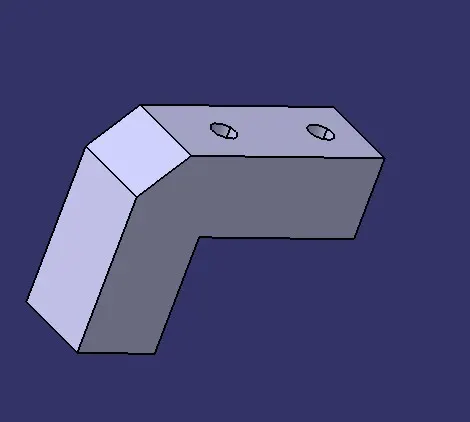
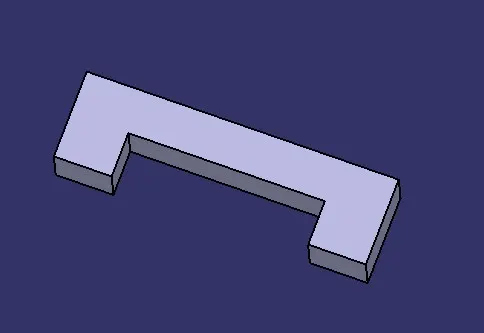
2. Backup / Rest Mylar:
It is a NC block fixed to the unit to support the car panel.
It helps in resisting the clamping force of cylinder onto the panel, thus clamping is achieved
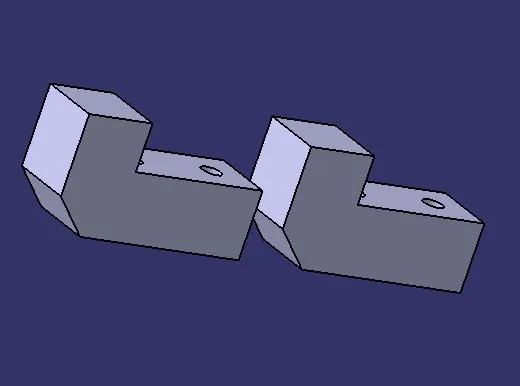
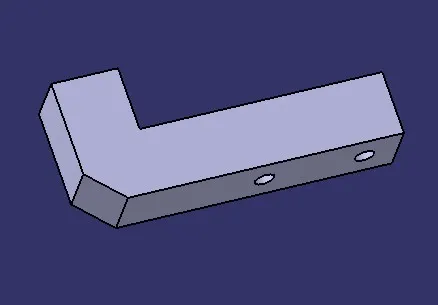
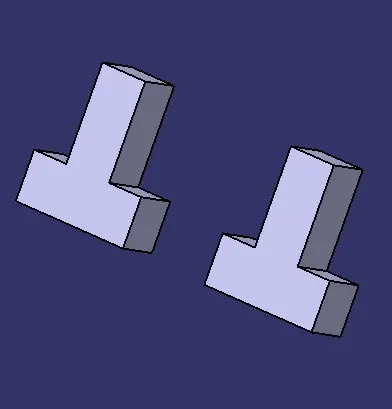
3. Clamp arm:
Clamp arm is a part of the clamp cylinder and it is a bought out part which is available in some standards.
All the moveable parts in the clamp unit are fixed to the clamp arm.
Clamp arm is different for different bore size of cylinder, it is available in different hole pitch.
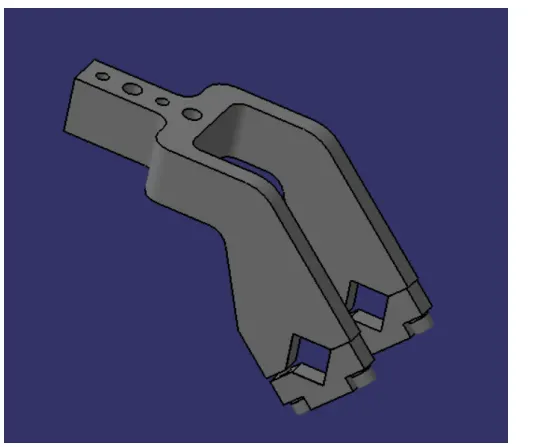
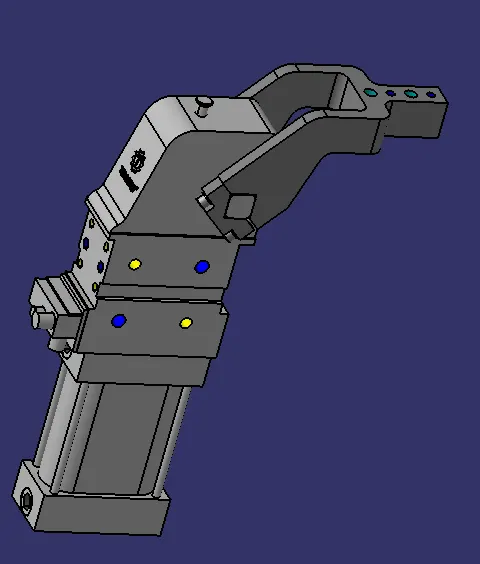
4. Clamp cylinder:
Clamp cylinder is a pneumatic device which works with the flow of pressurised air.
Clamp cylinder is a brought out part and some manufacturers are destaco, tuenkers, etc.,
The clamping cylinder is used to open and close the moving part in the clamp unit.
It is generally available in 40, 50, 63 and 80 bore capacity.
Clamp cylinder opens upto 135 degree for horizontal clamp mounting and it opens upto 105 degree for vertical clamping.
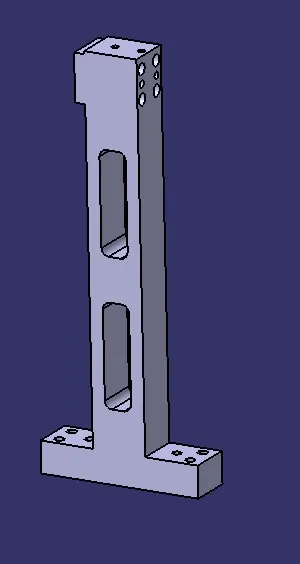
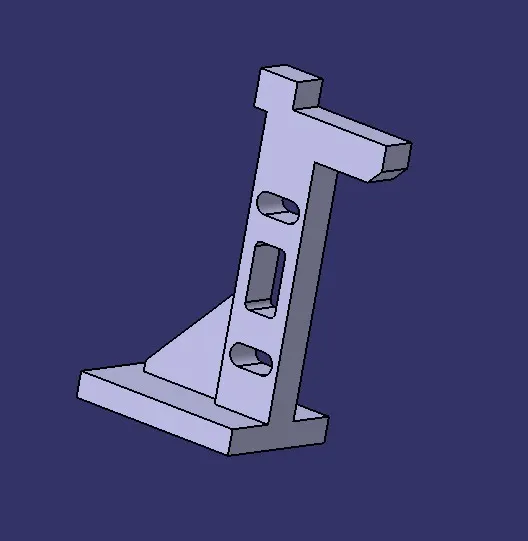
Riser: It is a part on which all the parts are mounted and it is mounted on the base plate of the fixture.
Final View of CLAMP_UNIT