Week 5 - Rayleigh Taylor Instability
Rayleigh Taylor instability-
The RT instability is an instability of an interface between two fluids of different densities that occurs when the denser fluid is on top, the lighter fluid is at the bottom, and gravity is present. Examples include air at vertical temperature inversions, like explosions and volcanic eruptions where the inner air warms and intrudes into a colder layer above forming a mushroom cloud. In the late stages of a massive star's life, it undergoes a supernova explosion. The explosion creates a shockwave that accelerates the outer layers of the star, causing them to expand and eventually collide with surrounding interstellar gas. The interface between the expanding stellar material and the interstellar gas can experience Rayleigh-Taylor instability, leading to the mixing and enrichment of elements.
Stages of turbulent mixing-
- Initial Mixing: The turbulent mixing process begins with the formation of small-scale eddies and vortices within the turbulent flow. These structures initiate the mixing by causing the fluid particles to interact and exchange momentum, heat, and mass. Initially, the mixing may be localized and limited to specific regions of the flow.
- Cascade and Energy Transfer: In this stage, the energy from the larger eddies is transferred to the smaller eddies through a process called energy cascade. As the energy cascades down to smaller scales, the eddies become more numerous and smaller in size, leading to increased mixing.
- Stretching and Deformation: Within the turbulent flow, fluid particles experience stretching and deformation as they are subjected to intense velocity fluctuations and vortical structures. This stretching and deformation enhance the intermingling of fluid components, effectively stretching and thinning concentration or scalar fields. It promotes the exchange and dispersion of different properties throughout the flow.
- Mixing Layer Development: In some turbulent flows, the mixing process can result in the formation of distinct mixing layers. These layers occur when two or more fluids with different properties, such as temperature or composition, are brought into contact with the flow. Mixing layers are characterized by strong gradients between the fluid components, and they evolve as a result of continued turbulent mixing.
- Homogenization: This stage is characterized by a relatively uniform distribution of temperature, concentration, or velocity throughout the turbulent flow domain. The intensity of mixing, the flow conditions, and the properties of the fluids involved will determine the extent and rate of homogenization.
Some practical CFD models based on mathematical analysis of Rayleigh Taylor waves-
Saffman-Taylor instability:
The Saffman-Taylor instability is a fluid instability that occurs at the interface between two immiscible fluids with different viscosities, typically when a less viscous fluid displaces a more viscous one in a Hele-Shaw cell. The instability is characterized by the formation of finger-like patterns that grow and propagate along the interface. The interface between the two fluids is initially stable. However, as the less viscous fluid advances into the more viscous one, small perturbations at the interface can grow. These perturbations cause the interface to deform, leading to the formation of finger-like protrusions. The small perturbations at the interface grow due to the competition between viscous and surface tension forces. The less viscous fluid tends to spread out more quickly due to its lower viscosity, while the surface tension at the interface acts to resist the deformation. This competition leads to the formation of finger-like patterns that grow and propagate into the more viscous fluid. This instability has applications in various fields, such as in the study of porous media flows, fluid displacement in geological formations, and the development of enhanced oil recovery techniques.
Plateau-Rayleigh instability:

Rayleigh-Plateau instability refers to the instability that naturally turns a liquid thread into a series of droplets. Surface tension plays a significant role in Plateau-Rayleigh instability. It acts to minimize the surface area of the fluid column, causing it to adopt a cylindrical shape due to the balance between pressure forces and surface tension. Hydrostatic pressure refers to the pressure exerted by a fluid column due to its weight. In the context of the Plateau-Rayleigh instability, the hydrostatic pressure tends to deform the cylindrical shape of the fluid column, trying to flatten it. The competition between surface tension and hydrostatic pressure leads to instability and eventual breakup of the fluid column. At some point, small perturbations or fluctuations in the shape of the column begin to grow due to the influence of the surface tension forces. As the perturbations grow, the fluid column becomes unstable and eventually breaks up into smaller droplets or segments. The breakup occurs at regular intervals along the column, leading to the formation of uniform-sized droplets or segments known as Plateau borders. These Plateau borders separate the individual droplets or segments and have a characteristic shape of curved regions connecting adjacent droplets. It is commonly observed in phenomena such as droplet formation, atomization processes, and the breakup of liquid jets. The understanding of this instability is crucial for applications involving spray generation, inkjet printing, aerosol production, and other processes that rely on the controlled breakup of fluid columns into droplets or segments.
Kelvin-Helmholtz instability:
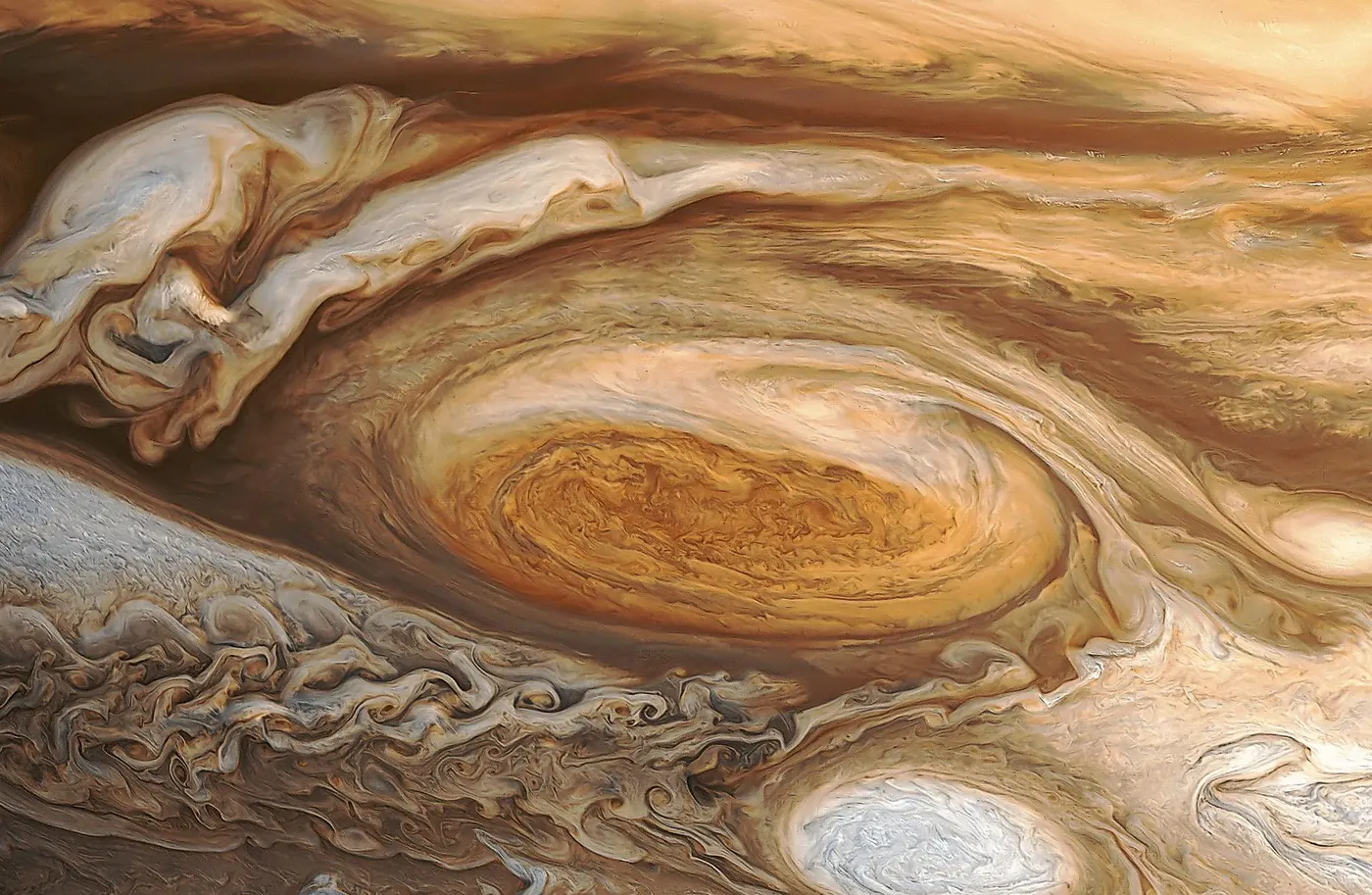
The Kelvin-Helmholtz instability is a fluid instability that occurs at the interface between two fluid layers with different velocities and shear rates. It is characterized by the formation of vortices and wave-like structures along the interface, resulting in the mixing and deformation of the layers. The instability arises when there is a velocity difference between two adjacent fluid layers or streams, resulting in a velocity shear across the interface. This velocity shear can occur in various situations, such as wind blowing over water or ocean currents with different velocities. The velocity shear at the interface leads to the formation of a shear layer between the two fluid layers. This shear layer is characterized by a significant velocity gradient, with the velocity decreasing smoothly from one layer to the other. The velocity shear within the shear layer creates a condition where the faster-moving fluid above tries to move downward, and the slower-moving fluid below tries to move upward. This opposing motion leads to the growth of small perturbations or undulations along the interface. As the perturbations grow, they develop into vortices or wave-like structures along the interface. These vortices and waves are formed due to the interaction between the velocity shear and the pressure fluctuations caused by the perturbations. The vortices and waves can propagate along the interface and cause the mixing and deformation of the two fluid layers. The Kelvin-Helmholtz instability is observed in various natural phenomena, such as cloud formations, ocean waves, and atmospheric turbulence.
Richtmyer–Meshkov instability
The Richtmyer-Meshkov instability is a fluid instability that occurs when a shock wave interacts with an interface between two fluids with different densities or other properties. The instability is initiated by the passage of a shock wave through an interface between two fluids. The shock wave imparts pressure and velocity perturbations to the fluids, which cause the initial interfacial disturbances. The perturbations on the interface grow due to the interaction between the pressure and density gradients induced by the shock wave. The growth is driven by the Richtmyer-Meshkov effect, where the density difference across the interface amplifies the perturbations. As the perturbations grow, the interface undergoes complex mixing and deformation. This results in the formation of structures such as spikes, bubbles, and vortices. The growth of these structures is influenced by the density and viscosity differences between the fluids. The Richtmyer-Meshkov instability exhibits a nonlinear evolution, with the growth rate depending on factors such as the amplitude and wavelength of the initial perturbations, the density ratio, and the shock strength. The Richtmyer-Meshkov instability has relevance in various scientific and engineering fields, including inertial confinement fusion, supernova explosions, shock-driven combustion, and shockwave-driven instability experiments. It is of particular interest in applications where the control and mitigation of fluid mixing and instabilities are essential for achieving desired outcomes.
Mathematical model adapted for CFD calculations-
SPH Method: Smoothed Particle Hydrodynamics (SPH) is a computational method used for simulating the behaviour of fluid flows and other physical phenomena. It is a Lagrangian particle-based method that approximates fluid properties using discrete particles or "smoothing kernels" that interact with each other.
- In SPH, the fluid domain is discretized into a set of particles. Each particle represents a small volume or mass of the fluid and carries information about fluid properties such as velocity, density, and pressure.
- Smoothing kernels, also known as smoothing functions or window functions, are used to interpolate the properties of fluid particles. These kernels define the influence range of each particle and determine how its properties contribute to neighbouring particles. Commonly used kernels include the Gaussian, Cubic Spline, and Wendland functions.
- The interactions between particles in SPH are governed by the smoothing kernels. Each particle contributes to the properties of neighbouring particles within its influence range, and the contributions are weighted based on the distance between particles. This allows for the exchange of momentum, mass, and other physical quantities between neighbouring particles.
- SPH discretizes the governing equations of fluid dynamics, such as the Navier-Stokes equations, into discrete forms that can be solved using numerical integration methods. The properties of fluid particles are updated over time-based on the equations of motion, taking into account the interparticle interactions and external forces.
- SPH allows for adaptive resolution, where particle density can be increased or decreased in regions of interest. This allows for higher accuracy in capturing complex fluid flow features, such as vortices, shocks, and free surfaces.
SPH has a wide range of applications in fluid dynamics, including simulating fluid flows, multiphase flows, free surface flows, and fluid-structure interactions. It is particularly useful in scenarios involving large deformations, complex geometries, and interfacial phenomena.
Atwood Number-
The Atwood number is a dimensionless parameter used in fluid dynamics to characterize the density difference between two fluids in a flow or interface.
The Atwood number, denoted by "At," is defined as the absolute value of the difference in densities divided by the average density:
`At = |ρ1 - ρ2| / (0.5 * (ρ1 + ρ2))`
where:
- ρ1 is the density of the first fluid,
- ρ2 is the density of the second fluid.
The Atwood number ranges from 0 to 1. When the densities of the two fluids are equal (ρ1 = ρ2), the Atwood number is 0, indicating no density difference. A value of 1 (At = 1) represents the maximum density difference between the two fluids. The Atwood number provides a measure of the buoyancy and the potential for mixing or stratification in the fluid system. It is commonly used in various fluid flow scenarios, including multiphase flows, shock waves, and stratified flows. In applications such as combustion, explosions, and astrophysics, the Atwood number is used to characterize the behaviour of fluid interfaces and the resulting instabilities, such as the Rayleigh-Taylor instability and the Richtmyer-Meshkov instability.
The behaviour of the fluid instability by the variation in Atwood number-
-
High Atwood Number (At > 0.5): When the Atwood number is close to or greater than 0.5, indicating a significant density difference between the fluids, the Rayleigh-Taylor instability exhibits strong growth. The heavier fluid tends to accelerate downward, and the lighter fluid accelerates upward, leading to the development of large-scale interfacial instabilities and turbulent mixing.
-
Low Atwood Number (At < 0.5): When the Atwood number is small, indicating a smaller density difference, the growth rate of the Rayleigh-Taylor instability decreases. Smaller-scale structures are observed, and the mixing between the fluids is less pronounced compared to higher Atwood numbers.