Week 5 - Rayleigh Taylor Instability
1. What are some practical CFD models that have been based on the mathematical analysis of Rayleigh Taylor waves? In your own words, explain how these mathematical models have been adapted for CFD calculations.
Rayleigh-Taylor instability occurs whenever a light fluid pushes on a heavy fluid. It is a dynamic process whereby the two fluids seek to reduce their combined potential energy. This has far-reaching consequences in nature.
Kelvin-Helmholtz instability:
It is a type of fluid instability that occurs when there is a velocity shear in a single continuos fluid or a velocity difference across the interface between two fluids. This type of instability is visible in the atmospheres of planets and moons.

Richtmyer-Meshkov instability
This instability occurs when fluids of different densities are impulsively accelerated. Normally this is done by the passage of shock waves. This instability begins with small amplitude perturbations that grows linearly with time which is followed by a non linear regime with bubbles appearing in the case of a light fluid penetrating a heavy fluid,and with spikes appearing in the case of a heavy fluid penetrating a light fluid.
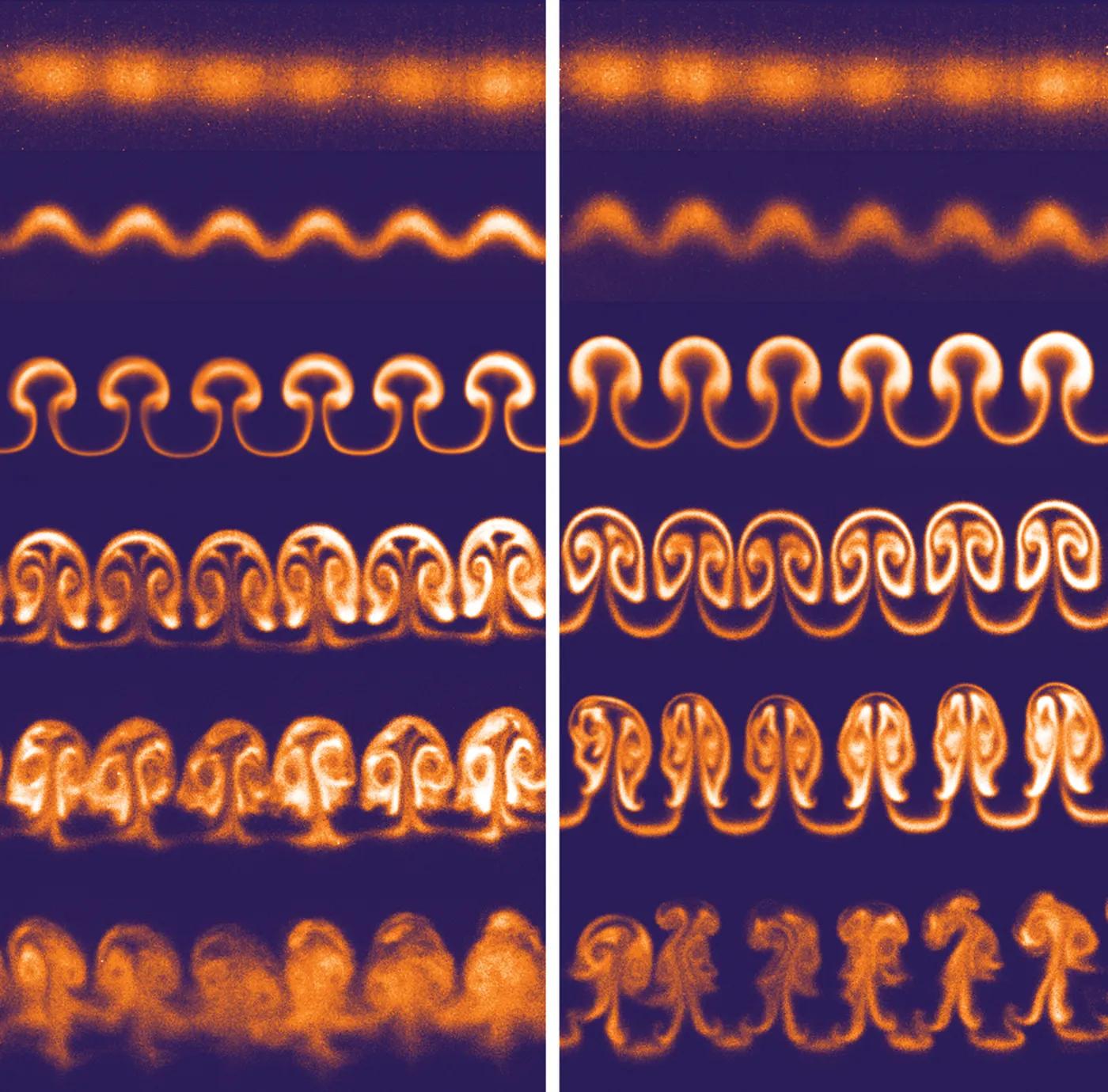
Plateau Rayleigh instability
It is often called as Rayleigh instability, explains why and how a falling stream of fluid breaks up into smaller packets with the same volume but less surface area.

Objective
In this project, we consider 3 different cases with first two cases being related to size of mesh and last case is related to user-defined materials.
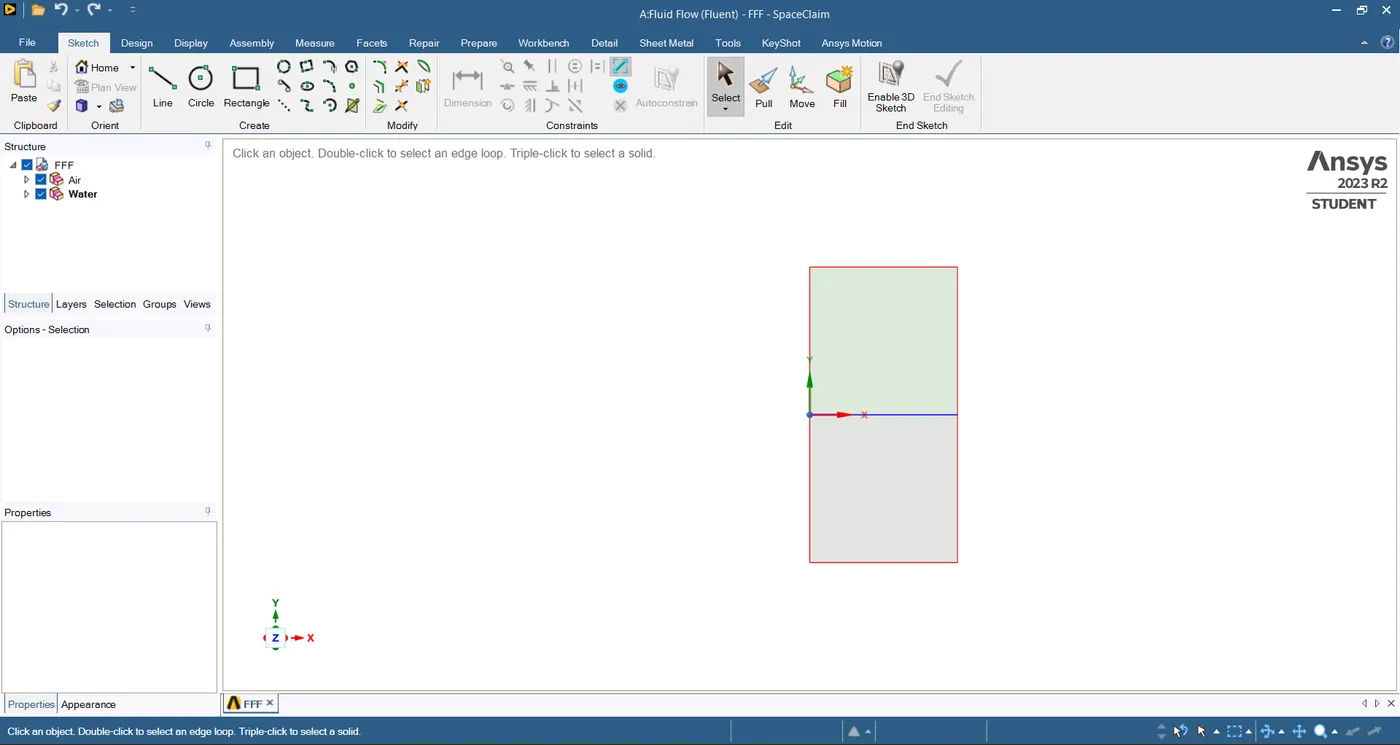
STEP: 1 Geometry
- Draw two squares of Dimension 20 X 20 cm.
- Then name the below square as air and above square as water.
- Select share topology for perfect intersection between both surfaces.
STEP: 2 MESHING
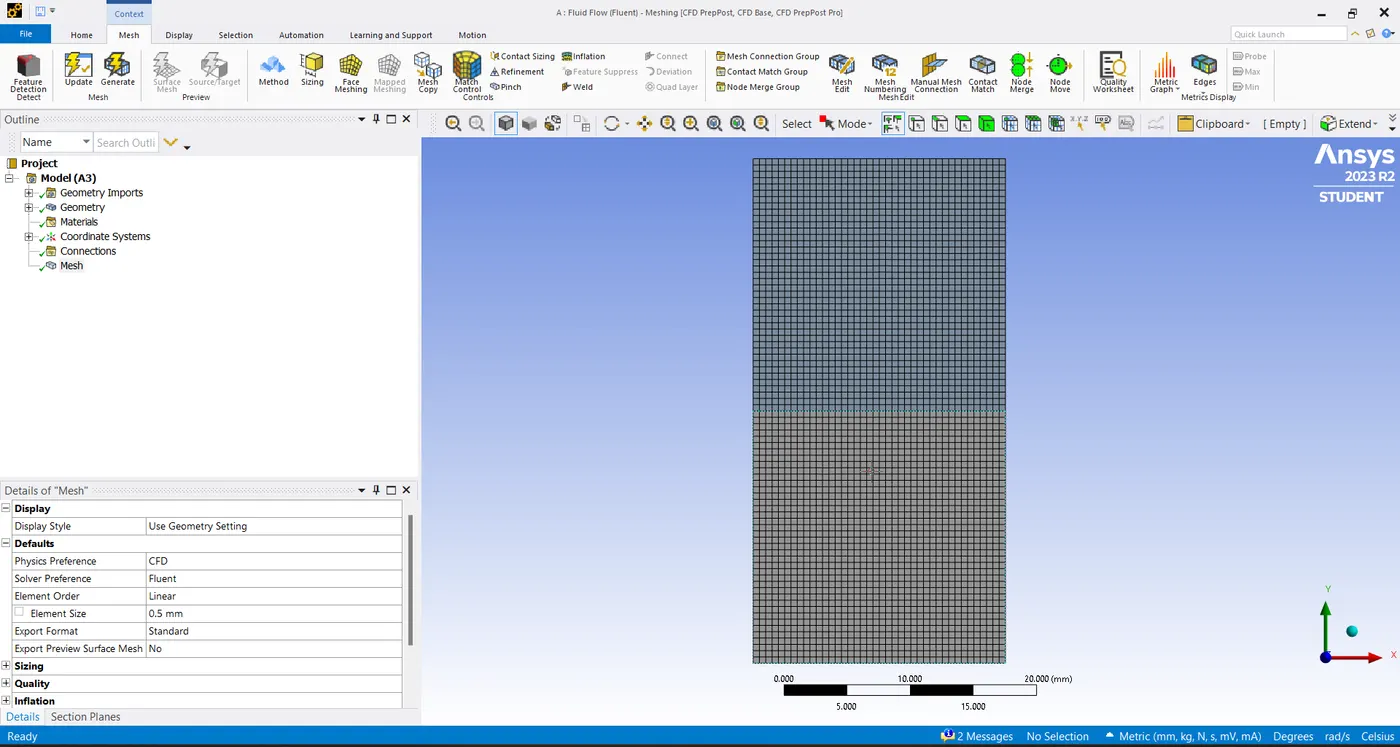
Case 1: Overall Element size: 0.5 mm
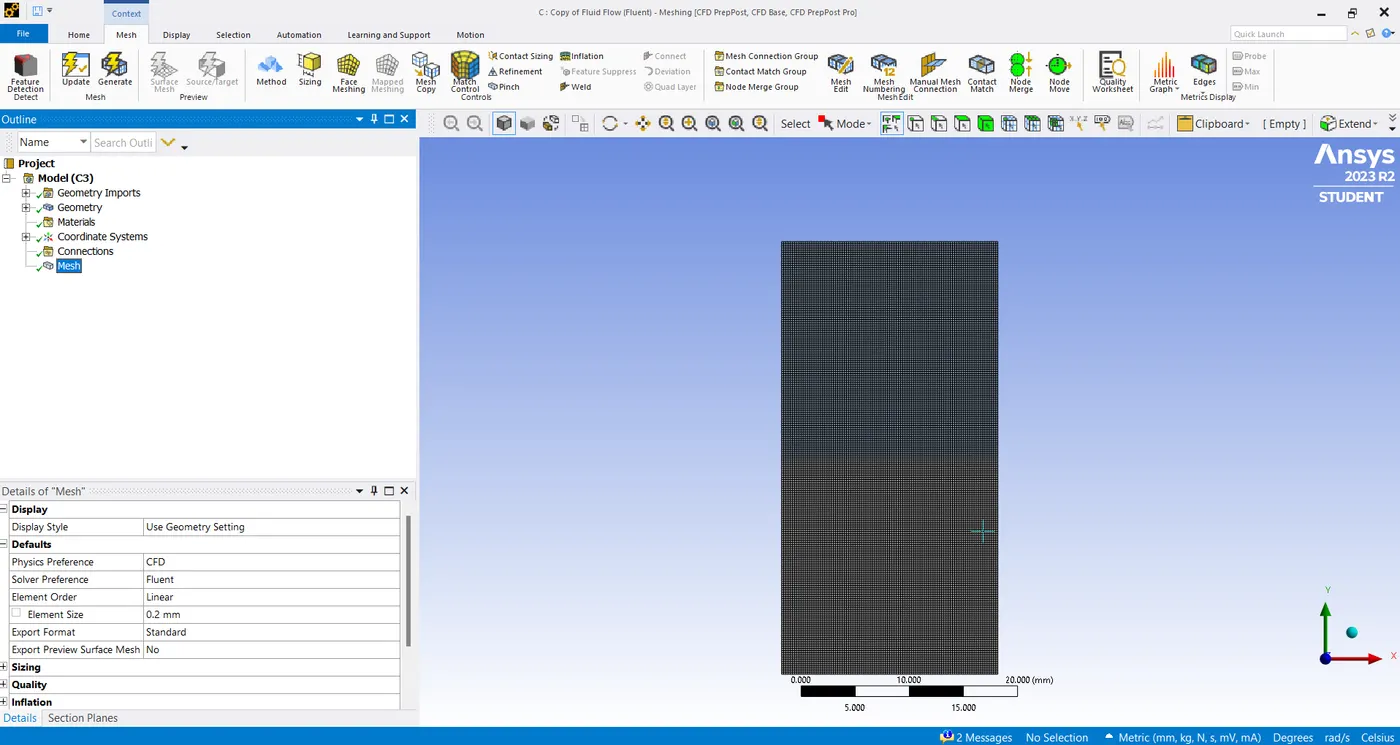
Case 2: Overall element size: 0.2 mm
STEP 3: SETUP
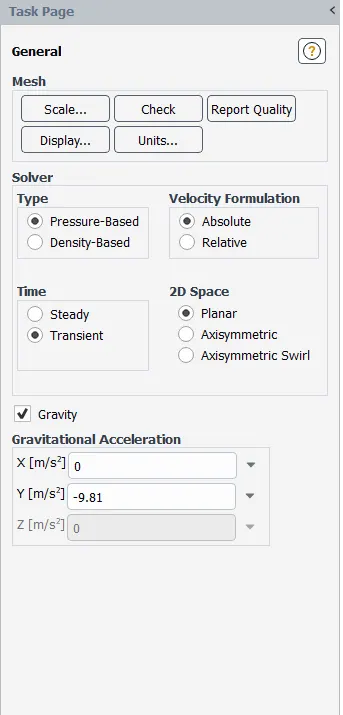
- Pressure-based solver is used along with Transient analysis.
- Gravity is enabled y = -9.81 m/s2.
- Then in material, water-liquid is created.
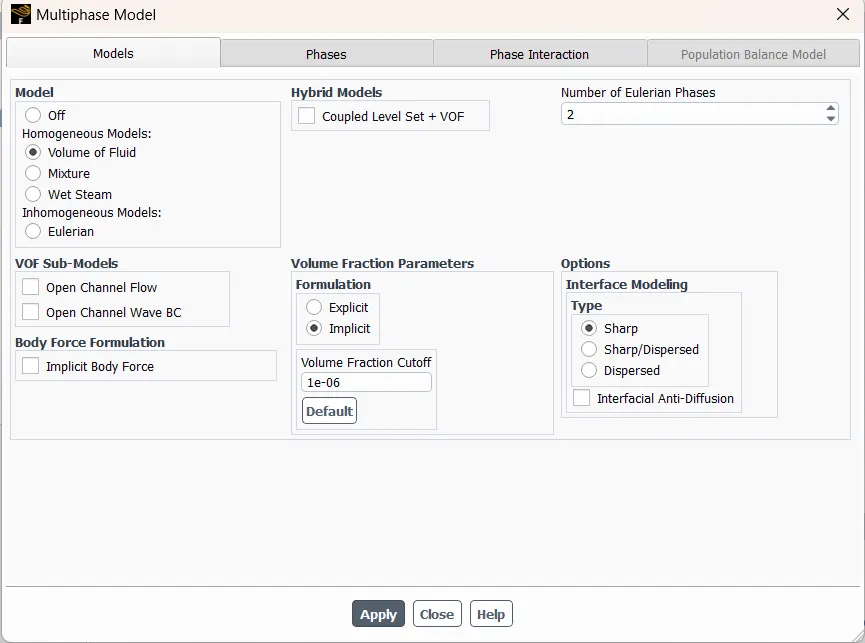
- Next, select multiphase option and click Volume of Fluids with two fluids.
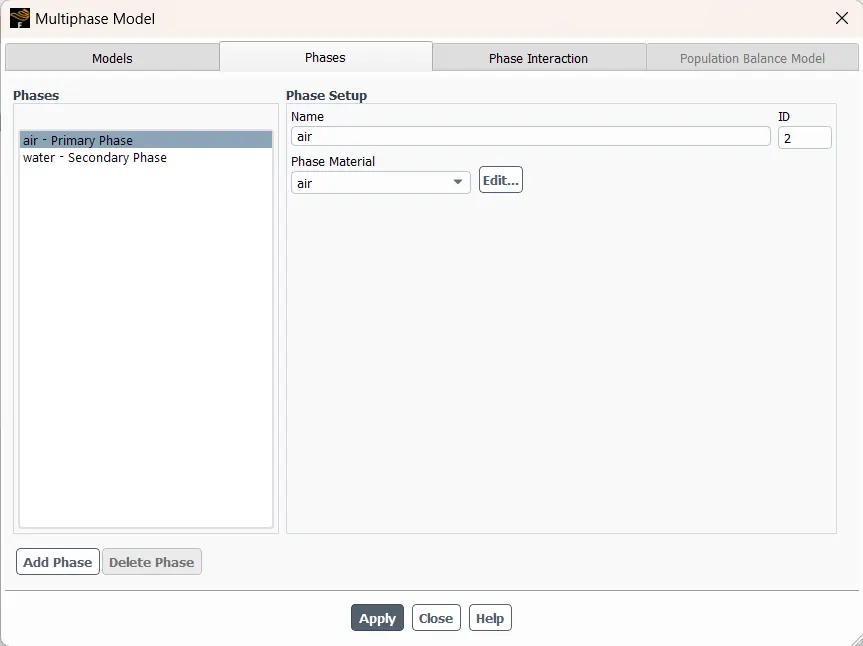
- In phases tab rename and assign the primary phase as air and secondary phase as water.
- In case of user defined fluid, assign water as primary phase and user defined fluid as secondary phase.
- Once, the physics part got over click initialize for hybrid initialization. Click on Autosave to obtain a animation of the flow in post results.
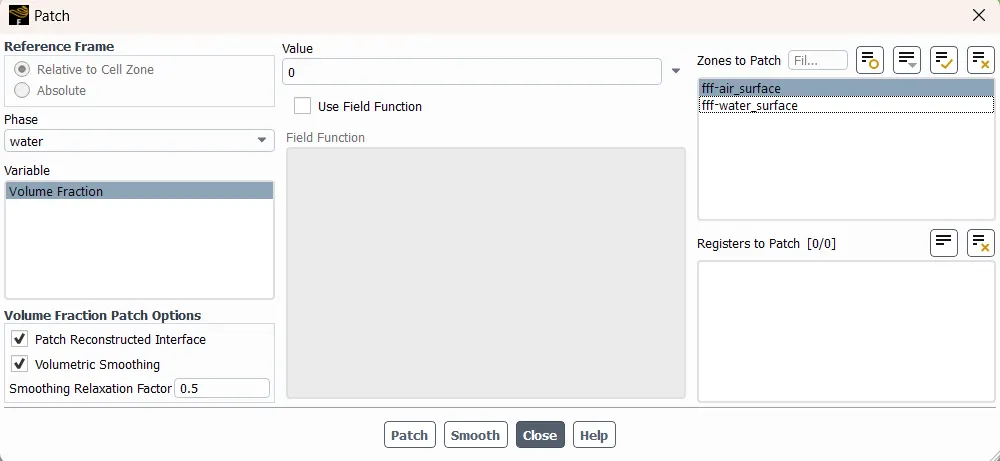
- Then select patch, set the fluid and select volume fraction.
- Assign the values to 1 and 0.
Then run the calculation with Time-step size as 0.01 s and No. of Time step as 500. After that move to solution module.
Results:
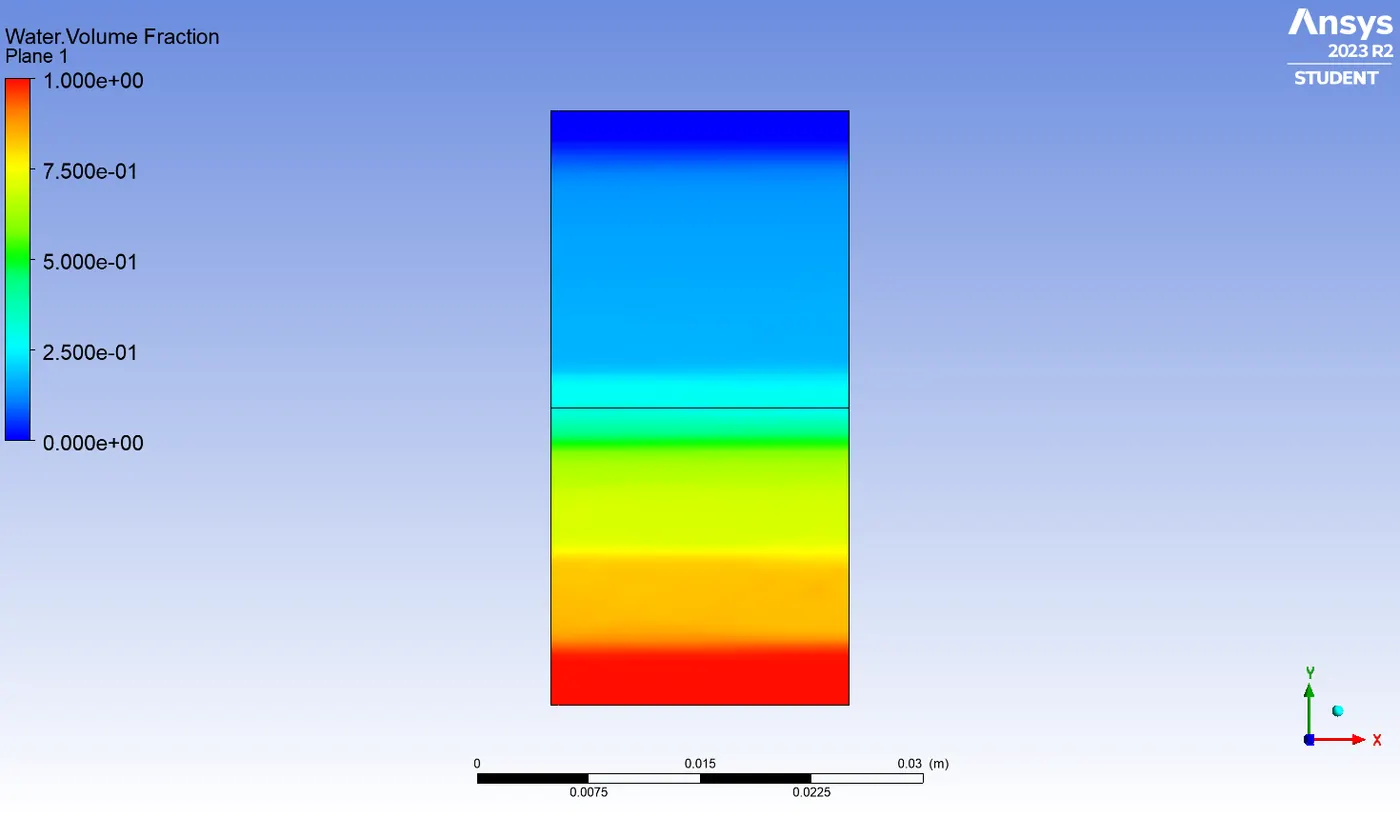
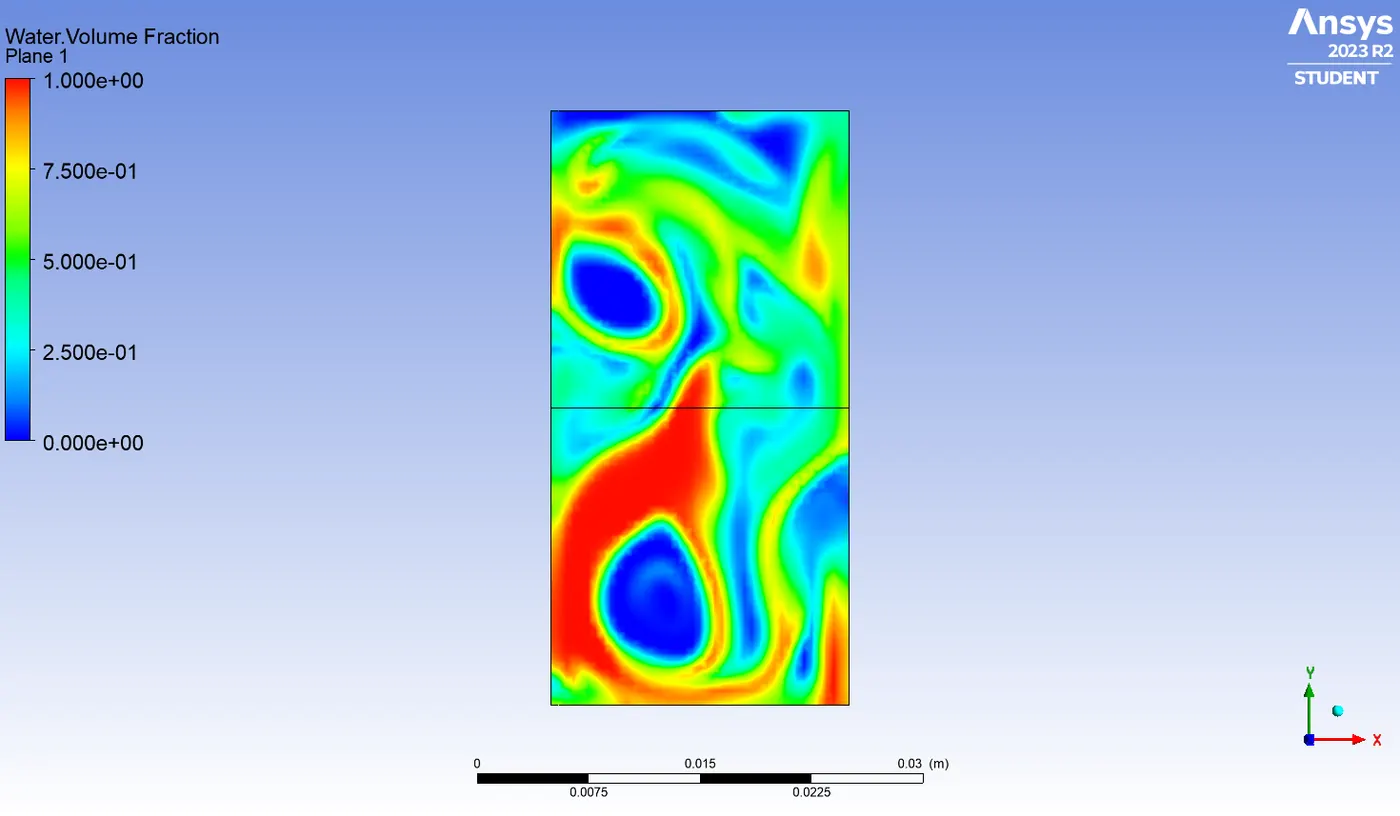
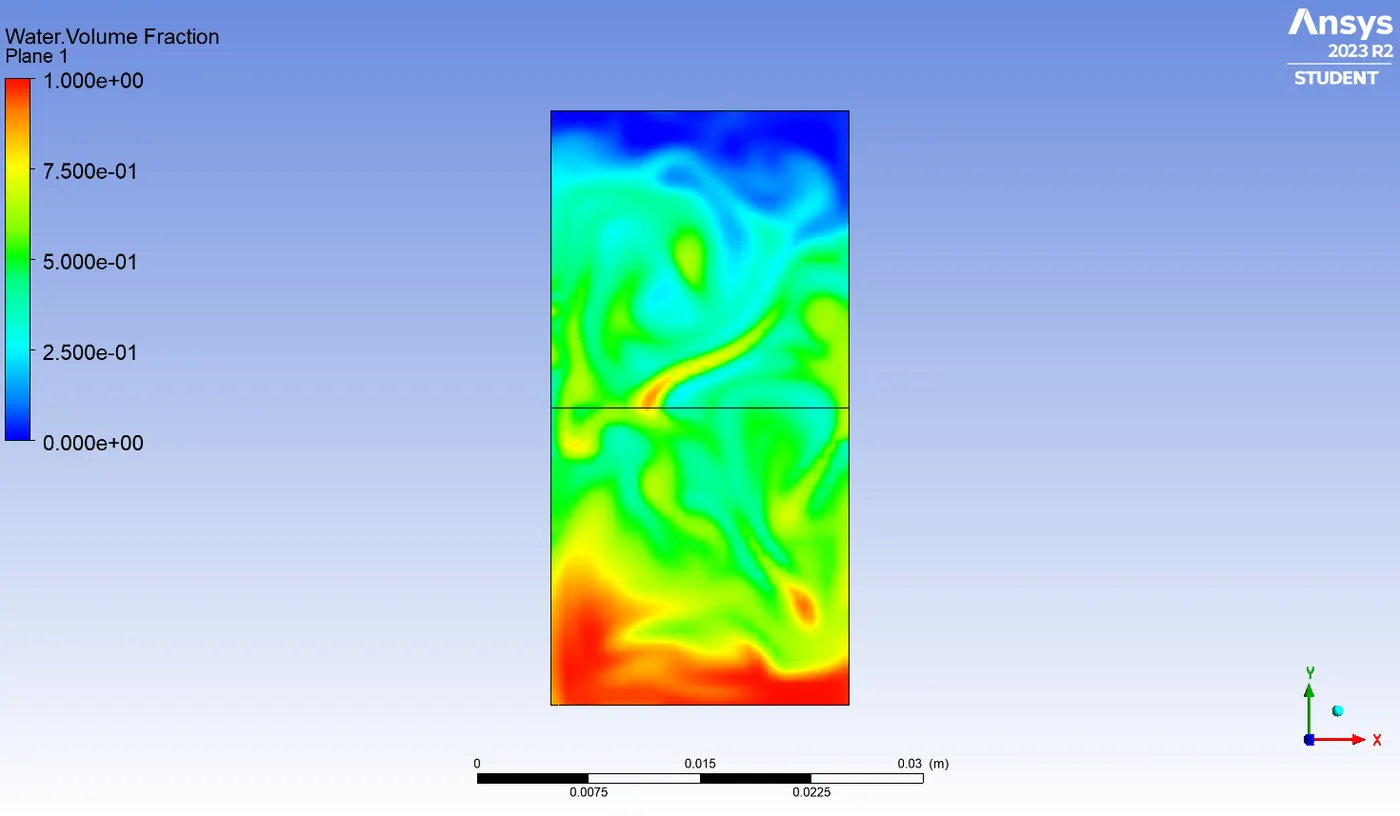
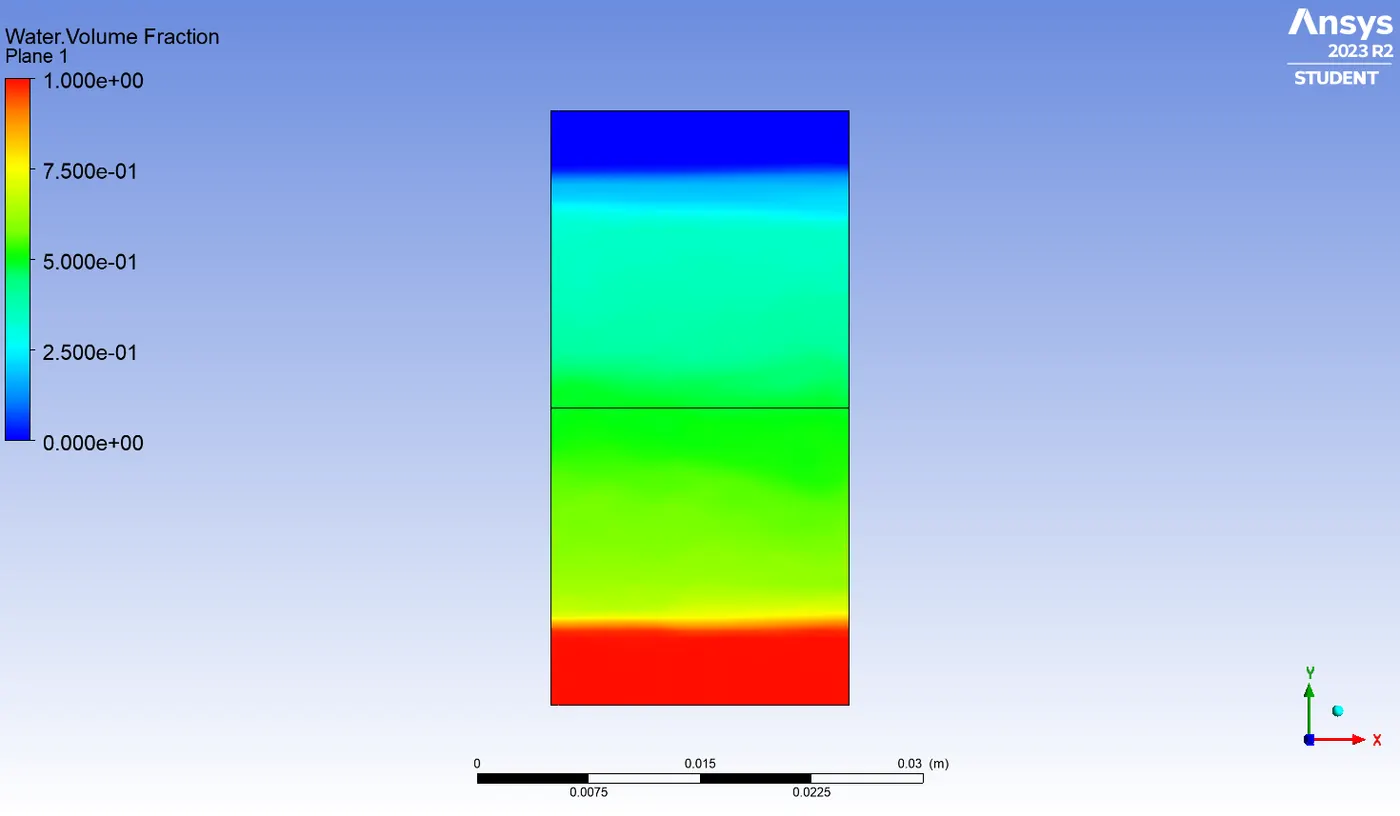
Case 1:
Mesh Size - 0.5mm
Fluid - Water and air
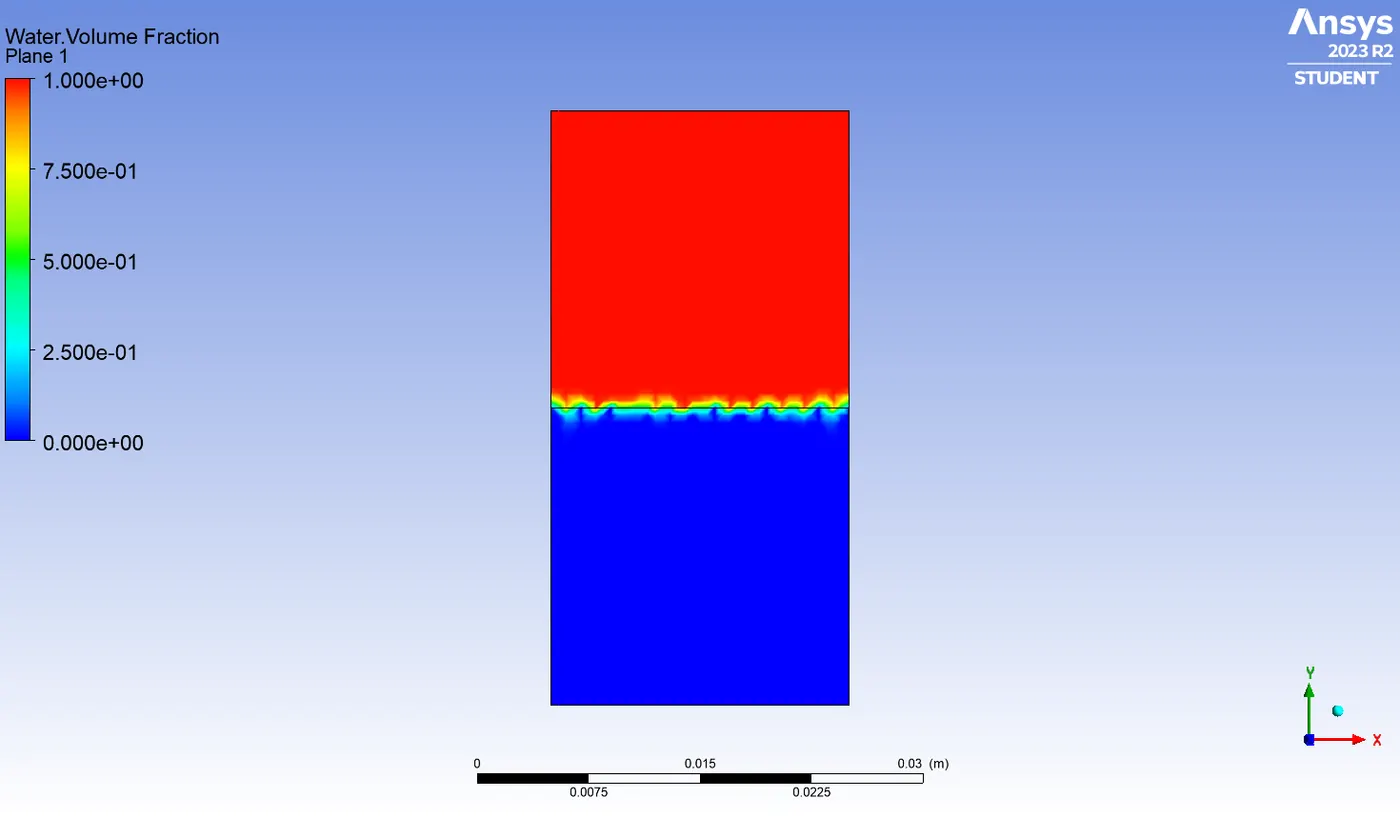
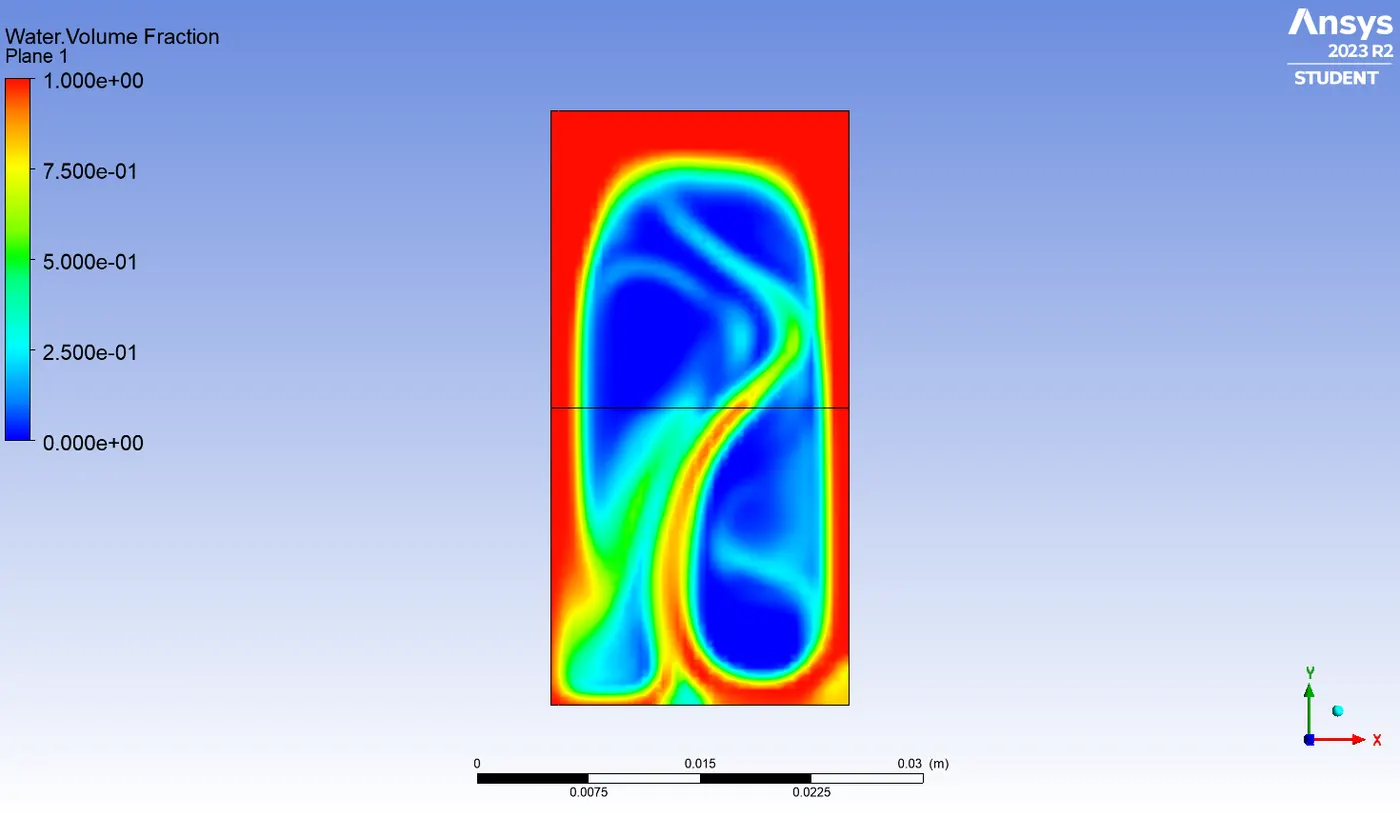
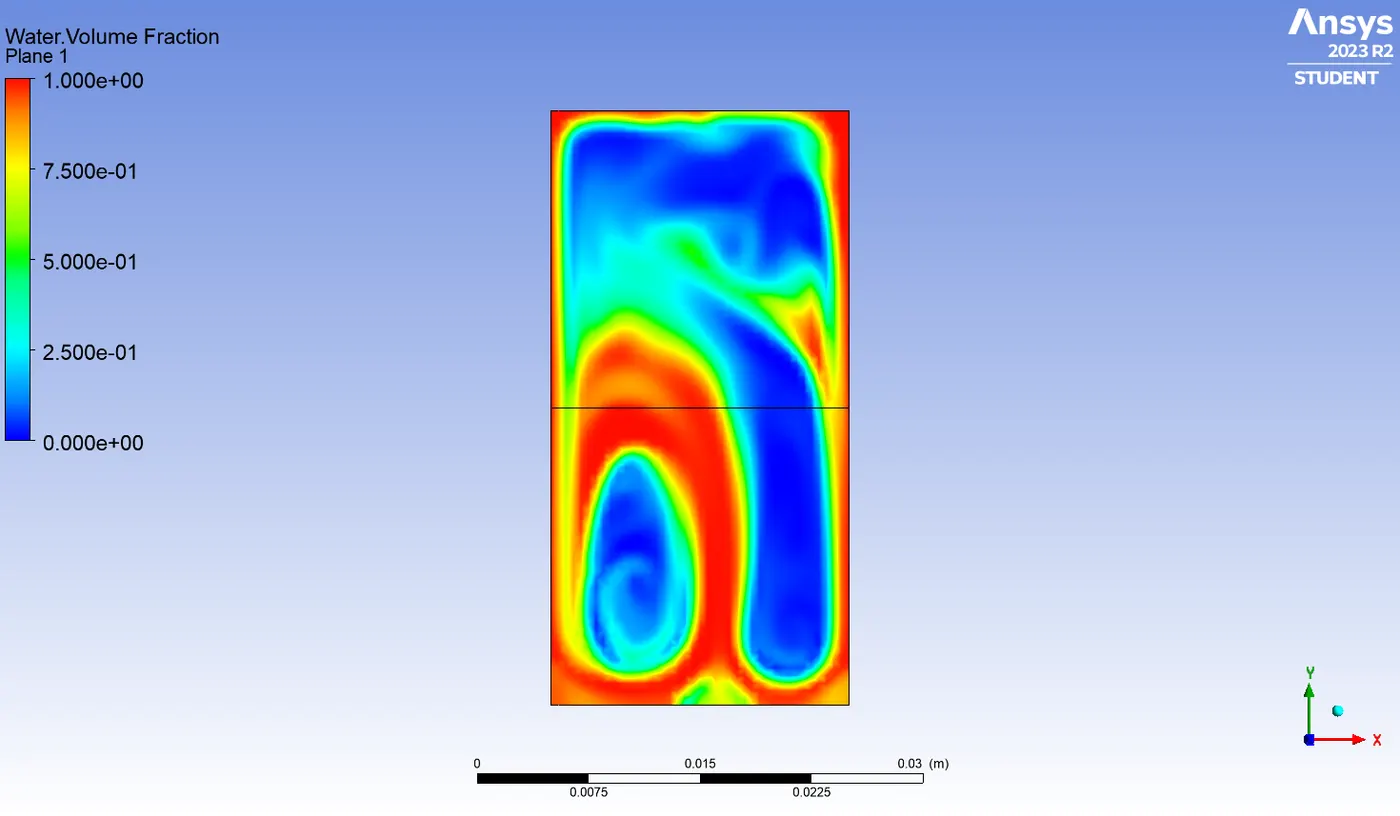
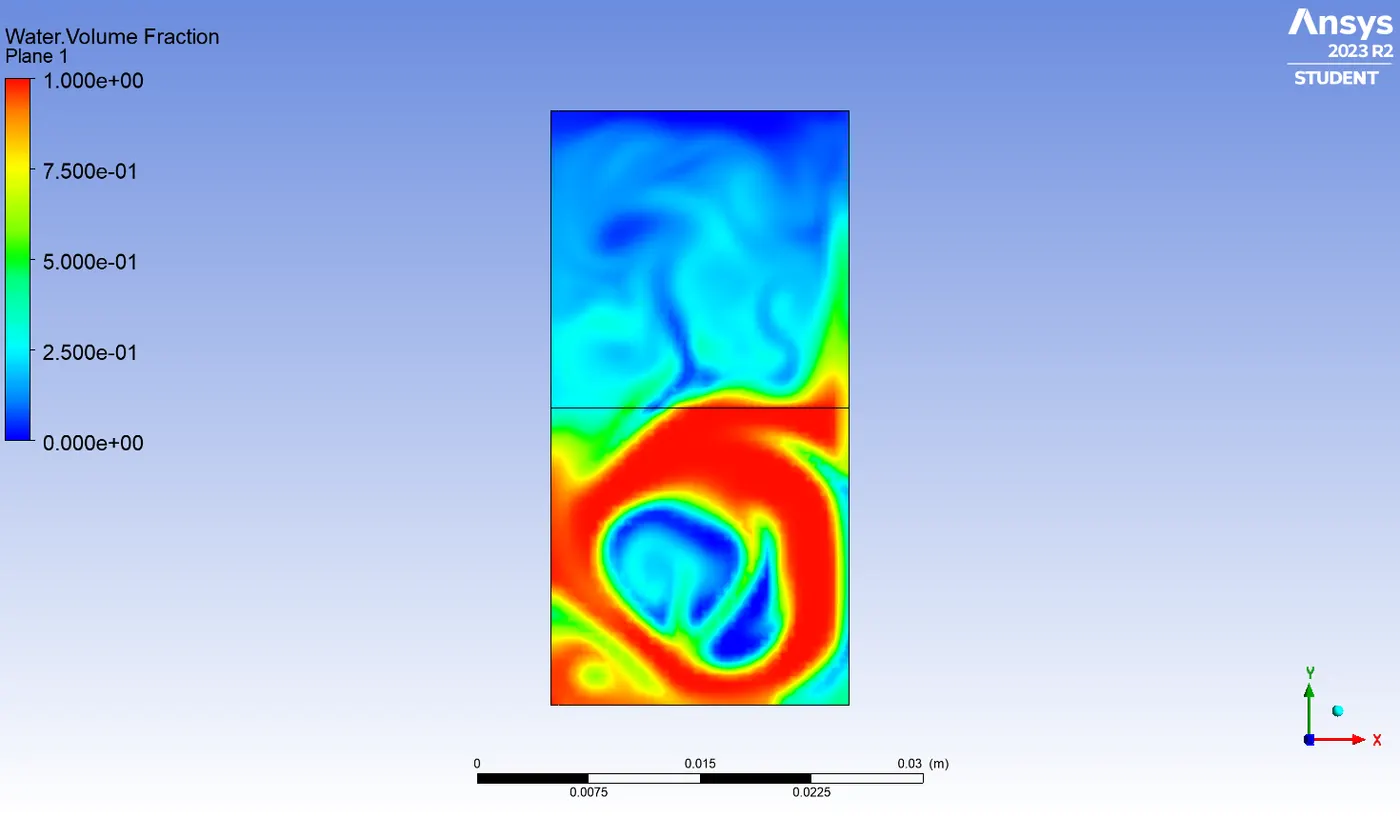
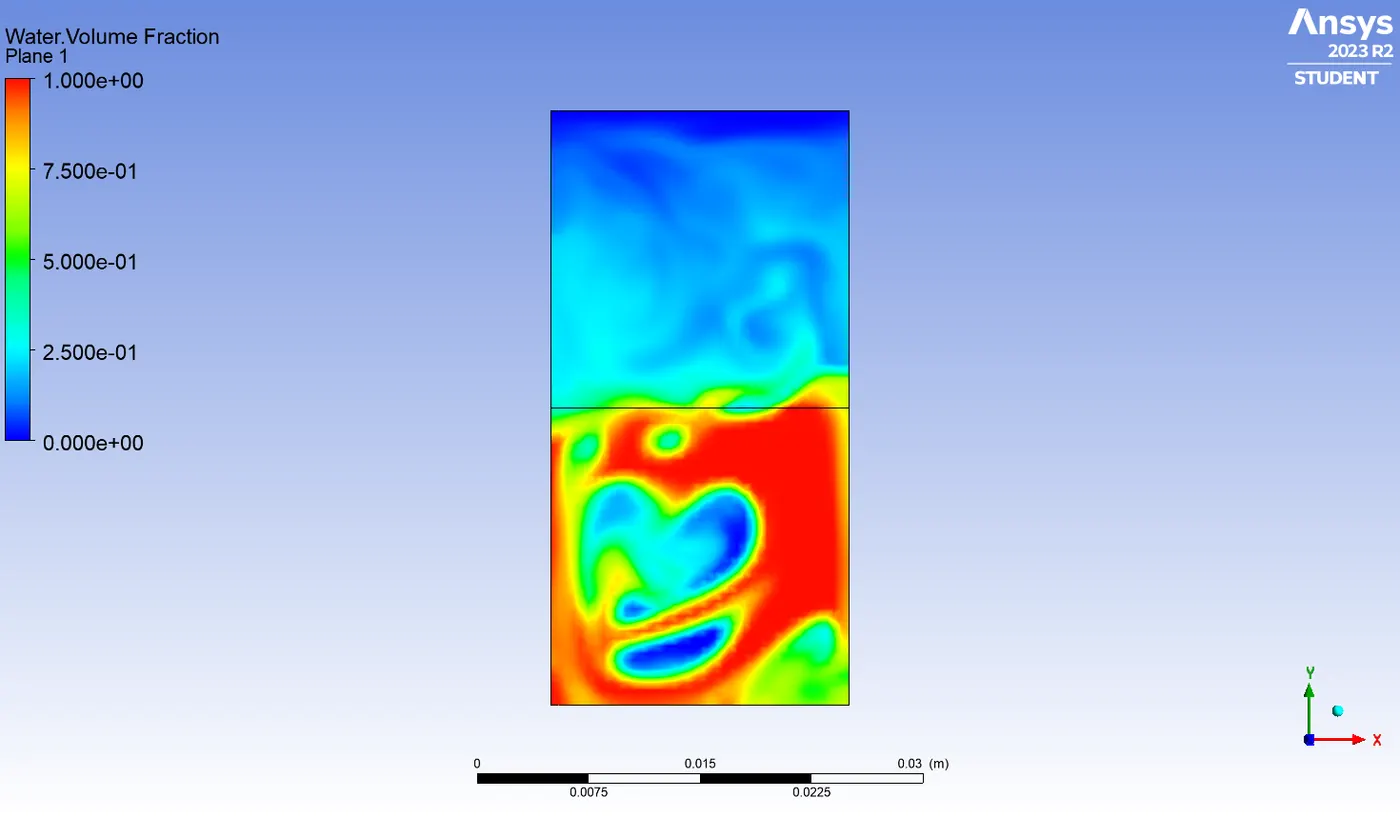
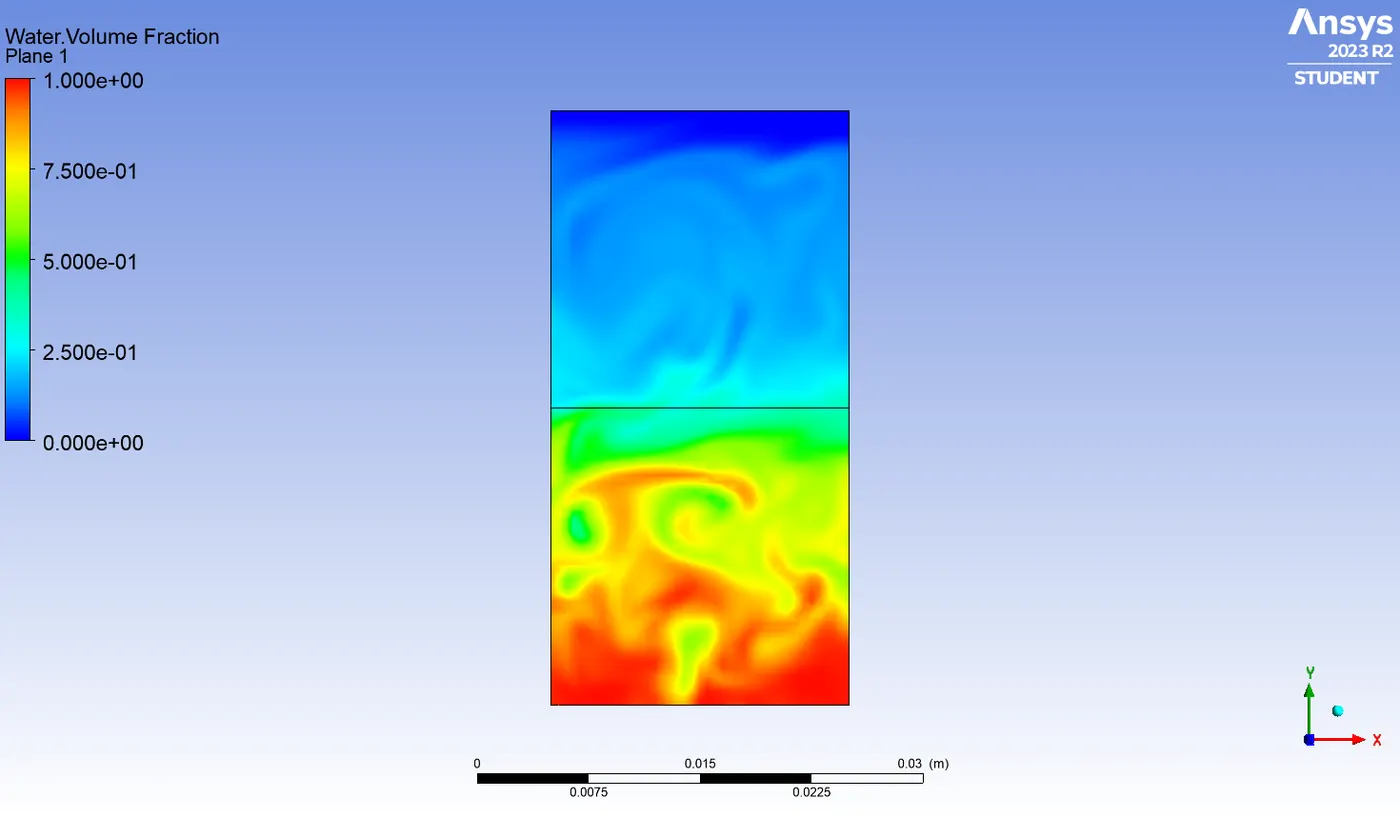
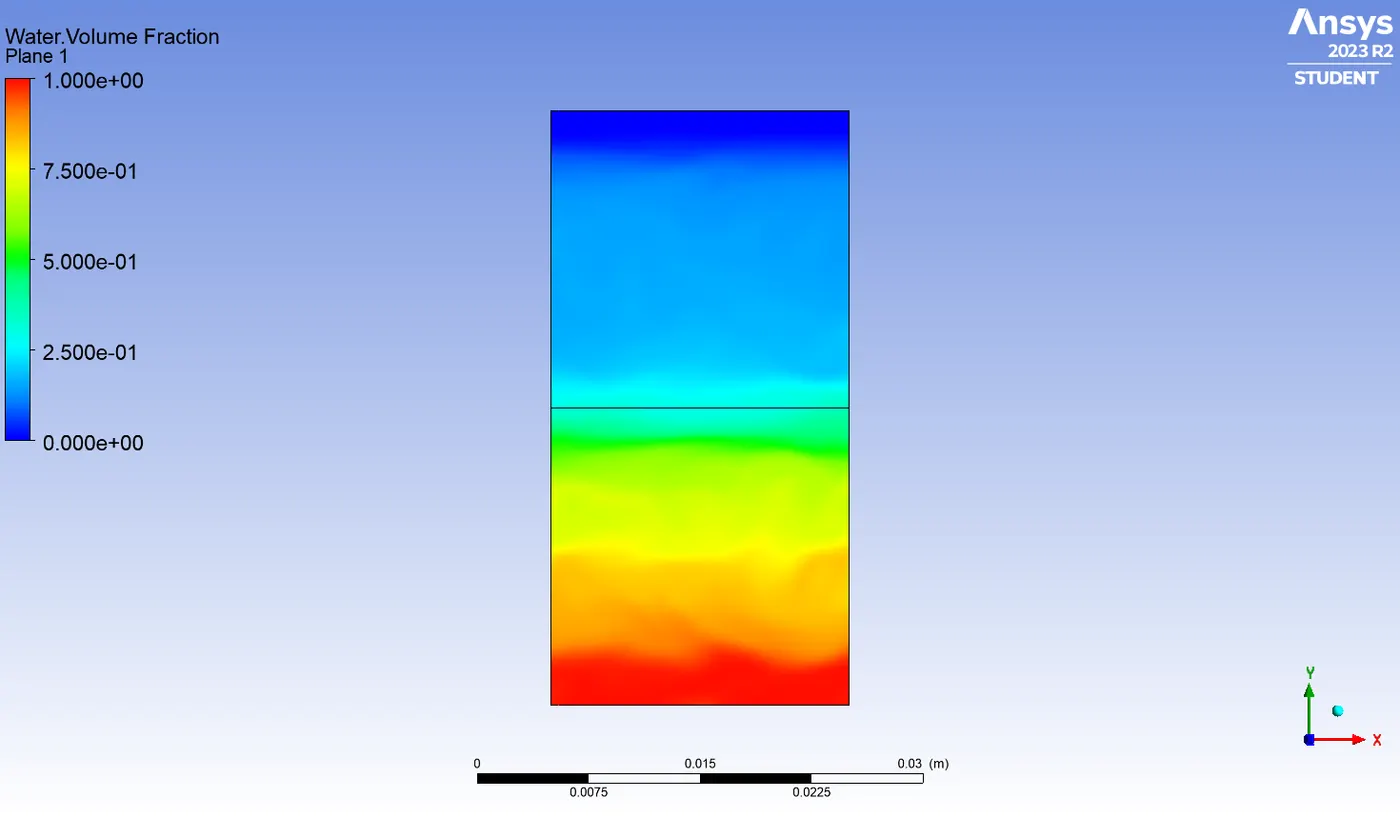
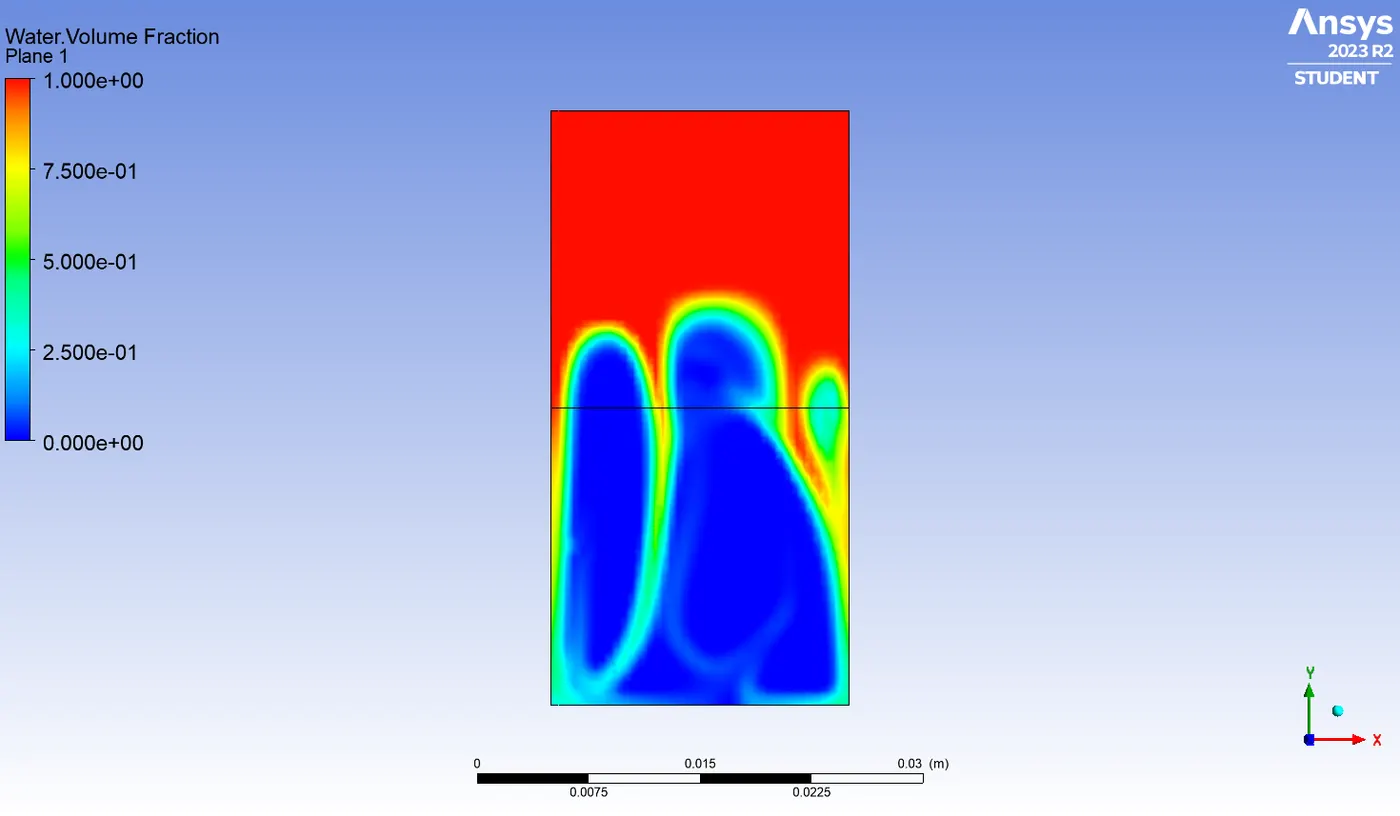
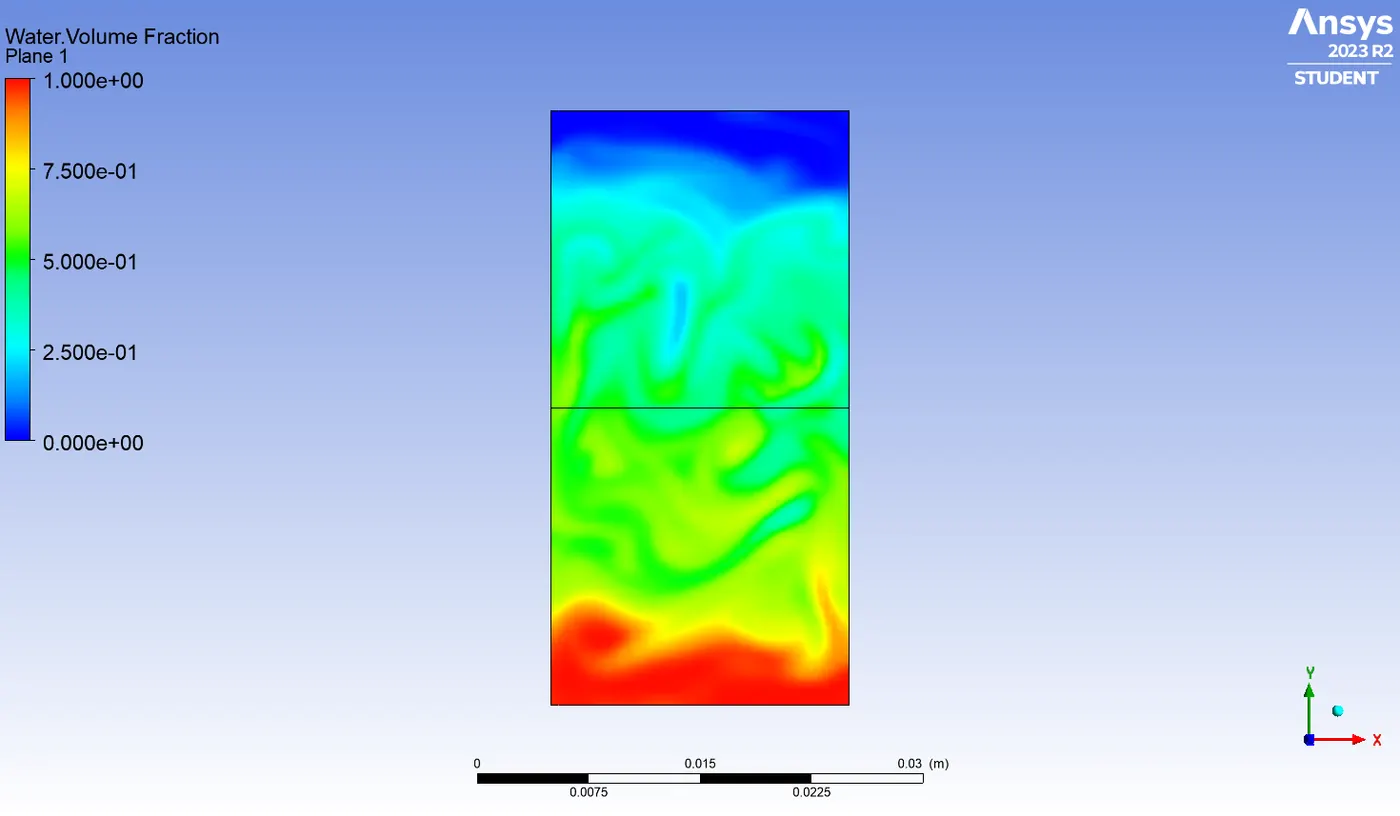
Case 2
Mesh Size - 0.2 mm
Fluid - Water and air
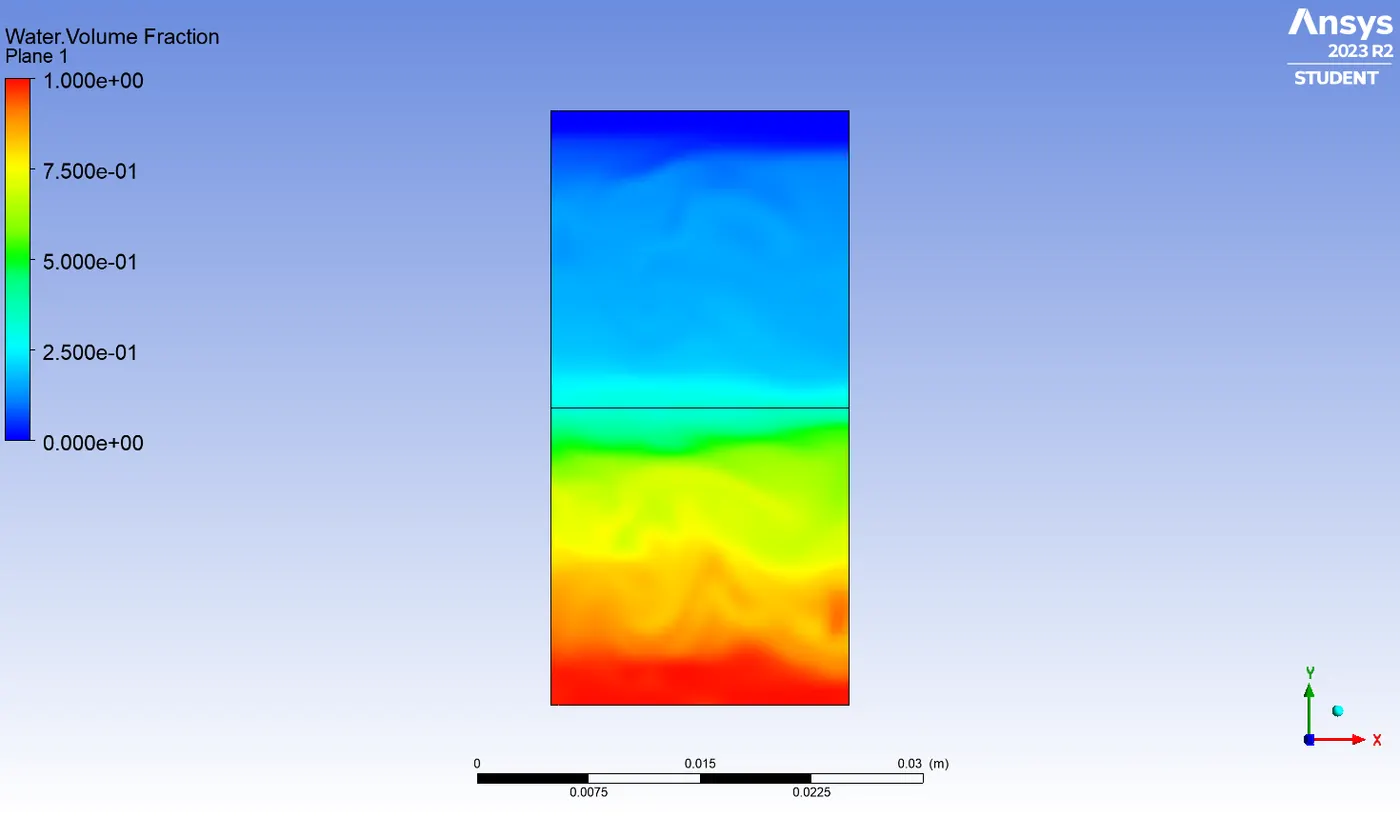
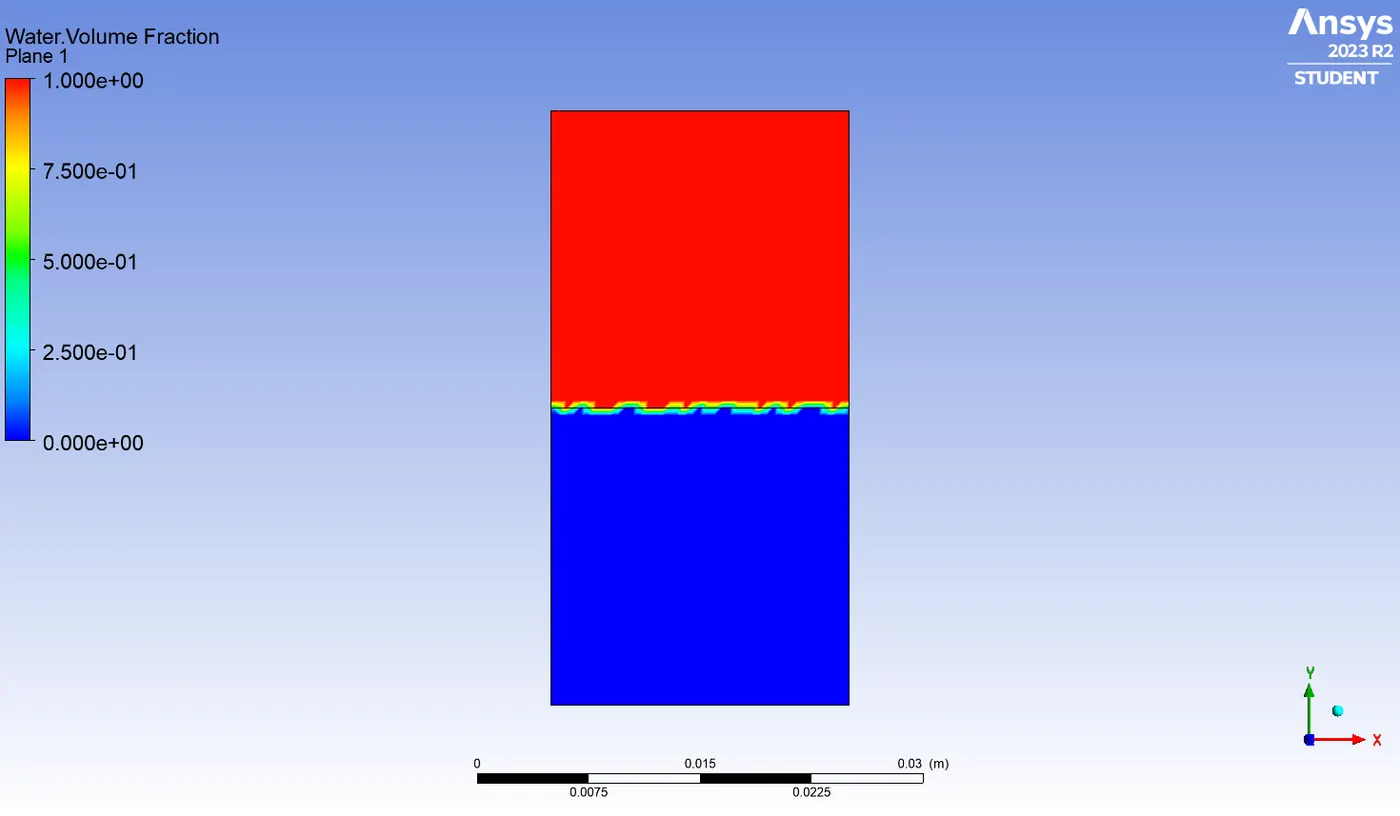
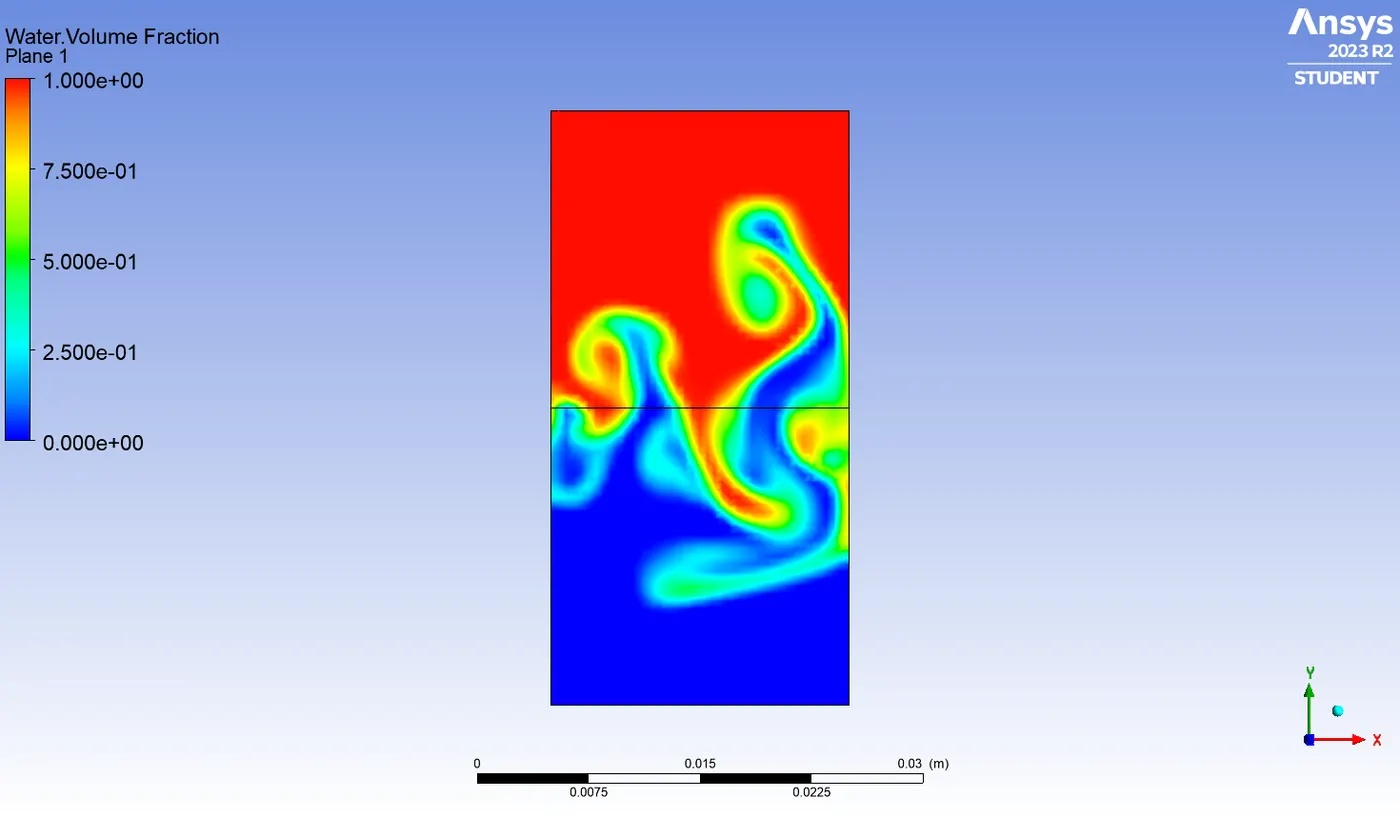
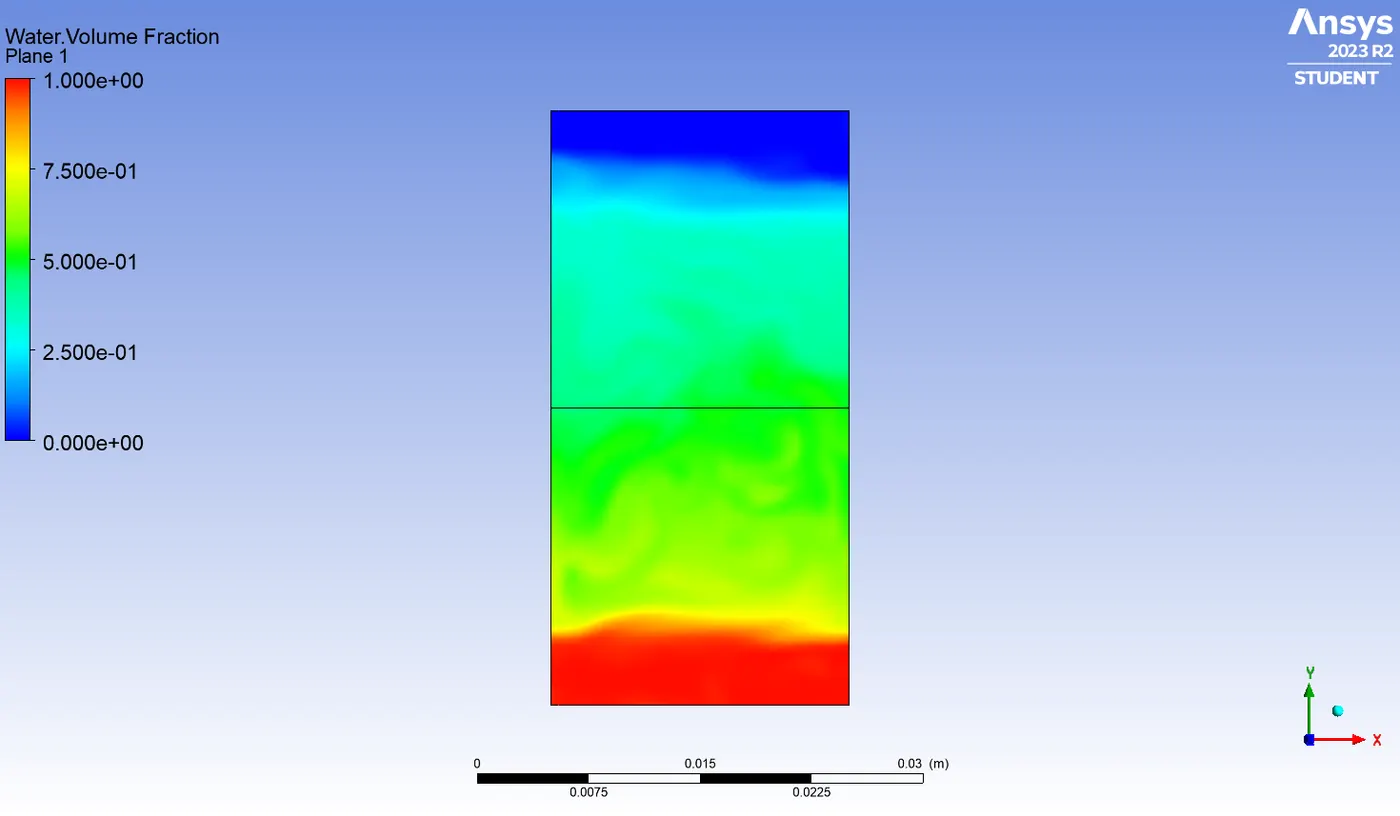
Case 3
Mesh Size - 0.2 mm
Fluid - User defined fluid and air
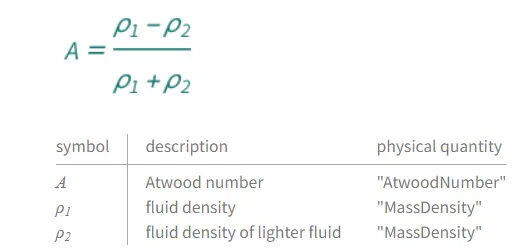
Atwood Number
Atwood Number is a non-dimensional number used to study hydrodynamic instabilities in density stratified flows.

- In an Rayleigh Taylor Instability there are three stages namely: Linear stability, mushroom head or bubble formation, long term evolution due to bubble merging and mixing.
- Bubble and mushroom head shape is relatively symmetrical in case of low Atwood number, Also perturbations are linear for a longer time.
- Bubble and mushroom head shape is less symmetrical in case of large Atwood number.
- The reason why steady state simulation is not suitable here because it won't capture the instabilities that occurs before reaching steady state.
https://drive.google.com/file/d/1-pQ0MT1mpKDs0WEcKeXpSQxwqTwECP98/view?usp=sharing