Week 5 - Rayleigh Taylor Instability
Aim : To Know the instability of a two different fluids by using the Rayleigh Taylor instability method.
Introduction :
Rayleigh taylor instability- It is an instability of interfaces between the 2 fluids of different densities . high density material will flow down due the gravity and lower density will flow upper side .
Ex – water and oil, grease, engine oil. River and ocean water mixture etc.
CFD models based on the mathematical of Rayleigh Taylor waves:
Richt meyer mesh know instability:
Shock wave will create the instability at interface of 2 different fluids. Two different densities fluids gradually generate instability from small amplitude and change with time. this instability can be considered the impulsive acceleration limits of the Rayleigh Taylor instability.
Kelvin Helmholtz instability:
This instability can occur when there is velocity shear in a continuous fluid, or where there is a velocity difference across the interface between two fluids. ex - wind blowing over the water.
Plateau Rayleigh instability:
This instability falling stream of fluid breaks up into smaller drops with the same volume but different or small surface area . The driving force of this instability is that the liquids by virtue of their surface tensions, tends to minimize their surface area.
Solving & Modelling approach:
Created the 20*20mm geometry one above the other.top represent the water and other represents the air. Sharing edges for the tropology of the two geometry by the space claim.
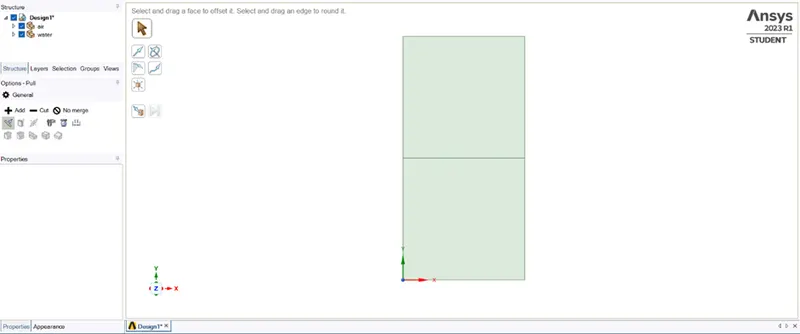
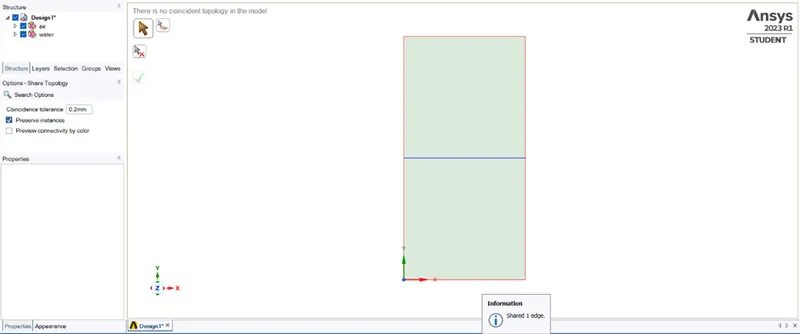
Topology shared
Model & labelling
Case-1 mesh- 0.5mm
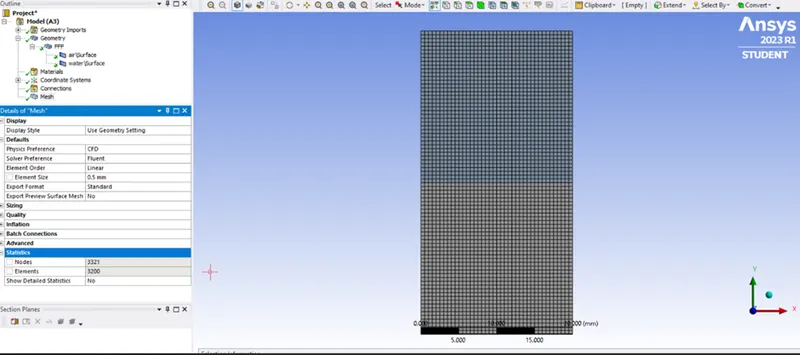
Setup & Results.
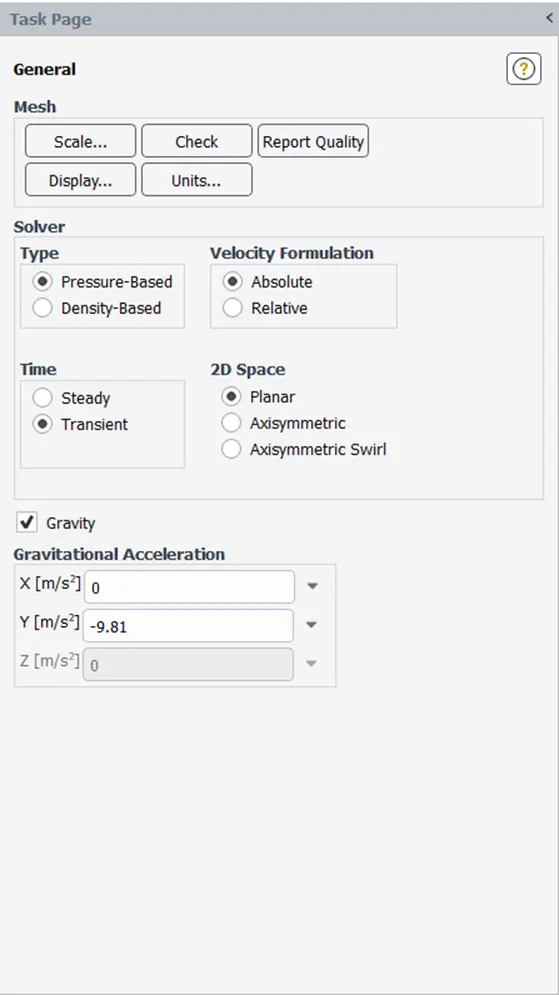
Updated the gravity value in solution setup
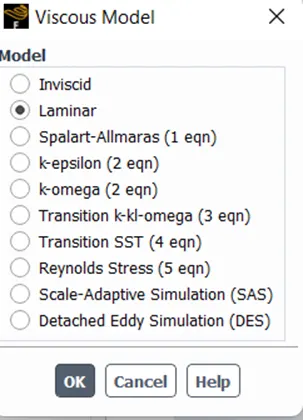
Model- laminar
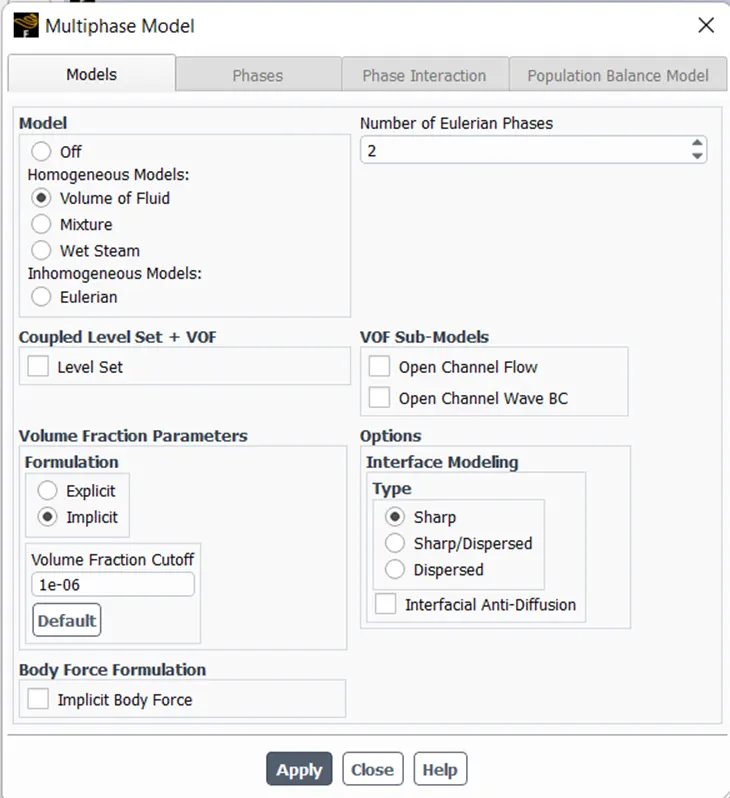
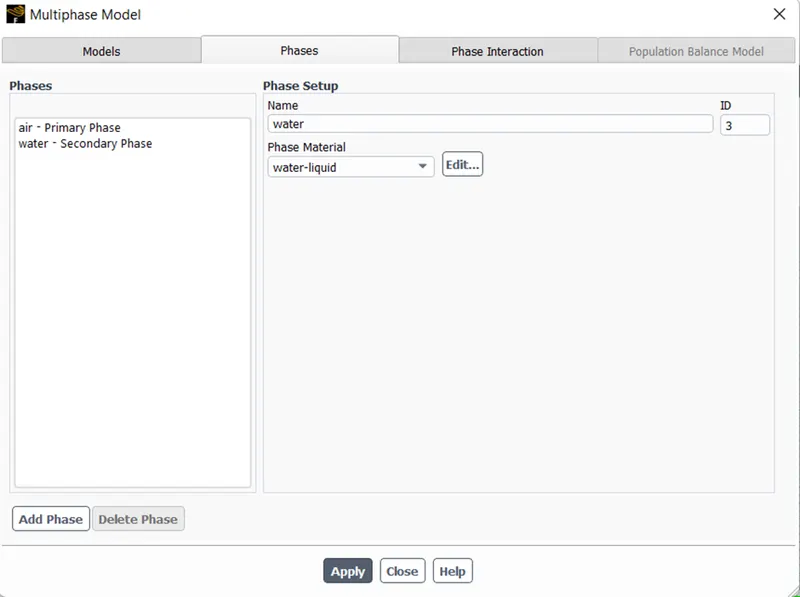
Multiphase , phases & material is set the air ,water for the geometry .
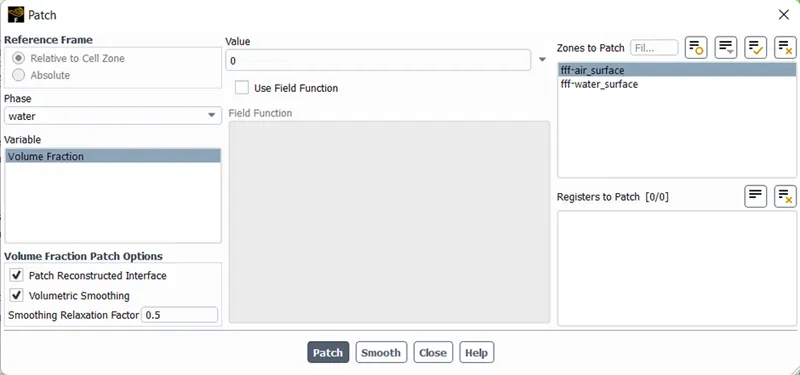
After the initiation the patch the water & air by nos 1 & 0 .
Time step size -0.004
No of time steps-500
Results
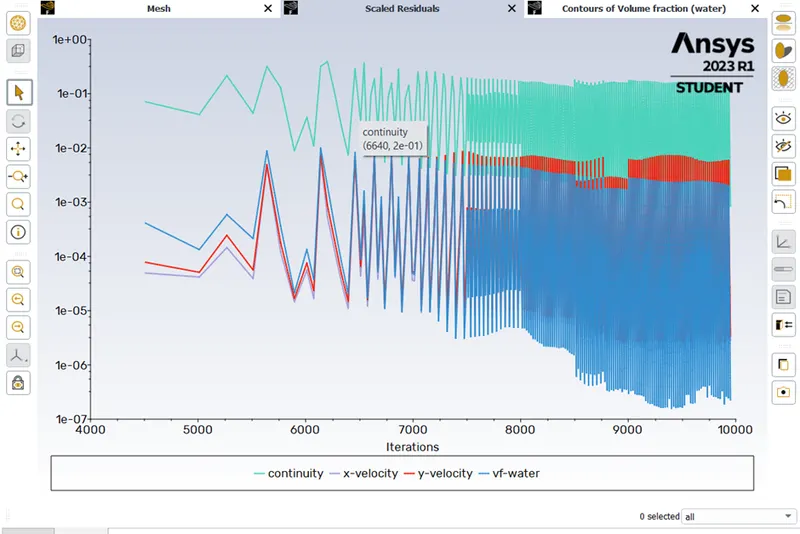
Residuals
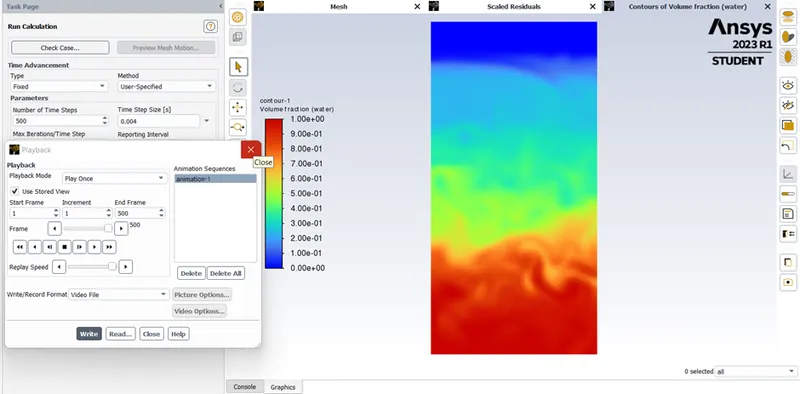
Contour
https://drive.google.com/file/d/1dz0uh9geTvM9-xALimJAnYsKmYqY0WMA/view?usp=share_link
Animation link-
Case-2
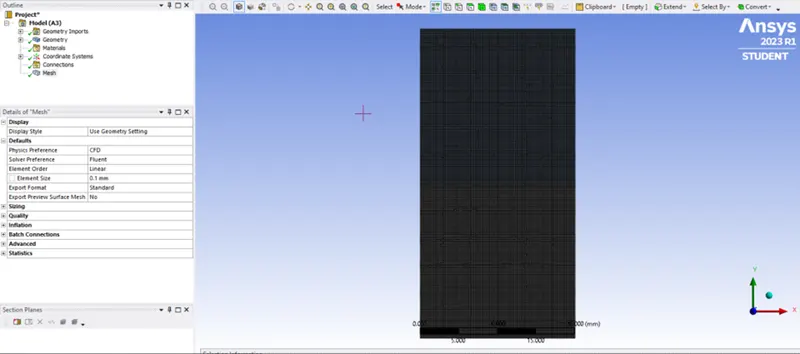
Mesh -0.1 mm
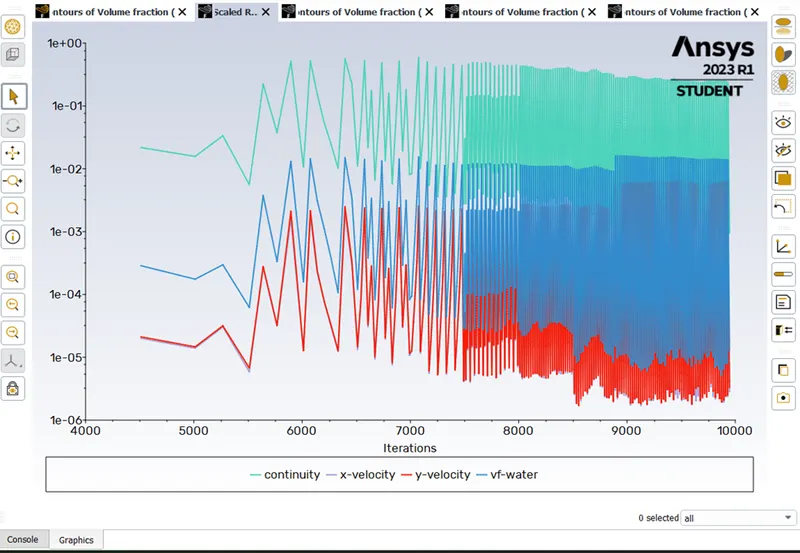
Residuals
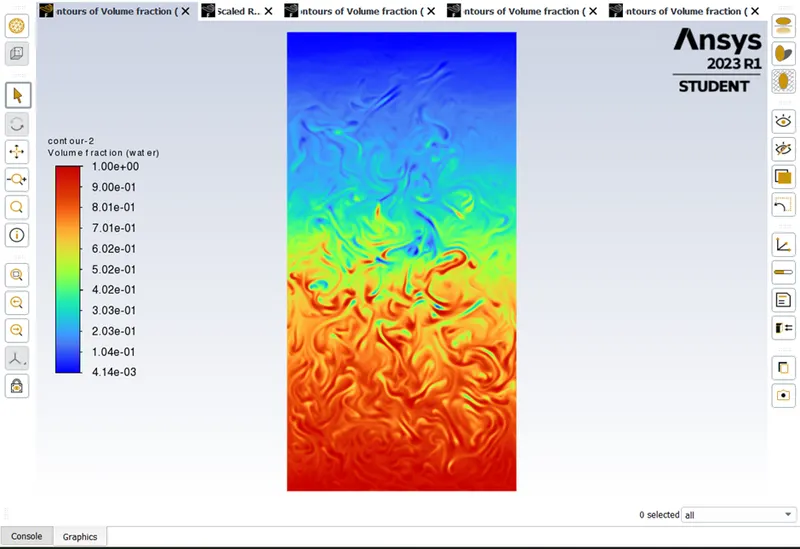
Contour
https://drive.google.com/file/d/1LE1yWKPqL0_qoO9K0OQxe2S1l-_N0G8s/view?usp=share_link
Animation link
Case-3
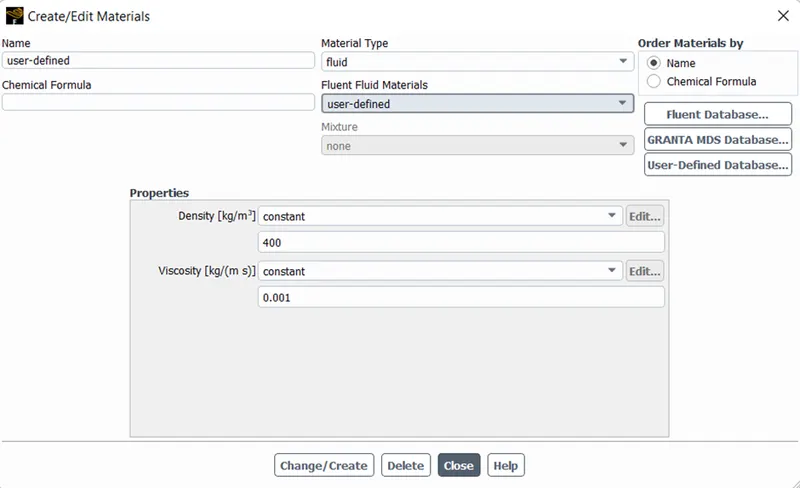
Changed the material for refined mesh.
Density-400 kg/m2
Visocity-0.001 kg/(m s)
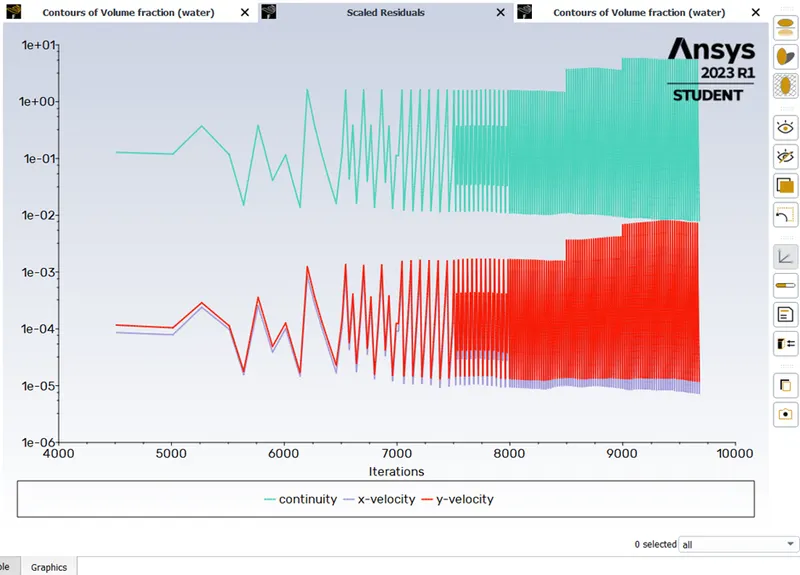
Residuals
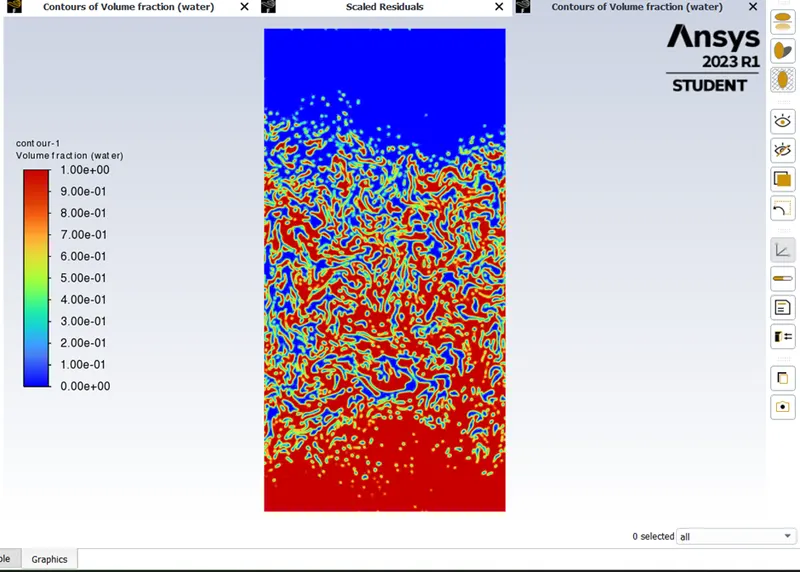
Contour
https://drive.google.com/file/d/1uuaEBgYRzMMaEu90gTRQsKnnCVX-b2Zz/view?usp=share_link
Animation link
Atwood number : It is a dimensionless number that is used to study hydrodynamic instabilities in density stratified flows.
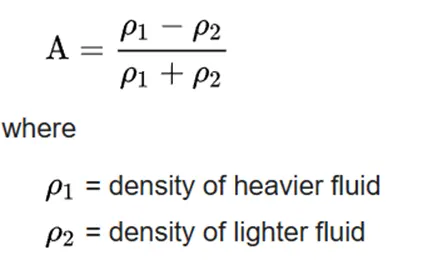
For air and water- A=0.99 bigger bubbles are generated will settling down .
For new material and water- A=0.4277 smaller bubbles are generated will settling down .
Conclusion:
The finer mesh captures the instability better than the coarse mesh.but it takes more time for the heavier fluid to settle down.
Depend upon the density also varying the settling the material taking more time.