Week 4 - CHT Analysis on Exhaust port
AIM: To the know the coefficient of the heat near the wall of the exhaust port of the engine.
Introduction : Temperature difference flow from the body to the atmosphere or solid to fluid know as the coefficient of heat transfer . coefficient of heat is key factor for the engines to increase the life time ,performance ,efficiency etc. CHT analysis will help in knowing cooling the component with in less time. Few material cannot with stand the higher temperature due to the low melting point of material. example: cooling towers,heat exchanges, exhaust for engines, nuclear heat exchanger ,electronic component etc.
Solving & Modelling approach:
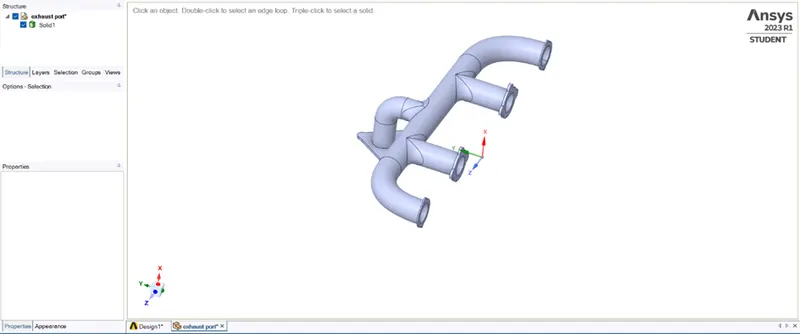
Importing the exhaust port cad file to the space claim. Change the units from MM TO METERS .
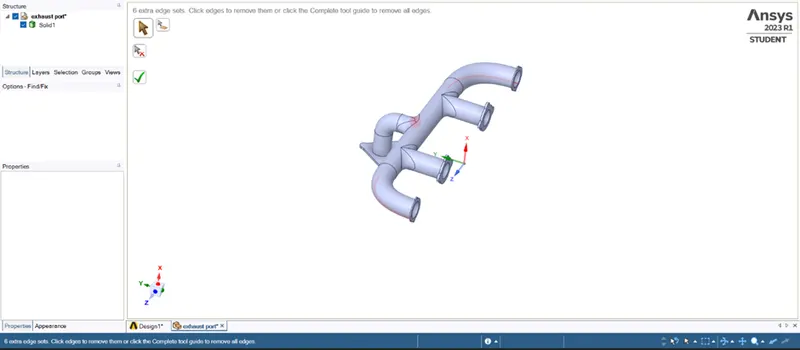
Removing the unwanted edges from geometry by using the extra edges Tool from work bench tab option.
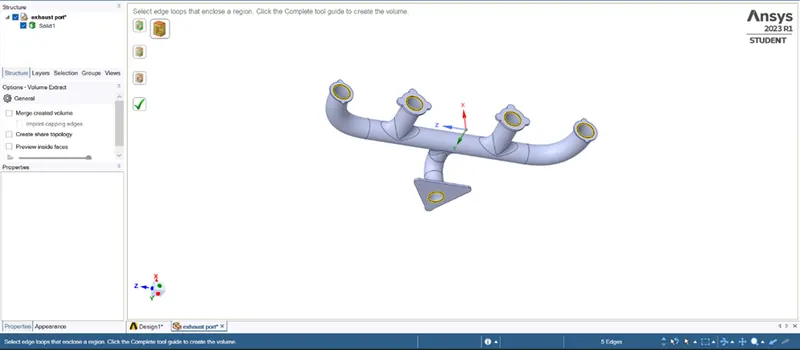
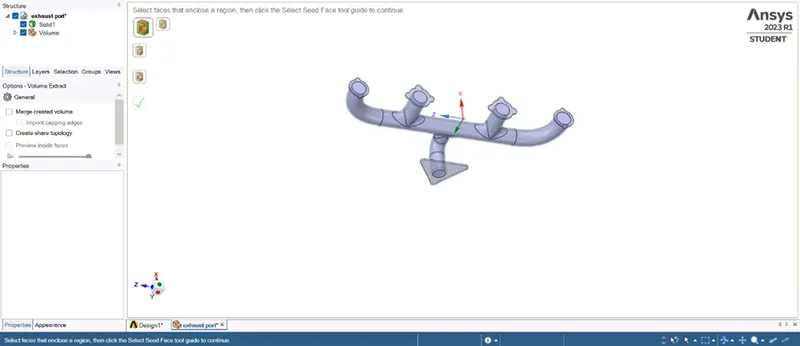
Generating the fluid body by selecting the edges of geometry with the extract tool.
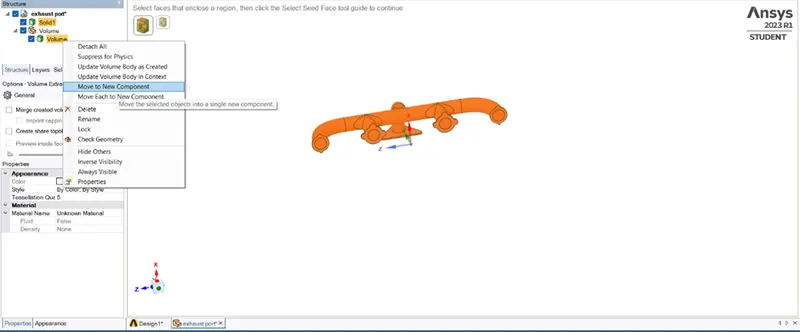
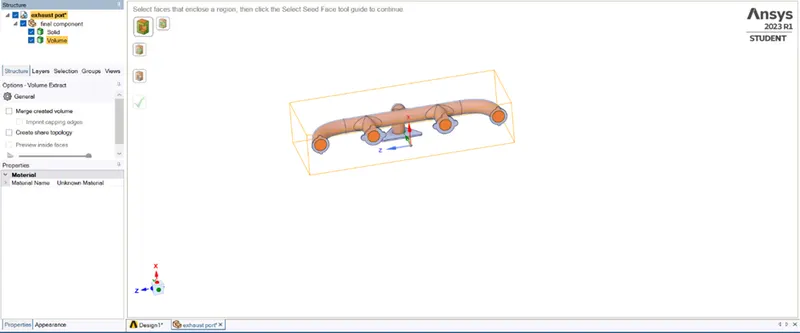
Transferring the 2 different component to the new component & deleting the empty component.
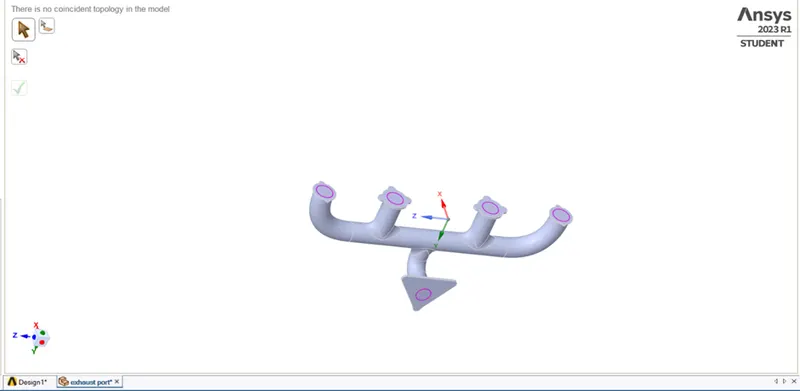
Shared the topology between the 2 components
Pre-processing and solver setting
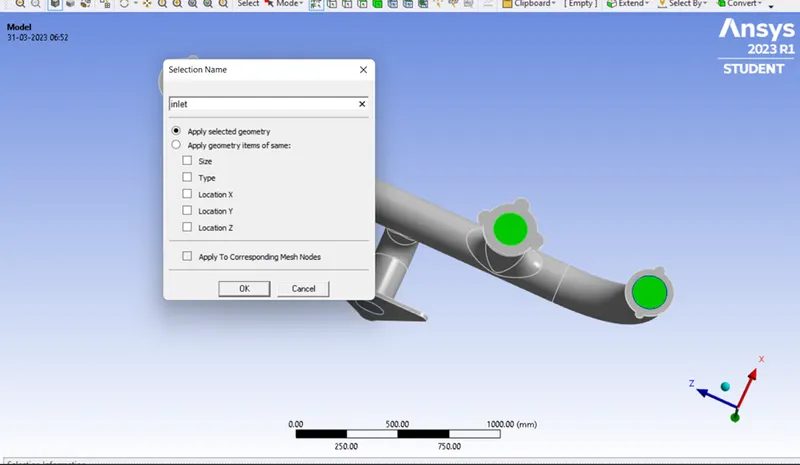
Naming the component for geometry.
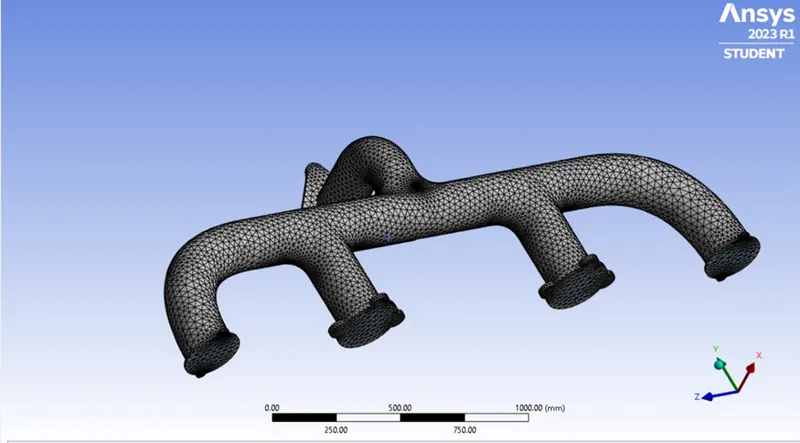
Mesh generated for 100mm size
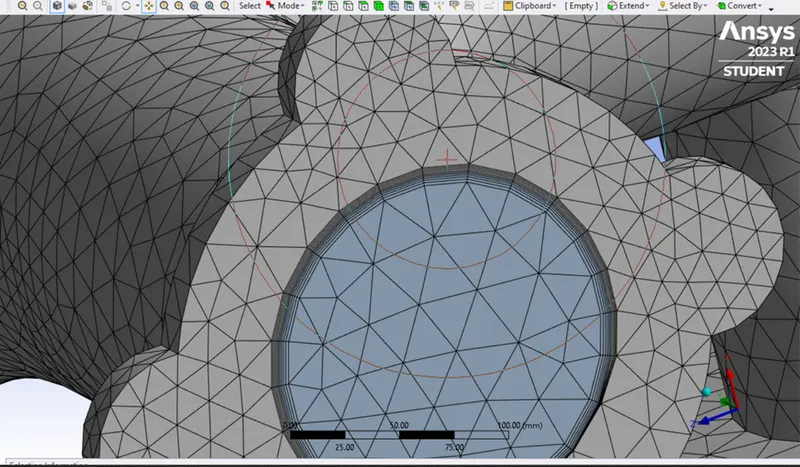
Inflation layer for both the bodies of y+ value of 5 mm of total thickness.
I choose the pressure based k-epsilon model for the CHT analysis because the heat exchanges will take place the near internal wall and fluid body.
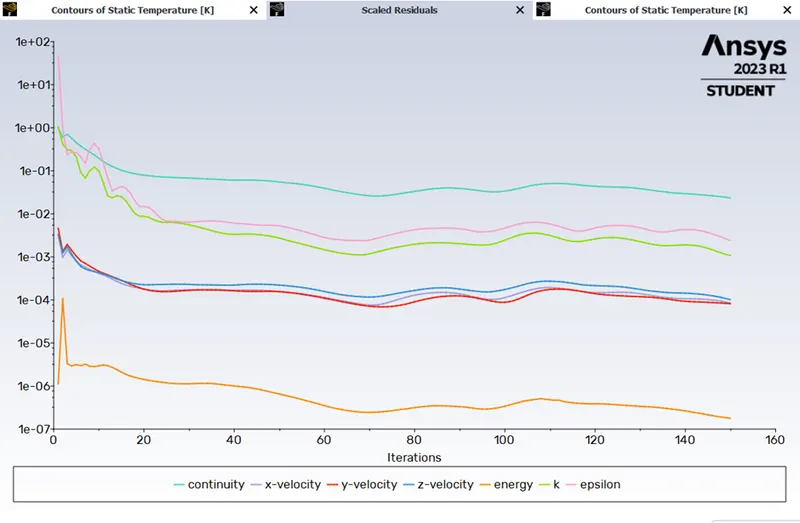
Residuals plots
Contours
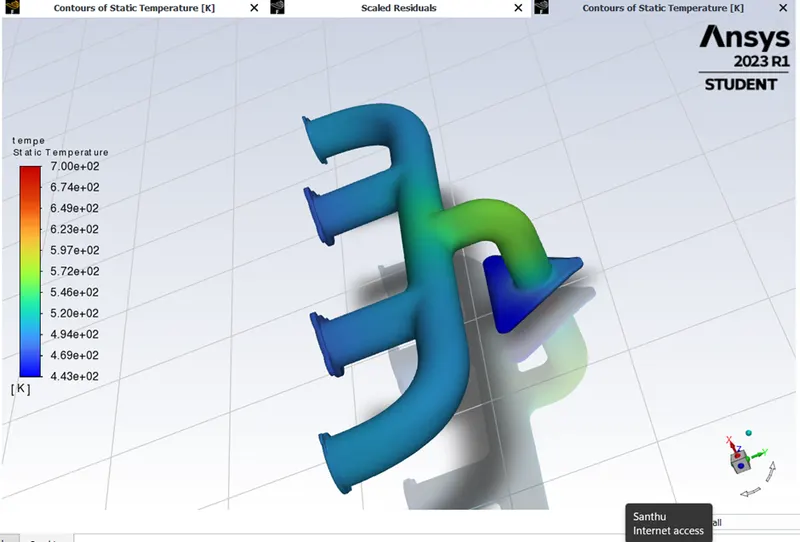
Temperature
Results
Making the outer wall transparency and inserting the XY plane in the body to see the velocity, temperature ,heat flux.
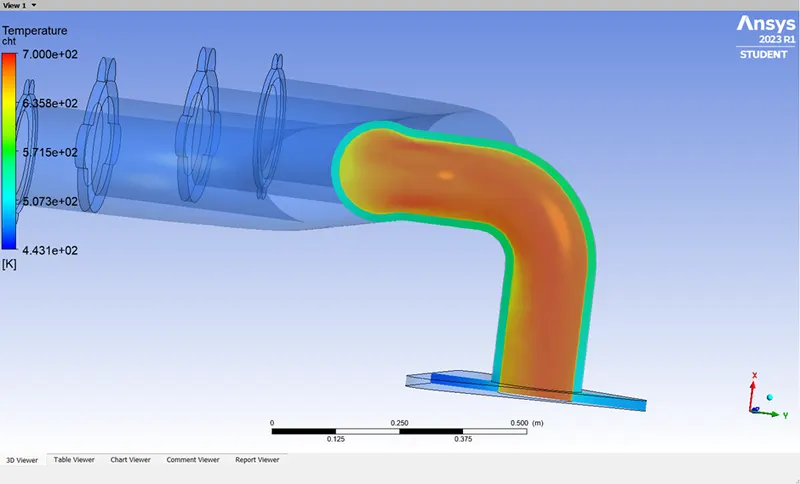
Temperature
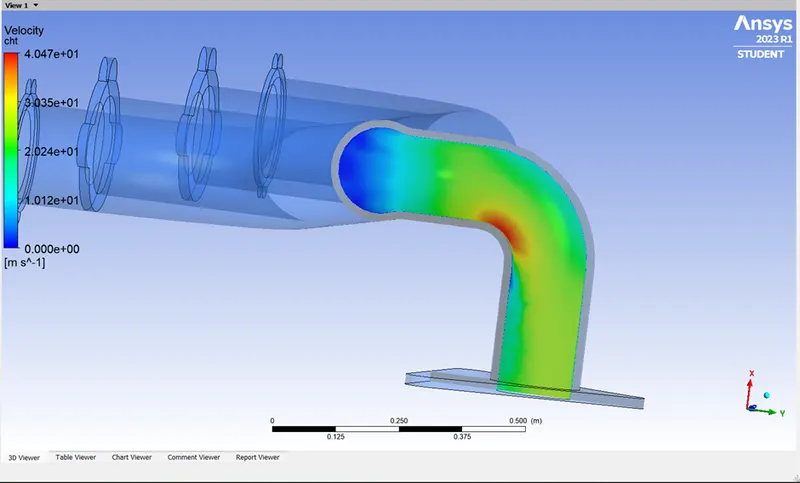
Velocity
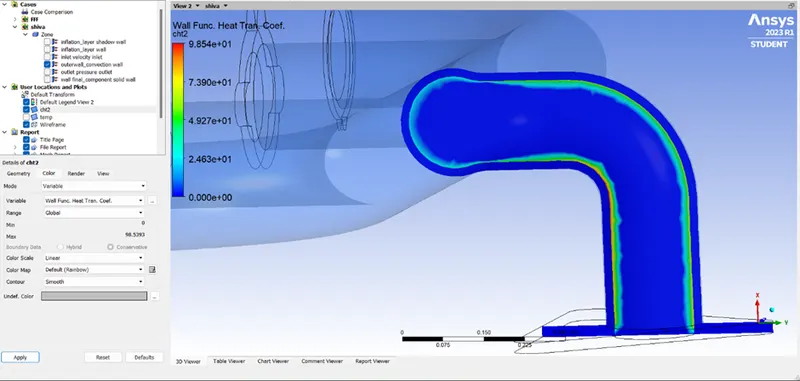
Heat transfer coefficient
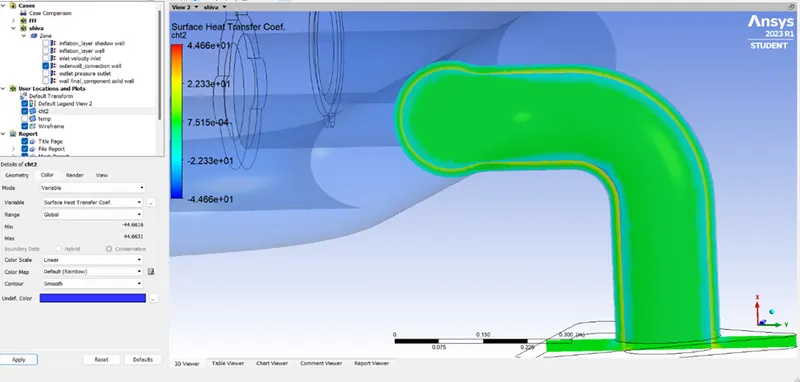
Surface heat transfer coefficient
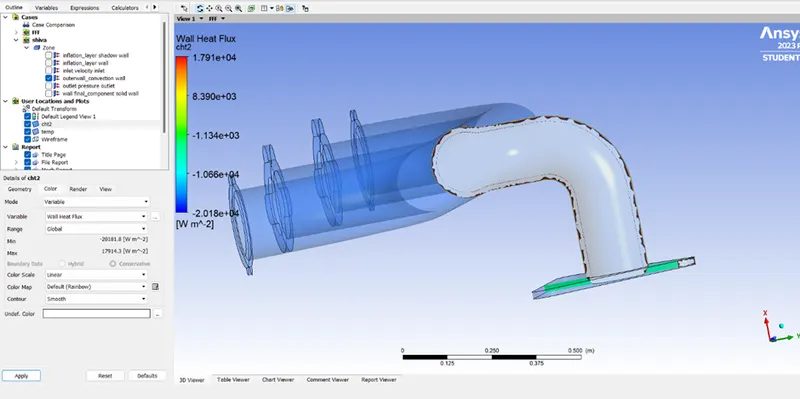
Heat flux
Heat should transfer to the outside body as fast it can from solid body. It will melt the solid body after the certain temperature as it vary from material to material . CHT should maintain between the material temperature .
Heat transfer coefficient –24.34
Surface transfer coefficient= -1666.04
Conclusion
As the result above we can see the velocity is more at the bent region at the outlet. CHT at the walls heat film between the solid and fluid body is creating and the heat is transfer to the surrounding area.