Week 5 - Rayleigh Taylor Instability
Objectives:
What are some useful CFD models that were constructed using Rayleigh Taylor wave mathematical analysis? Describe how these mathematical models have been modified for CFD computations in your own words.
Run the Rayleigh Taylor instability simulation with a base mesh of 0.5 mm for 2 different mesh sizes. By displaying the animations, compare the outcomes ( Attach them from your google drive). Examine the variations in the animation and describe how mesh size affects simulation. Also, discuss the potential drawbacks of using a steady-state technique for these kinds of simulations. [For this simulation, select Air and Water]
For a finer mesh, run a second simulation using water and a user-defined substance with a density of 400 kg/m3 and a viscosity of 0.001 kg/m-s.
- Define the Atwood Number. Find out the Atwood number for both the cases and explain how the variation in Atwood number in the above two cases affects the behavior of the instability.
Procedure:
Introduction:
Rayleigh Taylor Instability :
The Rayleigh–Taylor instability is an instability of an interface between two fluids of different densities which occurs when the lighter fluid is pushing the heavier fluid. Examples include the behaviour of water suspended above oil in the gravity of Earth ,mushroom clouds like those from volcanic eruptions and atmospheric nuclear explosion, supernova explosions in which expanding core gas is accelerated into denser shell gas, instabilities in plasma fusion reactors and inertial confinement fusion.
Some practical CFD models that have been based on the mathematical analysis of Rayleigh Taylor waves are:
- Kelvin Helmholtz instability Model:
This instability can occur when there is velocity shear in a continuous fluid, or where there is a velocity difference across the interface between two fluids. An example is wind blowing over the water. other examples showing this instability are clouds,oceans,saturns bands.
2. Richtmeyer meshkow instability :
This instability occurs when a shock wave interacts with an interface separating two different fluids or in other words when two fluids of different densities are impulsively accelerated.The development of instability begins with small amplitude pertubations which initially grow linear with time.This instability can be considered the impulsive acceleration limit of the Rayleigh Taylor Instability.
3. Plateau Rayleigh instability :
This instability explains why and how a falling stream of fluid breaks up into smaller packets with the same volume but different or small surface area . It is often called as Rayleigh instability.The driving force of this instability is that the liquids by virtue of their surface tensions ,tends to minimize their surface area .
4.Rayleigh Taylor Instability :
The Rayleigh–Taylor instability is an instability of an interface between two fluids of different densities which occurs when the lighter fluid is pushing the heavier fluid.
Case 1) Rayleigh Taylor instability simulation for base mesh 0.5 mm :
Step 1) Geometry creation :
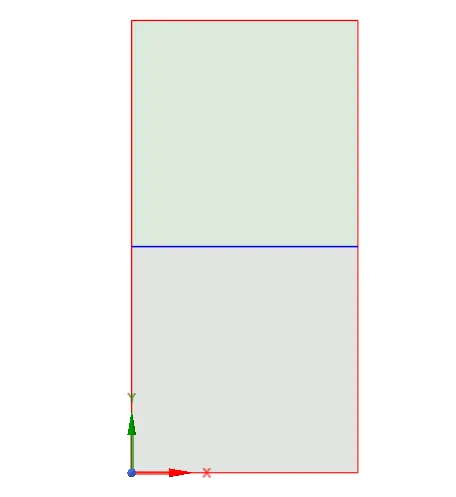
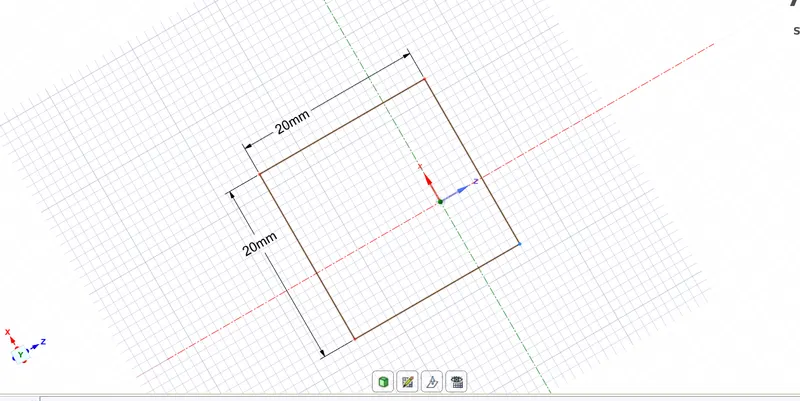
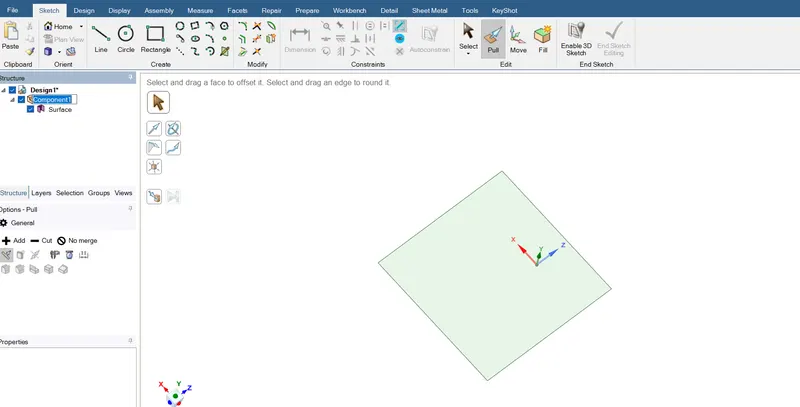
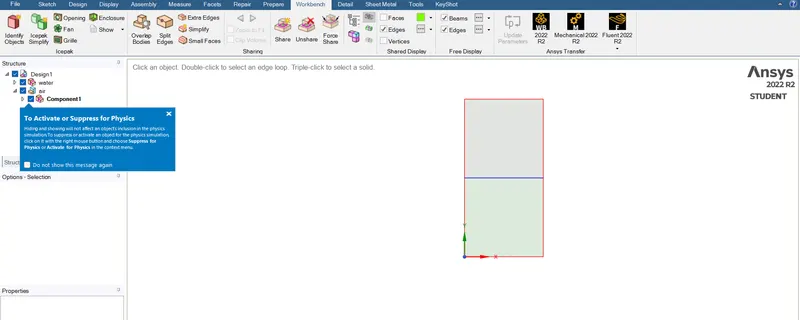
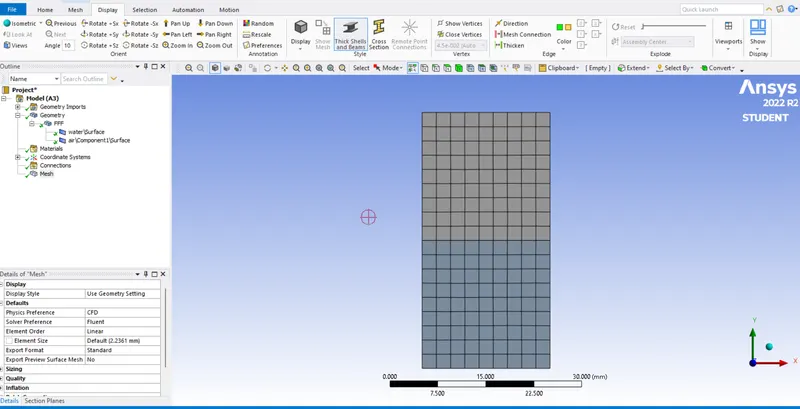
This is 2D simulation so we create the two square of size 20X20mm one is above the other and we give the name of top square is water and bottom square is air. and use share topology due to that the interface edge is shared .The created geometry is shown below:
\
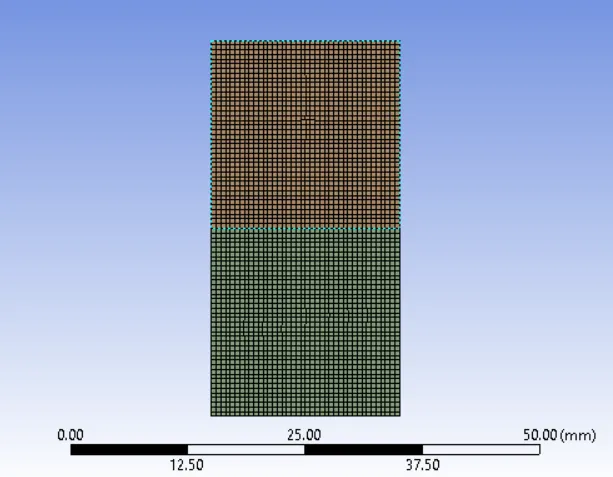
Step 2) Mesh : Use mesh size 0.5 mm
The mesh is shown below :
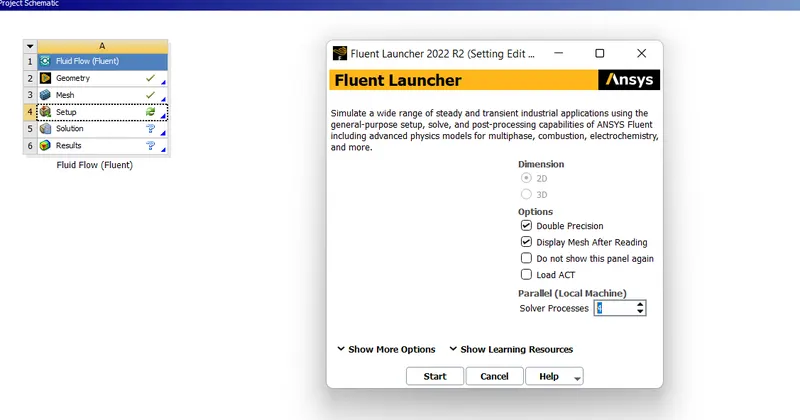
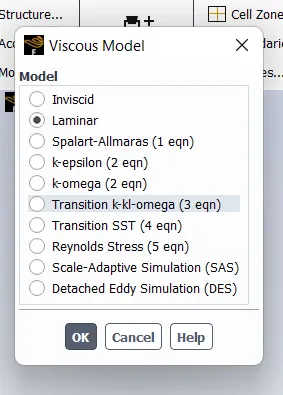
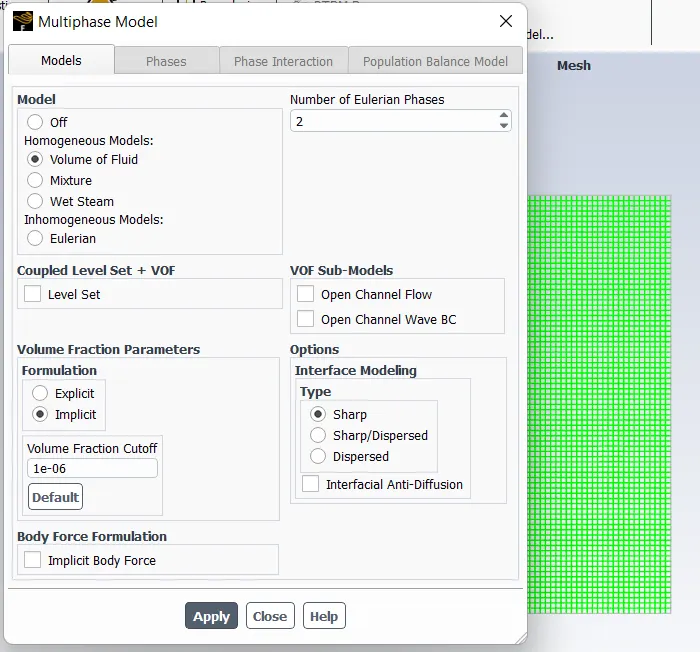
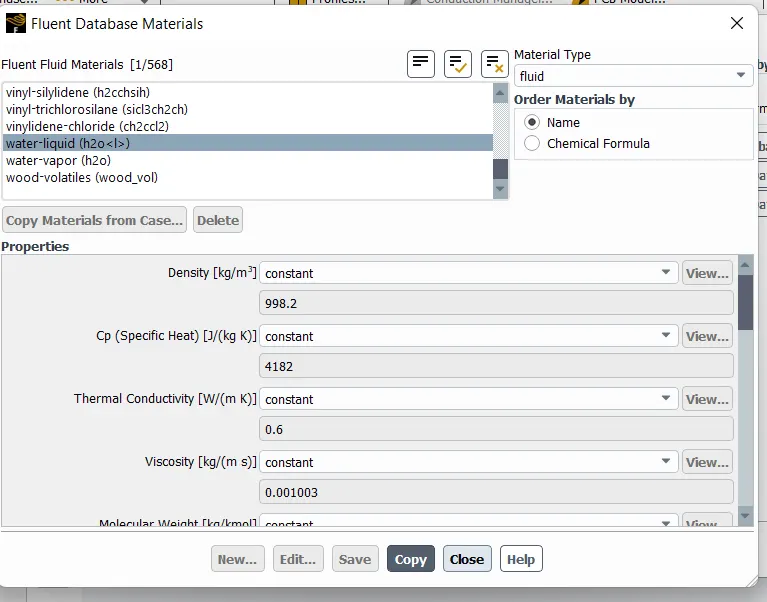
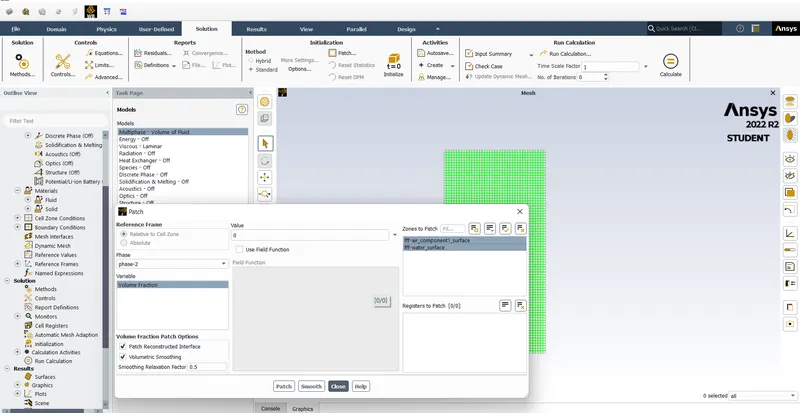
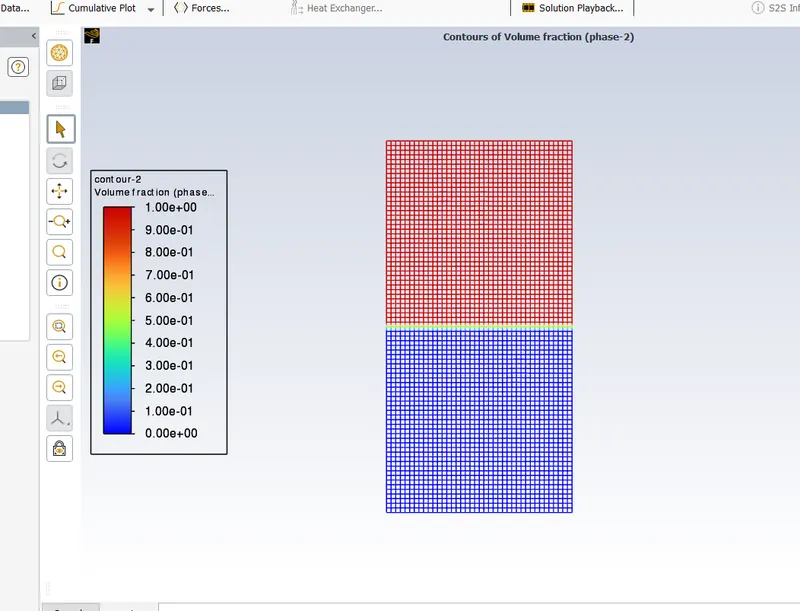
here i run with this equation

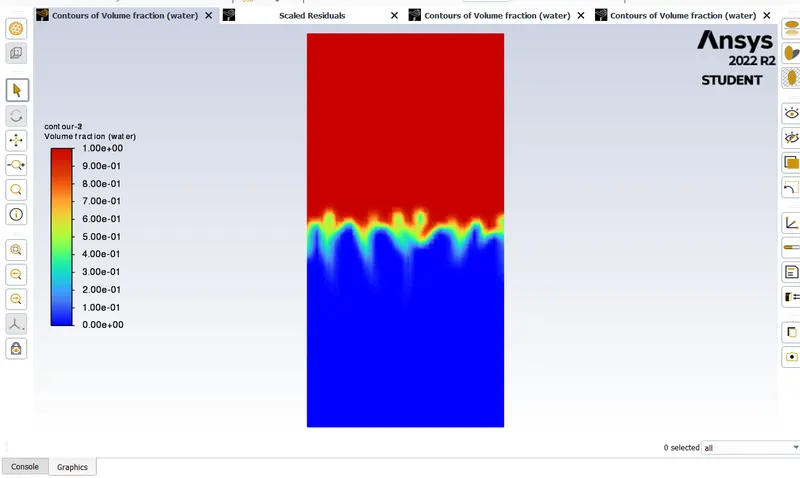
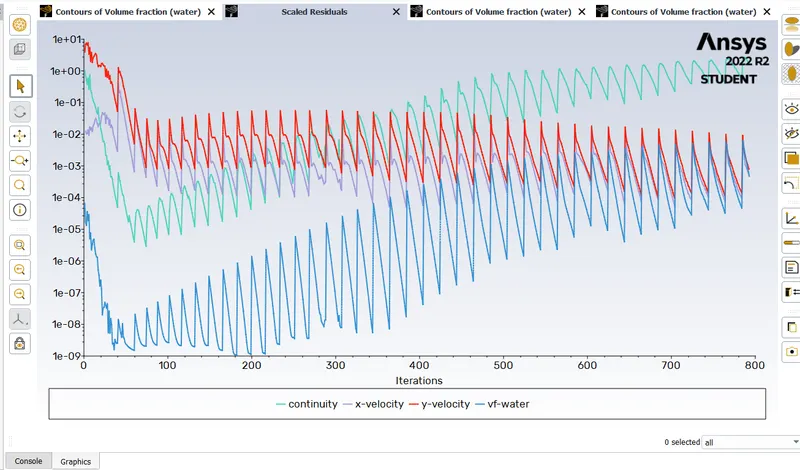
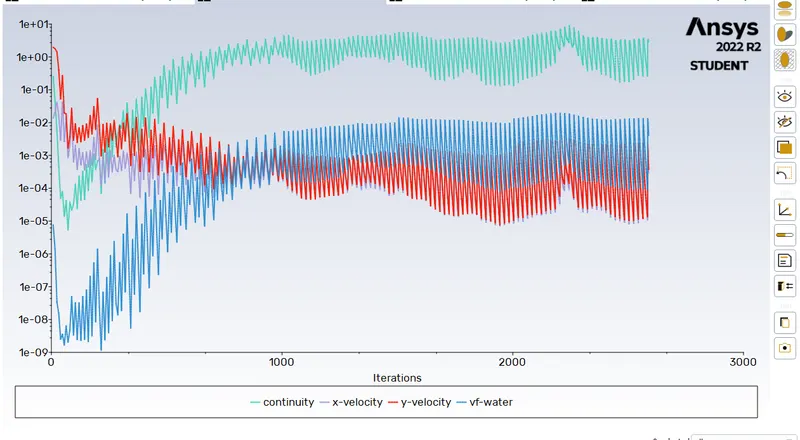
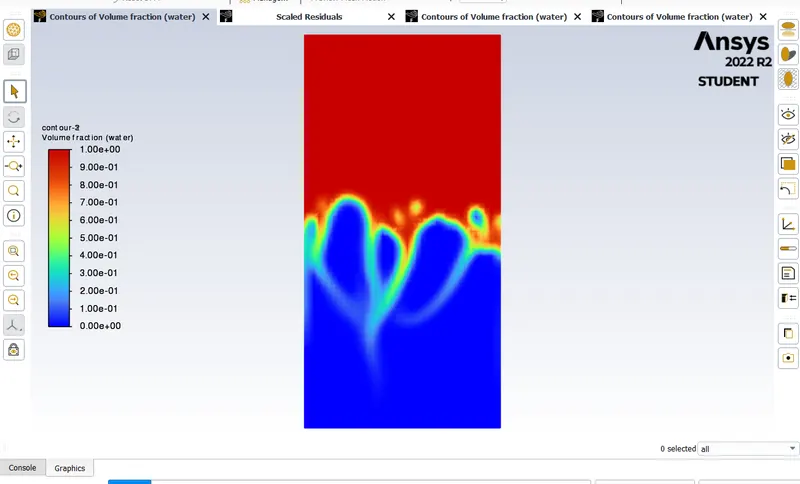
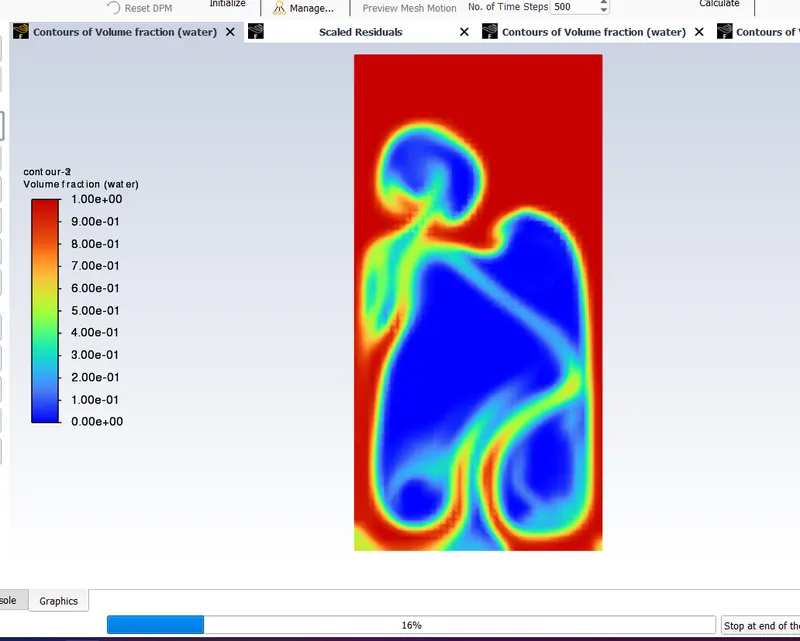
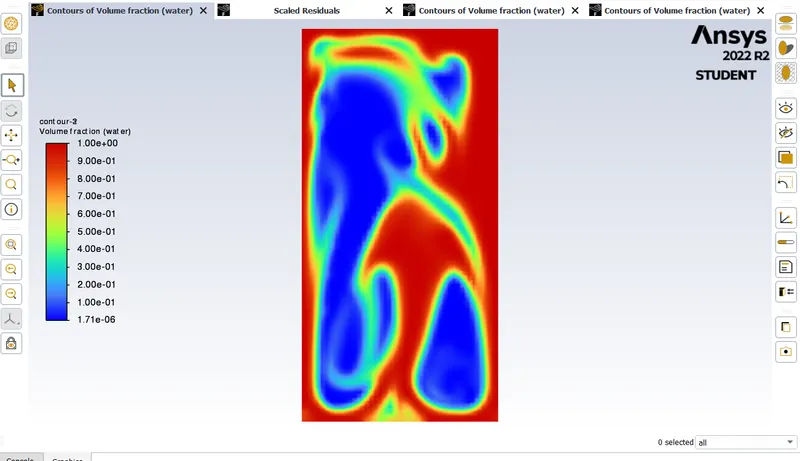
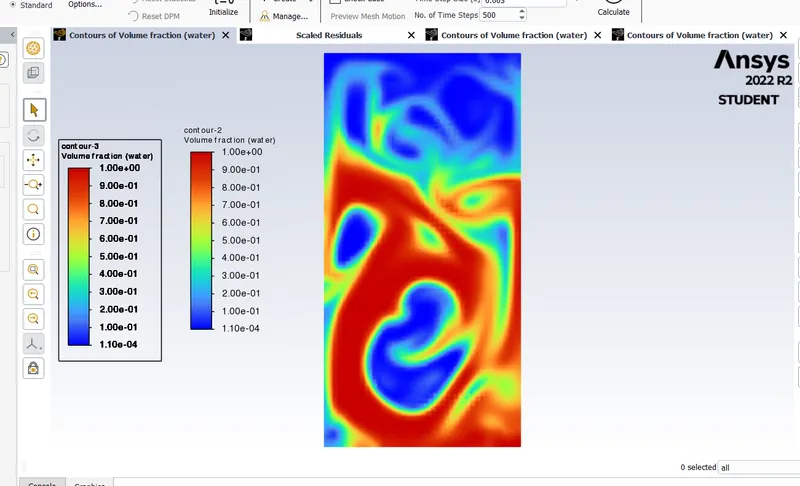
Link : https://drive.google.com/file/d/1XSNWvvPxLuXs0czlUpxuNh1TIJenSl8e/view?usp=sharing
Observations :
- The finer mesh captures the instability better than the coarse mesh.but it takes more time for the heavier fluid to settle down.
- The computational time is also increased for fine mesh but the result obtained having better accuracy.
- The steady state simulation is performed if we are concerned more about the final state results or the equilibrium state,In RT instability CFD model we are more concerned to learn about the transition of the irregularities that start developing when we pour the high densiy fluid upon the low density fluid under the effect of gravity.and we want to know how the interface collapses as a function of time so In this case Transient state is more suitable over the steady state.