Week 5 - Rayleigh Taylor Instability
AIM:
- To study and observe the Rayleigh Taylor Instability phenomenon using Ansys Fluent.
OBJECTIVE:
- To learn about Rayleigh Taylor Instability phenomenon and state some practical CFD models that have been based on the mathematical analysis of Rayleigh Taylor waves.
- To perform the Rayleigh Taylor instability simulation for 2 different mesh sizes with the base mesh being 0.5 mm and comparing the results by showing the animations.
- To observe the differences in the animation and explain the effect of mesh size on simulation. Also, explain why a steady-state approach might not be suitable for these types of simulation.
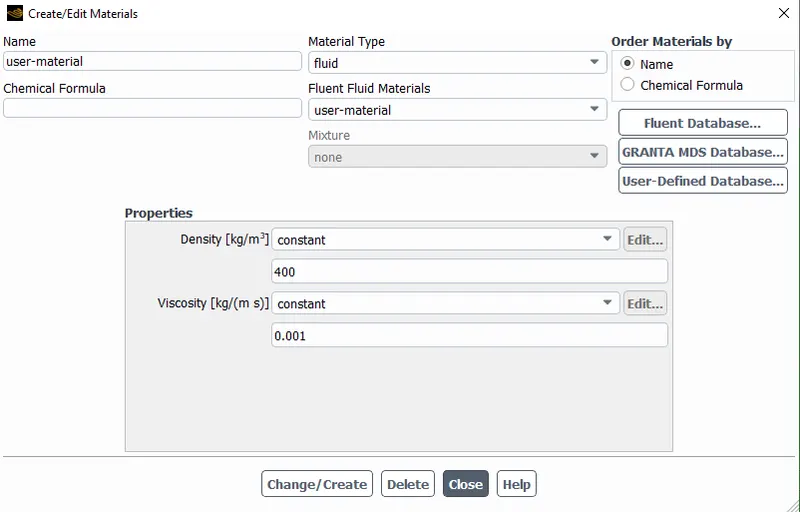
- To perform one more simulation with water and user-defined material (density = 400 kg/m3, viscosity = 0.001 kg/m-s) for refined mesh.
- To learn about the Atwood Number and find out the Atwood number for both the cases and explain how the variation in Atwood number in the above two cases affects the behavior of the instability.
INTRODUCTION:
RAYLEIGH TAYLOR INSTABILITY:
Rayleigh Taylor instability occurs whenever a heavy fluid of density is supported against a gravity by a lighter fluid of density. The RT instability is perhaps one of the hydrodynamic instabilities that most frequently occurs in nature. It is present in phenomena as different as the dropping of water in a glass when it is inverted and in the ignition of a supernova at the end of the life of some stars. RT instability also plays a role in the formation of some astrophysical structures like in the supernova remnants in the Eagle and Crab nebulae as well as in many industrial processes. It is also important in inertial confinement fusion as it determines the minimum energy required for ignition and, very probably, it is a matter of concern in the design of nuclear weapons.
The Rayleigh Taylor instability, is an instability of an interface between two fluids of different densities which occurs when the lighter fluid is pushing the heavier fluid. Examples include the behavior of water suspended above oil in the gravity of Earth, mushroom clouds like those from volcanic eruptions and atmospheric nuclear explosions, supernova explosions in which expanding core gas is accelerated into denser shell gas, instabilities in plasma fusion reactors and inertial confinement fusion.
The theory of the Rayleigh-Taylor instability of accelerated fluid layers is systematically developed from basic fluid equations. Starting with the classical potential flow theory for moving contact surfaces, the discussion extends to various fluid systems describing inhomogeneous, viscous, compressible, and isobaric flows. Thereby an overview on the major stability issues under a broad variety of physical conditions can be given. In particular, the stability analysis is addressed to layered materials in plane and spherical geometries under various dynamical conditions, to inhomogeneous media with variable gradients and different boundary conditions, to viscous boundary layers, compressible atmospheres, and to stationary ablation fronts in laser-driven plasma experiments. The stability theory is further extended to the nonlinear stage of the Rayleigh-Taylor instability and to a discussion of bubble dynamics in two and three dimensions for closed and open bubble domains. For this purpose simple flow models are studied that can describe essential features of bubble rise and bubble growth in buoyancy-driven mixing layers.
PRACTICAL CFD MODELS BASED ON THE MATHEMATICAL ANALYSIS OF RAYLEIGH TAYLOR WAVES:
- A Lattice Boltzmann Scheme for Incompressible Multiphase flow and its application in simulation of Rayleigh Taylor Instability:
- Here in this model it proposes a new lattice Boltzmann scheme for simulation of multiphase flow in the nearly incompressible limit. The new scheme simulates fluid flows based on distribution functions. The interfacial dynamics, such as phase segregation and surface tension, are modeled by incorporating molecular interactions. The lattice Boltzmann equations are derived from the continuous Boltzmann equation with appropriate approximations suitable for incompressible flow. The numerical stability is improved by reducing the effect of numerical errors in calculation of molecular interactions. An index function is used to track interfaces between different phases. Simulations of the two-dimensional Rayleigh–Taylor instability yield satisfactory results. The interface thickness is maintained at 3–4 grid spacings throughout simulations without artificial reconstruction steps.
- Modelling of Rayleigh Taylor Instability for Steam Direct Contact Condensation:
- Steam Direct Contact Condensation (DCC) is a well-known method to condense steam, which has been widely employed in the industry (e.g. nuclear, marine and chemical) for its high efficiency and ease of implementation due to the relatively simple design. In the nuclear field such philosophy has been introduced in the design of safe nuclear power plants, mostly because DCC serves as a passive safety system in case of a postulated accident. On the other hand, DCC might create unstable configurations of the flow, resulting in rapid pressure transients and large flow recirculation within the water pool, which could harm the plant structure integrity and reduce the efficiency of the whole system.
- Simulation of Single Mode Rayleigh Taylor Instability by SPH Method:
- Instability developing and evolving at the interface between
two horizontal parallel fluids of different viscosities and densities with the heavier fluid at the top and the lighter one at the bottom is known as the Rayleigh–Taylor instability (RTI) to honor the pioneering works of Lord Rayleigh and Taylor. The instability initiates when a multiphase fluid system with different densities experiences gravitational force. As a result, an unstable disturbance tends to grow in the direction of gravitational field thereby releasing and reducing the potential energy of the system. - SPH is a relatively new meshless numerical approach which has attracted significant attention in the last 15 years. Compared with the conventional mesh-dependent computational fluid dynamics (CFD) methods, the SPH approach exhibits unique advantages in modeling multiphase fluid
flows and associated transport phenomena due to its capabilities of handling complex material surface behavior as well as modeling complicated physics in a relatively simple manner. On the other hand, as SPH is still a developing CFD tool, it is vital to investigate its attributes, namely, advantages or potential limitations in modeling different multiphase flow problems to further understand and then improve this technique. Toward this end, this work aims to simulate the
RTI problem by using the SPH method hence revealing its ability for capturing complex hydrodynamic instabilities and the physics in the RTI problem.
- Instability developing and evolving at the interface between
- Three-Dimensional numerical simulation of Droplet formation by Rayleigh Taylor Instability in Multiphase Corium:
- During a severe accident in a nuclear reactor, the melting of the core may lead to the formation of a multiphase liquid pool (corium) in the vessel lower head. The heat transfer at the boundary with the vessel is affected by diffusive and convective mass fluxes. In particular, the development of Rayleigh–Taylor instabilities influence the thickness of the top metallic layer and therefore the “focusing effect” of the heat flux, which is the main risk for the vessel integrity. We use a Cahn–Hilliard pseudo-binary model to describe the uranium/oxygen/zirconium/iron mixture. The diffusion and the convection are governed by the Cahn–Hilliard equation and the Navier–Stokes equations under the Boussinesq approximation. In this work, the model is isothermal and the buoyancy force is only due to the gradient of chemical composition. The model is solved in three dimensions with a pseudo-spectral code. The initial configuration consists of a light layer of iron-rich fluid above a heavy layer of uranium/oxygen/zirconium mixture. A thin layer of heavier metallic phase lays at the interface and eventually triggers a Rayleigh–Taylor instability. The metallic phase forms a plume which falls downward and then breaks up into droplets due to the Rayleigh-Plateau instability. The phenomenon is alimented by diffusion which generates the heavy metallic phase at the interface. The droplet formation observed in an experiment of corium stratification transient from the literature is qualitatively captured. The mobility, the viscosity and the surface tension are shown to have an influence on the mass transfer.
- Using Rayleigh Taylor Instability for using the direct Simulation Monte Carlo method for gas dynamics:
- The Rayleigh-Taylor instability (RTI) is investigated using the direct simulation Monte Carlo (DSMC) method of molecular gas dynamics. Here, fully resolved two-dimensional DSMC RTI simulations are performed to quantify the growth of flat and single-mode perturbed interfaces between two atmospheric-pressure monatomic gases as a function of the Atwood number and the gravitational acceleration. The DSMC simulations reproduce many qualitative features of the growth of the mixing layer and are in reasonable quantitative agreement with theoretical and empirical models in the linear, nonlinear, and self-similar regimes. In some of the simulations at late times, the instability enters the self-similar regime, in agreement with experimental observations. For the conditions simulated, diffusion can influence the initial instability growth significantly.
- Buoyant rise of Anorthosite from a layered basic complex triggered by Rayleigh Taylor Instability:
- A major unsolved problem of the Proterozoic is the genesis and tectonic evolution of the massif type anorthosites. The idea of large-scale floating of plagioclase crystals in a basaltic magma chamber eventually generating massif type anorthosite diapirs from the floatation cumulates is not supported by observations of the major layered basic complexes of Proterozoic to Eocene age. In this paper, we test and propose a new genetic process of anorthosite diapirism through Rayleigh-Taylor instability. We have carried out a numerical modeling study of parallel, horizontal, multiple layers of norite and anorthosite, in a model layered basic complex, behaving like Newtonian or non-Newtonian power law fluids in a jelly sandwich model of the continental lithosphere. We have shown that in this pressure-temperature-rheology configuration the model lithosphere generates Rayleigh-Taylor instability, which triggers diapirism of the anorthosite. In our model, the anorthosite diapirs buoyantly rise through stages of simple, symmetrical upwelling and pronounced bulbous growth to a full-blown mushroom-like form. This is the growth path of diapirs in nearly all analog and numerical previous studies on diapirism. Our anorthosite diapirs fully conform to this path. Furthermore, we demonstrate that the progressive diapirism brings in striking internal changes within the diapir itself. In the process, the lowermost anorthosite layer rises displacing the upper norite and anorthosite layers as progressively stretched and isolated segments driven to the margin of the rising diapir—a feature commonly seen in natural anorthosite massifs. We propose that a large plume-generated basaltic magma chamber may be ponded at the viscous lower crust or ductile-plastic upper mantle or further down in the weaker mantle of the jelly sandwich type continental lithosphere. The magma may cool and crystallize very slowly and resolve into a thick-layered basic complex with anorthosite layers. Rheologically behaving like Newtonian or non-Newtonian power law fluids, the layers of the basic complex with built-in density inversions would generate RT (Rayleigh-Taylor) instability. The RT instability would trigger a buoyant rise of the unstable anorthosite from the layered complex. The upward driven anorthosite, accumulated as anorthosite plutons, would gradually ascend across the lower and middle crust as anorthosite diapirs.
- Richtmyer Meshkov Instability:
- The Richtmyer Meshkov instability occurs when two fluids of different density are impulsively accelerated. Normally this is by the passage of shock wave. The development of the instability begins with small amplitude perturbations which initially grow linearly with time. This is followed by a nonlinear regime with bubbles appearing in the case of a light fluid penetrating a heavy fluid, and with spikes appearing in the case of a heavy fluid penetrating a light fluid. A chaotic regime eventually is reached and the two fluids mix. This instability can be considered the impulsive-acceleration limit of the Rayleigh Taylor Instability.
- Saffman Taylor Instability:
- The Saffman Taylor instability, also known as viscous fingering, is the formation of patterns in a morphologically unstable interface between two fluids in a porous medium. This situation is most often encountered during drainage processes through media such as soils. It occurs when a less viscous fluid is injected, displacing a more viscous fluid; in the inverse situation, with the more viscous displacing the other, the interface is stable and no instability is seen. Essentially the same effect occurs driven by gravity (without injection) if the interface is horizontal and separates two fluids of different densities, the heavier one being above the other: this is known as the Rayleigh Taylor Instability. In the rectangular configuration the system evolves until a single finger (the Saffman–Taylor finger) forms, whilst in the radial configuration the pattern grows forming fingers by successive tip-splitting.
- Kelvin Helmholtz Instability:
- The Kelvin–Helmholtz instability is a fluid instability that occurs when there is velocity shear in a single continuous or a velocity difference across the interface between two fluids. Kelvin-Helmholtz instabilities are visible in the atmospheres of planets and moons, such as in cloud formation on Earth or the Red spot on Jupiter, and the atmospheres of the sun and other stars.
- Mushroom Cloud:
A mushroom cloud is a distinctive mushroom-shaped flammagenitus clouds of debris, smoke and usually condensed water vapour resulting from a large explosion. The effect is most commonly associated with a nuclear explosion, but any sufficiently energetic detonation or deflagration will produce the same effect. They can be caused by powerful conventional weapons, like thermobaric weapons, including the ATBIP and GBU/43B Massive Ordinance Air blast Some volcanic eruptions and impact events can produce natural mushroom clouds.
Mushroom clouds result from the sudden formation of a large volume of lower-density gases at any altitude, causing a Rayleigh Taylor Instability. The buoyant mass of gas rises rapidly, resulting in turbulent vortices curling downward around its edges, forming a temporary vortex ring that draws up a central column, possibly with smoke, debris, condensed water vapor, or a combination of these, to form the "mushroom stem". The mass of gas plus entrained moist air eventually reaches an altitude where it is no longer of lower density than the surrounding air; at this point, it disperses, drifting back down. The stabilization altitude depends strongly on the profiles of the temperature, dew point, and wind shear in the air at and above the starting altitude
REASONS FOR ADAPTION OF THESE MODELS FOR CFD CALCULATIONS:
- These mathematical models have been adapted for CFD calculations because of its complex nature and difficulty in analyzing manually.
- The models contain experimentation on nuclear weapons, gas dynamics, different fluids and different miscible liquids having very different and complex mixing pattern which cannot be visualized in our naked eyes.
- All the above examples or the mathematical models are time dependent and the flow pattern and the mixing pattern are very complex and difficult to observe in our naked eyes or manually.
- So, these types of fluid problem are solved using different CFD software in which we can set the condition as per our requirement and check and observe the flow and mixing pattern which can be almost accurate as per the theoretical calculations and all the flow and mixing patterns can be observed easily.
- To ease the complexity of these type of problems and make it easier to visualize such difficult and complex problems these are mathematically solved using CFD solutions.
- And also, the capturing the flow and mixing pattern at each time interval and smaller time fraction will be very difficult manually but in CFD calculations it can predict the flow and the mixing pattern at each and time interval and also for smaller time fractions.
ATWOOD NUMBER:
The Atwood number (A) is a dimensionless number in fluid dynamics used in the study hydrodynamic instabilities in density stratified flows. It is a dimensionless density ratio defined as
`A = (rho_1 - rho_2) / (rho_1 + rho_2)`
Where,
`rho_1` = Density of heavier fluid
`rho_2` = Density of lighter fluid
Atwood number is an important parameter in the study of Rayleigh Taylor Instability and Richtmyer Meshkov Instability. In Rayleigh–Taylor instability, the penetration distance of heavy fluid bubbles into the light fluid is a function of acceleration time scale, `A*g*t^2` where g is the gravitational acceleration and t is the time.
METHODOLOGY:
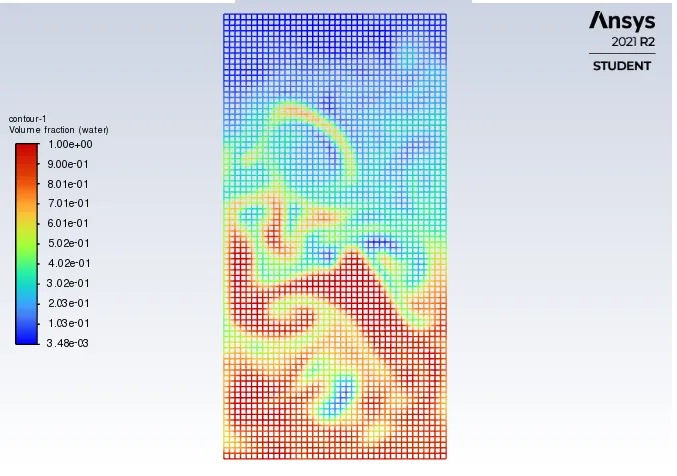
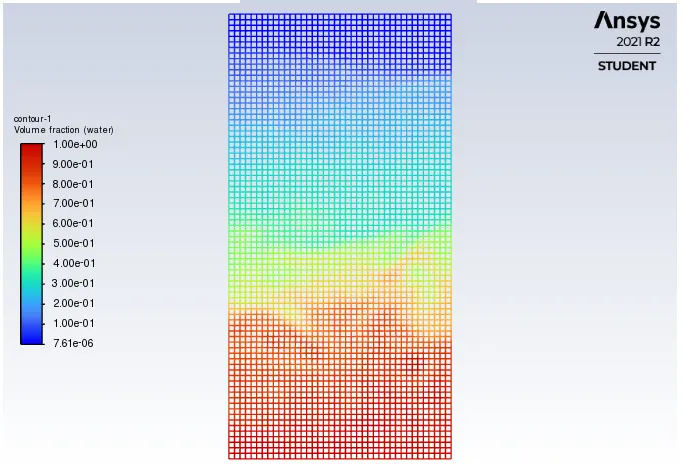
CASE - 1:
SUB CASE - 1.1:
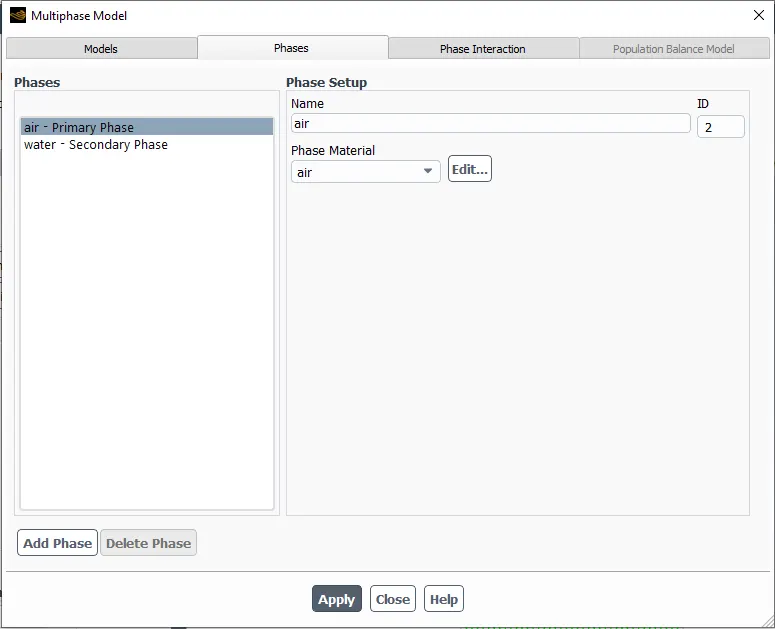
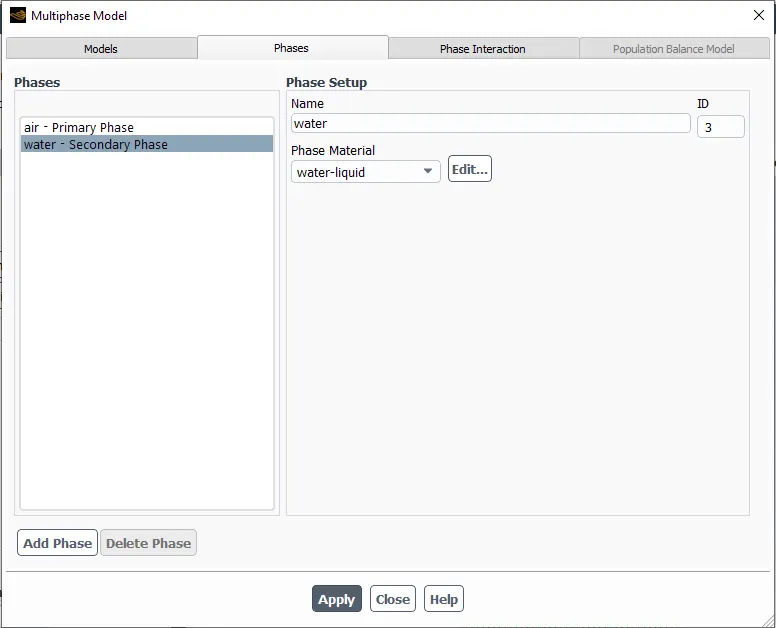
- Primary Phase: Air
- Secondary Phase: Water
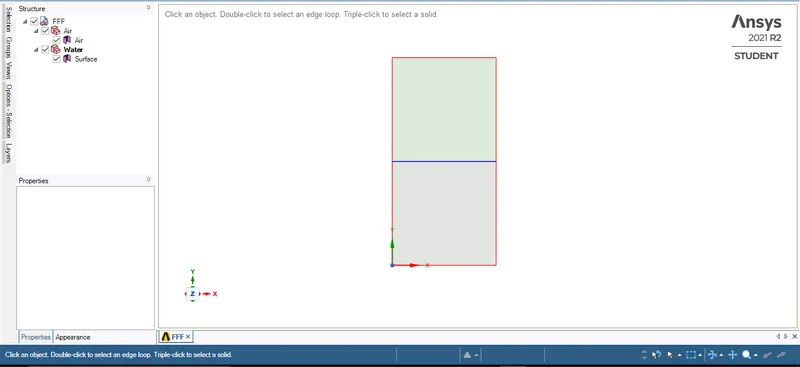
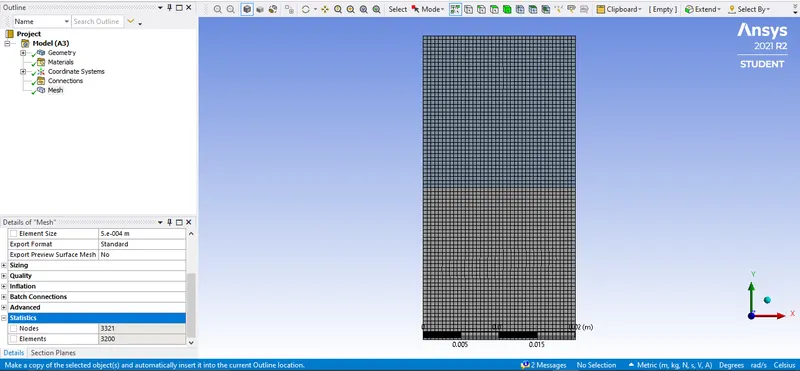
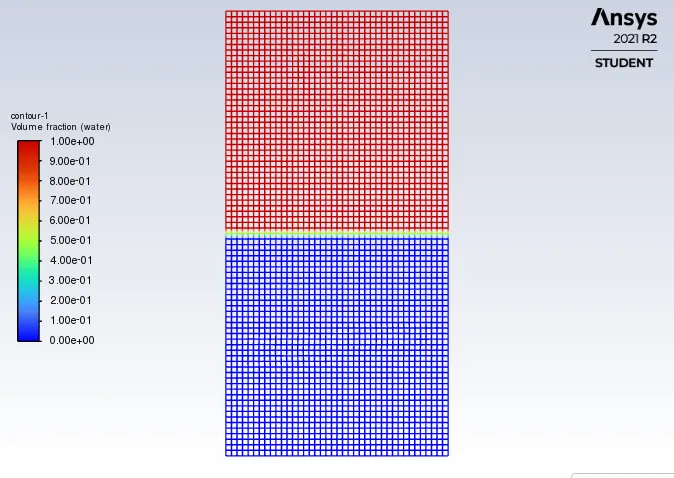
- Mesh Element Size: 0.5 mm
- Total number of meshing elements: 3200
GEOMETRY:
MESHING:
SETUP:
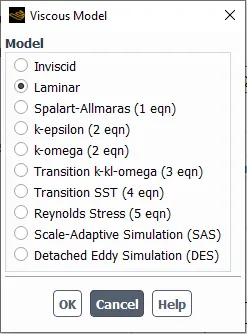
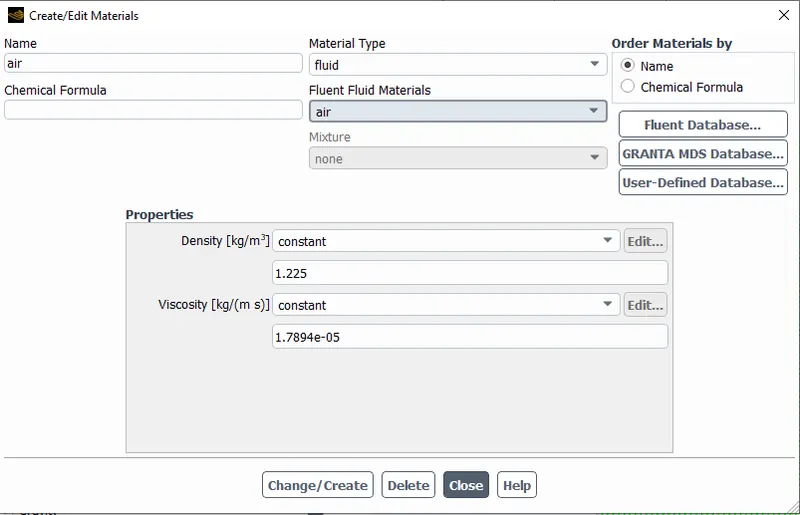
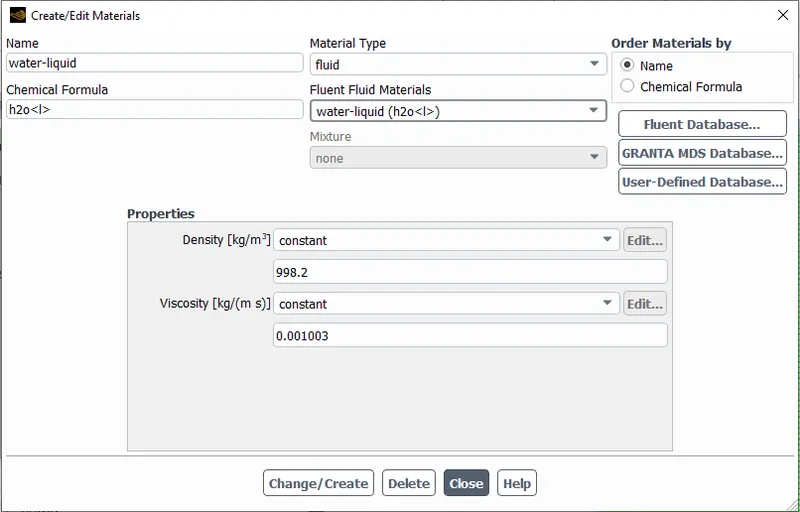
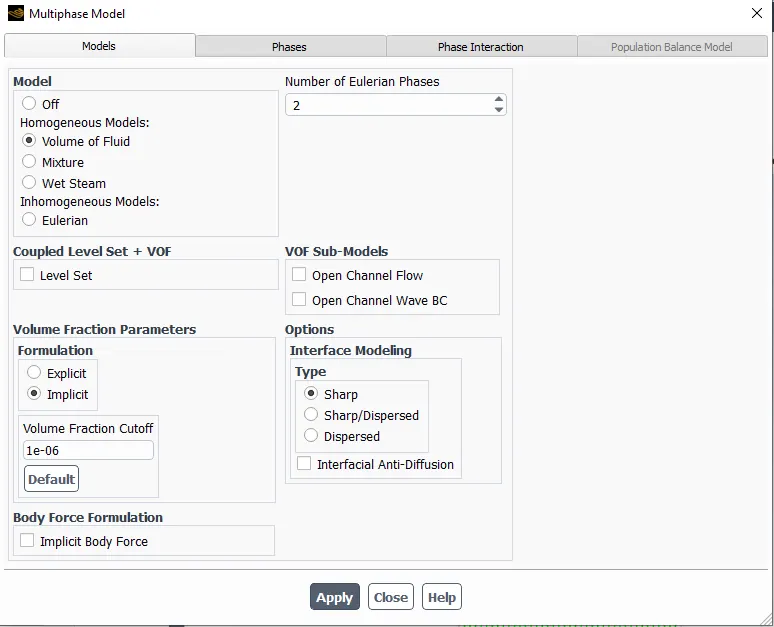
RESULT:
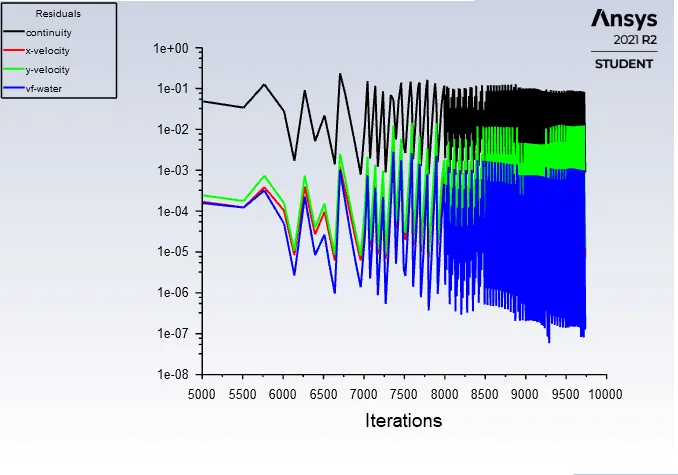
RESIDUALS:
PHASE CONTOUR:
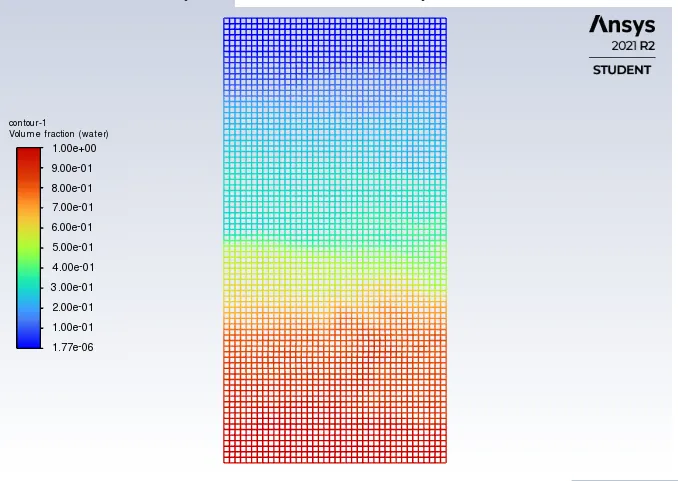
PHASE CONTOUR AT DIFFERENT TIME INTERVALS:
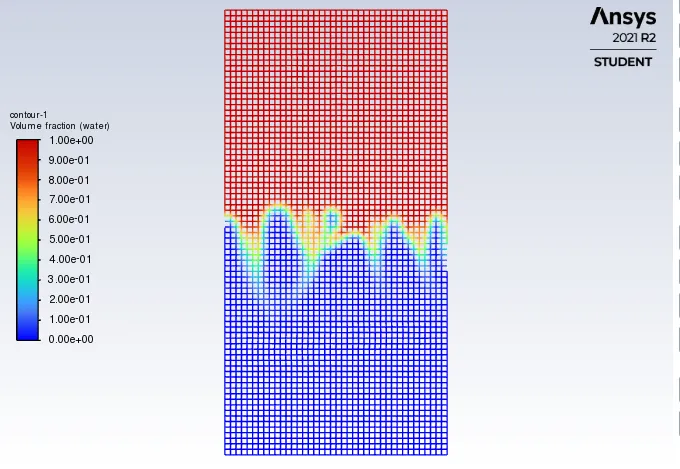
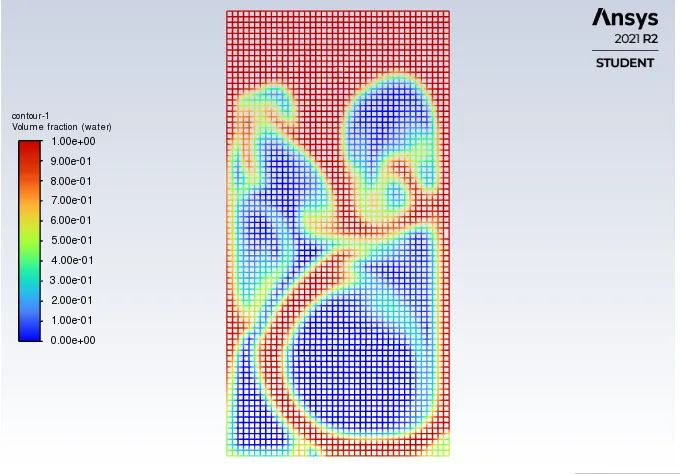
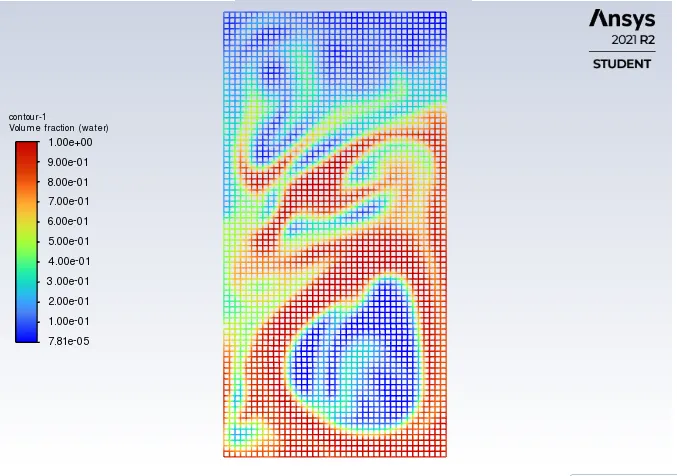
ANIMATION LINK:
- https://youtu.be/U_Y8I4NPEGo
- https://drive.google.com/file/d/1MY--jB9j01zntnoJJ_PwCDKHmOniYPWp/view?usp=sharing
CASE - 1:
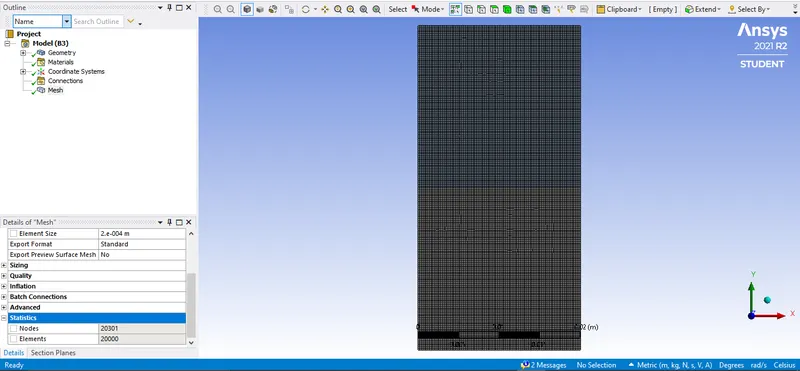
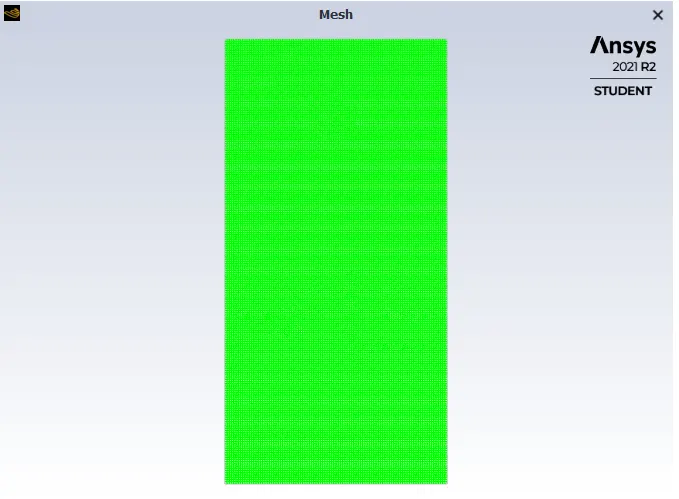
SUB CASE - 1.2:
- Primary Phase: Air
- Secondary Phase: Water
- Mesh Element Size: 0.2 mm
- Total number of meshing elements: 20000
GEOMETRY:
MESHING:
SETUP:
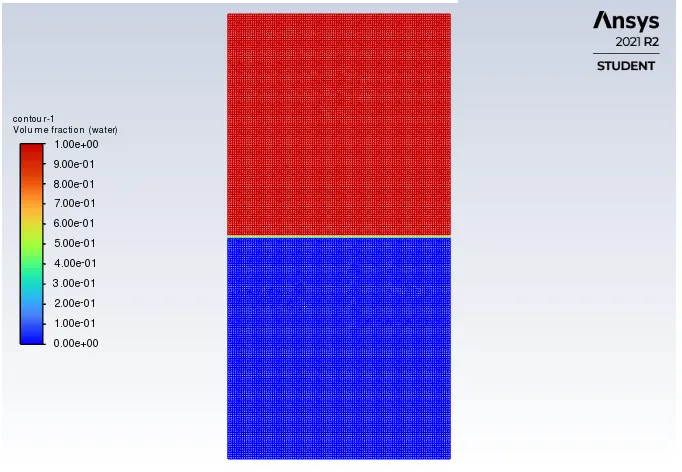
RESULT:
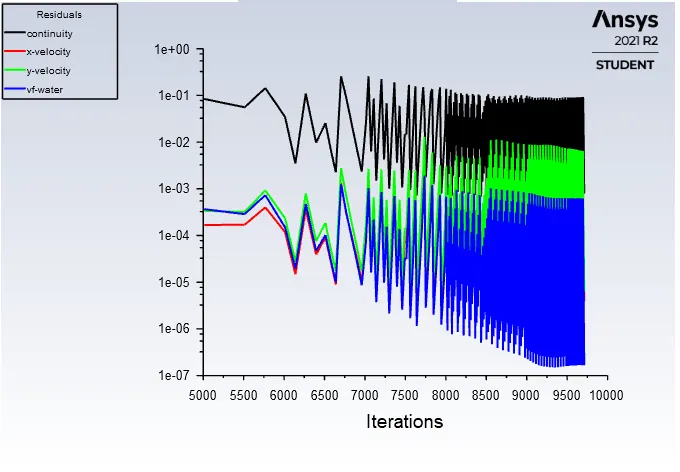
RESIDUALS:
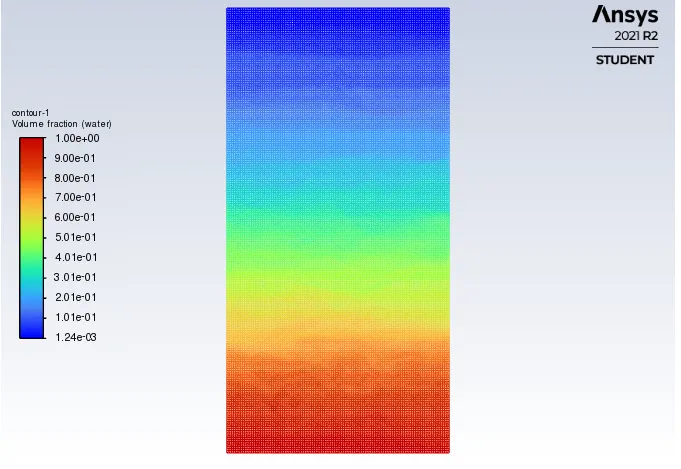
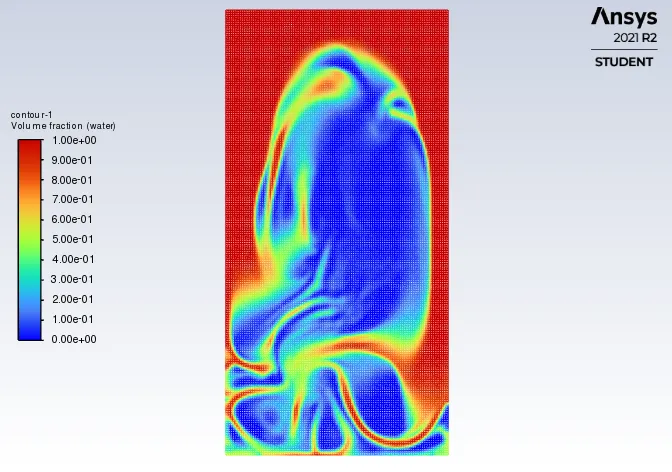
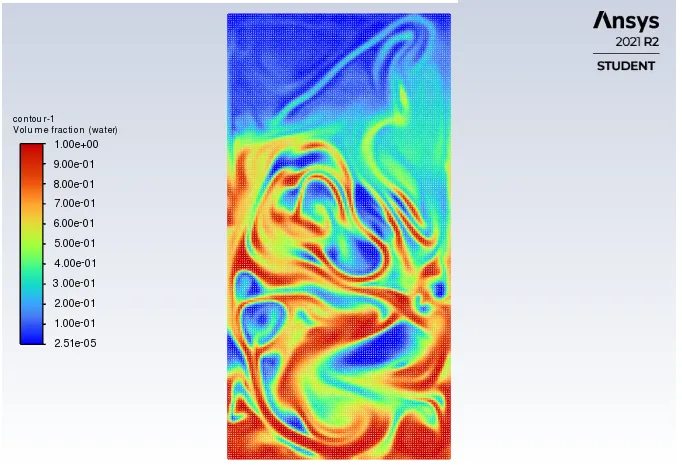
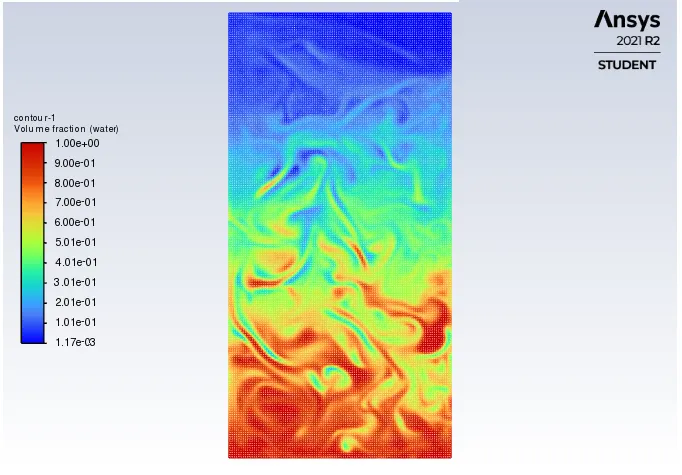
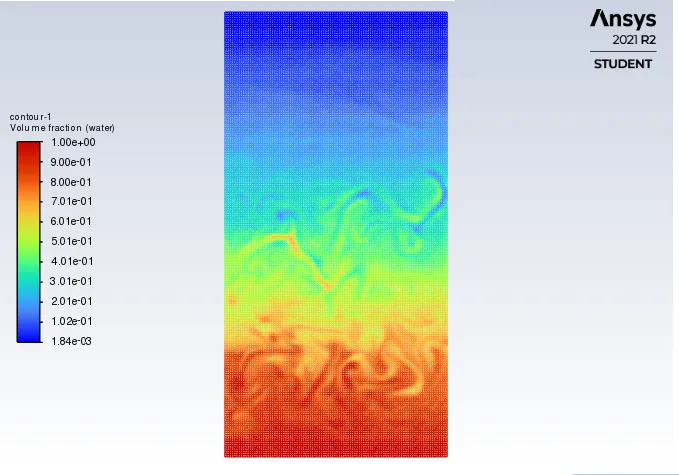
PHASE CONTOUR:
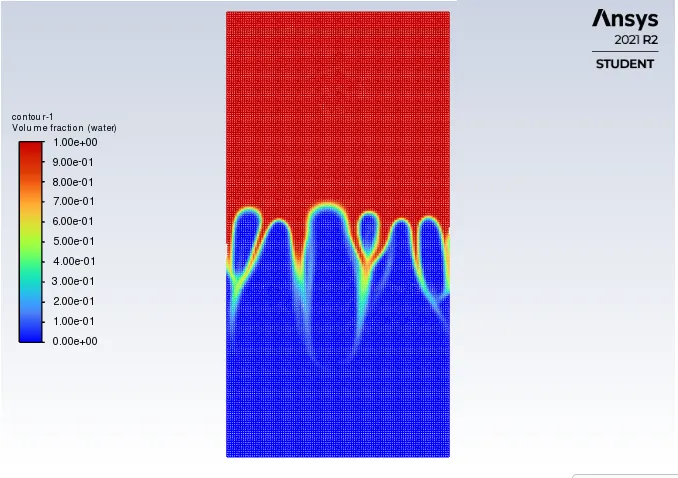
PHASE CONTOUR AT DIFFERENT TIME INTERVALS:
ANIMATION LINK:
- https://youtu.be/RKsHll9Vztw
- https://drive.google.com/file/d/1WB26kVueQelK7Jf0OE_kgs1gI3-tWvTs/view?usp=sharing
CASE - 2:
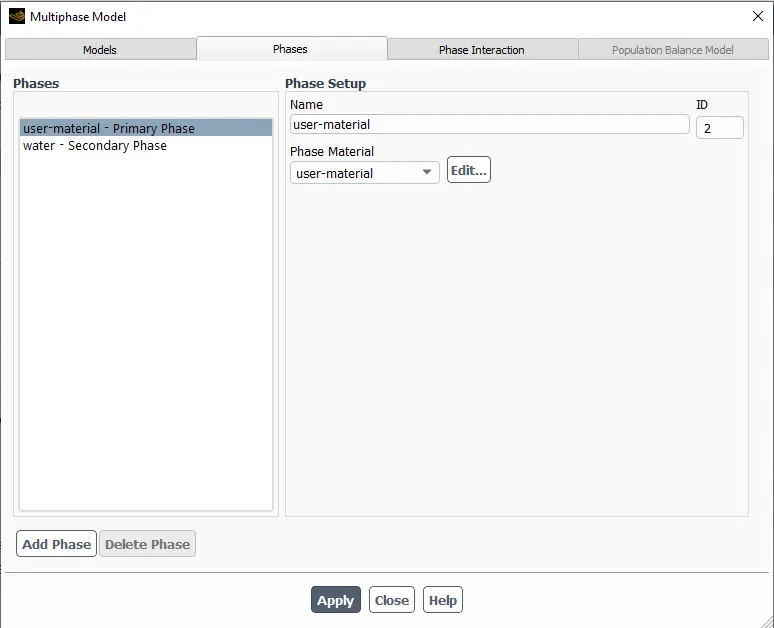
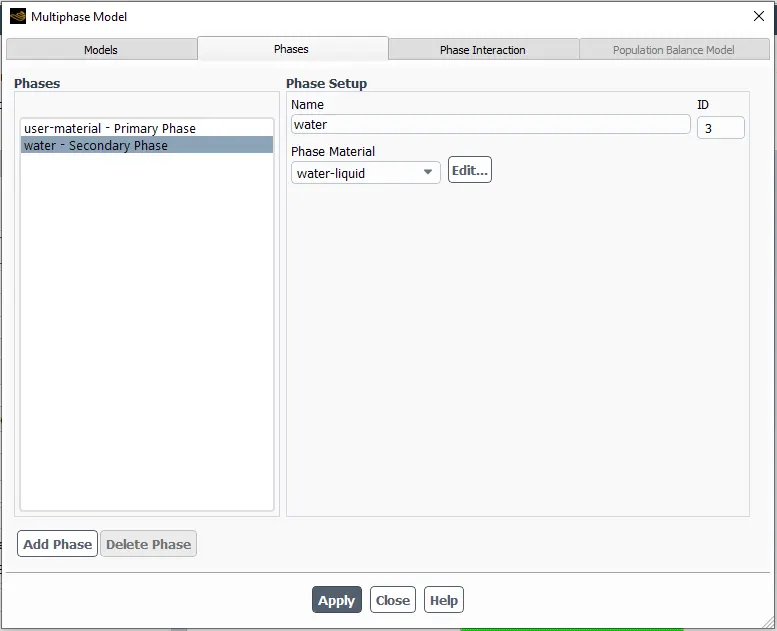
- Primary Phase: User-Defined fluid
- Secondary Phase: Water
- Mesh Element Size: 0.2 mm
- Total number of meshing elements: 20000
GEOMETRY:
MESHING:
SETUP:
RESULT:
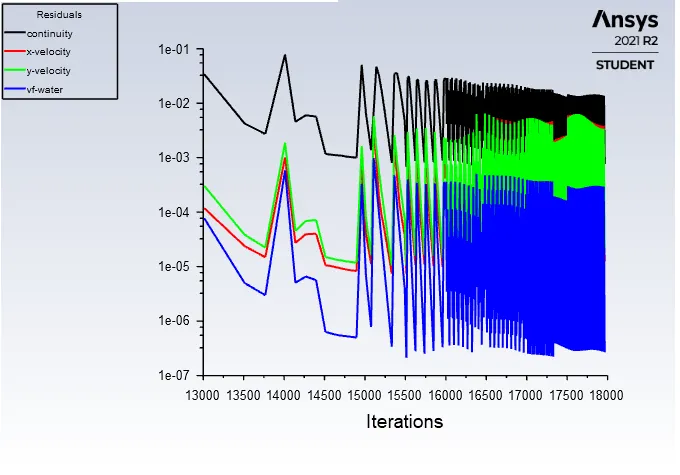
RESIDUALS:
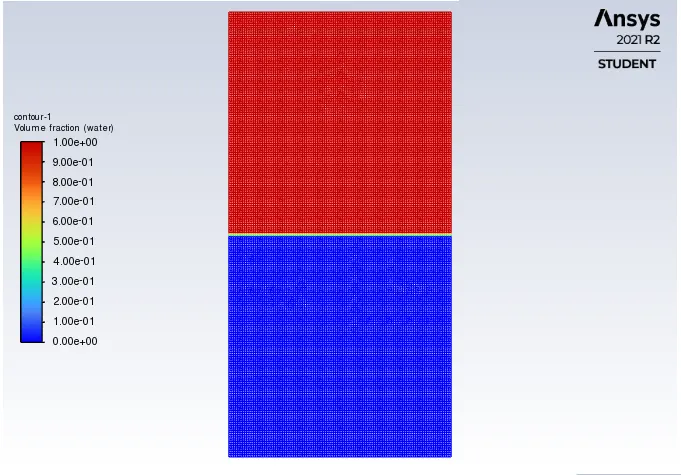
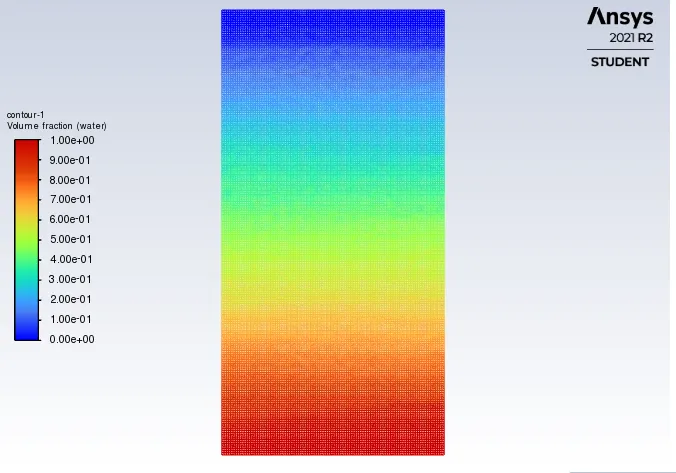
PHASE CONTOUR:
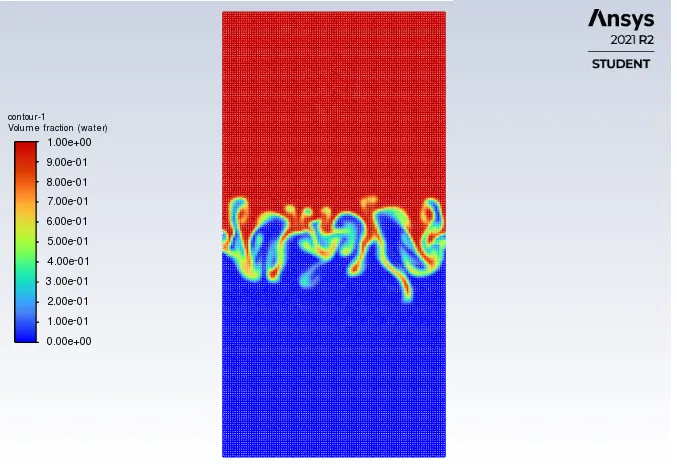
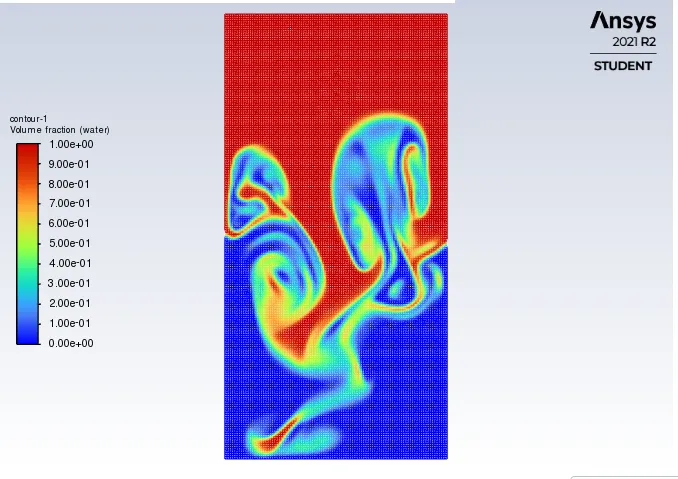
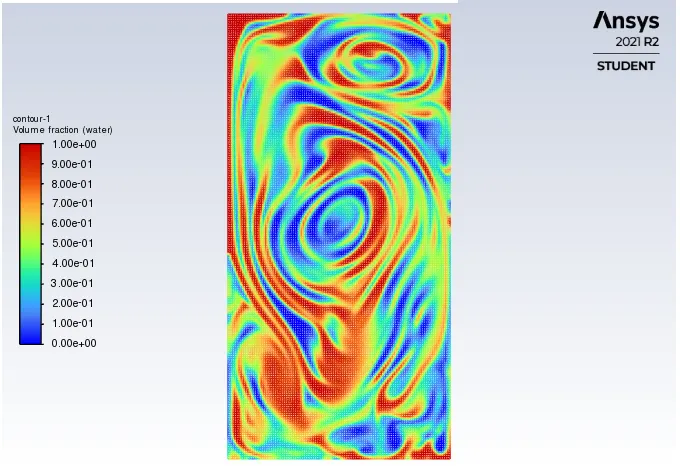
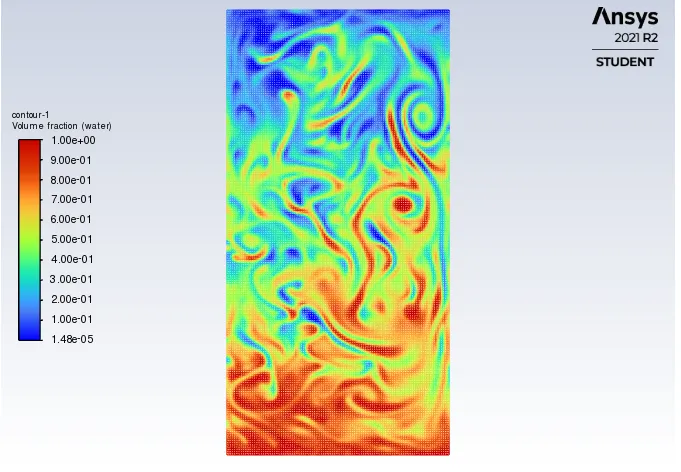
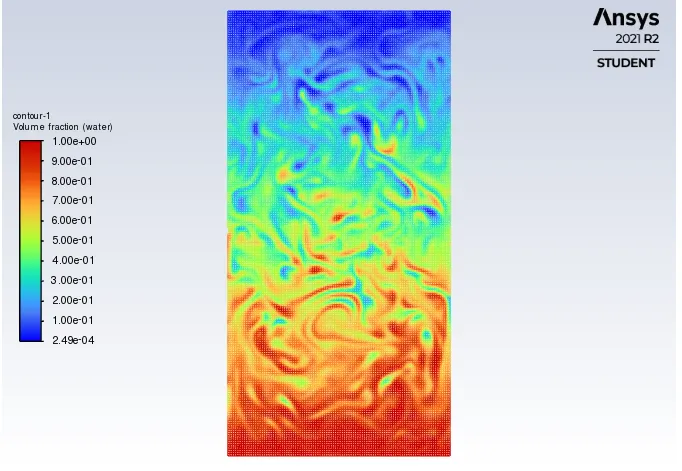
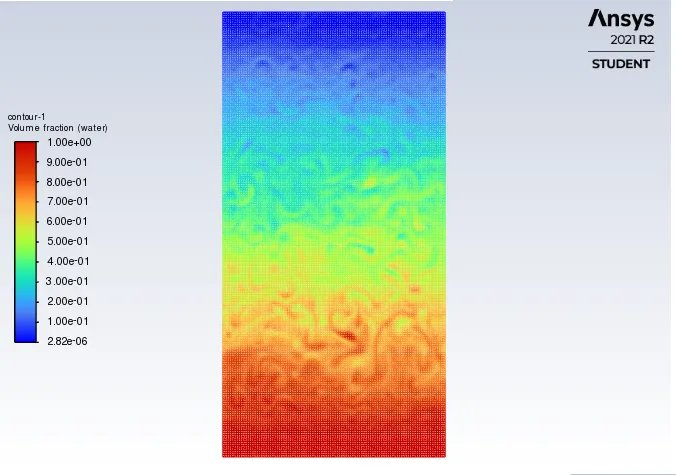
PHASE CONTOUR AT DIFFERENT TIME INTERVALS:
ANIMATION LINK:
- https://youtu.be/_539tdyt30I
- https://drive.google.com/file/d/1jc6mdoi3hXOcBxGa1XRAOQkZlIOu-yo1/view?usp=sharing
ATWOOD NUMBER CALCULATION:
CASE - 1:
`rho_1` = Density of heavier fluid = water = 998.2 Kg/m^3
`rho_2` = Density of lighter fluid = Air = 1.225 Kg/m^3
Atwood Number = `(rho_1 - rho_2) / (rho_1 + rho_2)`
= `(998.2 - 1.225) / (998.2 + 1.225) = (996.975)/999.425 = 0.9975`
The Atwood number for this case is 0.9975.
CASE - 2:
`rho_1` = Density of heavier fluid = water = 998.2 Kg/m^3
`rho_2` = Density of lighter fluid = User Defined Fluid = 400 Kg/m^3
Atwood Number = `(rho_1 - rho_2) / (rho_1 + rho_2)`
= `(998.2 - 400) / (998.2 + 400) = (598.2)/1398.2 = 0.4278`
The Atwood number for this case is 0.4278.
CONCLUSION:
- From the above assignment we came to know about the Rayleigh Taylor Instability and its different applications in Computational Fluid Dynamics.
- By refining the mess from 0.5mm element size to 0.2mm element size we can able to see how a heavier density fluid interacts with lighter density fluid and settles at the bottom at each and every small places inside the domain.
- By refining the mess the pattern can be observed at a very finer and detailed look due to small mesh and fine elements.
- Also, by refining the mess we can see the formation of bubble at the phase interface in a very clear manner.
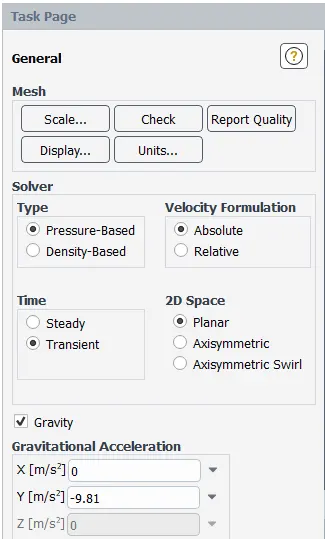
- For studying and observing Rayleigh Taylor Instability we use a Transient State approach because we need to observe how the fluids react at the interface and how the heavier density fluid settles at the bottom with respect to time.
- Steady state simulations are performed typically to get the final result or the end product but here in this case we need to see how the interface collapses with respect to time so, this problem is performed using Transient State approach.
- For the first case the Atwood number is 0.9975 for the second case the Atwood number is 0.4278.
- From the calculation of Atwood number it can be observed that the case having high Atwood number the heavier density fluid settles down faster as compared with the phase having lower Atwood number.
- In the phases which have a lower Atwood number the interface between the 2 phases collapses slowly and in a very dispersed manner having more and smaller bubble formation and the heavier density fluid takes more time to settle down whereas phases having a higher Atwood number the interface between the 2 phases collapses at a faster rate in a less dispersed manner having less and large bubble formation and the heavier density fluid takes very less time to settle down.