Week 5: Prandtl Meyer Shock problem
Prandtl Meyer Shock problem
OBJECTIVE-
- Simulate a nozzle inside which air is flowing at subsonic and supersonic velocity
- simulation is steady state
- observe variation of velocity and pressure along the geometry and throughout the geometry
- use of adaptive mesh refinement
What is a shock wave?
Shock waves are formed when a pressure front moves at supersonic speeds and pushes on the surrounding air. When the speed of a source exceeds the speed of sound (v > c) the wave fronts lag behind the source in a cone-shaped region with the source at the vertex. The edge of the cone forms a supersonic wave front with an unusually large amplitude called a "shock wave". When a shock wave reaches an observer a "sonic boom" is heard.
shock waves can be created in both liquid and air, primary condition for generation of shock wave is that source velocity should be greater than sound velocity.
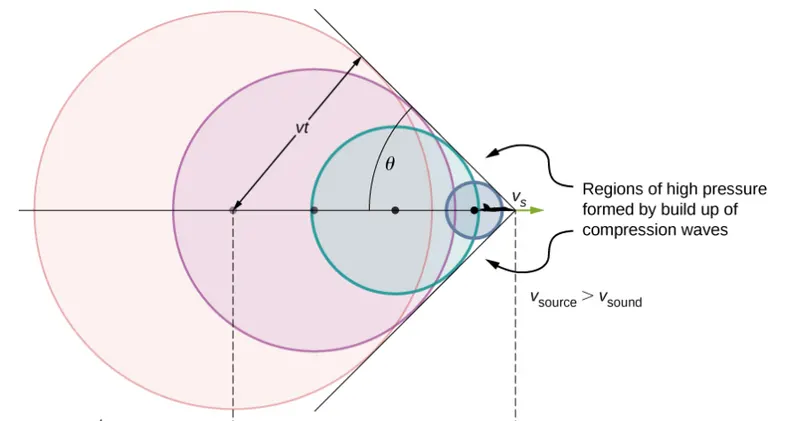
shock waves are waves of long amplitude. In above figure at vetex is a source whose velocity is more than sound velocity, so we can see the rythmic long amplitude shock waves created, which starts at vertex goes to end forming a triangle or pyramid shape.
Mach number - Ratio of velocity of source to velocity of sound is called mach number. When mach > 1 supersonic waves are created and when mach < 1 subsonic waves are created.
Shock flow boundary conditions
Dirichlet boundary condition - This condition specifies the value that the unknown function needs to take on along the boundary of the domain. y(x) = f(x)
Neumann boundary condition - Neumann boundary when imposed on an ordinary (ODE) or a partial differential equation (PDE), it specifies the values that the derivative of a solution is going to take on the boundary of the domain. dy/dn = f
Robin boundary condition - This boundary condition consists of a linear combination of the values of the field and its derivatives on the boundary or this boundary condition is combination of dirichiletand neumann boundary condition
What is neuman boundary condition
NOZZLE
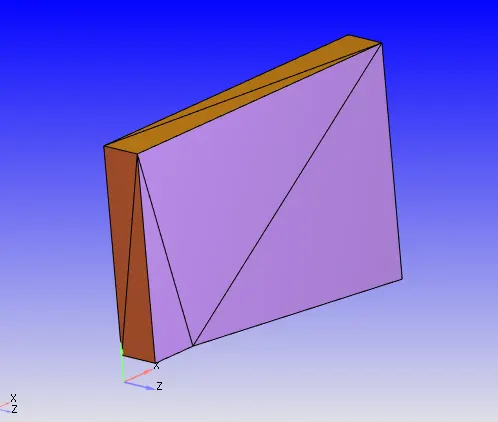
This is a 2D supersonic nozzle, velocity inside supersonic nozzle is more than velocity of sound.
SIMULATION PARAMETERS
Run parameters
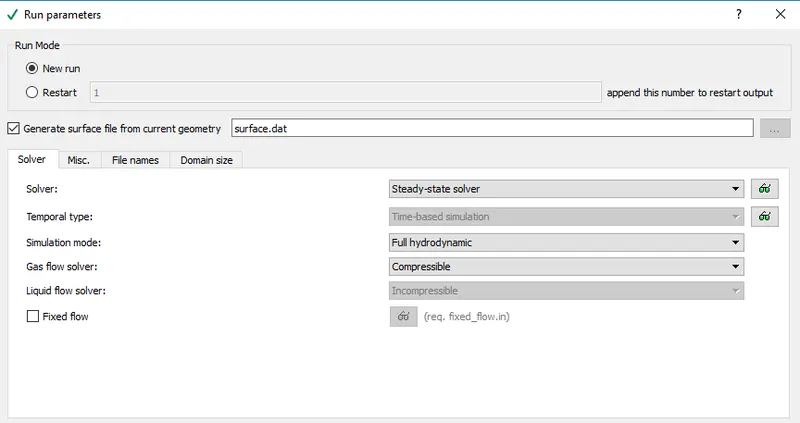
simulation is a steady-state solver and hence we are using full hydrodynamic mode.
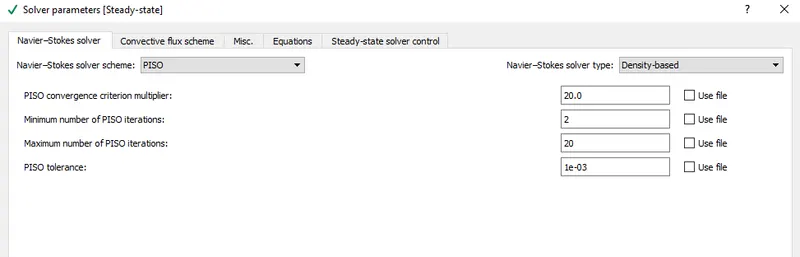
solver parametrs
Time parameters
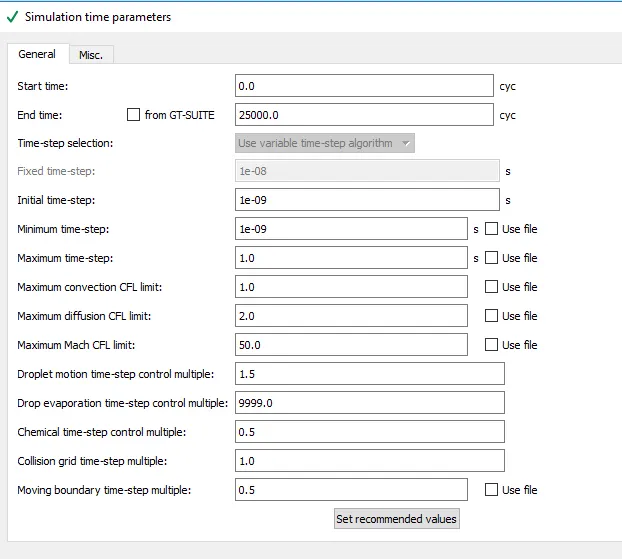
start time -0
end time - 25000
time step - 1e-09
Boundary conditions-
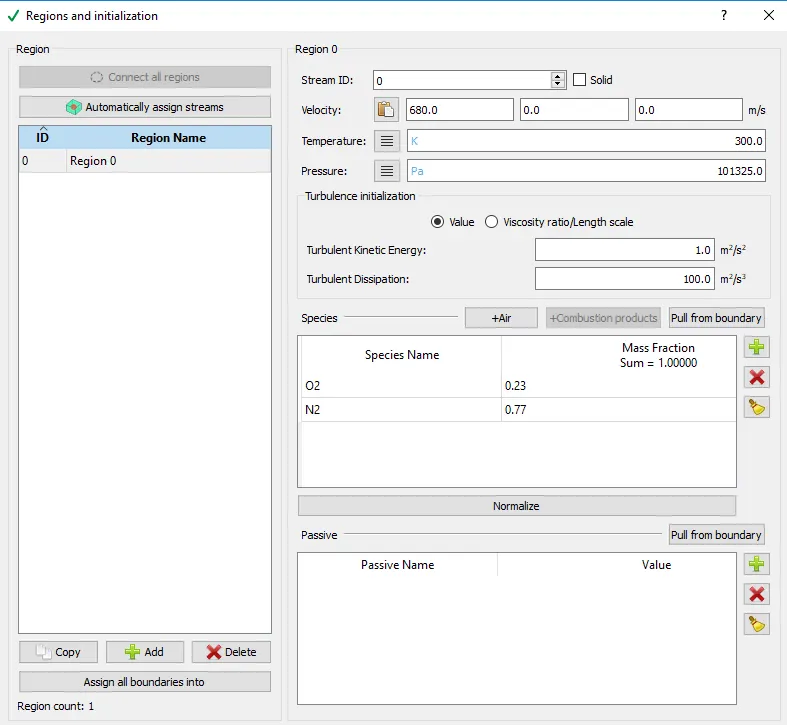
Inlet - inflow, at inlet we will use specied value for all three boundary condition.
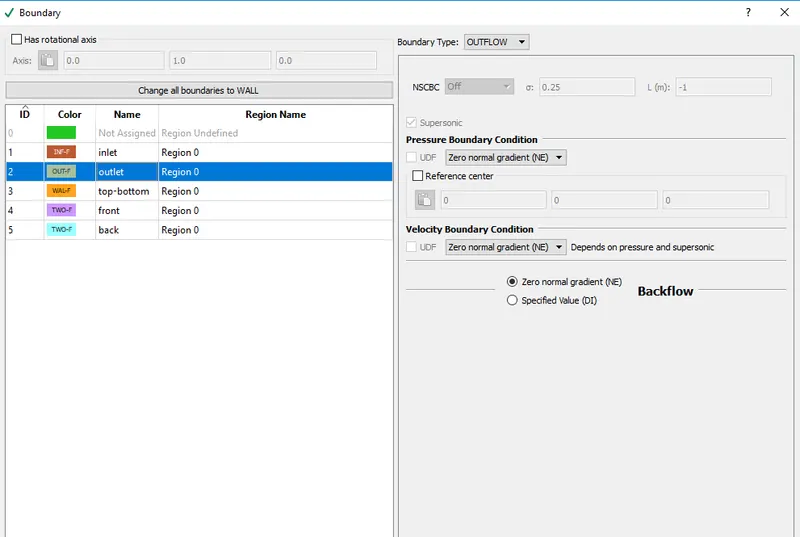
outlet - outflow , at outlet all three boundary conditions are zero gradient because we dont know final velocity , temprature and pressure so in such cases where outlet values are unknown we use neumann boundary condition
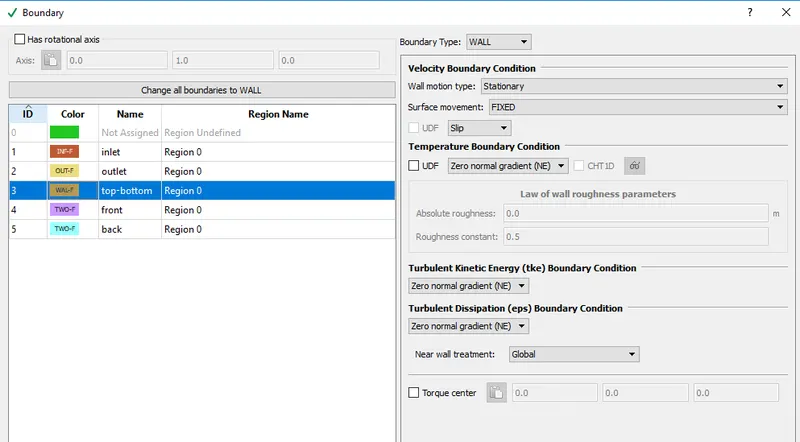
top-bottom - wall, It is slip boundary condition because it is solid , when we use wall it is going to be slip or no slip boundary condition.
inlet
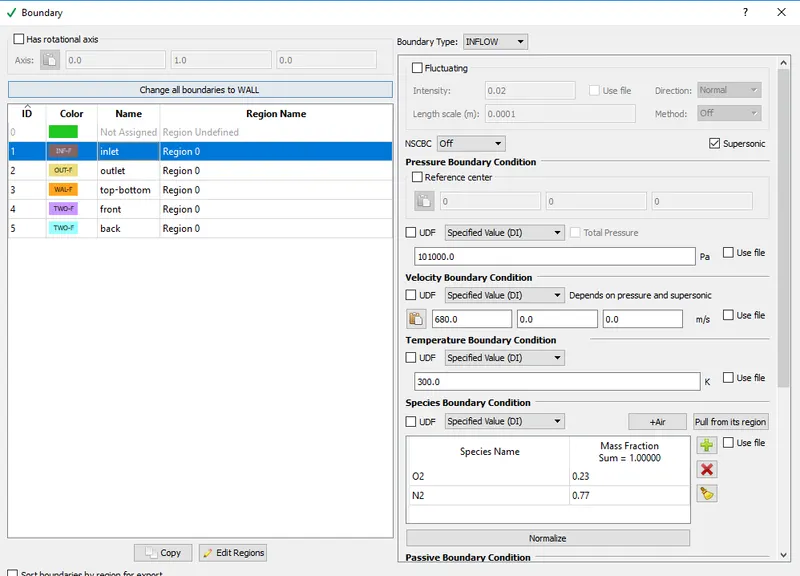
velocity is 680m/s in x-direction which is supersonic speed
outlet
Top-bottom
Regions and initialisation
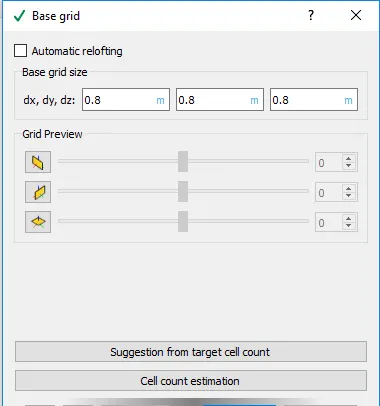
Grids
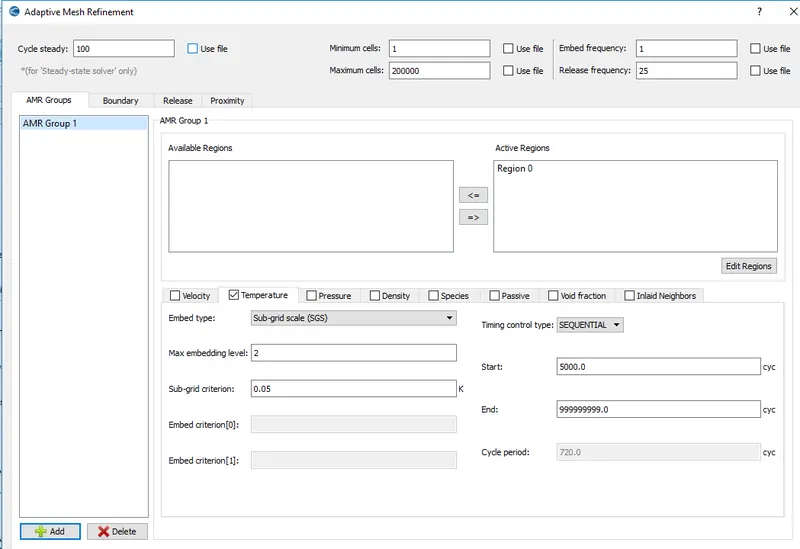
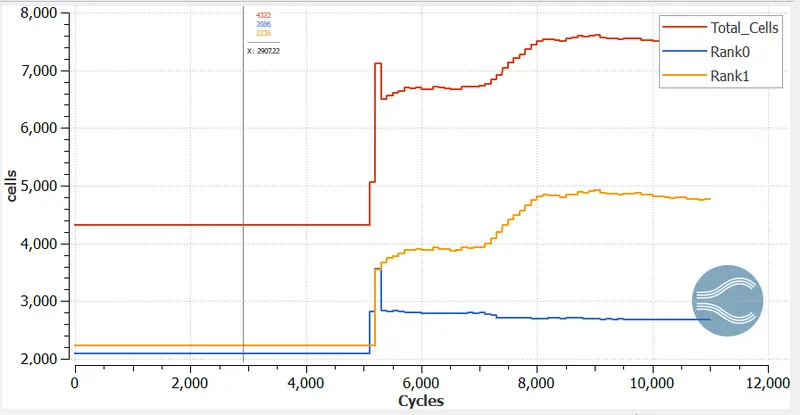
adaptive mesh refinement
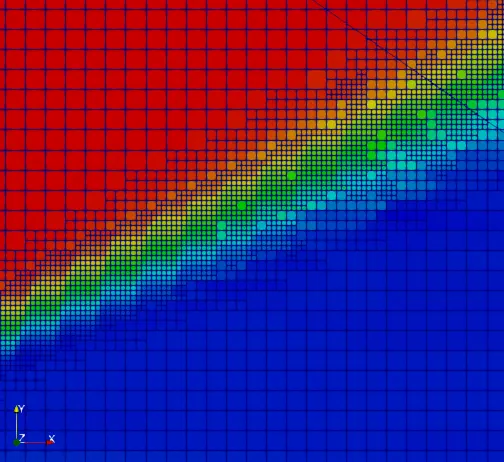
why adaptive mesh refinement?
For large-size application problems. Due to the large size of many application problems, it is infeasible to solve the entire problem on a uniform grid that is fine enough to achieve the desired accuracy. For this reason, the code incorporates the ability to perform adaptive mesh refinement (AMR).
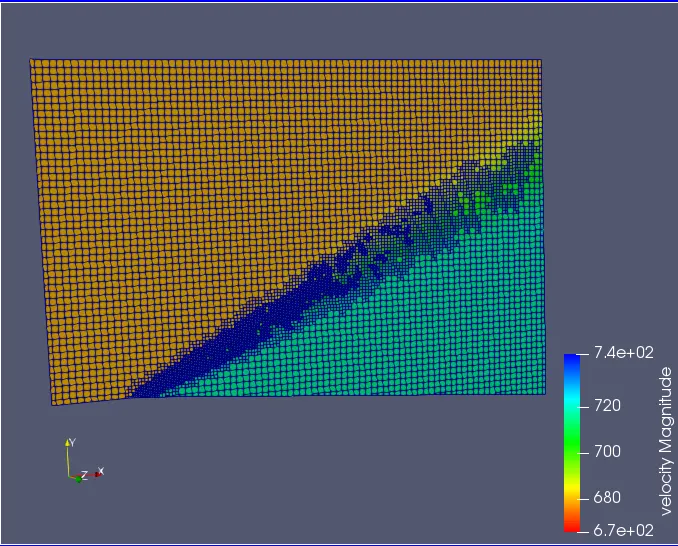
Supersonic problems are large size application problem and to get better results we use finer grids in combustion area
VELOCITY CONTOUR
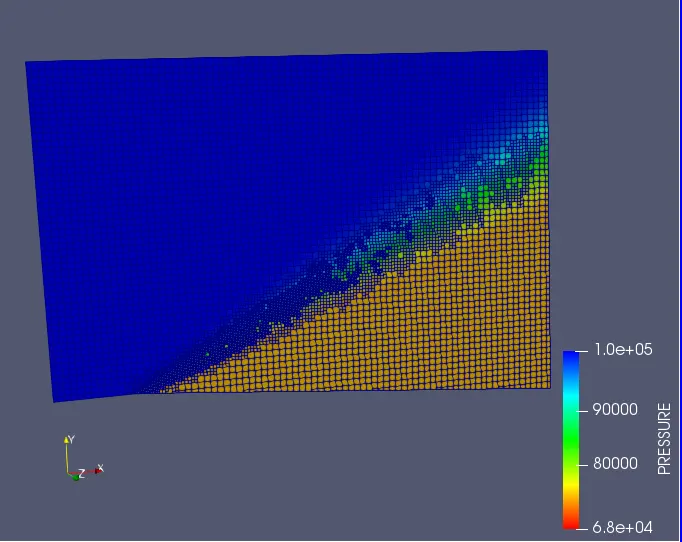
PRESSURE CONTOUR
PLOTS
Average velocity at outlet
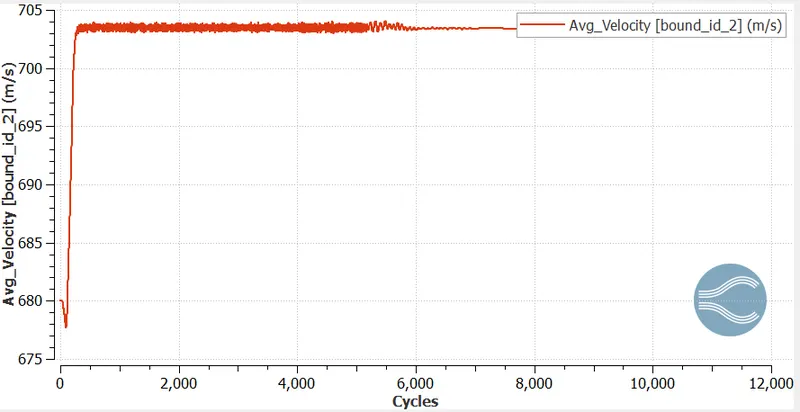
velocity observes a sudden rise , this usually happens in case of supersonic problems
average density at outlet
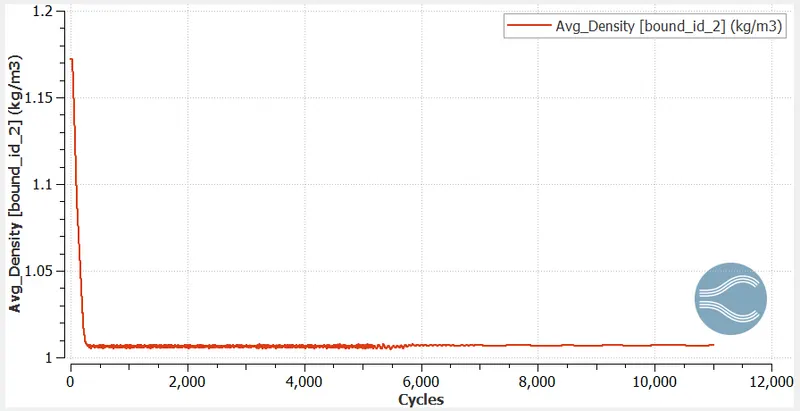
Density decreases as object moving at supersonic speed reduces density of its surroundings
static pressure at outlet
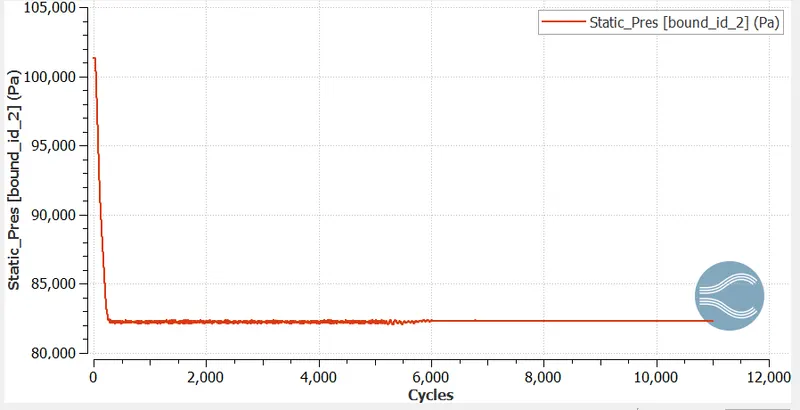
Increase in velocity leds to decrease in pressure.
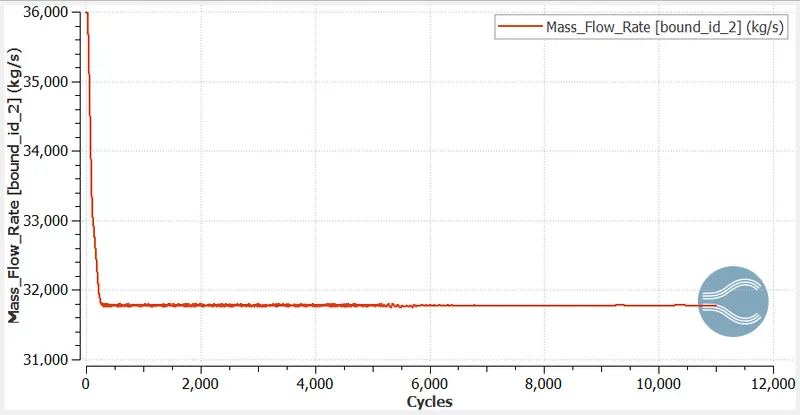
Mass flow rate at outlet
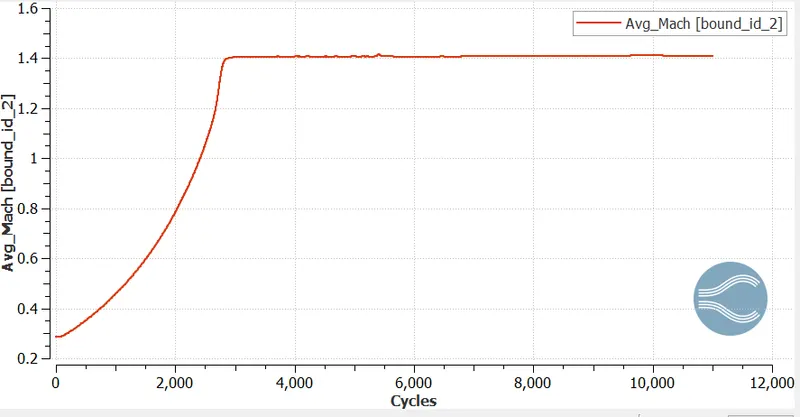
Mach no
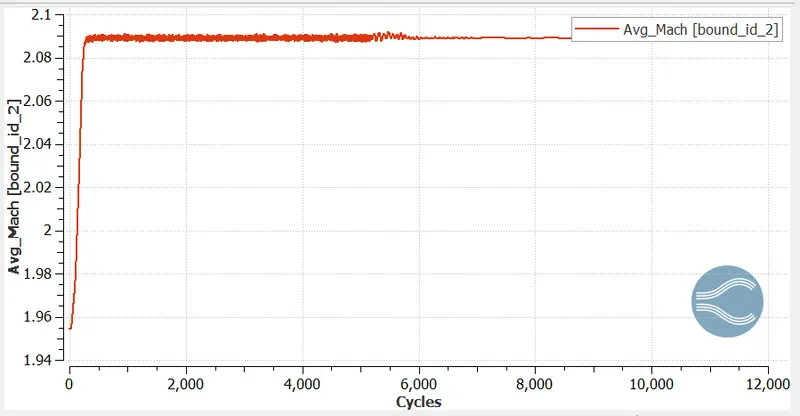
Mach no greater than 2 represnts supersonic flow
Velocity variation setup in paraview
https://drive.google.com/file/d/1nXB0PFYVa_-Hv2vhuoJiLlMpvI5SO3Se/view?usp=sharing
Pressure variation setup in paraview
https://drive.google.com/file/d/1EFwqutUQrbLg2SwWhXQ6hMmtVqwjqu9b/view?usp=sharing
SUBSONIC FLOW-
Everything would same except velocity, change velocity to 100m/s
velocity contour
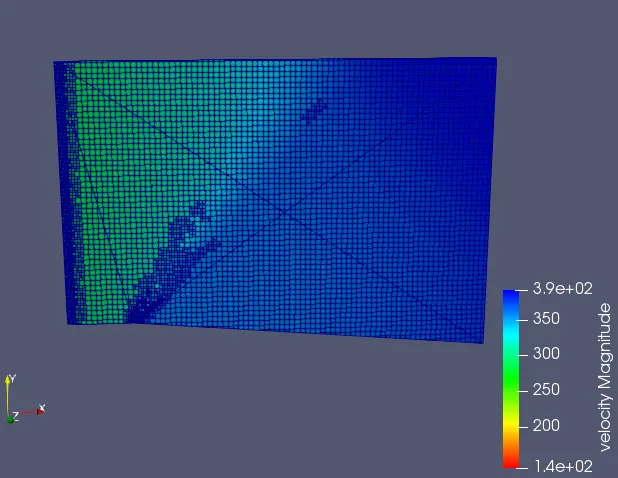
pressure contour
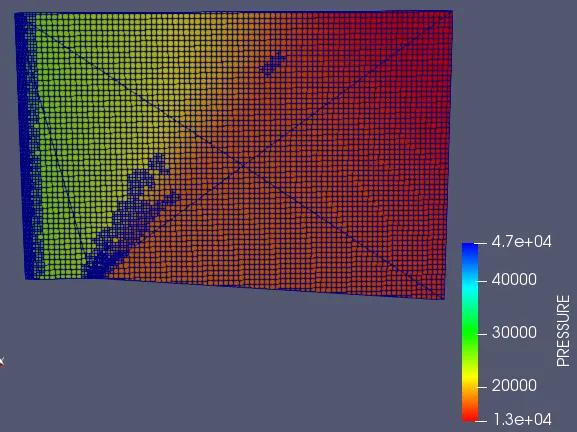
Animation of velocity
https://drive.google.com/file/d/1OvIYX4_Qi23y9bokfXyL6crfYWTFDe-o/view?usp=sharing
PLOTS
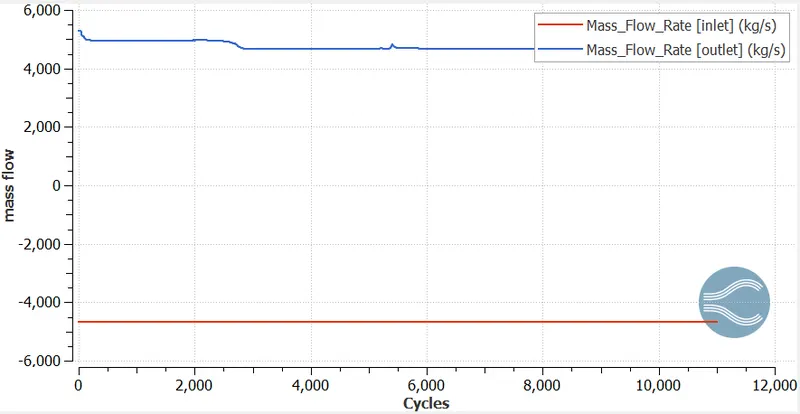
mass flow
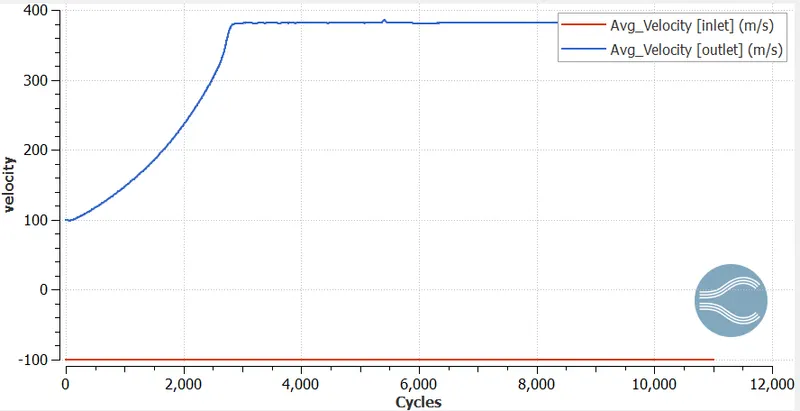
velocity
total cellls
mach no
Conclusion-
- Pressure, density drops at supersonic flow.
- velocity expriences sudden increase in magnitude in supersonic flow.
- mach no increass to more than 2
- neumann boundary are used while dealing with supersonic flows.
- supersonic flow has mach no over 2 whereas subsonic flowa has mach no less than 1.