Week 5: Prandtl Meyer Shock problem
Aim --> Prandtl Meyer Shock problem.
Introduction
The shock wave is a type of propagating disturbance that moves faster than the local speed of sound in the medium. Like an ordinary wave, a shock wave carries energy and can propagate through a medium but is characterized by an abrupt, nearly discontinuous, change in pressure, temperature, and density of the medium. Shock waves are formed when a pressure front moves at supersonic speeds and pushes on the surrounding air. At the region where this occurs, sound waves travelling against the flow reach a point where they cannot travel any further upstream and the pressure progressively builds in that region; a high-pressure shock wave rapidly forms. Shock waves are not conventional sound waves; a shock wave takes the form of a very sharp change in the gas properties. Shock waves in the air are heard as a loud "crack" or "snap" noise. Over longer distances, a shock wave can change from a nonlinear wave into a linear wave, degenerating into a conventional sound wave as it heats the air and loses energy. The sound wave is heard as the familiar "thud" or "thump" of a sonic boom, commonly created by the supersonic flight of aircraft.
Prandtl Meyer Expansion
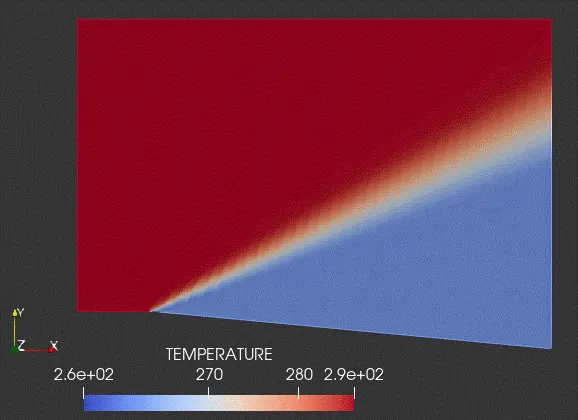
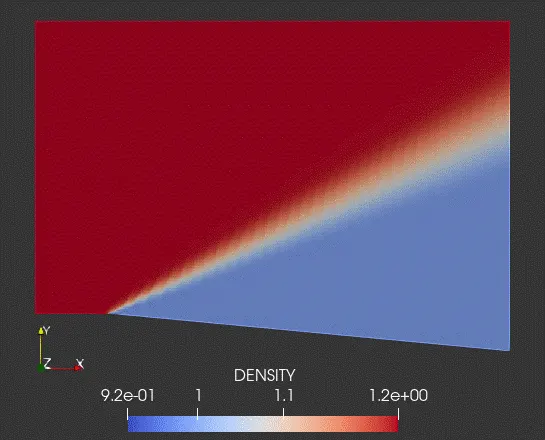
It is an Isentropic expansion process. pressure, temperature and density decrease and velocity increases in this process. A mach cone consisting of infinite weak mach waves (travelling at sonic speeds) fans out of the expansion corner. We can not have a strong shock wave for expansion case as it will violate the second law of thermodynamics which ensures entropy of the universe always increases.
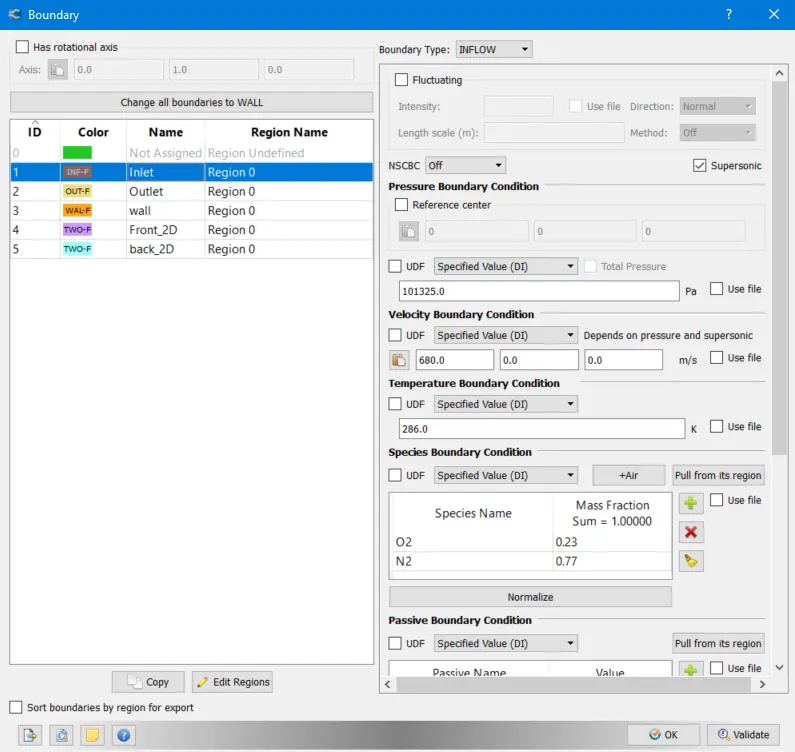
Reason for using a Neumann Boundary condition
We want to simulate the supersonic flow up to a point where the expansion fan waves do not reach the top boundary wall, as it reaches the top boundary wall it gets reflected back into the flow. We don't know the value at the outlet so, we compute the gradients to zero and get the value from the flow field. Specifying gradients at the boundary is known as the Neumann boundary condition.
Geometry
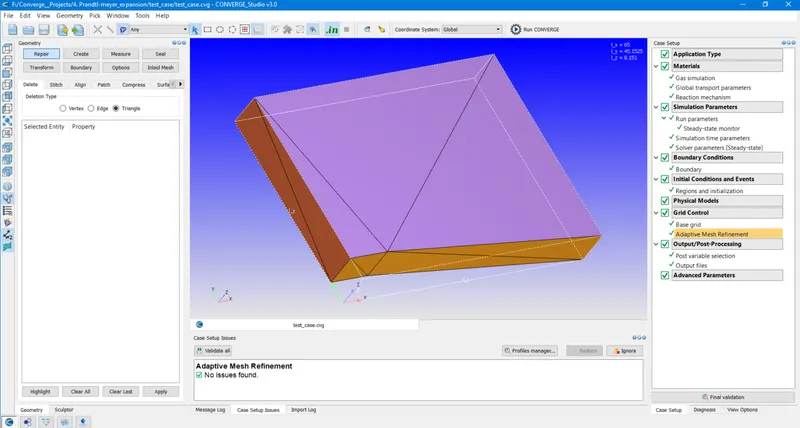
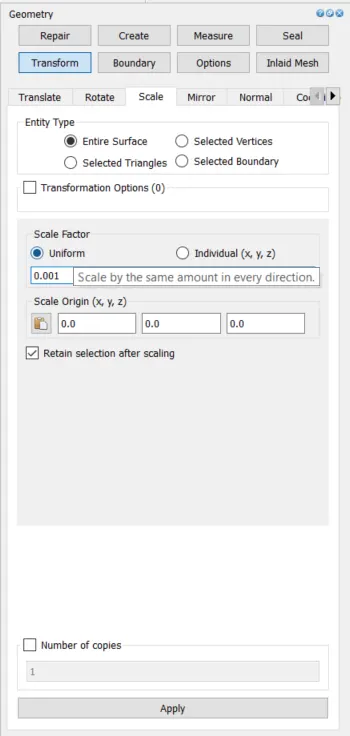
- Scaling the geometry
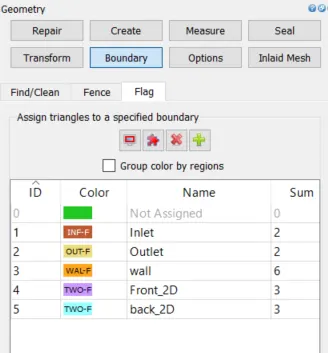
- Creating Boundaries
- Normal Orientation
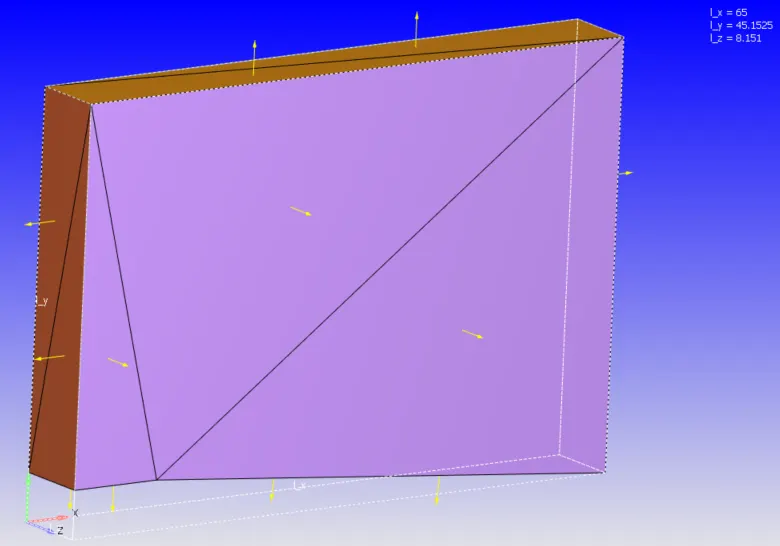
--> The normals are pointing outwards and it will results in negative values for velocity and mass flow rates etc.
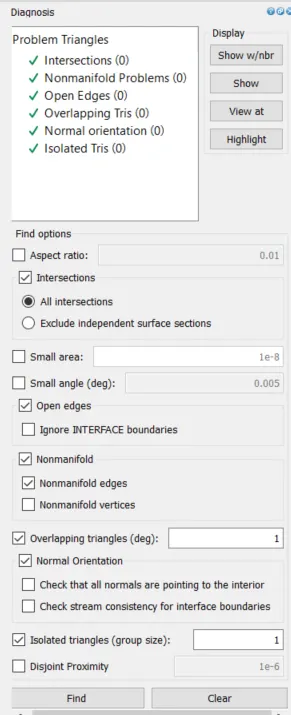
- Diagnosis
Case Setup
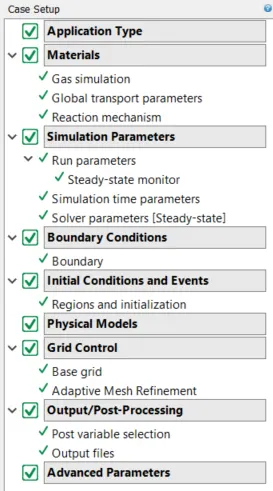
- Application type --> Time-based simulation
- Material --> Air
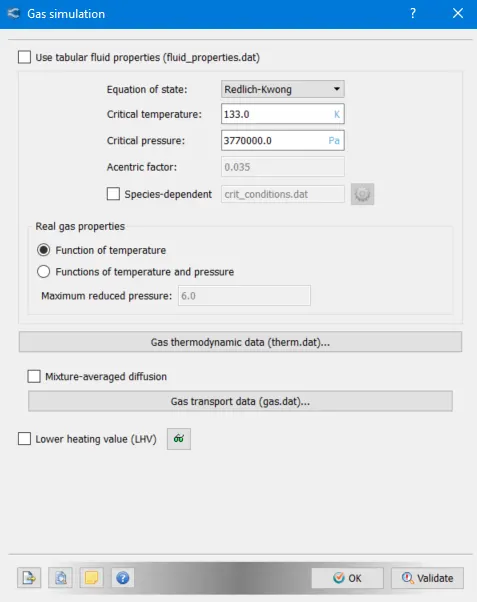
- Gas simulation
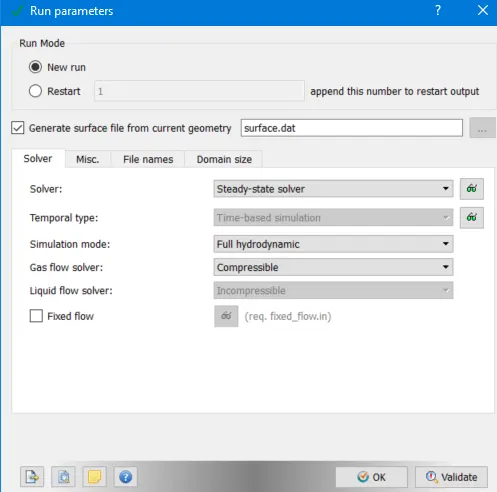
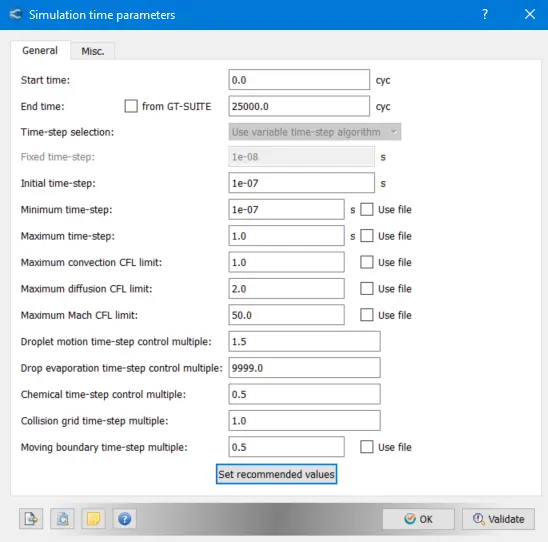
- Simulation Parameters
- Simulation time parameters
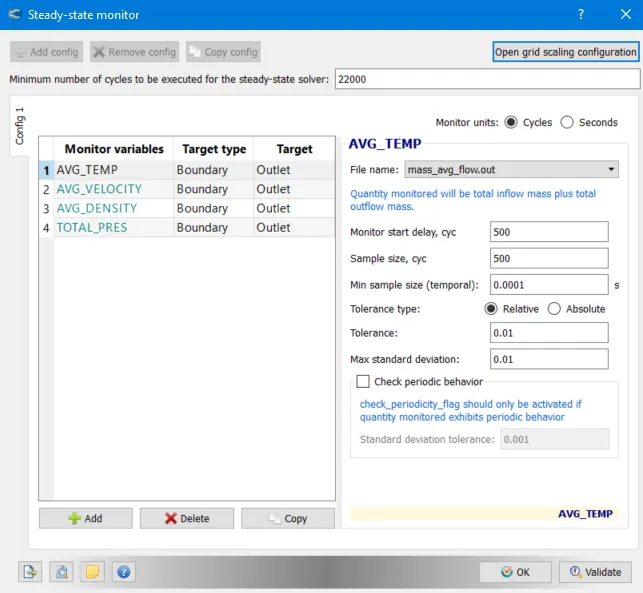
- steady-state monitor
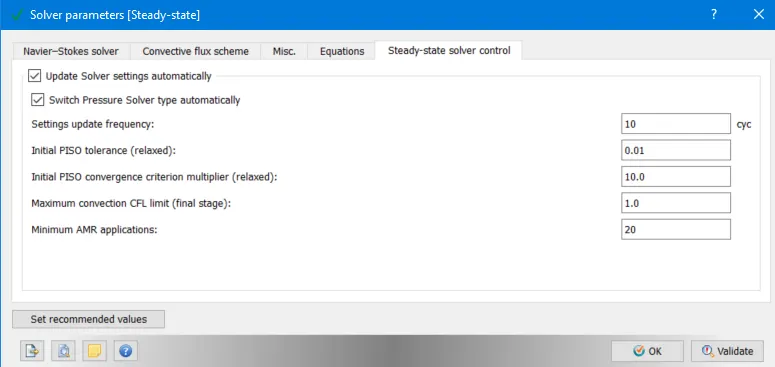
- solver parameters
- Boundary condition
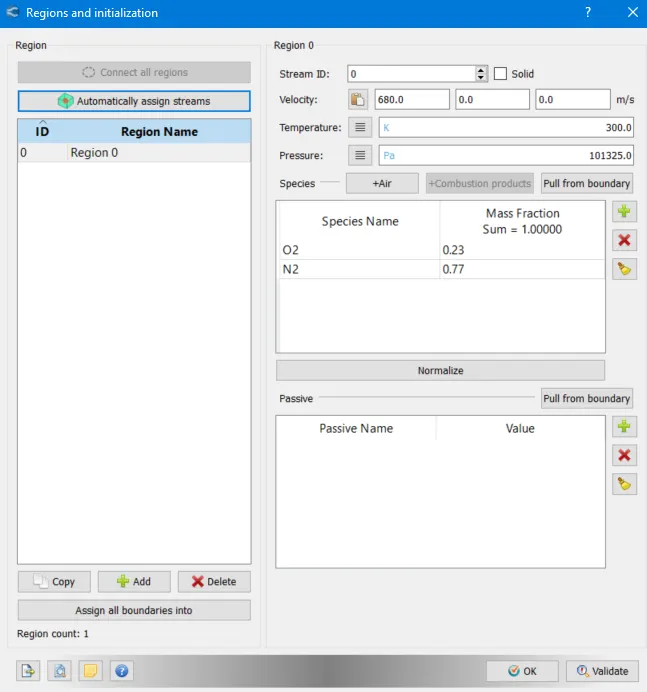
- Regions and Initializations
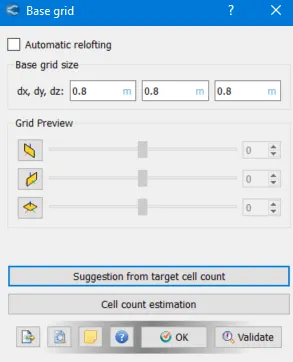
- Base Grid
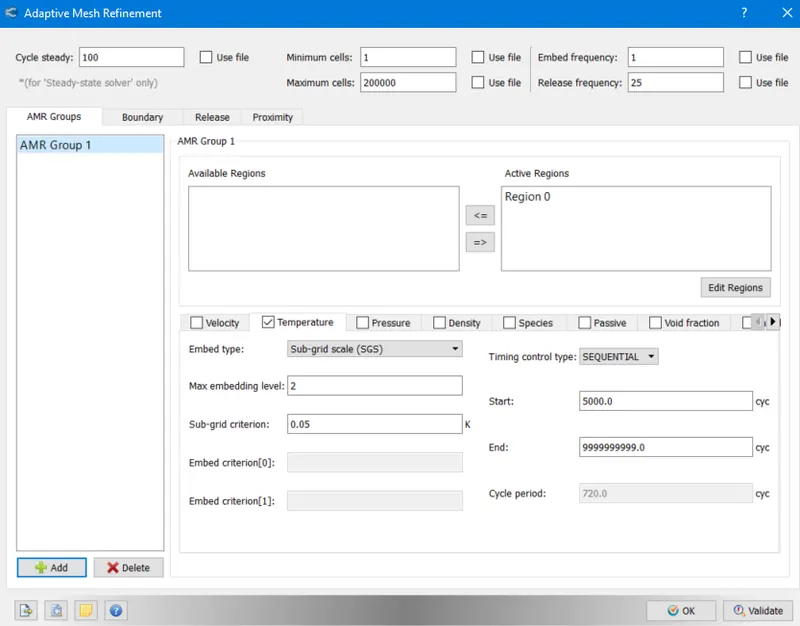
- Adaptive Mesh Refinement
Results
Case I [inlet velocity = 680 m/s] (SGS = 0.05)
- mesh (SGS = 0.05)
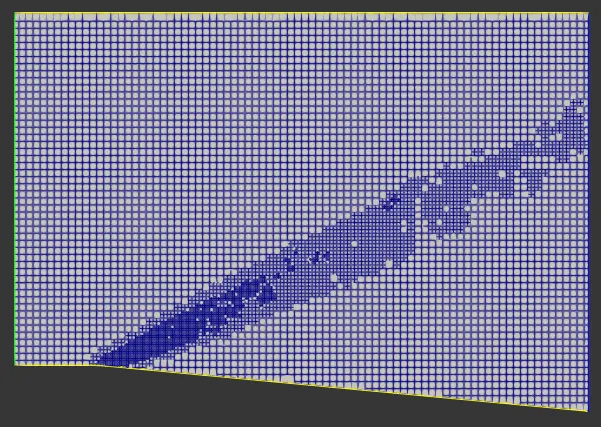
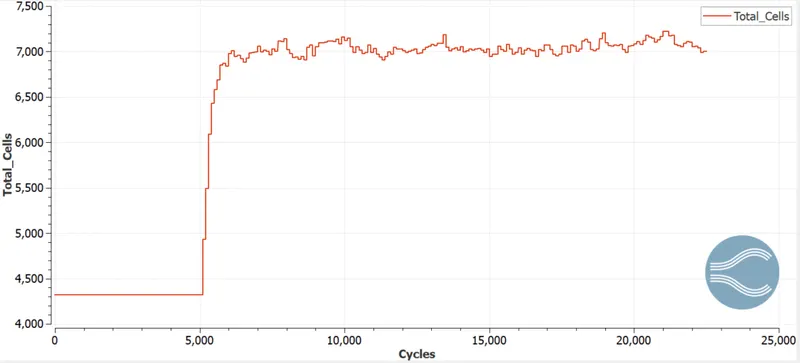
Mesh (AMR) Animation
- Velocity plots/Contours
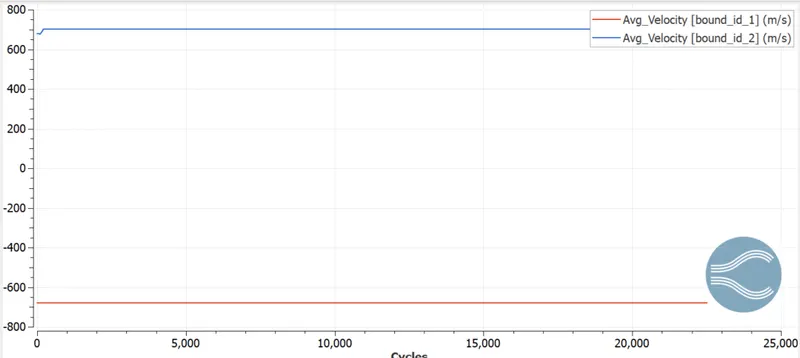
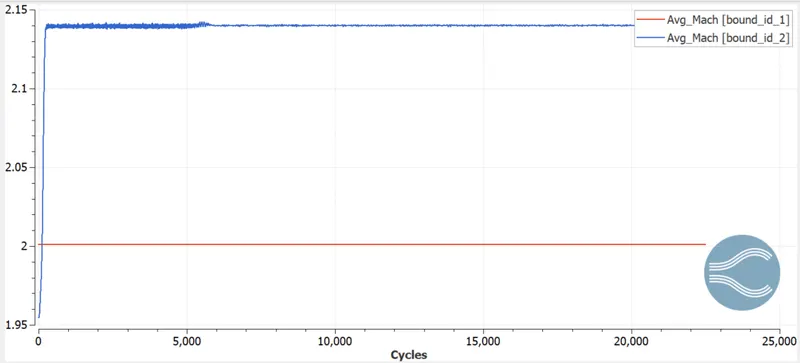
Average Mach number
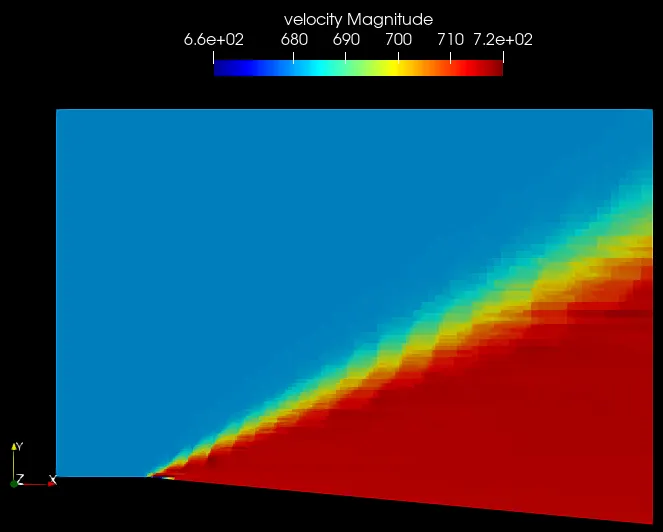
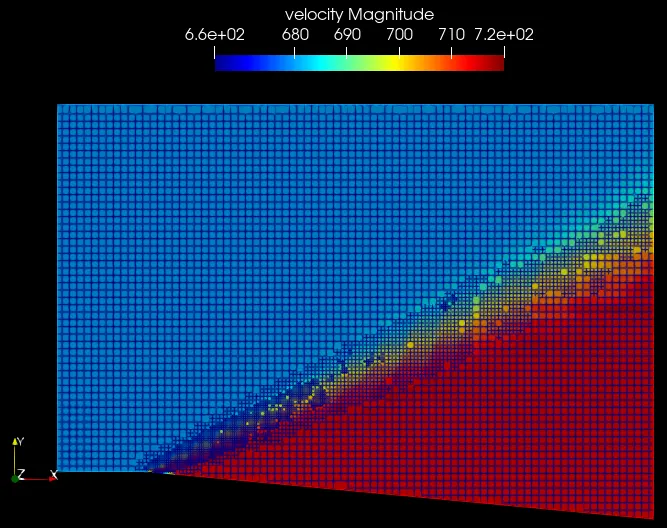
Velocity Animation
- Pressure plots/Contours
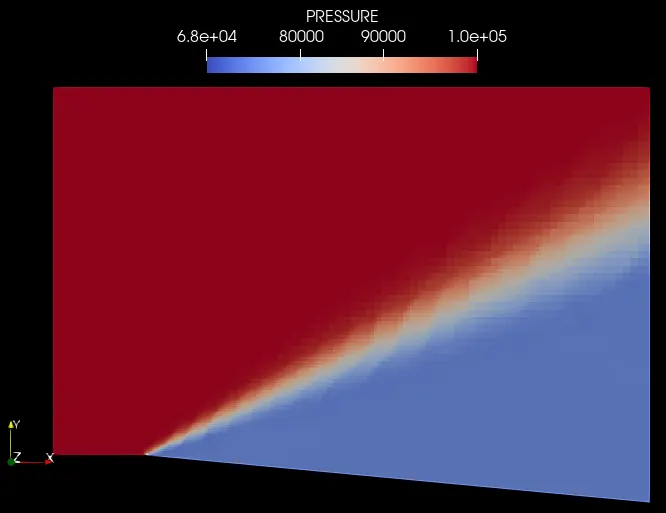
- Temperature
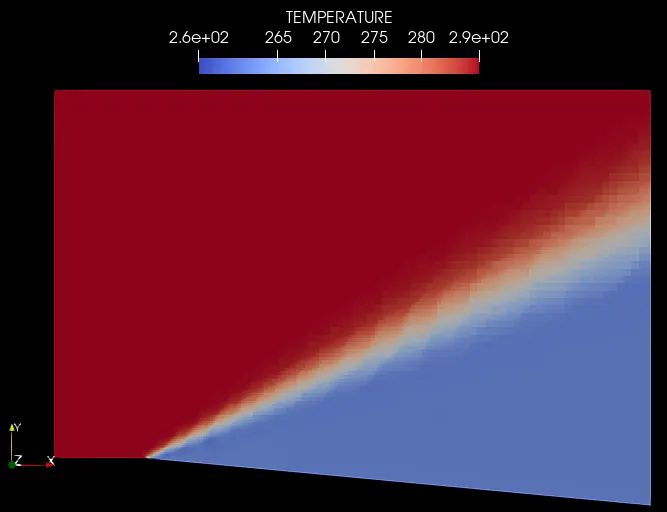
- Density
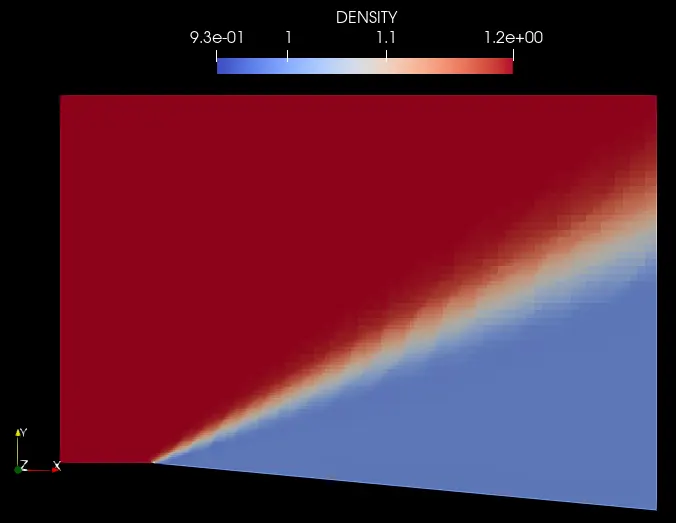
Case II [inlet velocity = 680 m/s] (SGS = 0.01)
- Mesh
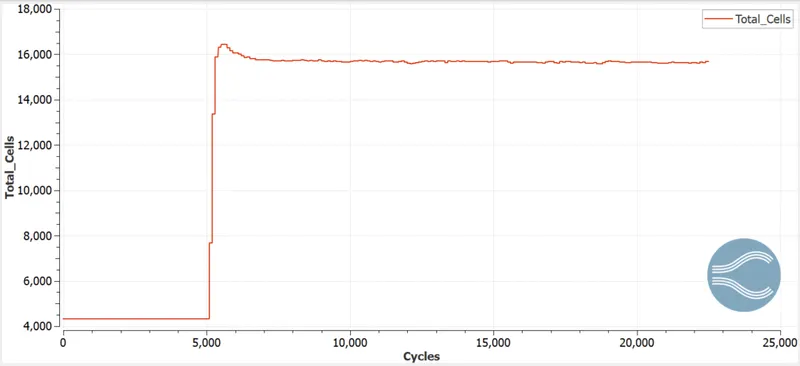
--> SGS parameter is set to 0.01, the subgrid mesh scale is more refined than the previous case.
- Velocity
- Pressure
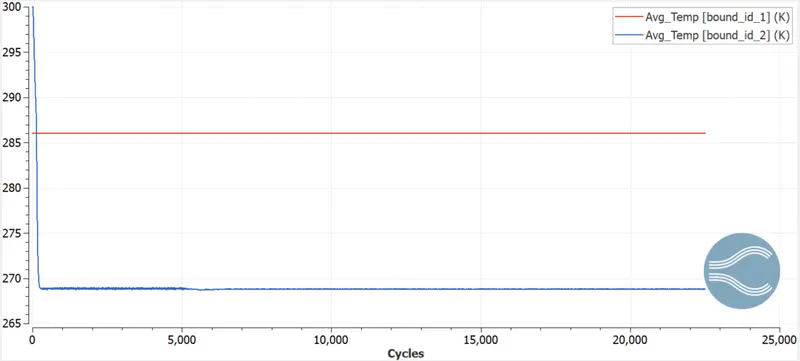
- Temperature
- Density
Conclusion
- Simulation of Supersonic flow through a duct was set up and run in Converge CFD.
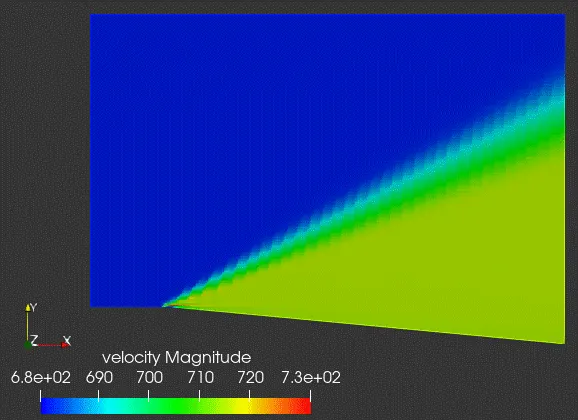
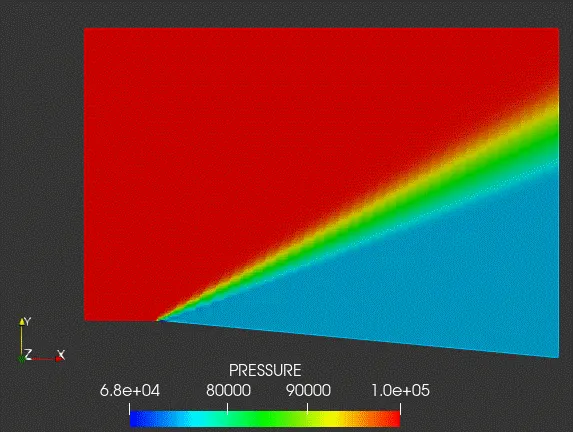
- Formation of the weak mach waves known as Prandtl Mayer Expansion waves was captured and the effect of SGS parameter on the shock locations was studied.
- As SGS parameter decreases the mesh refinement near the shock occurring regions increases.