Week 5: Prandtl Meyer Shock problem
Aim
- Setup a simulation to capture the shock wave
- Show the created mesh
- Effenct of SGS on the solution
- Explain the shock wave theory
- Define boundary conditions and physics behind the shock wave
Shock wave
Is a strong pressure wave found in any elastic medium such as air, water etcetra . They are formed when the pressure front moves at supersonic speed by pushing the fluid around.Supersonic Aircrafts , explosions, Lightnings produce shock waves. Shock wave results in abrupt changes in pressure , temperature ( due to high level of fluid molecule interations). when a an aircraft is moving at supersonc speed the waves created at the front end up in the back side of the aircraft and causes compression. Hence a density based calculation is always preferred inorder to capture the shocke wave
Prendtl-Meyer expansion fan
A supersonic expansion fan, technically known as Prandtl–Meyer expansion fan, a two-dimensional simple-wave, is a centered expansion process that occurs when a supersonic flow turns around a convex corner. The fan consists of an infinite number of Mach-waves, diverging from a sharp corner. When a flow turns around a smooth and circular corner, these waves can be extended backwards to meet at a point.
Each wave in the expansion fan turns the flow gradually (in small steps). It is physically impossible for the flow to turn through a single "shock" wave because this would violate the second law of thermodynamics.
Across the expansion fan, the flow accelerates (velocity increases) and the Mach number increases, while the static pressure, temperature and density decrease. Since the process is isentropic, the stagnation properties (e.g. the total pressure and total temperature) remain constant across the fan.
Shock wave boundary conditions
- At higher speeds of fluid the effect of viscousity is neglected and hence it is considered as an inviscid flow.
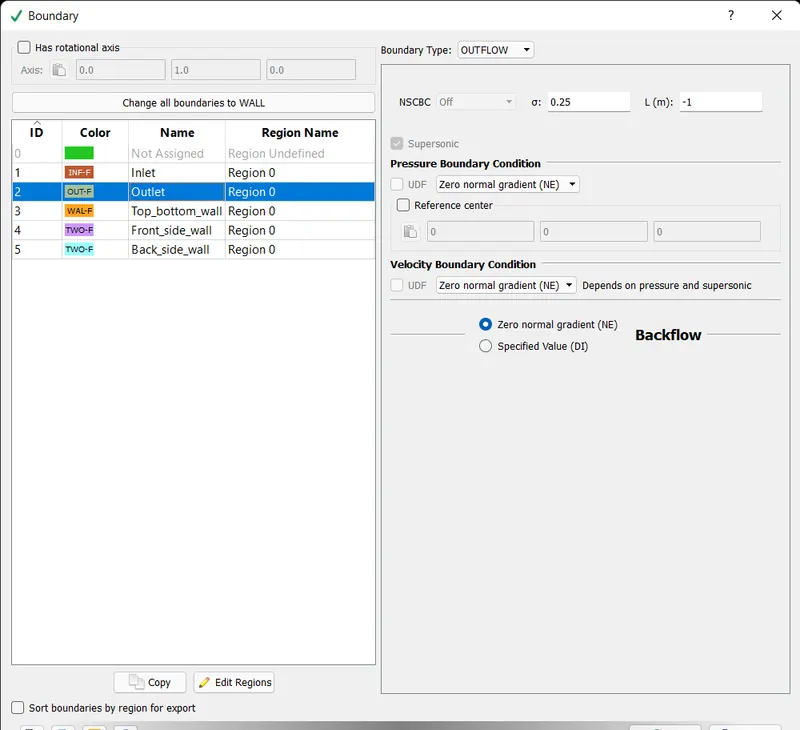
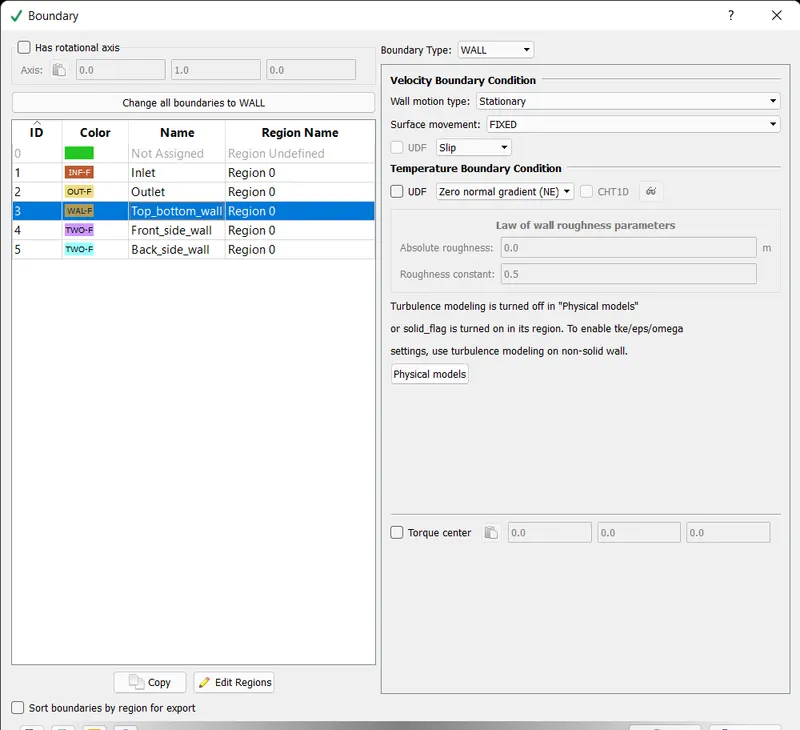
- The walls therefore is considered as slip boundary
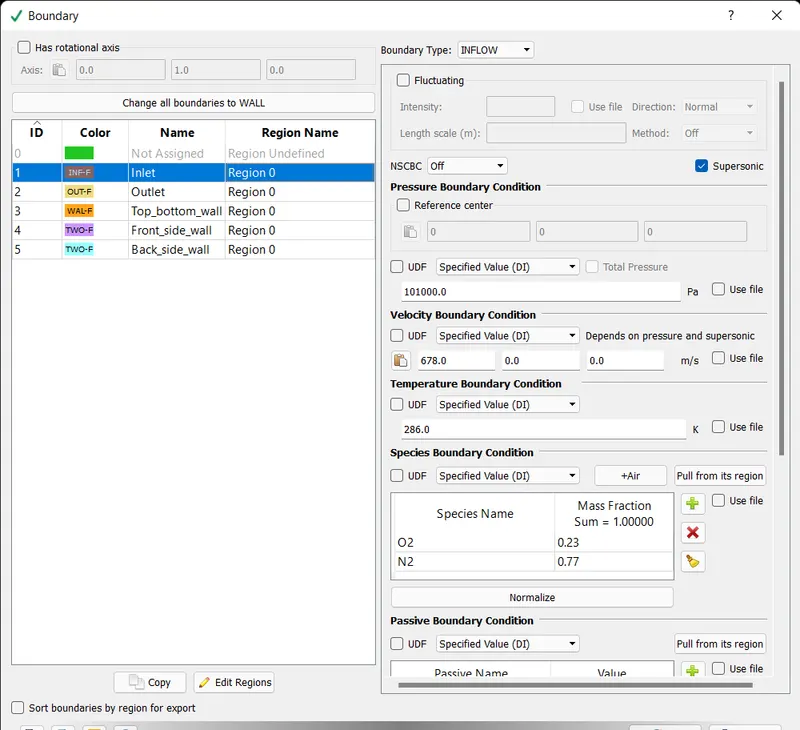
- For inlet since we have to specify the pressure along with velocity for capturing the shock wave the boundary condition is Set to Dirichlet boundary condition
- The boundary condition for temperature of wall is Neumann boundary condition. Here the values of the temperature will be the derivative of the value applied at the boundary
Geometry
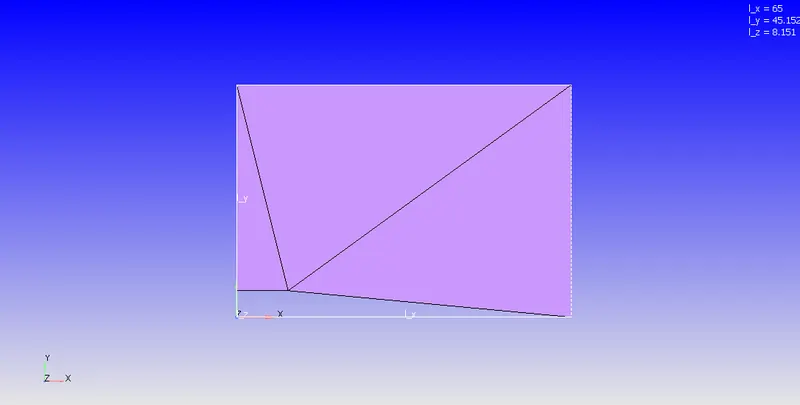
Setup
Setup
- Time based simulation is set
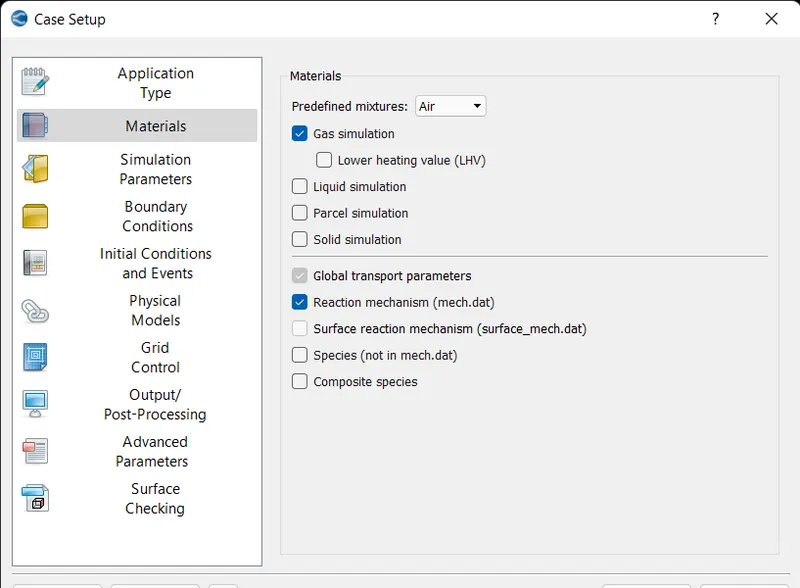
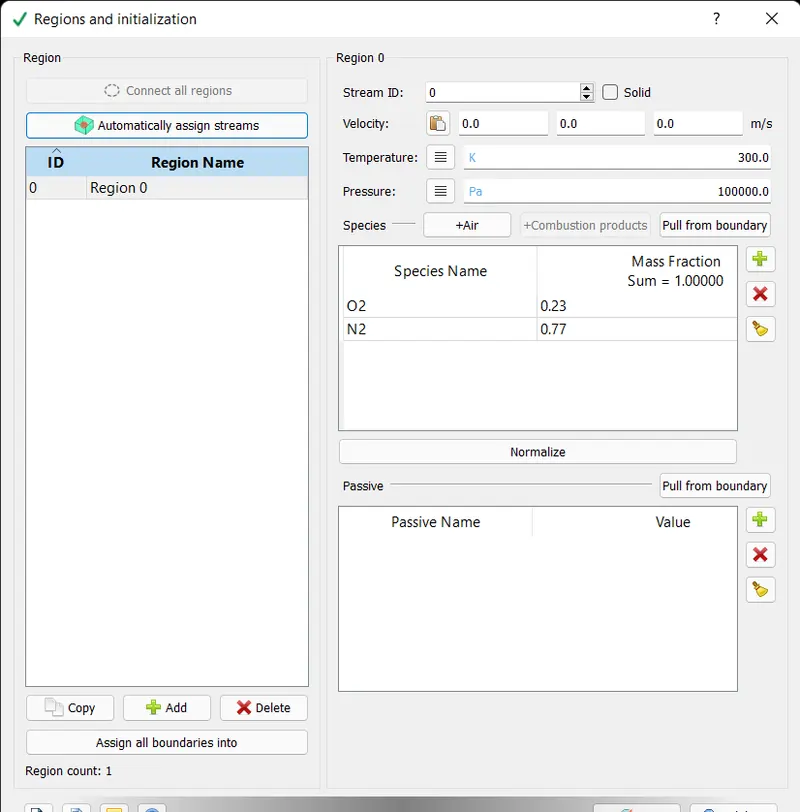
- Material is set to air contains 0.77 of nitrogen and 0.23 of oxygen also species involvemnt is also enabled
- species are added accordingly
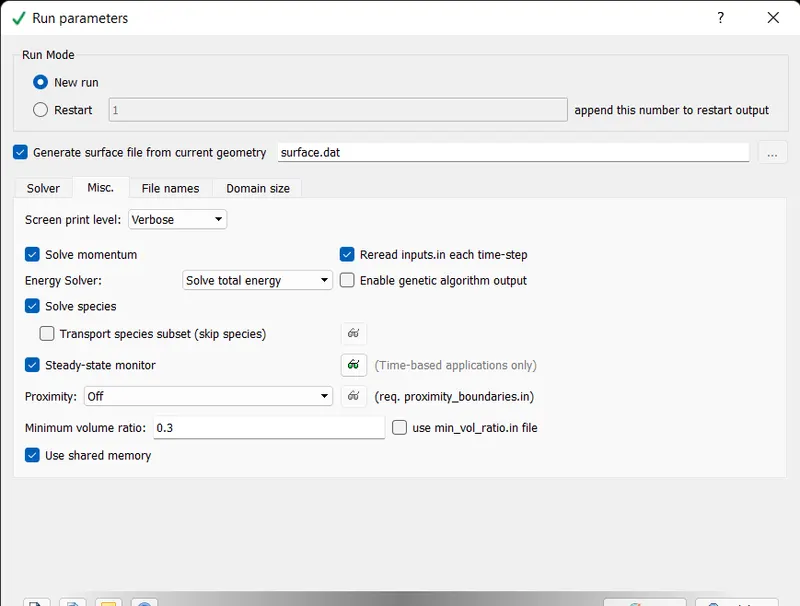
- In run parameters enregy involvement is enabled by selecting total energy as the simulation involves the temperature changes
- Steady state monitor is turned on
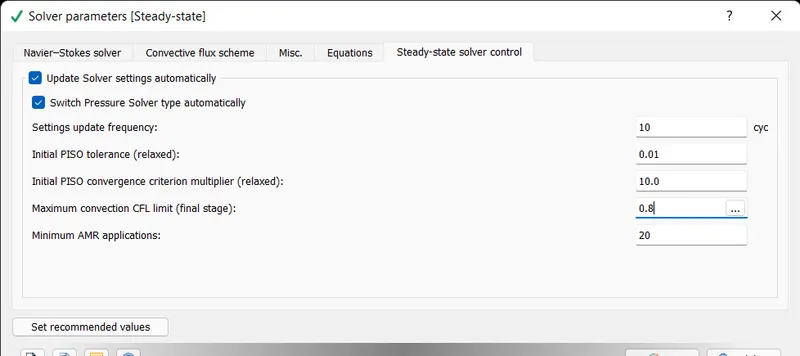
- A steady state simulation was enabled in Run parametres
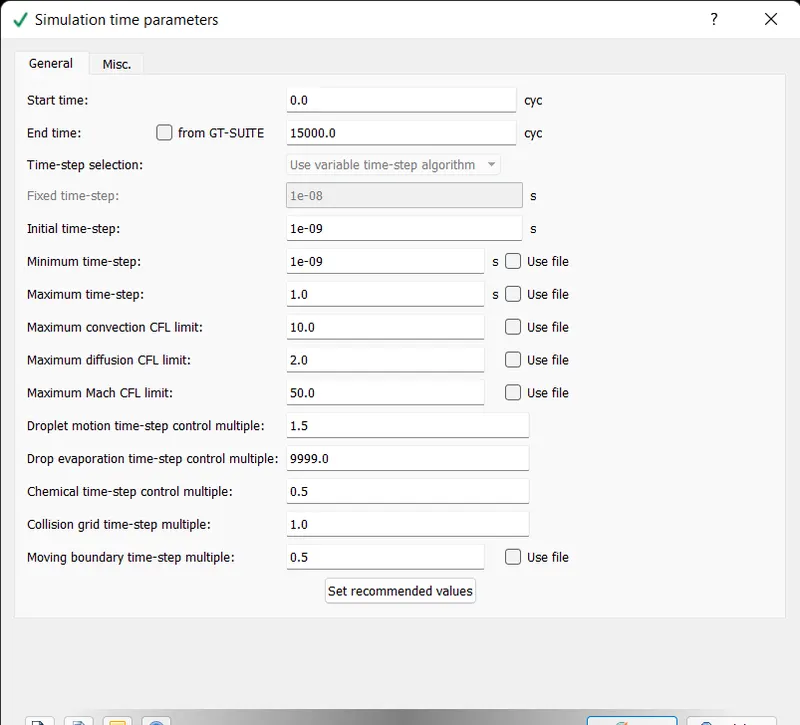
- Under Simulation run parametres the start time and end time was set to 0 to 15000 and the initial and minimum time step 1e-9 and the amximum times tep is set to 1
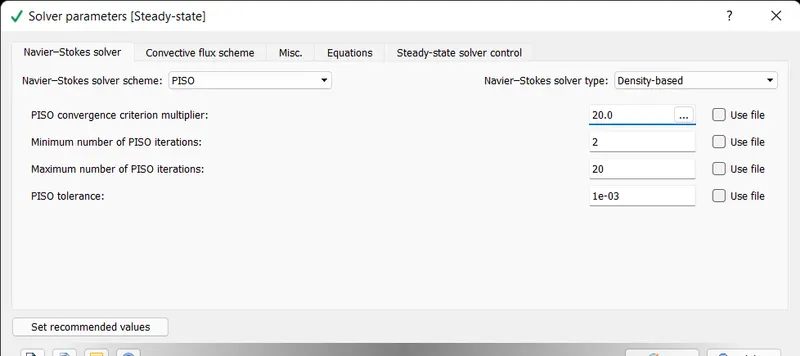
- Under solver paramteres, A density based simulation was enabled
- A new region containing air is created in 'region and initialisation' and the initial pressure is set to 1e5 pa
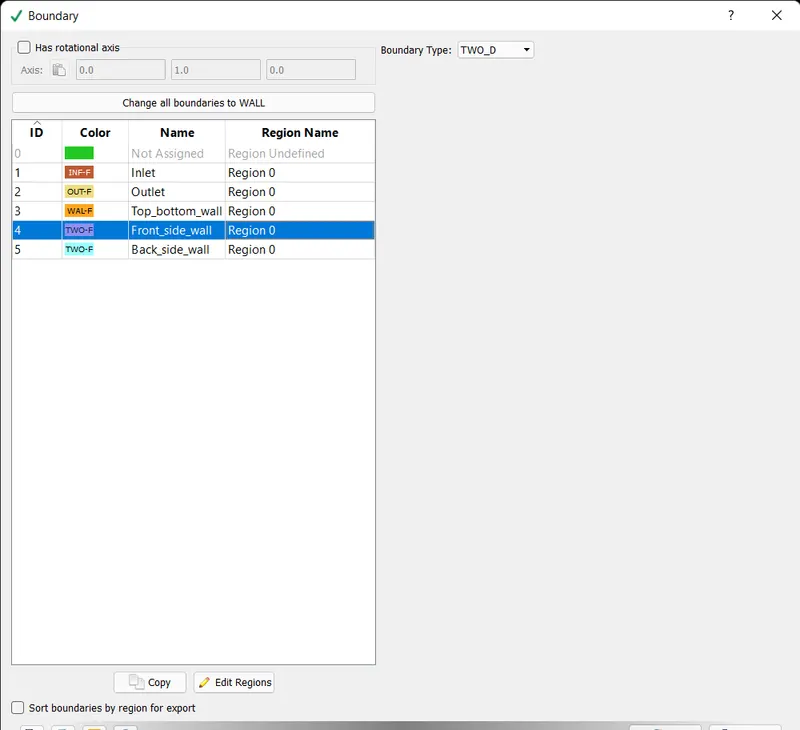
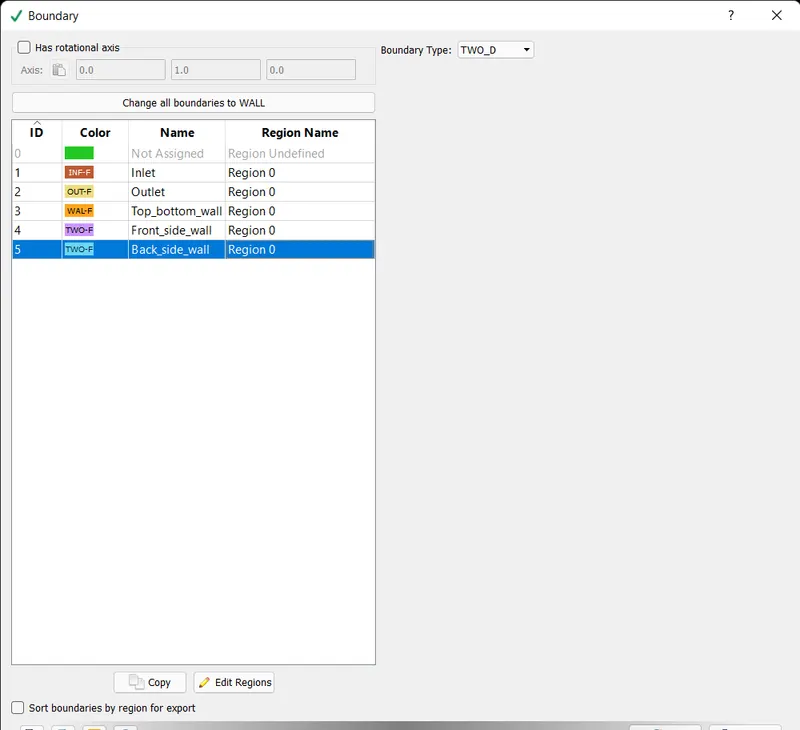
- Boundary conditions are set and shown the screen shots
- Turbulance model is turned off as effect of reynolds number is neglected
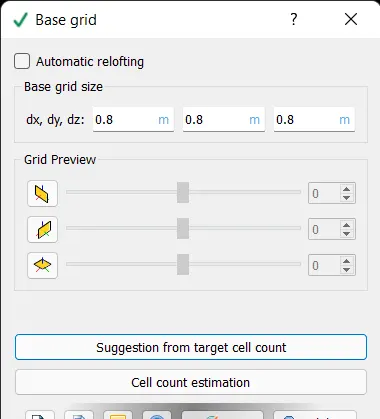
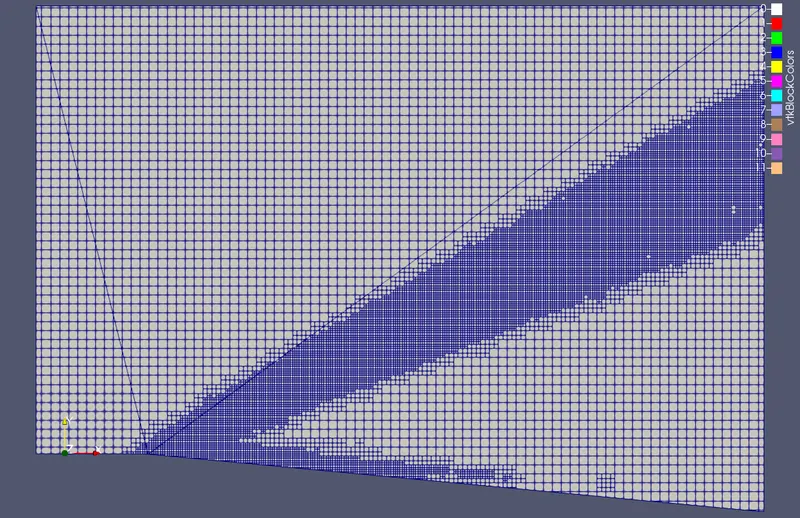
- In grid control the mesh size is set to 0.8 m and the adaptive mesh refinement is turned on
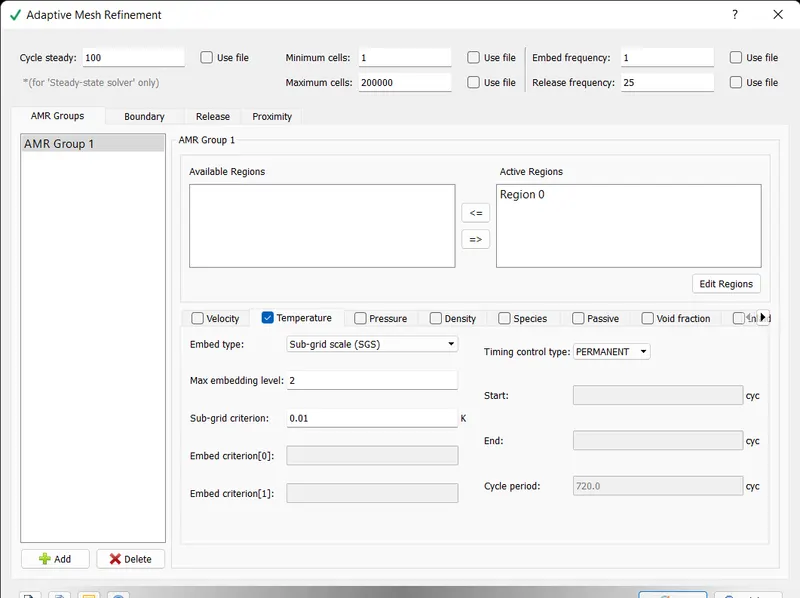
- Under adaptive mesh refinement the maximum number of cells is set to 200,000 and temperature is selected inorder to refine the area where the abrupt change in temperature occur(this is where the location of shock is expected)
- Sub- grid criterion is changed to perform the simulation in different cases in order to find the effect of subgrid size on the solution
- Case 1 , Sub grid size = 0.1
- Case 2 , Sub grid size = 0.05
- Case 3 , Sub grid size = 0.01
- Finally normals were checked and ensured that they were pointing inside of the geometry
Mesh
- Case 1 , Sub grid Criterion = 0.1 k
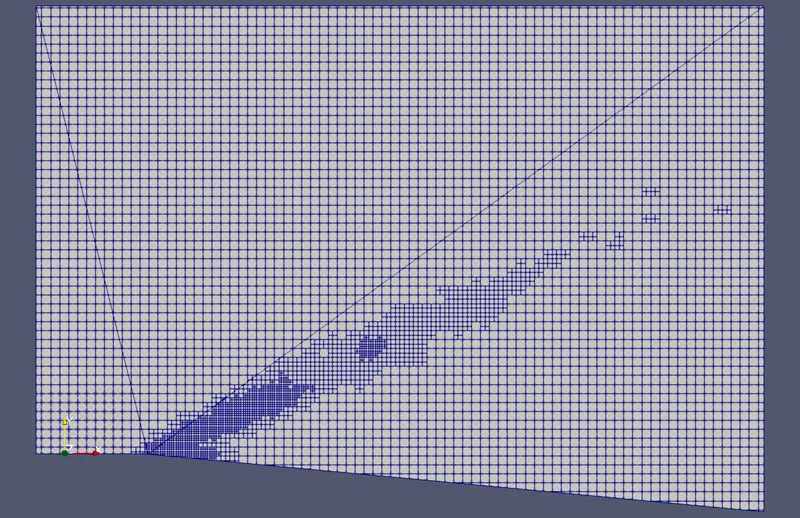
- Case 2 , Sub grid criterion = 0.05 k
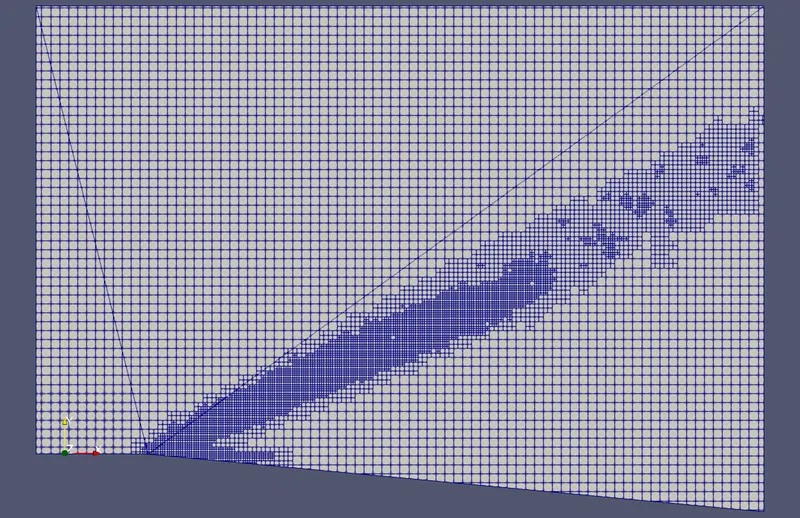
- Case 3 , Sub grid criterion = 0.01 k
Outputs
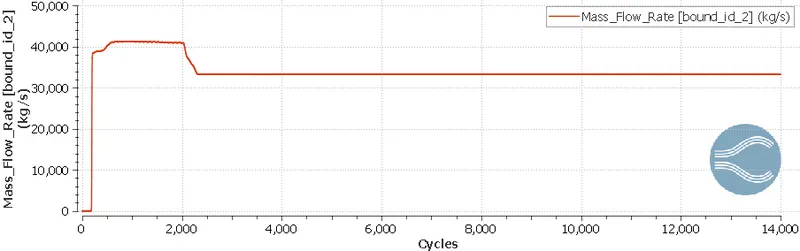
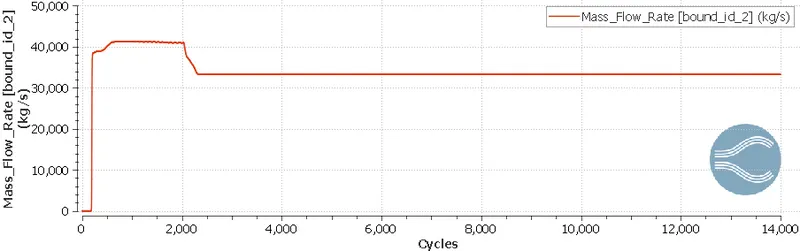
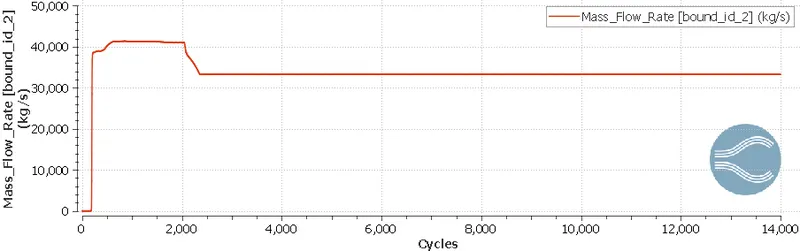
Plots to show convergency
- Case 1 , Sub grid criterion = 0.1 k
- Case 2 , Sub grid criterion = 0.05 k
- Case 3 , Sub grid criterion = 0.01 k
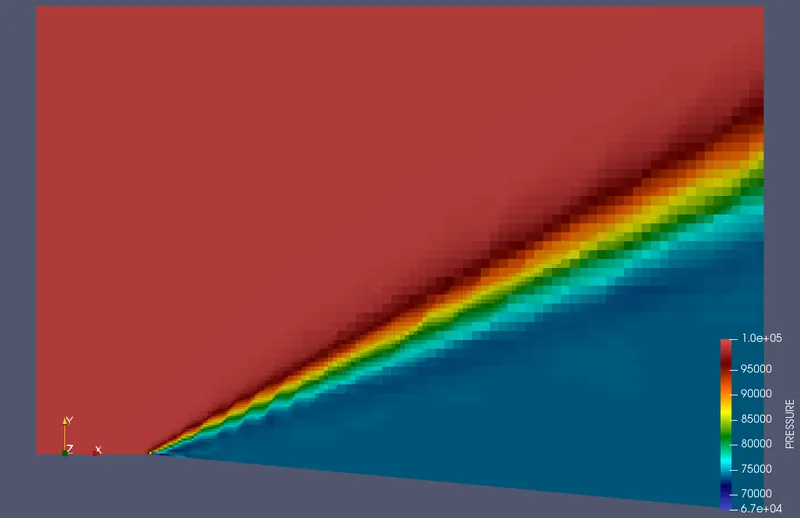
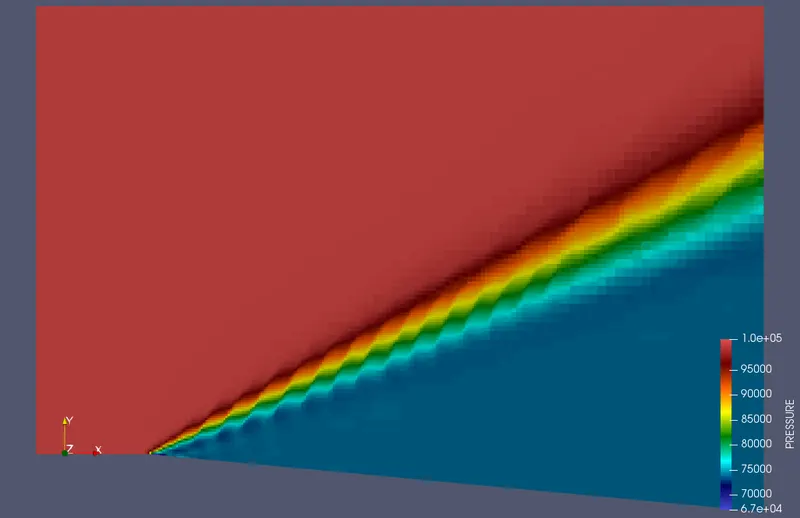
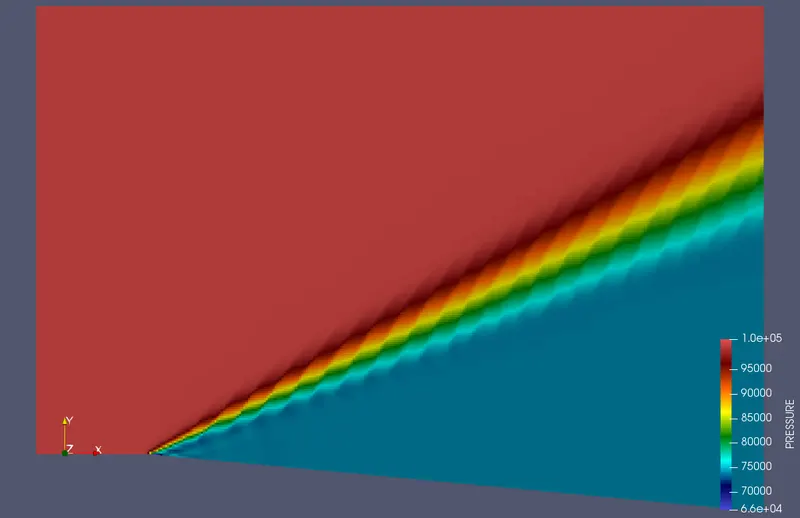
Pressure contours
- Case 1 , Sub grid criterion = 0.1 k
- Case 2 , Sub grid criterion = 0.05 k
- Case 3 , Sub grid criterion = 0.01 k
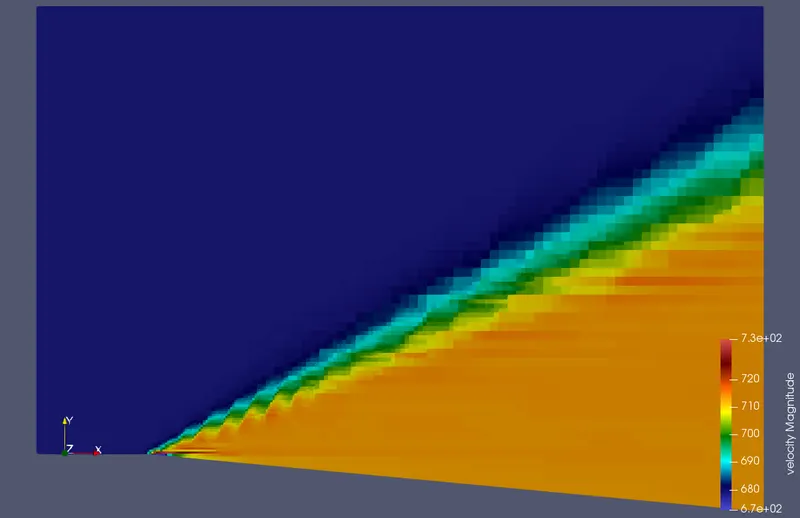
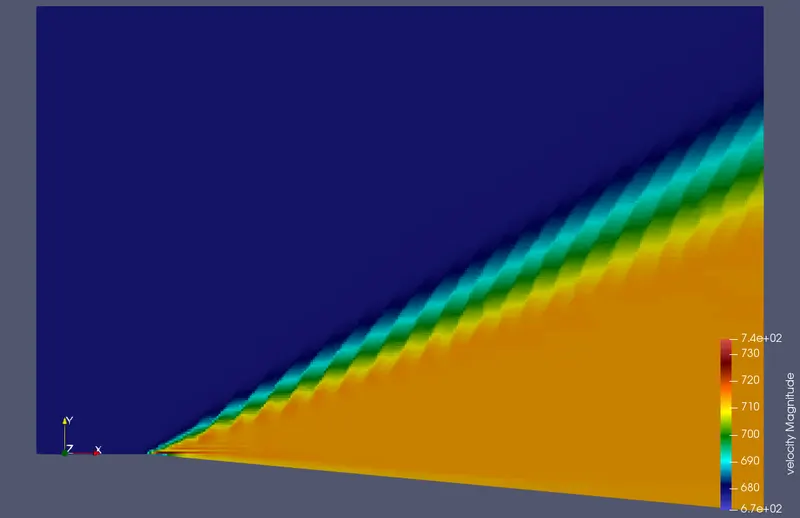
Velocity contours
- Case 1 , Sub grid criterion = 0.1 k
- Case 2 , Sub grid criterion = 0.05 k
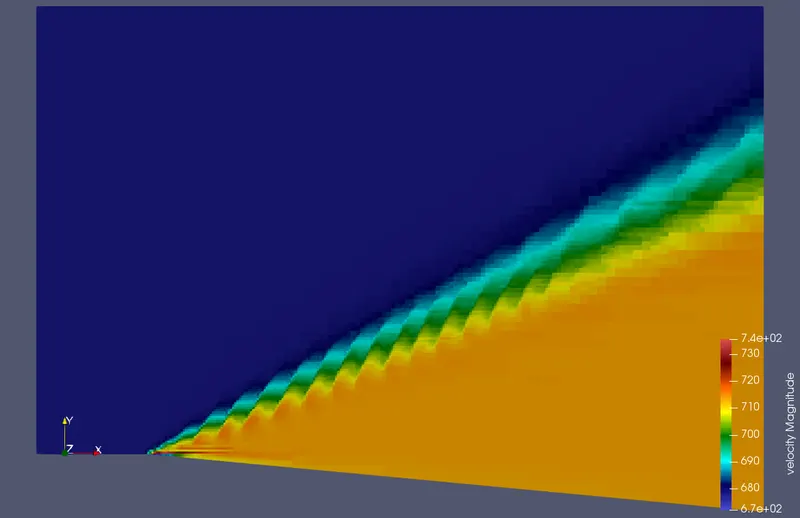
- Case 3 , Sub grid criterion = 0.01 k
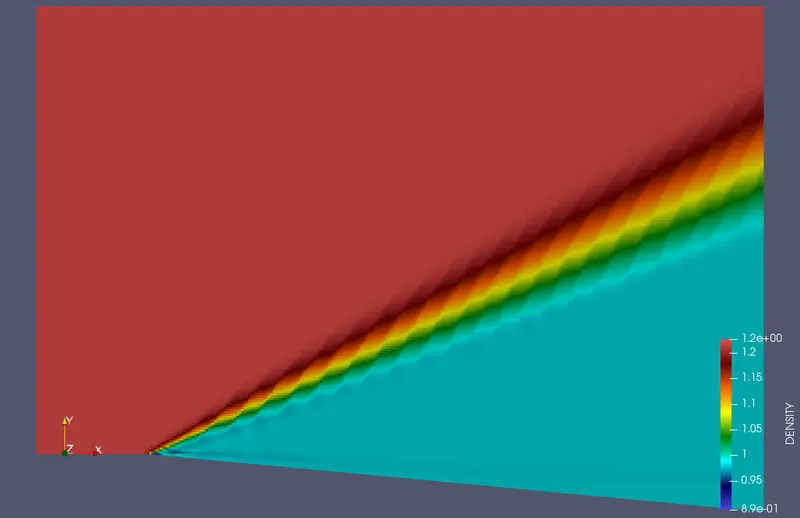
Density contours
- Case 1 , Sub grid criterion = 0.1 k
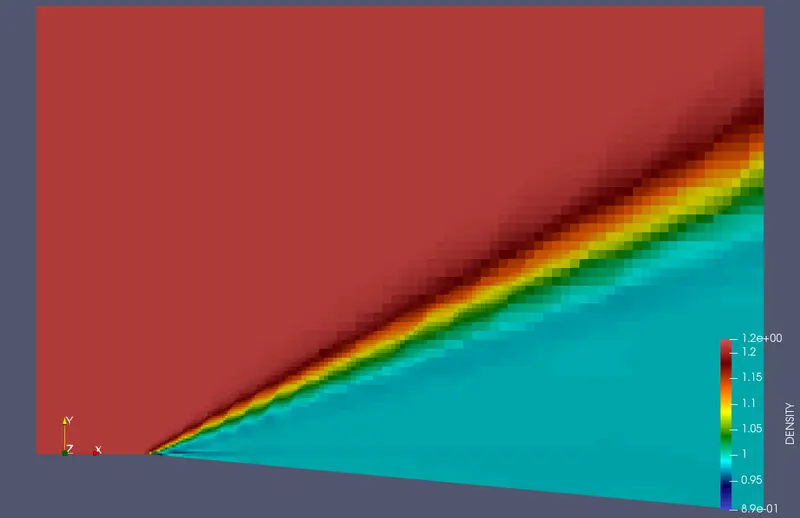
- Case 2 , Sub grid criterion = 0.05 k
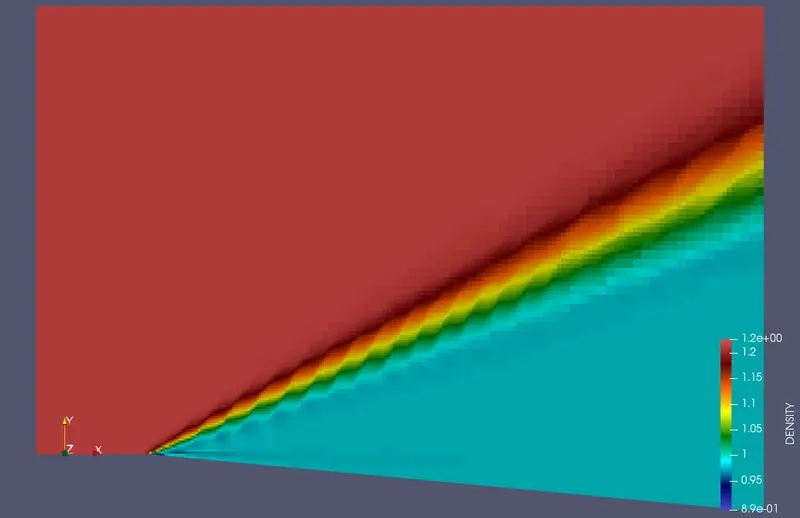
- Case 3 , Sub grid criterion = 0.01 k
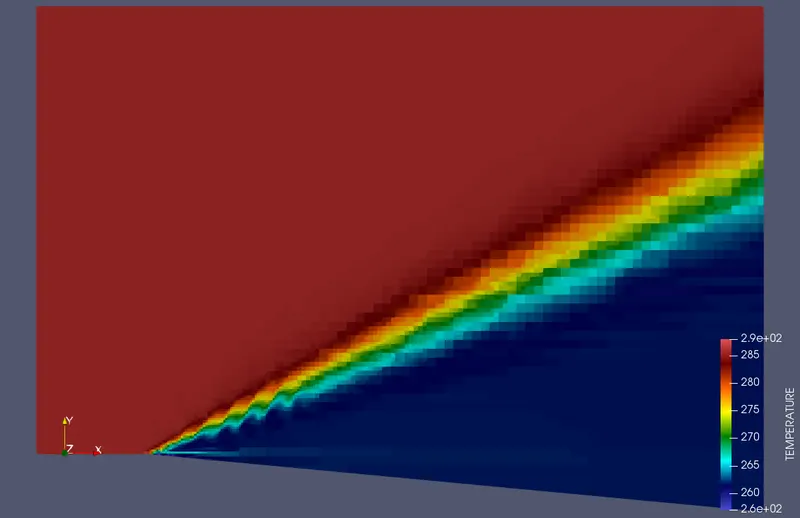
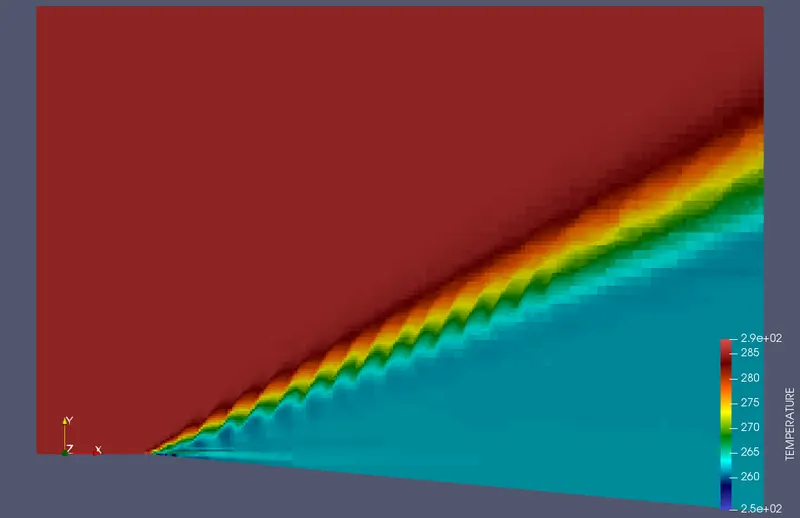
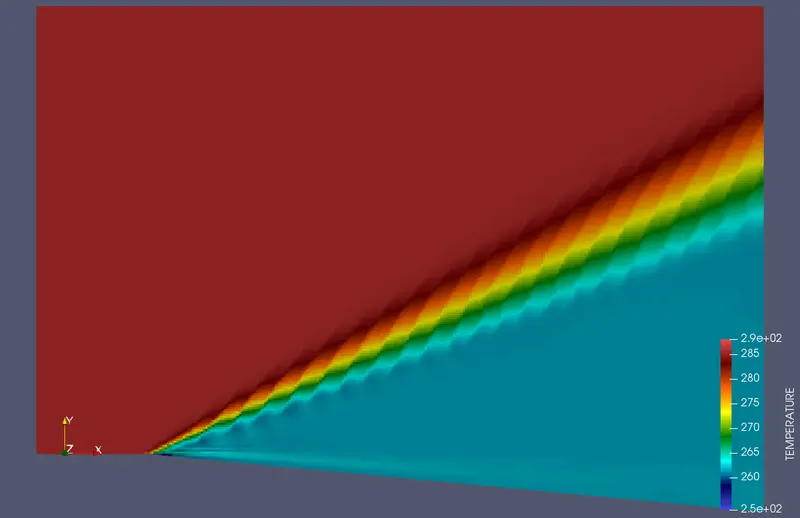
Temperature contours
- Case 1 , Sub grid criterion = 0.1 k
- Case 2 , Sub grid criterion = 0.05 k
- Case 3 , Sub grid criterion = 0.01 k
Animations
- Density
Case 1
Case 2
Case 3
- Pressure
Case 1
Case 2
Case 3
- Temperature
Case 1
Case 2
Case 3
- Velocity
Case 1
Case 2
Case 3
Observations
- From above contours it was found that there is high pressure, temperature and density region on the upper side of the shock
- On the lower side the velocity is higher
- As discussed earlier in prandtl meyer expansion fan as the super sonic flow flows through a convex side there occurs to be a layer formed with sudden changes in physics, each wave in the expansion fan turns the flow gradually
- The sub grid criterion plays an important role in number of cells , when the numbers are lowered for sub grid criterion the cells involved as more and this happens to be wheren the shock occurs and hence we can lower the value to increase the detailing
Conclusions
- Discussed about shock wave
- Discussed about the Boundary conditons used for a shock problem
- A shock wave was captured using prandtl meyer shock problem
- Dependancy of Sub grid criterion on the number of cells was observed
- Got different contours and animations
References