Week - 5 - Modelling Spotwelds
Aim- Run a crash box simulation using beam spotweld and solid hex spotweld and compare results.
Objective - the objective of the assignment is to create spotweld with 2 different configuration beam and soid connecting the 2 parts, and run a crash simulation on a planar rigid wall.
case1. beam Spotweld.
Procedure-
1. Create the spot weld by picking the subequent node in one direction of the two parts.
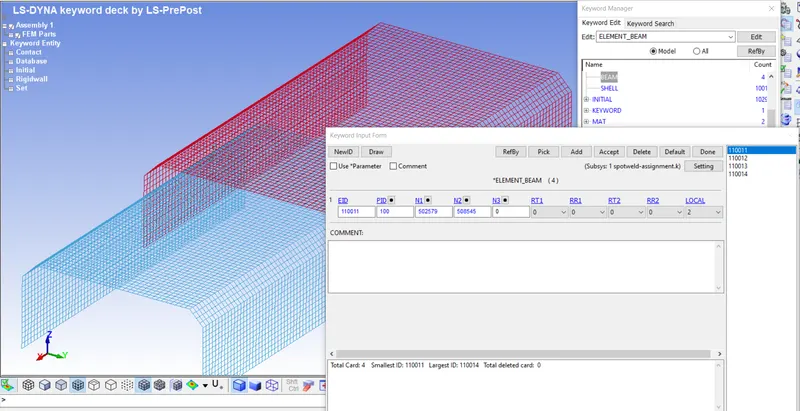
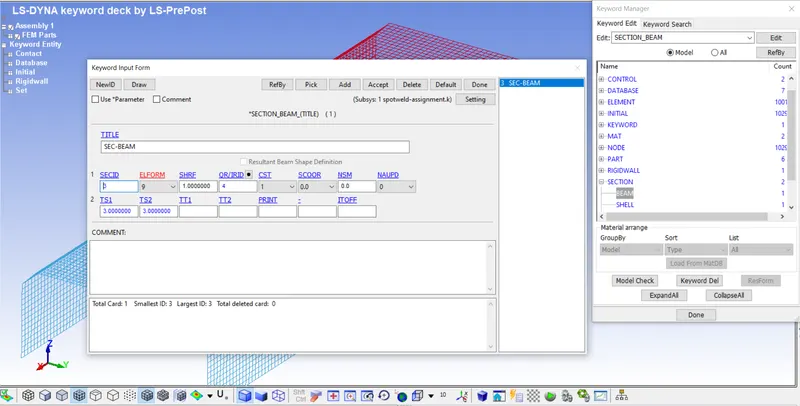
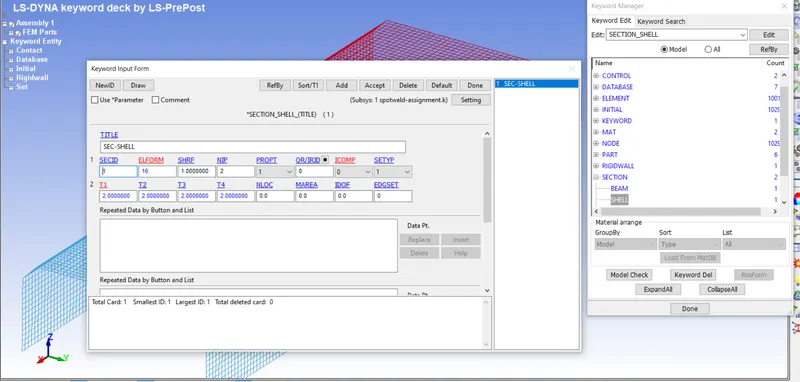
2. Create section elements, for parts use shell element and use beam element for spotweld.
use ELFORM 16 for fully integrated shell element.
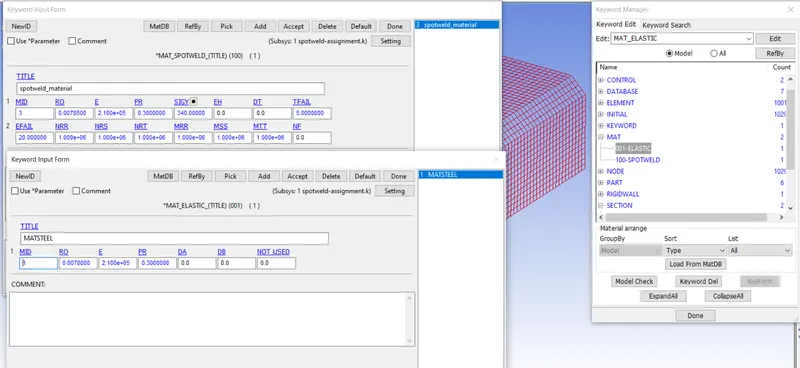
3. Assign materials
for spotweld assign MAT_spotweld
for parts assign MAT_elastic
4. Make a rigid wall using planar option from keyword manager.
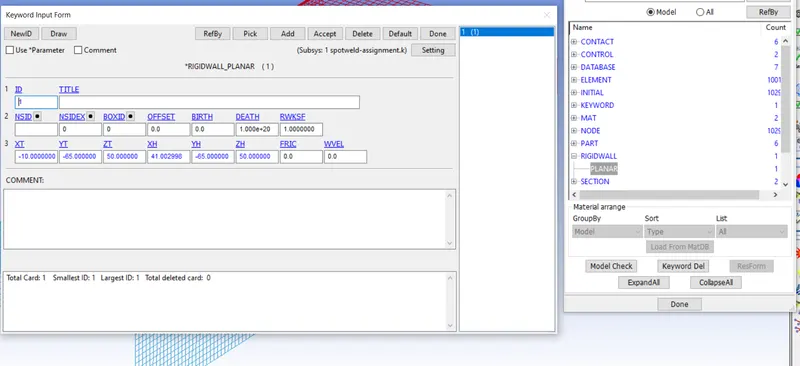
5. Create contact between the elements of the parts and spotweld.
between the two parts use automatic_single_surface
between parts and spotweld
contact_tied_shell_edge-to-surface
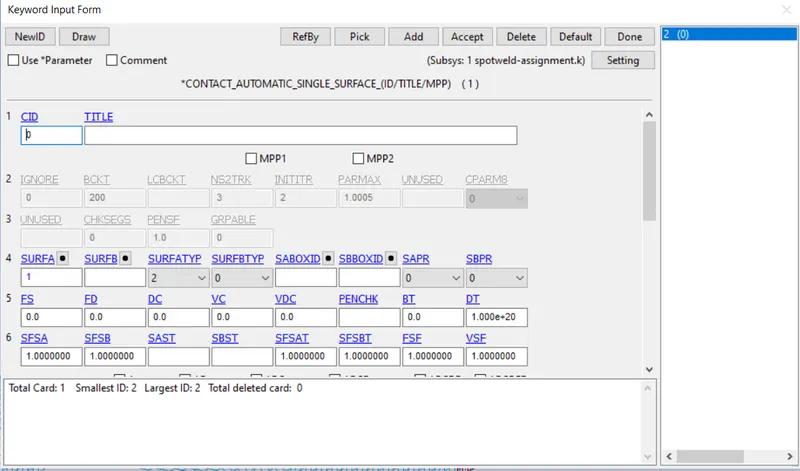
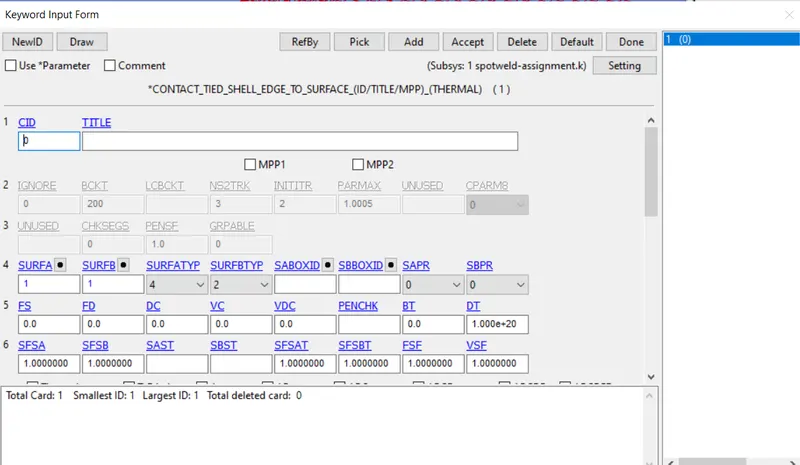
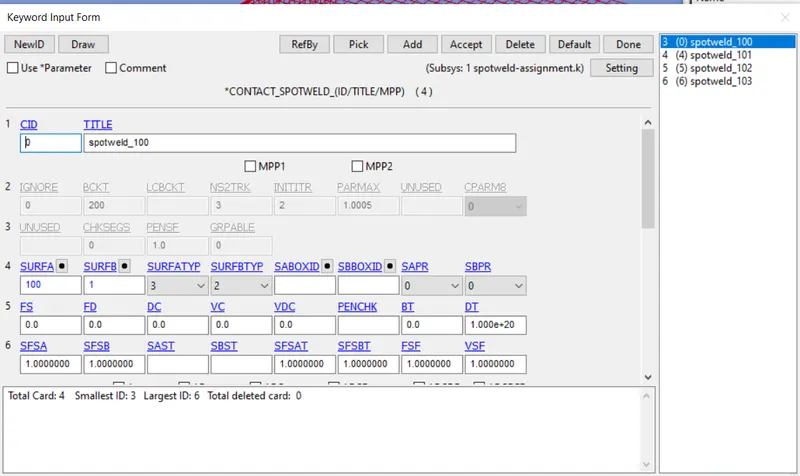
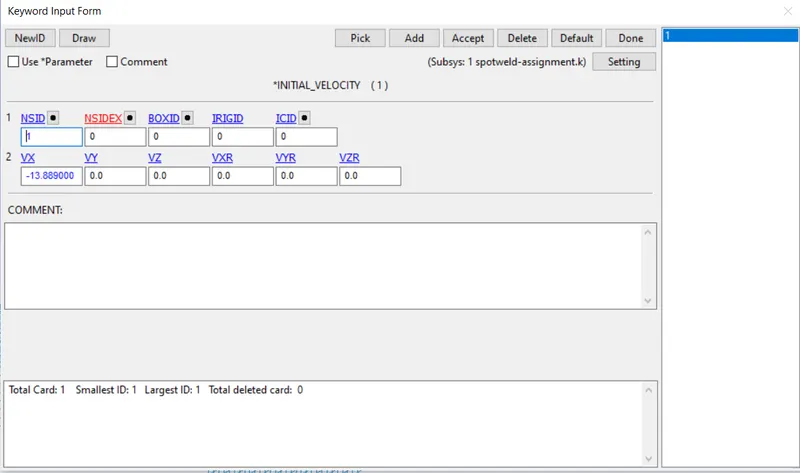
6. Assign a initial velocity to the component with a value of 13.89
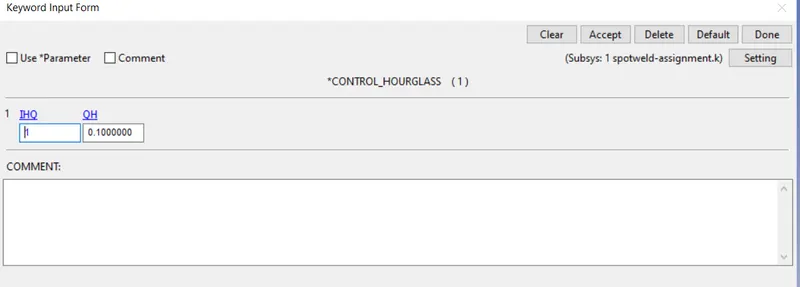
7. Create hourglass card.
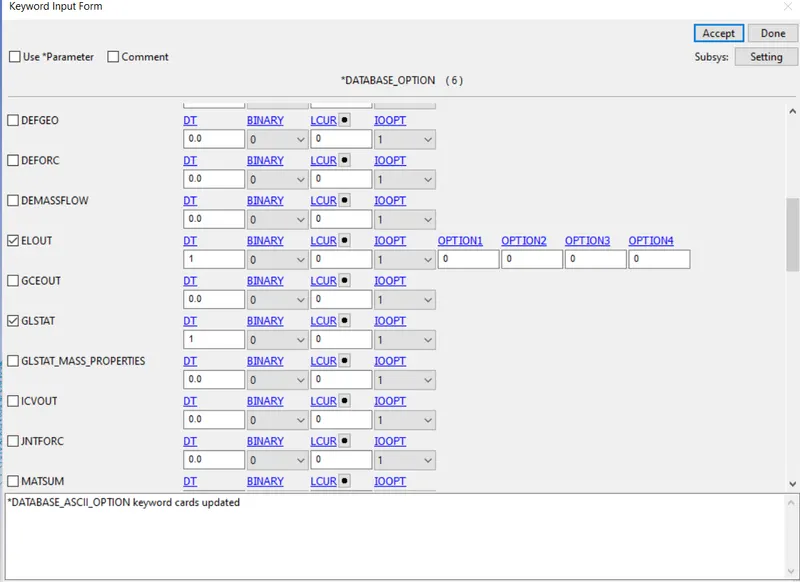
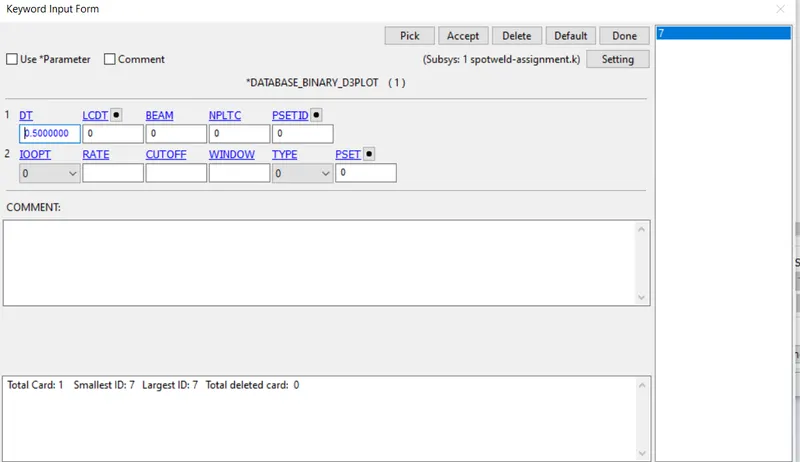
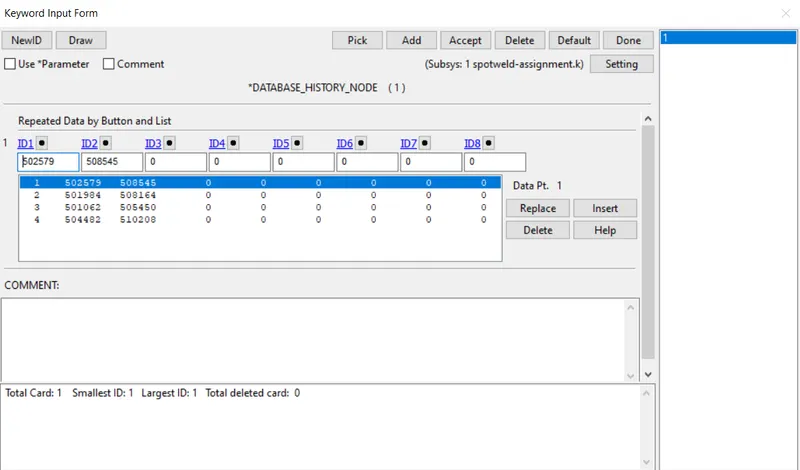
8. Create a database card
defining the output parameter
case 2.
Solid Spot weld
procedure -
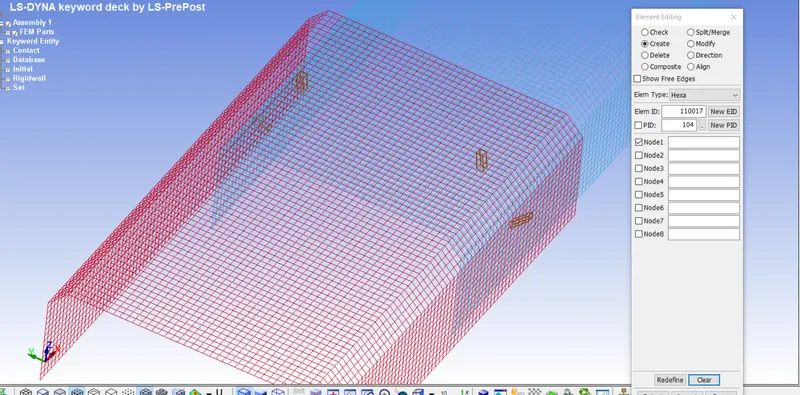
1. model the solid spotweld element in the element generation using element editing tool.
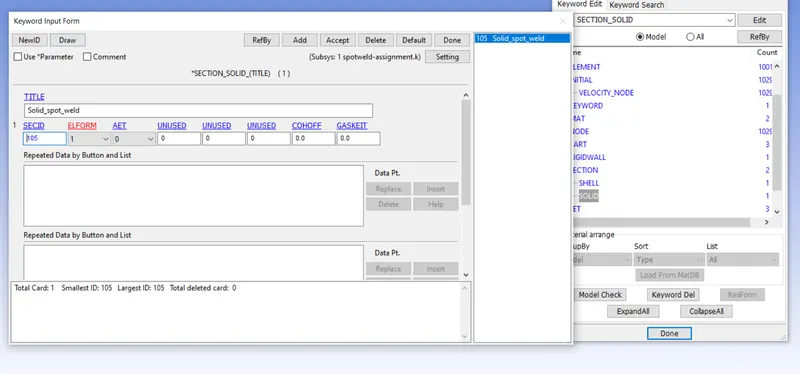
2. Assign a solid section to the spotwelds.
Run both the cases in the LS-DYNA solver.
Result -
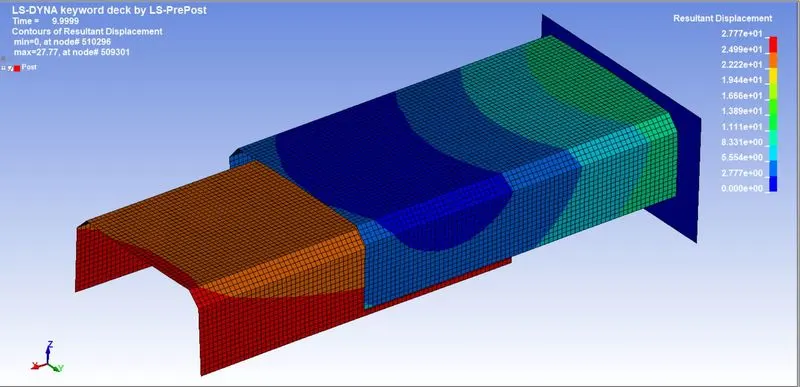
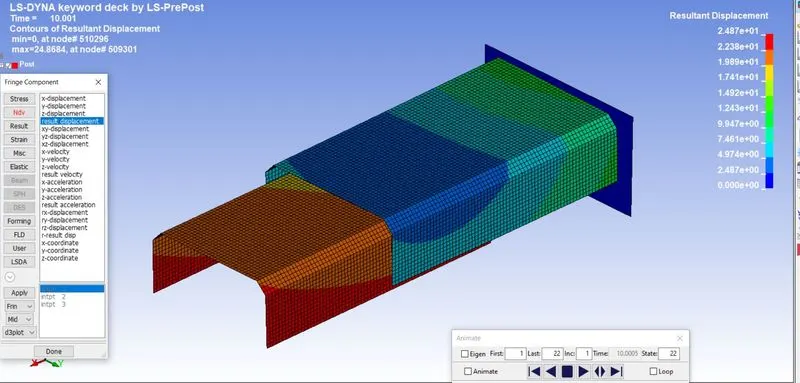
1. The resultant displacement of the beam and solid element.
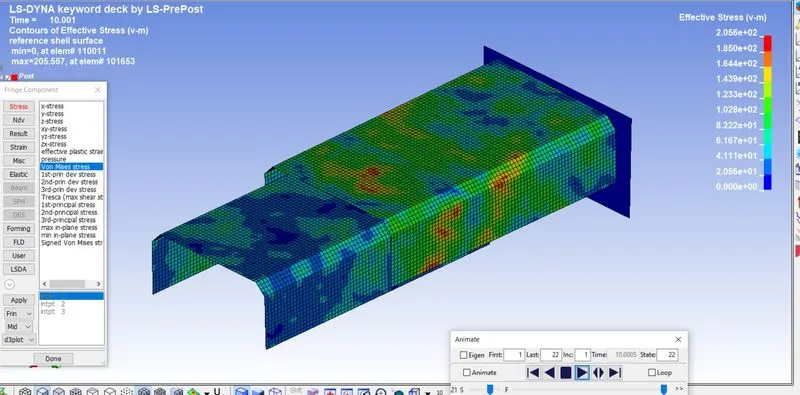
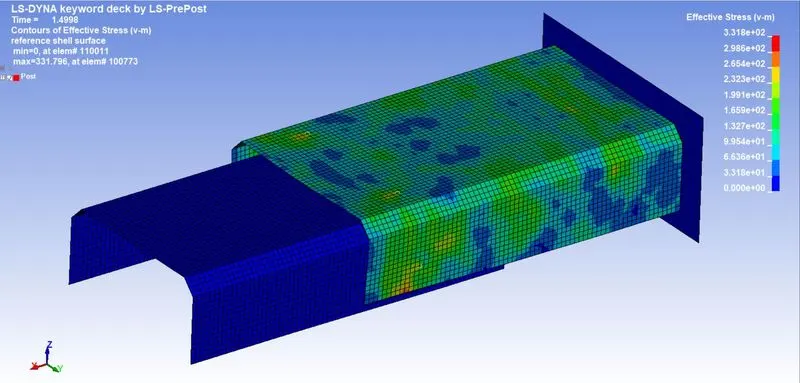
2. The resultant vonmisses stress in the beam and solid element
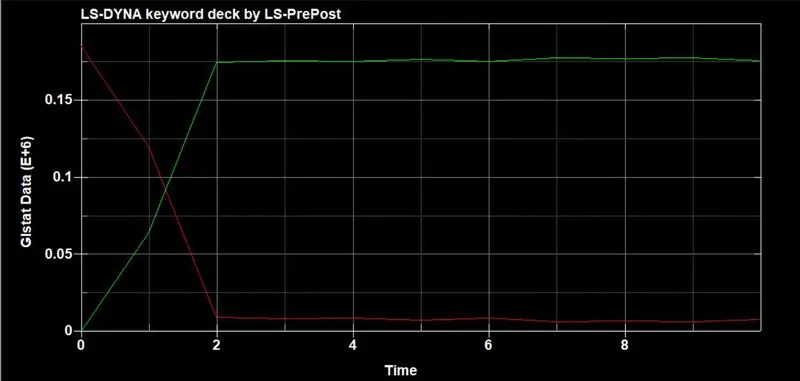
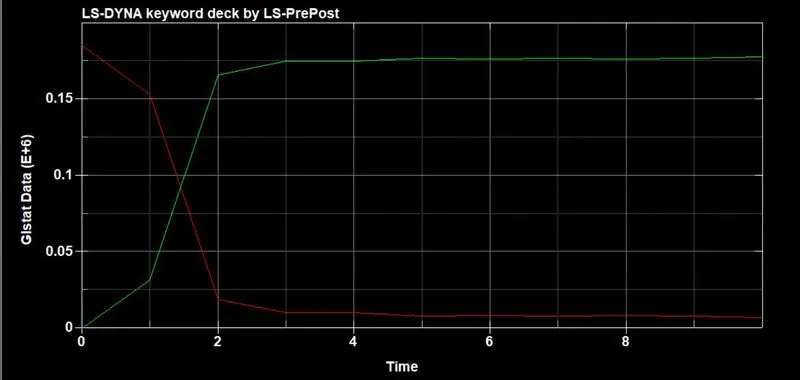
3. The kinetic and internal energy of the beam and solid element
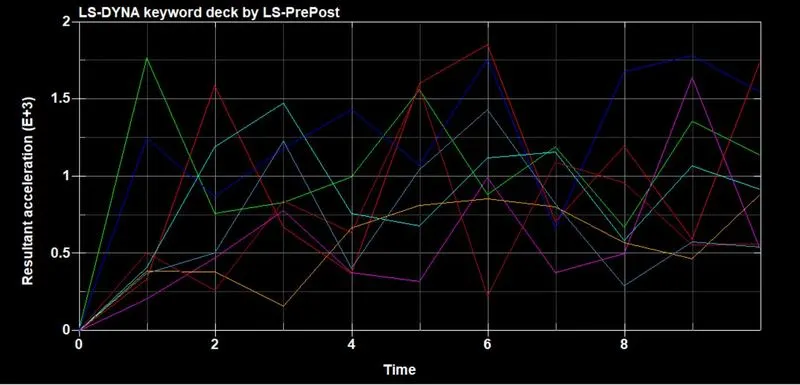
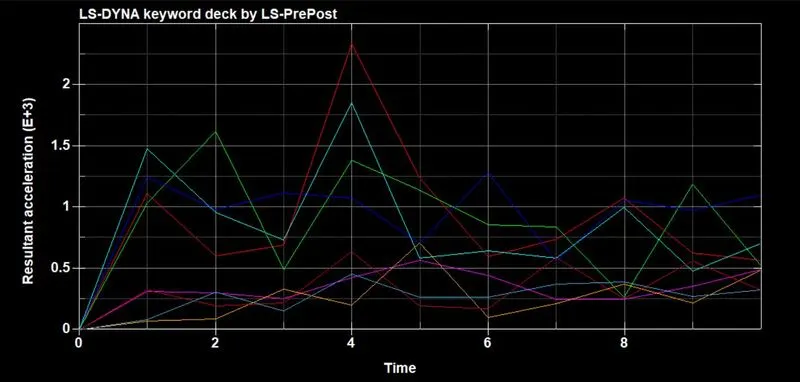
4. The resultant accelration of the beam and solid element.
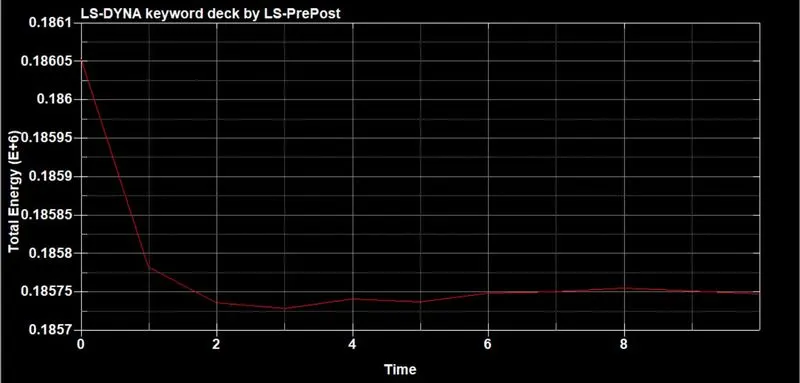
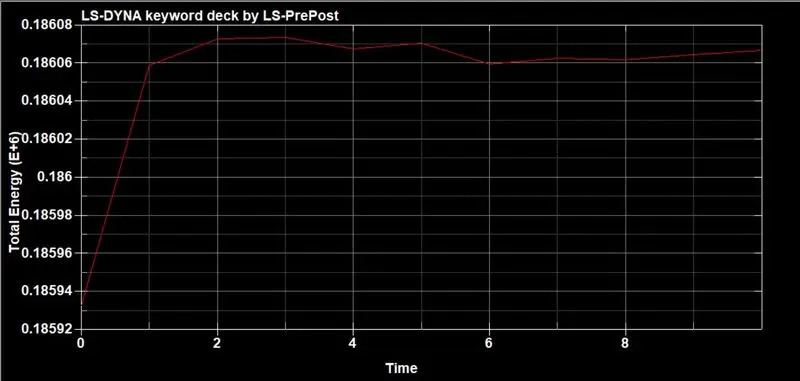
5. The total energy of the beam and solid element.
Conclusion -
1. The crash analysis of the system is carried out with 2 different spotweld element type beam and solid.
2. the beam spotweld element have high amount of unstable resultant accleration of the elemets while on the other hand the solid spotweld element have stable resulant accleration which leads to the better output result in the analysis.
3. The difference in the total energy drop in the beam element and elevation in the solid element changes with the time.
4. Thus it states that the 3d solid element gives more accurate result as compared to 1d beam element.