SOLID MESHING ON REAR VIEW MIRROR USING ANSA
SOLID MESHING ON REAR VIEW MIRROR USING ANSA
Objective:
To perform geometric topology on the given model and perform solid meshing or tetrahedral meshing as per the given quality criteria using ANSA.
|
S.No |
Quality criteria |
Value |
|
1. |
Target/Average length |
1 |
|
2. |
Minimum length |
0.5 |
|
3. |
Maximum length |
2 |
|
4. |
Tetcolapse |
0.2 |
Procedure:
Geometric topology:
1.The given part is separated in to four components namely ball, mirror, mirror box and stand which are kept in separate lock view.
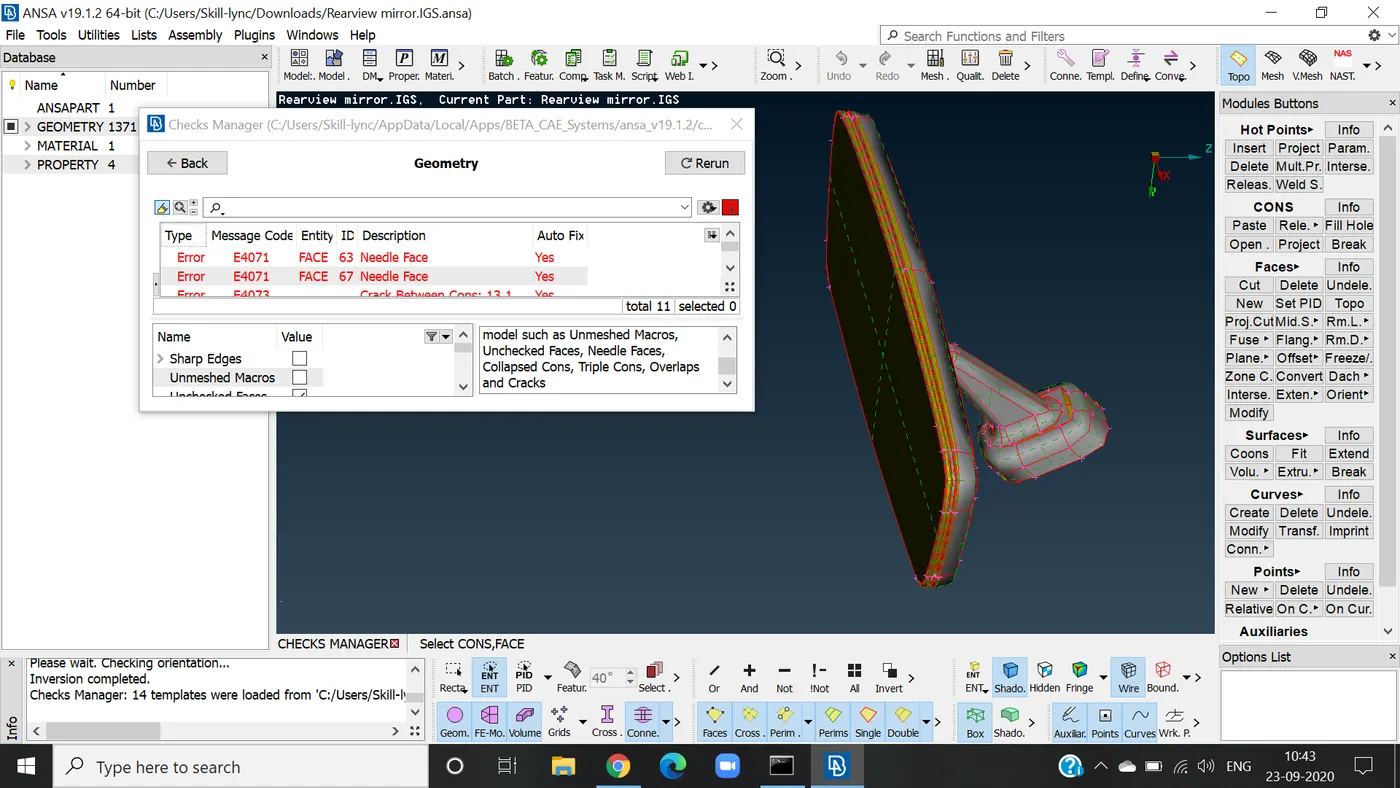
2.The components are checked for geometrical errors using the checks manager.
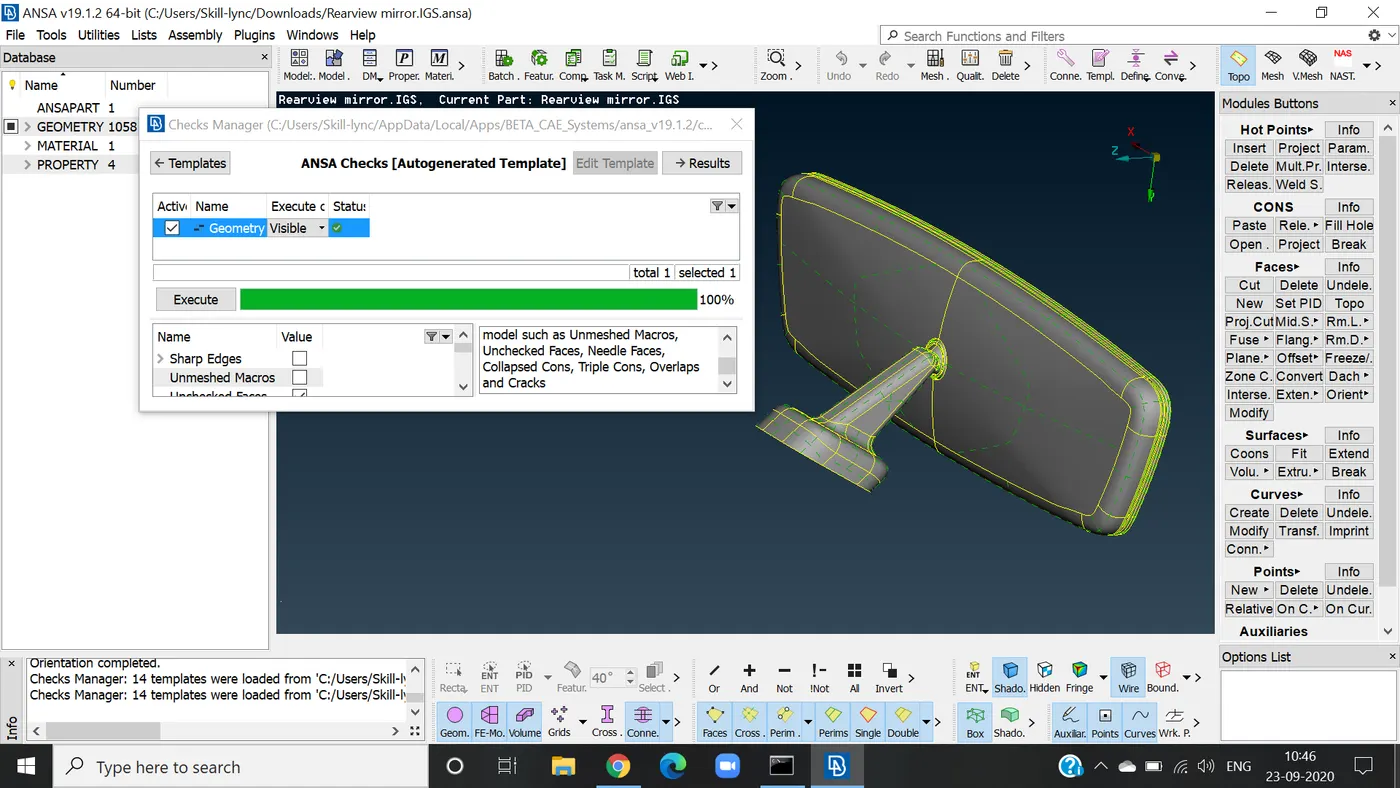
3.The errors which are identified are fixed using Auto fix option available in checks manager.
Geometric errors before topology:
Model without any geometrical errors:
Meshing:
Surface meshing:
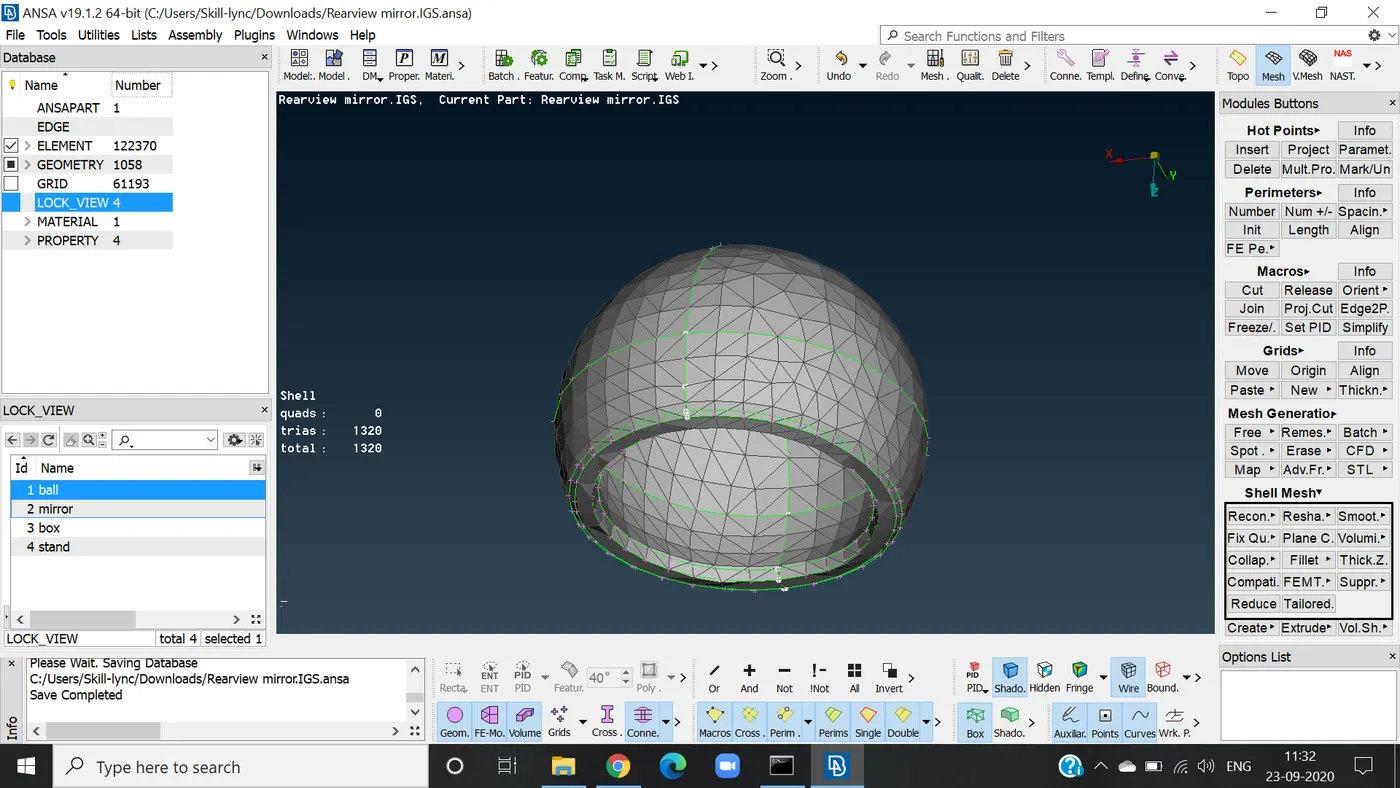
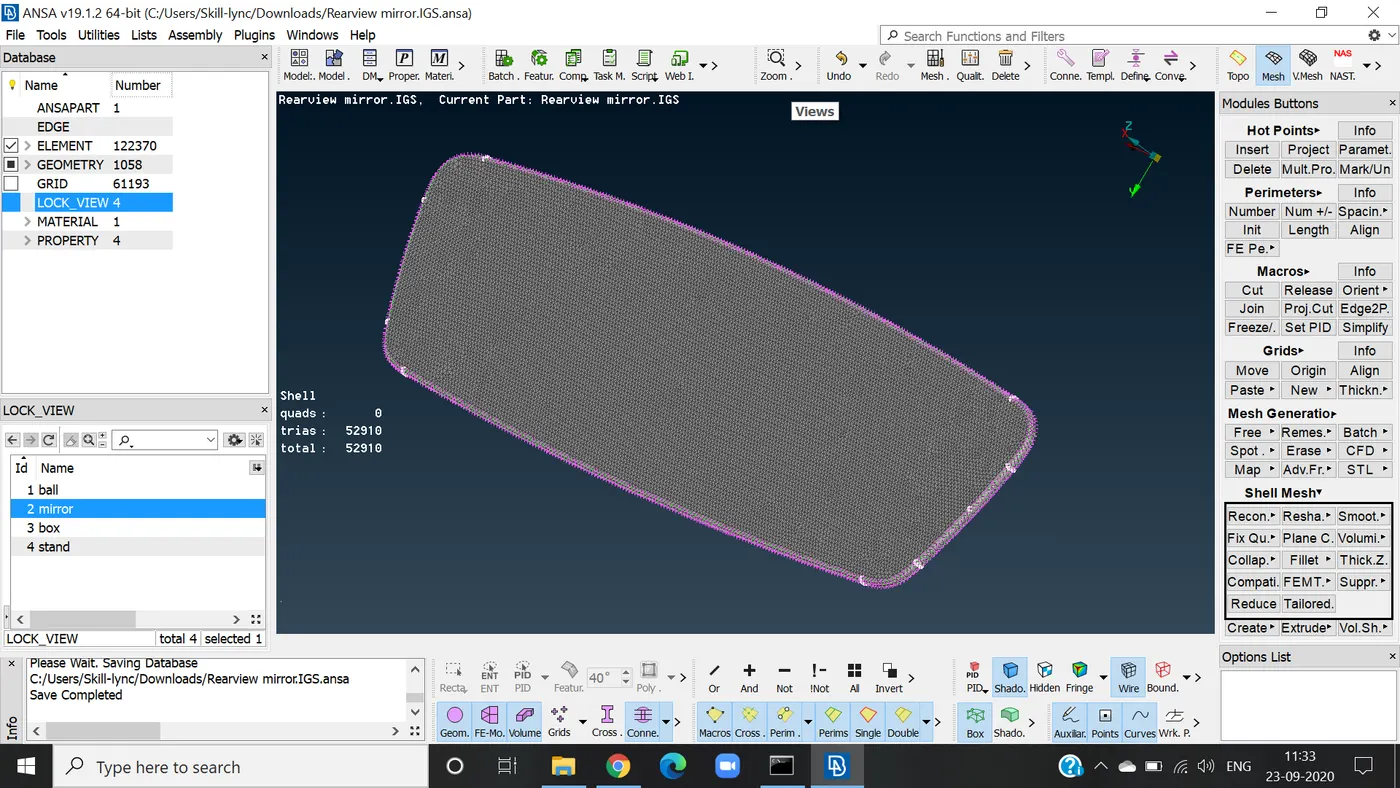
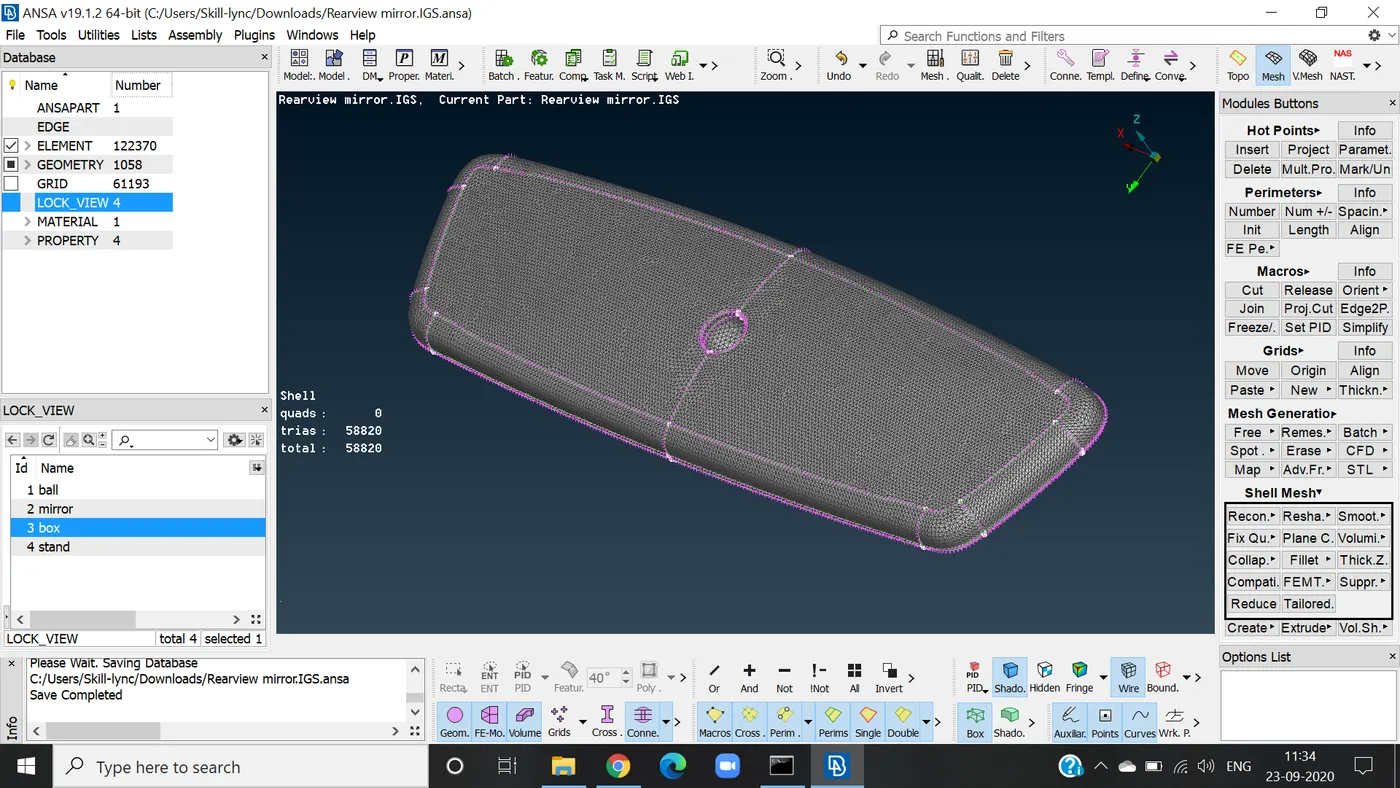
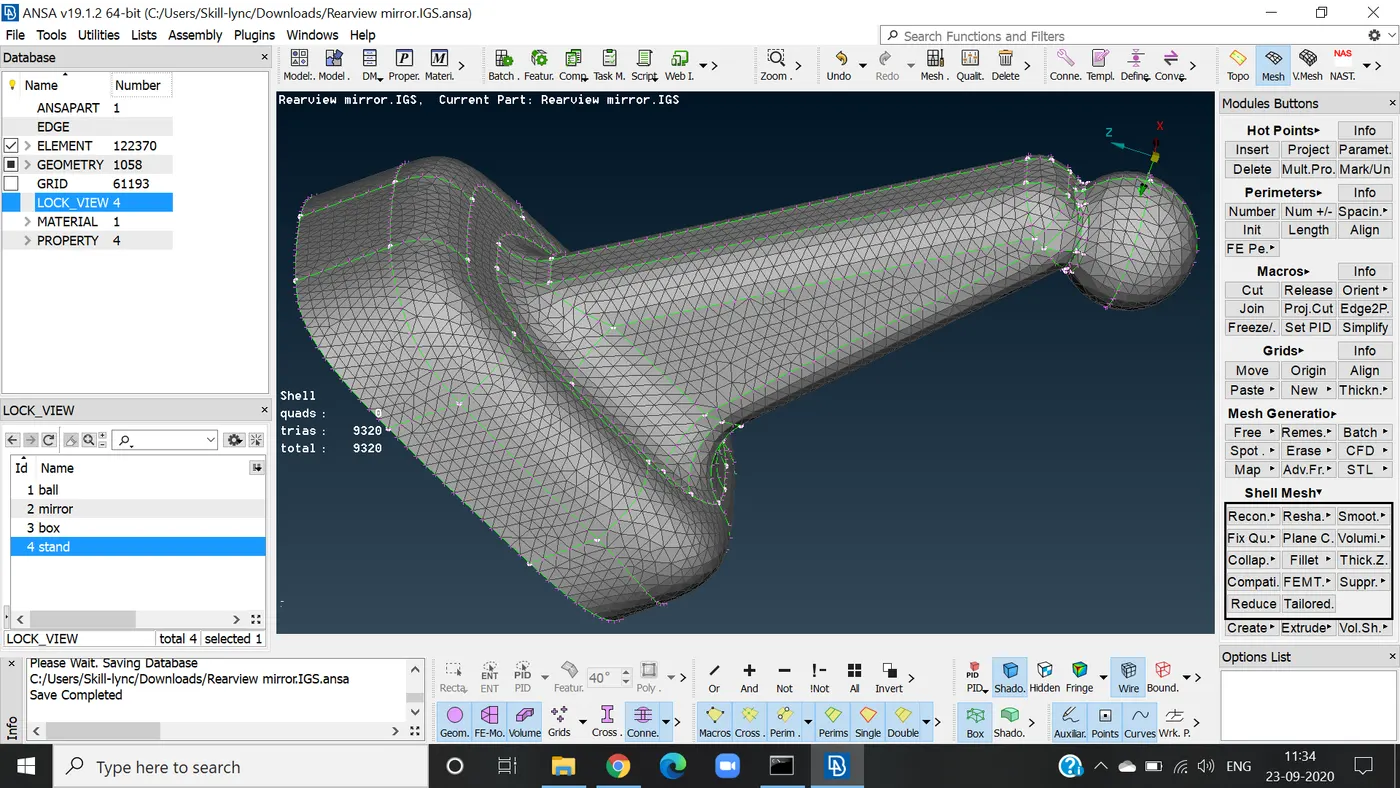
1.The outer surfaces of the given components are meshed separately using Spot mesh command available in the Mesh generation module.
2.Ortho tria is used on the curves and fillet regions where as the normal tria is used in the flat surfaces.
3.The two trias were alternatively used to reduce the computational time since ortho trias will take more time to process normal tria is used in less tricky surfaces.
4.Quality criteria parameters and mesh parameters are entered before starting the meshing process.
5.Total/average length and the minimum and maximum length values are entered as given.
Meshing is done on individual parts of the component as shown in the below figure:
Volume meshing:
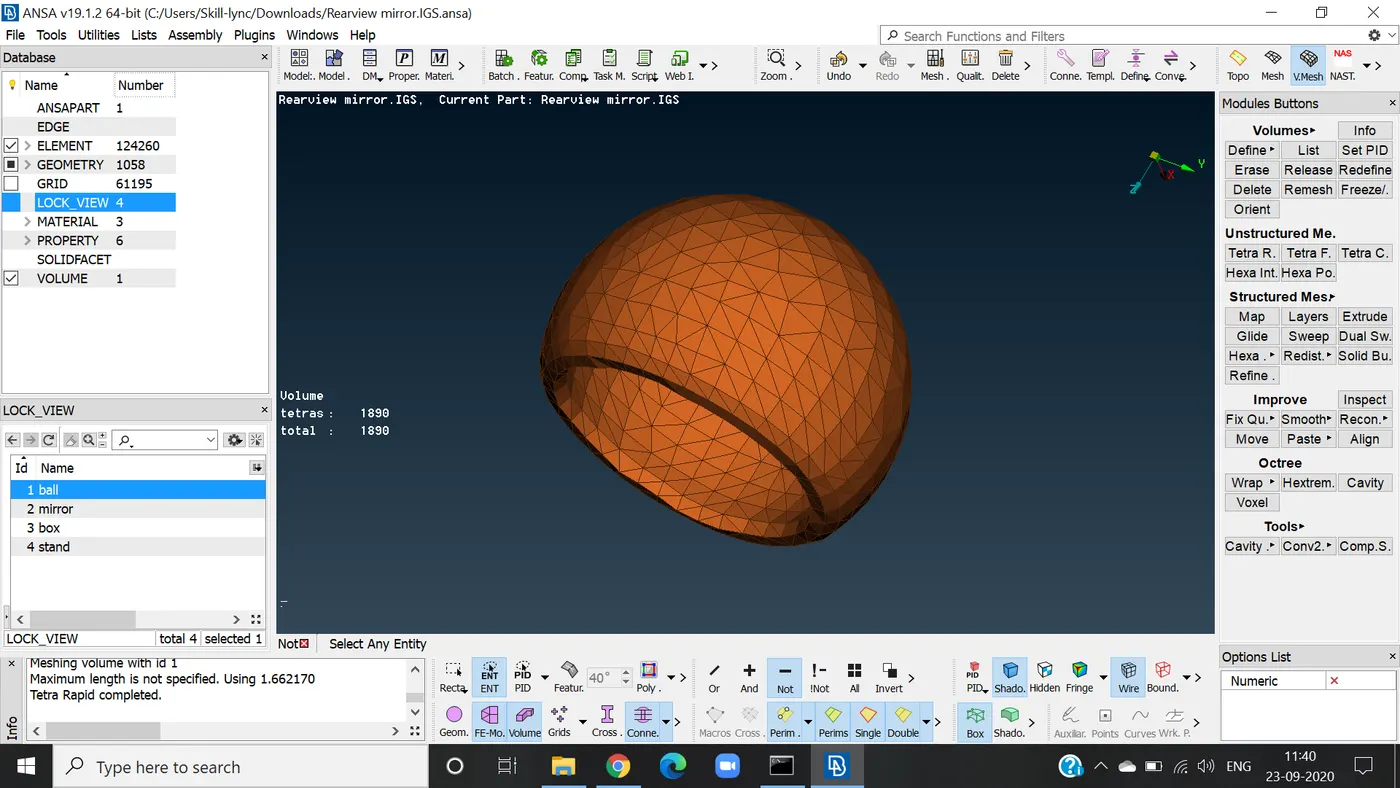
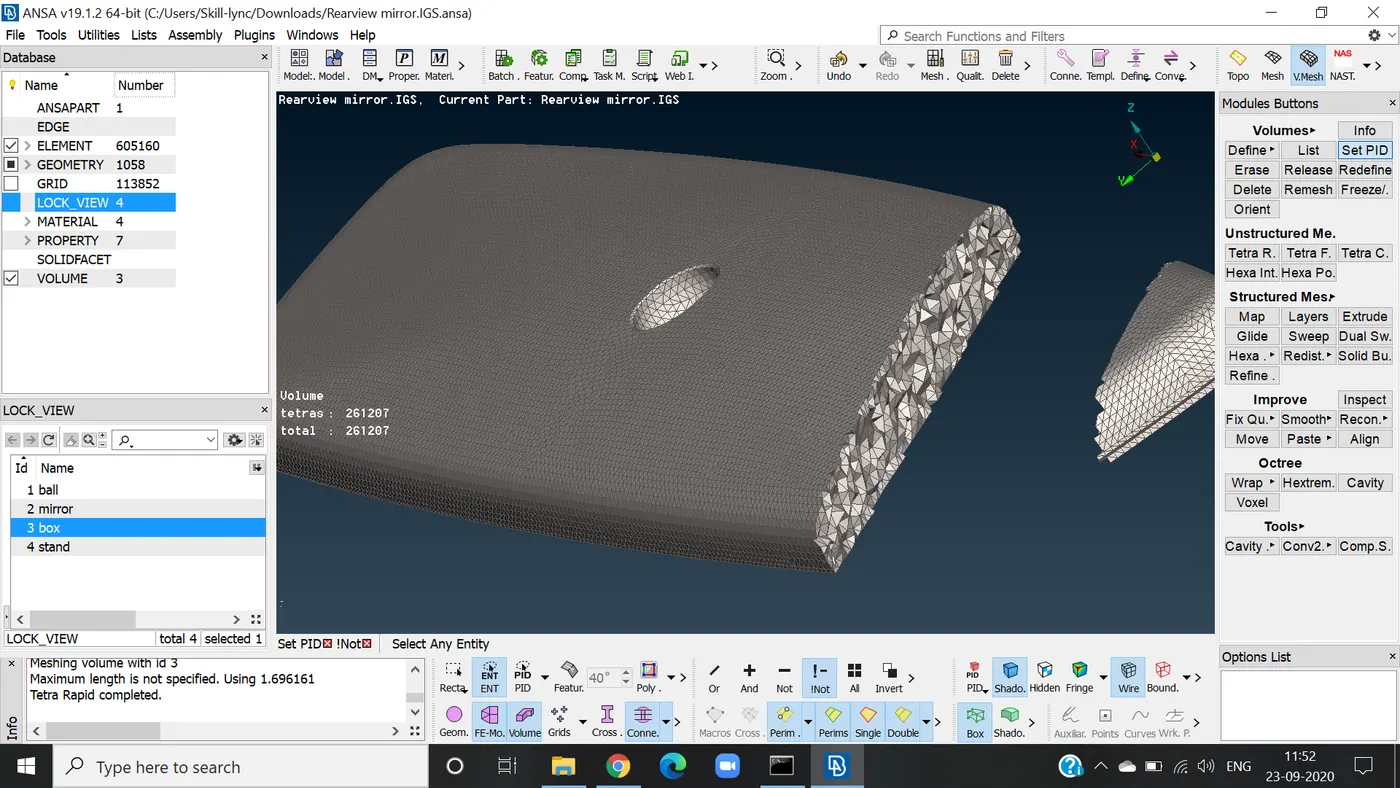
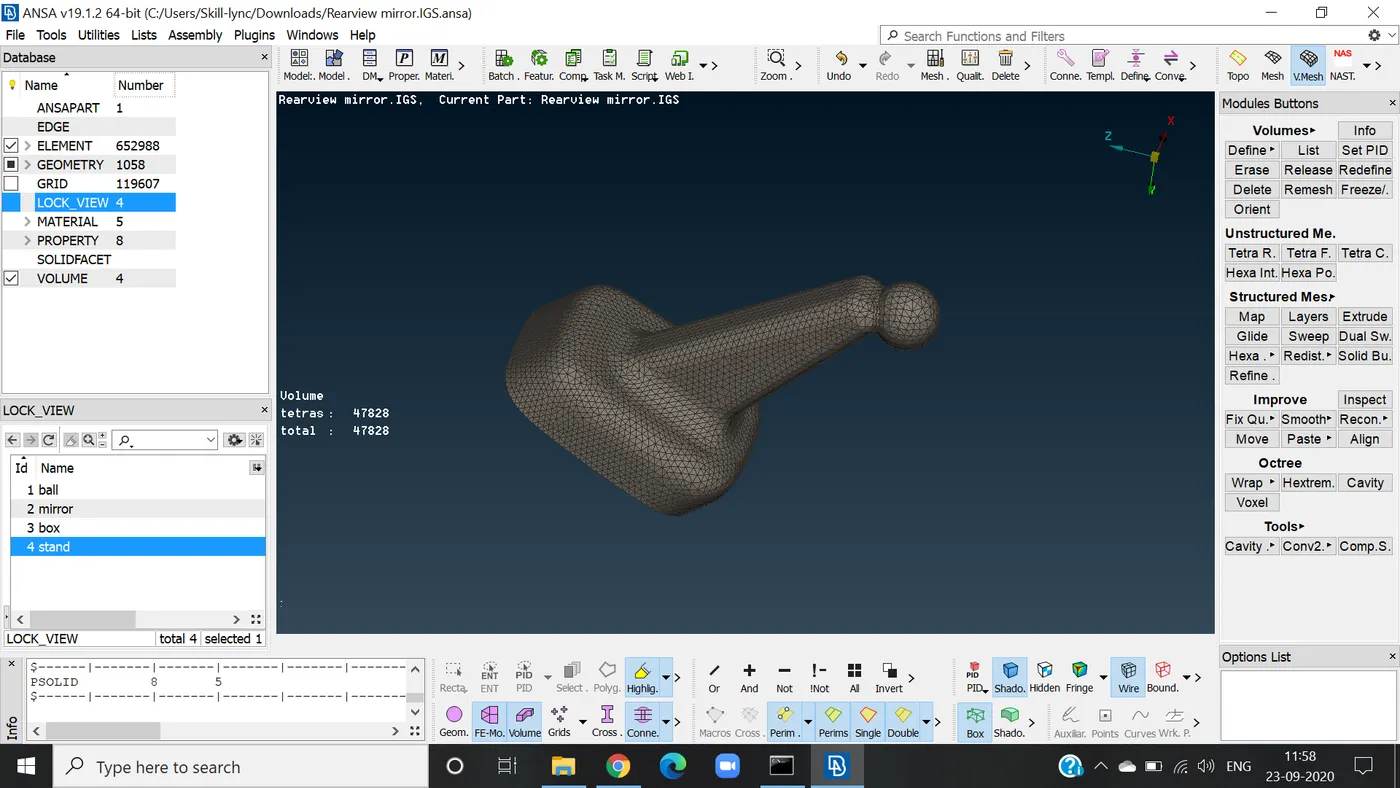
1.Volume must be defined to the components in volumes list option the defined volume is meshed.
2.There are four different PIDs are used which can be used to define four different meshing process.
3.Before starting the meshing process Tet collapse value is entered in the quality criteria box.
4.TETRA RAPID or TETRA FEM method is used based on the requirements.
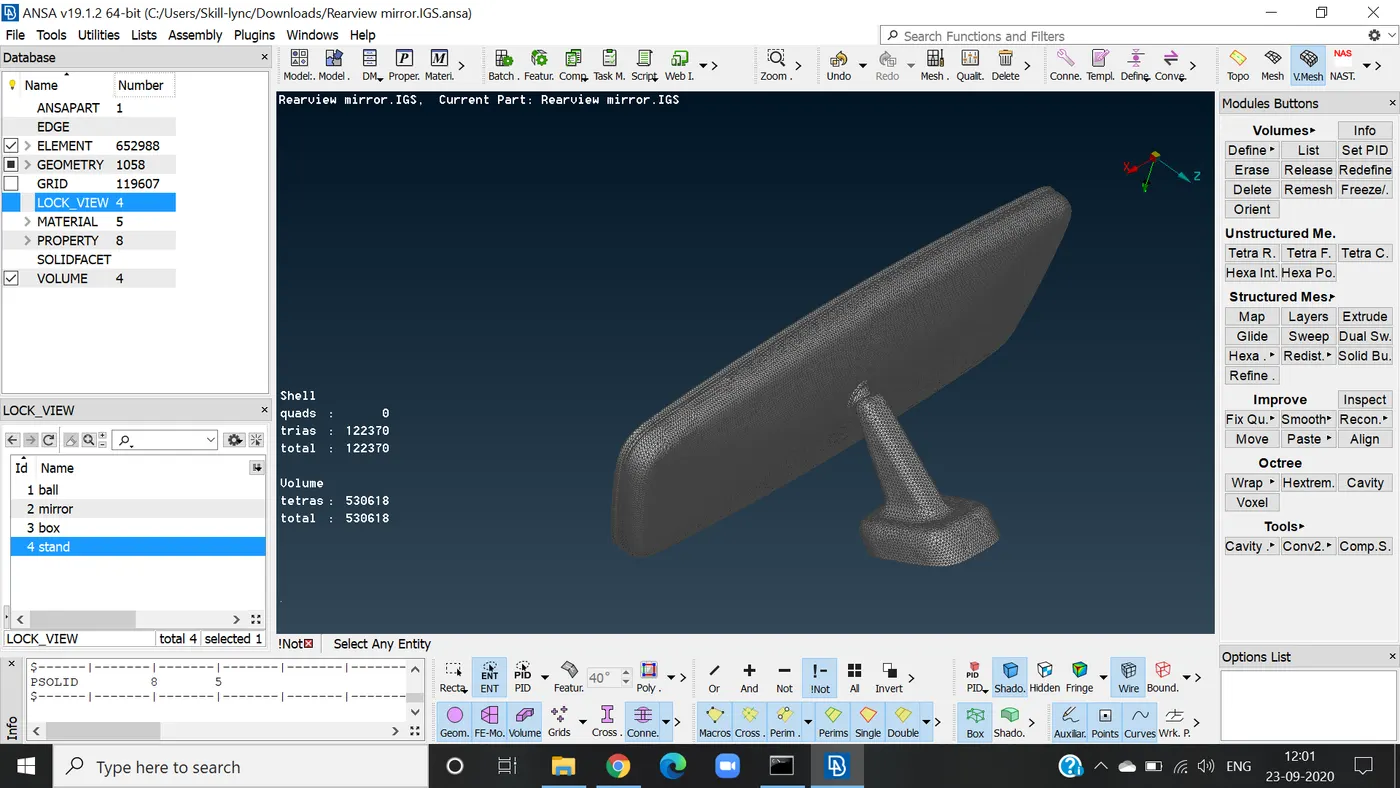
Meshed volume of the components is as follows:
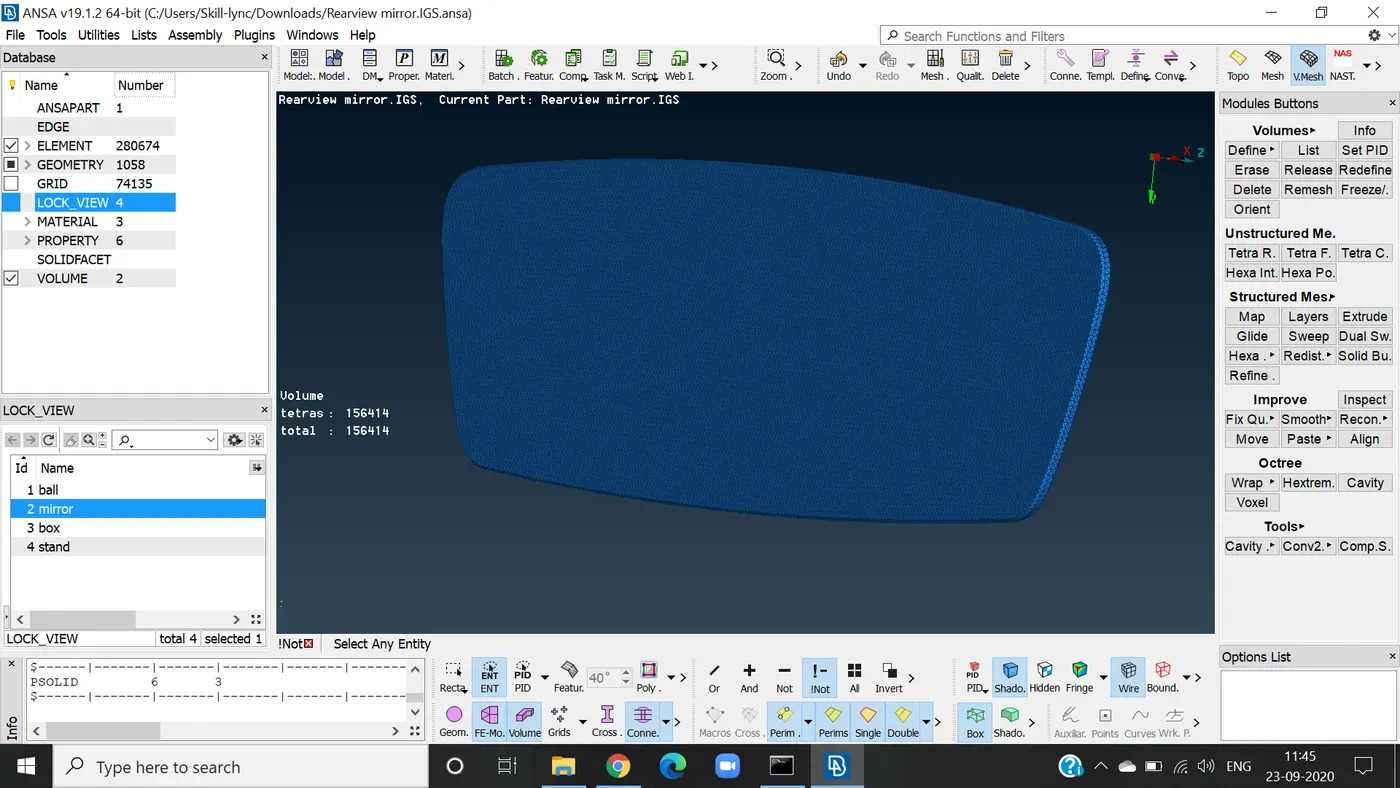
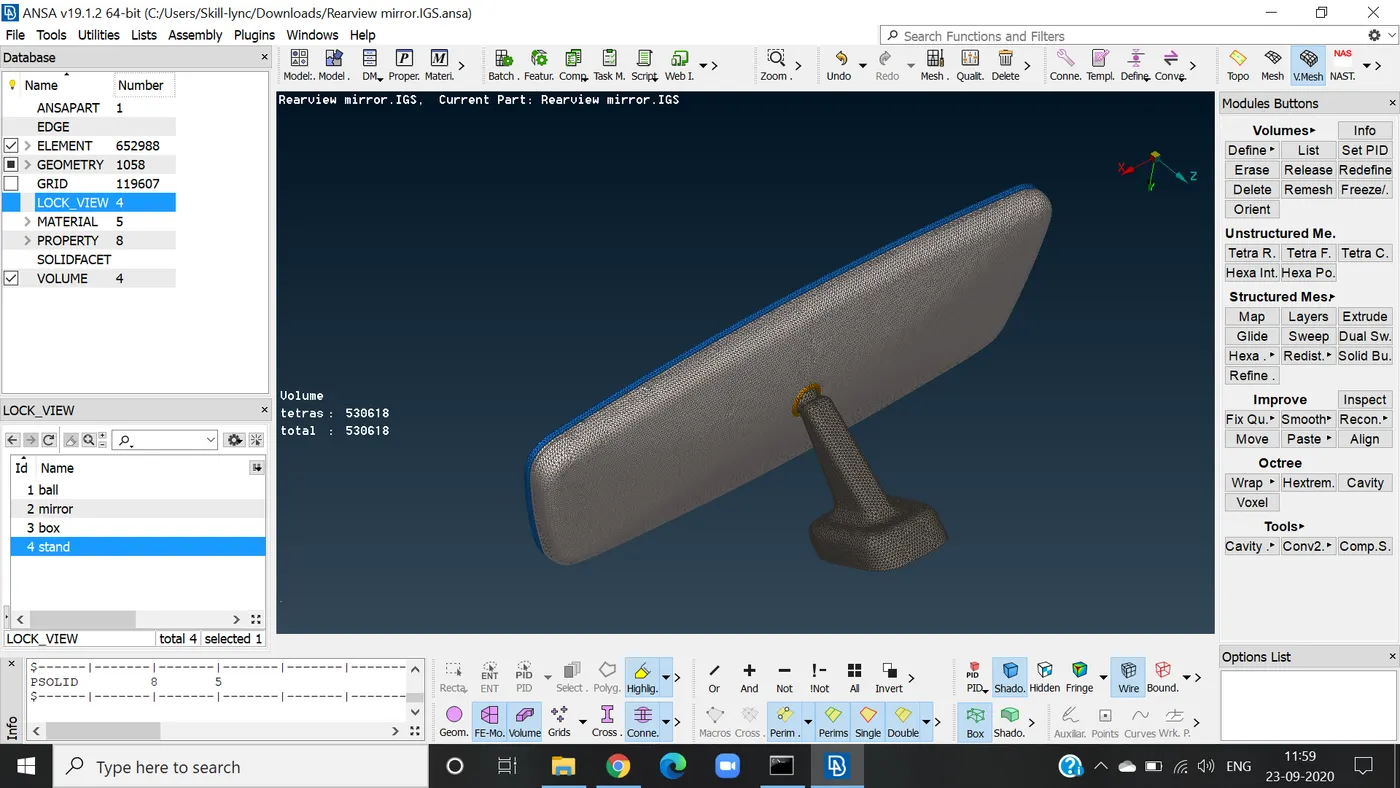
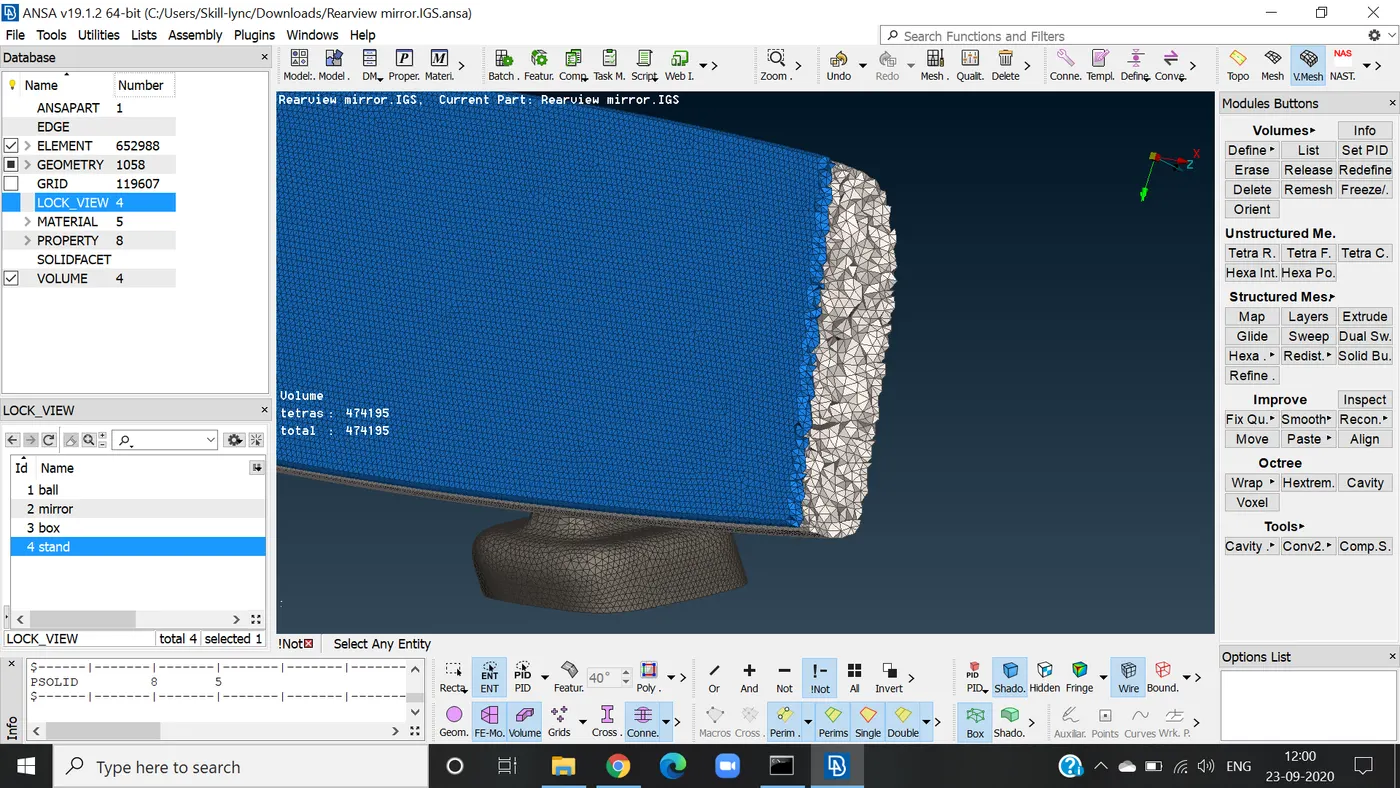
Full part volume meshed:
Learning outcomes:
1.Learnt about various tools of the ANSA
2.Able to clear the geometric errors easily.
3.Able to perform surface meshing and volume meshing accordingly.
4.Learnt about the difference between ortho trias and normal trias, when and where they can be used.
5.Solid meshing or tetrahedral meshing is done with a smooth mesh flow to clear the quality criteria.
Conclusion:
Thus the given rear view mirror is checked for geometrical errors and meshed with tetrahedral mesh with the given quality criteria with no Tet collapse.