Week 4:- Pin Unit Design Challenge
DESIGN OF PIN UNIT USING CATIA V5
Objective:
- Design two types of fix pin unit
- Design two retractable pin unit
Software used:
- CATIA V5
Fix pin unit:
The fix pin unit is used to hold the car part in a specific position in order to store the part or perform machining operations on the car part.
Retractable Pin Unit:
This pin unit consists of a cylinder which can retract the pin
Parts of the pin unit:
- Pin: This is the part which holds the fixture in the place.
- Retainer: This is the part which holds the pin.
- L-Block: This is the part which connects the retainer to the riser.
- Riser: This is the part which is the base of the assembly of the pin unit, all the other parts are mounted on the riser. The riser can be of two types L-Type riser or a T-Type riser.
Parts of the retractable pin unit:
The retractable pin unit has the same parts as that of the fixed pin unit except that the pin is connected to a hydraulic/pneumatic cylinder instead of a retainer. The cylider retracts the pin when the part is to be moved.
Fundamentals of pin unit design:
It is necessary to have two pin to arrest the car panel. One pin should arrest 4 DOF and the other should arrest 2 DOF
- Pin should engage 3 to 5 mm from the car part entry.
- All pins should be accommodated with at least 2 shims irrespective of direction of arresting
- In 4 ways arresting round pin should be used
- If the hole is slot round pin can be use for 2 way arresting
- Diamond pin should be used for 2 way arresting if the hole is round
- Diamond pin should be used for 4 ways arresting if the hole is slotted.
The axis of the car panel should be same as the axis of the pin.
The geo pin tolerance can be -0.15 mm, for re-spot pin – 0.28 mm
Parts of the pin unit:
A pin is a part which locates the car panel. A pin can be a make part or standard part.
- The pin should have grinding surface on the shaft on which the pin retainer will be fitted.
- The mounting surface of the pin should be a fine machined surface.
- The pin should have a step machine surface to lock the rotation, which matches with the pin retainer.
- The mounting surface of the pin retainer should be a machined surface.
- All machined planes should be perpendicular to the axis of the pin shaft.
- The pin should have a tapered hole from the bottom for fastening.
- Pin must be hardened and black oxide finished in general. (The hardness factor should be 55 – 60 HRC)
- Material: 20mm CR5
Pin Retainer:
Pin retainer is the part which holds the pin in the position, it can be make part or standard part.
- Pin retainer should have a hole with a fit on to which the pin will be fixed.
- Mounting surface of the pin retainer should be a machined surface.
- The pin mounting surface should have a stepped surface to block the rotation of the pin.
- The mounting surface of the pin to the block should be machined.
- The pin retainer will be fixed to the L-Block to the riser with 2 dowel holes and at least one screw hole to maintain the tolerance.
Parts:
Block/L-Block:
- These parts are mainly used to accommodate the shimming direction as per fundamentals in general.
Shims/Spacers:
- These are Std. parts in general which are used as adjustment of locators. These are for obtaining the desired precession with respect to car part.
Blade:
- It connects the part of the unit to the riser.
Riser:
- The part on which every other part is mounted. This part is mounted on the base plate of the tool.
Types of pin:
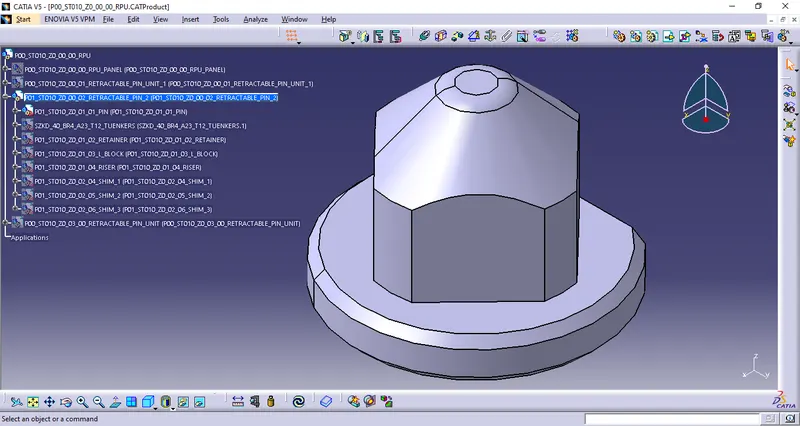
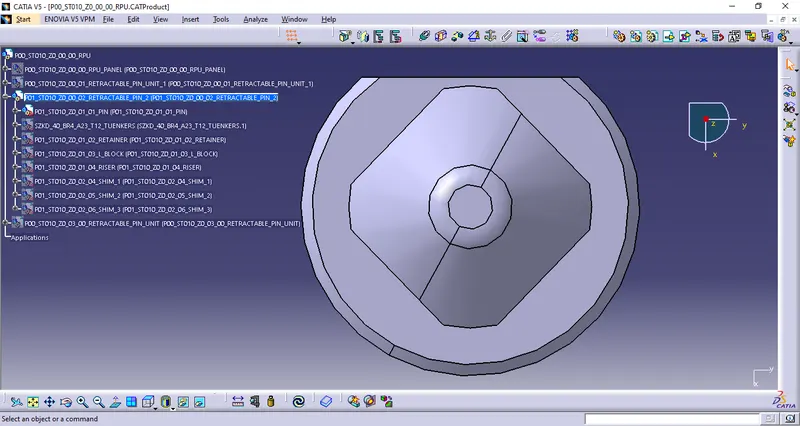
To prevent over constraint sometimes diamond pins are used:
Shims:
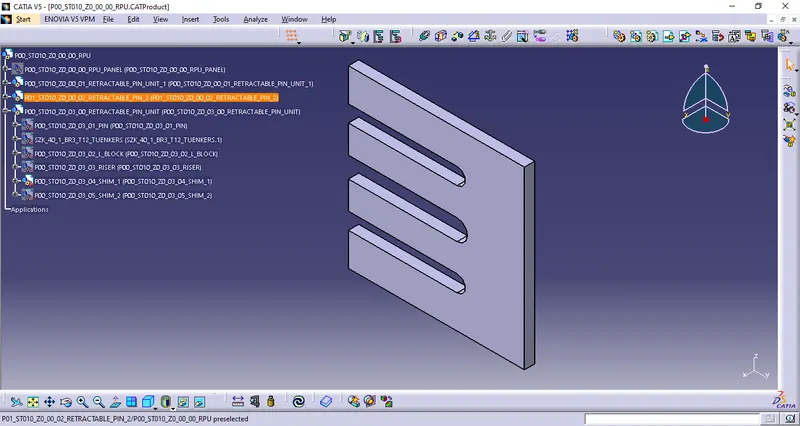
Shims are placed between retainers, risers, blades and block to make minor adjdust ment in the fixture to match the hole on the car panel. These are standard parts.
These are made up of several plated of different thickness, depending on the need the shims of appropriate size and numbers are added
NOTE: This is just a representation on shim, as mentioned above shim is made up of plates of different sizes stacked together
Design methodoly:
- The pin has a flat portion of its collor to prevent it from rotating on its axis in the retainer.
- The pin is designed according to the size of the hole in which it will fit.
- The retainer is designed and then blades, L- Blocks and the riser.
- Adjustments are made to get a proper part.
- All parts have holes in which standard bolt will fit to assemble the pin unit
- The Riser has hole on its base to fix it to the shop floor
- All the parts have a 5mm gap in betweeen them to fit the shims
NOTE: The dimension for the other parts of other units are different than the pictures shown.
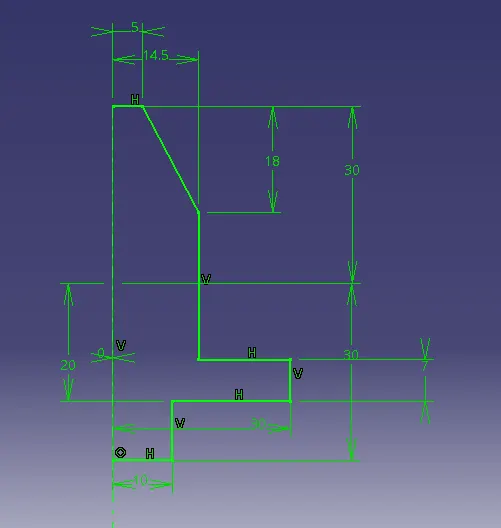
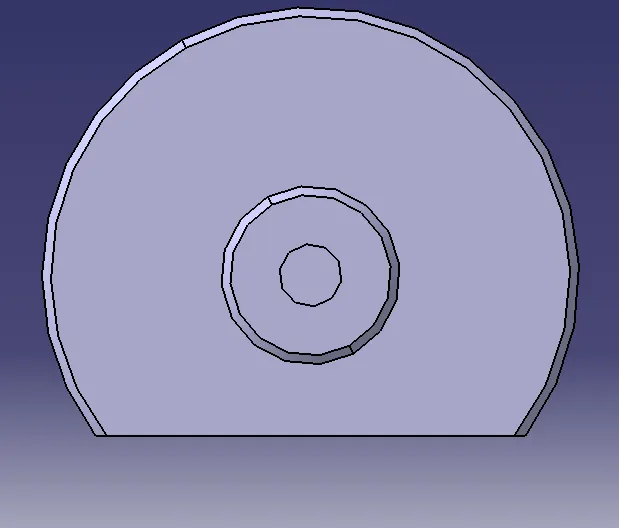
- Dimensions of Pin 1:
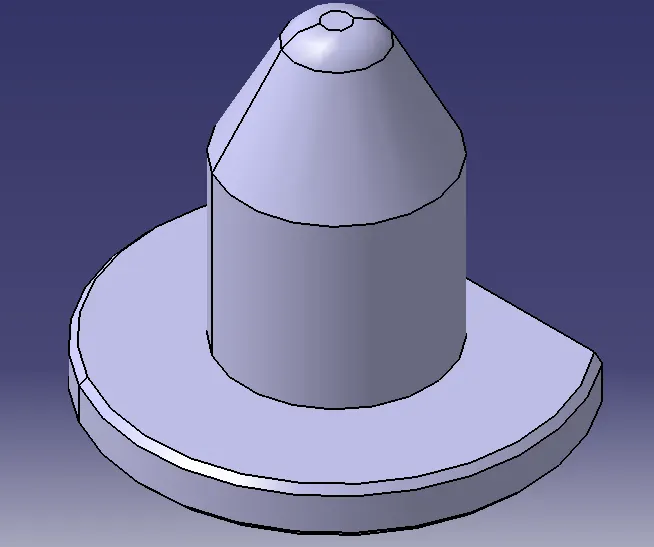
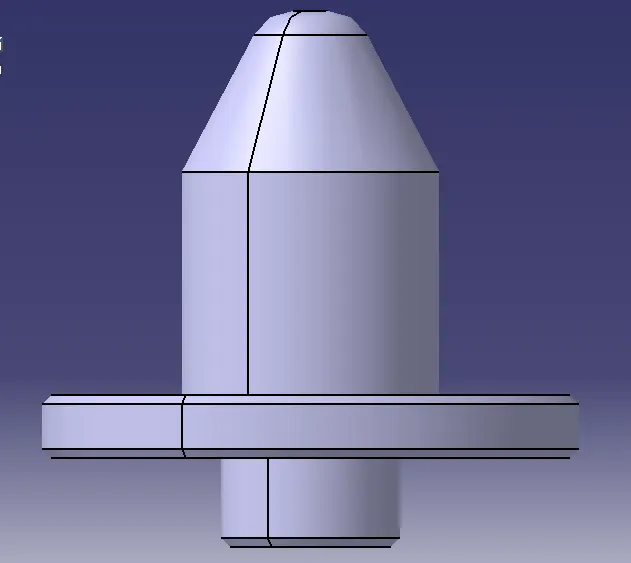
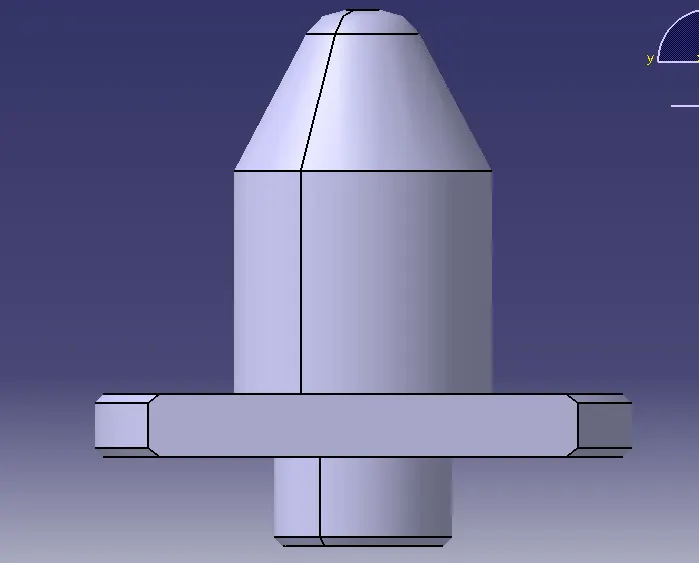
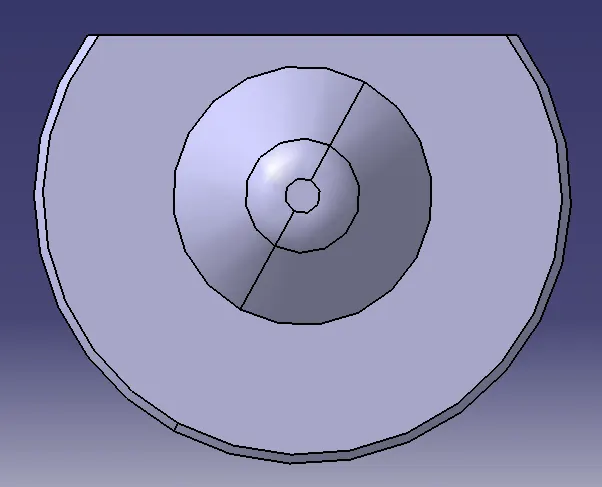
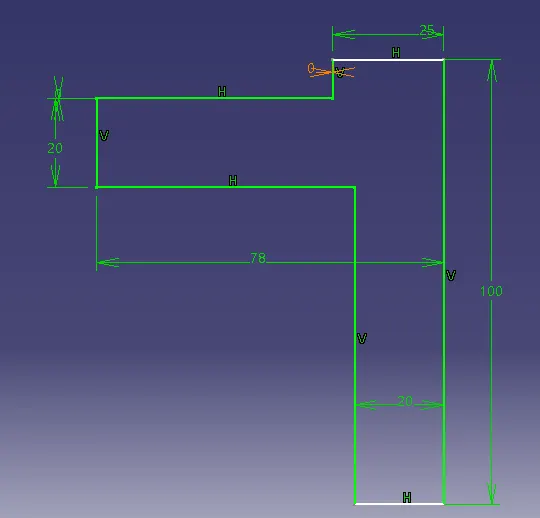
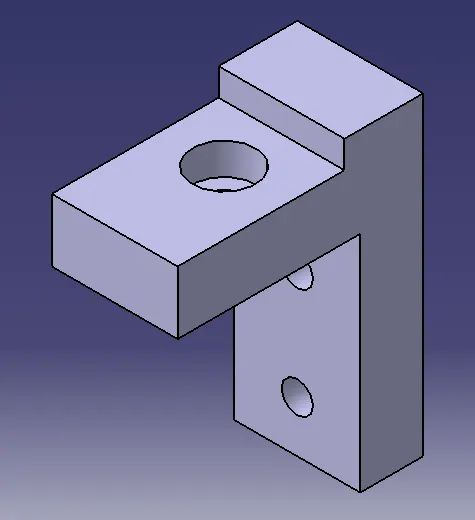
Dimensions of Retainer 1:
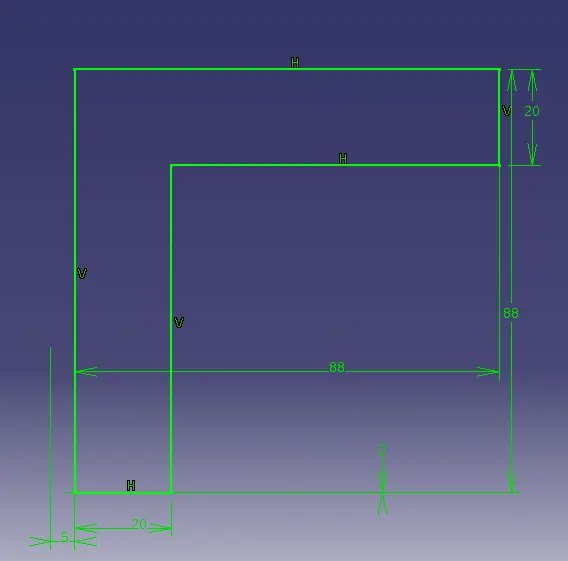
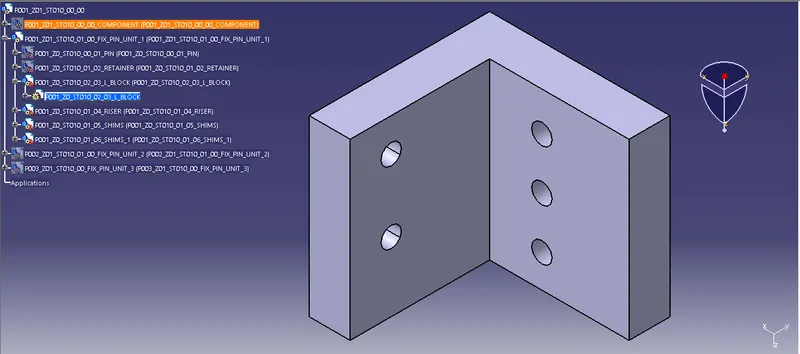
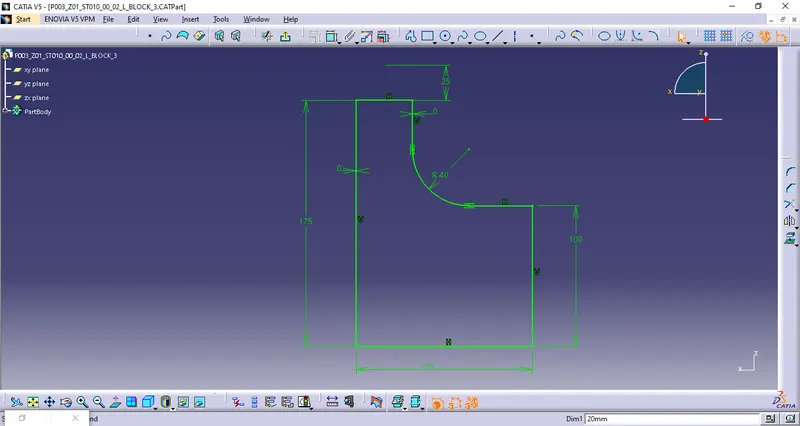
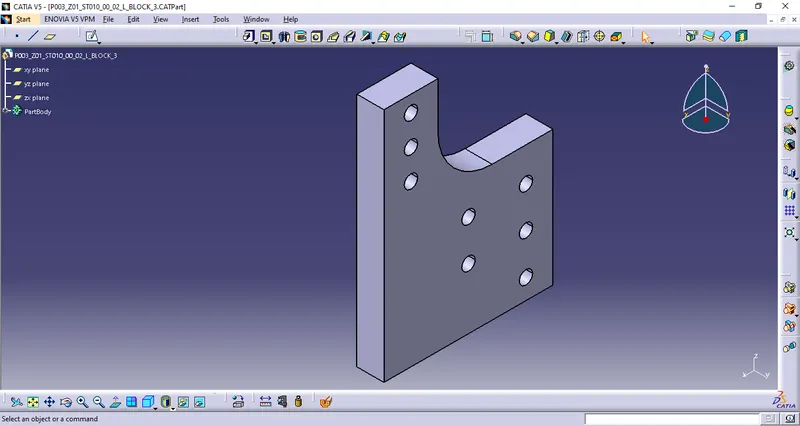
Dimension of L-Block:
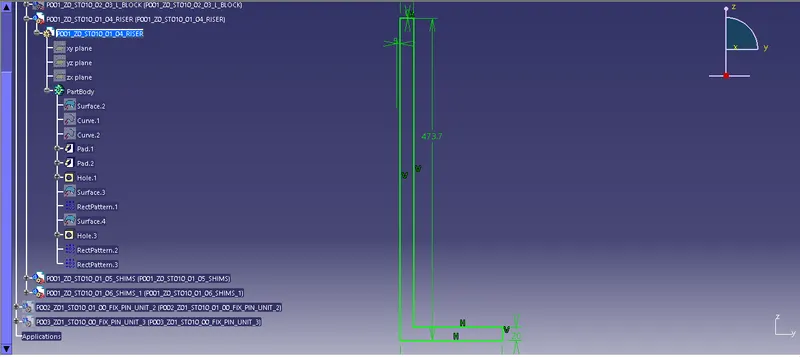
Dimensions of riser:
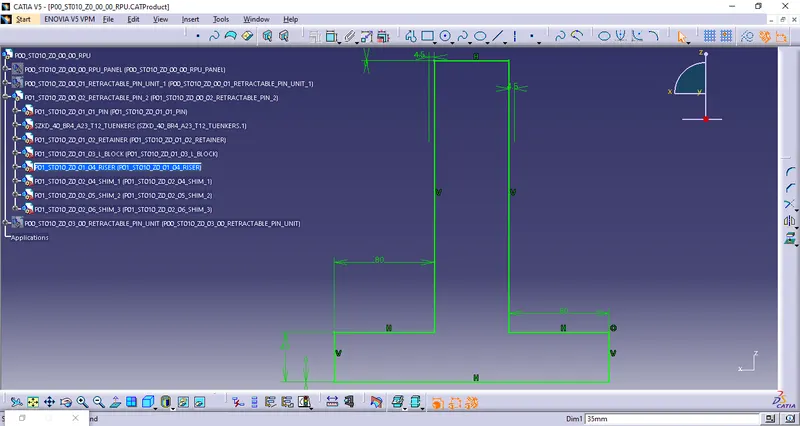
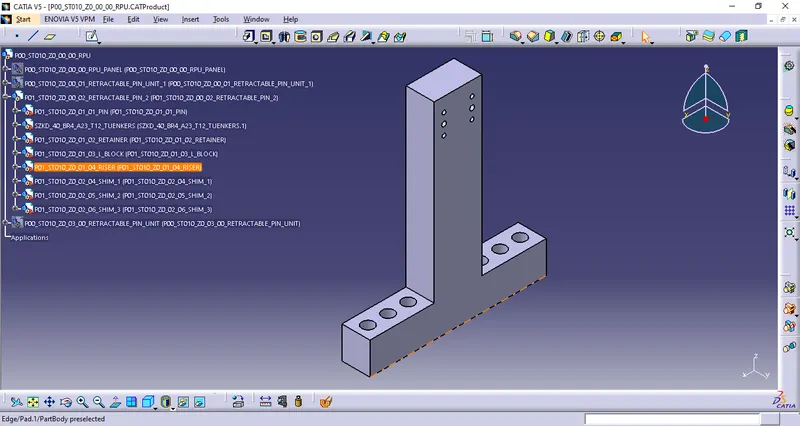
T-Shaped Riser:
BLADE:
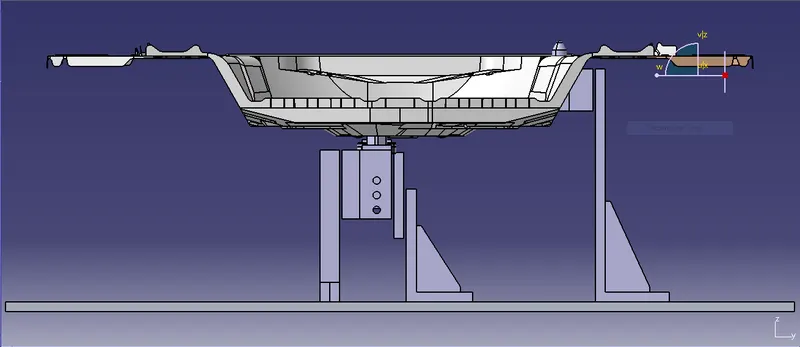
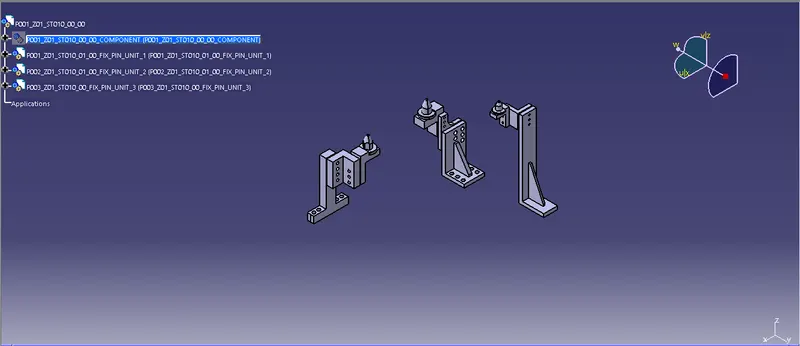
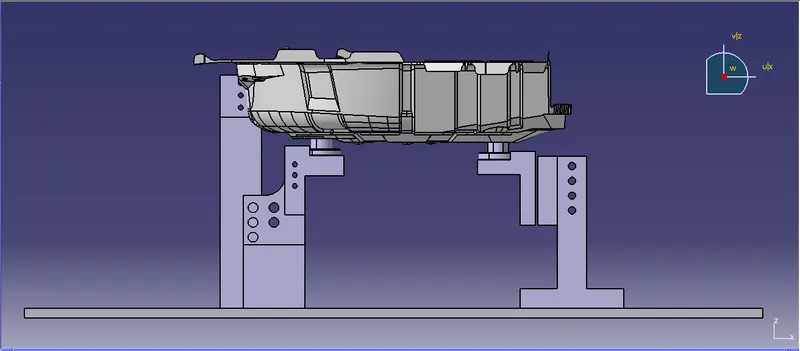
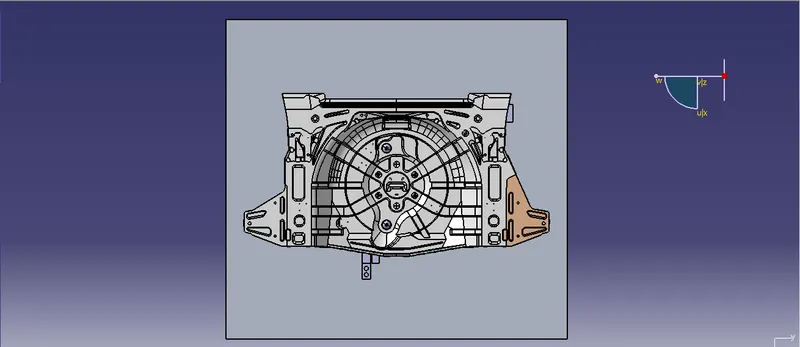
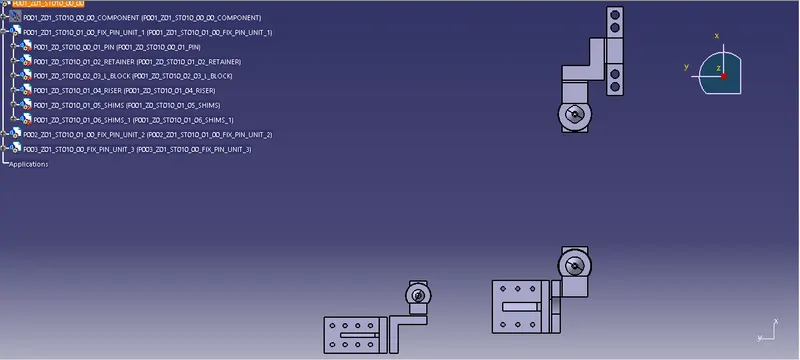
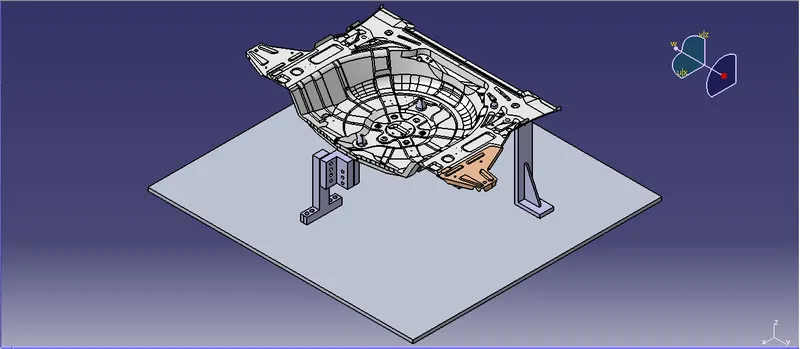
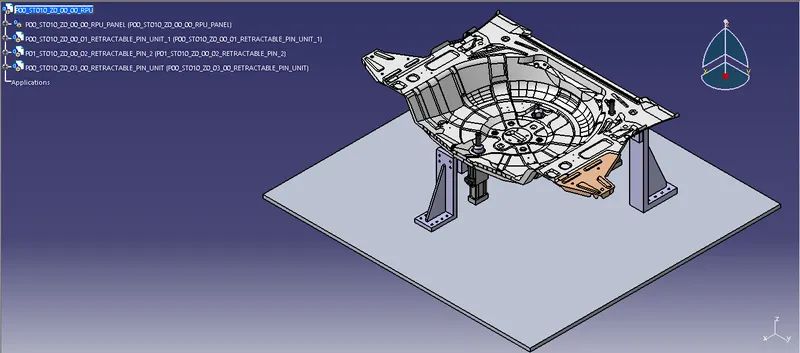
PIN unit with parts and panel:
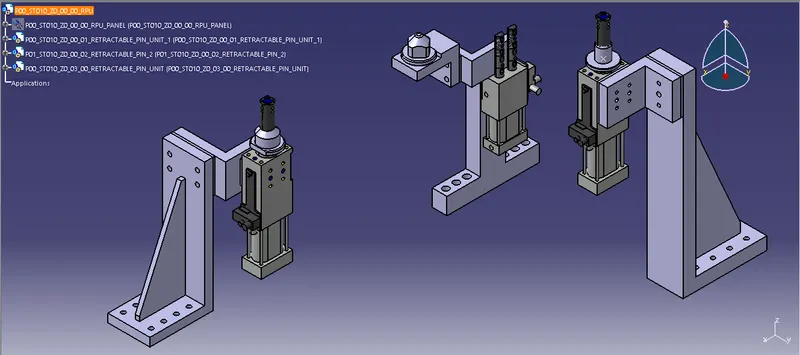
Retractable pin unit:
This pin unit has a hydraulic/pneumatic cylinder to extend/retract the pin in the part.
This enables the worker to move the part when needed and fix it in a place.
Pin unit with single rod cyliner and normal pin:
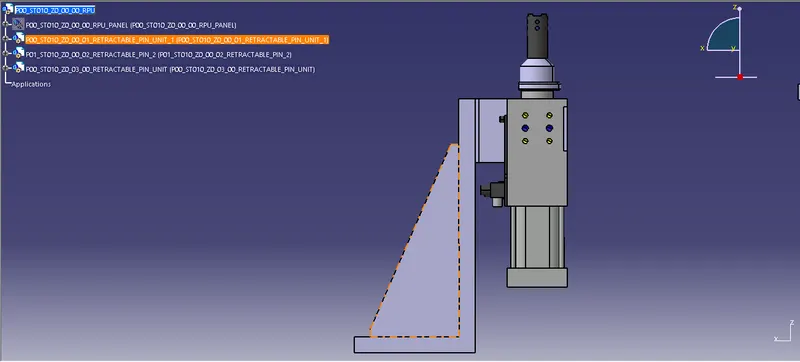
Pin unit with double rod cylinder and a diamond pin:
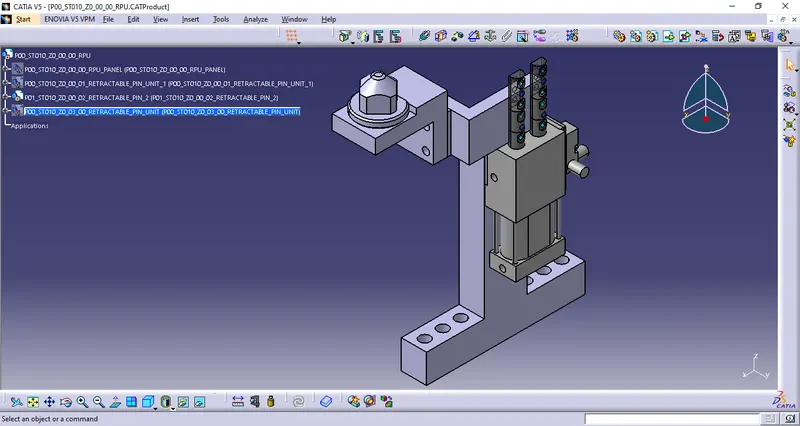
All three retarctable pin unit
Cylinders:
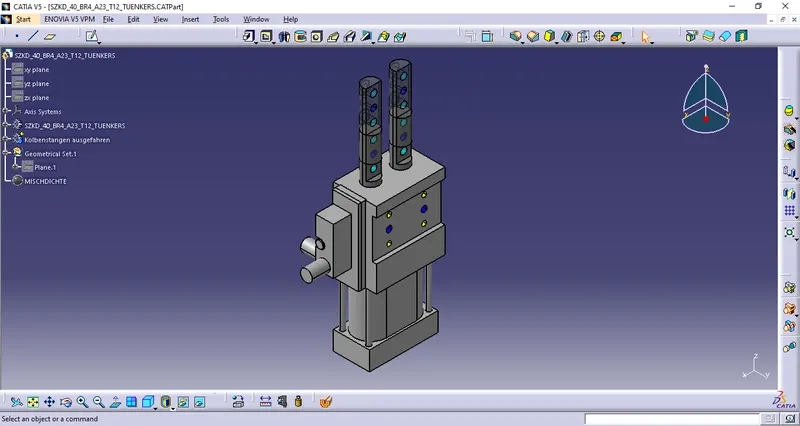
In this pin unit Tunker cylinders are used
- SZK_40_1_BR3_T12_TUENKERS:
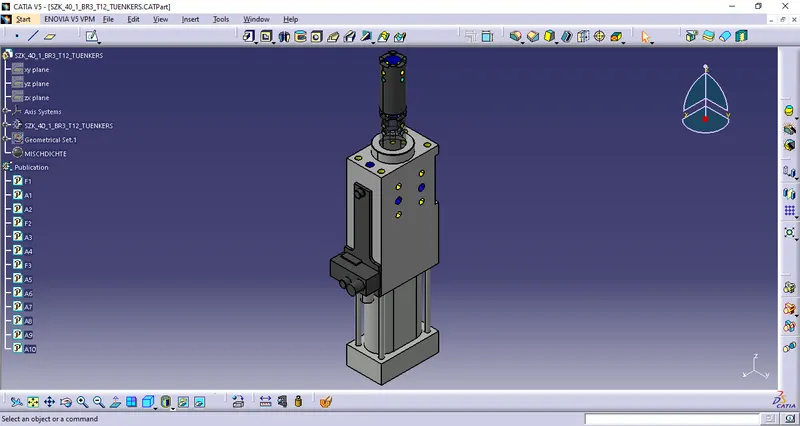
2. SZKD_40_BR4_A23_T12_TUENKERS:
Conclusion:
Different pin units were designed:
- Two pin units for Fixed pin unit
- Two pin units for Retractable pin unit
- Different types of pins were designes