Week 4 - CHT Analysis on Exhaust port
Aim: To evaluate heat transfer coefficient on the inner wall of an exhaust port.
Conjugate Heat Transfer Analysis: Conjugate heat transfer analysis is a method of simulting flow where we are intrested in how Energy/Temperature is carried from fluid to the surface or surface to surface and the body of the object in which the fluid is flowing through.
Some applications, as evident understanding CHT of ehaust port, simulating electronioc components to extract better performance, understanding the heat dessipation from a mechanical component (Engine, Heat Exchangers, etc).
Setting up problem:
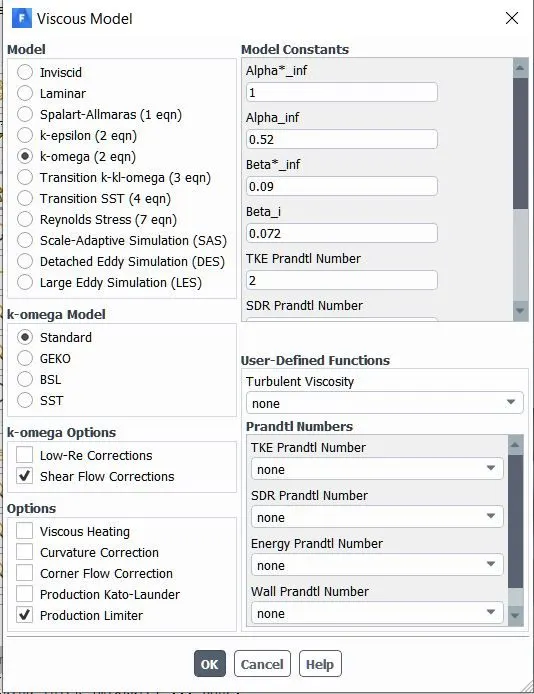
As the y+ value of 1 is considered this value lies in the viscous sub-layer region. As this is a near wall region the turbulance model are not well equiped to handle it as they are more focused on resolving core turbulernt flow. Although, the K-Omega and Spalart-Allmaras models are well equiped to handle near wall functions as well.
Eventhough, K-Epsilon will give a more or less accurate result for y+ values of >30 it is to be notedd that the solution will differ slightly. And the K-Omega seems to be more accurate than K-Epsilon in this case.
Calculation of y using y+
As y+ = 1 (Using k-Omega turbulance model)
`y+ = (rho*U*y)/mu` => `y = (y+*mu)/(rho*U*y)`
Where,
`U = sqrt(tau/rho)`
`tau = 0.5*Cf*rho*Un^2`
`Cf = 0.079*Re-0.25`
`rho(Density) = 1.225 (kg)/m^3`
Re for internal flow: `Re = (rho*Un*D)/mu`
Here,
Un = free strean Velocity,
`tau =` Sheer near wall,
y = distance from the solid surface.
Re = `(1.225*5*0.15)/(1.8*10^-5)` = 51041.667
Cf = `0.079*51041.667^-0.25 = 0.005255`
`tau = 0.5*0.005255*1.225*25 = 0.08048`
`U = sqrt(tau/rho) = sqrt(0.08048074/1.225) = 0.256317 m/s`
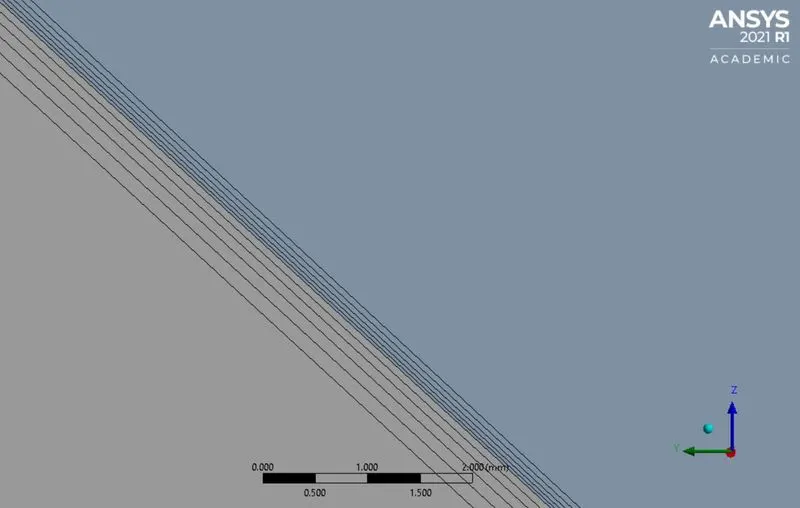
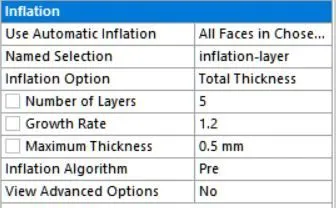
`y = (y+ * mu)/(U*rho) = (1* 1.8*10^-5)*/(0.06569856* 1.225) = 0.0005732m`
ie approximately 0.5mm
This the inflation layer length for simulation with 5 layers and a growth rate of 1.2
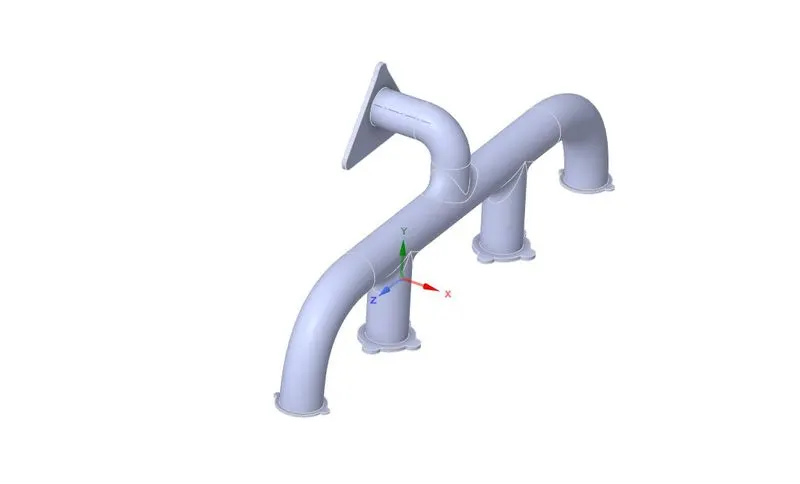
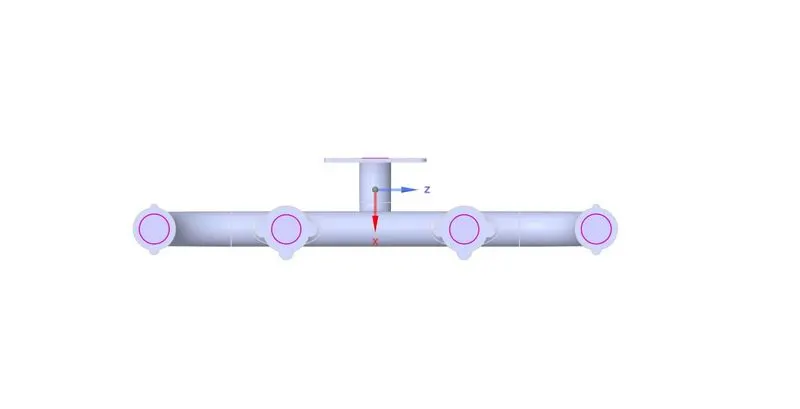
Geomtry
 |
|
Share Topology
|
|
|


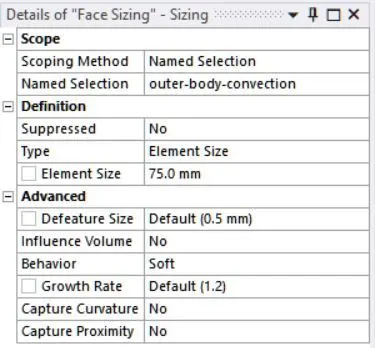
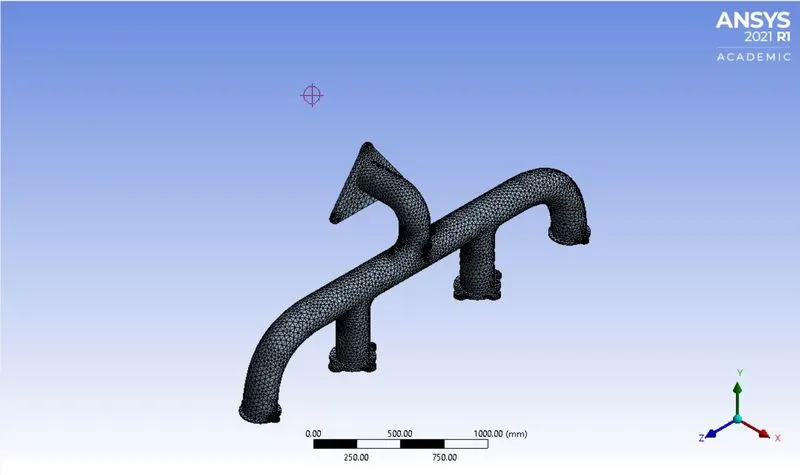
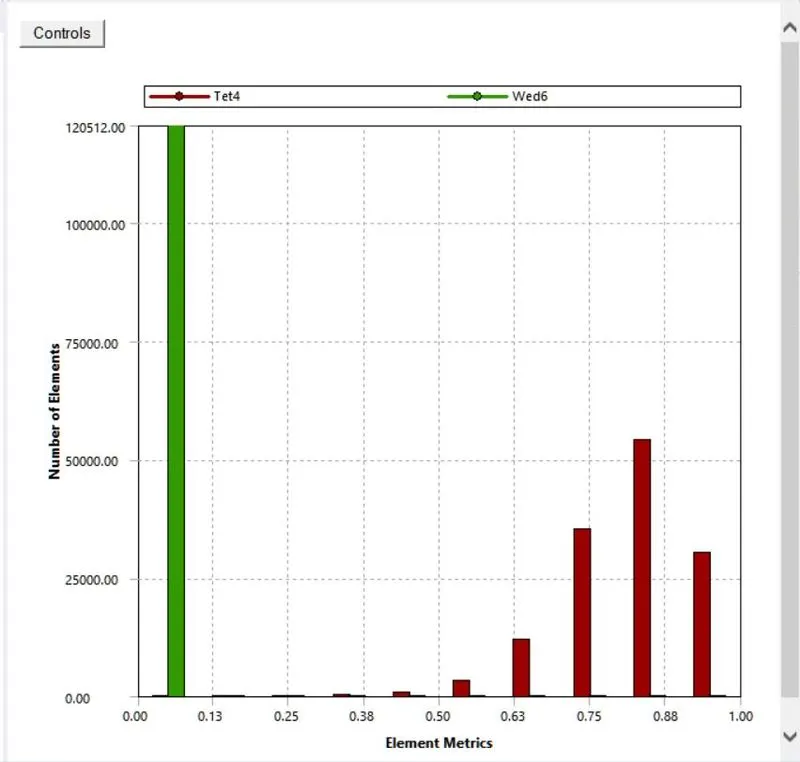
Meshing
|
|
|
Inflation layer
|

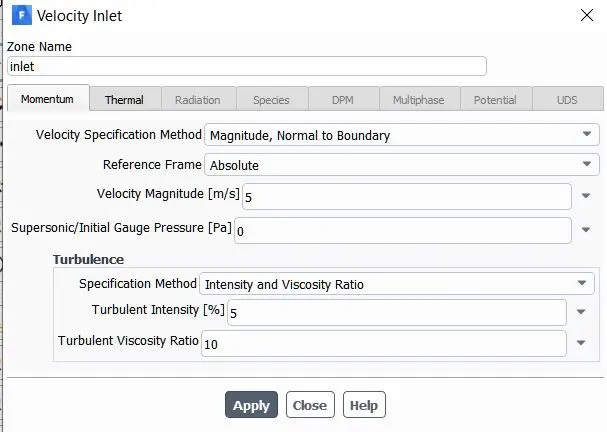
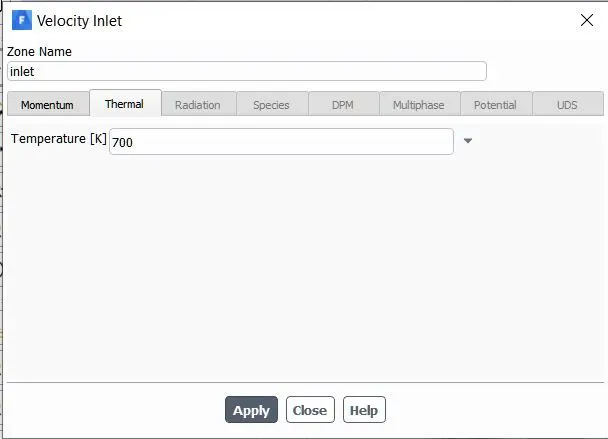
Setup
|
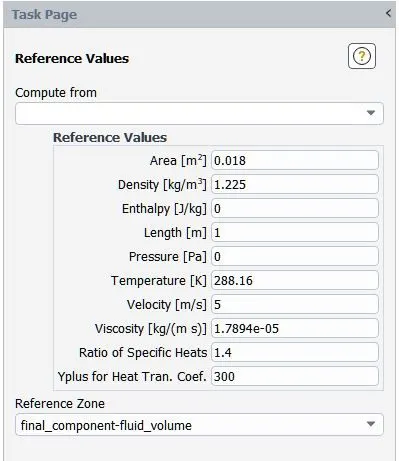
Refrence Values
Turbulance model
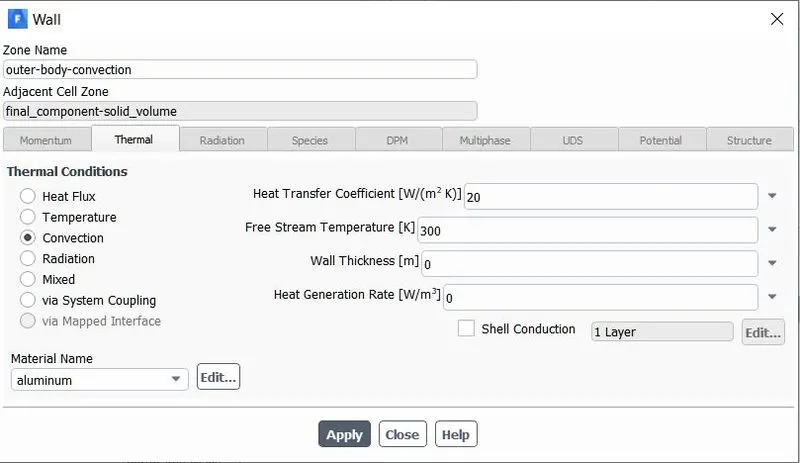
Outer wall BC:
|
Results
|
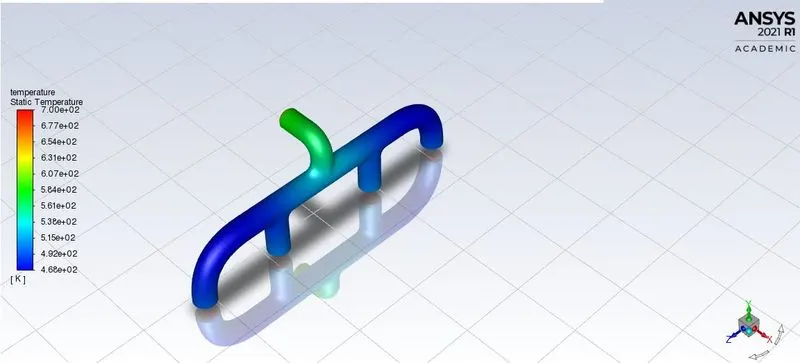
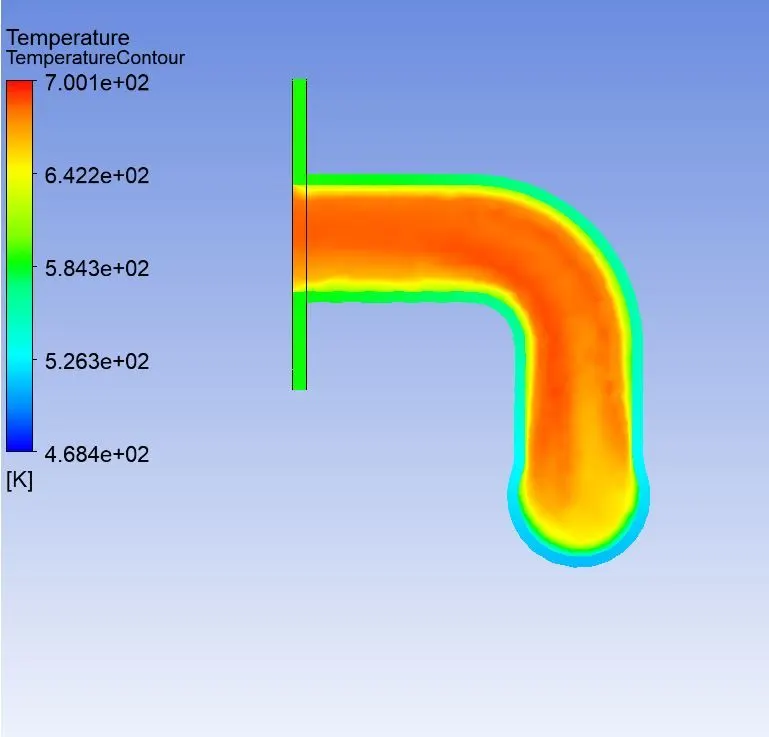
Temperature contour:
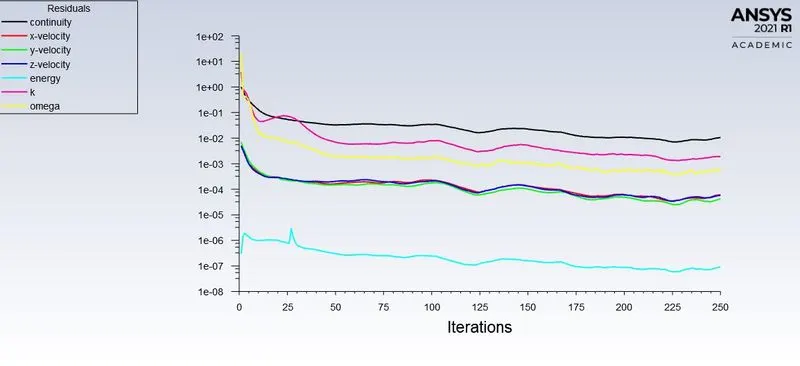
Residual
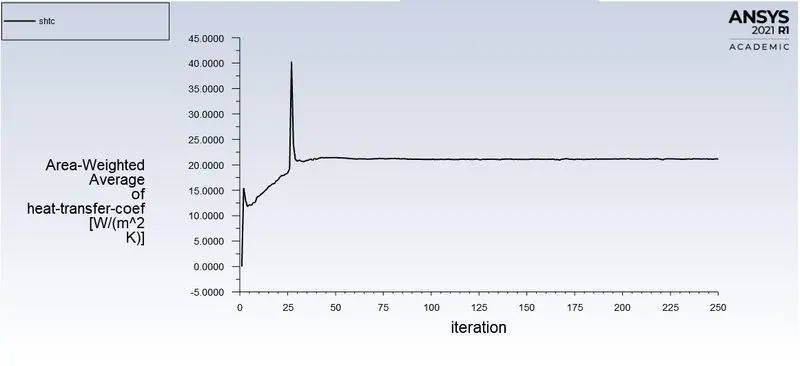
Surface heat transfer coefficient: 21.125079 W/(m^2 K)
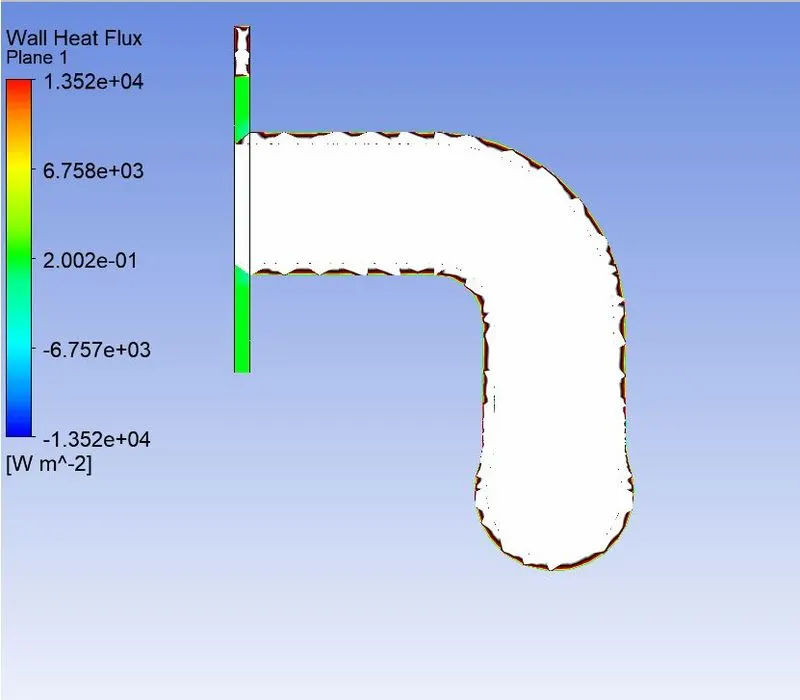
------------------------------------------------------------------------------------------------------------ PLOTS Heat Transfer Coefficient:
Temperature
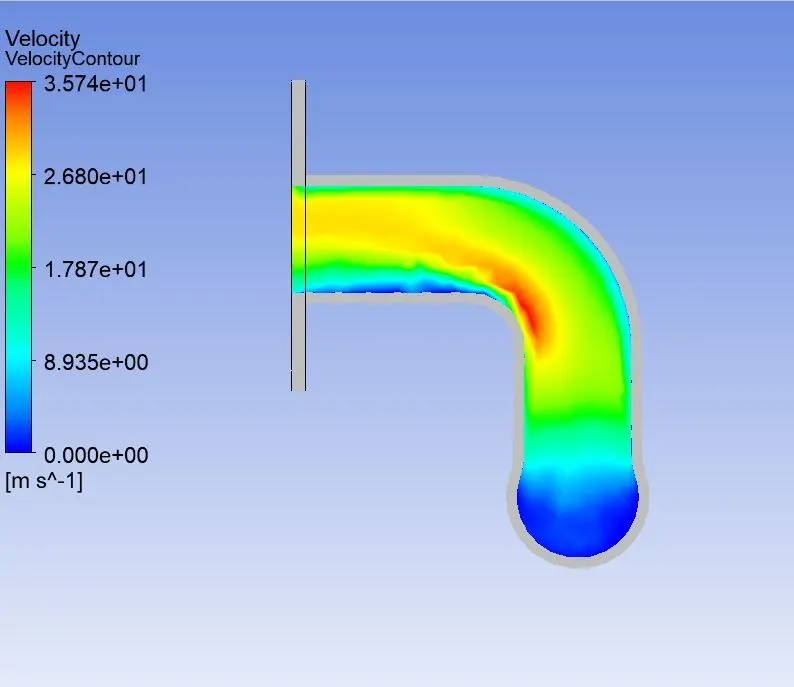
Velocity:
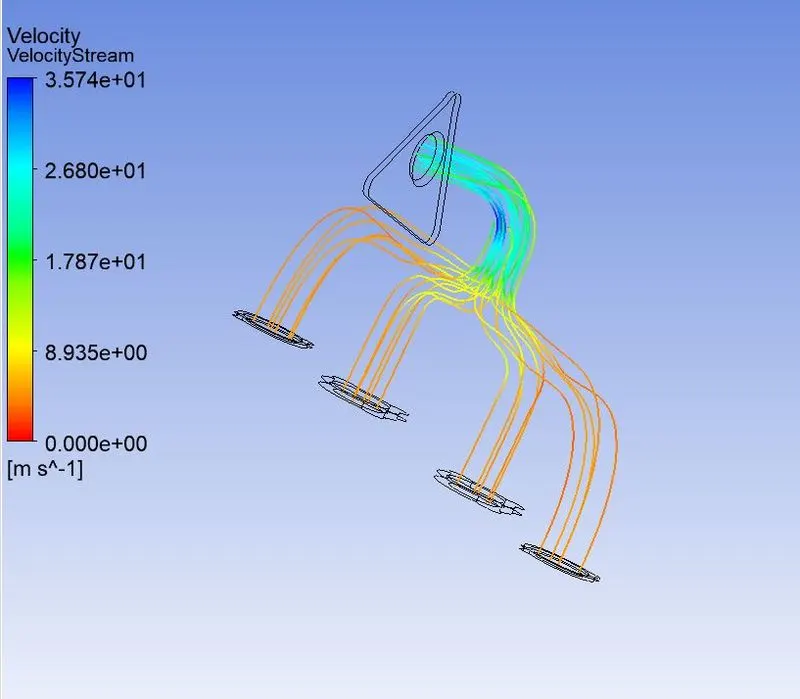
Velocity Streamlines:
|
Validation of the results:
There exist a correlation betwwen Nusslet number, Prandalt number and Reynolds number. This corellation is given

this is a case for turbulent flow in pipes. After obtaining the Nu we can use the formula
`Nu = (h*D)/k`
where,
h = Convective heat transfer coefficient,
D = Hydraulic diameter of pipe,
k = Thermal conductivity.
We can analytically now validate the Convective heat transfer coefficient using above steps and see if our simulation is acuurate or not.
Comments on the results and predictions on heat transfer coefficient:
As it can be seen fron the above velocity streamline plot there is increase in the velocity near the throat area. This is attributed to the fact of conservation of mass. As the hot air combines near the exhaust region and even the diameter is bigger than input to compensate for the incoming volume.
When it come to accuracy of the predictions, it can be noted that simply convergence is not criteria enough to check accuracy of Heat Transfer Coefficient. Whereas the constantly refining the mesh size will cause the element quality to deteriorate. This can be bad for accuracy as the values start to oscillate. Overall, the predictions depend upon the length of inflation layer, quality of elements, Refrence values and trbulance model as well. As a model which is good at evaluating the near wall phenomenons is generally good at predicting Heat Transfer Coefficient.