Week 4 - CHT Analysis on Exhaust port
Introduction:
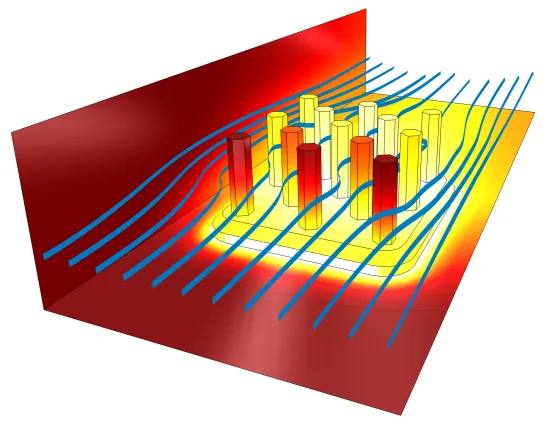
- Conjugate Heat Transfer is a phenomenon which involves heat transfer between and fluid and solid structure simultaneously. The heat transfer between the fluid and solid structure will be through convection.
- The Best example for CHT is cooling of Electronic devices.
Solving and Modelling approach:
- The exhaust pipe was modelled using space claim.
- This exhaust port model has four inlets and one outlet and since this is an heat transfer analysis, it requires both solid and liquid volume under consideration for our computational analysis.
- Volume Extract option is used to extract volume from the edges of inlets and outlet.
- Share topology has been used to ensure proper connectivity of mesh between solid volume and liquid volume interface.
Geometry in the spaceclaim:
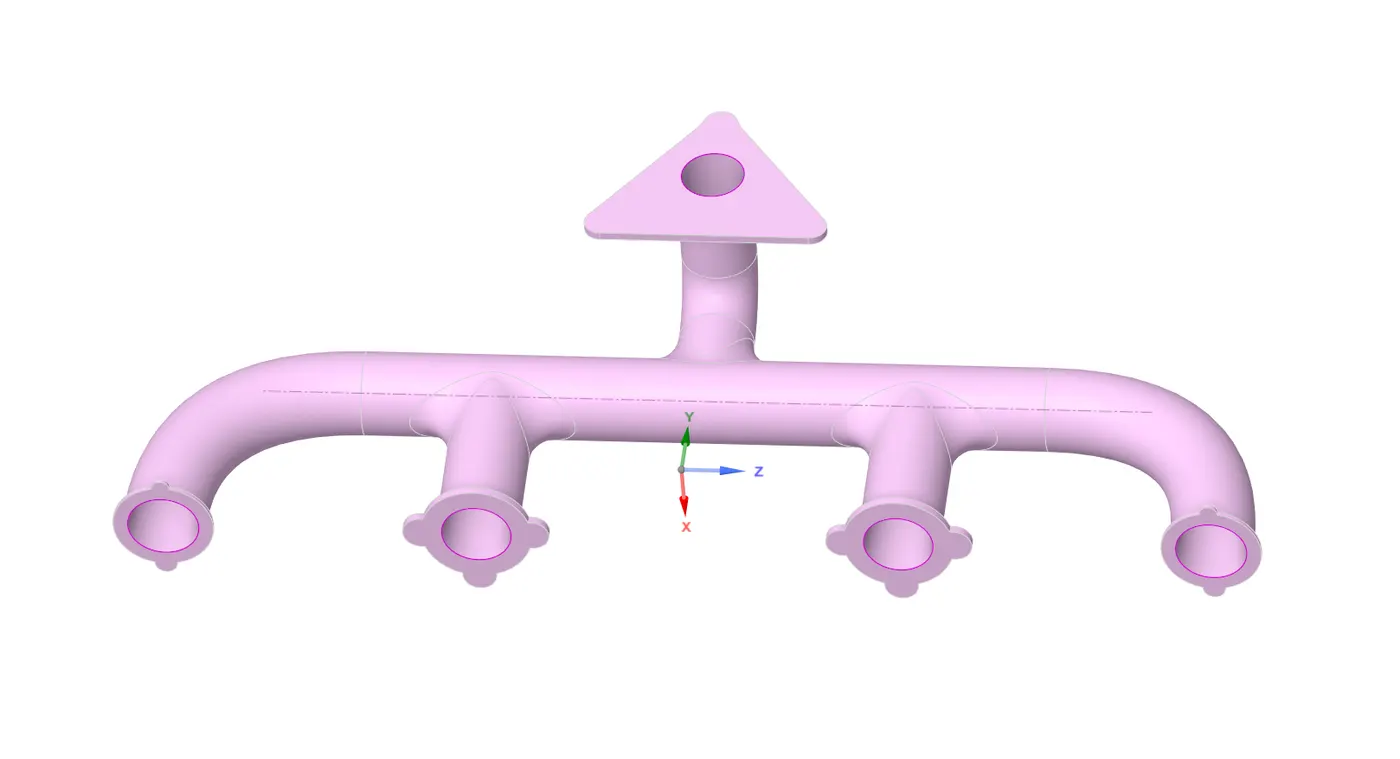
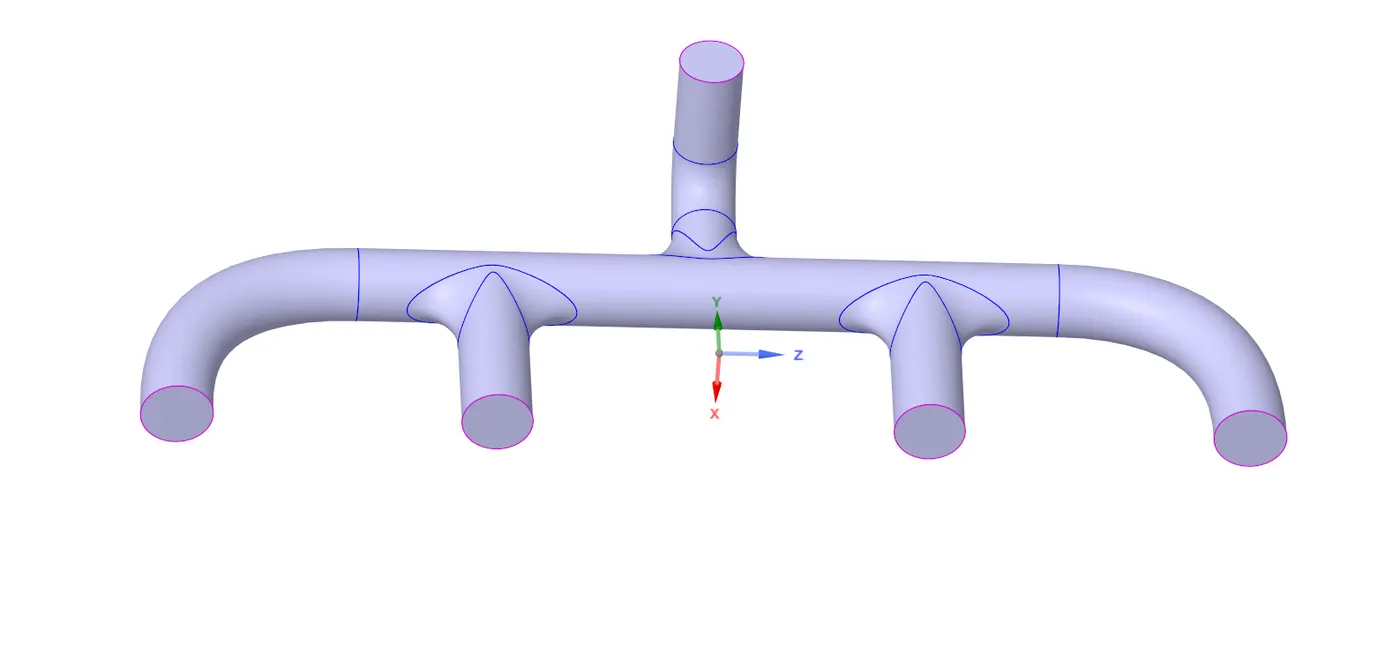
- In the geometry, some extra edges has been found and were removed first.
- Then the volume extract tool is used for the five edges and then a fluid volume is created.
- Both solid volume and fluid volume are moved to different collectors.
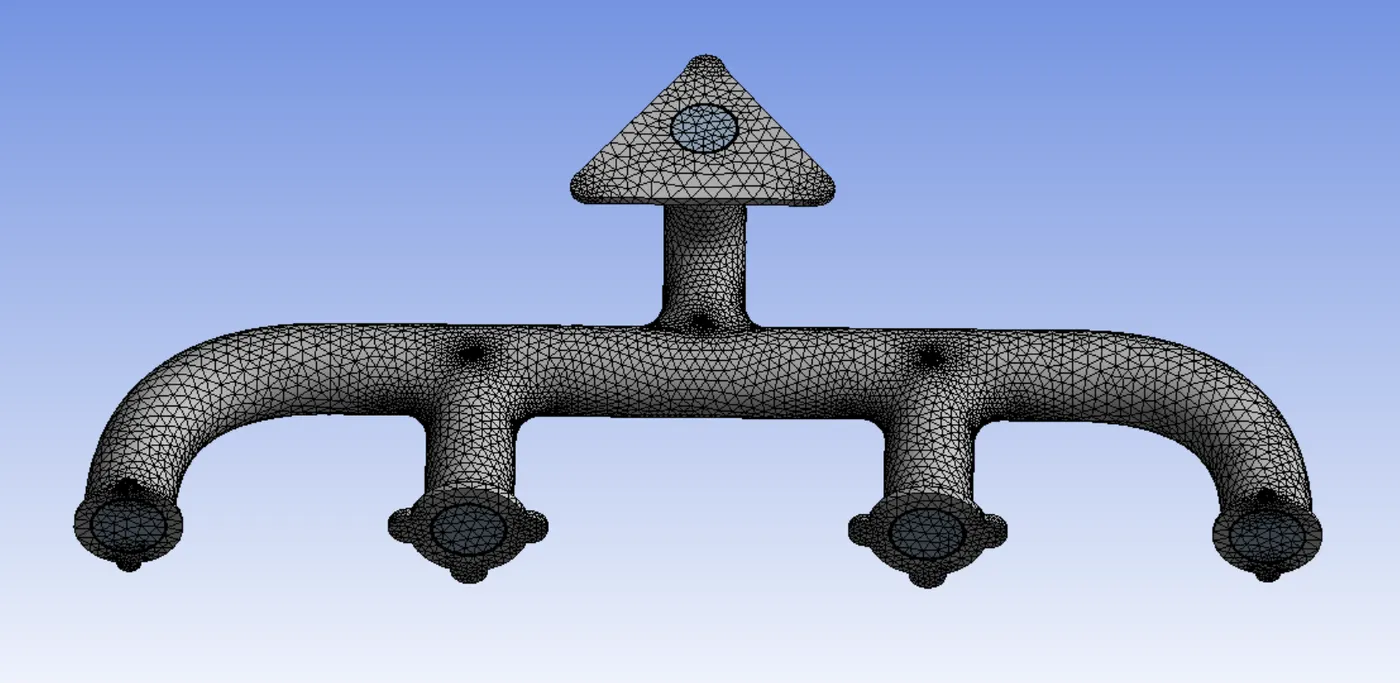
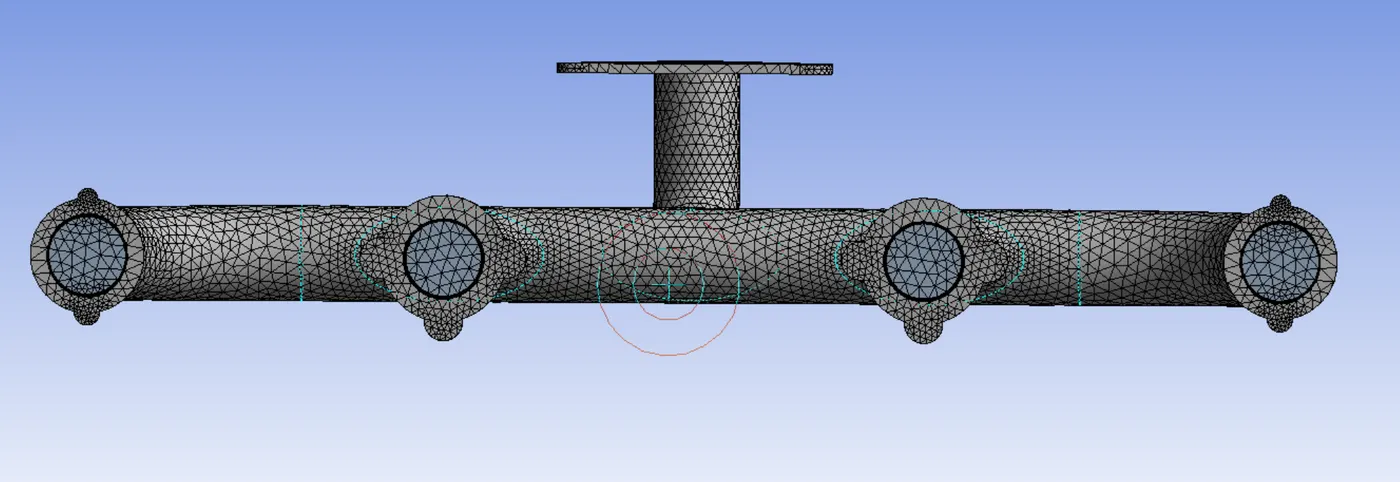
- The base mesh created with element size of 150 mm. And grid independence test was performed for element size of 100 mm and 50 mm.
- The Y+ value is chosen to be 10 and corresponding First layer thickness is 0.5mm.
- Then mesh file is imported into fluent solver to perform CHT analysis.
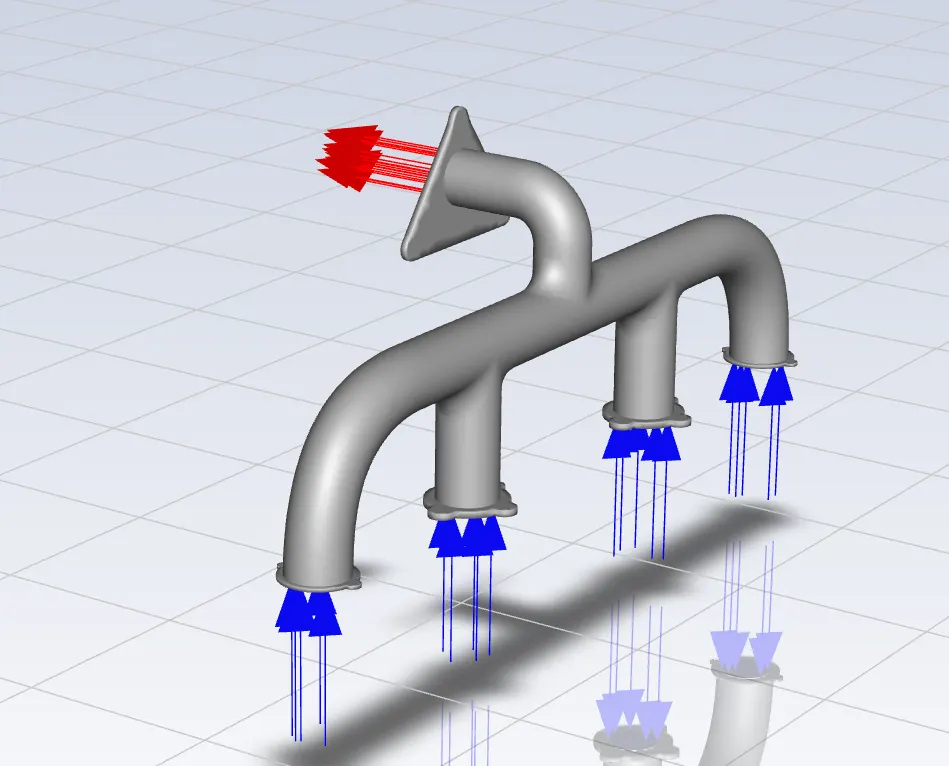
- The blue arrow indicates inlet boundary condition, which is velocity inlet of v = 5 m/s, with the temperature of the fluid to be 700 Kelvin
- The red arrow indicates outlet boundary condition, which is pressure outlet of 0 Pa.
- The third boundary condition is applied to the outer wall which are named as adiabatic wall and wall in named selection with a heat transfer coefficient of k = 20 W/m^2-k.
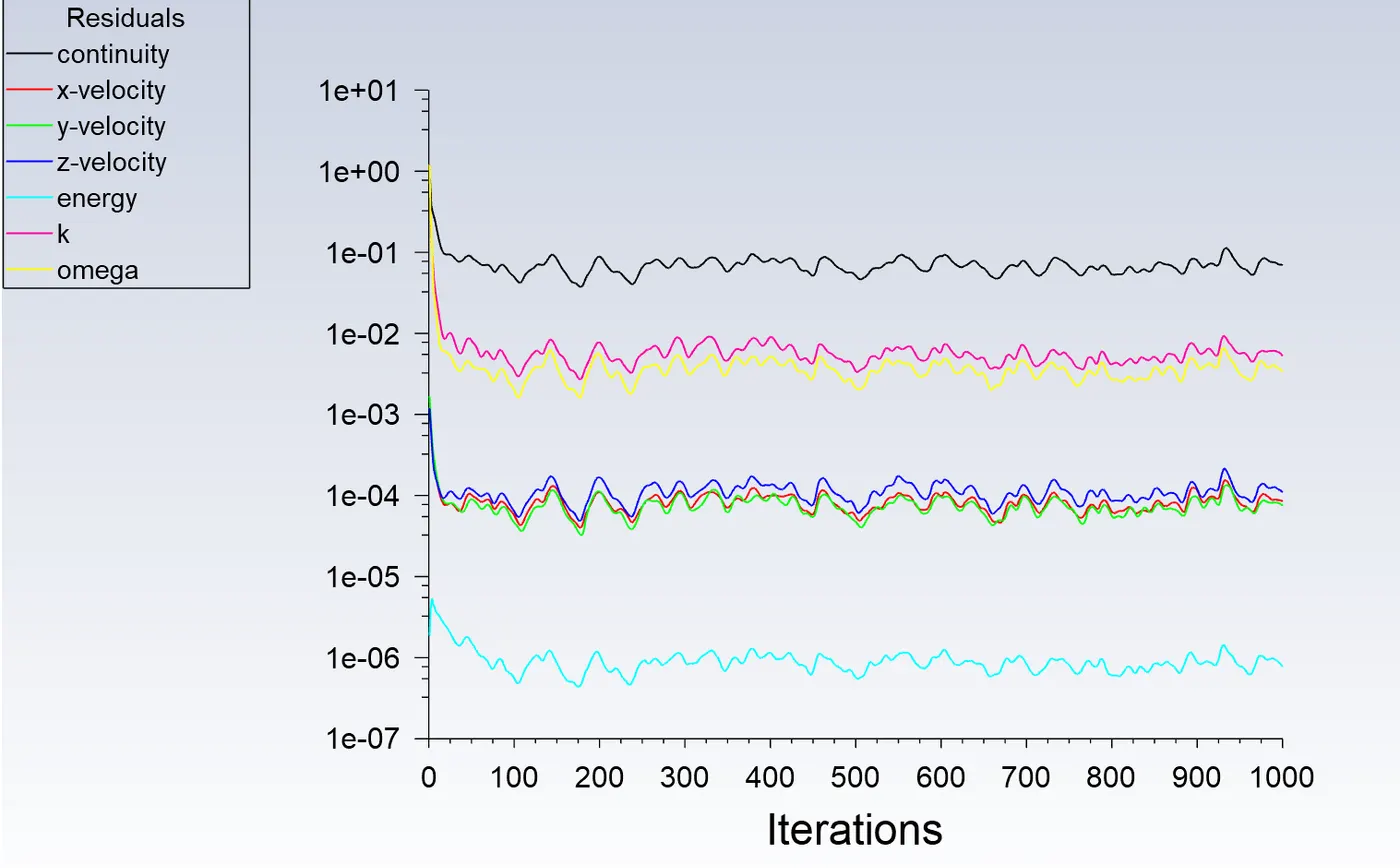
- Steady state analysis was carried out with Pressure based solver along with SIMPLE algorithm enabled. The turbulence model that has been used is K-Epsilon.
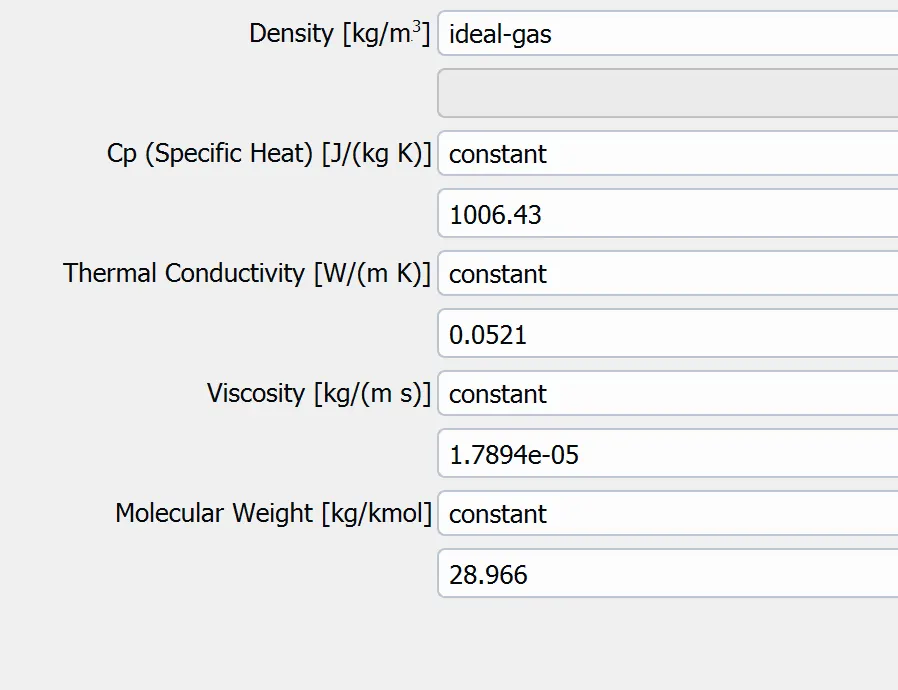
Material Properties:
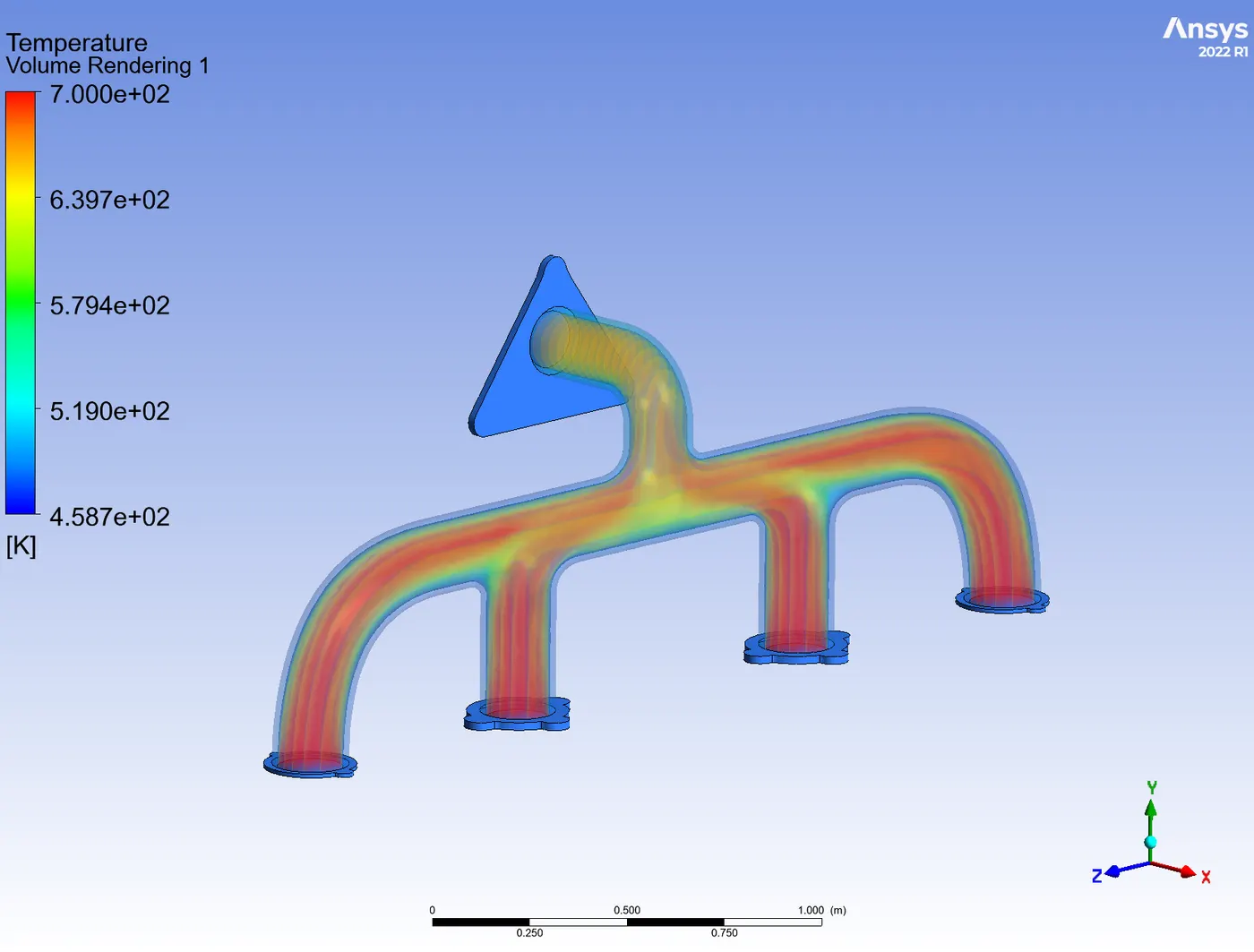
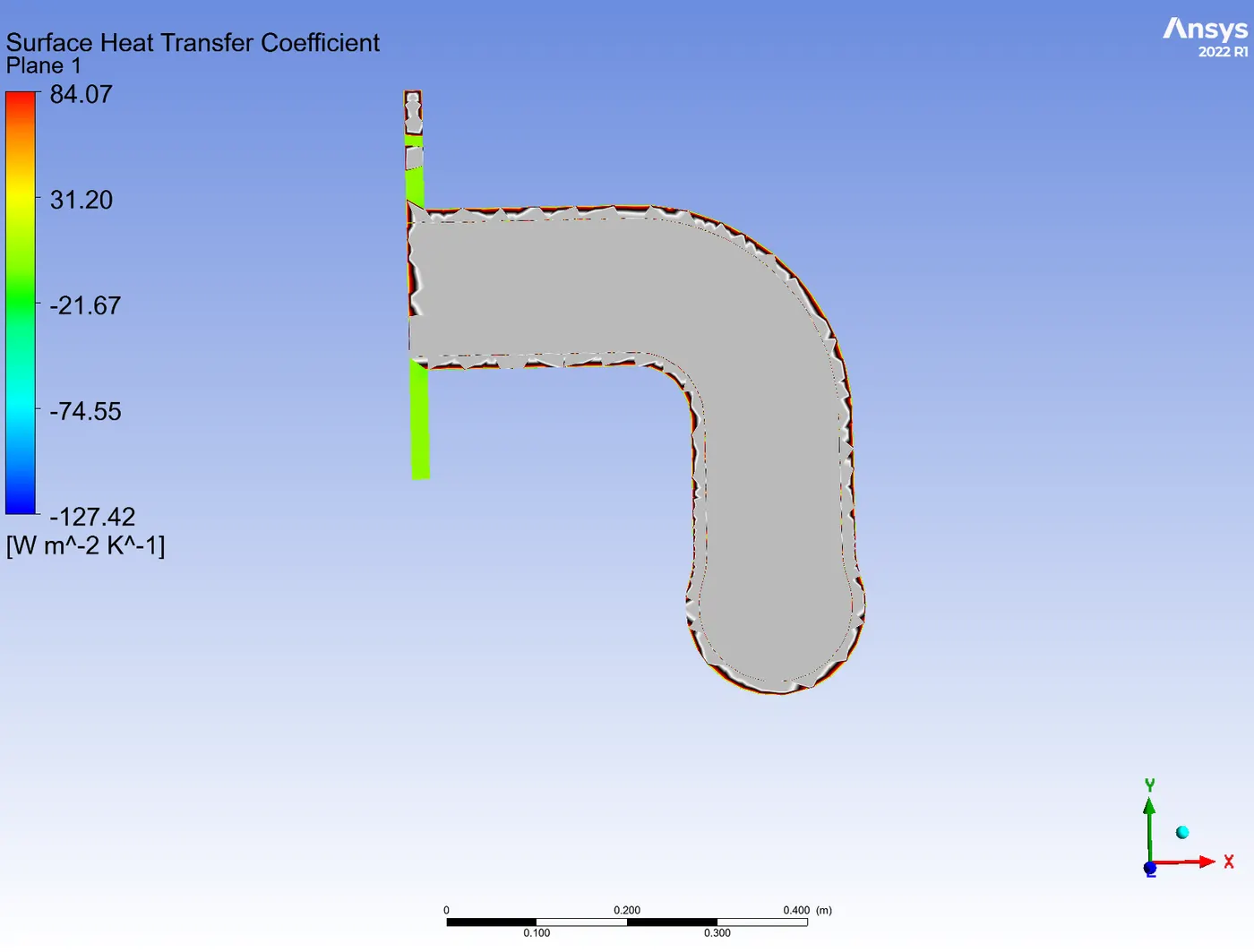
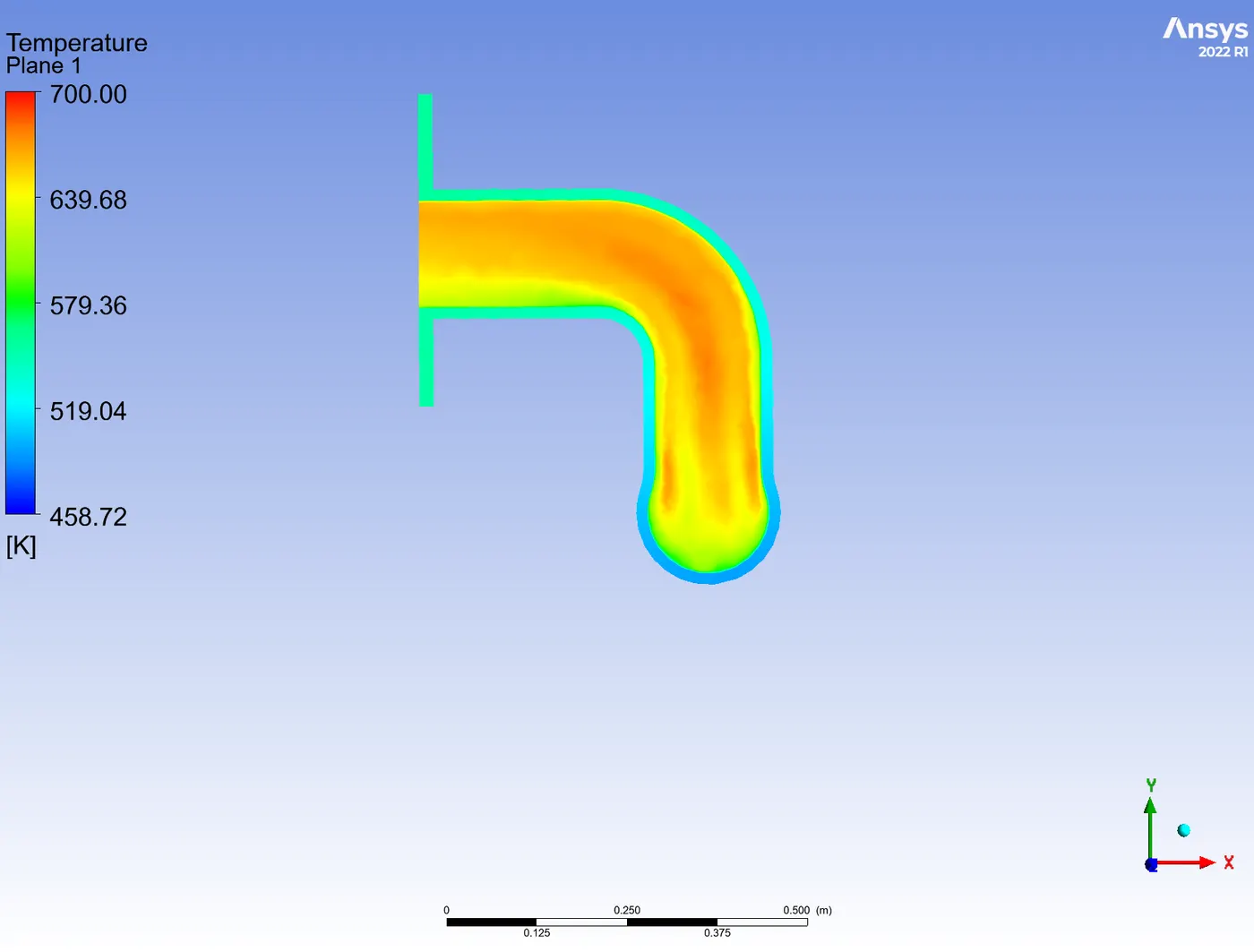
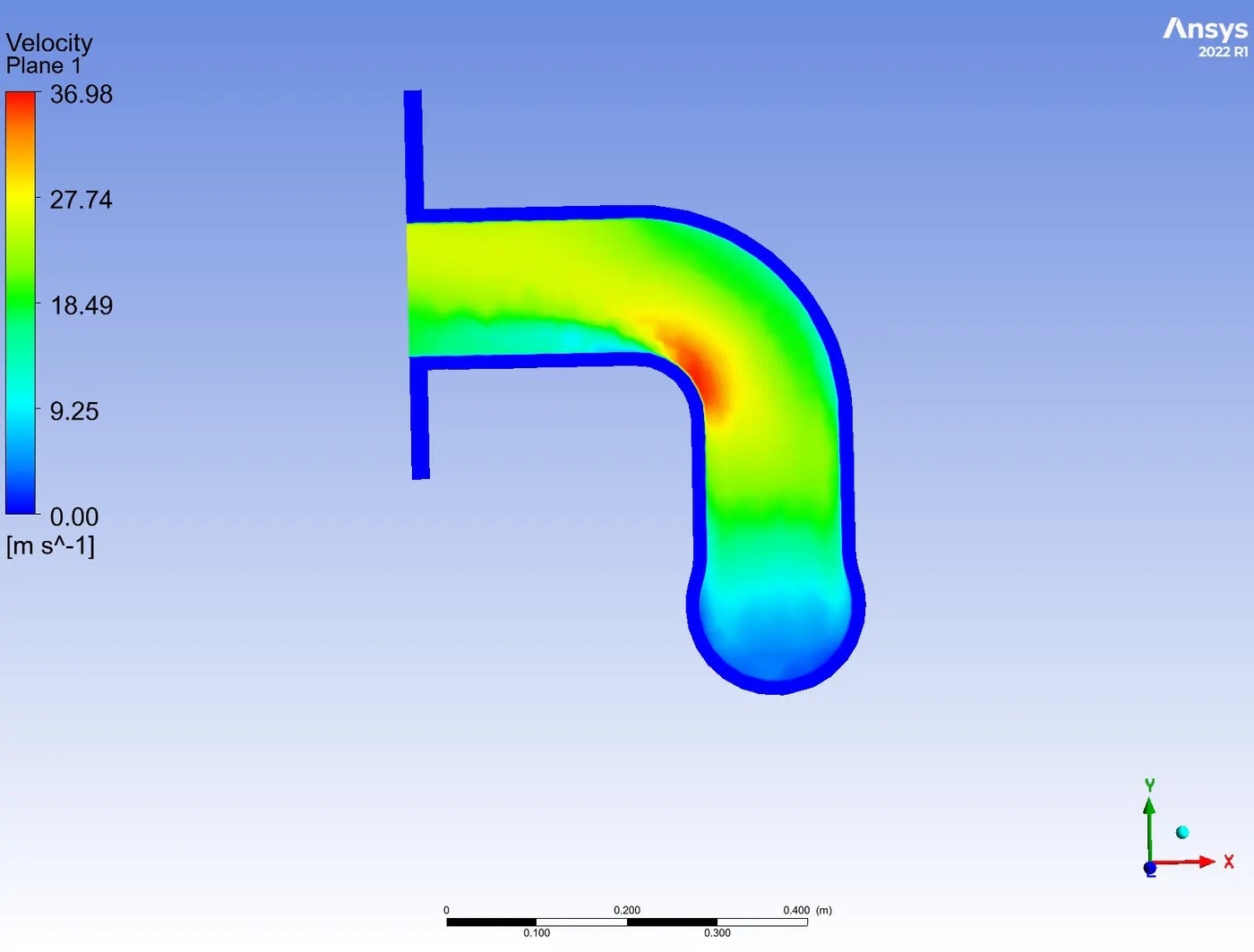
- The point of maximum velocity is the point where maximum heat transfer is encountered.
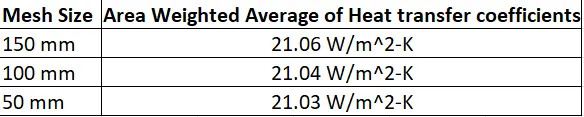
- Grid independence study was also performed whose result has been tabulated below.
Analytical Solution:
The Reynolds number of the flow Re = 56867.66
Nu = 0.023*Re^(4/5) * Pr^0.3. D = 0.166m
From heat and mass transfer data book, for air:
Pr = 0.678, k = 0.0242 W/m^2-k.
Now,
Nu = 0.023*56867.66^(4/5)*0.678^0.3 = 130.31
We know that,
Nu = hD/k = h*0.166/0.0242 = 130.31
h = 19 W/m^2-k.
Conclusion:
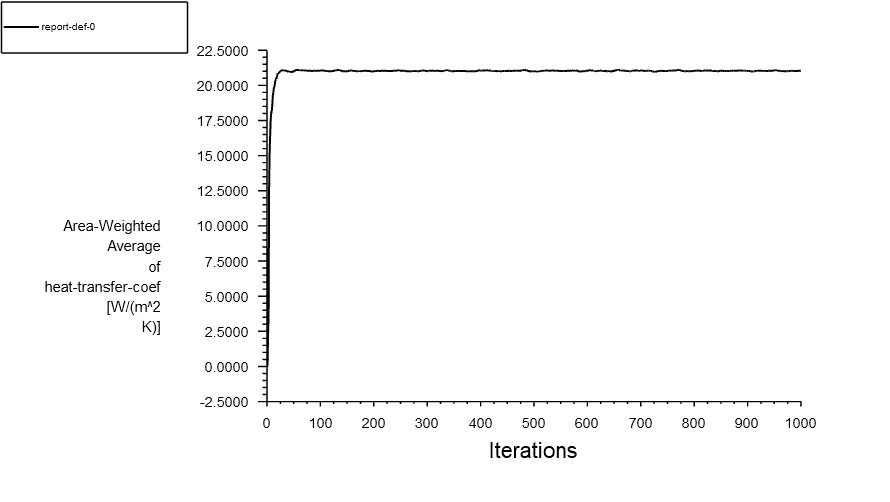
Here, the theoretical and the computational value of the thermal specific heat transfer coefficient are 19 which is really close to the value that has been found from CFD.
https://drive.google.com/file/d/105sVRdYv2CoyhjR2xPg1u7oTqnmIeOcP/view?usp=sharing