Week 4 - CHT Analysis on Exhaust port
AIM : To give a brief description of why and where a CHT analysis is used.
INTRODUCTION :
CHT Analysis:
Conjugate Heat Transfer involves exchange of thermal energy between fluid and solid interface. Such analysis is carried out for heat exchangers, cooling of electronic equipments, cooling and heating systems, exhaust manifolds and components where convective phenomena is of significance.
In any fluid solid interaction, whenever there is flow of fluid at surface, there is formation of thermal boundary layer inculcating the energy exchange between surface and fluid, CHT is taken into picture to determine and analyse the Heat transfer occuring. The current project is about CHT analysis of an exhaust manifold of an engine, thereby to determine the convective heat transfer coefficient.
Geometry approach :
- The CAD model of an exhaust manifold is loaded in Ansys Spaceclaim.
- The faces and other geometry is categorized in various named selections.
- There are total four inlets, indicated with blue arrows and one outlet by red arrow, following the mass conservation equation.
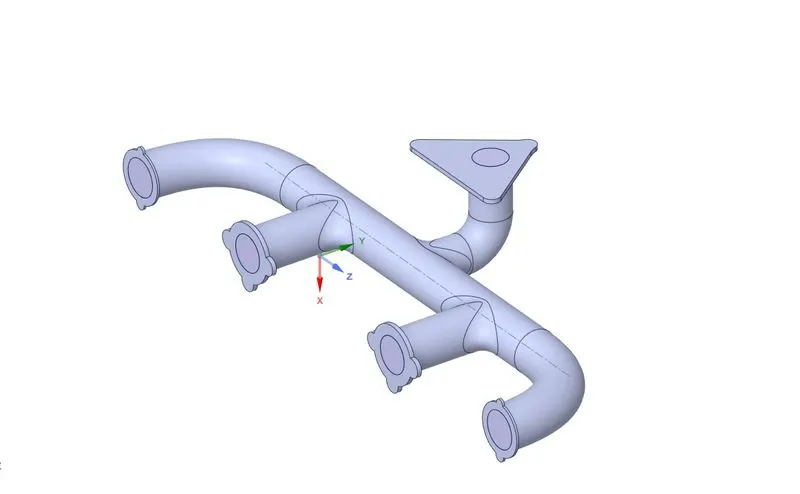
- The model is loaded in Mesh module where entire geometry is discretized by sharing topology as to pass on the information from adjacent boundary to cells.
Baseline mesh :
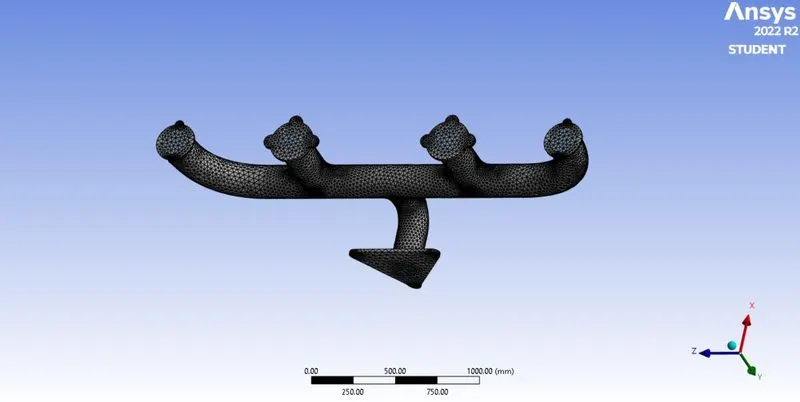
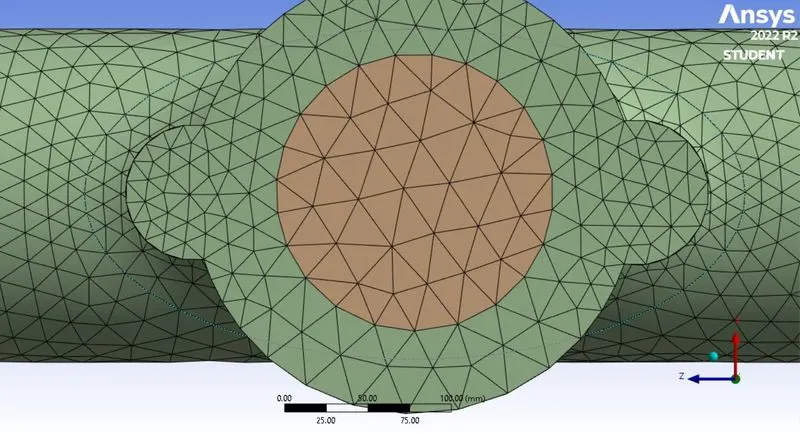
- When the base line mesh is done we can see that the topology between the walls of fluid volume and the solid volume is not aligning with each other this type of mesh is known as non-conformal mesh shown in the figure below
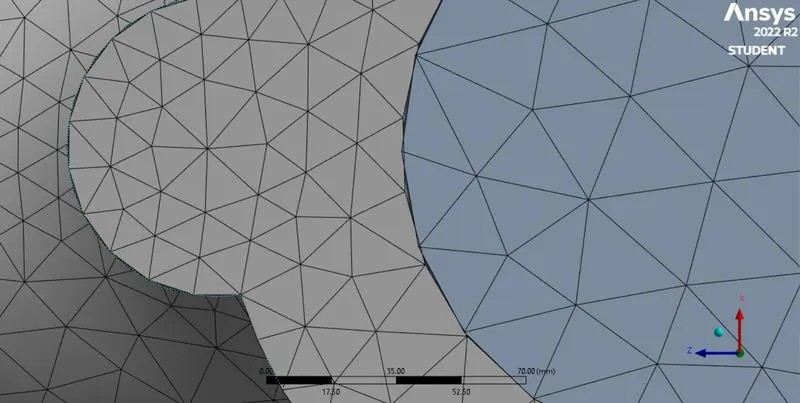
- To rectify that error we have to align the both layers with the help of share topology option
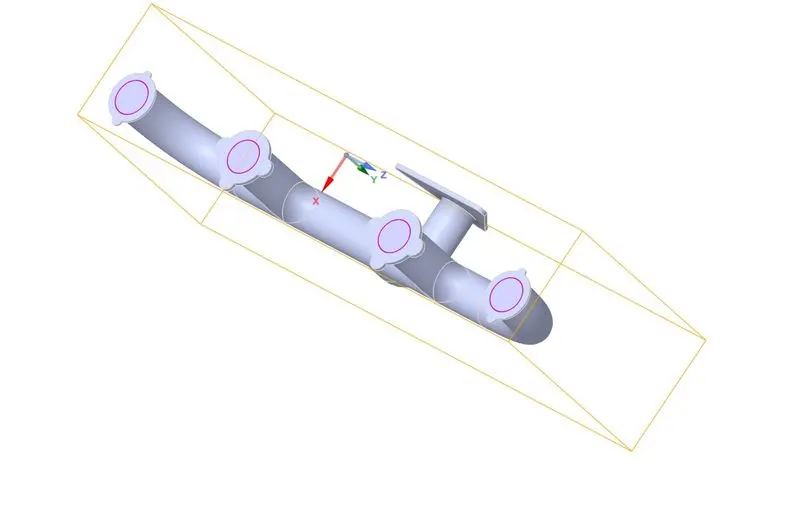
Conformal mesh :
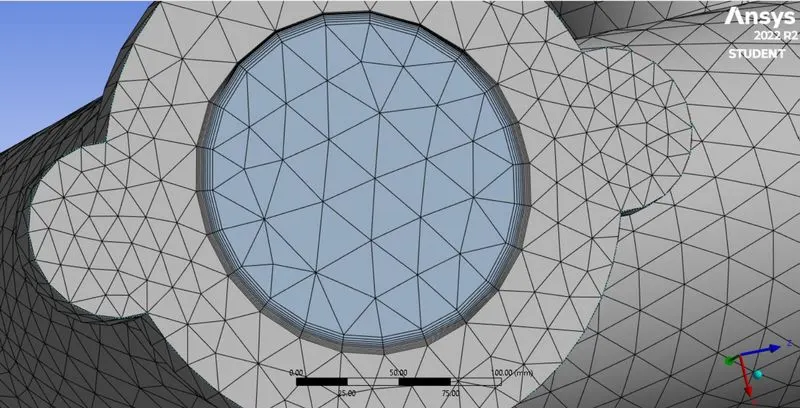
Inflation layers:
Create inflation layers at the walls to capture the viscous interaction of fluid flow.
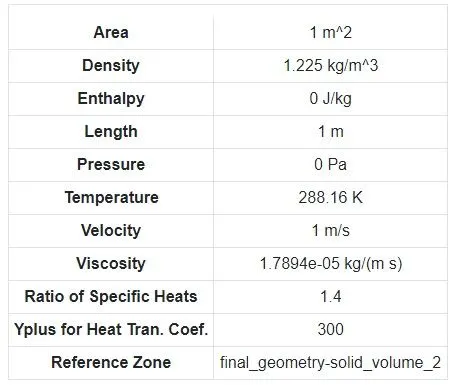
Secondly in the Ansys Fluent module, the Pressure based solver is used as the flow has very less velocity and the density does not vary significantly. The solver solves the corrected values of pressure and velocity for convergence, Continuity equation, x-momentum, y-momentum and z-momentum equation. Since the flow of air takes place at 700 Kelvin, the Energy Equation is accounted as well. The boundary conditions, fluid and properties of the solid are as follows
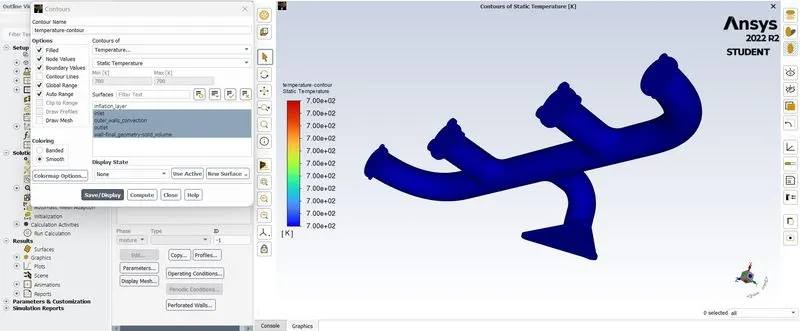
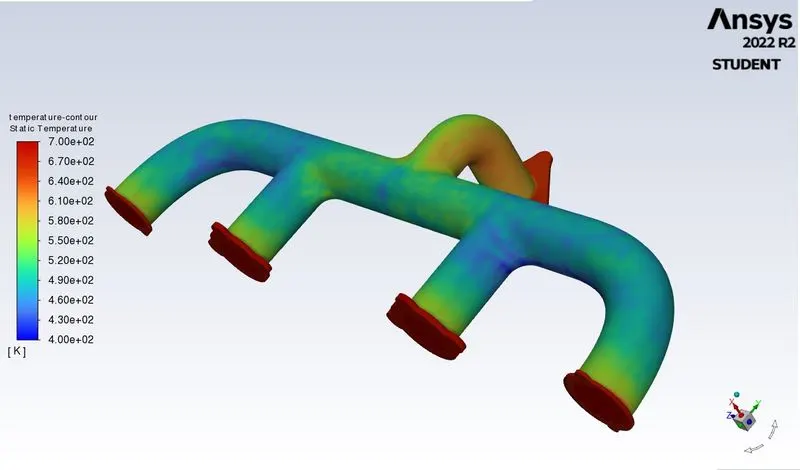
By usind Hybrid initialization, the initial temperature values are printed out, and the surface heat transfer coefficient at inner wall is illustrated by creating a section plane normal to Z axis.
Temperature contour :
Result :
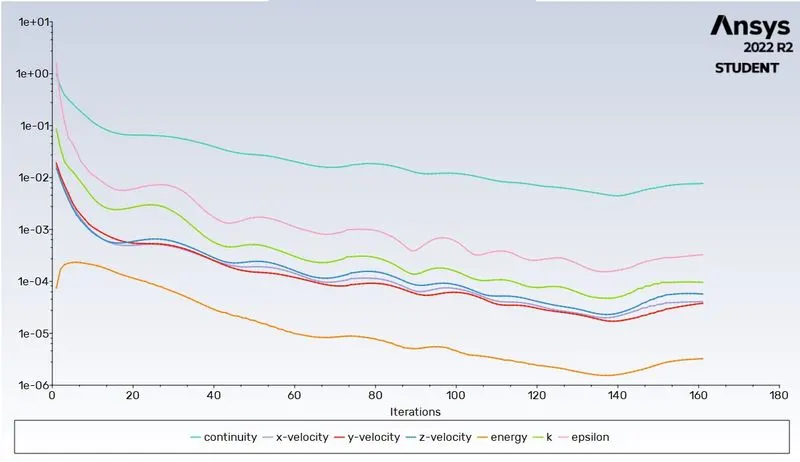
Scaled residuals:
With k-epsilon model, having y+ = 70
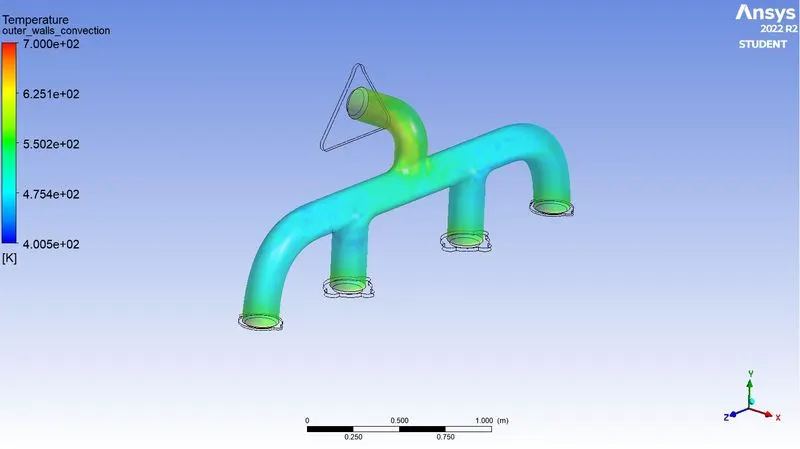
Results :
Outer walls convection:
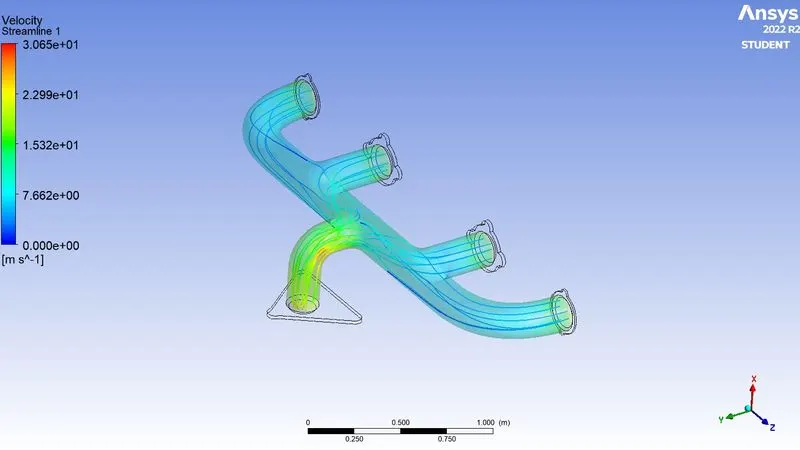
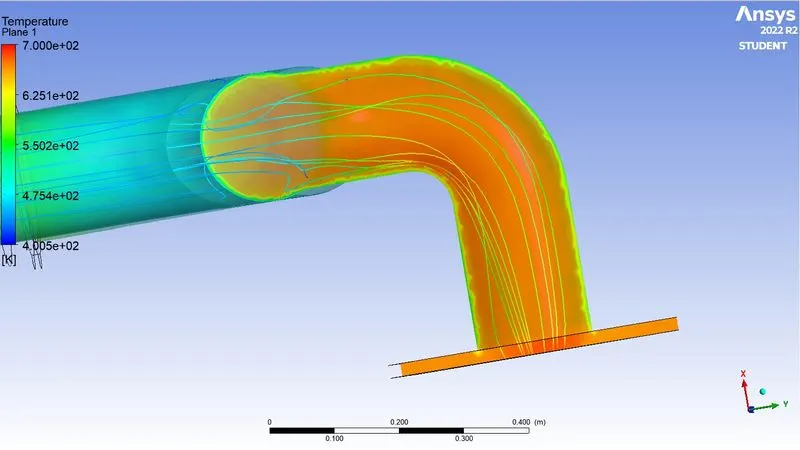
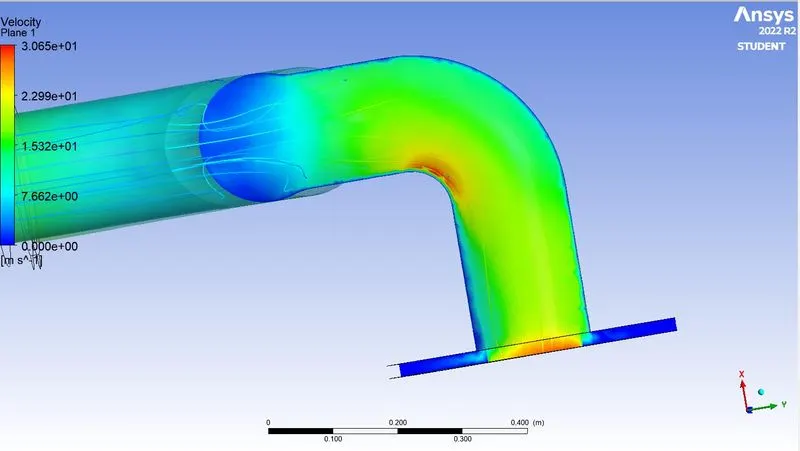
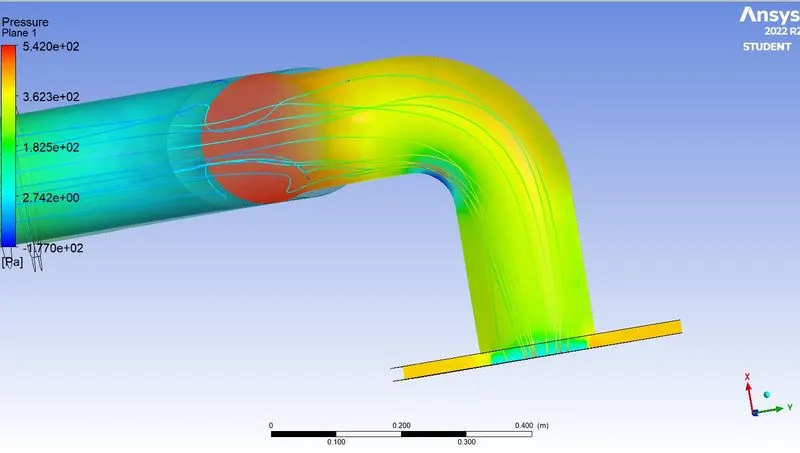
Add stream lines to the model for the flow of fluid through the inlet to the outlet and give variable colours to the geometry.
Temperature contour :
Velocity contour :
Pressure contour :
| y+ | Model |
Inflation layers |
Cells | yp |
Heat transfer coefficient |
70 k-epsilon 9 255086 3.901e-3 29.37
Conclusion:
- The value of Convective heat tranfer coefficient for k-epsilon model is near to 29.37 W/m^2K
- The accuracy of the prediction depends on the number of inflation layers created above the wall.
- The accuracy of the prediction depends on the number of inflation layers created above the wall.