Week 4 - CHT Analysis on Exhaust port
The Conjugate Heat Transfer (CHT) analysis type allows for the simulation of heat transfer between solid and fluid domains by exchanging thermal energy at the interfaces between them. Typical applications of this analysis type exist as, but are not limited to, the simulation of heat exchangers, cooling of electronic equipment, and general-purpose cooling and heating systems.
The term ‘conjugate heat transfer’ refers to a heat transfer process involving an interaction of conduction within a solid body and the convection from the solid surface to fluid moving over the solid surface. Therefore, a realistic analysis of conjugate heat transfer problems necessitates the coupling of the conduction in the solid and the convection in the fluid. This is generally accomplished by satisfying the conditions of continuity in temperature and heat flux at the fluid–solid interface. There are many engineering devices in which conjugate heat transfer analysis becomes important. Most common example is a heat exchanger in which the conduction in the tube wall is greatly influenced by the convection in the surrounding fluid. Another example of conjugate heat transfer problem is found in fins.
In this CHT challange, the analysis is done on exhaust port of automobile which has heated air as input from the 4 entry points and there is one common outlet. Below shown is the cad model of the exhaust port on which whole challange is completed.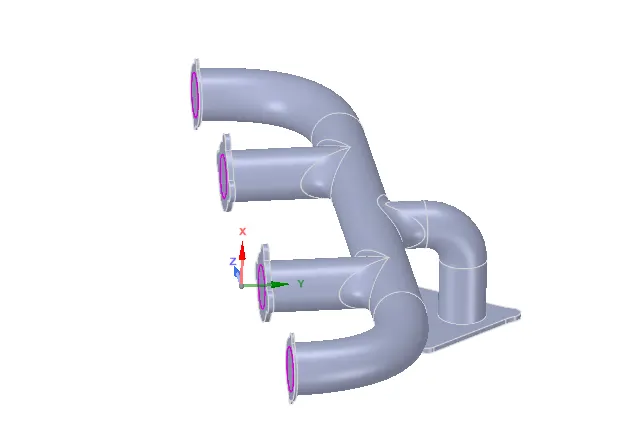
The whole challange is divided into 4 cases based upon turbulence models i.e. k-epsilon and k-omega, further baseline mesh and refined mesh. In th eend a comparision is made on these cases.
For The Baseline meshing setup-
Case1 : K-epsilon Model
Initially for making the model in the spaceclaim the volume extract is made and the Topology is set to share for the conformal mesh.
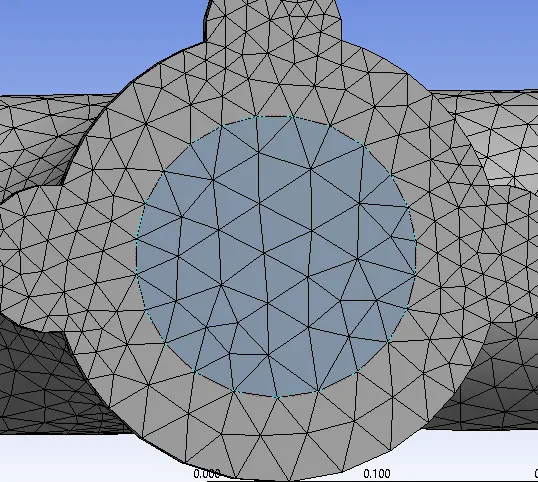
Fig. Conformal Meshing
The default eshing is adopted and the result after the meshing is -
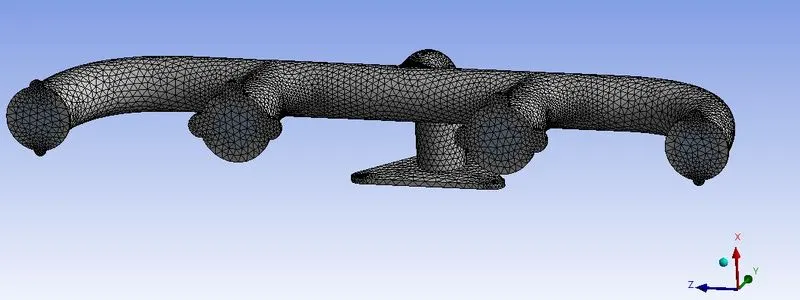
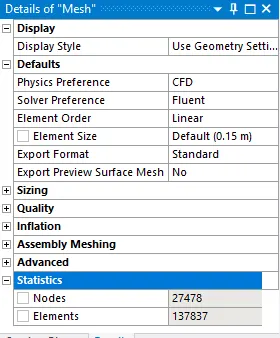
Then the 4 inlets are given named selection as Inlets and the outlet one is named outlet. Then the solid body is named for the convection.
Setup:
The pressure-base sover is used along with energy calculation.
The K-epsilon model is used in this case.
The inlet boundary conditions are-
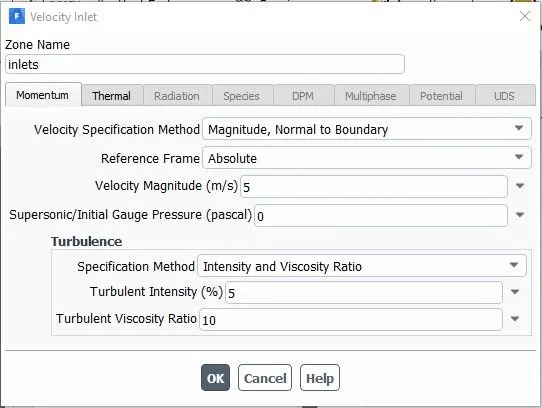
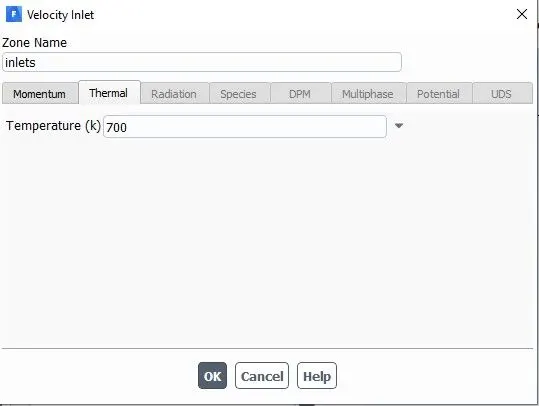
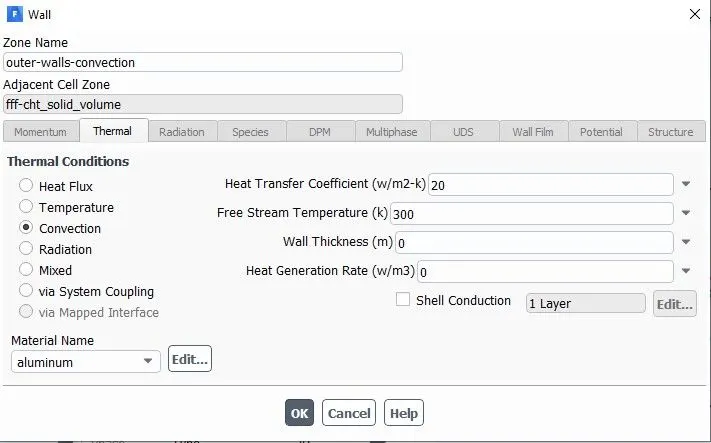
The solid model is set at
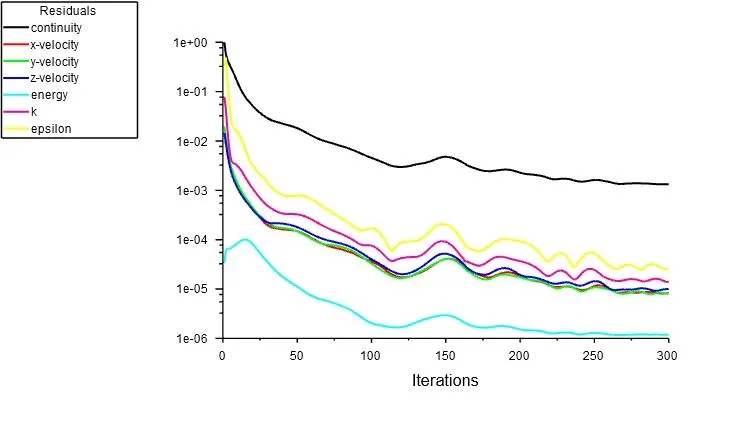
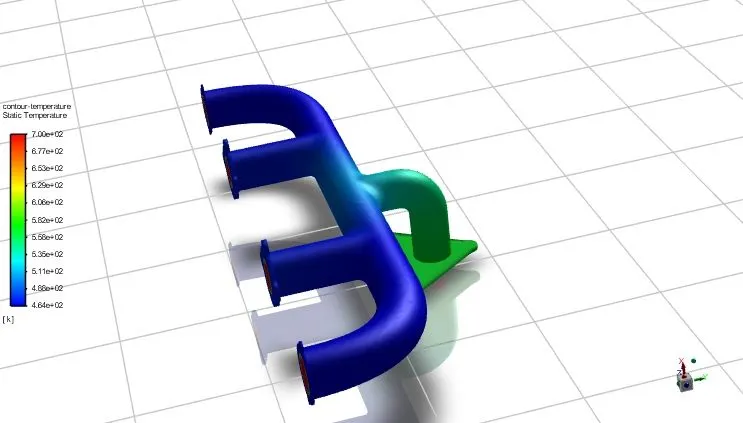
In output:
 \
\
Post processing:
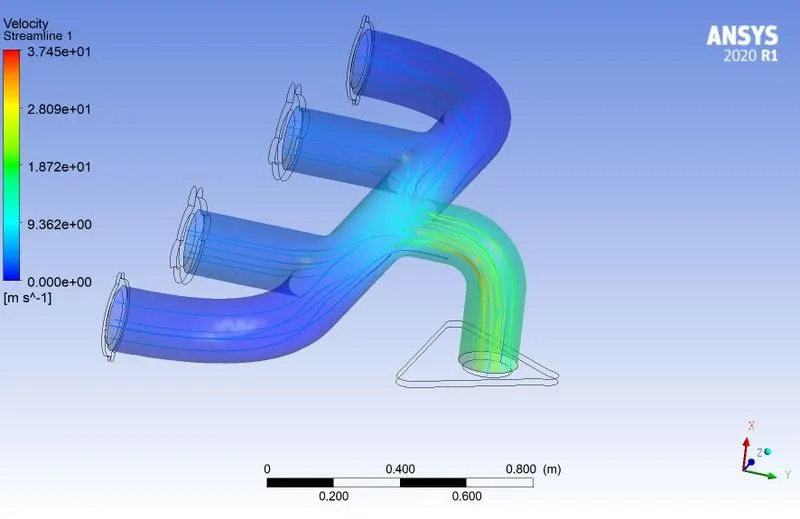
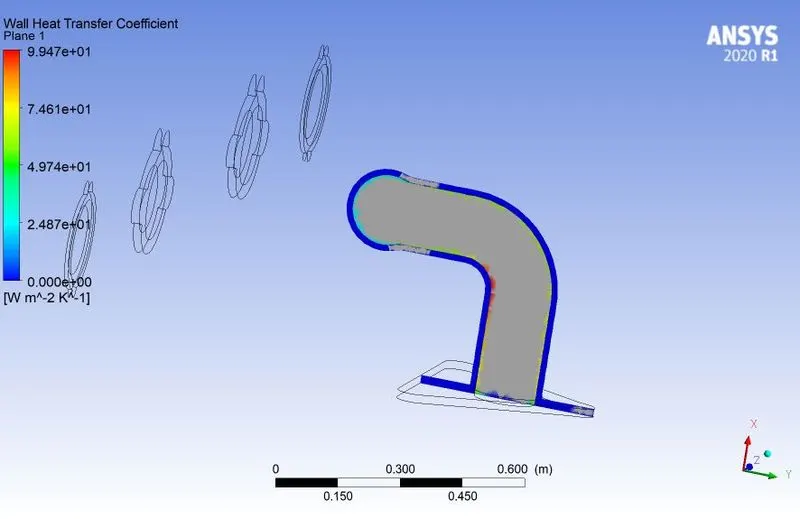
Wall Heat Transfer coefficient
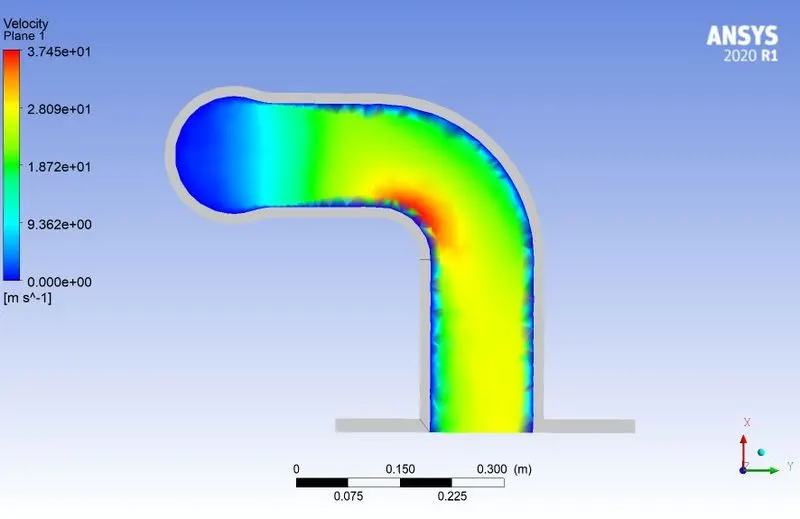
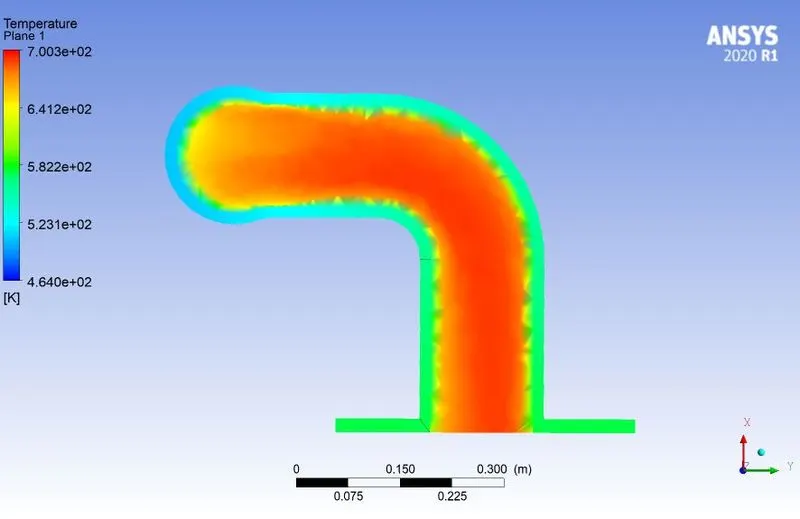
Temperature and velocity contours:
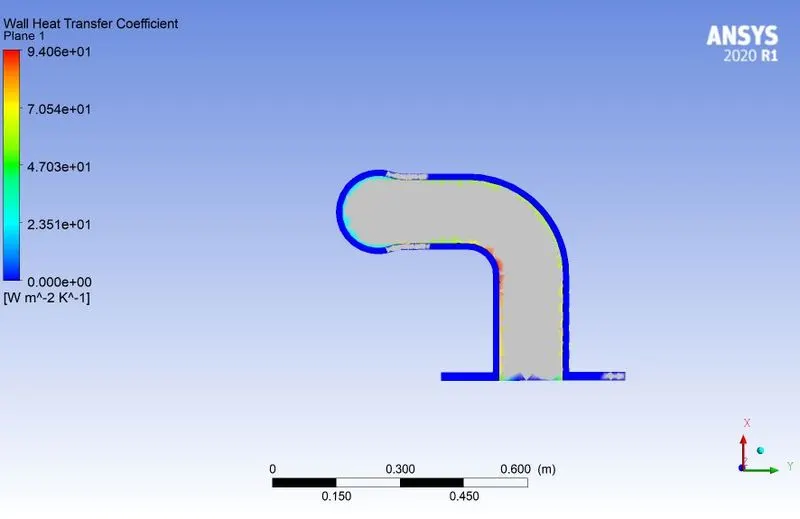
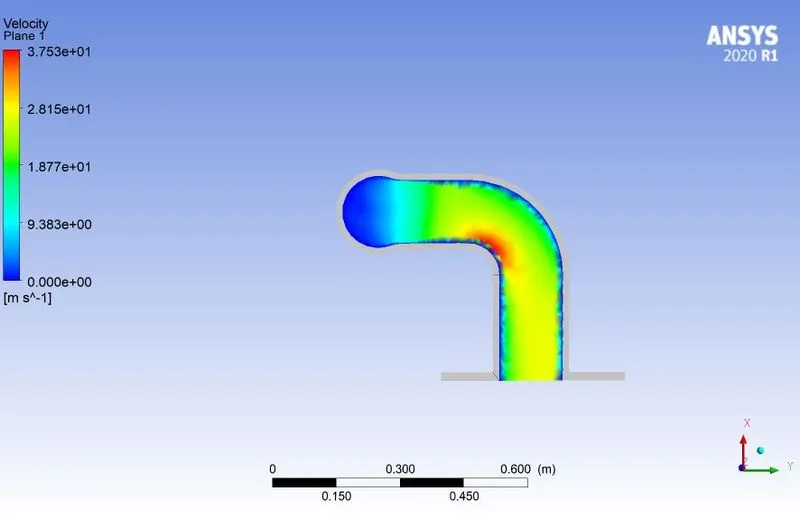
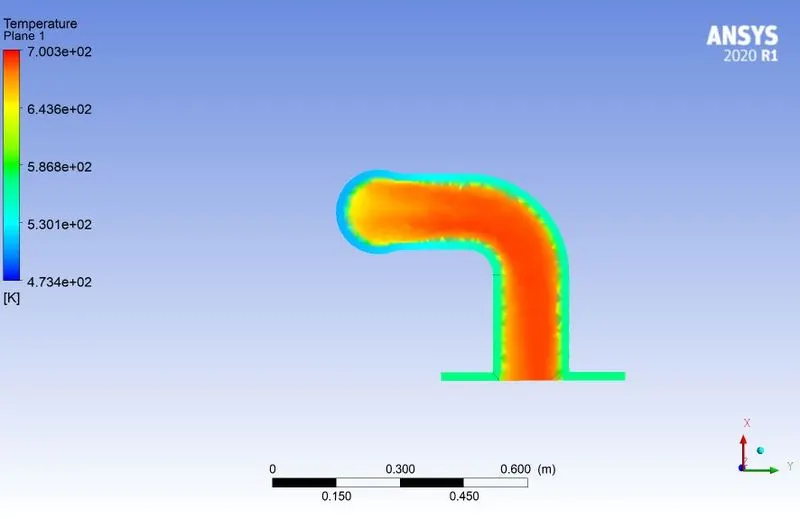
Case2 : K-omega Model
The same model of the last case is used here too but i this case K-omega model is chosen.
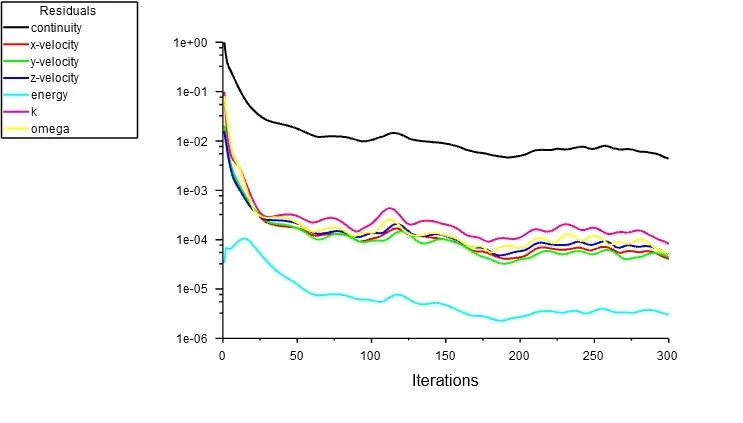
In output:
Post processing:
Wall Heat Transfer coefficient
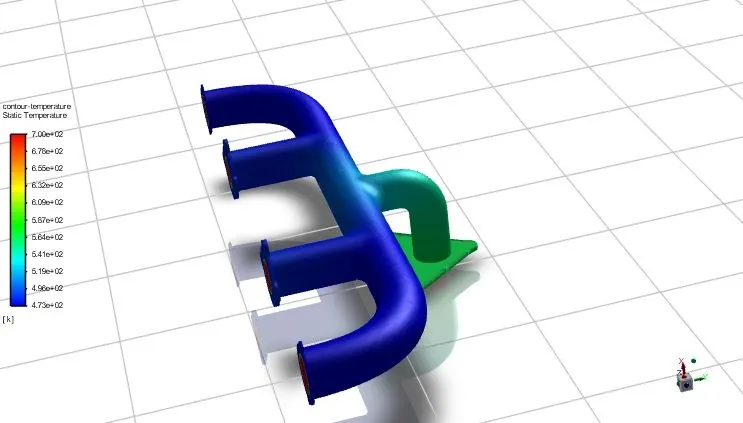
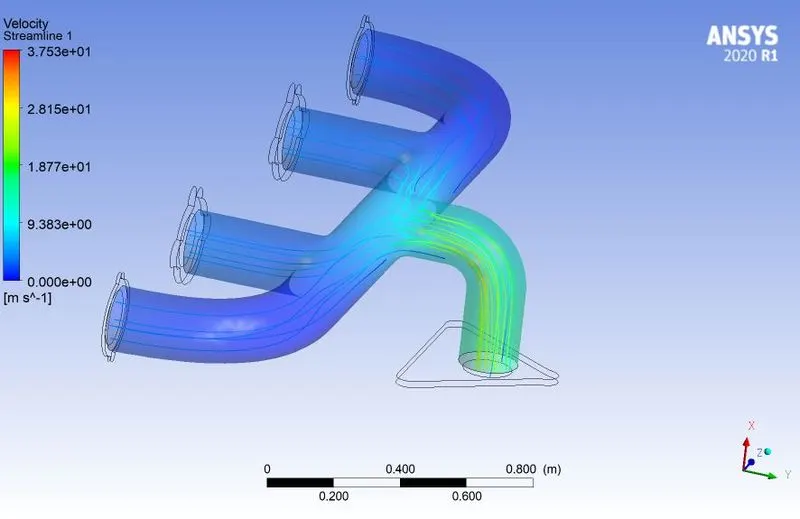
Temperature and velocity contours:
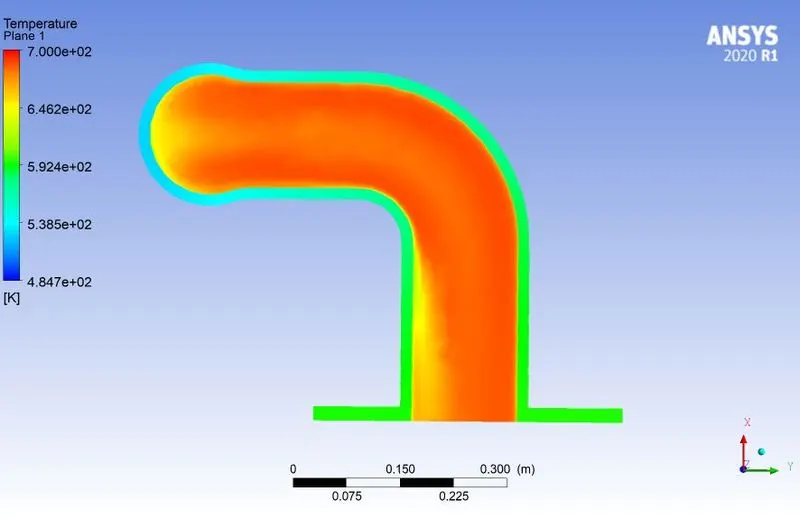
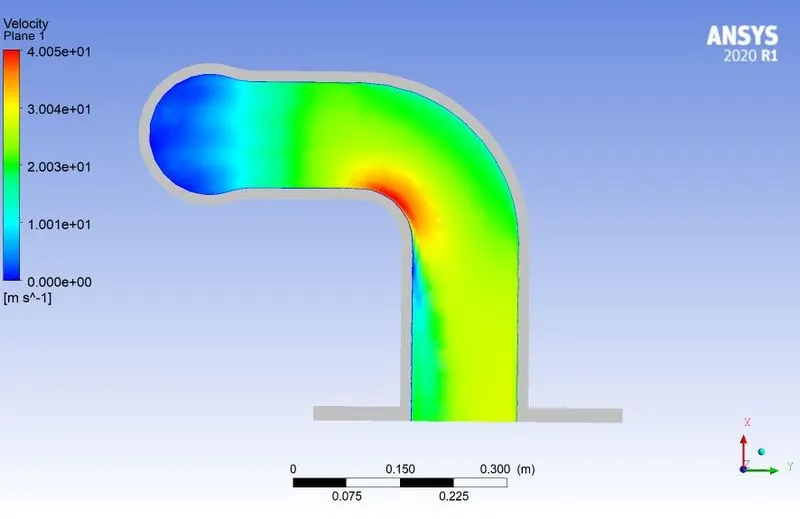
Case3 : K-epsilon Model(Refined Mesh)
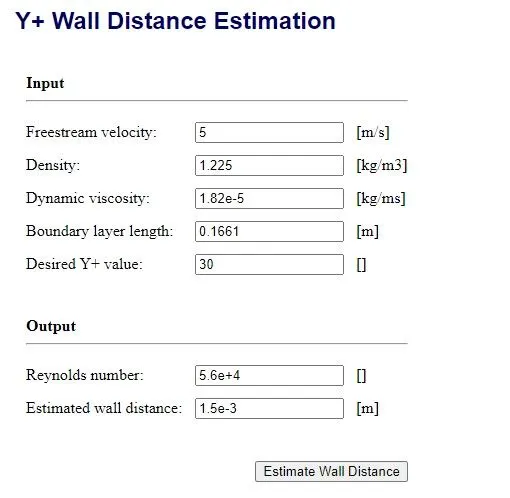
The Y+ value is cosen as 30 in this case the first cell thickness is calcuated as follows wit layers of inflation

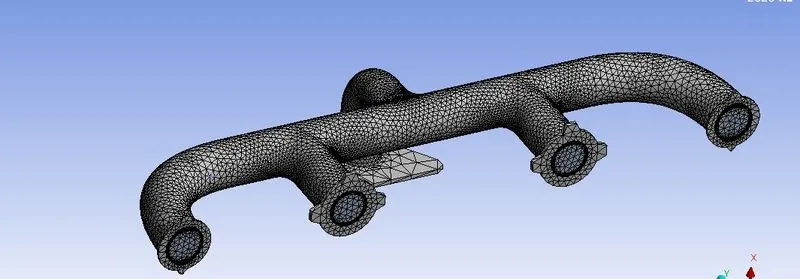
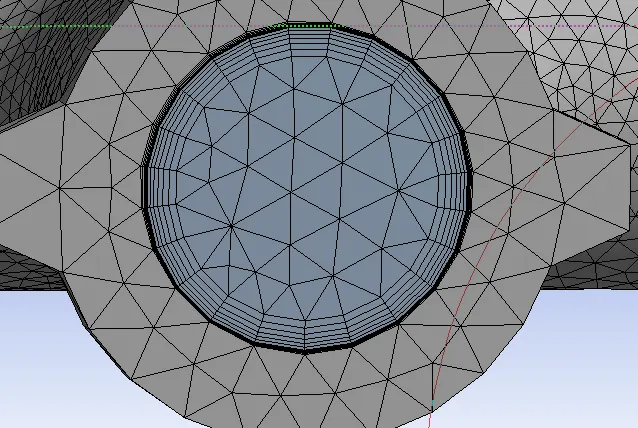
In output:
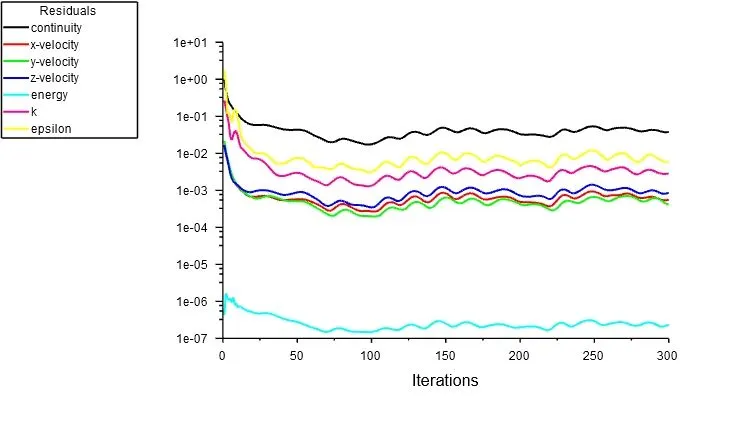
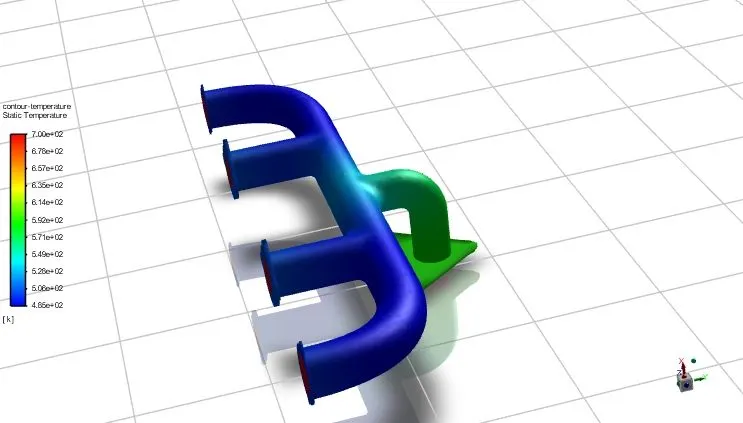
Post processing:
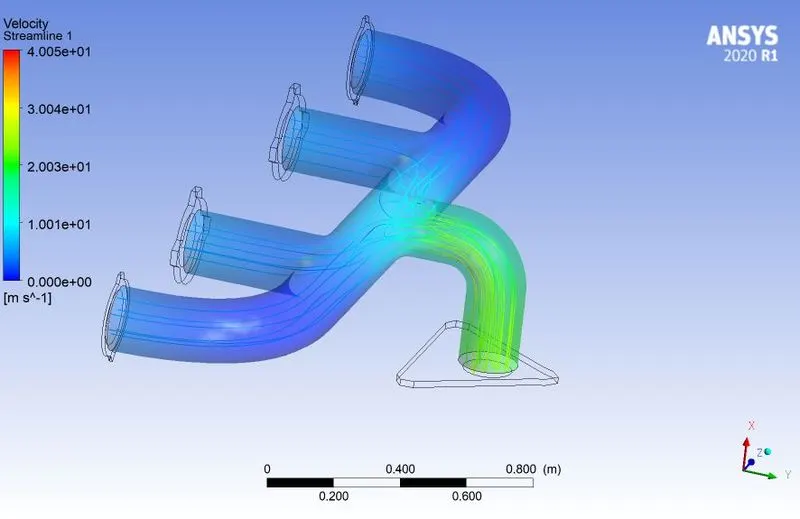
Wall Heat Transfer coefficient
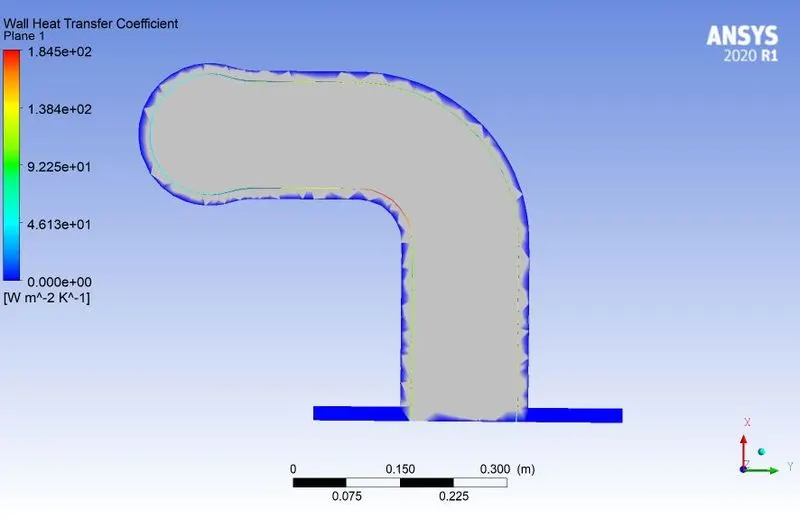
Temperature and velocity contours:
Case4 : K-omega Model(Refined Mesh)
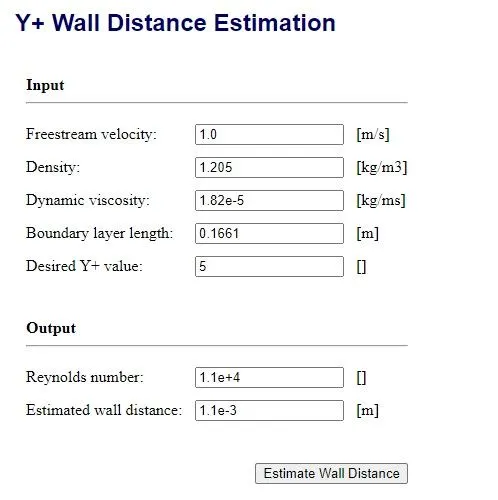
The Y+ value is cosen as 5 in this case the first cell thickness is calcuated as follows wit layers of inflation
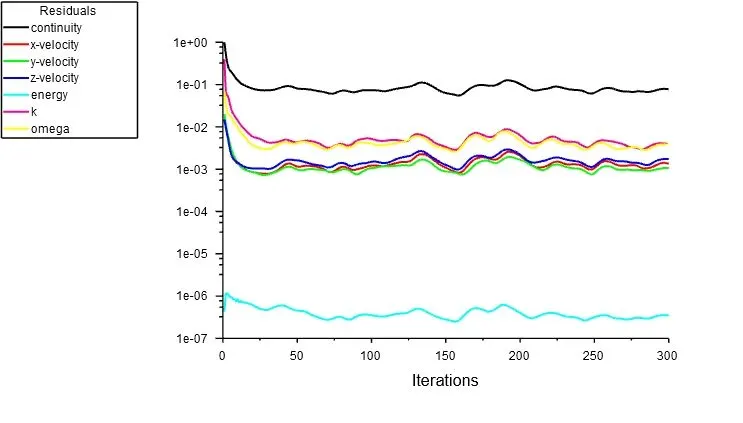
In output:
Post processing:
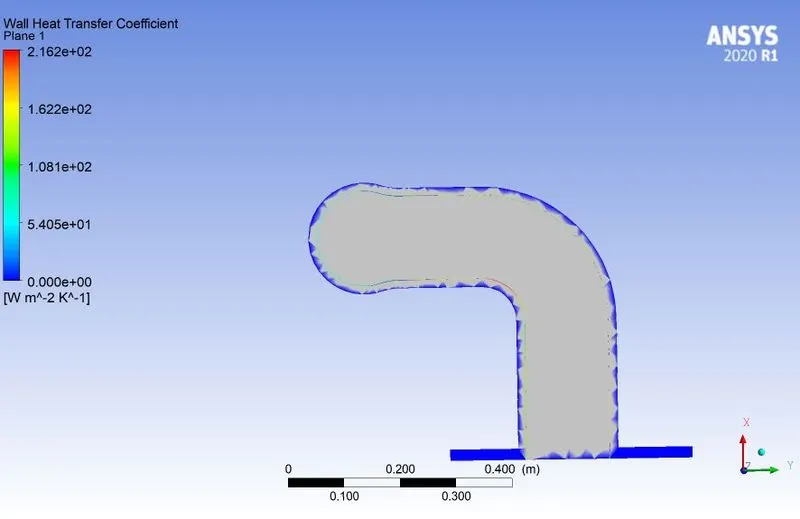
Wall Heat Transfer coefficient
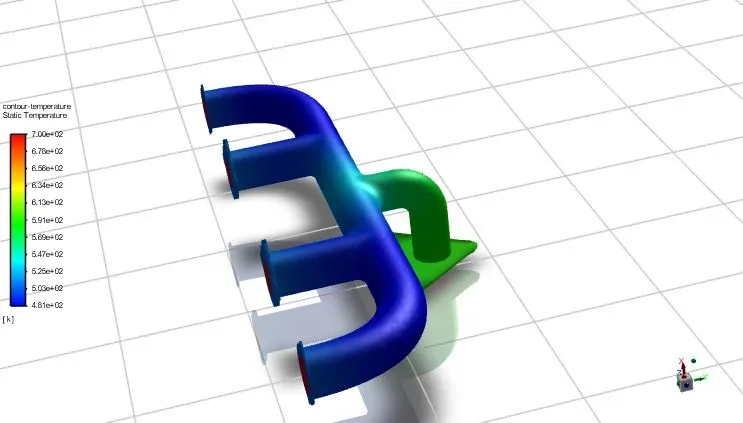
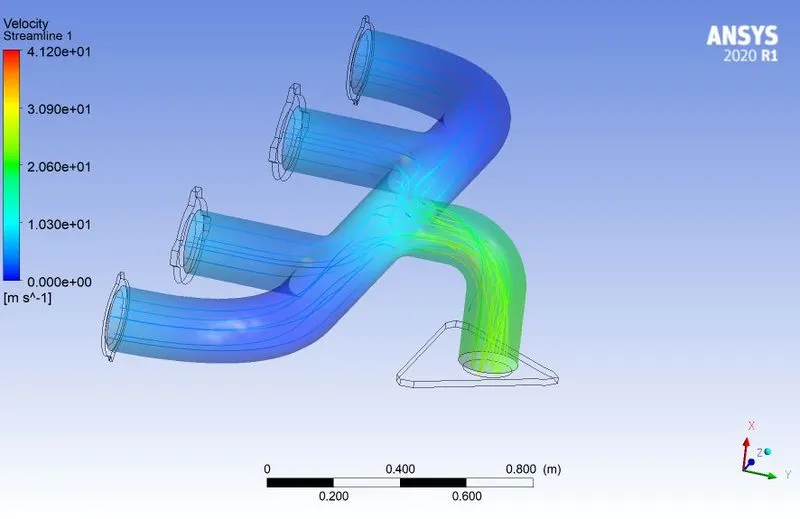
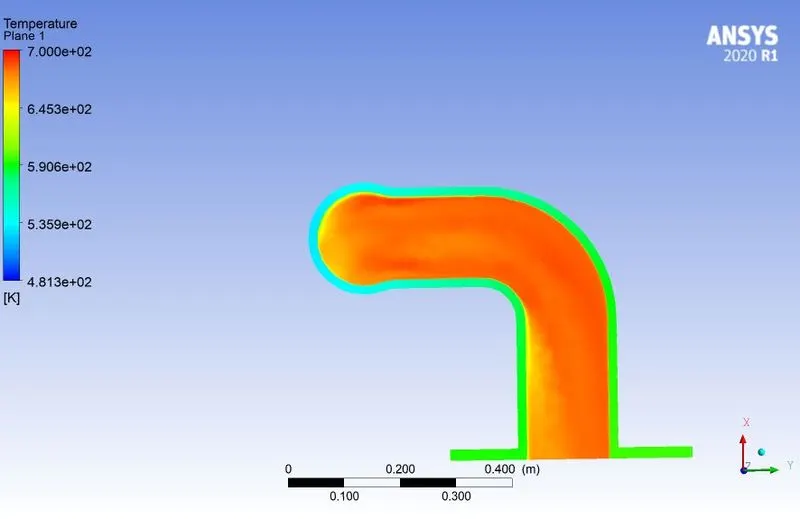
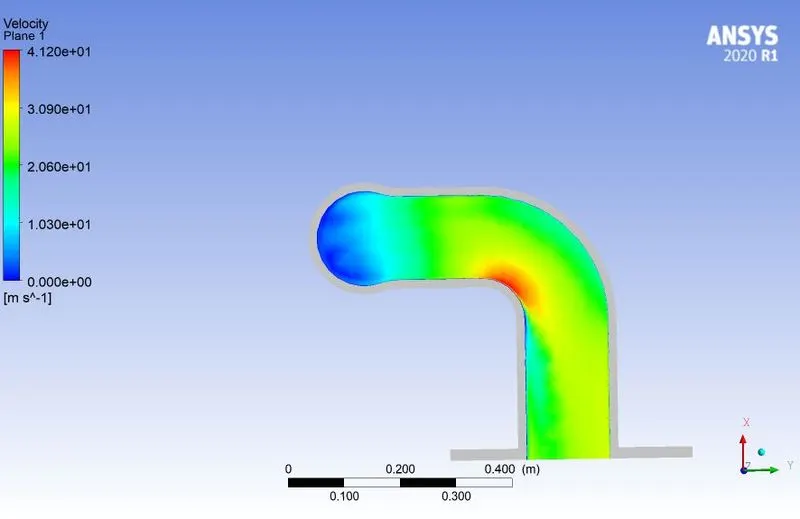
Temperature and velocity contours:
The values obtained are Tabulated as below:
| Wall Heat Transfer coefficient |
Maximum Temperature(Kelvin) |
Maximum Velocity(m/s) | |
| K-epsilon(Baseline Mesh) | 99.47 | 700.3 | 37.45 |
| K-omega(Baseline Mesh) | 94.06 | 700.3 | 37.53 |
| K-epsilon(Refined Mesh) | 184.5 | 700 | 40.05 |
| K-omega(Refined Mesh) | 216.2 | 700 | 41.20 |
As from the contours it is easily understood that the maximum velorcity is achieved at the exit exit point. Also it is observed that the maximum temperature is also at the outlet region from the contours.
This can be justified by the concept of mass conservations,as the hot inlet gas combines near the outlet. As more amount of the mass is accumulated at one place and so the more heat transfer is taking place and thus the heat transfer coefficient is found out to be a lager value as we go inside from the wall.